Build the Bed From Layers You Actually Use
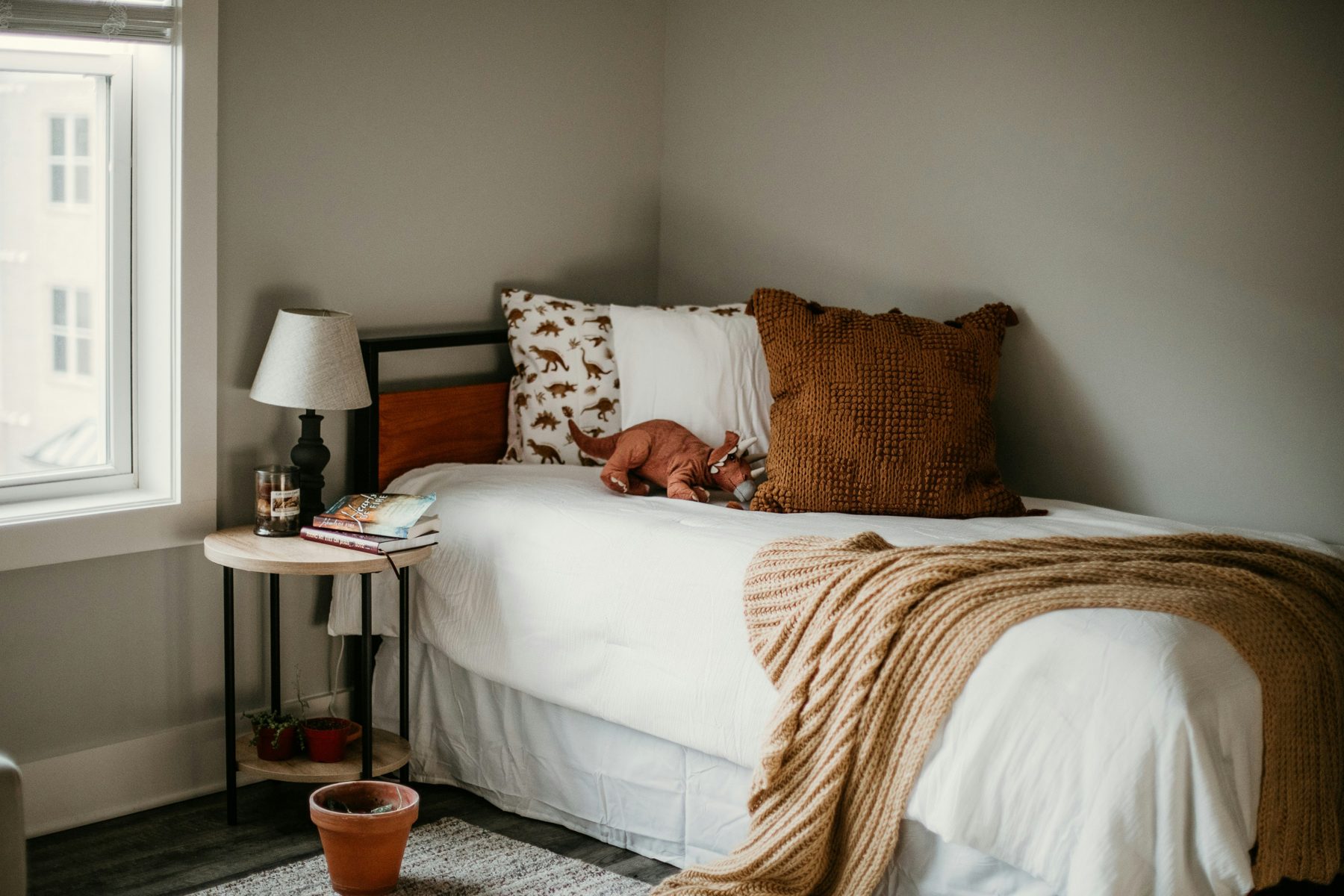
Start with the bed itself. In this room, white bedding makes a clean base for a camel-colored knit throw, a rust-brown pillow and a printed cushion. Nothing here comes from a matching set. The interest comes from materials meeting at different heights: smooth sheets near the mattress, a loose knit across the foot, and pillows with a little texture.
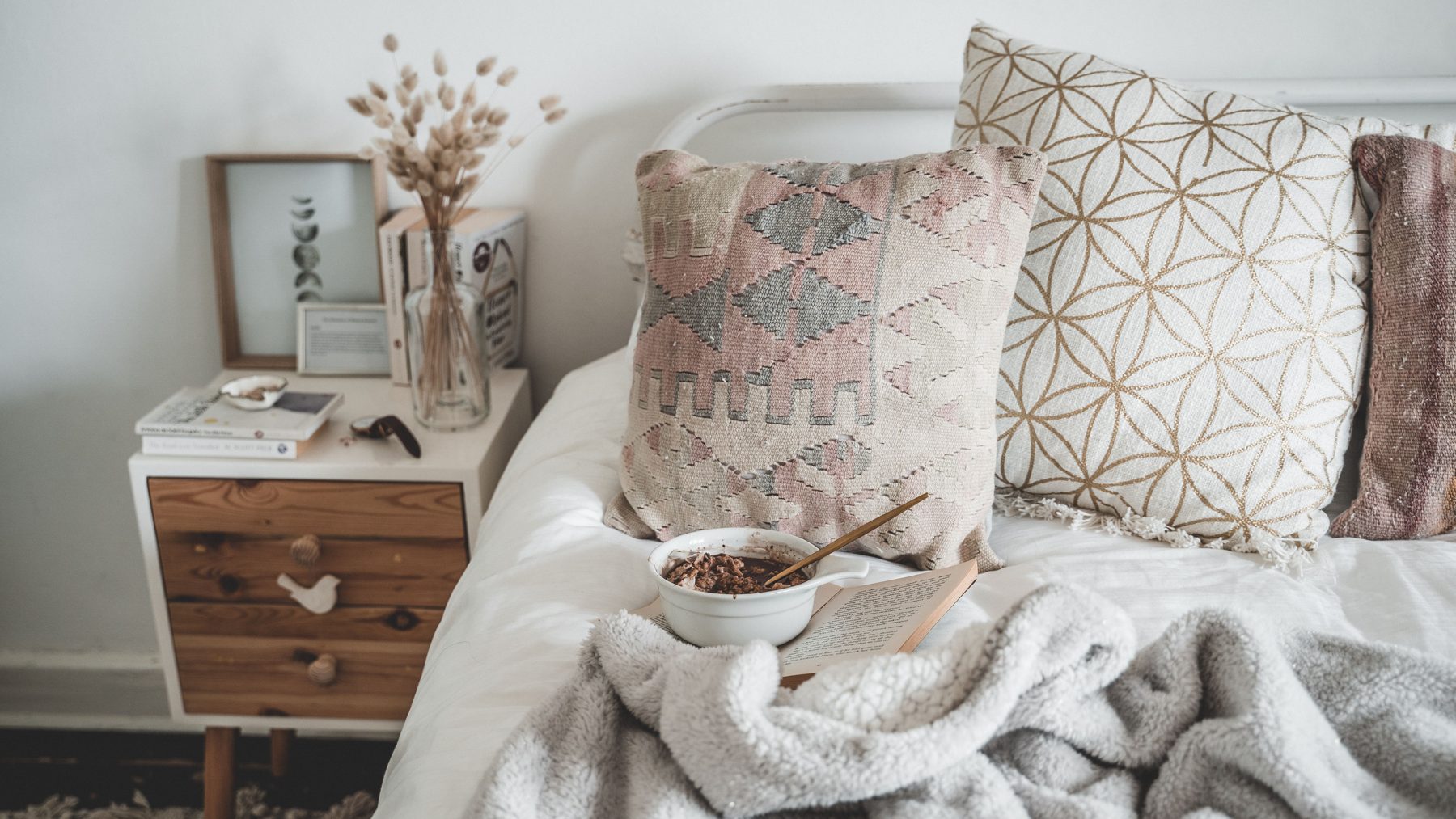
Add the layer your bed lacks. If the duvet already feels good, a contrasting throw may be enough. If everything reads as one flat pile, swap a single pillow cover for something with visible weave or a small pattern. The close-up below shows why texture matters even when the palette stays quiet: a chunky knit catches light differently from smooth cotton.
Keep it easy to live with. Sleeping pillows and a throw that comes off in one move usually earn their place faster than a tower of decorative cushions. Choose layers you can wash and swap with the seasons.
Let an Upholstered Headboard Be the Softest Shape
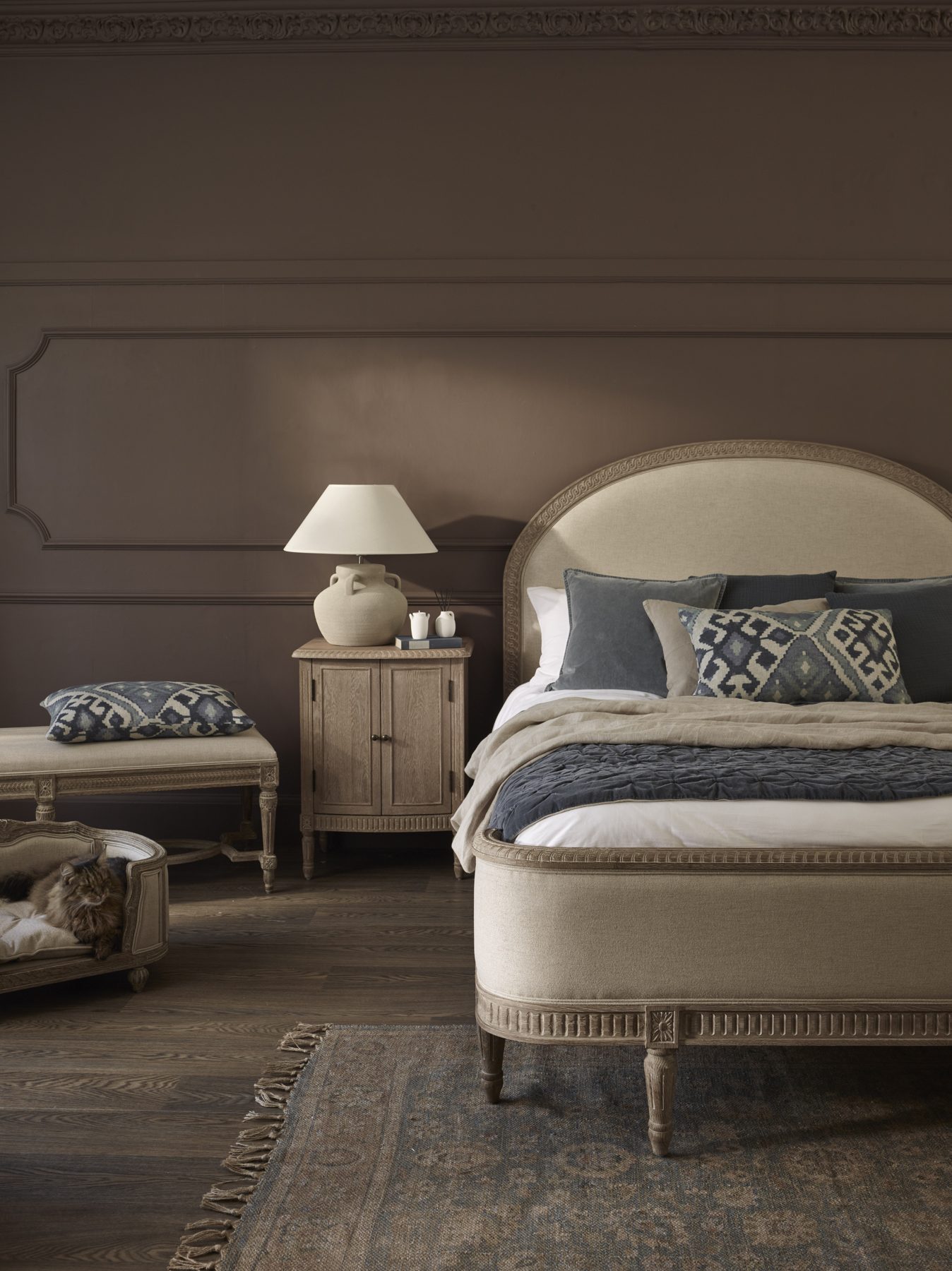
A curved upholstered headboard can soften a room before you add a single blanket. In this taupe bedroom, the rounded top breaks up the straight lines of the wall paneling, while a simple bedside lamp and a patterned rug keep everything else measured. The headboard, not a pile of accessories, does the visual work.
It suits a bedroom full of hard-edged furniture, or one with a big blank wall behind the bed. If you sit up to read, padding is also kinder to lean on than bare wood. In a narrow room, look for a slim profile rather than a deep, winged shape that pushes into the floor.
You don’t need the whole styled scene. Take the shape, then let ordinary bedding and one bedside lamp support it. If upholstery feels too heavy for your room, idea 7 offers a lighter kind of texture.
Warm Up White With One Rust-Colored Accent
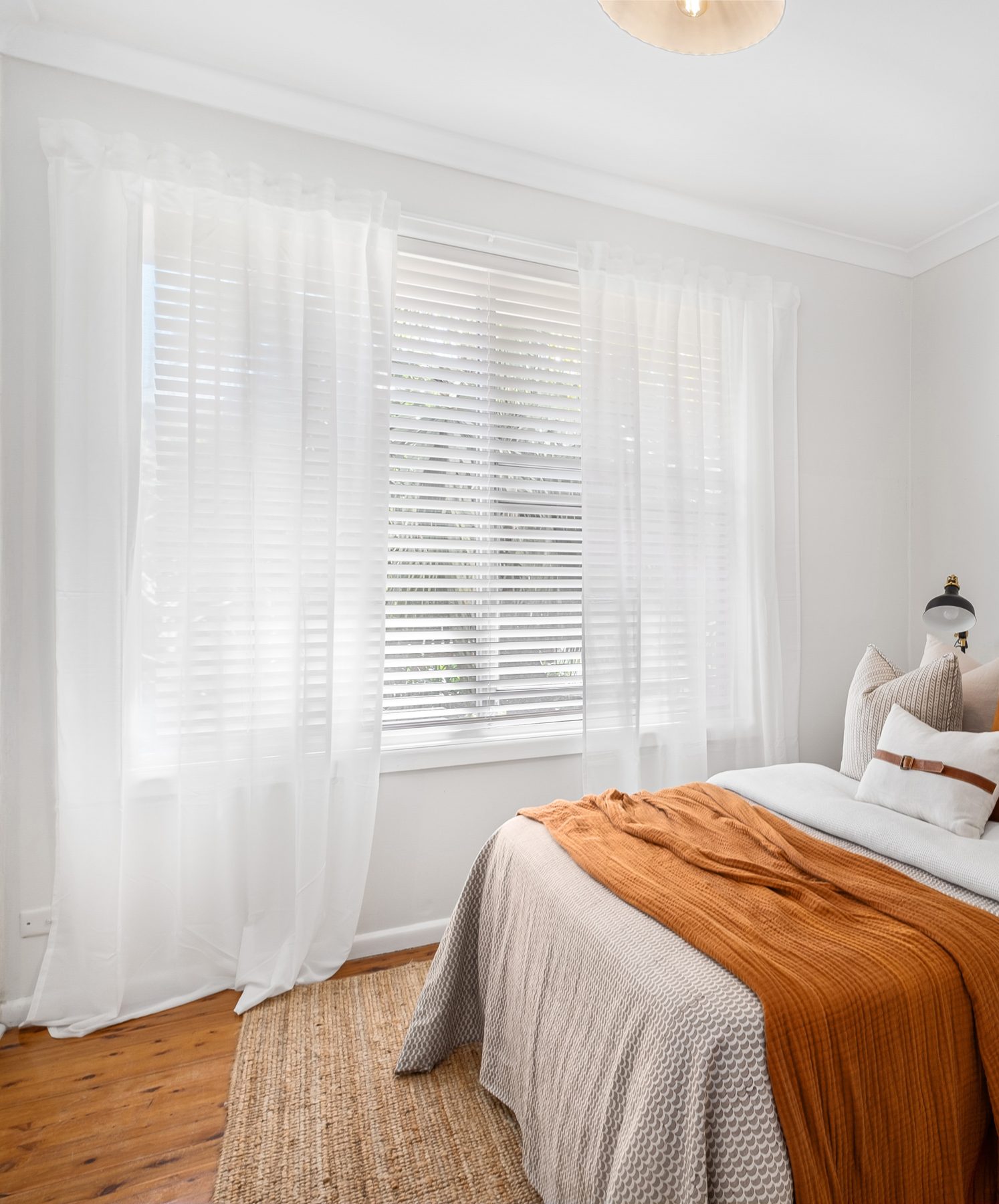
A rust-orange throw warms this otherwise pale bedroom without changing the wall color. White curtains, light bedding, and a woven floor covering let the accent stand out. Start here if the room feels cool but painting is not an option.
If you rent, or your room is mostly white and gray, begin with one textile before you think about paint. Hold a terracotta, cinnamon or clay-colored sample against your bedspread and floor. A shade that looks lively in the store can turn far more saturated at home, so judge it in daylight and under your evening lamp.
If you want cohesion, repeat the color once, in a pillow or a small print, not across the whole dresser. The room stays bright instead of turning into a different color.
Choose Between a Teal Cocoon and a Blue Accent Wall
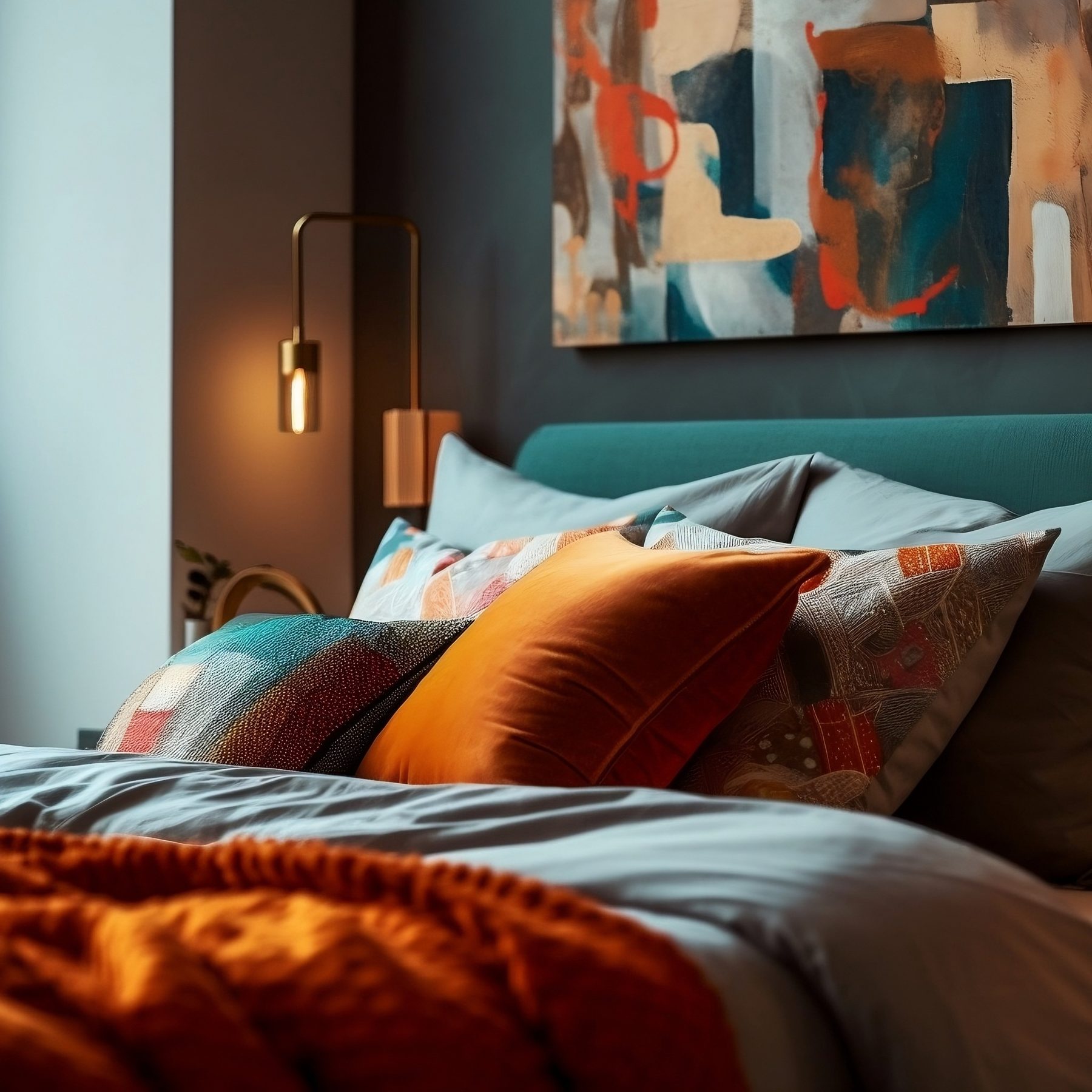
Deep color can make a bed feel sheltered, but how much wall you paint changes the mood. In the teal room, a dark wall and a teal headboard wrap the bed in dense color, warmed by a rust knit blanket, an orange pillow and saturated artwork. The effect is immersive: bed and wall read as one composition.
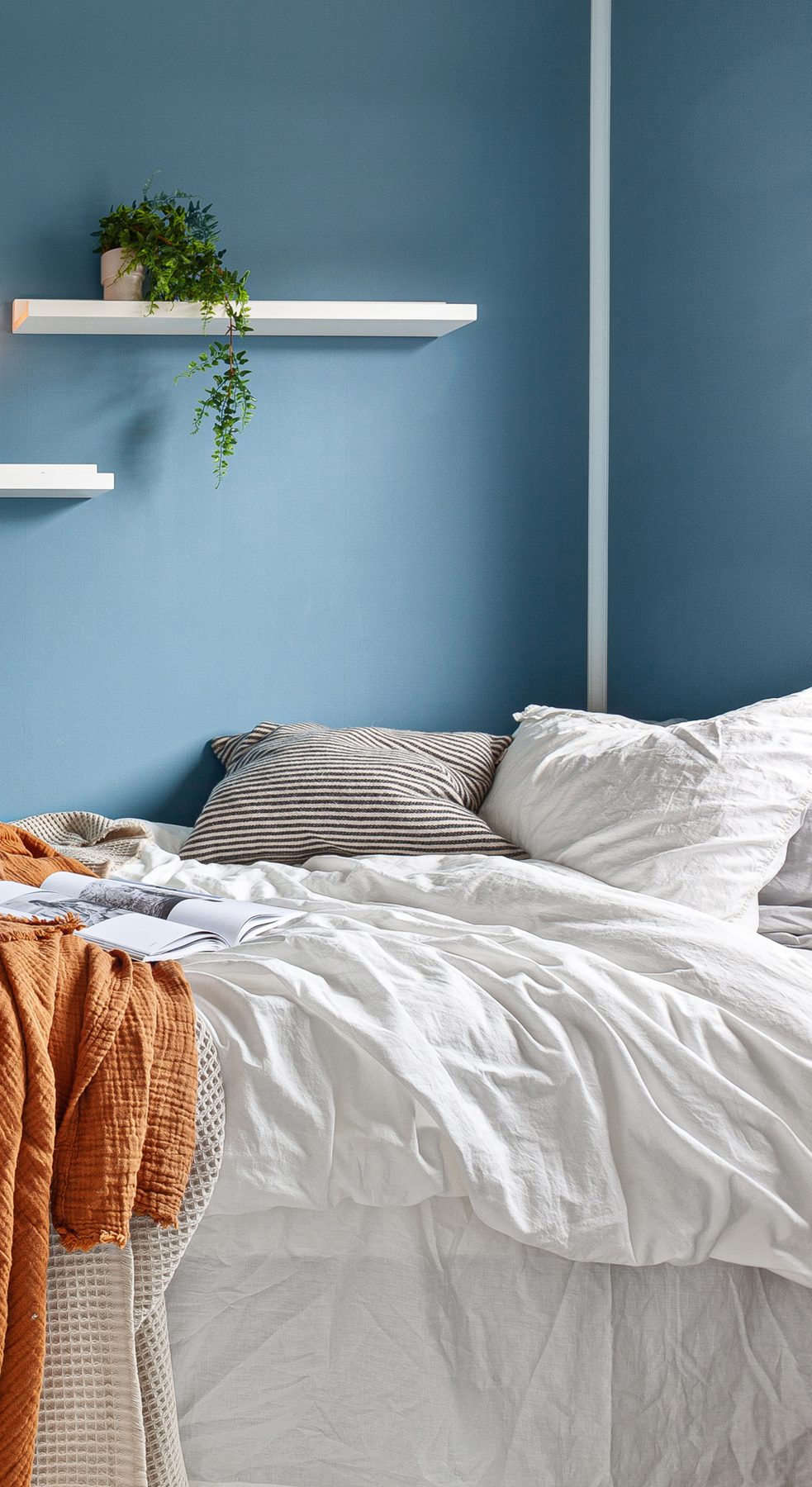
The blue room takes a lighter route. A vivid blue wall rises behind pale bedding, with a rust-toned throw as a smaller, warm counterpoint. Leaving the bedding white makes the painted wall a backdrop rather than wrapping the whole bed in deep color.
Go for the full teal if you want a dramatic retreat and already like deep hues. Choose a single blue wall if you want color but a bright bed. Either way, tape a large paint sample up near the bed and check it in morning light and under the lamp you use at night. A swatch won’t tell you how you’ll sleep, but it will show whether you enjoy living with that contrast. For a fuller deep-color approach, see Dark Bedroom Ideas.
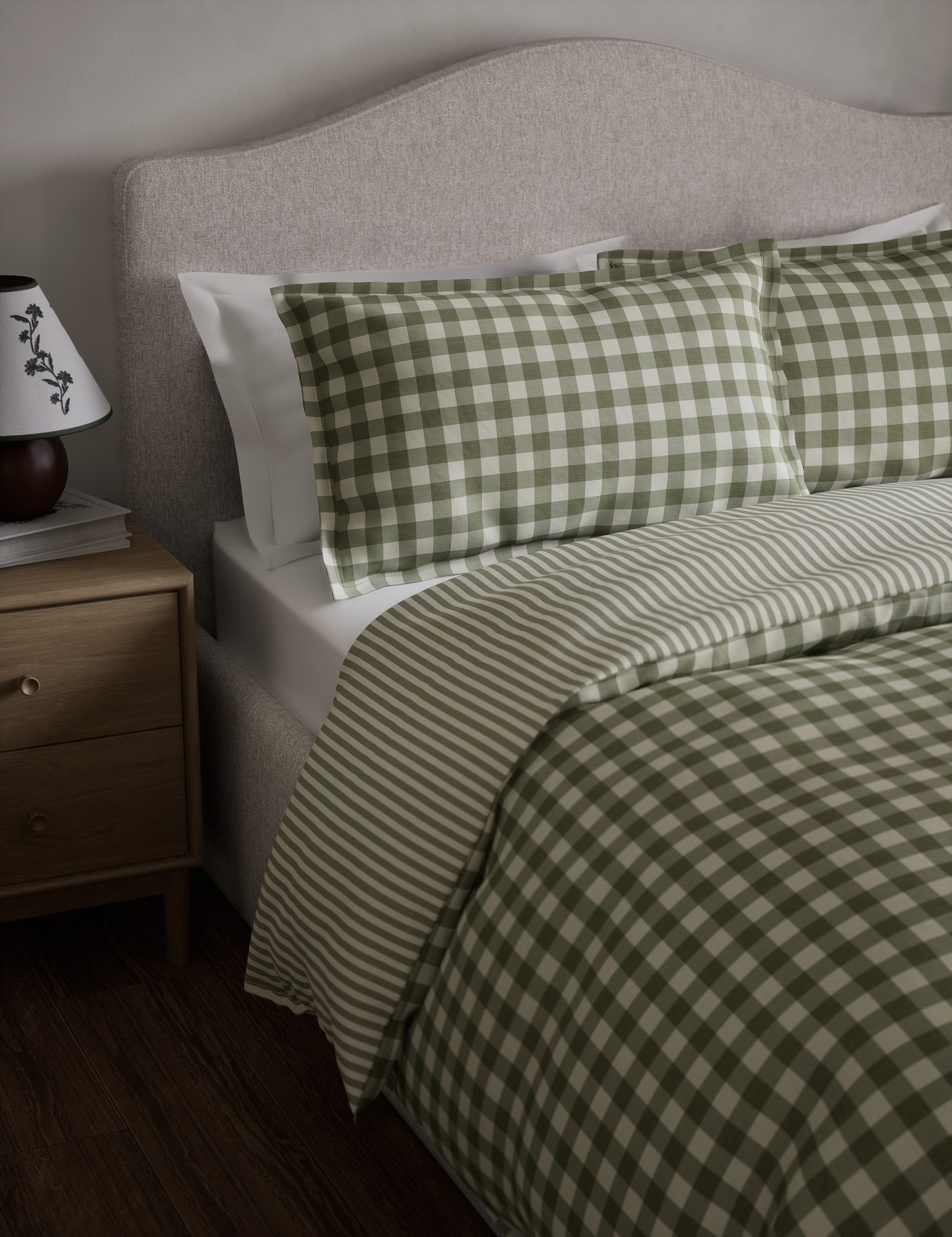
Make Gingham the Pattern, Not One Pattern Among Five
A small check can give a plain bedroom more character than a wall of decoration. The green gingham here repeats enough to feel playful, and the pale upholstered headboard and neutral surroundings give the pattern somewhere quiet to sit.
Try it when the bed looks too plain and you don’t want to repaint. One gingham duvet, striped pillow or checked sheet set is enough; keep the larger pieces next to it calm. You can echo the green in a vase or throw, but it doesn’t have to become a theme.
Scale matters more than perfect matching. Smaller checks read as texture from across a room; large checks become the dominant graphic. If your curtains are already patterned, test the two fabrics together before adding another print.
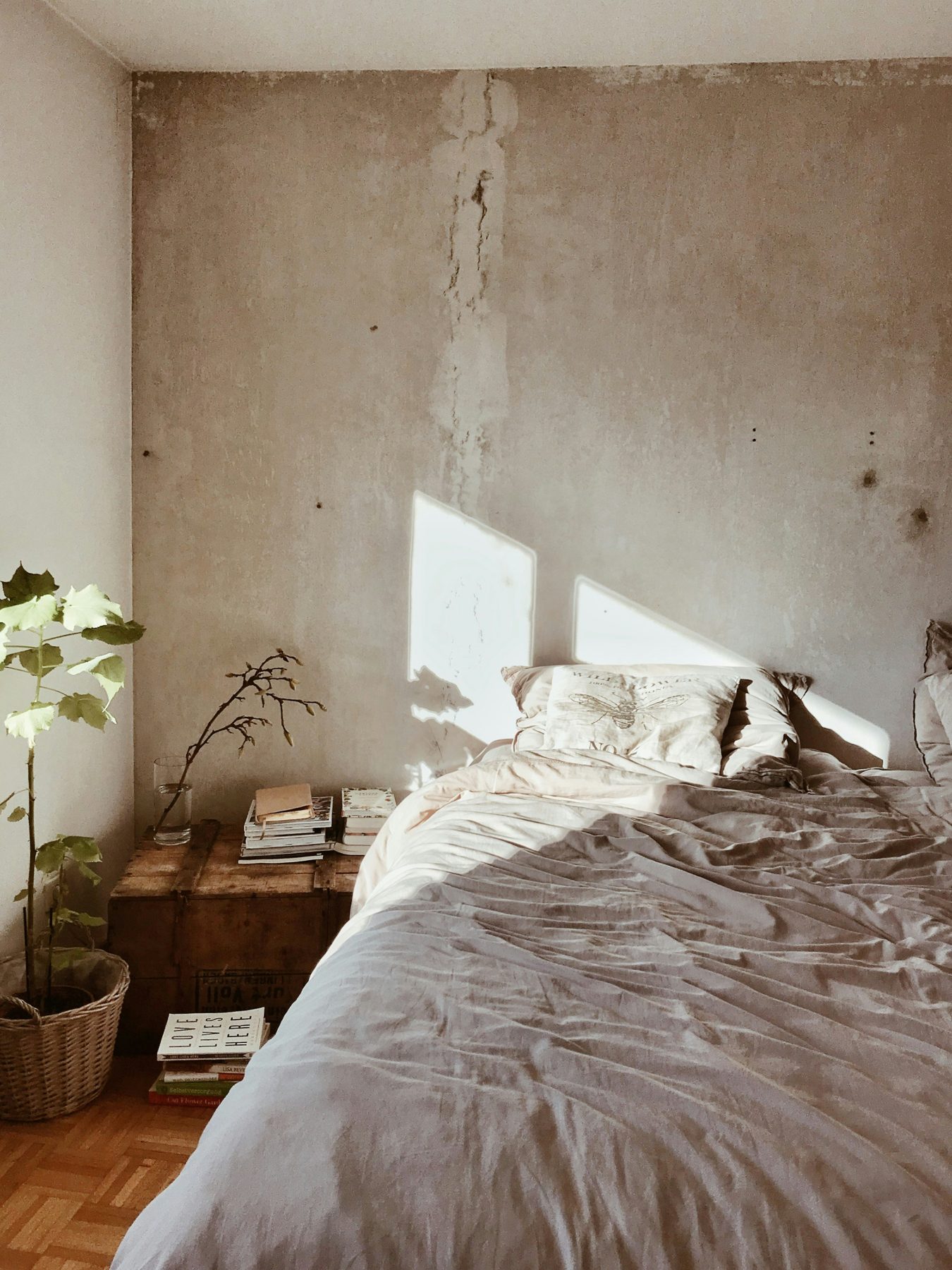
Pair a Raw, Uneven Wall With Loose, Unfussy Bedding
Some bedrooms get their warmth from surfaces rather than extra objects. Here, a raw, uneven wall sits behind rumpled bedding, a low wooden table and a patch of daylight. The irregular finish makes a minimal arrangement feel lived in without making it busy.
For a similar room, pick one textured backdrop and let the bedding fall naturally. A matte, subtly varied finish behaves differently from a glossy one, and a loosely woven cover adds a second quiet layer. You don’t need rough walls, nubby rugs and exposed brick all at once.
If you rent, a removable textile or textured headboard can supply the contrast without touching the wall. And if a wall like this is damp, stained or flaking, fix the moisture first rather than styling around it; the EPA’s guide to mold and moisture is a good place to start.
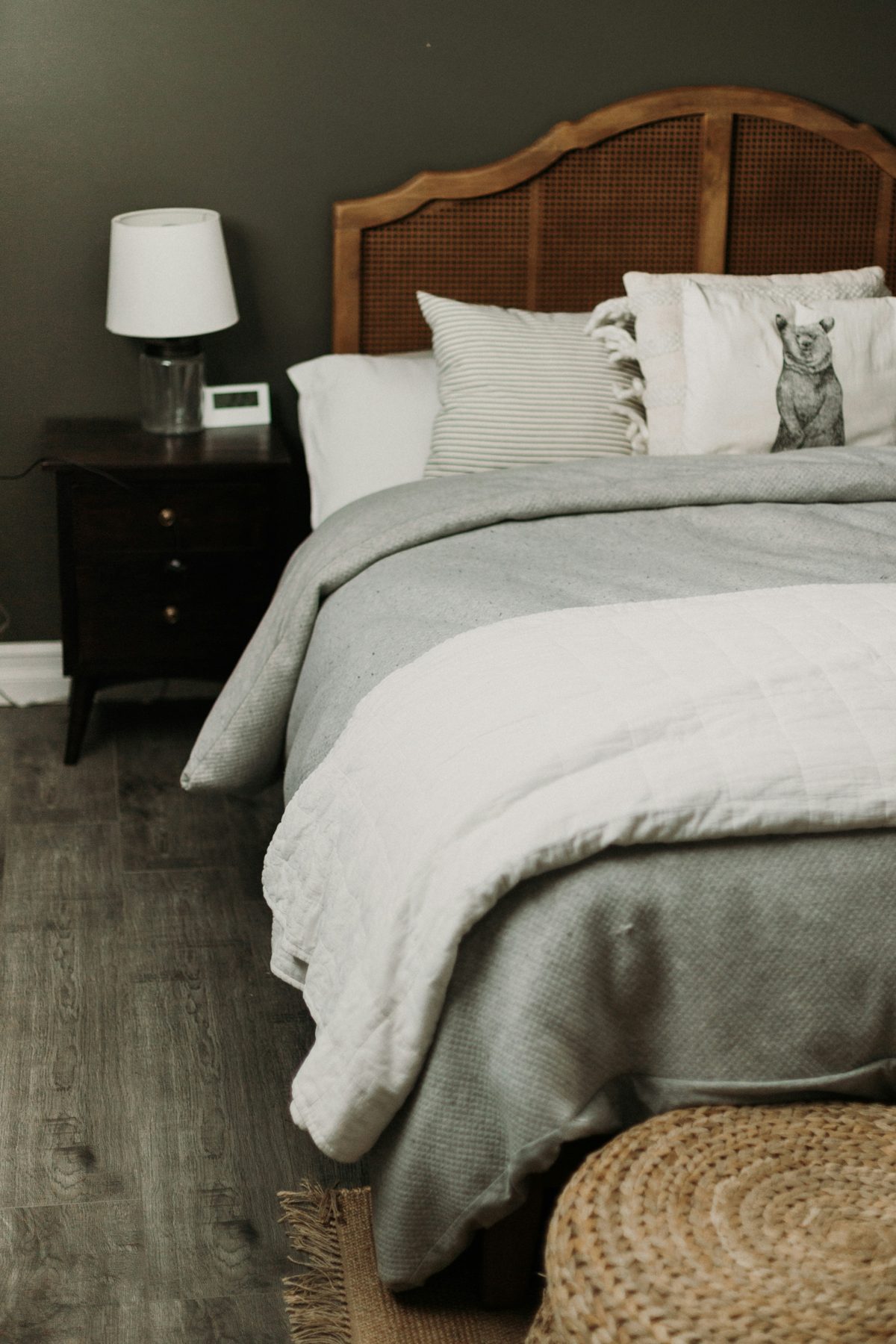
Use a Woven Headboard for a Lighter Kind of Texture
The arched, cane-style headboard here has a different presence from the upholstered bed in idea 2. Its fine woven grid adds detail against a dark wall, while white pillows and gray bedding keep the bed itself quiet.
Consider it when a padded headboard would feel bulky, especially in a small room or one with simple furniture. A woven surface adds detail without a second big field of fabric. Keep the pillows mostly plain so the weave doesn’t compete with busy bedding.
This is a choice of visual weight, not a rule that one material is cozier. If you like to sit up in bed, upholstery is the softer backrest. If you want an airy, furniture-led bed, a woven profile is worth a look.
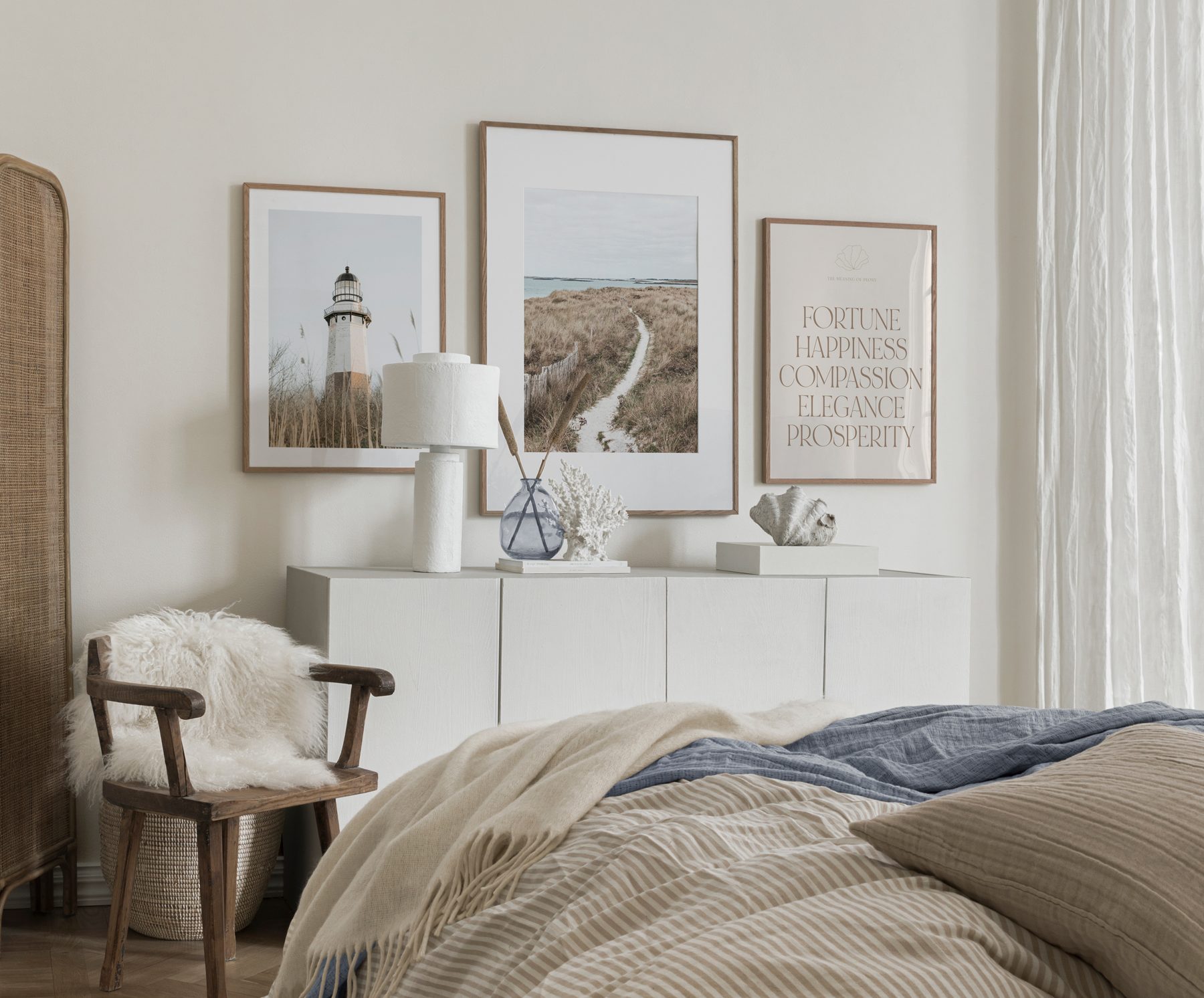
Soften a Straight-Lined Corner With Fabric
A white cabinet and three framed prints give this bedroom corner a series of neat rectangles. What keeps it from feeling rigid is the fabric around them: a pale curtain at the right edge, loose bedding in the foreground, and a soft throw over the wooden chair. None of those pieces needs a bold pattern to be noticed.
Use this approach when the bedroom already has a dresser or a display wall but still feels bare. First make a small group of things you actually use—perhaps a lamp and a few framed pieces—then put texture beside the hard edges: a curtain with natural folds or a throw on a chair. This is a contrast in surfaces, not a second gallery-wall project.
For an actual window treatment, choose the fabric according to the room's privacy and light-control needs. A pale curtain can look visually soft without being sheer or providing darkness at night. Test fabric against the window in daylight and with the room lit after dark.
Put the Evening Lamp Where Your Hand Can Find It
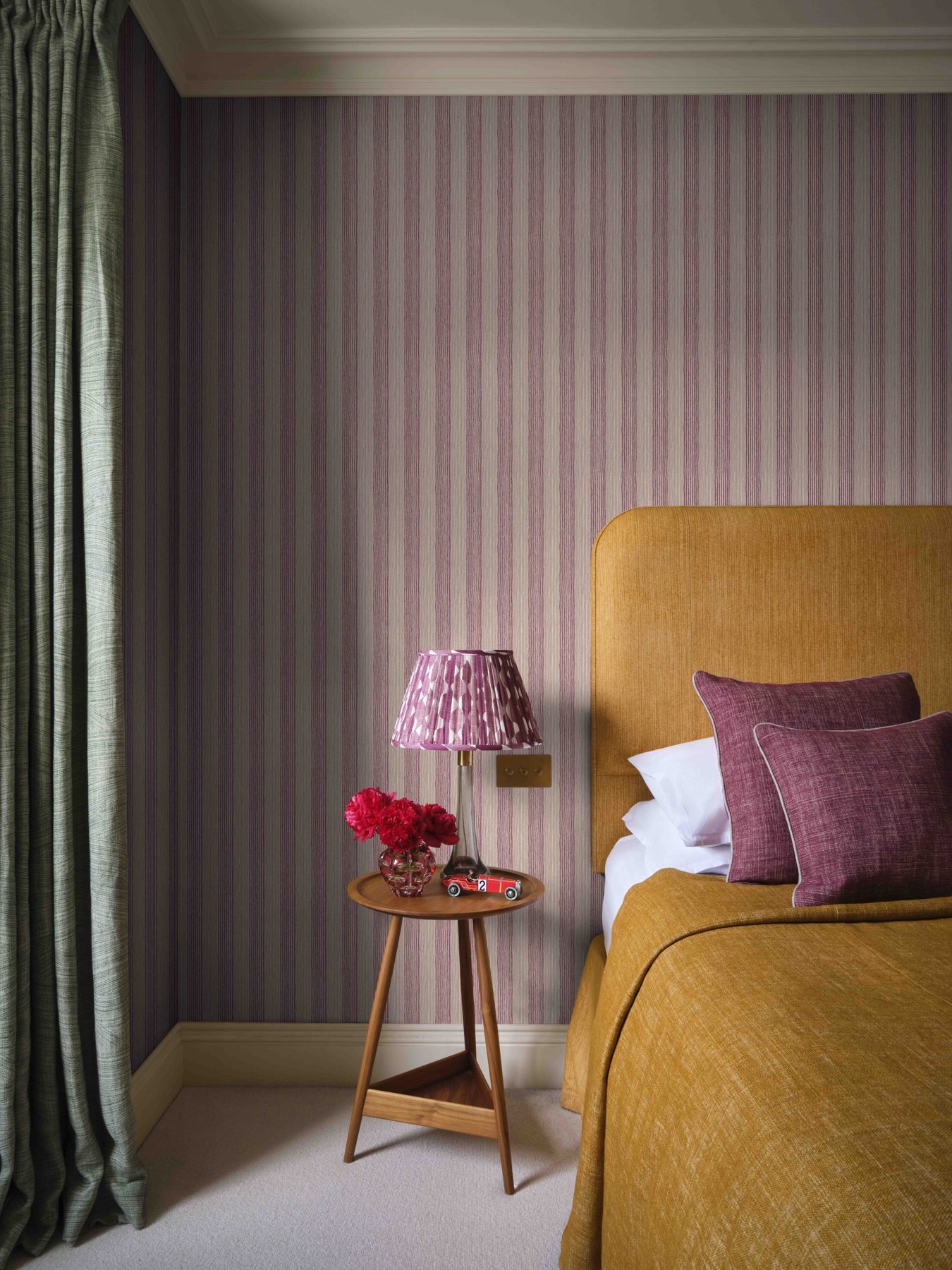
The small patterned lamp beside this mustard bed stands out against mauve stripes and green curtains. Its small shade directs attention to the bedside corner, while the bold surroundings give the lamp a deliberate place in the room.
What matters more than the shade is where the lamp sits. From where you lie or sit up, can you reach the switch without leaving bed? Is there room beside it for water, a book and your phone? A stable surface and a lamp you can control from bed can be more useful than an elaborate fixture.
If two people keep different hours, separate bedside lamps are easier than one overhead switch. If a new wall-mounted or hardwired fitting is involved, ask a qualified electrician to check the placement rather than copying the photo.
Give Each Kind of Evening Light a Job
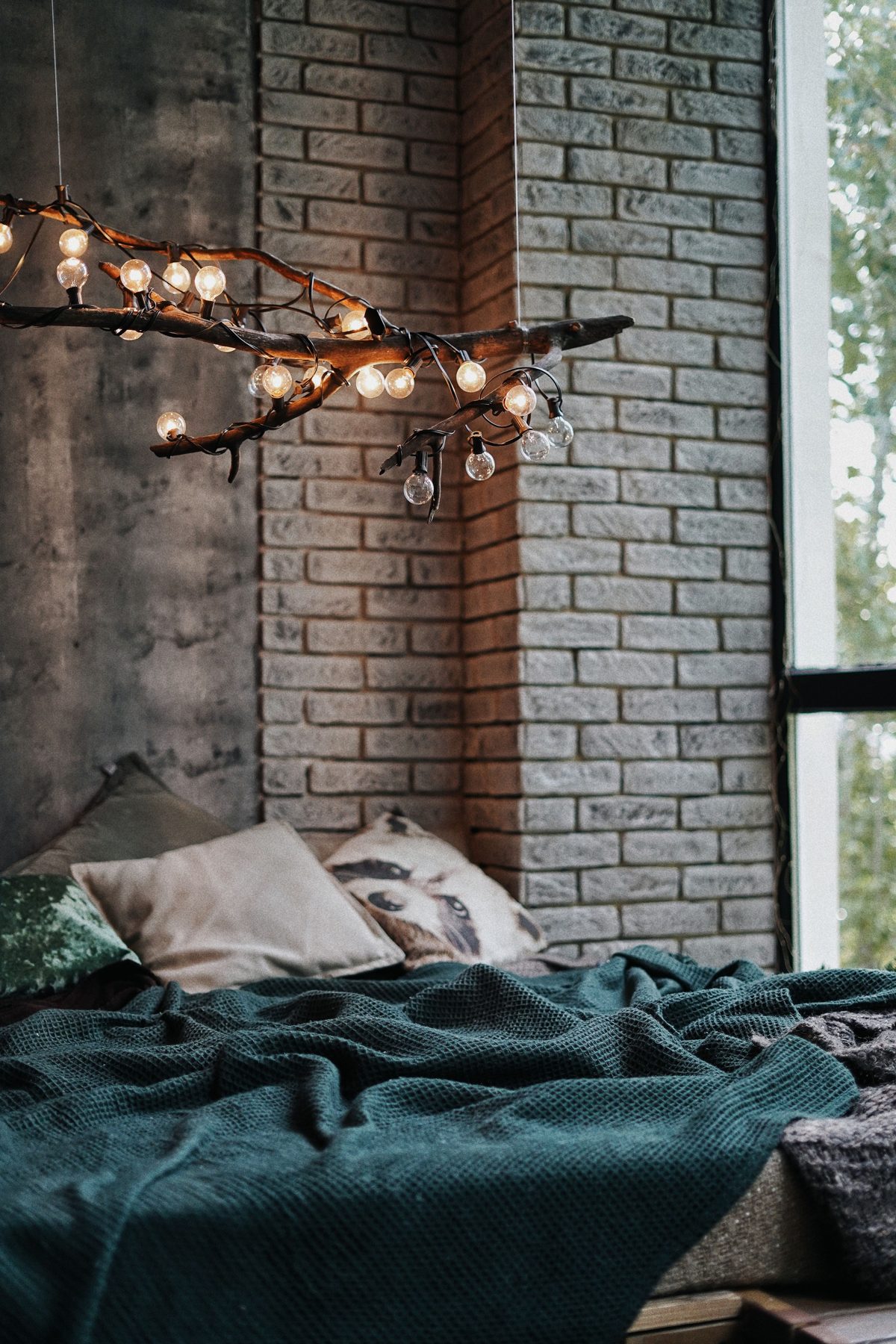
The branch-style fixture with bare bulbs in this room picks out the rough brick and gives the deep teal bedding a softer backdrop. It works visually because the glow sits at one edge of the room instead of flooding all of it.
Decorative light is only one layer. A bedroom also needs brighter light for cleaning and getting dressed, focused light for reading, and a low setting for winding down. If your room feels harsh after dark, ask which of those jobs a single fixture is trying to do. A proper bedside lamp may help more than another strand of accent lights.
Use fixtures rated for the bulbs you put in them, and keep cords and hot bulbs away from blankets and curtains. Turn decorative lights off for sleep. The NHLBI recommends keeping the bedroom quiet, cool, and dark; a dim night light is fine if needed.
Frame a Small Nook With Botanical Wallpaper
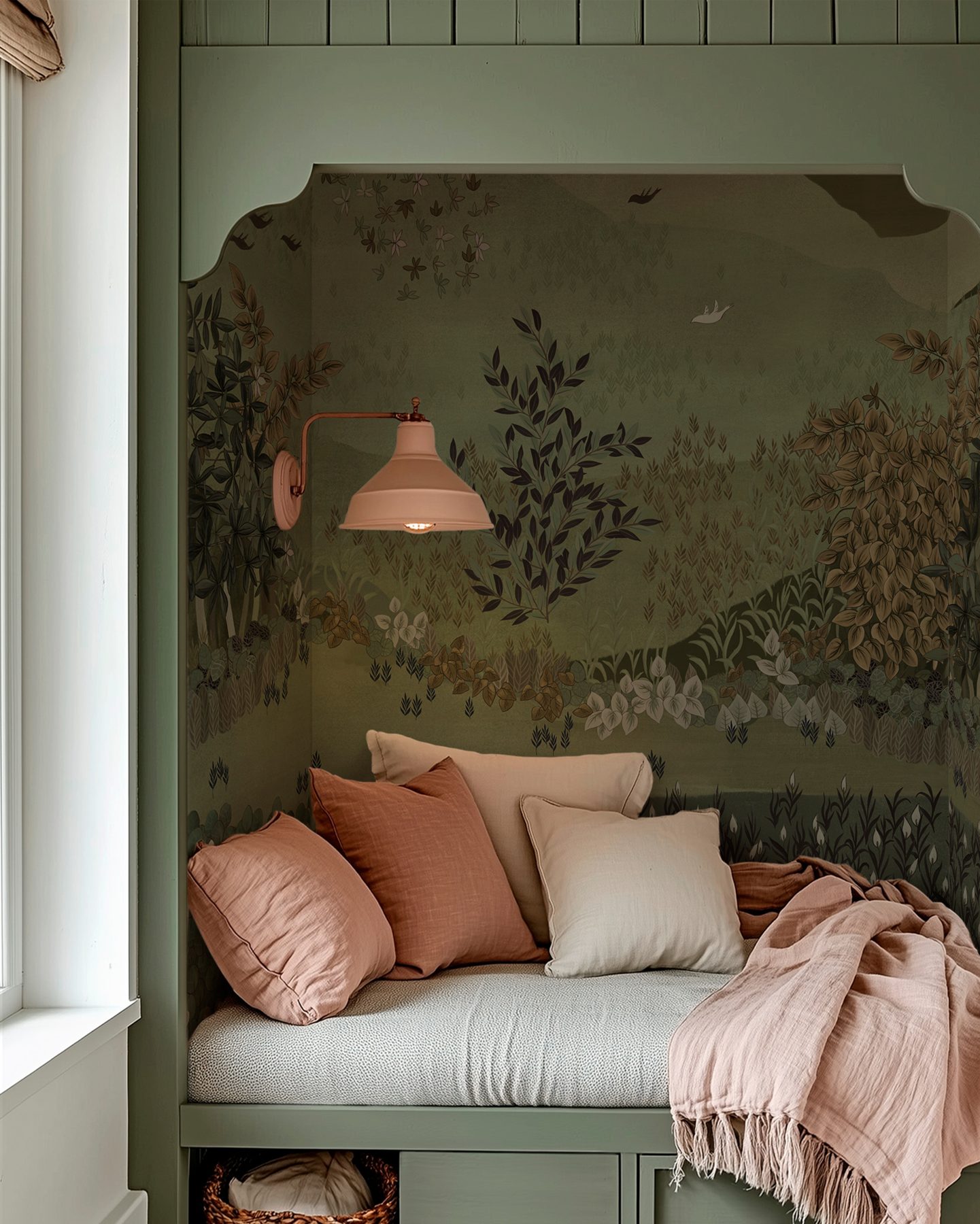
This built-in alcove uses wallpaper almost like scenery. A leafy pattern fills the back wall, while sage trim, peach cushions and a pink pendant lamp hold the composition together. Because the pattern is contained in one recess, it feels rich without taking over the room.
Try it when your bedroom already has a deep window recess or a spare corner. Keep the pattern to the back of the niche, repeat one color in the cushions, and make the seat practical enough to use. The drawers underneath are handy for blankets or books, but the idea works without them.
A custom bench and a hardwired pendant take more planning than a freestanding chair. Don’t squeeze in a seat at the cost of walking easily around the bed. Without a true recess, a wallpapered section of wall and a movable chair is the simpler version.
Turn a Long Window Wall Into a Daybed
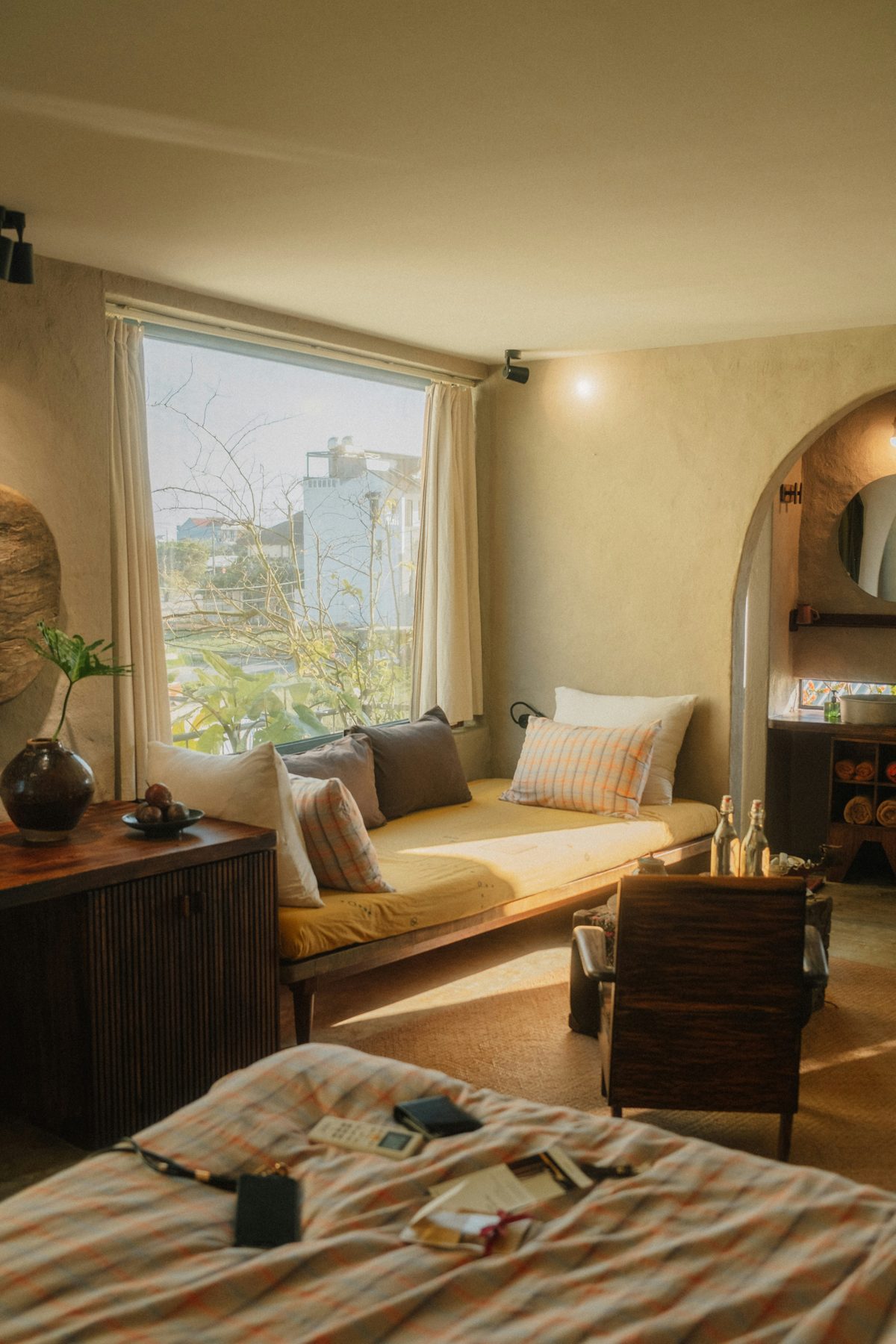
A window seat is a second kind of retreat. In this room a long, low cushioned seat runs beneath a large window, with pillows to lean on, a dark wooden cabinet at one end and a wooden armchair in front. Beyond the bed in the foreground, it is a separate place to stretch out.
Where the nook in idea 11 is enclosed, this seat is about openness and daylight. It suits a generous room with an unused window wall and someone who wants a place to read, rest or just look outside. An upholstered bench or a chair can borrow the idea without built-in carpentry.
Before you add seating, walk the route from bed to door and check that drawers and closet doors still open. No corner is cozy enough to justify a permanent obstacle.
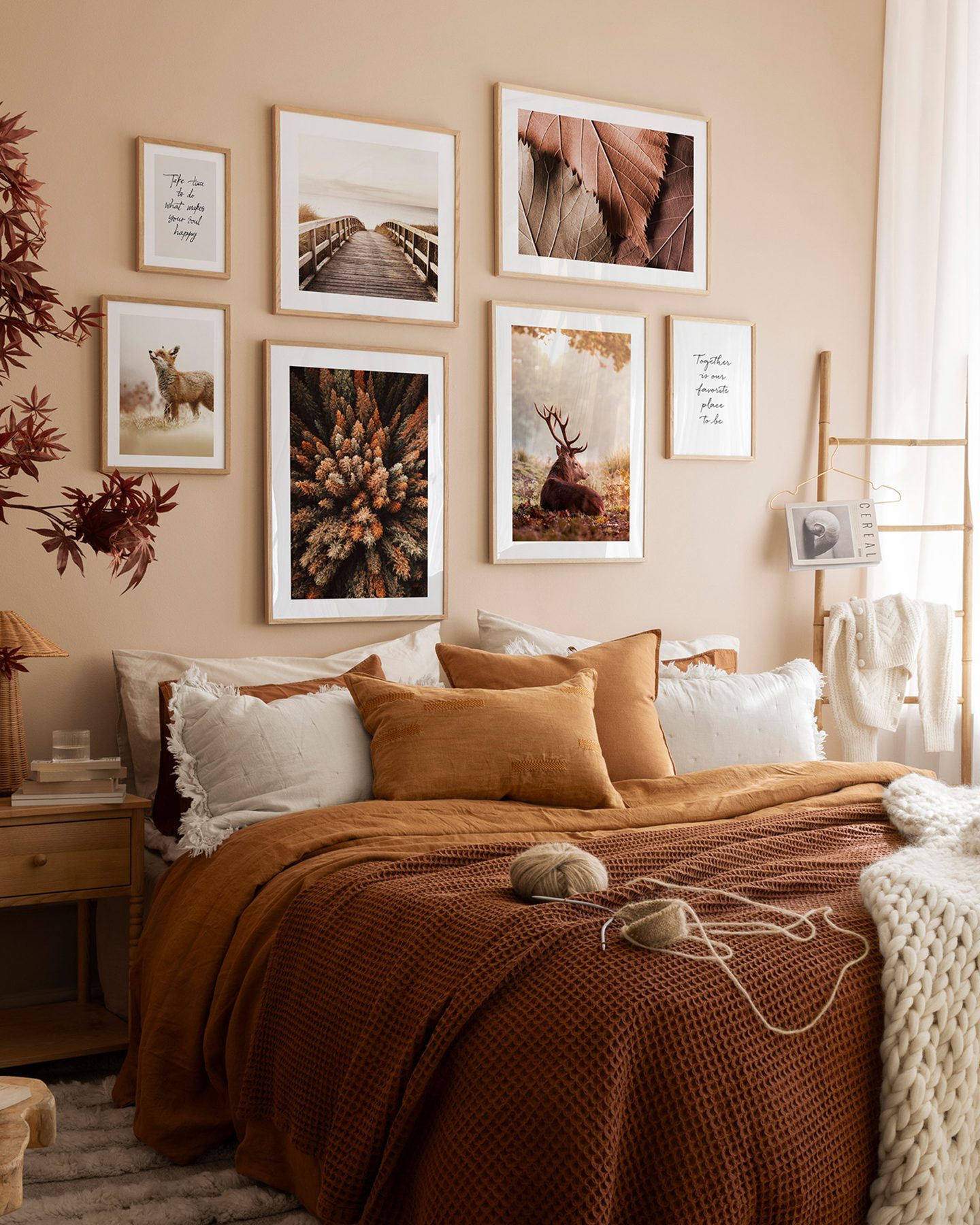
Let the Gallery Wall Borrow a Color From the Bed
The wall above this rust-colored bed mixes small and medium framed nature prints. Its organizing idea isn’t a perfect grid: the warm browns, ocher tones and soft backgrounds of the prints echo the bedding and the furniture nearby.
If your bedroom feels impersonal, start with images you actually like looking at: travel photographs, botanical prints, quiet landscapes, a piece with personal meaning. Lay paper templates on the wall above the bed first, then choose frames that relate without matching exactly. Repeat one blanket or pillow color in the art so the group feels connected.
Leave open wall around the group so it reads as a collection rather than noise. Use fixings suited to your wall type, and keep heavy frames and shelves from hanging directly above a pillow.
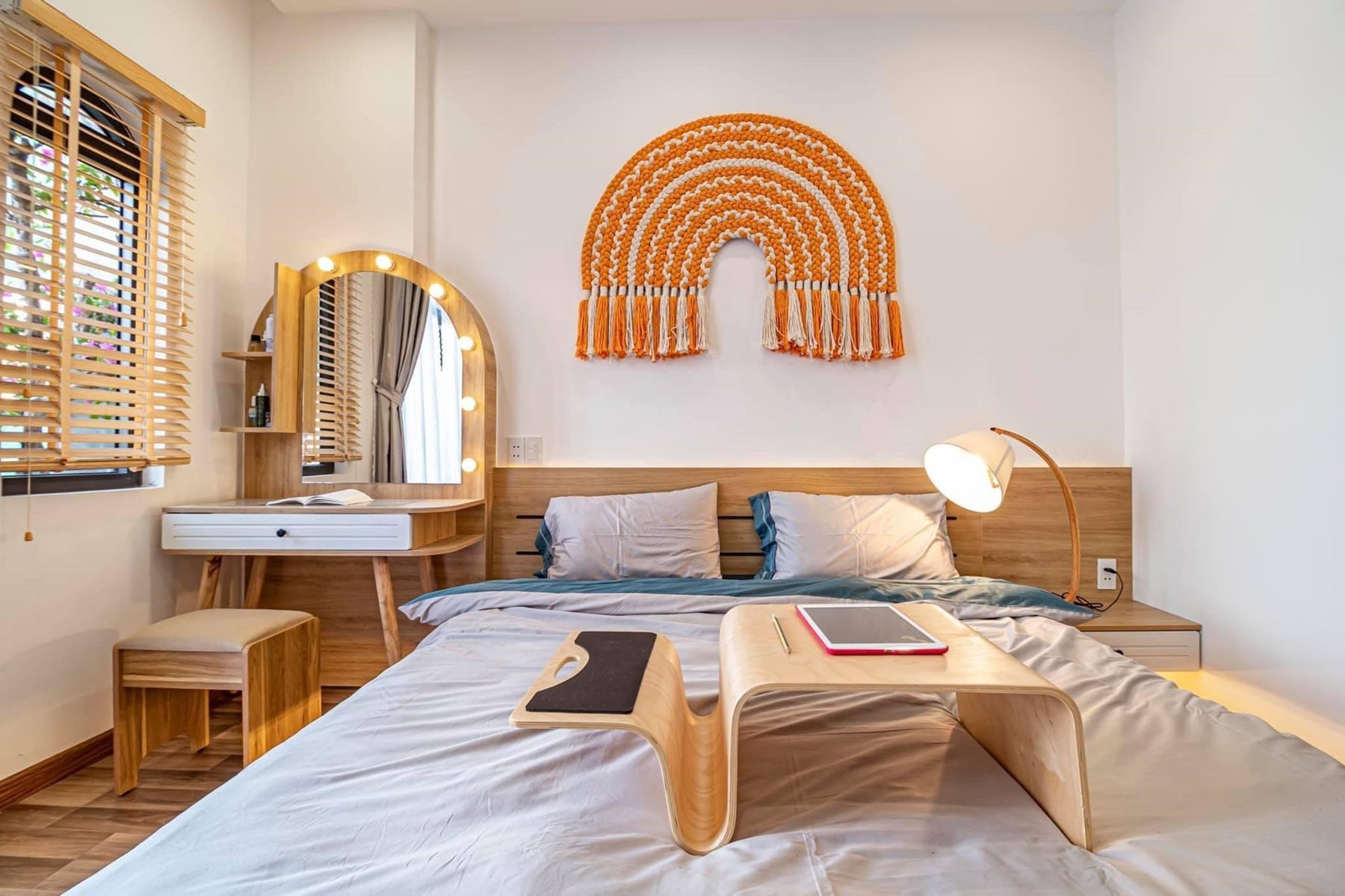
Hang One Playful Woven Accent
An arched orange wall hanging brings a handmade shape to this light bedroom. Pale walls and warm wood keep everything else restrained, so the single piece is easy to appreciate; the arched vanity mirror nearby echoes its curve more quietly.
It’s a good move when you want a relaxed, slightly bohemian note without stacking trends. Choose one textile hanging or small sculptural piece with a shape you like and keep the bed simple. Some contrast with the wall color helps it stand out.
It’s also easy to change, far simpler than wallpaper or a built-in headboard. Hang it securely, and keep it clear of anywhere it could fall onto the bed.
In a Small Room, Put Storage on the Wall
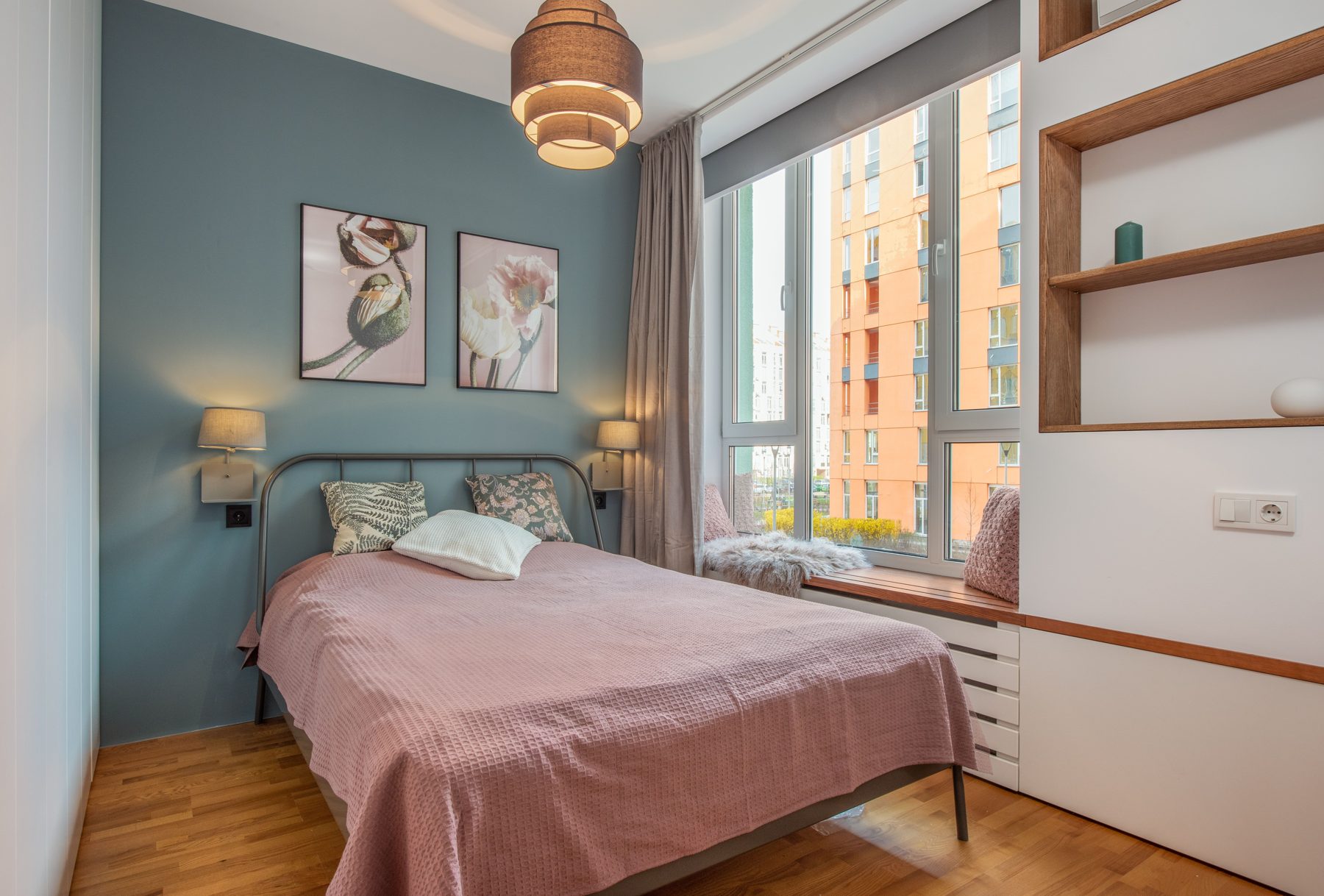
This compact bedroom fits a bed against a strong blue wall and puts its storage into one built-in unit by the window: open shelves above, drawers below. With little spare floor, the walls do the useful work.
If your room is just as tight, decide what actually needs to be within arm’s reach before you buy furniture. A shallow shelf or wall-mounted organizer can hold a few essentials and leave the floor free. Keep one reliable landing spot beside the bed for water, a book or your phone; remove a second basket or stand if it only accumulates clutter. Keep the route from bed to door straightforward and a light switch within reach.
Don’t mount heavy things above the pillow or crowd the only clear path, and fix any shelving to the wall with fixings that suit its load. For full layouts rather than this one comfort idea, see Room & Matter’s small bedroom guide.
Add Greenery Where It Has Light and Room to Grow
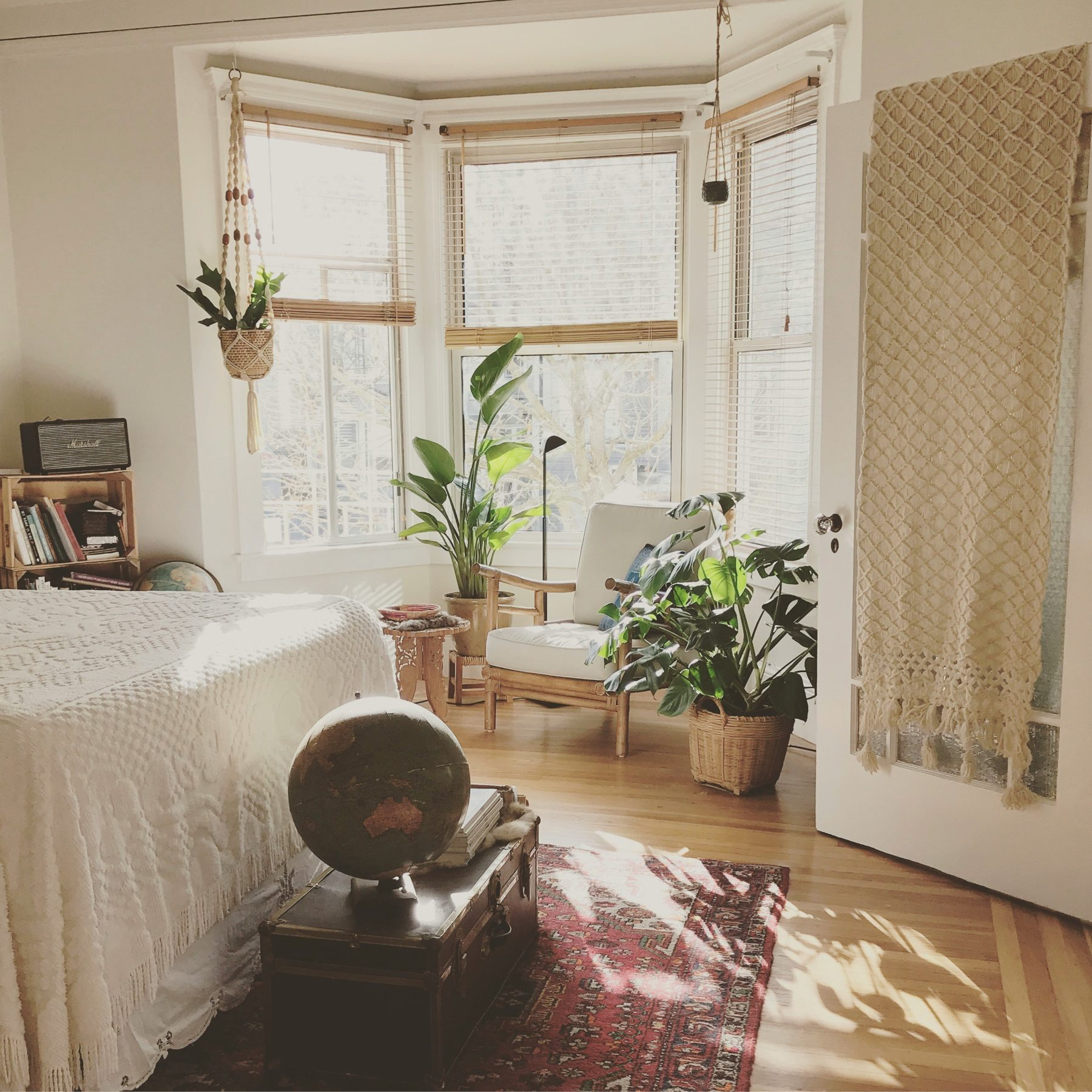
The last room is mostly pale surfaces and fabric, with leafy plants at different heights around a bay window. The greenery breaks up the straight lines of window frame and door without another patterned duvet or painted wall.
One healthy plant is enough to test the idea. Pick a spot with the light that species needs, protect the floor or dresser from water, and keep the path to the door clear. One tall plant by the window often feels calmer than several small pots crowding a nightstand.
Enjoy plants for the greenery, not as a way to clean the air: the EPA notes that a reasonable number of houseplants does not remove significant quantities of indoor pollutants. If pets, allergies, low light, or upkeep make plants impractical, a nature print or a leafy view can bring some of the same contrast without soil in the bedroom.