COLOR

Grey

Grey interiors explored through warm and cool palettes, materials, contrast and layered texture.

COLORExplore this theme across different rooms, with advice you can apply at home.

EXPLORE BY ROOM

Grey across the home.

Open the most relevant guide for each room in this theme.

MORE GUIDES

More ideas to explore.

Related guides explore this theme through different rooms, materials and design decisions.

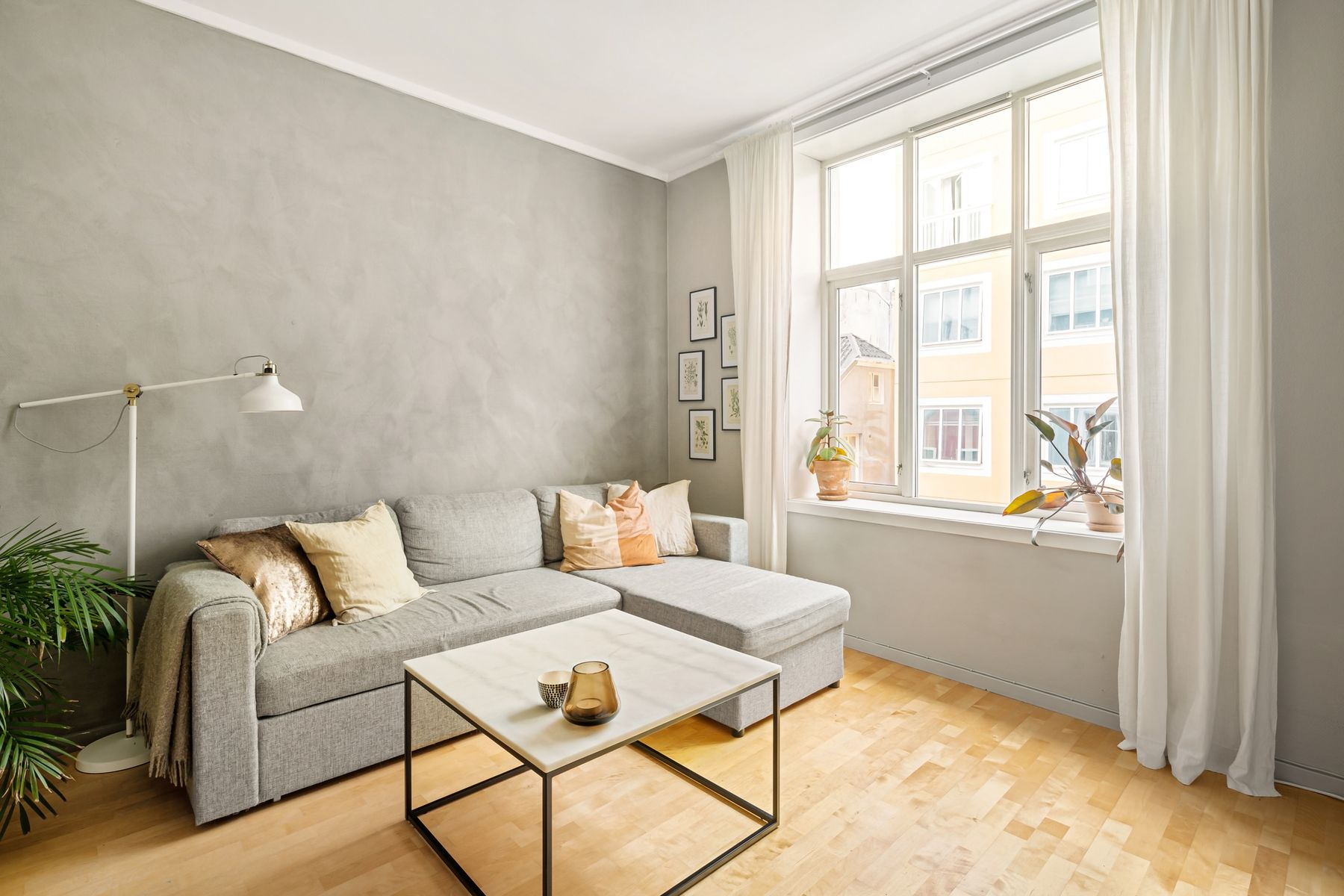
Warm grey living room with a grey sectional, mottled wall, white curtains, pale wood floor and large daylight window

Grey Living Room Ideas

Grey living room ideas fail when grey is treated as an empty backdrop. In a real room it borrows color from the sky, floor, garden, fireplace and lamps, while its value decides whether a sofa reads as an object or dissolves into the wall. That is why the same paint can look calm in one home and blue, mauve, green or simply unfinished in another. This guide starts with diagnosis rather than a shade list. It separates undertone, lightness and surface; explains why builder-grey schemes go flat; shows how to give a grey sofa a specific role; and uses timber, color, stone, metal, trim and evening light to correct the room without disguising the problem with more cushions.

Explore the guide →
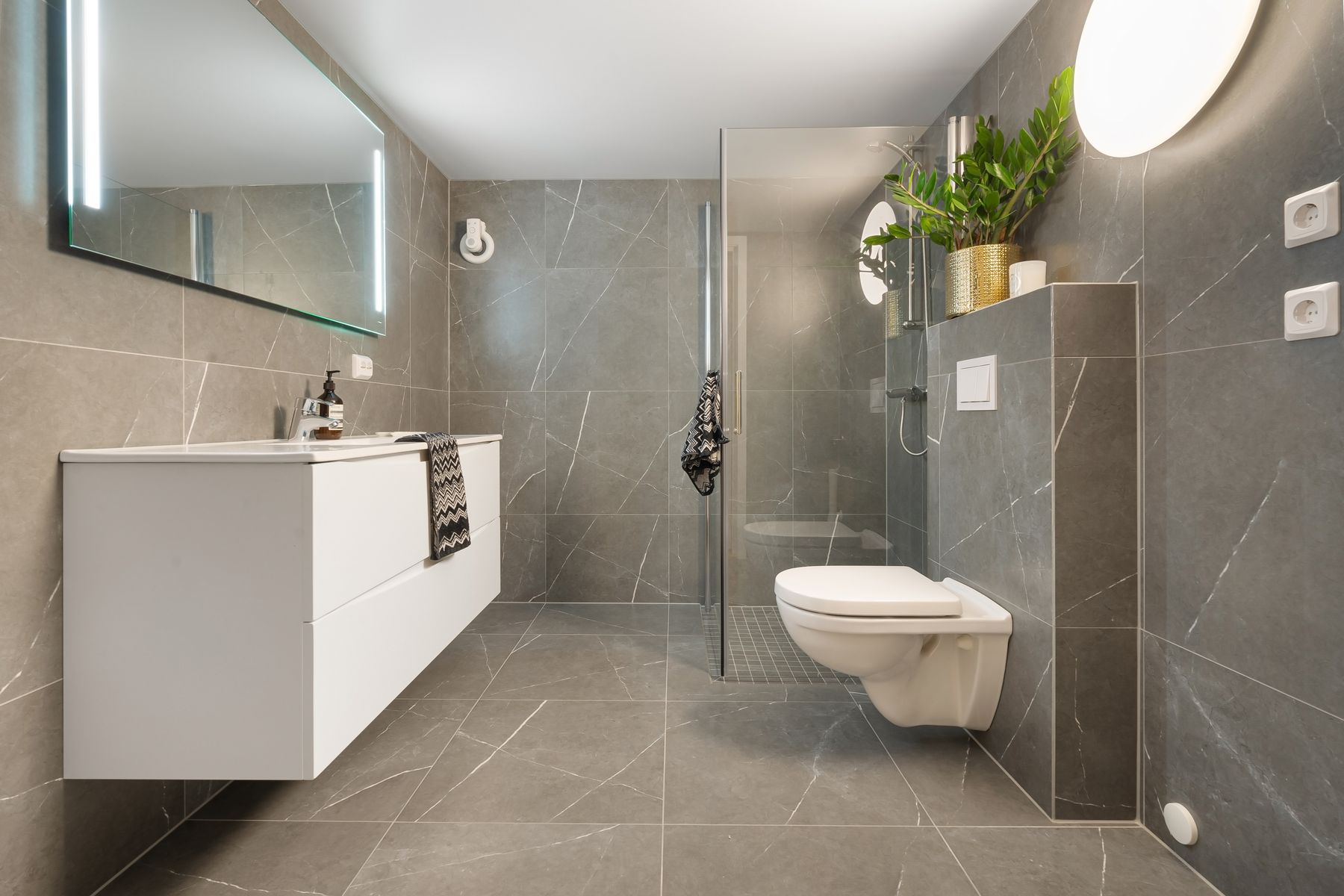
Modern grey tiled bathroom with a glass shower, toilet and softly illuminated round mirror

Grey Bathroom Ideas

Grey bathroom ideas are strongest when grey acts as a calibrated middle value between fixed whites, mineral surfaces, metal and timber rather than as a safe color repeated everywhere. The useful decisions are about mediation: which grey bridges the sanitaryware to the stone, where charcoal should stop, how sheen changes value when wet and whether the palette still separates into readable planes after daylight disappears.

Explore the guide →
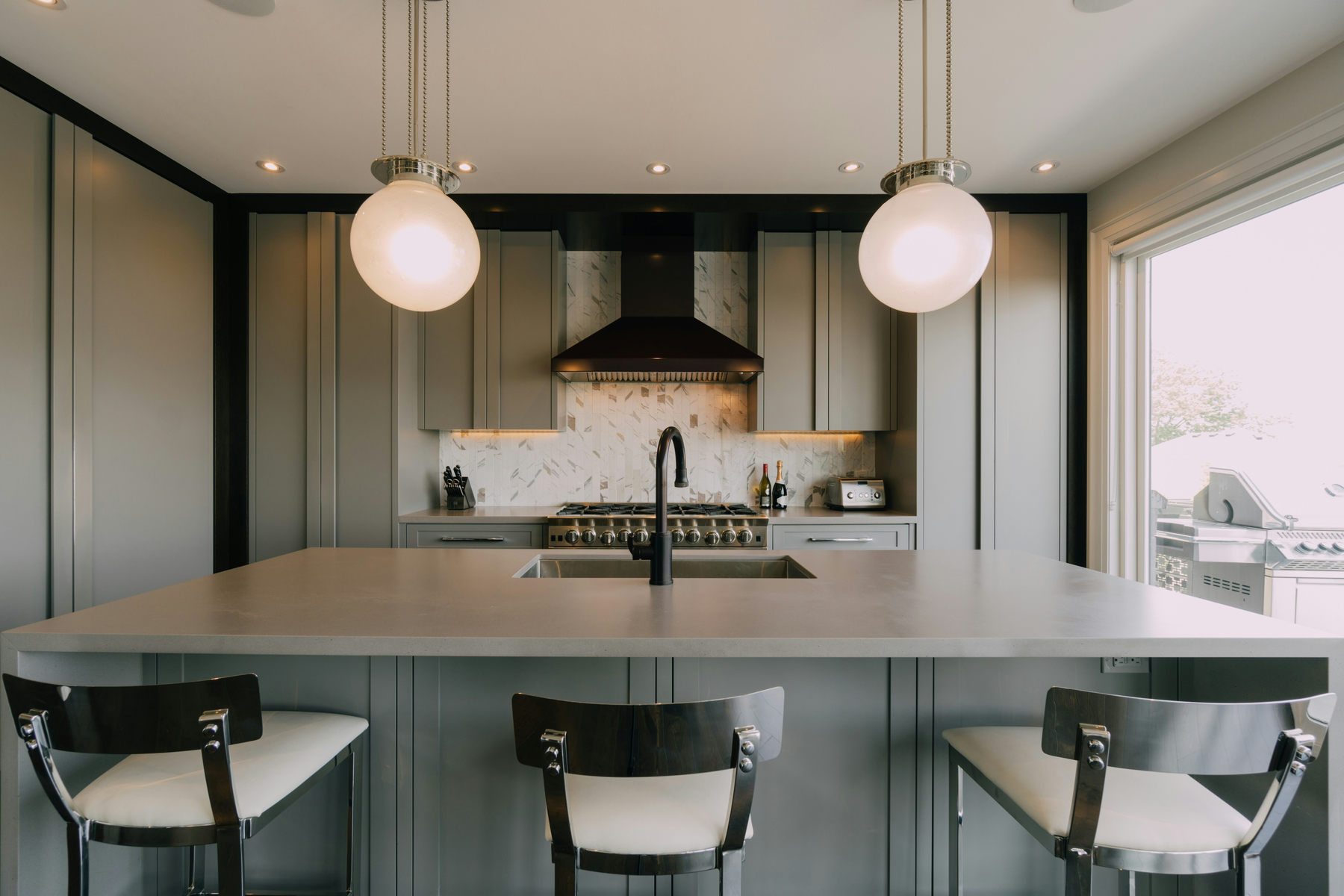
Gray-green kitchen island with pale counter, black range hood and framing, two globe pendants, and gray cabinet doors

14 Gray Kitchen Ideas With Warmth, Contrast, and Character

Gray has a reputation as the safe, slightly bland choice. In the right kitchen it's neither. It can sharpen a door profile, give an island some authority, or settle a pale room onto a darker floor. What changes the outcome is everything next to it: the wood, the stone, the metal, and the light. These 14 kitchen examples show how cabinet color, flooring, countertops, and light change the way gray feels. Each section gives you a decision to test against the finishes already in your home. Some are cool, some are warm, a few lean toward charcoal. Skim for the move that matches what you're keeping, then use the sampling tips to avoid an expensive surprise.

Explore the guide →
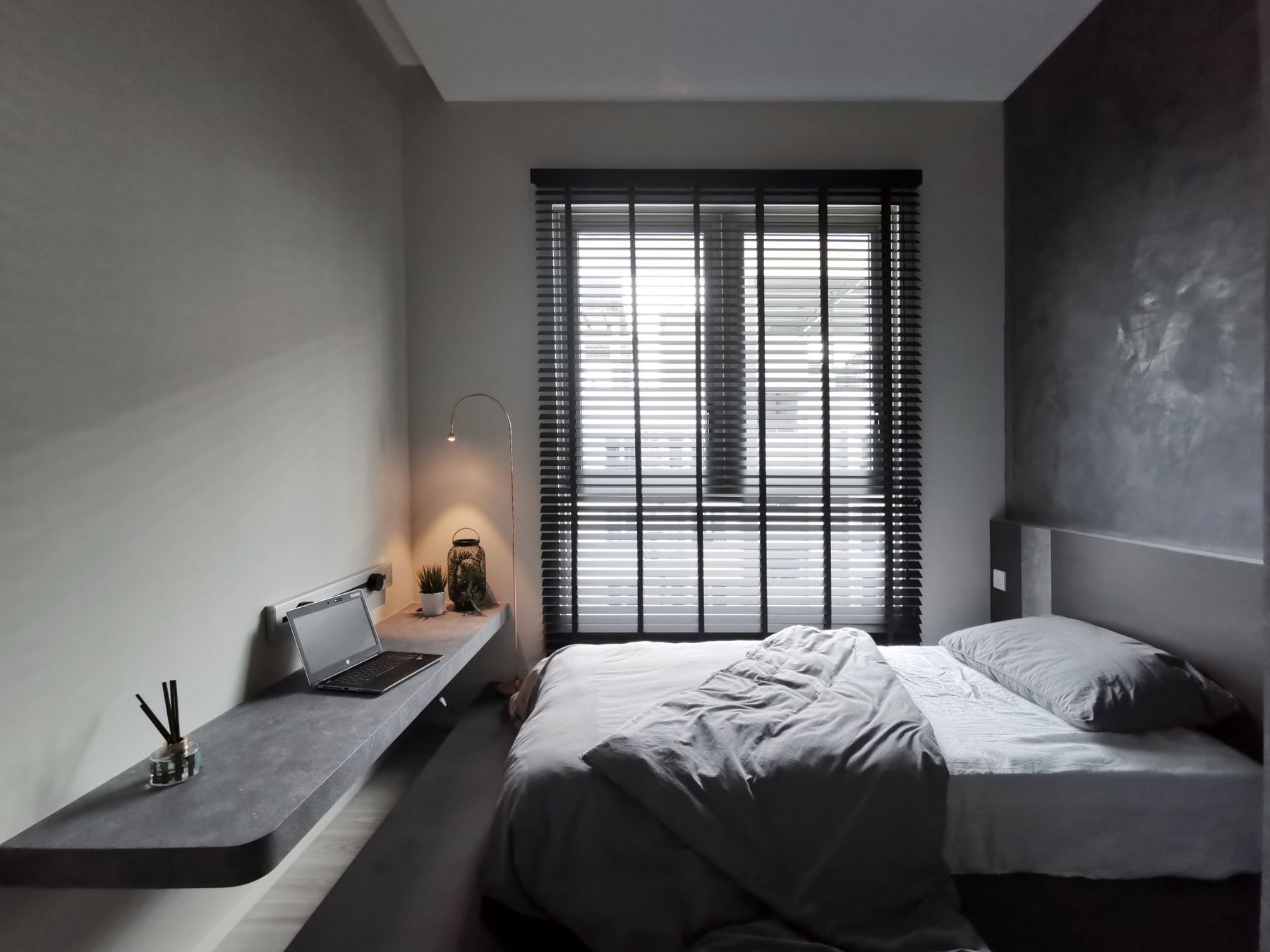
Bedroom with deep forest-green walls, white grid bedding, black metal bed, two windows and warm brass lighting

Dark Bedroom Ideas

Dark bedroom ideas are broader than black paint and more practical than a mood-board label. A successful low-value room may be led by navy, forest green, charcoal, deep brown, aubergine or black, with enough tonal separation for the bed, storage, controls and circulation to remain usable. This guide covers palette choice, sampling, wall scope, ceilings, beds, textiles, materials, daylight, artificial light, windows, flooring, storage, mirrors, small and large rooms, work zones, rentals, accessibility and maintenance. It keeps Dark Bedroom distinct from [Black Bedroom Ideas](/bedroom/black-bedroom-ideas/), where black is the dominant hue, and from Dark Academia, where books, heritage references and scholarly atmosphere define the style.

Explore the guide →
Dark modern living room with deep-toned furniture, wall-mounted television and subdued lighting

Dark Living Room Ideas

Dark living room ideas are not a shortcut to black walls, Gothic drama or generic coziness. A socially useful dark room is a low-luminance composition: several deep color families, a readable middle value, small returns of light and controlled transitions between the bright window, the television, people's faces and adjoining rooms. This guide treats navy, forest, charcoal, espresso, aubergine and black as different kinds of darkness. It shows how to place the deepest field, build brightness bridges, keep dark-on-dark seams legible, choose night-window behavior and create separate conversation and screen hierarchies without bleaching the room with pale contrast.

Explore the guide →