Recognize Relaxed Romance Before Buying
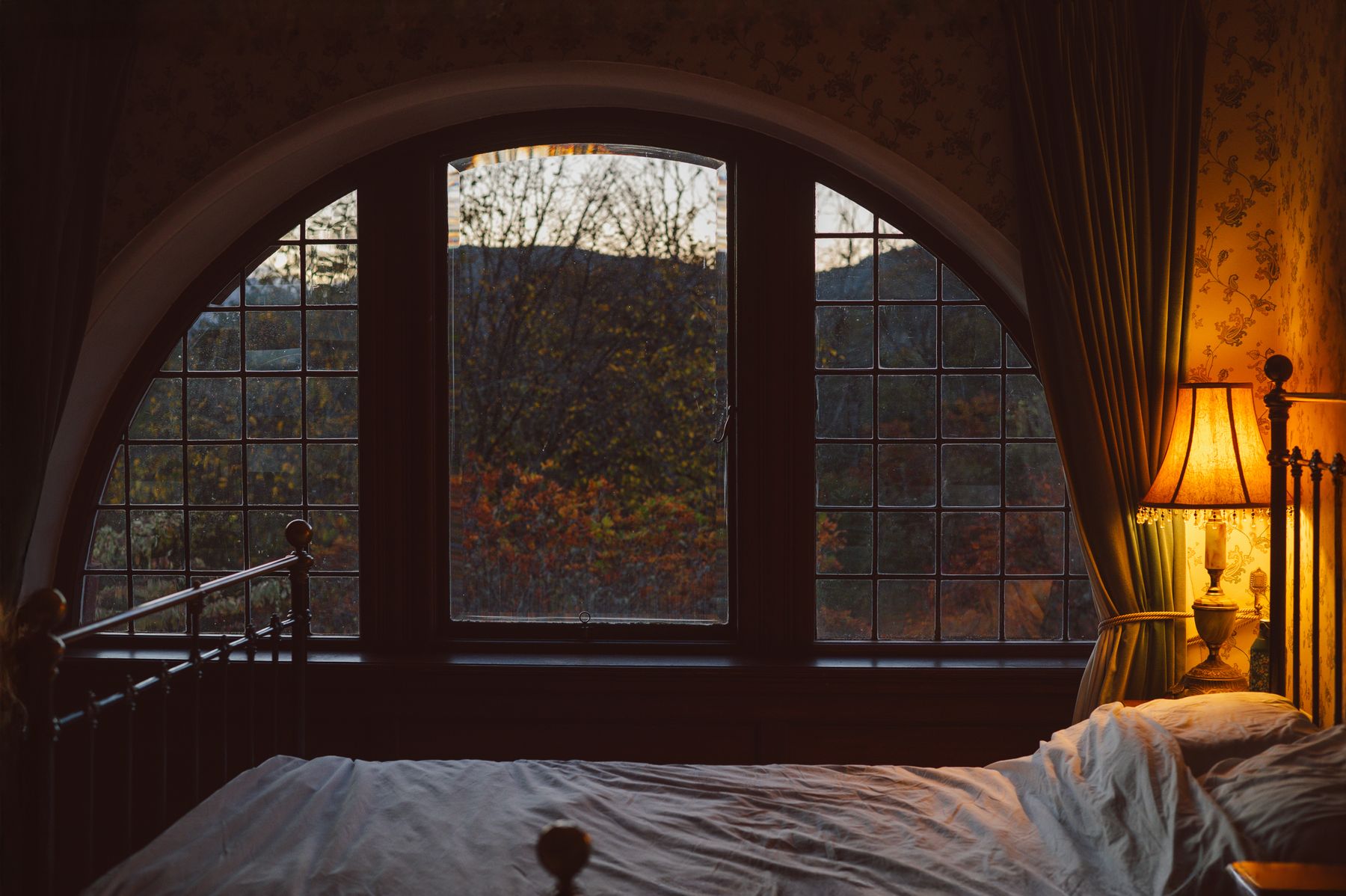
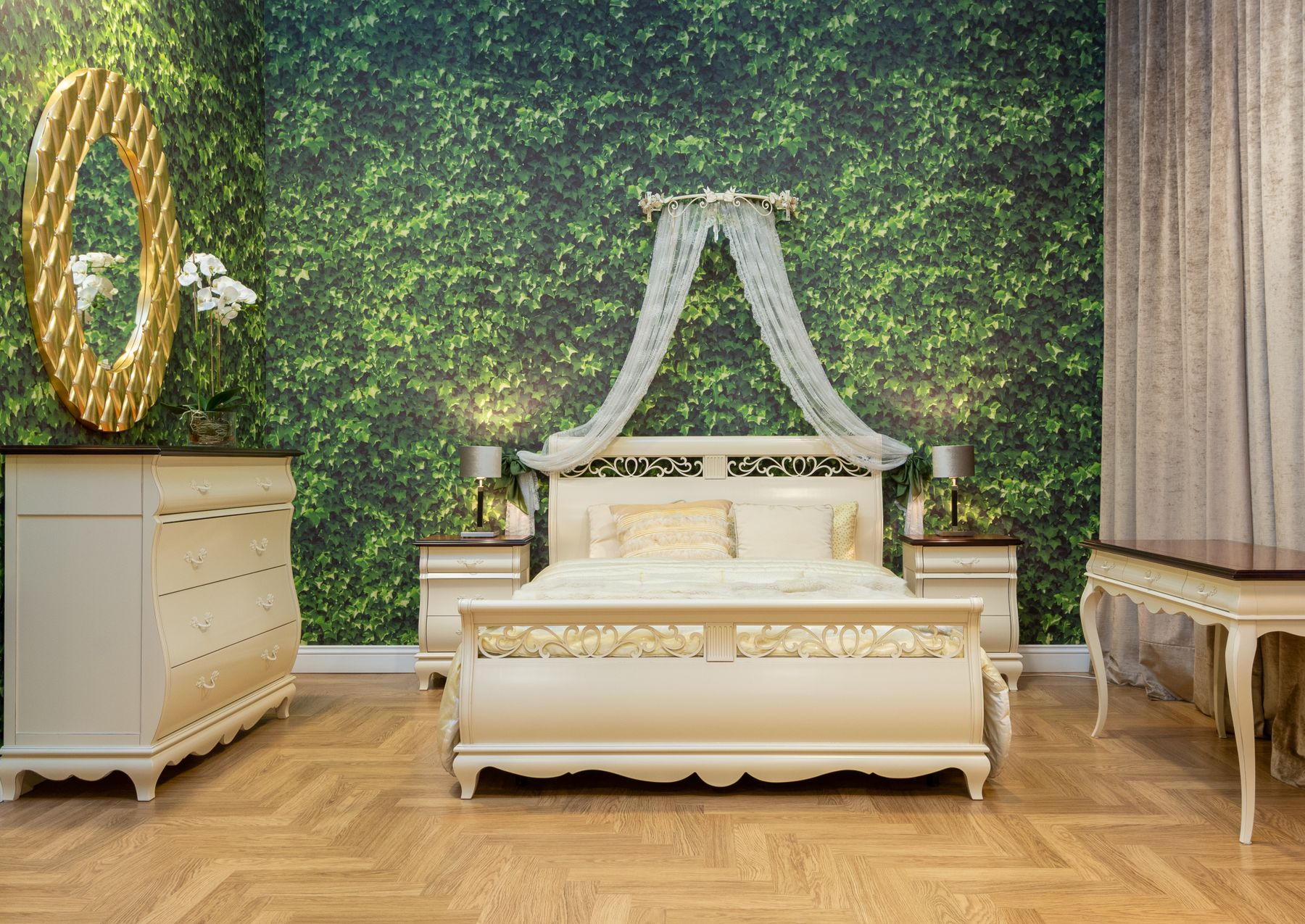
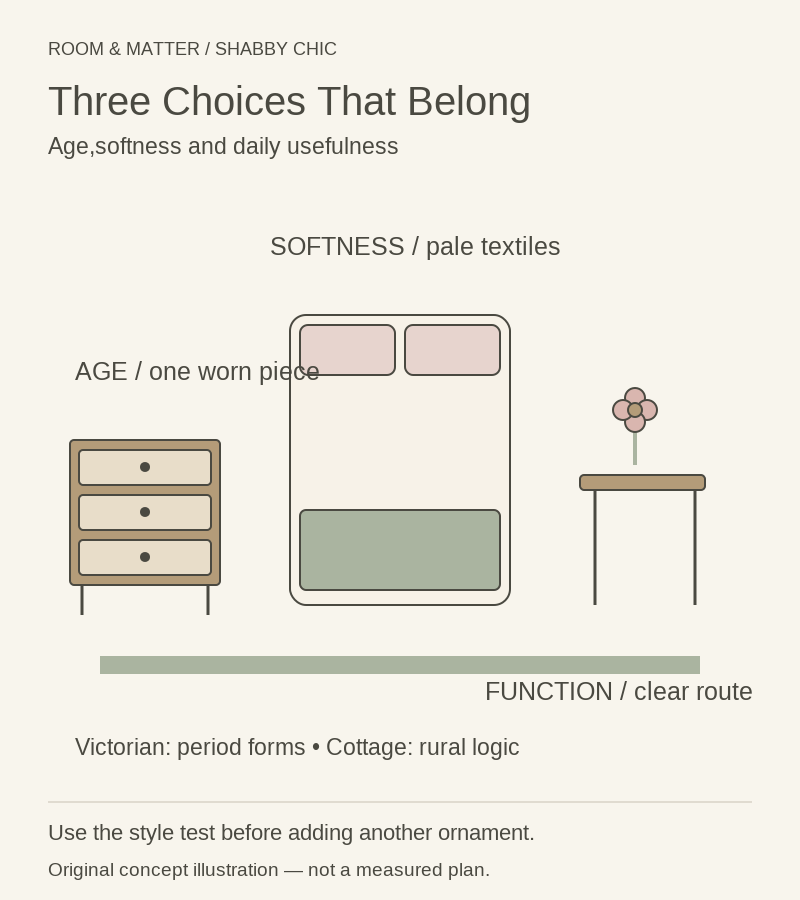
Test each major choice against three questions: does it carry believable age or handwork, does it soften the room, and does it support sleeping or dressing? A weathered dresser, washable floral quilt and shaded reading lamp pass for different reasons. A room filled only with reproduction signs and chipped paint does not. Vintage Bedroom Ideas prioritizes provenance across many periods; shabby chic narrows that broad field into a pale, romantic and intentionally relaxed grammar.
Victorian design is historically specific and often depends on richer wood, layered ornament and nineteenth-century forms. Shabby chic may borrow an iron bed, floral textile or carved mirror but edits them into a paler, more casual room. If historical accuracy, architecture and period furniture drive the scheme, use Victorian Bedroom Ideas; if softness and selected wear drive it, this page is the better destination.
Cottage rooms often grow from compact architecture, practical furniture and rural material; shabby chic can exist in any shell. Borrow a quilt, spindle form or worn floor, then maintain the pale romantic hierarchy. French Country usually carries stronger regional forms, stone, linen and provincial furniture. Do not combine every adjacent label in one keyword costume: decide which material and spatial logic actually leads the room.
Warm Whites Before Pastels
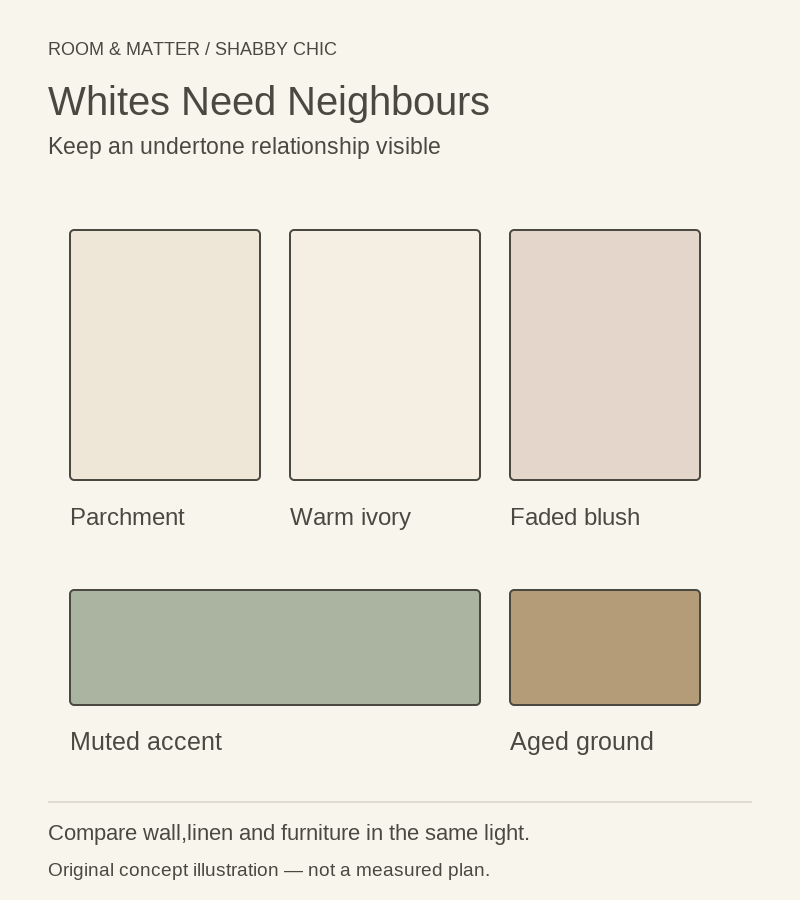
Chalk, cream, parchment and faded ivory are more forgiving than optical white. Select the lightest field from the room's orientation, floor and fixed trim, then add blush, powder blue, sage or lavender as secondary notes. North light can push cool pastels gray; strong sun can bleach them. Sample broad areas behind the bed and beside curtains at morning, afternoon and night before matching painted furniture to the walls.

One Aged Piece, Carefully Preserved
Choose the bed, dresser, wardrobe or bedside chest as the main aged element. Keep natural wear where it reveals construction and use; repair loose joints, splinters, odors, mold and failing finishes before bringing the piece into a bedroom. New pieces can remain quiet rather than receiving decorative damage. A single convincing patina creates more character than a matching suite with identical sanded corners.
If refinishing is appropriate, preserve sound original surfaces and avoid sanding antiques whose value depends on finish. On ordinary furniture, use compatible paint, prepare the substrate and place wear where hands and movement would naturally reach. Seal only when the product system requires it and ventilate fully before sleep. Random dark patches, heavy crackle and exposed fiberboard read as costume rather than age.

Pick a Bed With a Light Visual Frame
Painted iron, spindle wood, a simple carved frame or a restrained canopy can establish the style without excessive mass. Check mattress support, squeaks, rail height and safe spacing before appearance. In a small room, open metalwork exposes more wall and floor than a deep upholstered bed; in a larger room, a pale carved bed can carry the main decorative weight. The bed should remain comfortable to sit against and easy to make.
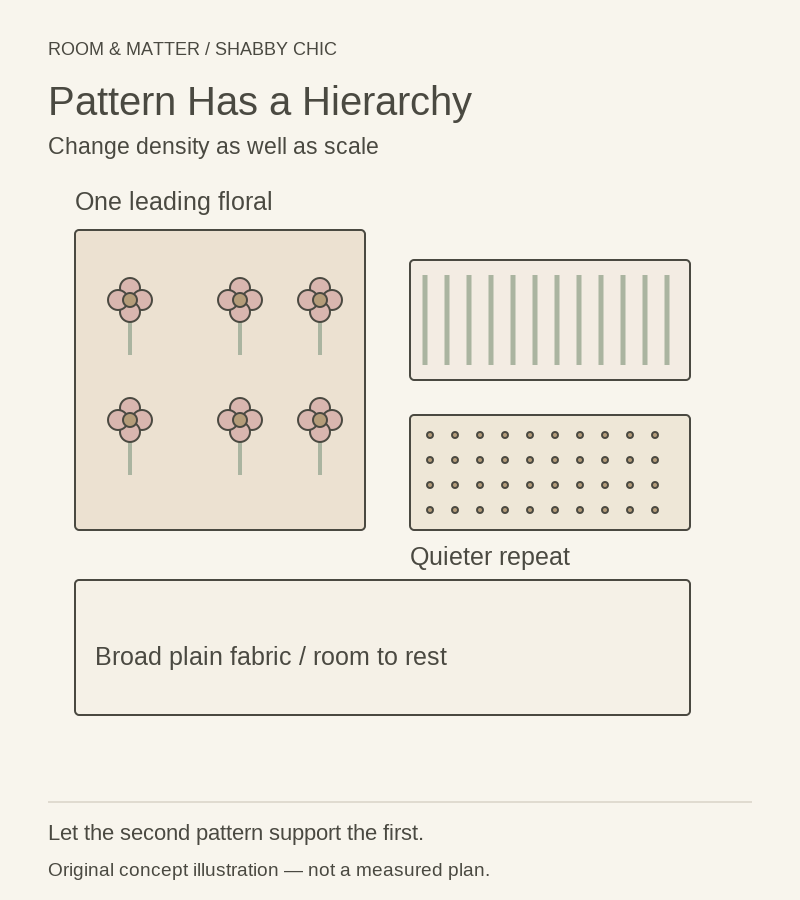
A Leading Floral With Quieter Companions
Decide whether wallpaper, quilt, curtains or an upholstered chair will carry the clearest flower pattern. Repeat one or two colors elsewhere, but do not duplicate the same print across every surface. Small repeats suit close viewing and modest rooms; large botanical forms need more uninterrupted wall or fabric. Order a full repeat, inspect seams and test it behind pillows before committing.
Pair the leading floral with a narrow stripe, faded check, tiny dot or woven texture at a lower contrast. Change scale and density while repeating one undertone. Toile can work as the narrative pattern, but it still needs plain areas around faces, lamps and storage. Maximalist Bedroom Ideas supports deliberate abundance; shabby chic usually benefits from more visible rest.
Bedding for Sleep, Not Display
Choose the sheets and seasonal warmth you actually sleep under before adding the shabby chic layer: one washable quilt or textured coverlet. Ruffles, lace and embroidery work best where they do not irritate skin, trap dust or complicate weekly laundry. Limit cushions to what can be stored cleanly at night. Linen, cotton percale and matelassé provide softness through weave rather than volume, so the bed remains inviting rather than ceremonial.


Lace, Daylight and a Separate Privacy Layer
Use lace at a café curtain, pillow edge, small table runner or inner canopy panel where its pattern can be read. Keep it away from floor drag, heater output and areas that require frequent wiping. Antique lace may need conservation rather than daily use; machine-washable cotton versions are better for active rooms. Pair one delicate textile with plain linen or wood so the contrast remains credible.
Separate the jobs: a sheer or lace inner layer softens daylight, while a lined curtain, blind or shutter handles privacy, heat and blackout. Keep fabric clear of radiators and damp glazing, and provide a holdback that does not crush a delicate edge. Faded floral curtains may suit the room, but they should not repeat a strong wallpaper at equal intensity. Test the closed room from outside after dark.
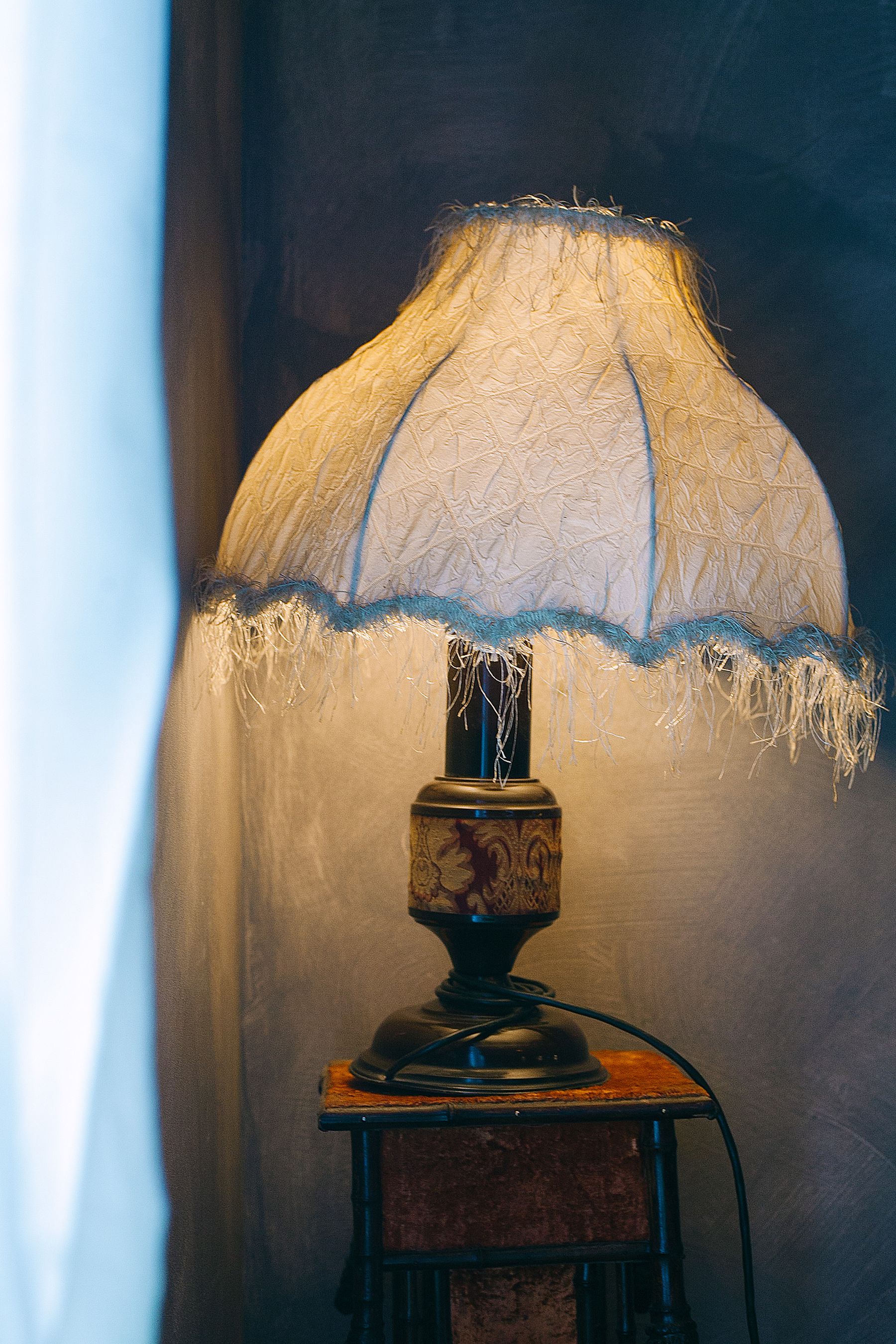
Warm the Bedside With Low Light
Combine gentle ambient light with independent reading lamps and a low route light. Fabric shades can soften glare, but check heat rating, dust and fire safety; old lamps should be rewired by a qualified professional rather than used for atmosphere alone. Warm-neutral lamps flatter cream and aged paint, while dimming lets the room shift toward sleep. A decorative chandelier is optional and should never be the only useful source.
Useful, Mismatched Bedside Pieces
Two sleepers need equivalent reach and storage, not identical tables. A painted cabinet can pair with a natural wood chest when their top heights align and one color or hardware note connects them. Give cords, medication, glasses and books defined homes. Avoid tiny decorative tables that cannot support real routines; shabby chic looks relaxed because useful pieces have accumulated, not because function has been ignored.


A Dresser That Remains Repairable
Older drawers need clean interiors, sound runners, anchored tall cases and handles that suit the user's grip. Retain original hardware when safe, but do not sacrifice function to matching patina. Wax, paint and varnish require different cleaning and repair methods, so record the finish before treatment. A washable liner can protect textiles without hiding damp or pests that need proper remediation.
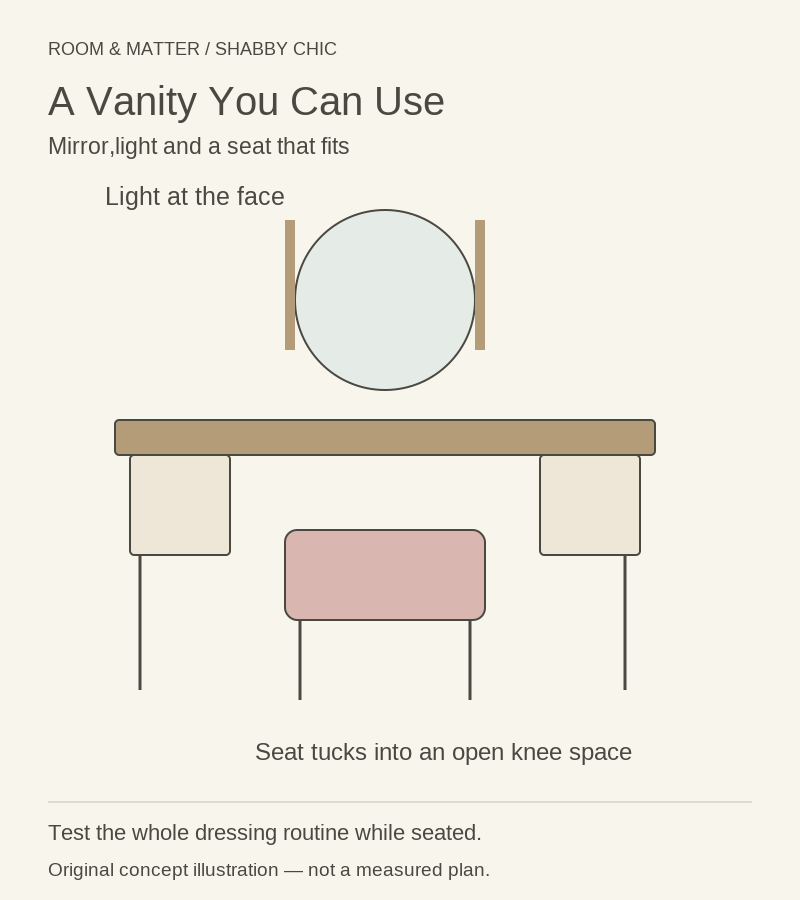
Turn the Vanity Into a Real Dressing Zone
Place the vanity where side light reaches the face, add a supportive seat that tucks away and give daily items shallow, cleanable storage. Secure heavy mirrors and keep hot tools away from fabric. A skirted table can conceal clutter but may impede knees or gather dust; exposed legs are often easier in small rooms. The styling should follow the routine rather than create an unused still life.
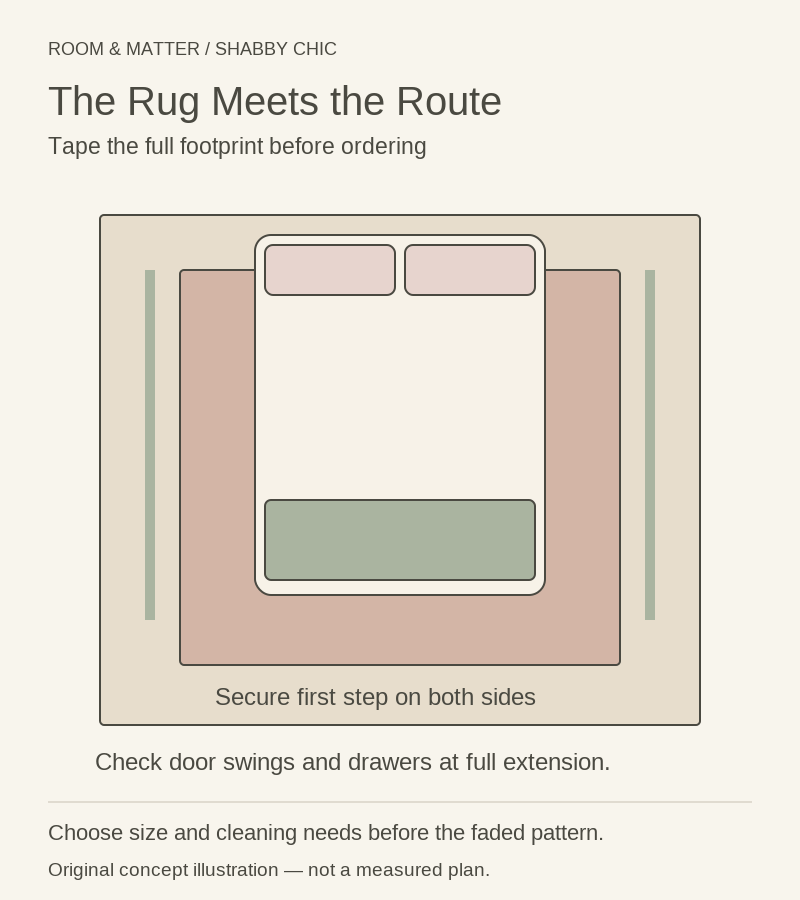
Ground Pale Furniture With a Worn-Look Rug
Choose size and fiber before pattern. The rug should give both sleepers a secure first step, clear door swings and accept the household's vacuum and cleaning routine. Faded medallions and florals connect aged wood with pastel textiles, but high piles can catch wheels or feet. Use a compatible underlay and avoid deliberately worn holes that weaken the route.
One Comfortable Reading Chair
Choose a chair for seat height, back support and available floor area before floral upholstery. Place it near light but outside the primary route, and provide a basket or hook elsewhere so clothing does not permanently occupy it. Reupholster only when the frame merits the work and select fabric rated for real use. In a tight room, a stable bench or stool may perform better.
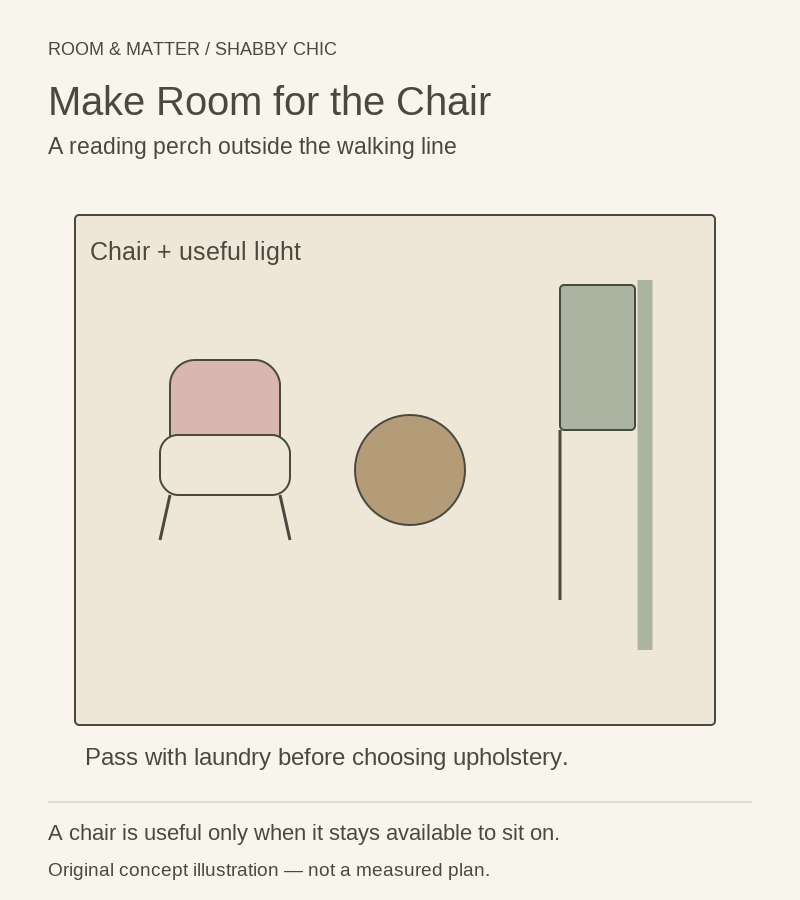

Display Collections With Negative Space
Group photographs, ceramics, books or pressed flowers by story rather than color, then leave clear space around the collection. Keep heavy glass away from the head of the bed and protect light-sensitive textiles and paper. Open display increases dusting, so reserve it for items worth maintaining. A quiet wall can be more characteristic than another cluster of decorative signs.
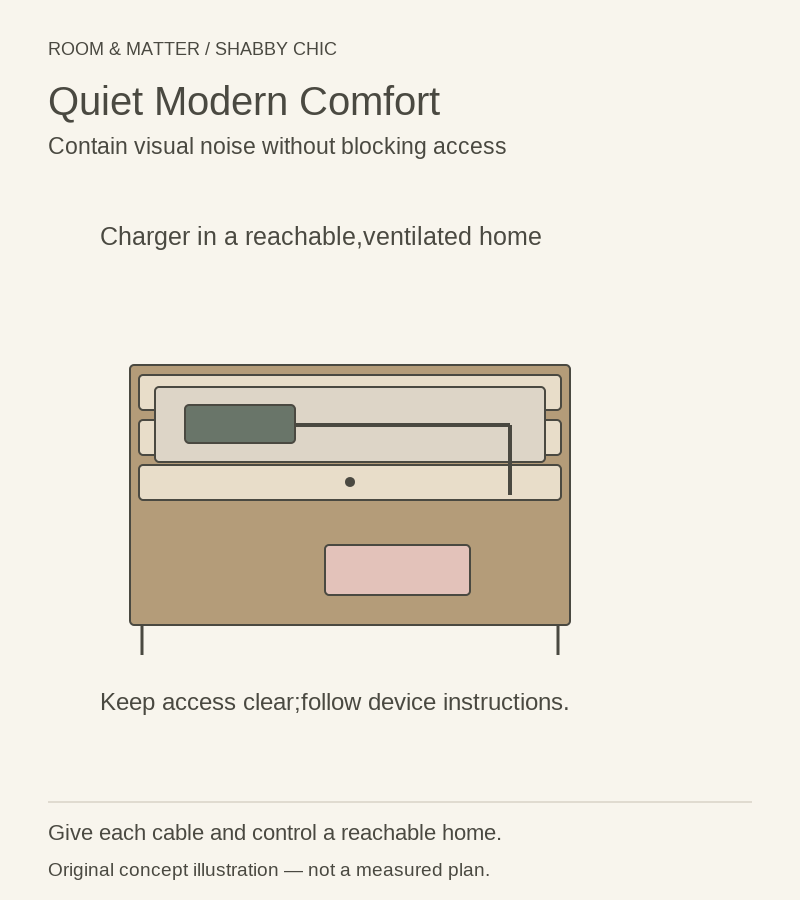
Modern Necessities Kept Visually Quiet
Use safe outlets, efficient lamps, a supportive mattress and current window controls without disguising devices as antiques. Route chargers into a ventilated drawer or cable channel, choose a quiet fan and give remotes one home. Traditional Bedroom Ideas offers more formal order; shabby chic can remain looser while still containing modern visual noise.
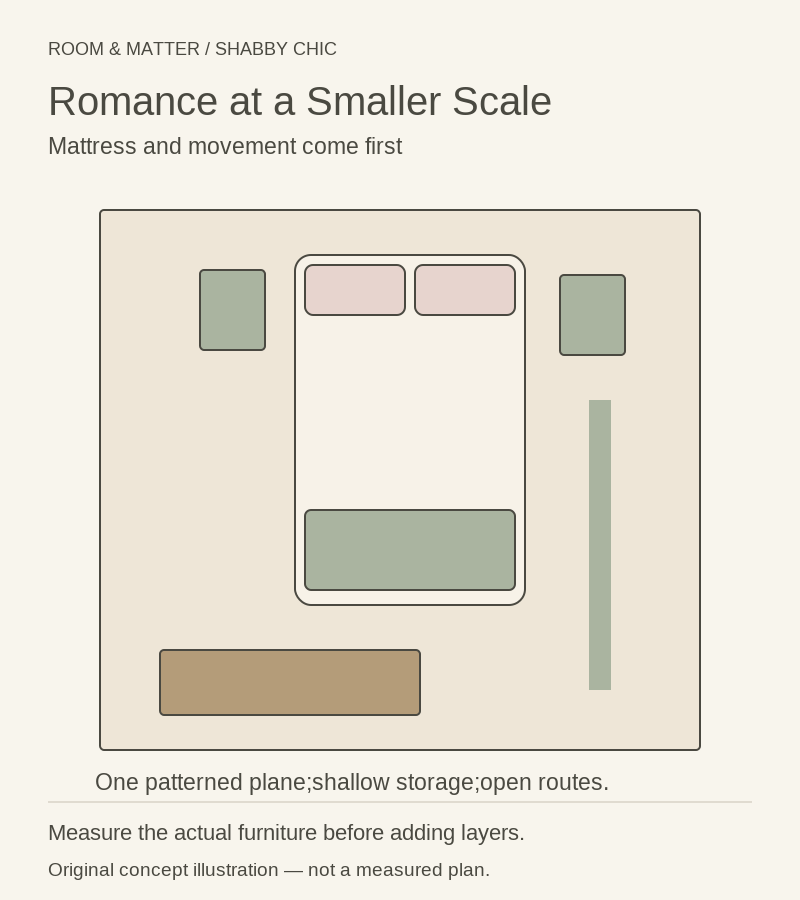
An Open Iron Frame for a Tight Room
Choose mattress and route first, then use an open iron bed, shallow bedside shelf and one patterned plane. Pale color can improve continuity but cannot fix oversized furniture. Lift curtains clear of radiators and floors, use wall lights where surfaces are tight and put seasonal textiles in closed storage. Apply the circulation tests in Small Apartment Ideas before adding decorative layers.
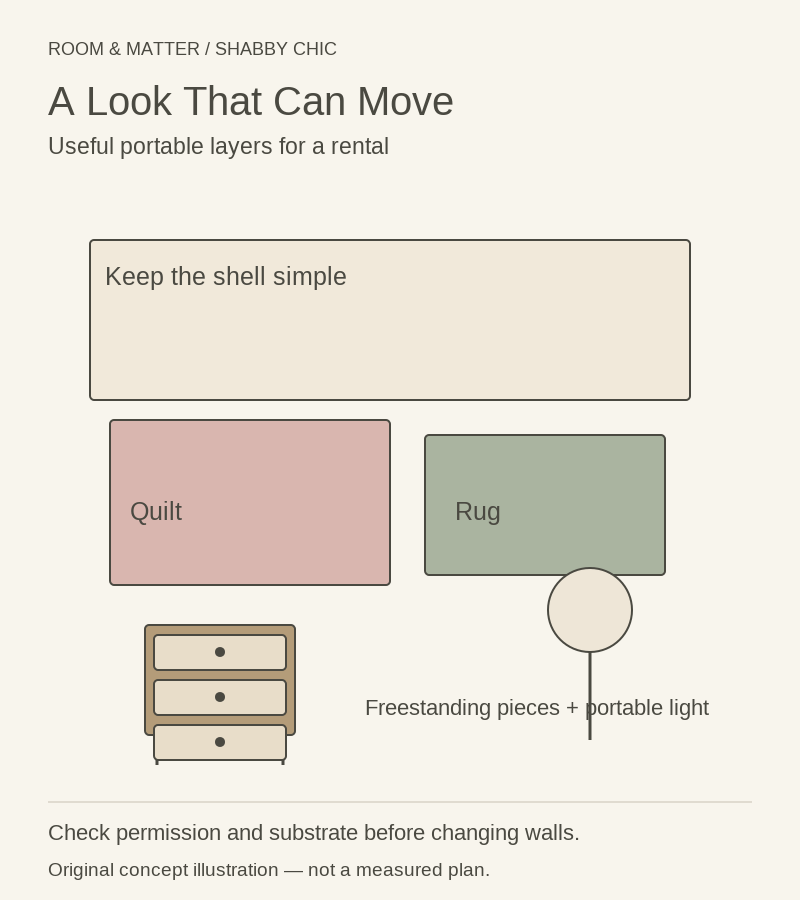
A Quilt, Rug and Chest You Can Take With You
Start with bedding, permitted curtains, a rug, portable lamps and one secondhand bedside piece. Before painting or fitting removable wallpaper, check what the rental agreement permits and test adhesion on the actual wall finish; removable products can still stain or lift weak finishes. Photograph starting conditions and retain landlord fixtures. Choose pieces that can move to a future room so the look does not depend on disposable props or false architectural panels.

Shared Romance With Independent Bedside Choices
Use a shared wall color, rug or curtain as the common romantic layer, then let each sleeper choose bedding weight, bedside storage and reading light. Matching beds are optional; equal comfort and access are not. Discuss fragrance, dust-sensitive textiles and how much floral pattern feels restful to both people. Symmetry should not override different body needs or schedules.
Pack the Workday Into a Closing Drawer
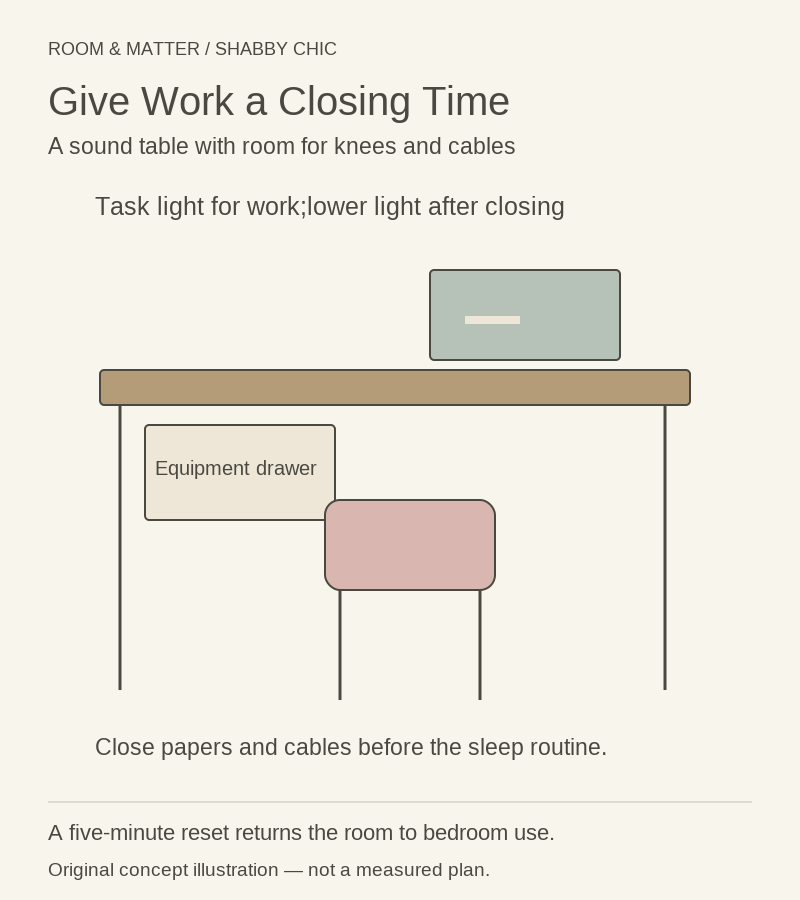
A skirted desk may look romantic but can restrict knees, airflow and cable access. Prefer a sound table, supportive chair and closed box or shallow drawer for equipment. Position the screen so it is not the first thing seen from the pillow, use a dedicated task lamp, then close equipment and select the lower bedroom light after work. One floral pinboard or painted chair can connect the zone without compromising ergonomics.
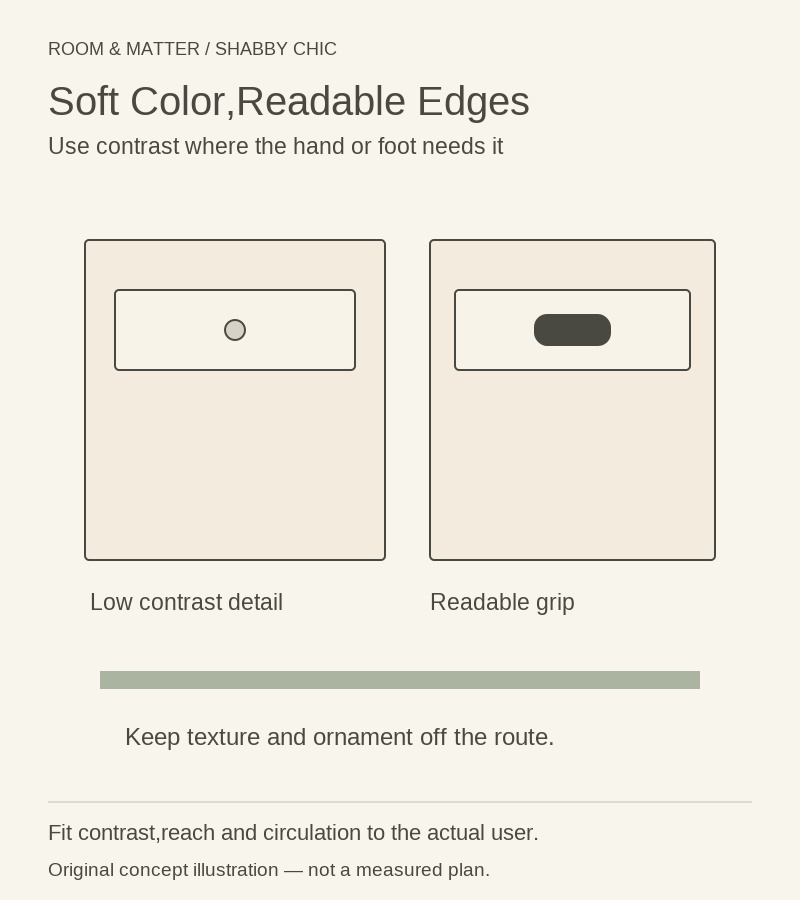
Readable Handles in a Pale Room
Contrast bed against floor, handles against pale furniture and switches against walls without introducing busy stripes in the walking path. Set mattress height, transfer space and drawer pulls for the actual user; secure rugs and avoid trailing lace, low baskets or projecting furniture. Romantic detail should live above or outside movement zones. Antique handles can be replaced or adapted when grip matters more than originality.
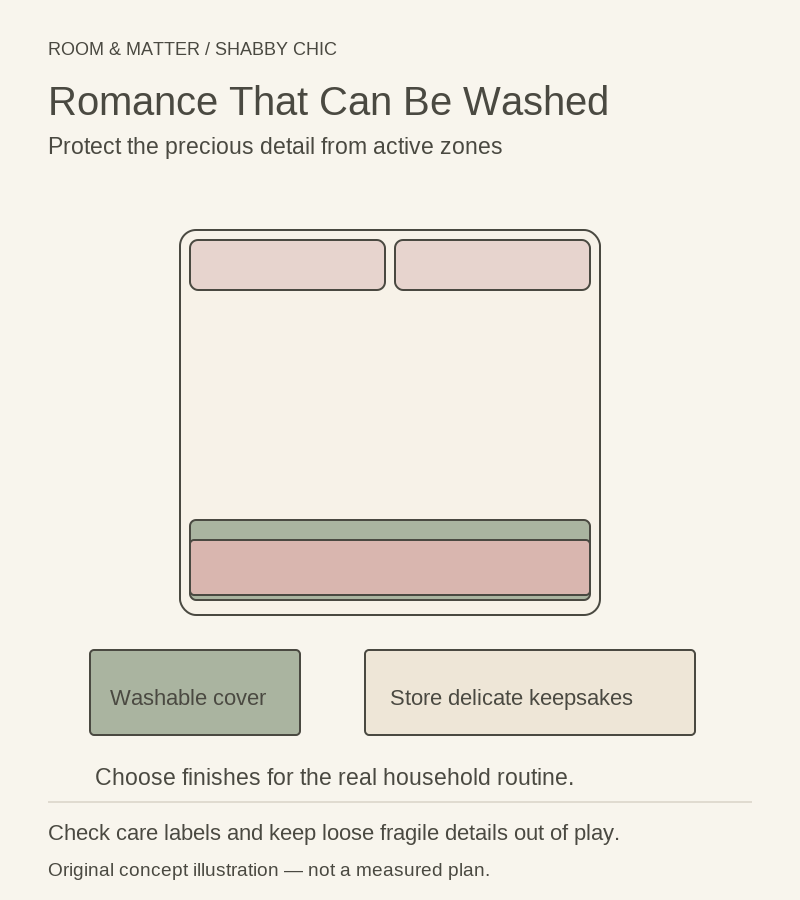
Washable Romance for Children and Pets
Use machine-washable quilts, secure tall furniture, cordless window treatments and replaceable covers where spills, claws or play are expected. Avoid peeling paint, loose beads, unstable antique mirrors and mystery finishes on chewable surfaces. Keep treasured lace or porcelain out of active zones. Boho Bedroom Ideas offers a more global, layered alternative; shabby chic should retain its pale aged focus.
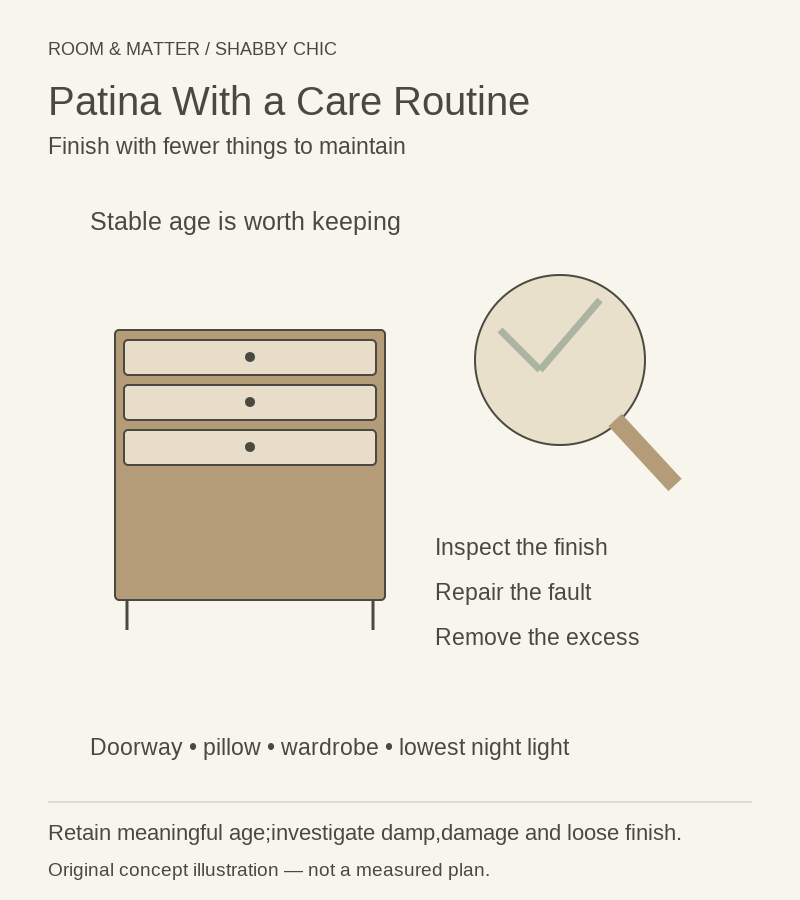
Maintain the Patina, Then Make the Final Edit
Learn which surfaces are waxed, painted, varnished, plated or untreated before cleaning. Dust carved and textile details with methods appropriate to their condition, launder bedding on a realistic cycle and ventilate wardrobes. Investigate damp, mold, pests, loose paint and old wiring rather than calling them character. Keep finish notes and repair materials so small chips can be stabilized instead of repeatedly over-distressed.
Review the room from doorway, pillow and wardrobe in daylight and the lowest night scene. Remove duplicate florals, furniture distressed only for effect, cushions without storage and collections that turn cleaning into avoidance. Preserve the one aged object, textile or handmade detail that gives the room identity. The result is finished when sleep, dressing and circulation work and another decorative layer would contribute less than the calm already present.