Choose the Grey Undertone First
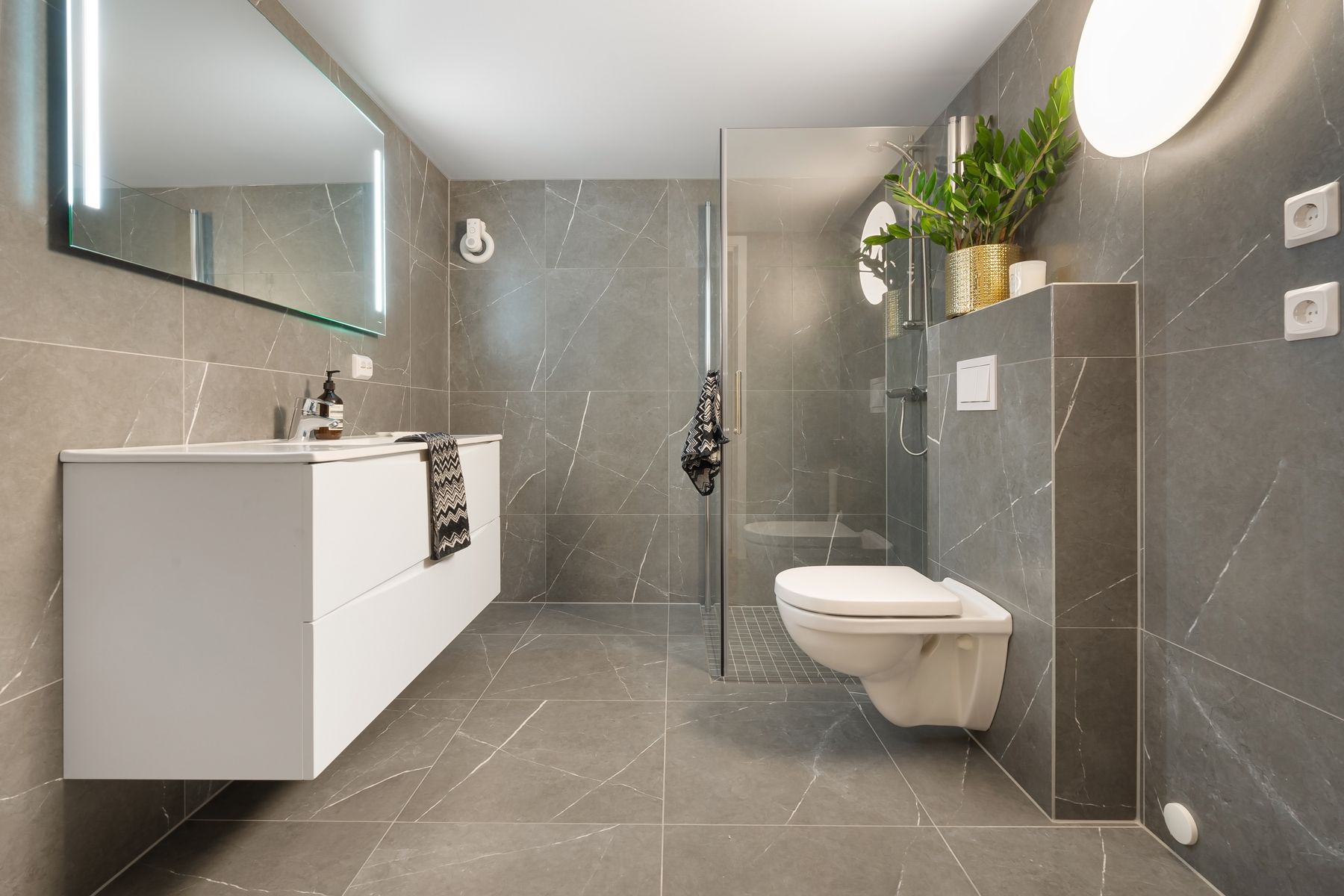
Cool grey can lean blue, warm grey can move toward beige and greige sits between the two. These differences become obvious beside white ceramic, wood and artificial light. Decide the undertone before buying tile or paint so the vanity, floor and grout do not pull in competing directions.

Use Grey Tile to Define the Shower
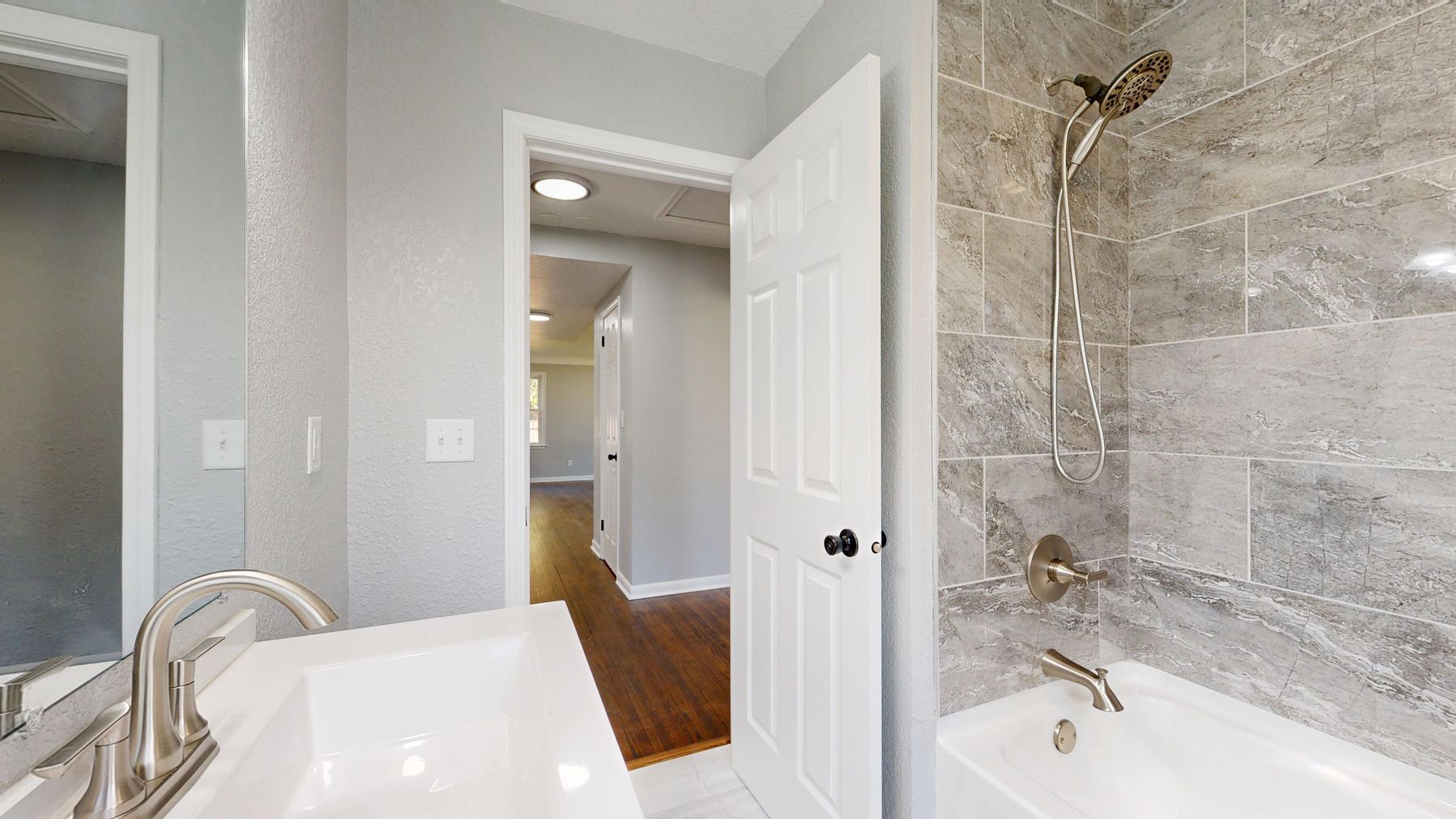
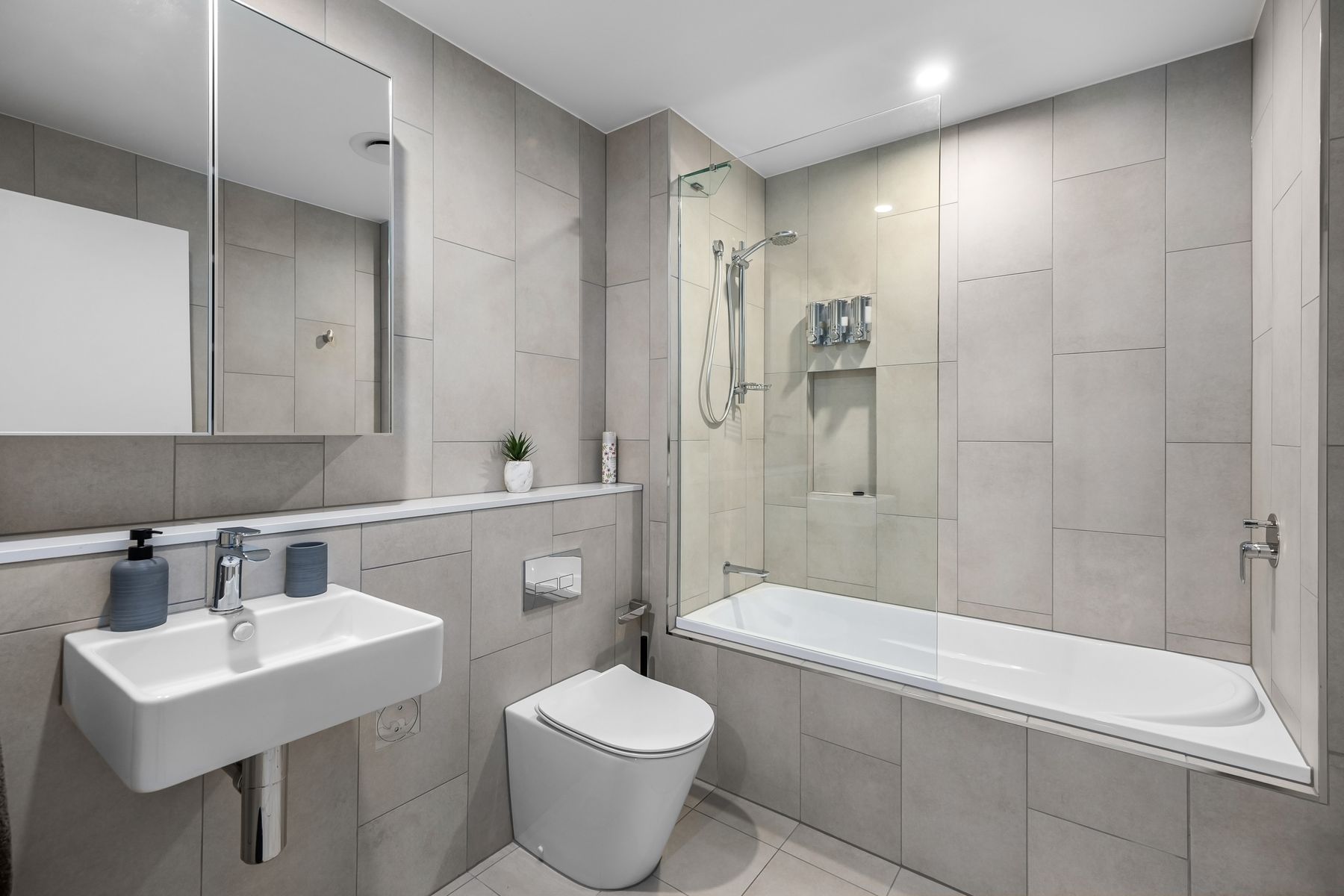
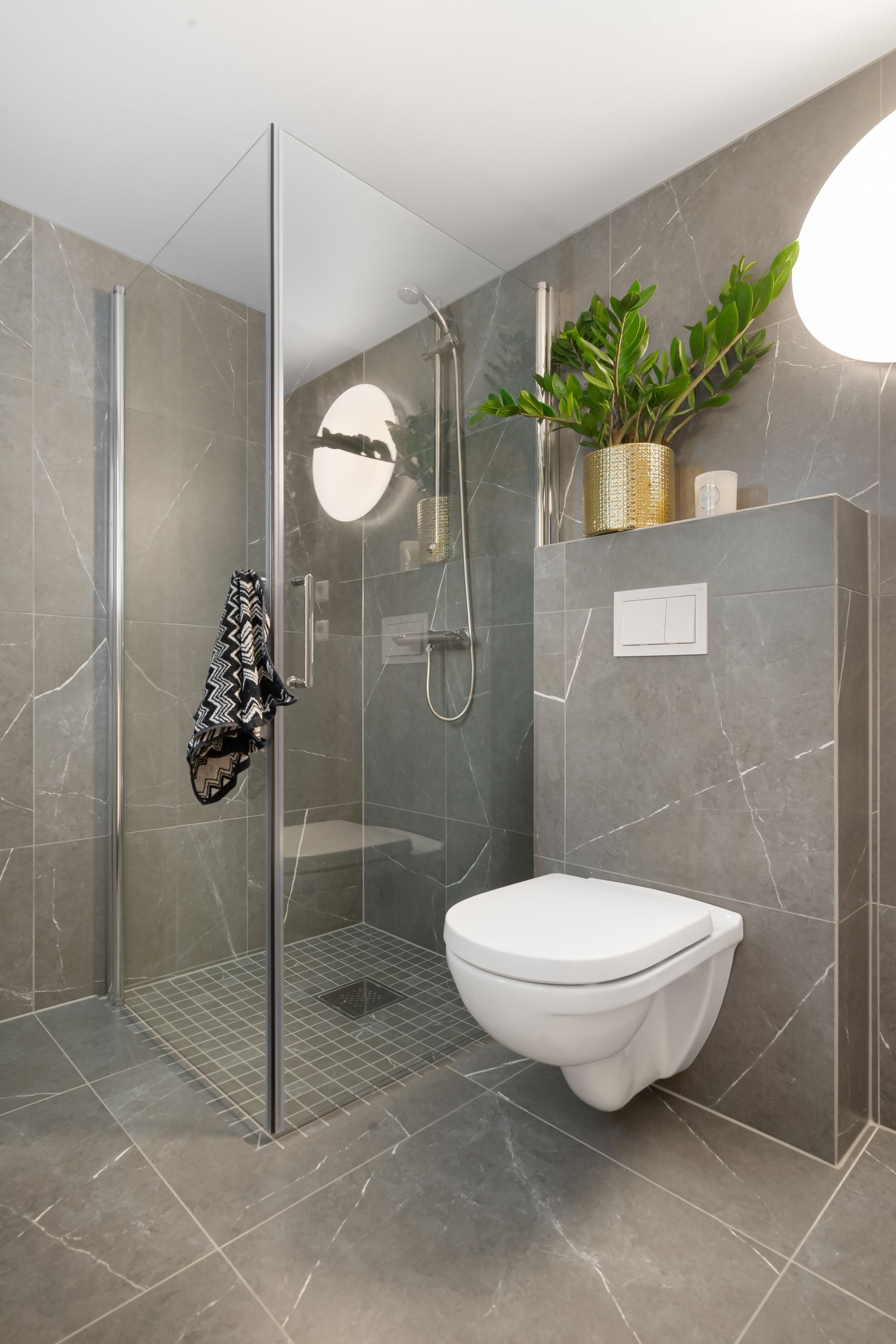
A grey shower wall can provide enough visual weight to anchor the wet zone while leaving the rest of the bathroom lighter. Keep the tile format consistent and let glass preserve depth. If the grey is dark, make sure controls and niche edges remain visible.
Bring Grey Into the Vanity Instead of the Walls
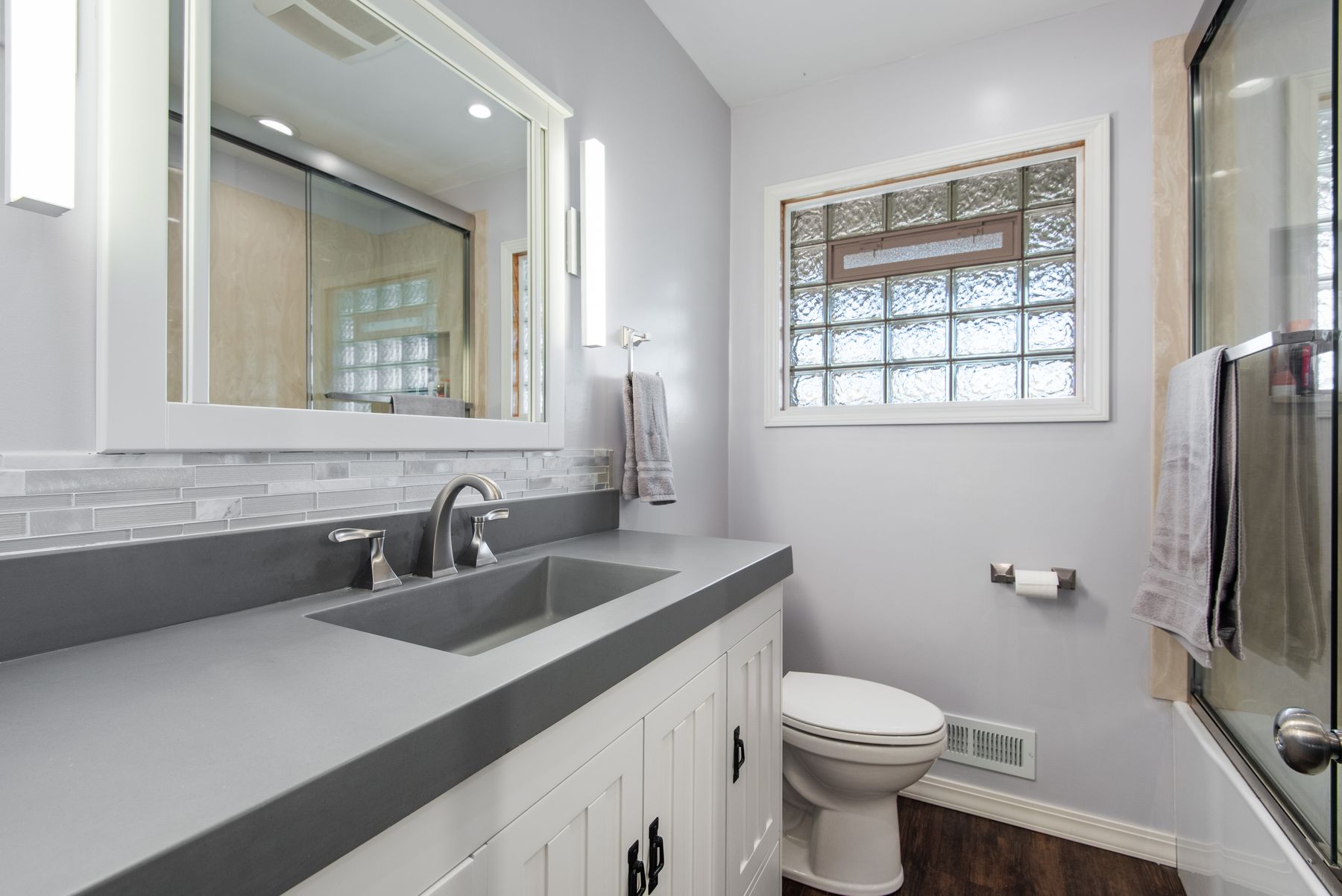
A grey vanity can carry the neutral palette while white or pale walls keep the room brighter. This is useful in compact bathrooms or spaces with limited natural light. Cabinetry also gives grey enough scale to feel intentional without committing every permanent surface to the same tone.
Layer Several Grey Values, Not One Exact Match
A successful grey bathroom usually contains light, mid and deeper values rather than one repeated shade. Variation between tile, grout, cabinetry and metal gives the eye depth while the room still reads as neutral. Exact matching can make separate materials collapse into one flat surface.
Use White Ceramic as the Clean Break
White baths, basins and toilets create a crisp functional layer against grey tile. This contrast prevents a neutral room from becoming visually muddy and makes fixtures easier to read. Softer off-white works with warm grey, while cleaner white sharpens cooler schemes.
Let Tile Texture Do the Work
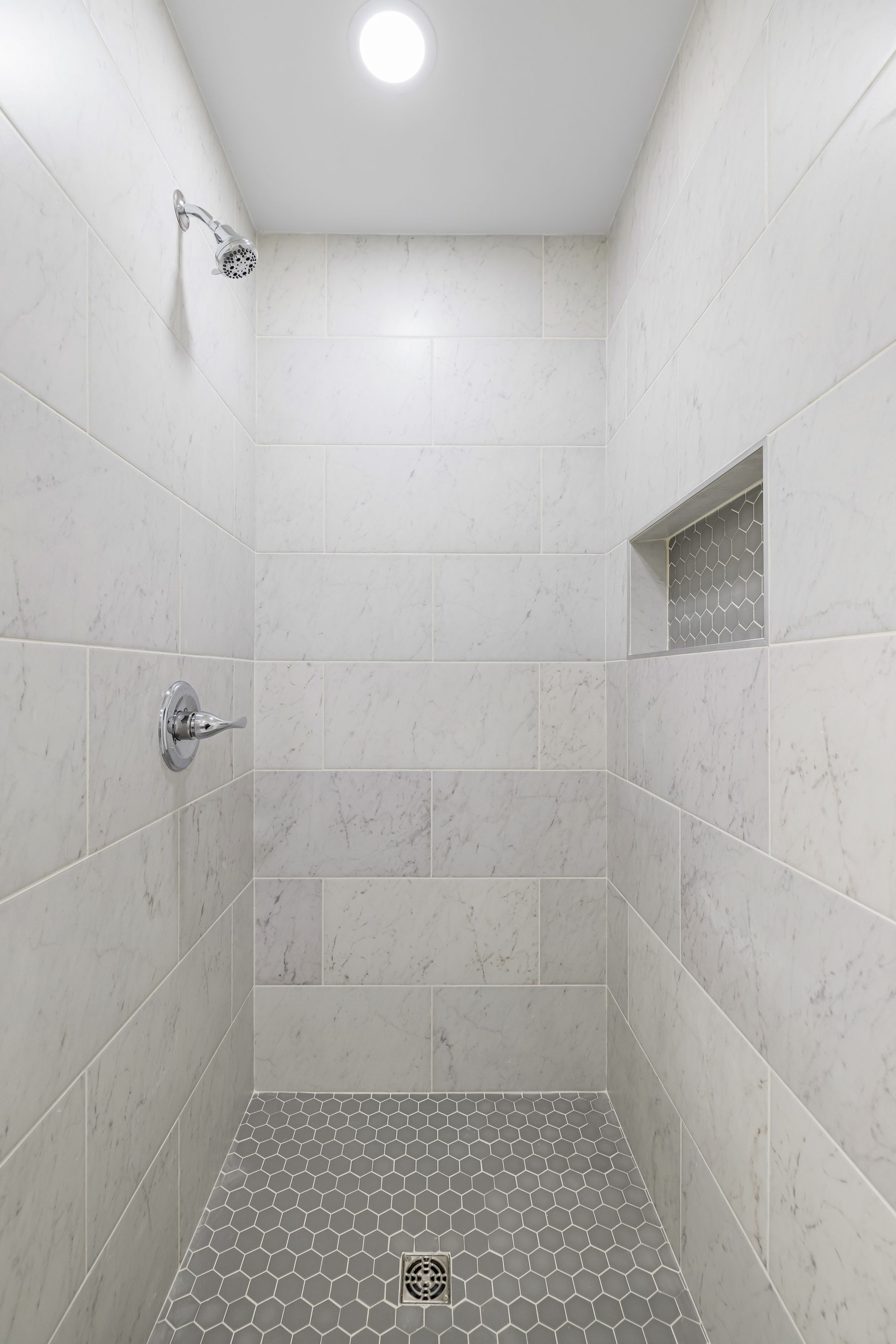
Grey is especially effective when tile relief, grout lines or subtle surface variation create interest. A simple shower can feel rich through texture alone without adding pattern or extra color. Keep grout and hardware controlled so the tactile quality remains the main story.
Use Concrete-Look Grey for a More Architectural Room
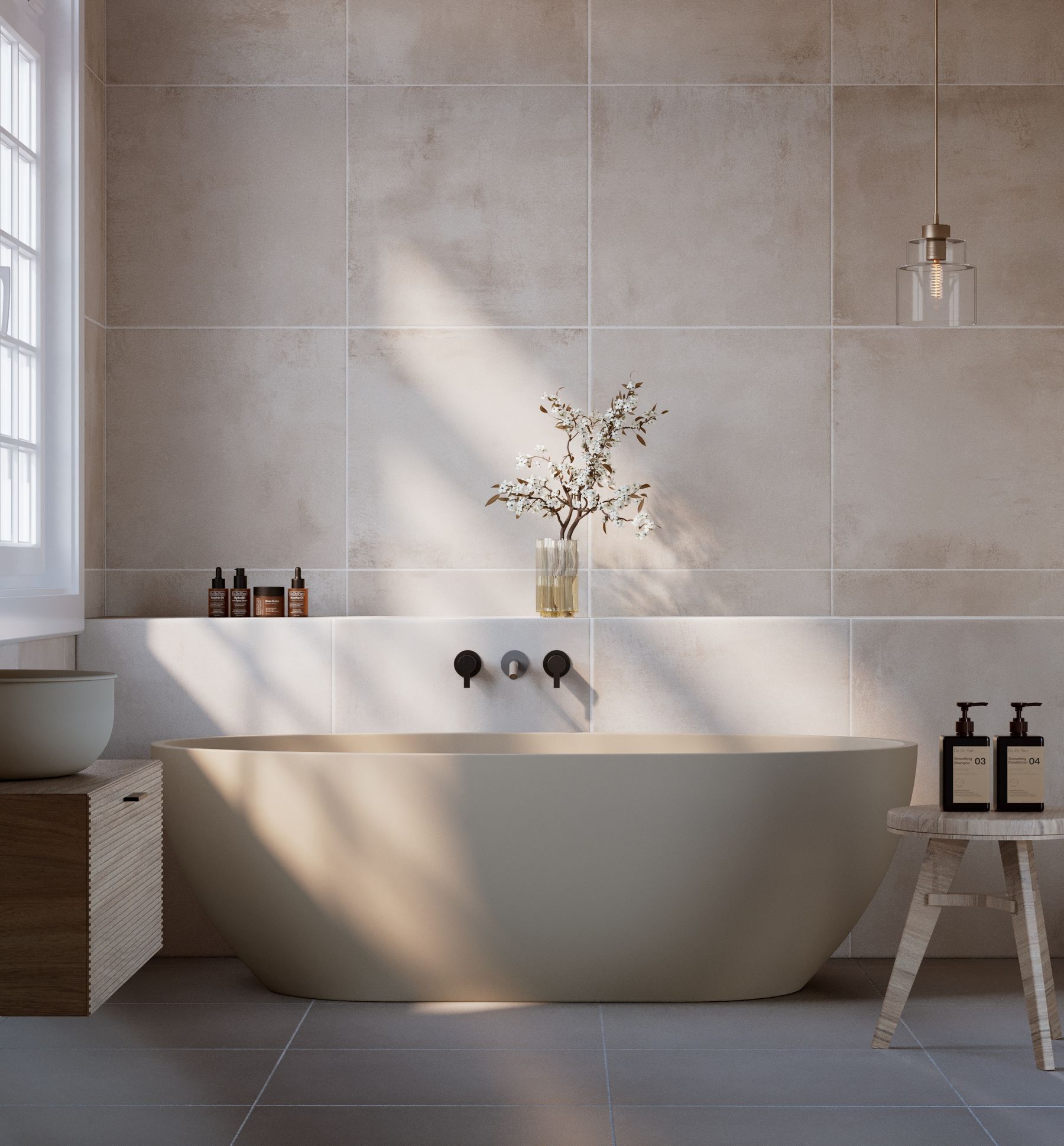
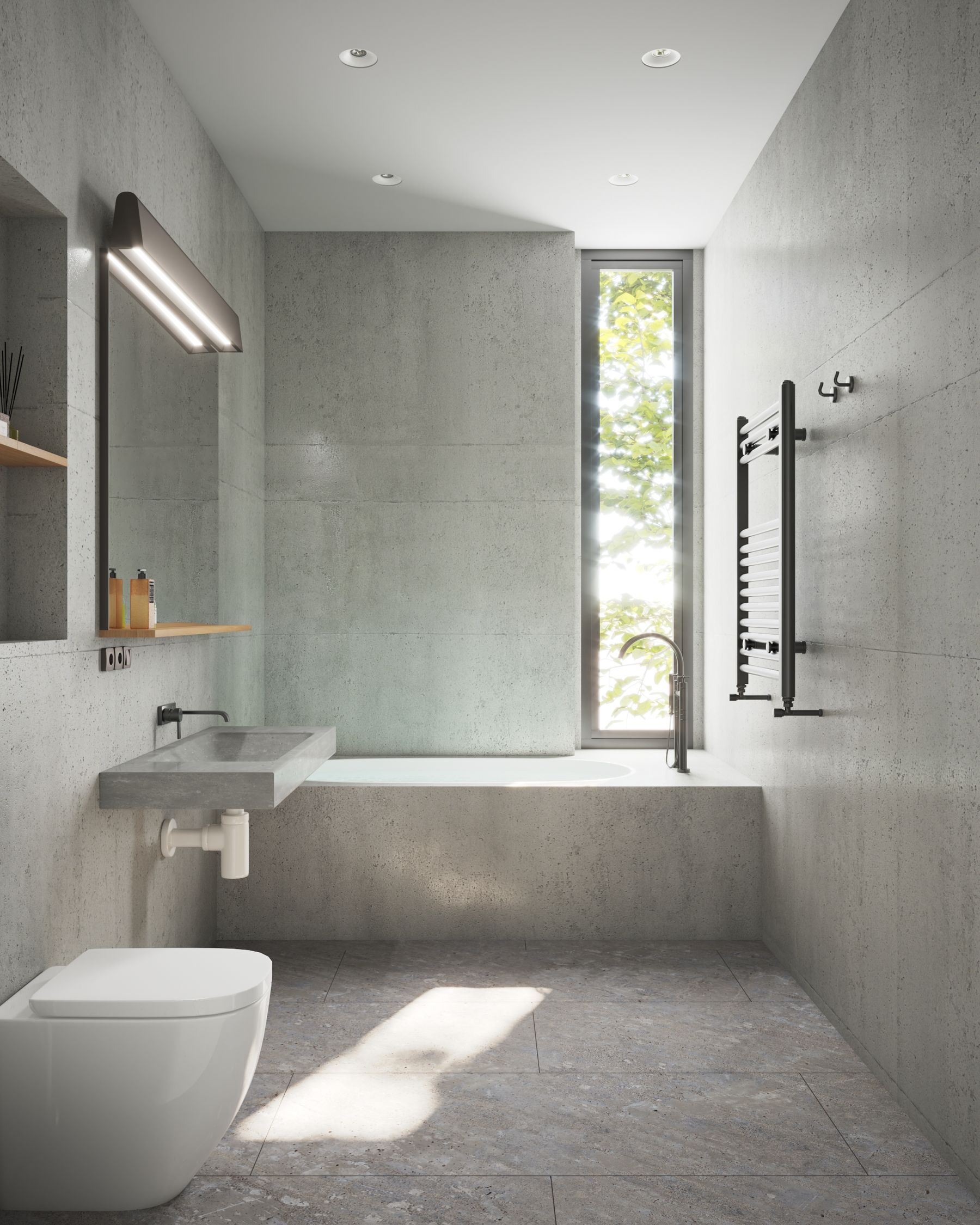
Concrete-look surfaces create a more monolithic grey bathroom and work well with minimal or modern layouts. Their success depends on lighting and finish variation; completely uniform matte grey can look flat. Warm wood, a pale bath or reflected daylight can keep the result from feeling severe.
Use Grey Marble for Movement
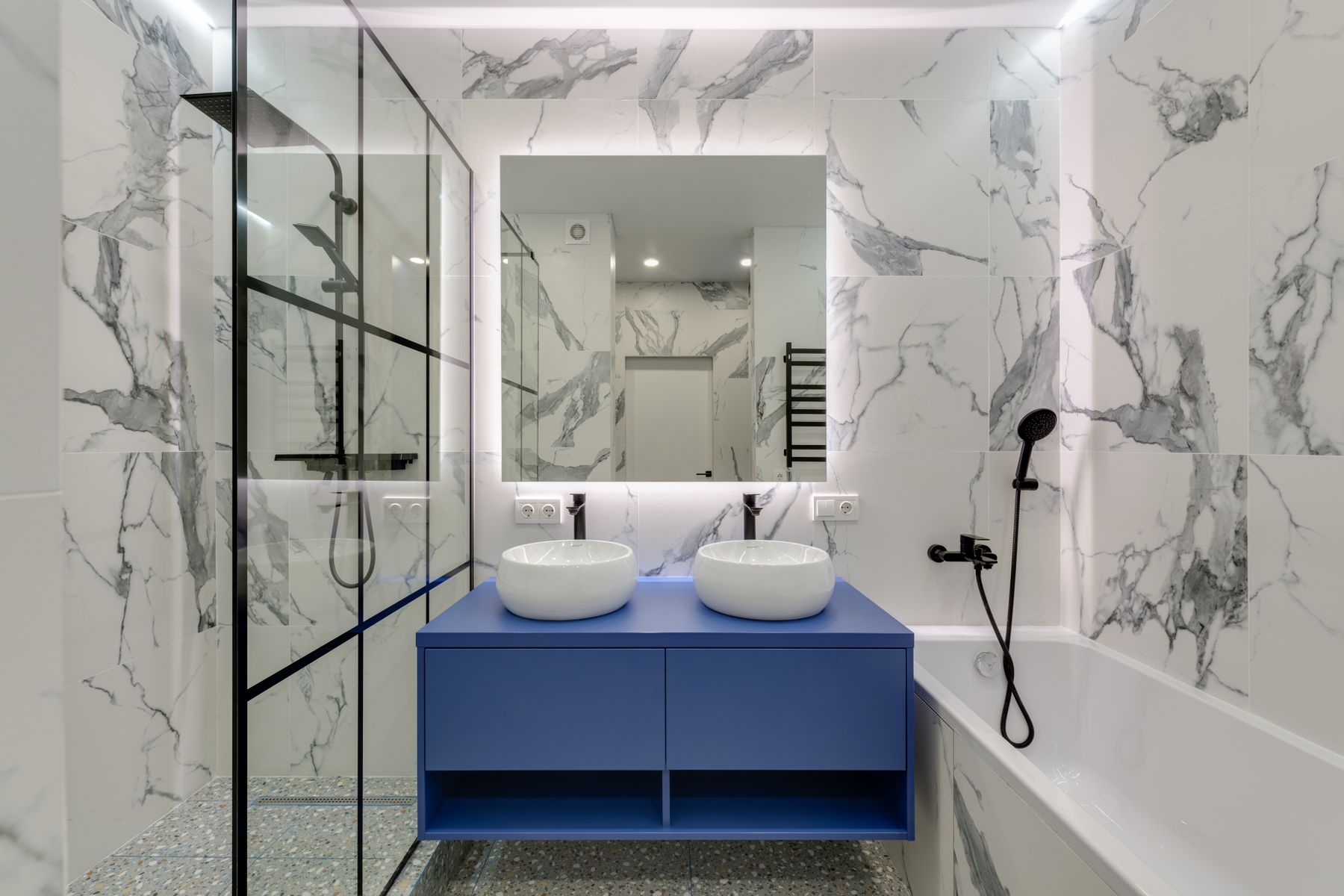
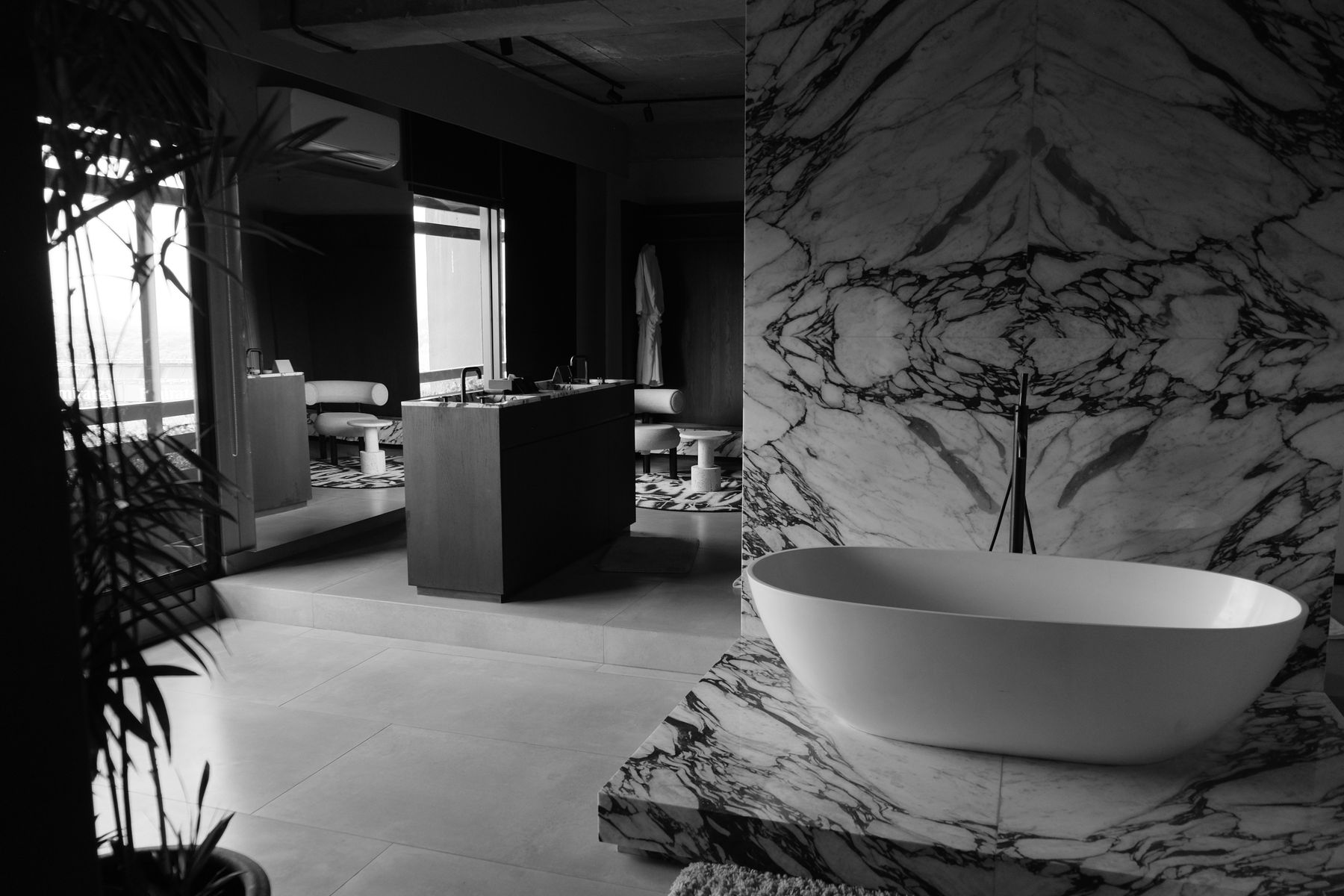
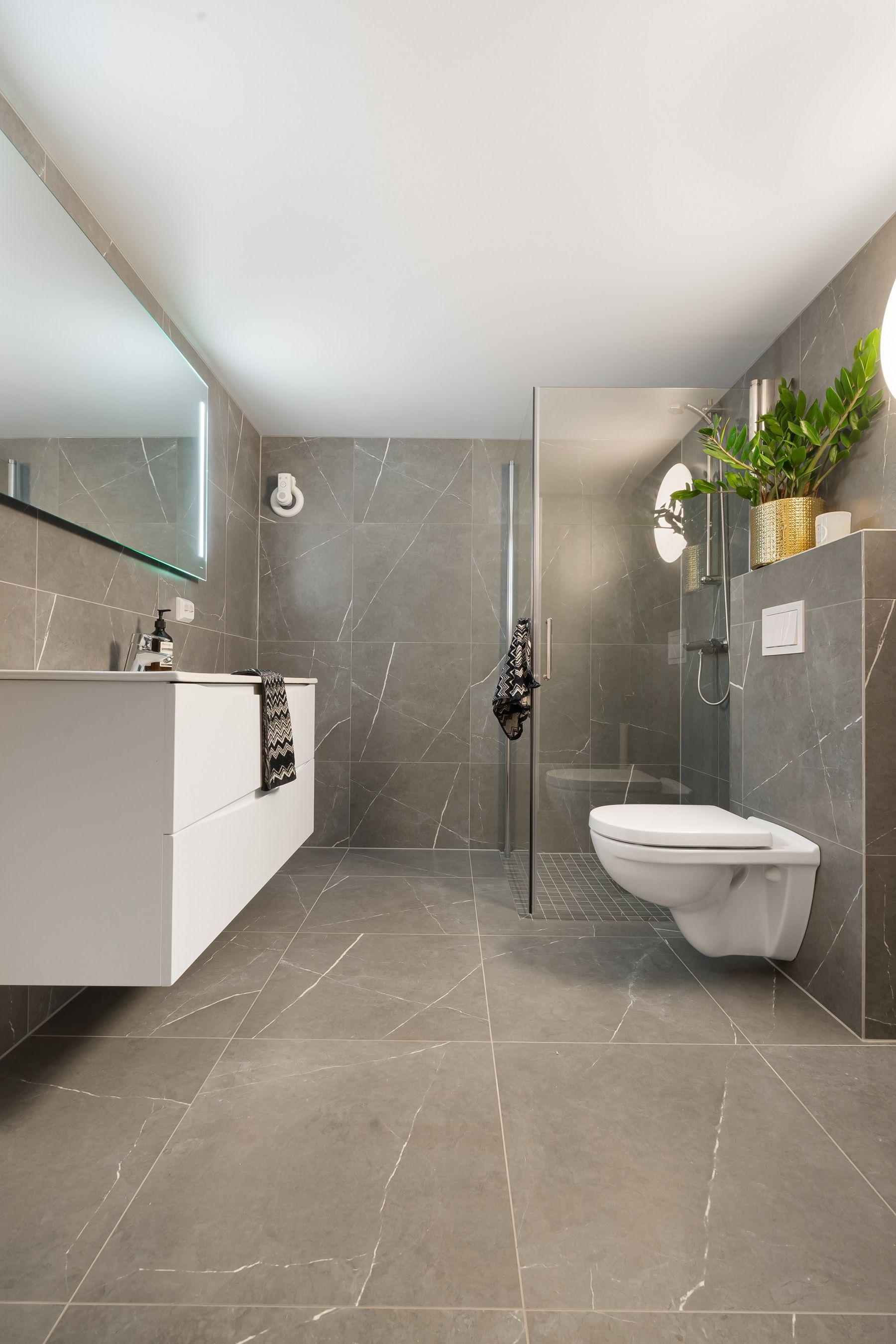
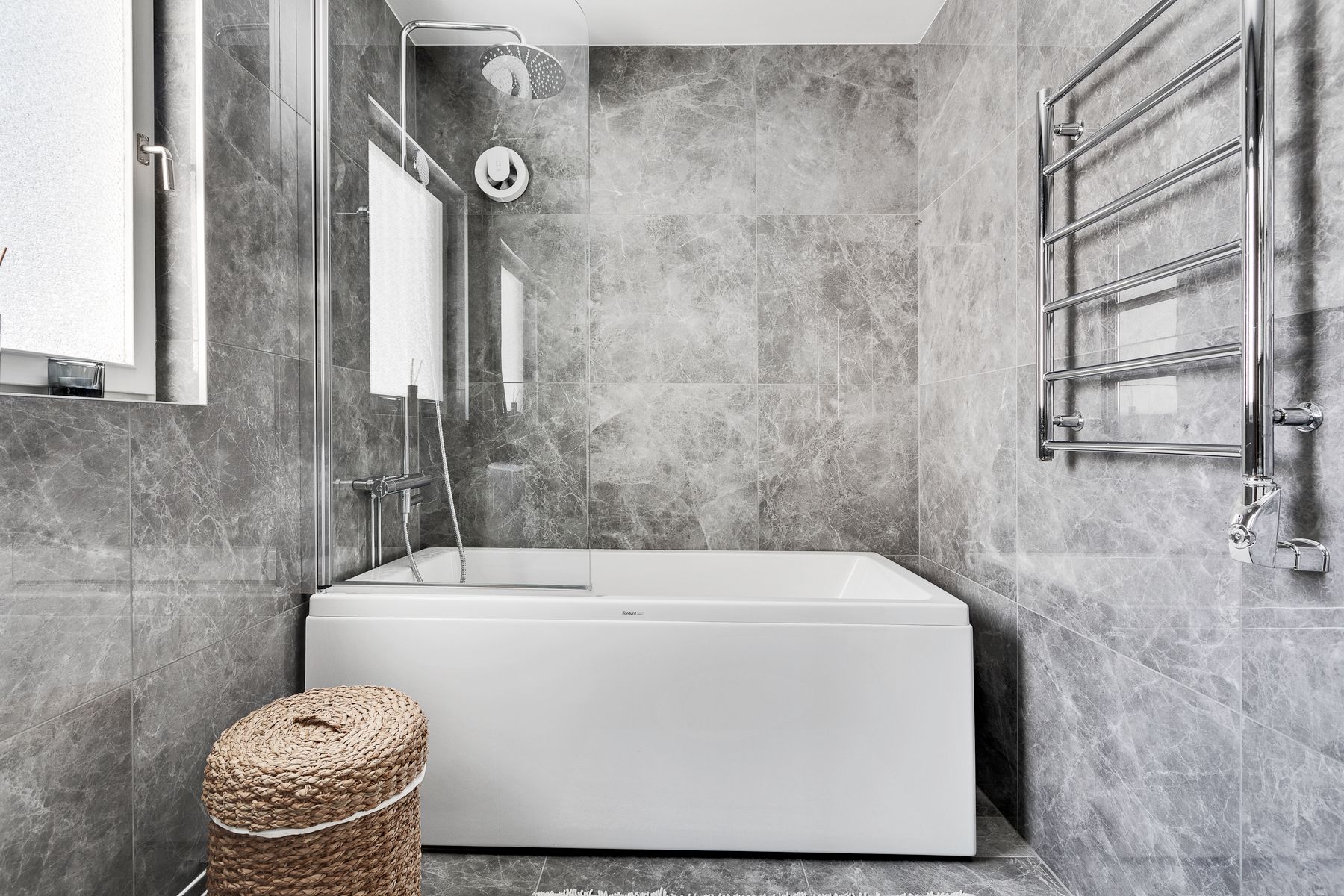
Grey marble or marble-look porcelain introduces movement through veining while keeping the overall palette neutral. It can bridge white ceramic, chrome and darker grey cabinetry more smoothly than a flat tile. If the veining is strong, keep other patterns restrained.
Add One Natural Accent
A small plant, timber shelf or natural textile can stop grey from feeling sterile without changing the room into a botanical or rustic scheme. The accent should remain secondary to the grey architecture. Choose plants only where light and humidity are suitable.
Keep Compact Grey Bathrooms Light Around the Face
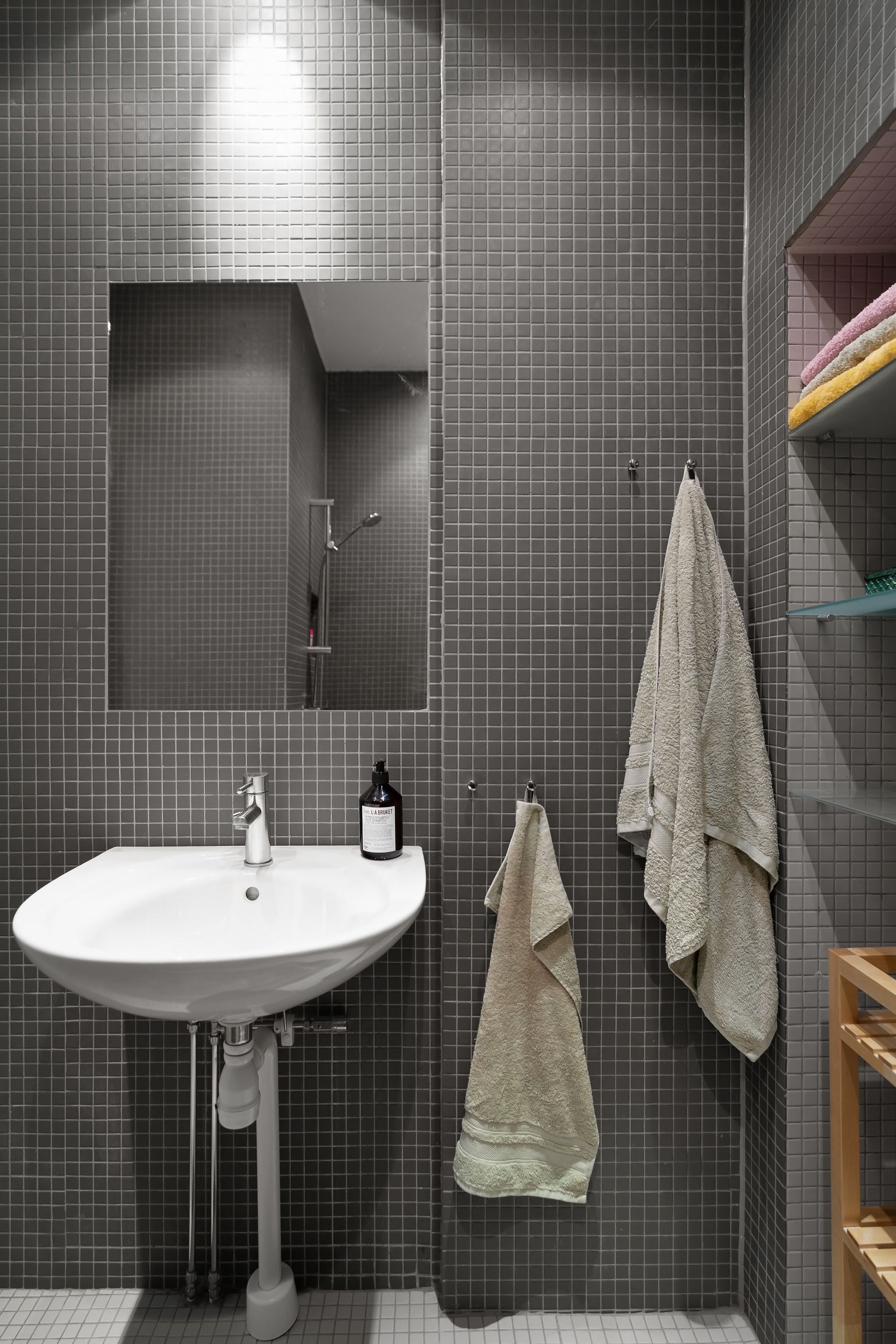
In a small bathroom, grey can still work well when the mirror, sink and task-lighting zone remain clear and bright. Use darker grey lower down or on one wall and preserve lighter surfaces around the face. This keeps the room calm without making it feel enclosed.