Choose a Slim Picture Light for One Small Print
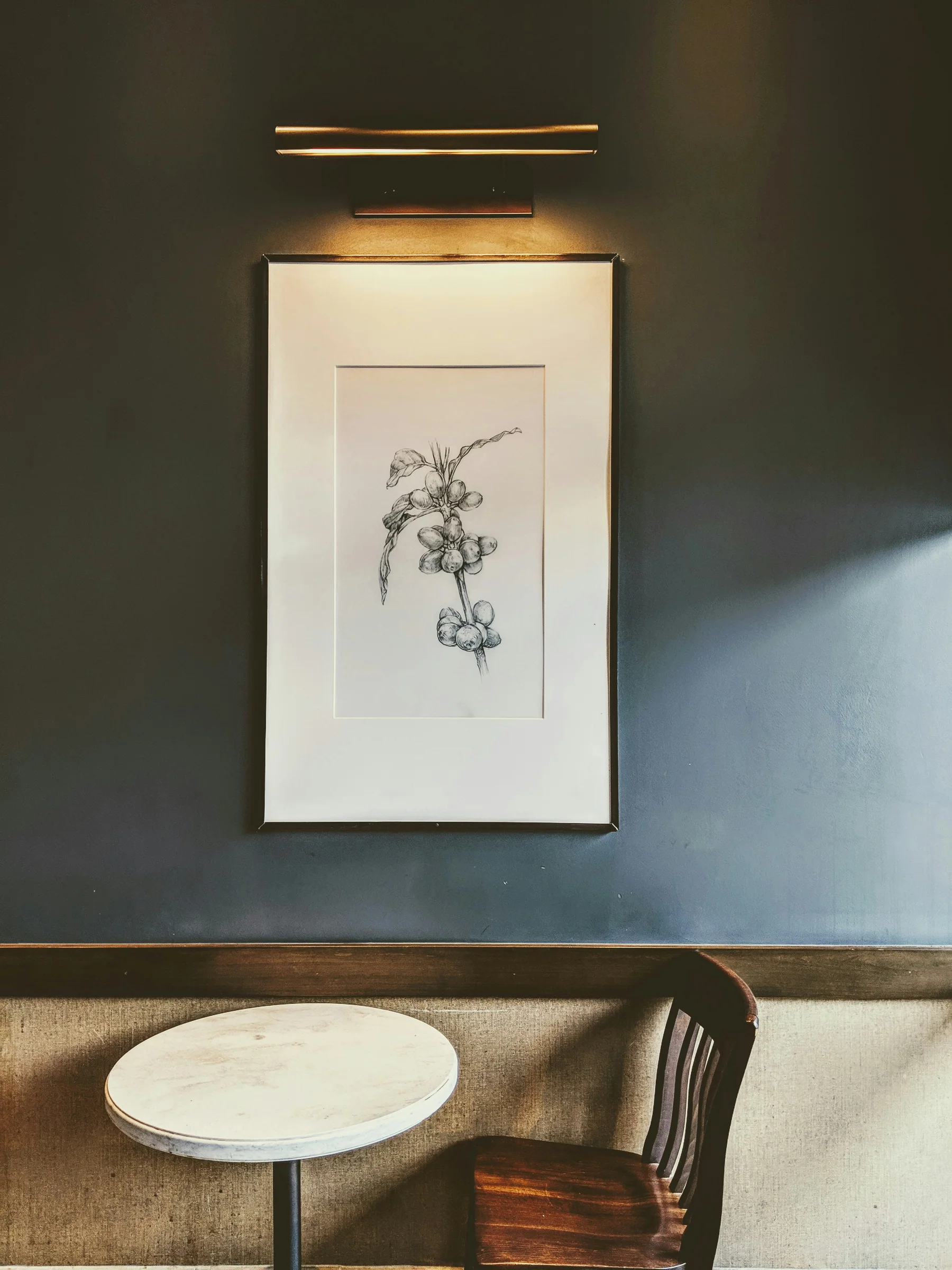
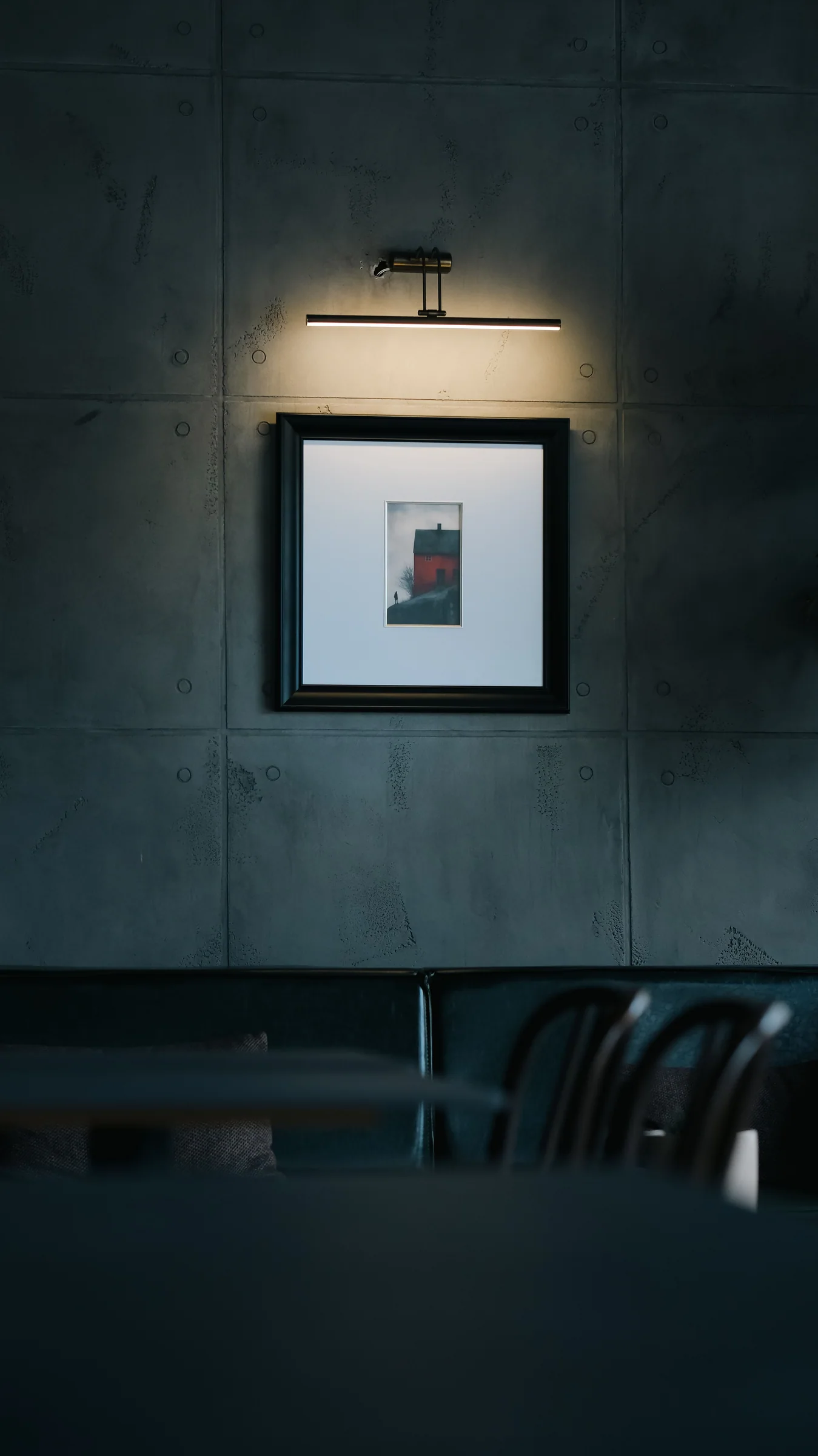
On the dark wall below, a modest framed work becomes the center of a spare composition. The narrow gold-toned bar sits close to the frame, so the light reads as part of that one small display—not as general lighting for the seating area. This approach makes sense in a short hallway, beside a reading chair, or above a console where a favorite print would otherwise recede into the background.
Choose the fixture in relation to the outside width of the frame, not only the image inside the mat. An oversized, highly ornamental light can dwarf a small print; a very short light can leave the edges of a wide one dull. Manufacturer sizing formulas are only a starting point. Compare the bar length, the distance it projects from the wall, and the maker’s stated beam spread as one decision. A portrait image also needs light to travel down the picture, rather than brightening only its top edge.
Before fixing the position, view the artwork from the doorway or chair where you will usually see it. With glazed art, a reflection that seems minor when you stand directly in front may be distracting from a seat to one side. A fitting with an adjustable head can help, but its actual range and clearance depend on the model. Jim Lawrence’s picture-light guide gives useful proportion and aiming considerations; test them against your own artwork rather than applying a single universal ratio.
Use One Picture Light Above a Compact Gallery
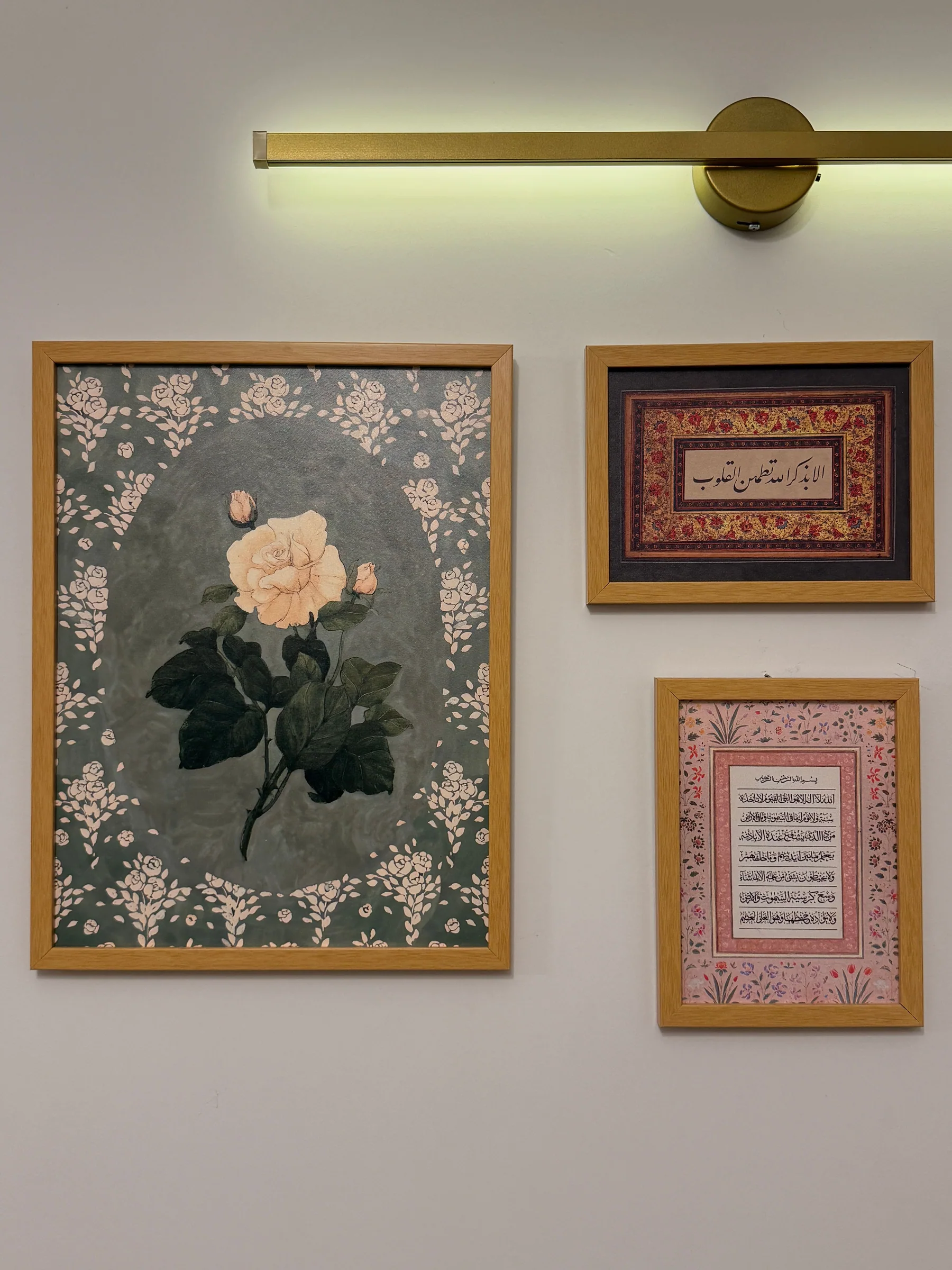
A single horizontal light above three framed pieces creates a line of continuity across a mixed arrangement. In this image, a larger floral print sits beside two smaller framed works, and the gold-toned tube gives the cluster a common visual top. You do not need three matching lights simply because there are three frames; sometimes the more restrained choice is to illuminate the group.
The test is coverage, not just symmetry. Imagine a loose rectangle around the entire arrangement and treat it as one visual frame. Then check whether the chosen fitting can illuminate both outside edges and the lower portions of the works. A bar centered over the largest print may look balanced while leaving a smaller picture at the end comparatively dim. The photograph shows a long horizontal light above the group, but its right end is outside the crop; it cannot establish the bar’s full length or how evenly the beam reaches every piece.
If the collection is compact, one appropriately sized, adjustable light may preserve a simple silhouette. If the frames spread farther apart, you may prefer separate lights for selected pieces or a more adaptable ceiling source. Several closely packed wall fixtures can make the hardware compete with the pictures, especially when the works vary in size. Keep the spacing of the actual art deliberate first, then decide which parts warrant their own illumination.
For help arranging the frames themselves, use our gallery wall ideas guide; the decision here is how many of those frames one light can serve convincingly.
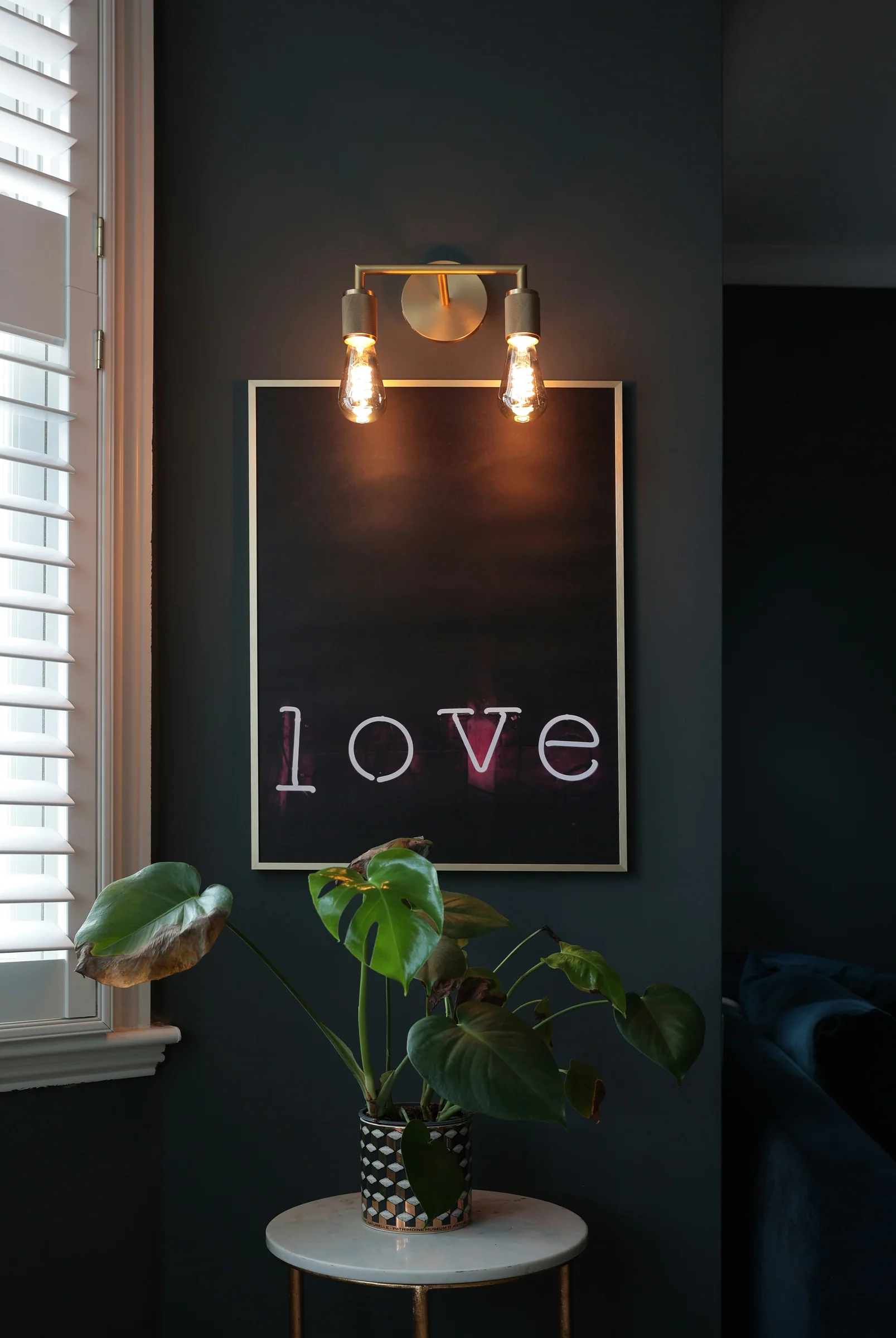
Alternative: Let Exposed-Bulb Sconces Become Decoration
A decorative wall fixture need not disappear. Two exposed, warm-looking bulbs above a framed typographic print make the fitting almost a second piece of decoration. Unlike a shielded picture-light bar, the bulbs themselves draw attention. The dark wall, nearby window, and plant give the arrangement room to breathe; the eye notices the glowing lamps before traveling down to the word art. That is a different effect from the slender bar over the botanical drawing.
A visible two-lamp style works best when the work is graphic, informal, or deliberately playful and the hardware is meant to be seen. Repeat a warm-metal tone in one or two nearby details if that makes the corner feel connected, but do not choose a fixture solely because its finish matches the frame. The fixture’s scale and the space around it matter more than a perfect metal match.
The trade-off is light control. Exposed bulbs may compete with the art, create bright reflections in glass, or produce uneven illumination across a wider frame. For a subtle drawing or a glazed photograph, a slim, shielded light with suitable adjustability may be the calmer option. Check the lamp’s color rendering index (CRI) as well as the warmth of its light: a cozy-looking glow in a photograph does not tell you how accurately it will show the colors of your own print.
For more on the difference between lighting a room and lighting an artwork, see Christie’s guide to art lighting. Its guidance on picture lights and spotlights is particularly useful when the artwork—not the decorative lamp—is the priority.
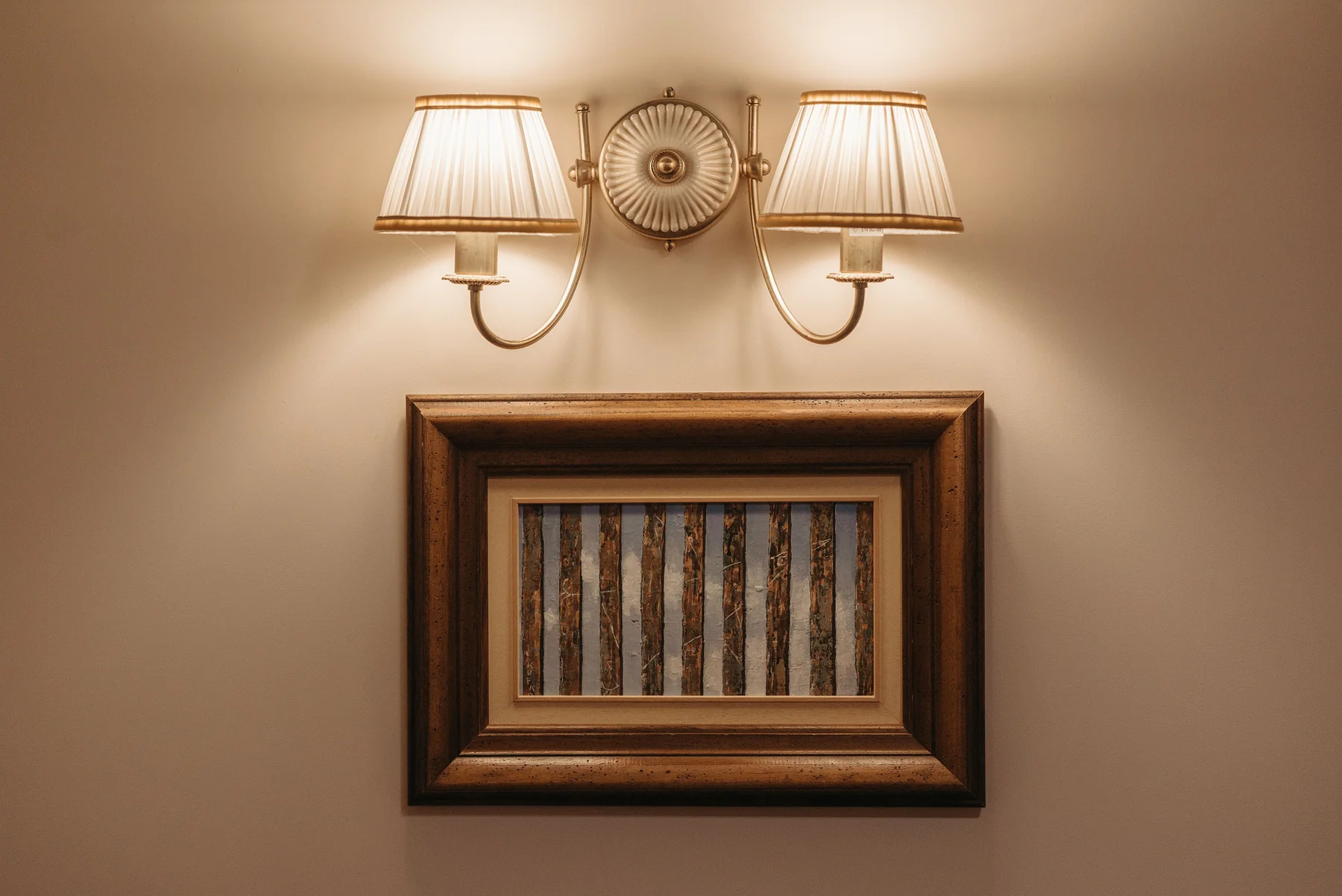
Alternative: Choose a Two-Shade Sconce for a Collected Room
The pleated shades and circular center detail in this room are every bit as noticeable as the striped framed work below. This is a decorative double-arm wall sconce, not a conventional narrow picture-light bar. It offers a useful alternative for a collected or traditional room where the wall fixture is supposed to be part of the display, rather than an invisible source of art light.
The two shades sit above a wide frame, so the fixture and the artwork read as one composed unit. A compact bar would put more visual emphasis on the picture, while the sconce gives the upper half of the composition its own shape. That extra presence can be welcome above a sideboard or in a dining room with other decorative metalwork. It is less persuasive when the artwork is small and the shades occupy most of the available wall space.
Treat this as a style choice first and an art-lighting solution only if the fixture’s actual beam supports it. Shaded sconces may throw separate pools onto the wall or light their surroundings more than the picture. Check for glare and unevenness on the real framed surface. If your aim is to see fine detail in an original artwork, a purpose-designed, controllable art light—or professional advice—usually deserves priority over the silhouette of the sconce.
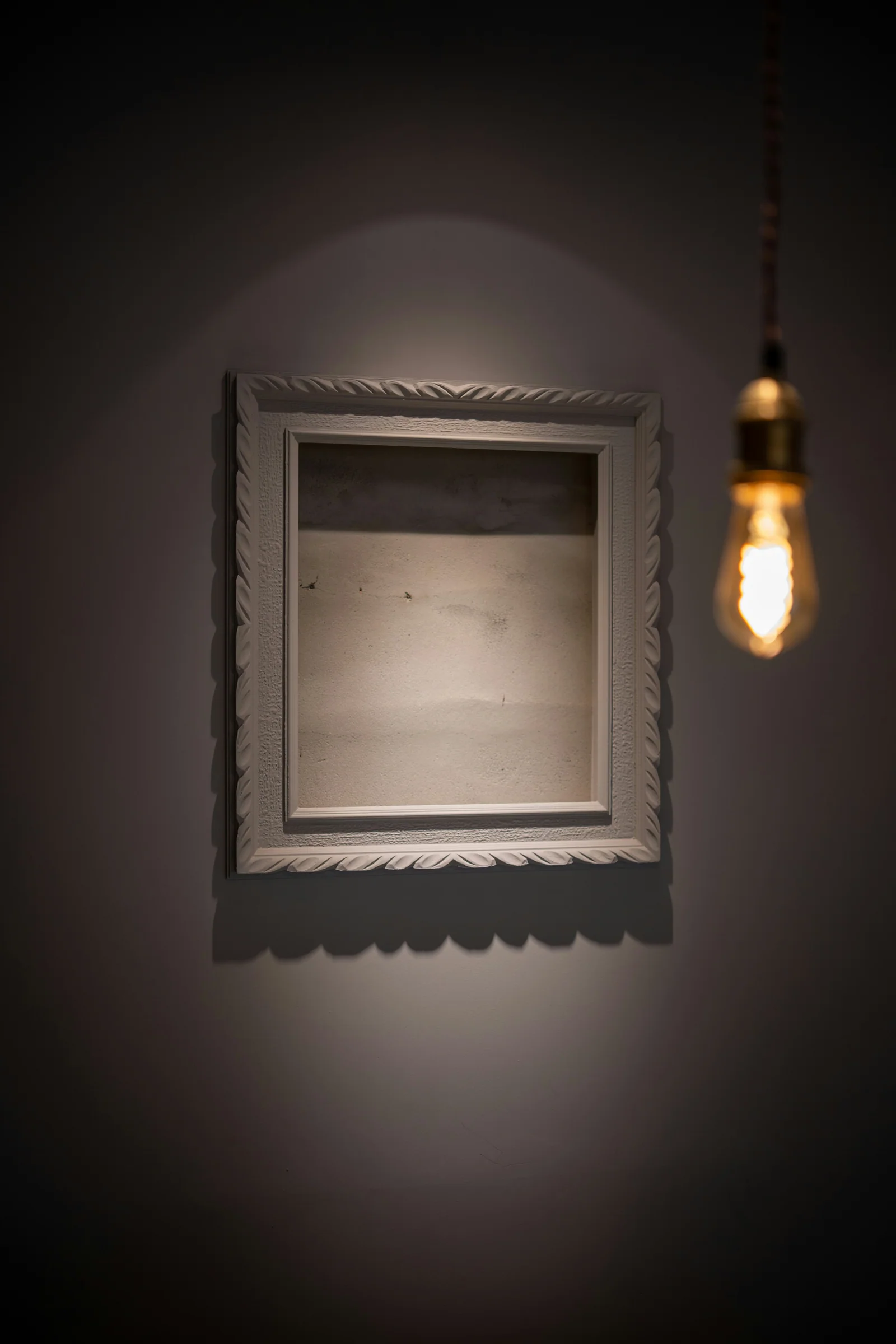
Alternative: Light the Artwork Without a Wall Bar
A pool of light picks out an empty frame on a charcoal wall, with a hanging Edison bulb visible at the edge of the scene. There is no picture-light bar above the frame. The same approach can give framed art a clear focal point while keeping the wall above it free of hardware.
In general, a ceiling-mounted directional light can leave the wall clear and may offer more freedom when a collection changes, provided the chosen fixture can be aimed for the new picture. It can be especially useful where a deep frame, nearby molding, or the shape of the art makes an overframe bar awkward. Compared with a picture light, however, the visible pool on the wall may be broader, and a poorly aimed beam can produce glare in glass or an unwanted halo around the frame.
Stand where the artwork will actually be seen—from the sofa, hallway entrance, or dining table—and look for reflected points of light before choosing a final position. Ceiling lighting is not automatically easier to add to a finished room, and a renter should not assume a new electrical point is permissible. For a broader scheme of floor lamps, task lights, and room ambience, see our living room lighting ideas guide.