Choose the Finish by How It Catches Light
Black is not visually uniform. A super-matte cabinet absorbs light and can make the joinery feel soft and monolithic, while satin paint reveals edges and reflections more readily. Textured laminate, stained timber and blackened metal behave differently again. The right choice depends on the amount of daylight, the size of the cabinet run and how much surface variation the room needs. In a dim kitchen, a little sheen can help reveal the architecture; in a bright room, a matte finish can keep the dark palette quiet and controlled.
Keep Black on One Continuous Cabinet Run
Black has the most impact when it reads as a deliberate architectural mass instead of a collection of scattered dark objects. One wall of tall units, one uninterrupted lower run or a clearly defined cooking zone can create that effect. Concentrating the darkest value also makes the rest of the room easier to balance because pale walls, flooring or worktops have somewhere to provide relief. This is particularly useful in open-plan spaces where a continuous dark elevation can visually organize the kitchen without adding more ornament.

Pair Black with Pale Stone
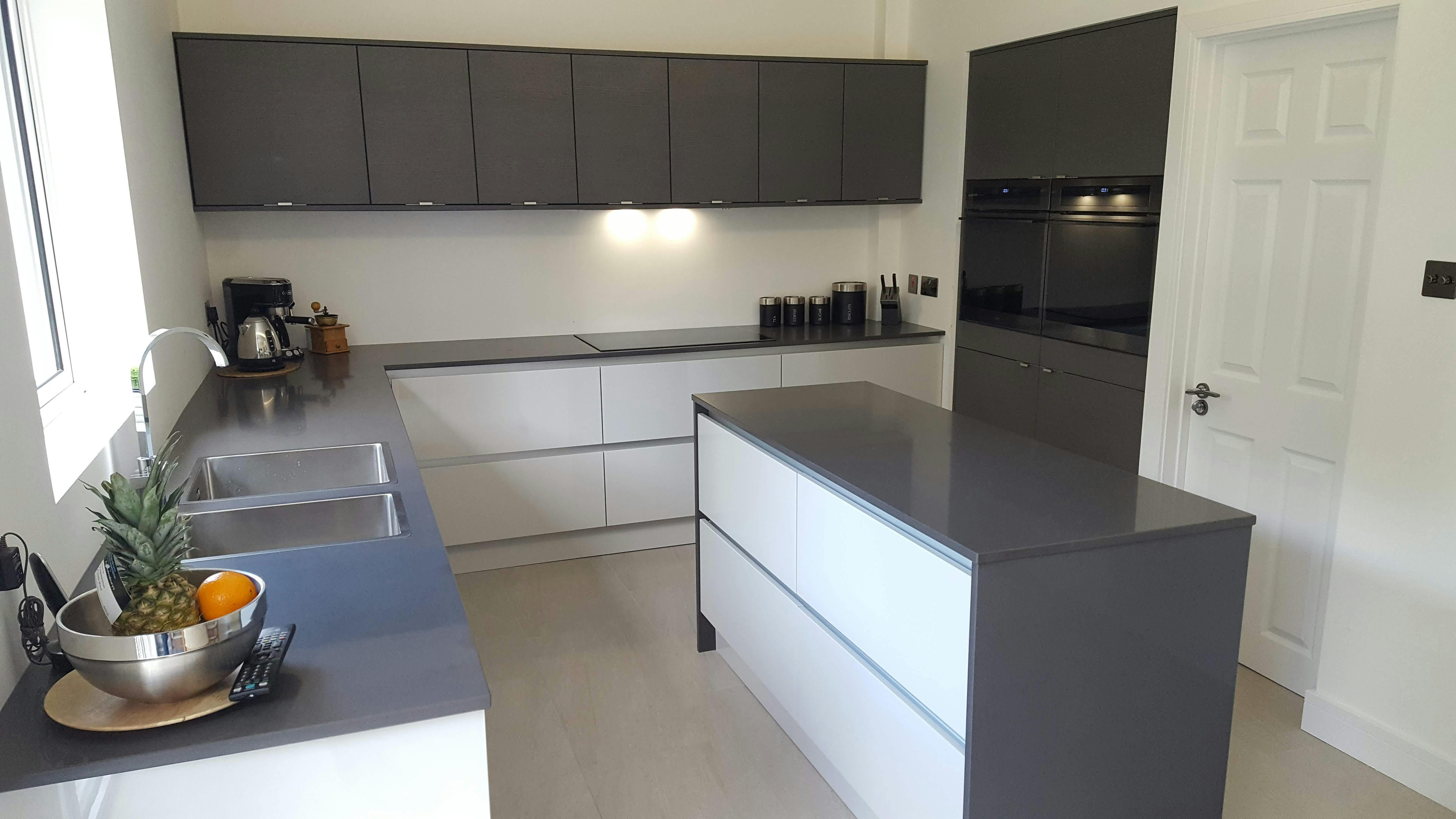
Pale stone is one of the most effective counters to black cabinetry because it creates a bright horizontal working plane without weakening the overall dark character. Warm marble, pale quartzite and softly veined quartz all introduce light while adding enough pattern to avoid a stark black-and-white effect. A thick pale island top can become the visual break between dark cabinetry below and the room above, while a slimmer worktop creates a more graphic line.
Warm Black with Natural Wood
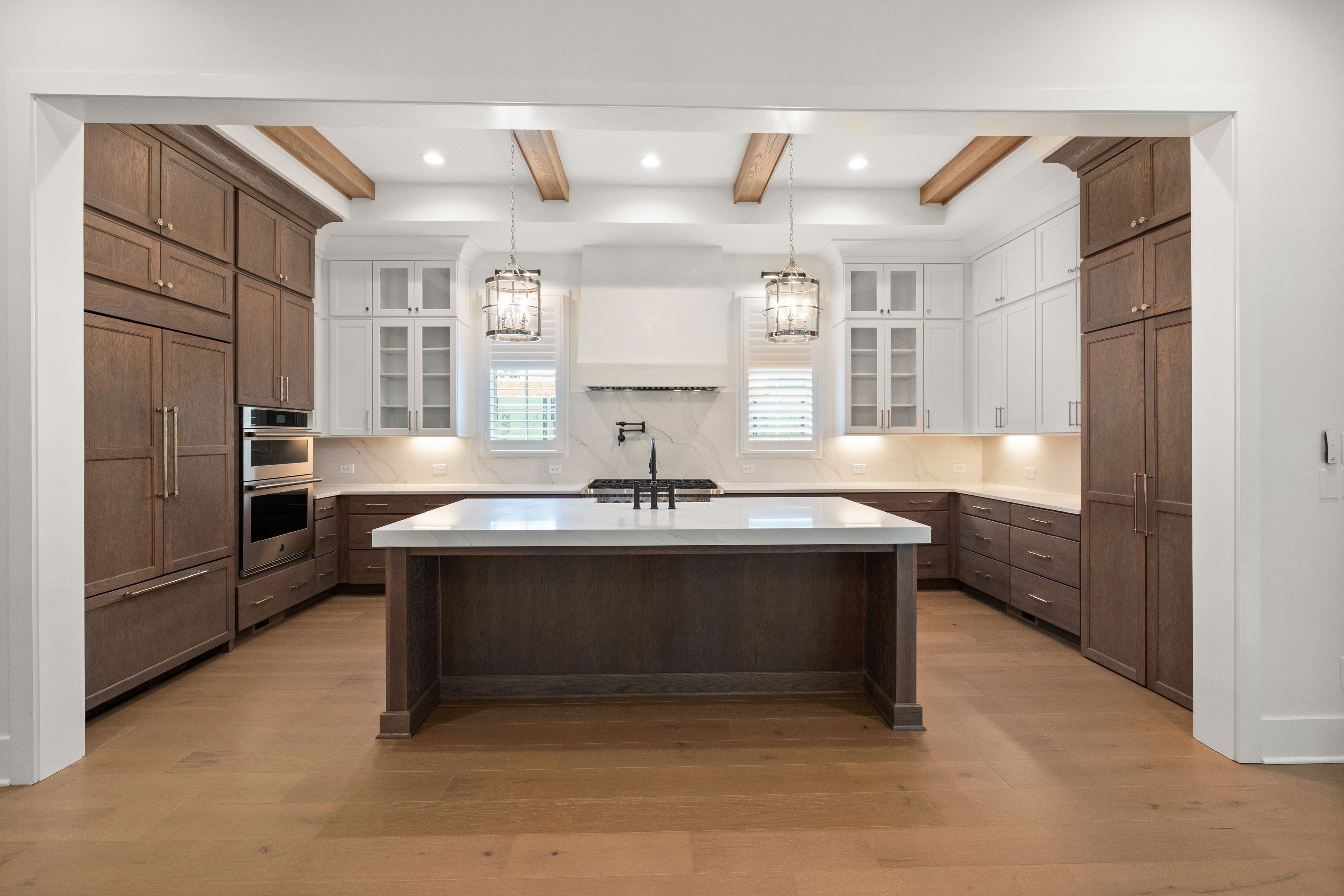
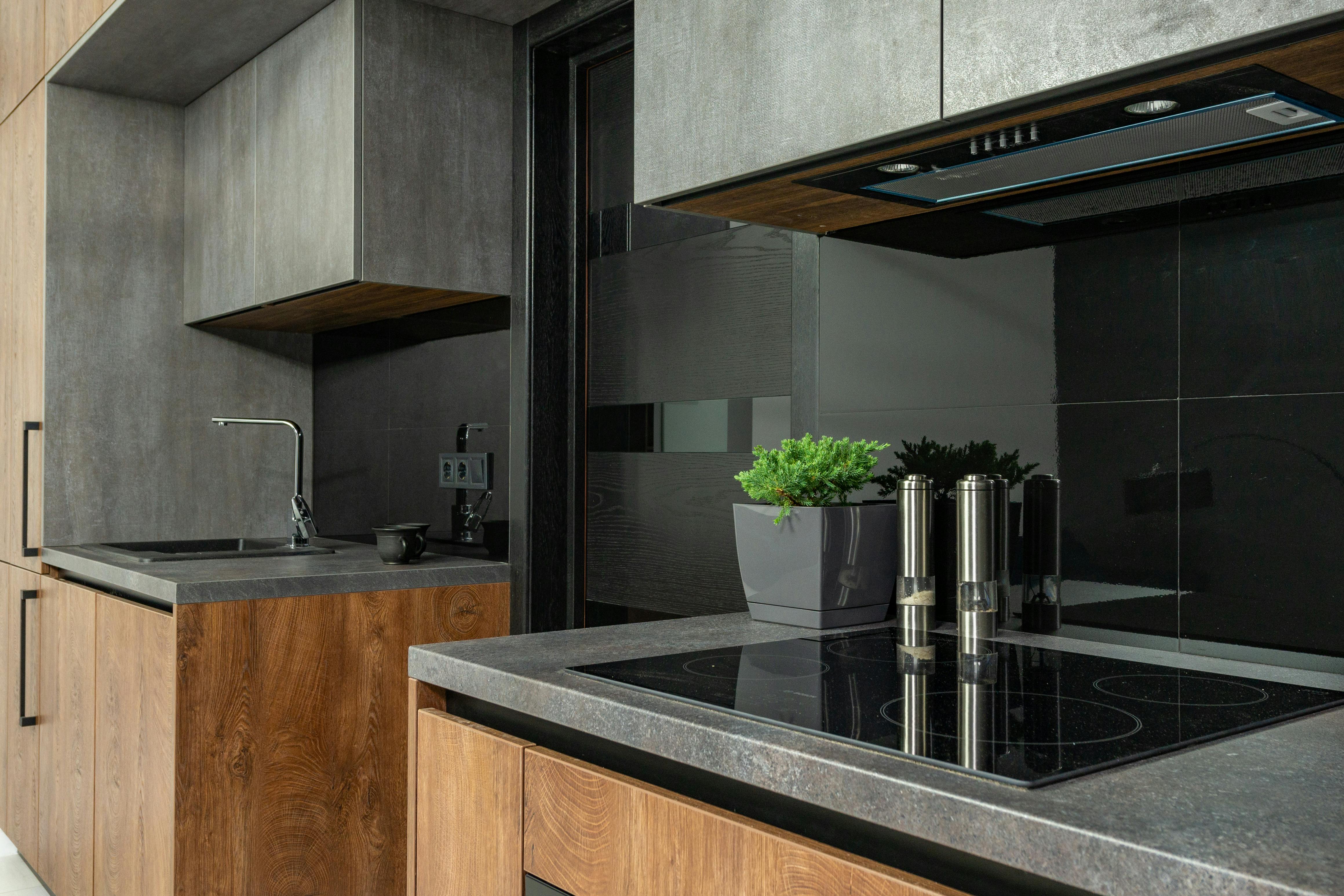
Black and timber work well together because the wood introduces grain, warmth and tonal variation that dark painted surfaces lack. Pale oak makes a black kitchen feel lighter and more Scandinavian, while walnut or smoked oak creates a richer and more enveloping mood. Use wood where it has structural weight — flooring, an island face, tall cabinetry or open shelving — rather than relying only on cutting boards and decorative accessories. One substantial timber element usually changes the temperature of the room more convincingly than many small accents.
Let Black Stone Add Movement
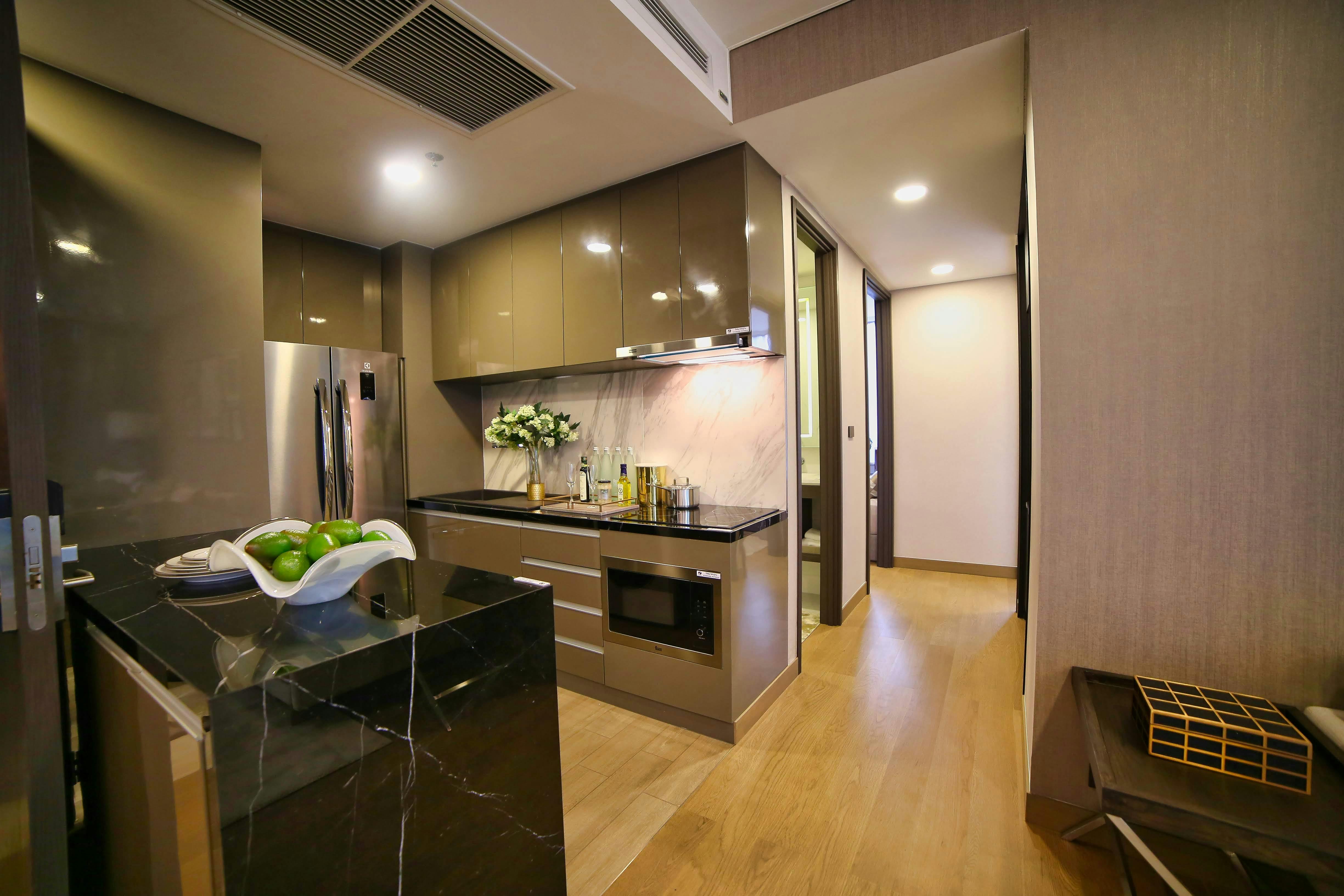
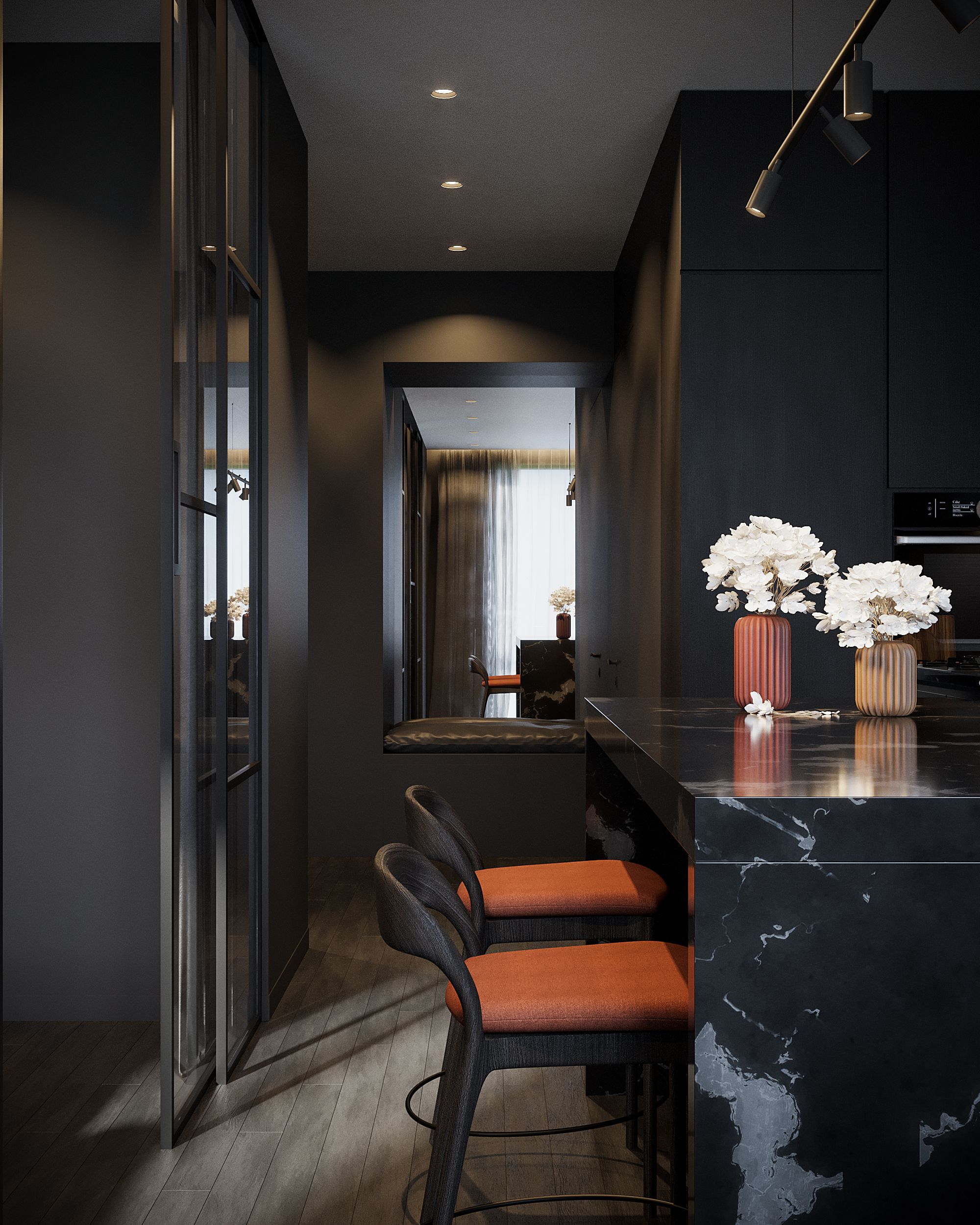
A dark palette can become visually flat when every surface is a uniform painted black. Black marble, soapstone, granite and richly patterned quartz introduce veins, mineral variation and changes in reflectivity while staying inside the same tonal family. This lets a worktop or splashback become expressive without introducing a new color. The effect is strongest when the stone pattern has enough scale to be read from across the room rather than only at close range.

Use the Backsplash for Tonal Relief
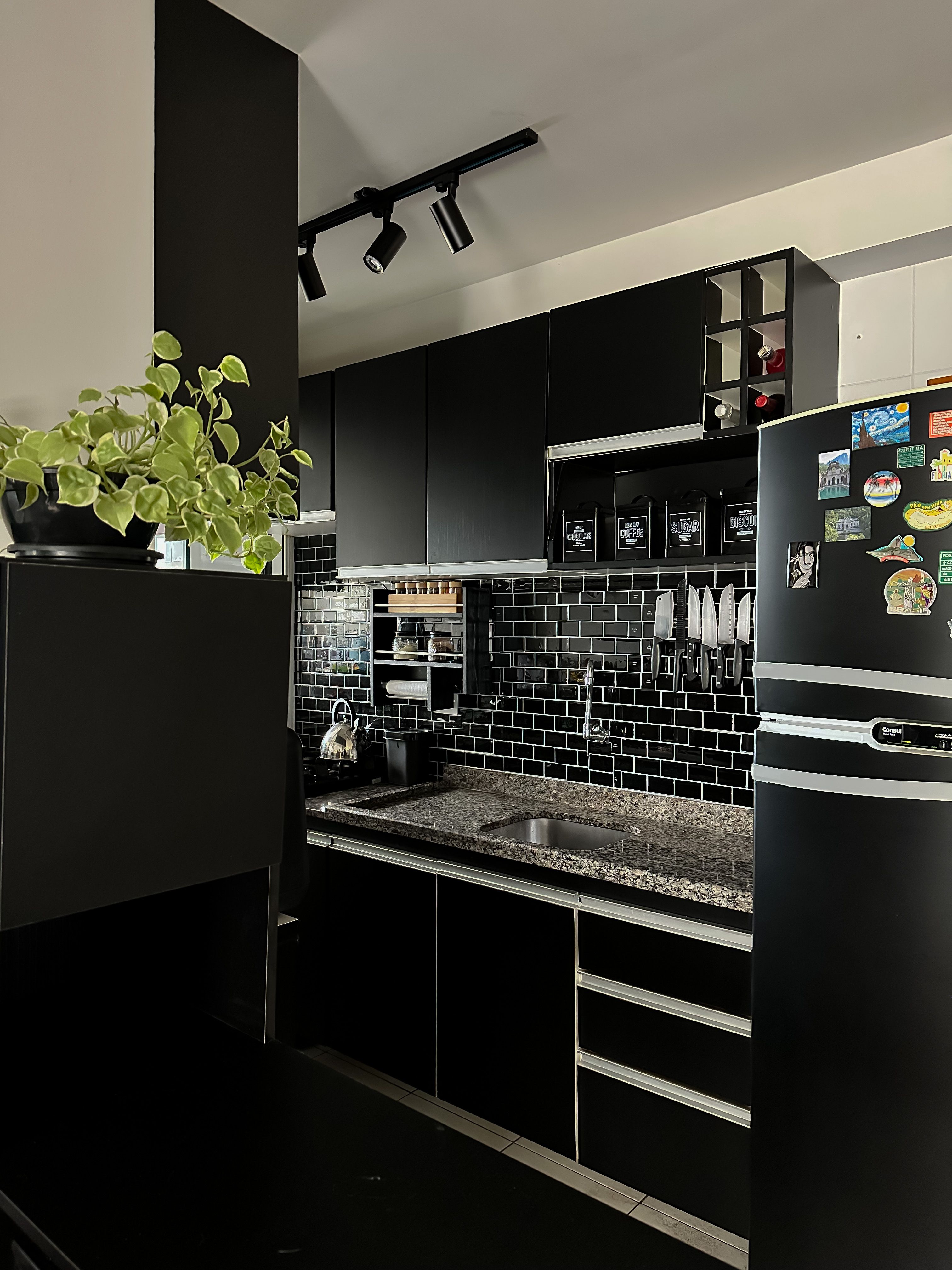
A backsplash can create separation even when it remains dark. Glossy black tile reflects more light than matte cabinetry, ribbed or handmade surfaces create shadow, and dark stone introduces pattern. That difference in texture helps distinguish the wall plane from the cabinets below it. If the kitchen already contains a black worktop, avoid making the splashback identical by default; a small change in sheen or material can give the composition more depth without breaking the palette.
Use a Dark Island as the Anchor
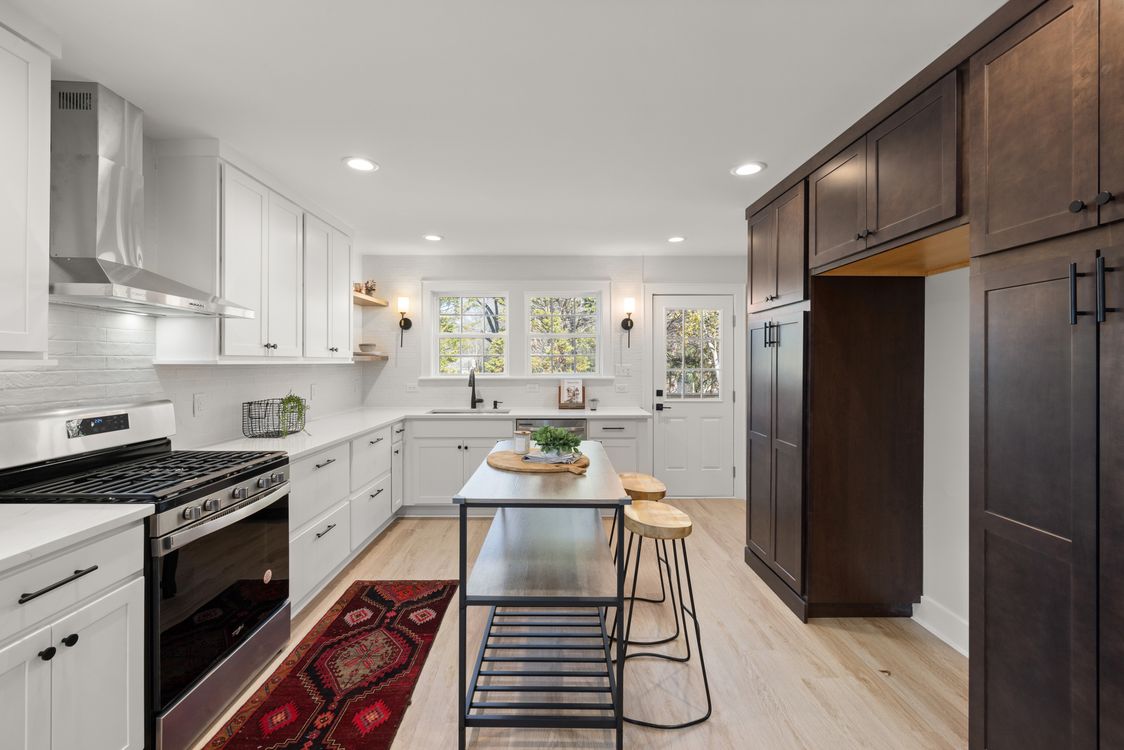
A black island can give a pale or mixed kitchen a strong center without requiring every cabinet to be dark. In a large room, this helps the island read as furniture rather than simply another run of cabinetry. In an open plan, the dark mass can also connect visually to a dining table, window frames or other black elements beyond the kitchen. Keep enough contrast at the worktop and floor so the island has a clear silhouette rather than disappearing into the surrounding finishes.
Decide Whether Metals Should Disappear or Contrast
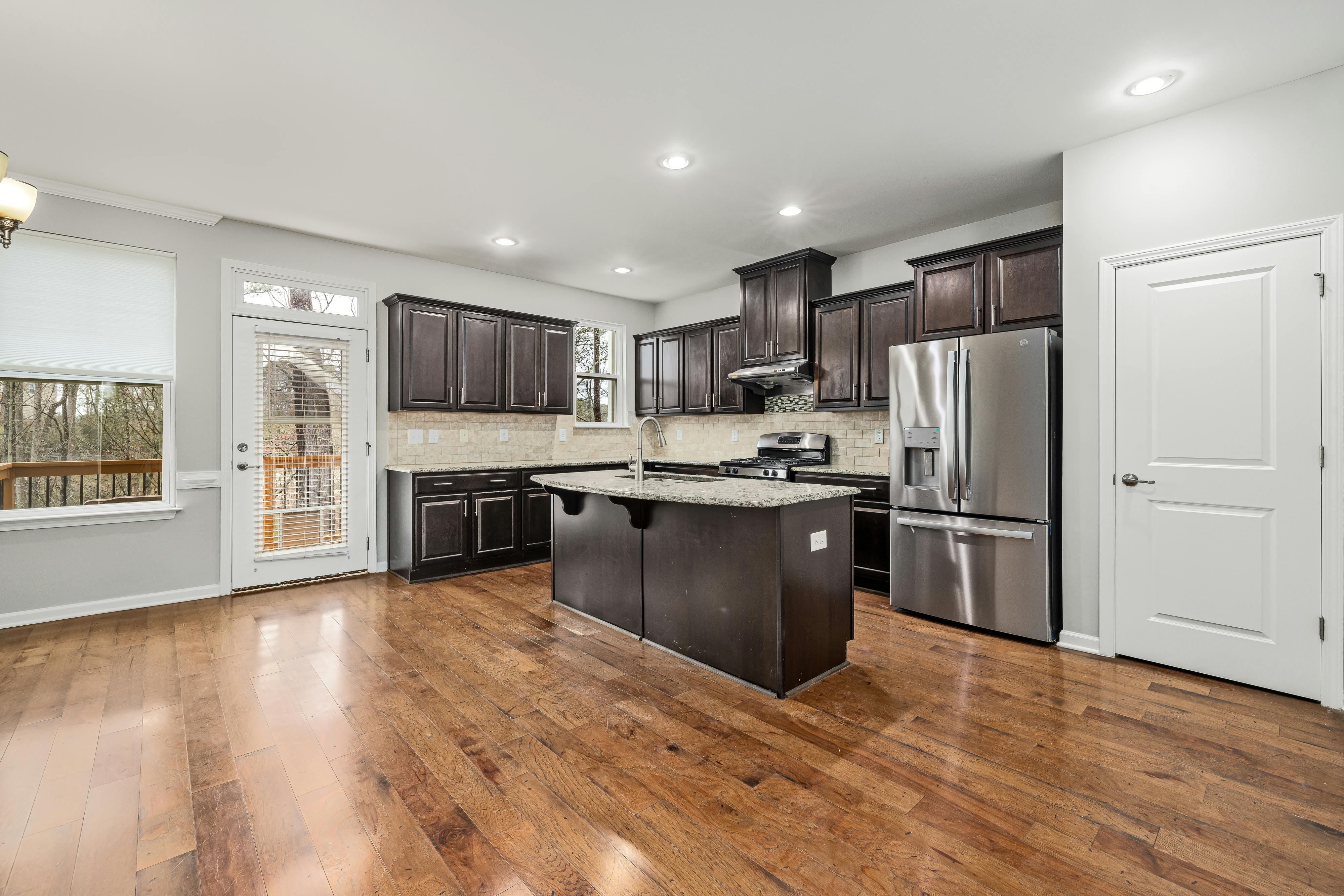
Hardware changes the character of a black kitchen quickly. Black handles and a black faucet can disappear into dark cabinetry and create a quieter monolithic effect. Brass, bronze and copper become warmer highlights, while stainless steel and chrome feel cooler and more technical. None of these approaches is inherently better; what matters is whether the metal is meant to recede or become a focal detail. A black kitchen usually benefits from fewer, more deliberate finish families rather than a mixture of every available metal.
Layer Lighting Before Adding More Decor
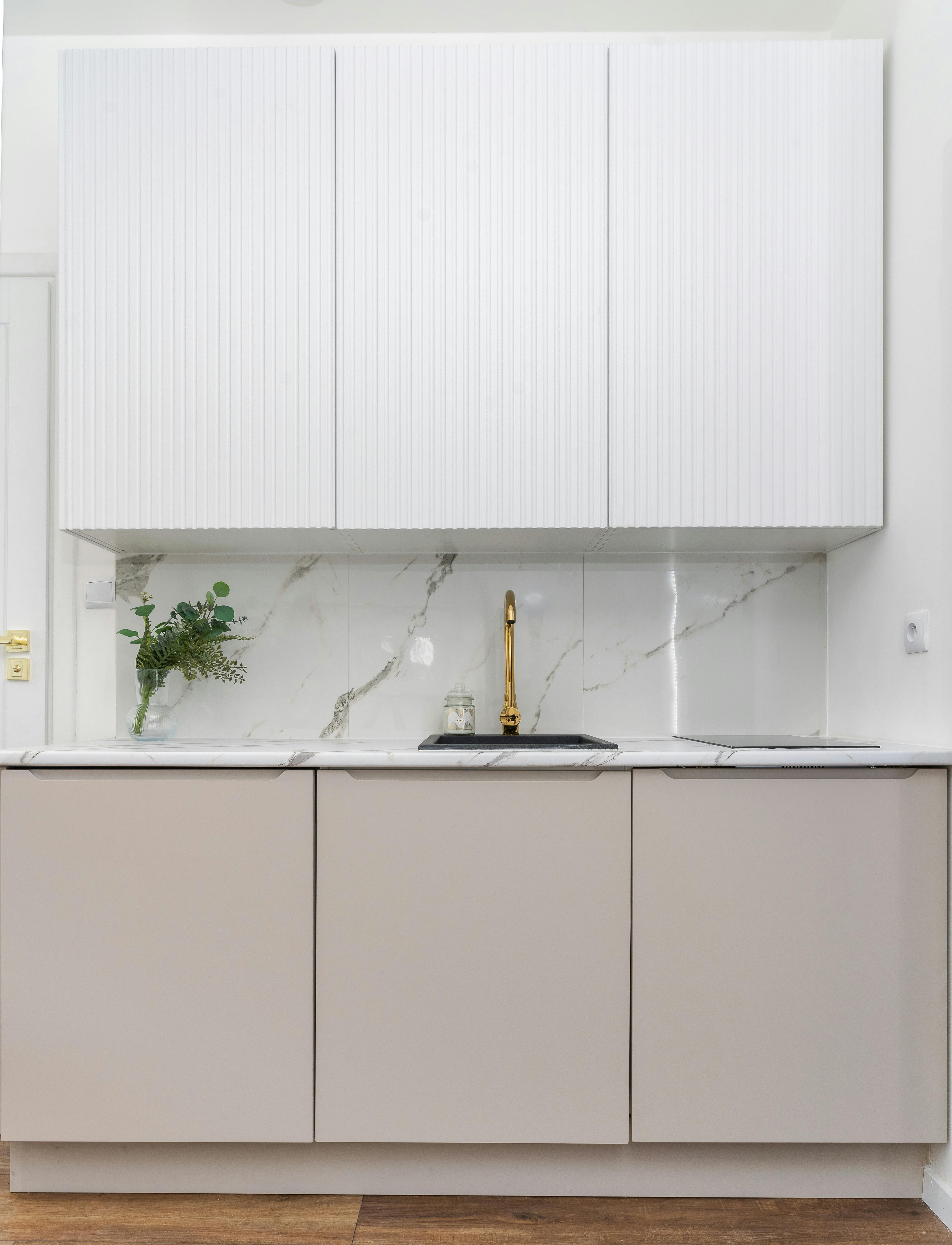
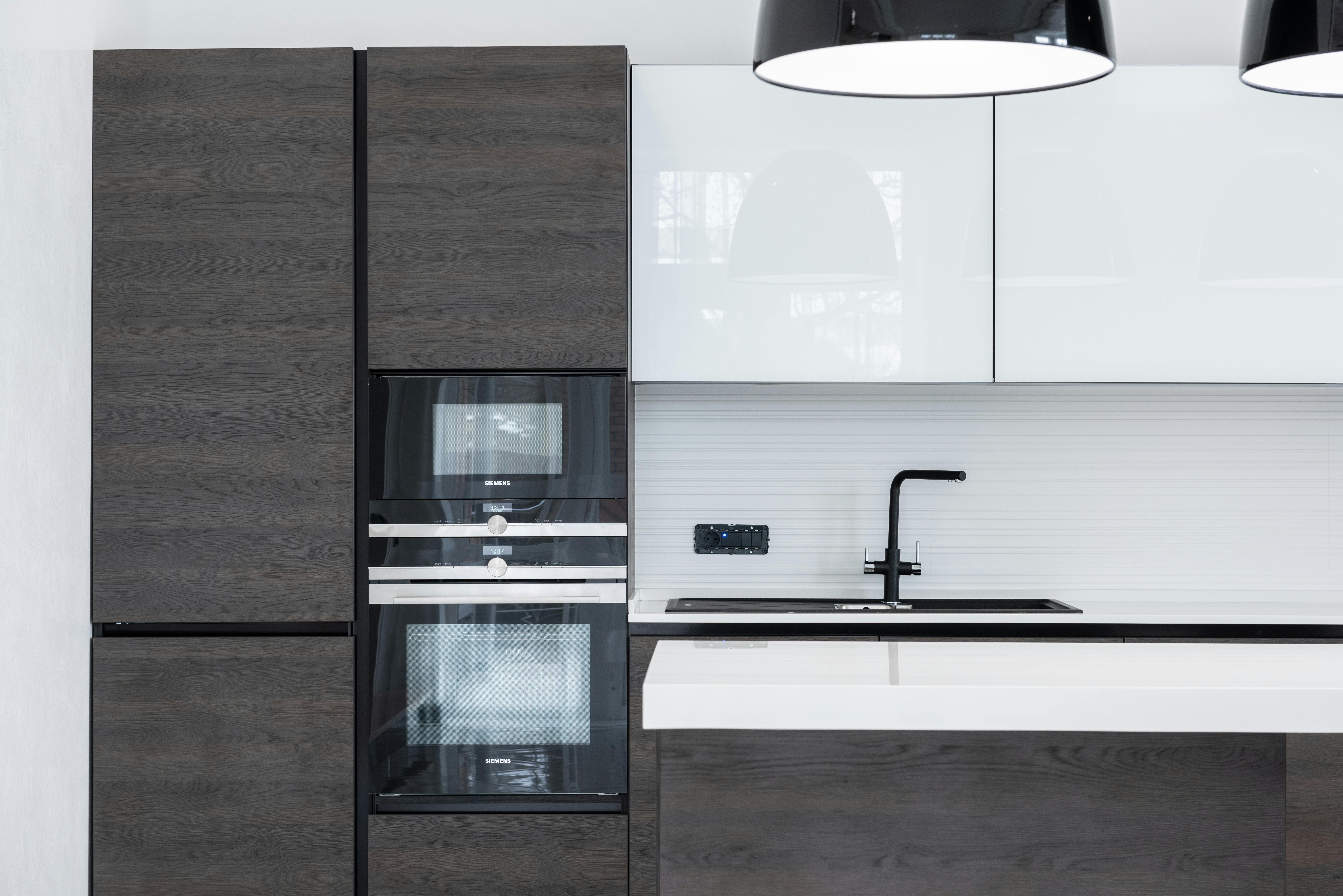
Lighting is structural in a black kitchen. General ceiling light alone often leaves dark cabinet fronts flat while the worktop remains shadowed. Combine ambient light with under-cabinet task lighting and one or two focused decorative sources so highlights appear at different heights. Directional light can reveal stone veining, door profiles and metal edges that disappear in even illumination. Pay particular attention to evening conditions, because a black kitchen that works beautifully in daylight can lose much of its depth after sunset.
Make Black Work in a Small Kitchen
A small kitchen does not have to avoid black, but the dark surfaces need a clear role. Concentrating black on lower cabinets or one compact run can ground the room while pale walls, a lighter worktop and an uncluttered ceiling keep the upper half open. Reflective tile, good task lighting and visible floor area also help. The goal is not to make the room look artificially large; it is to keep the dark cabinetry from erasing the boundaries and work zones that make a compact layout easy to read.