Choose the Character of the Grain First
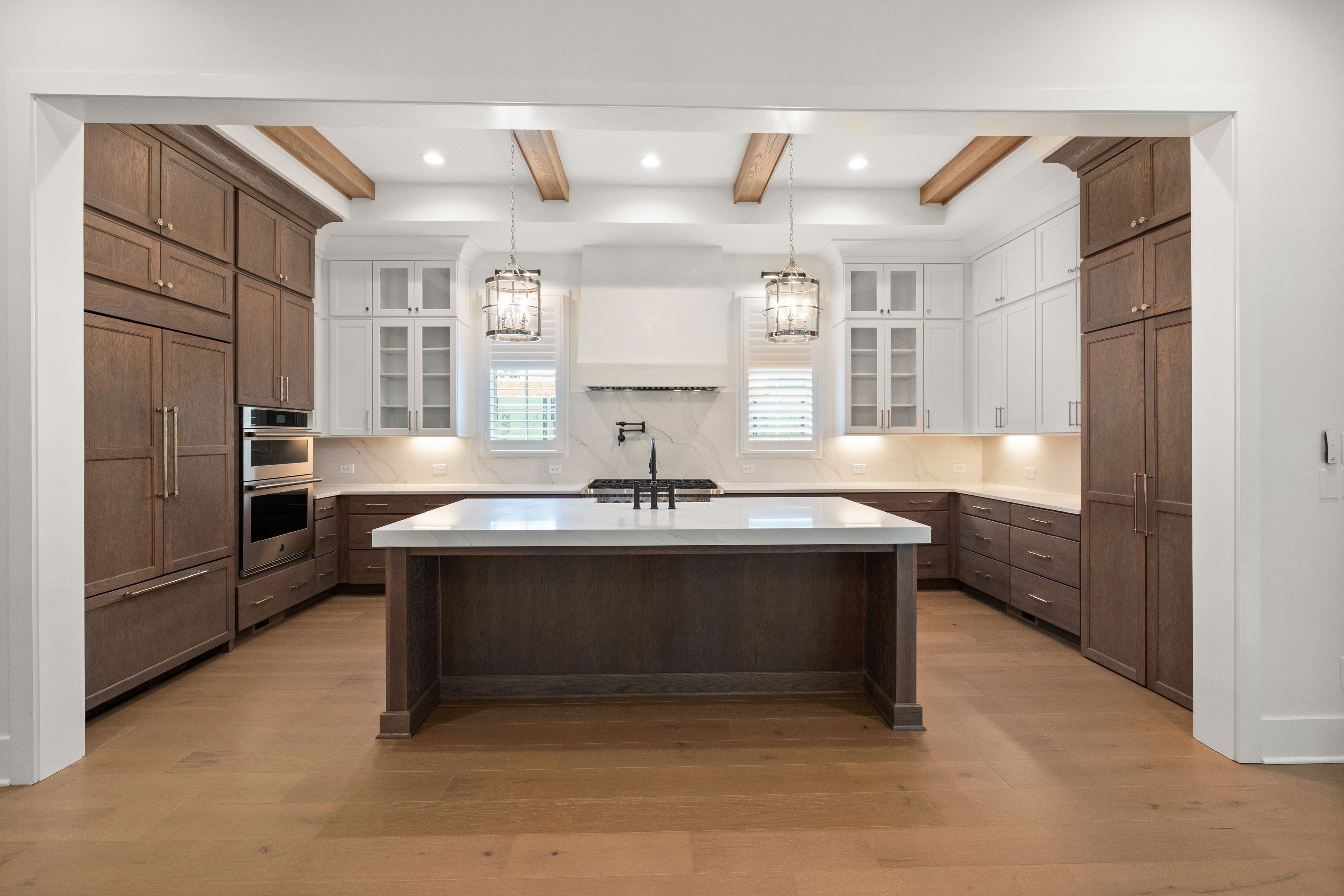
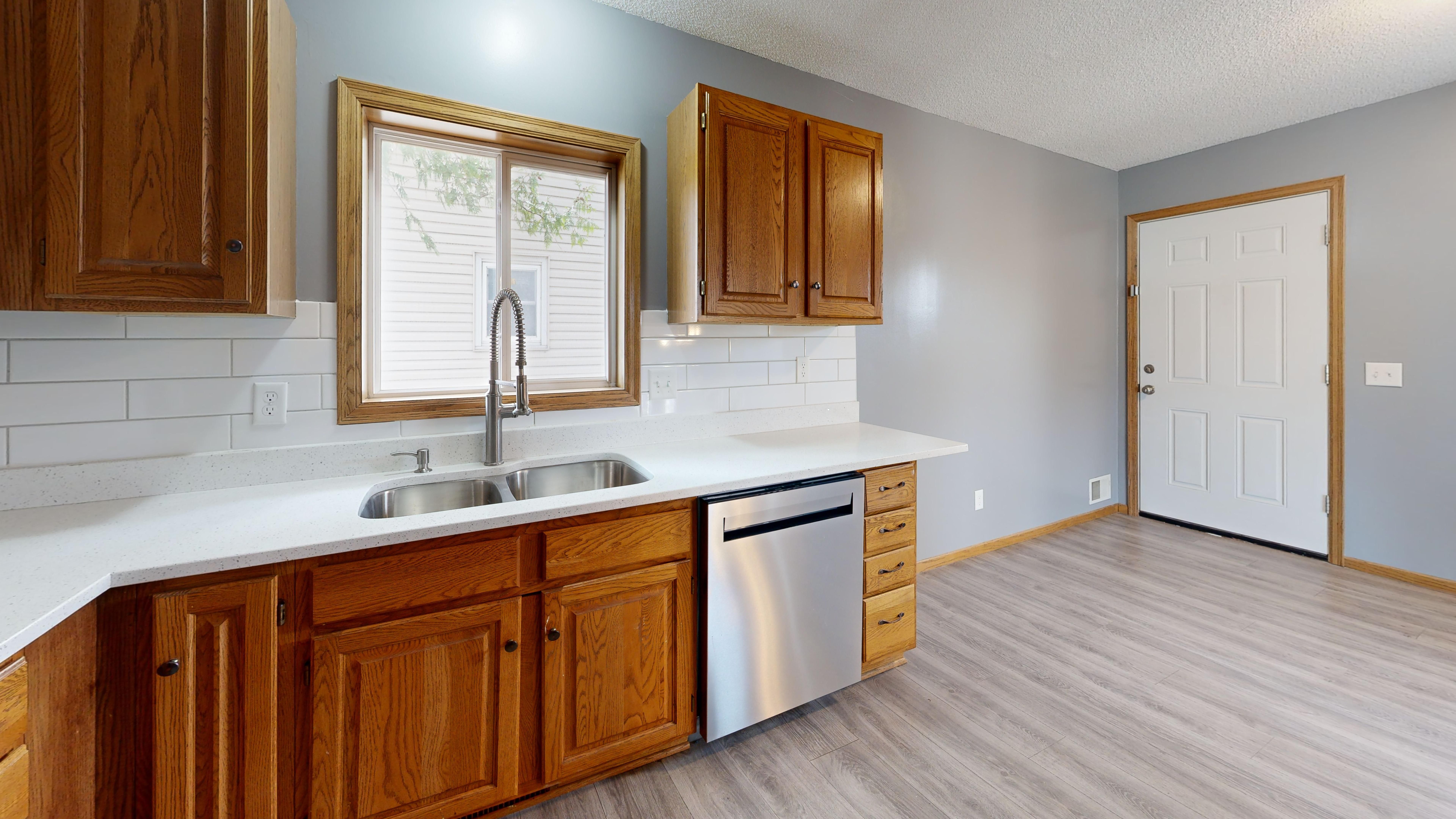
Wood differs not only in color but in how strongly its grain reads across a cabinet elevation. Rift- or quarter-sawn oak tends to look more linear and controlled, while broader cathedral grain creates more movement. Walnut usually brings richer contrast and a more furniture-like quality. In a kitchen with many cabinet doors, grain becomes one of the largest visual patterns in the room, so it deserves the same attention as a paint color or stone slab.
Decide Whether the Wood Is the Background or the Feature
A kitchen with timber on every cabinet can feel calm when the grain is consistent and the surrounding surfaces are quiet. Alternatively, wood can be concentrated on an island, tall pantry wall or breakfast area while painted cabinetry carries the rest of the room. This second approach is useful when you want warmth without allowing grain to dominate a compact space. Neither is inherently better; the decision should follow how much visual movement the room can comfortably support.
Pair Wood With Stone by Temperature
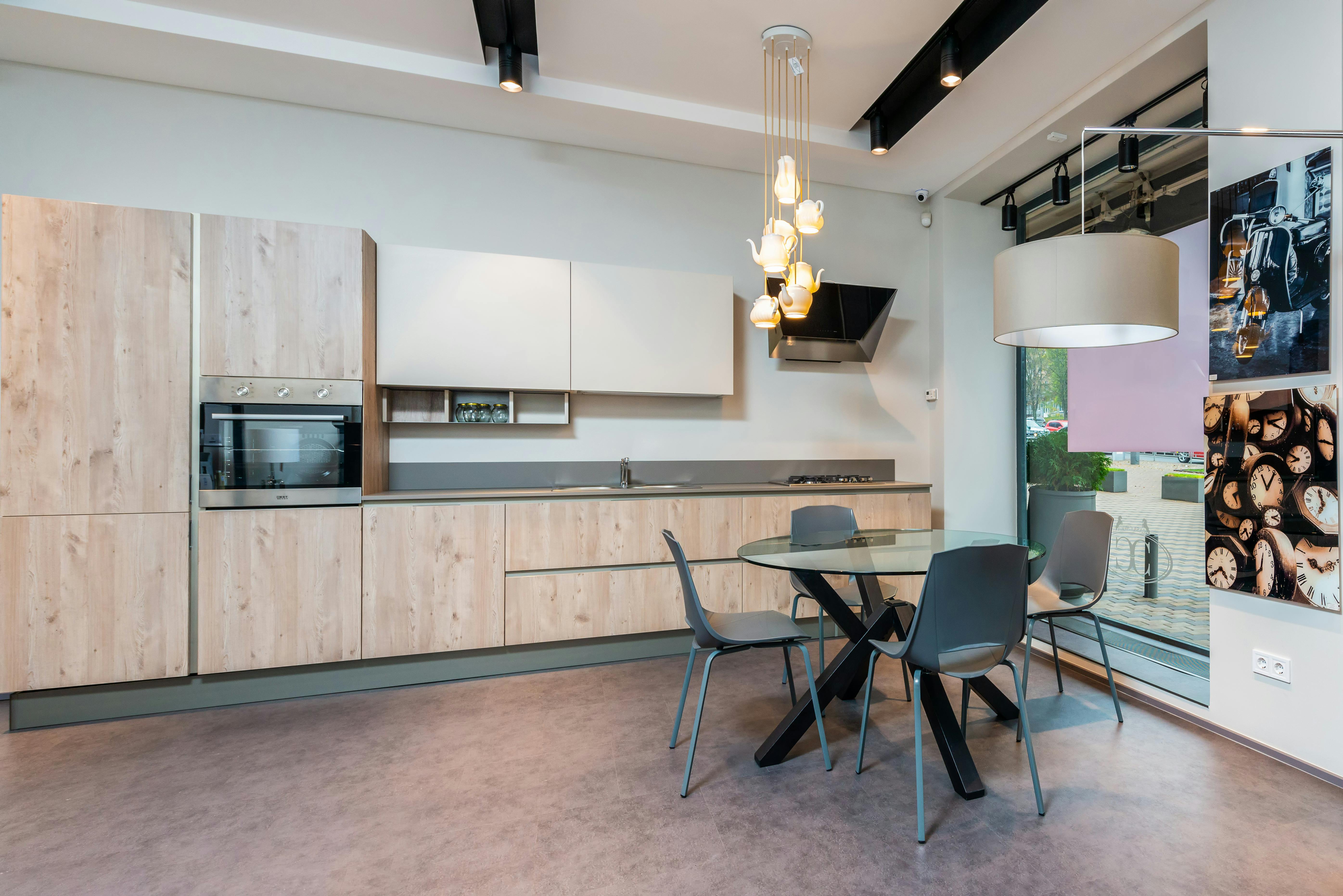
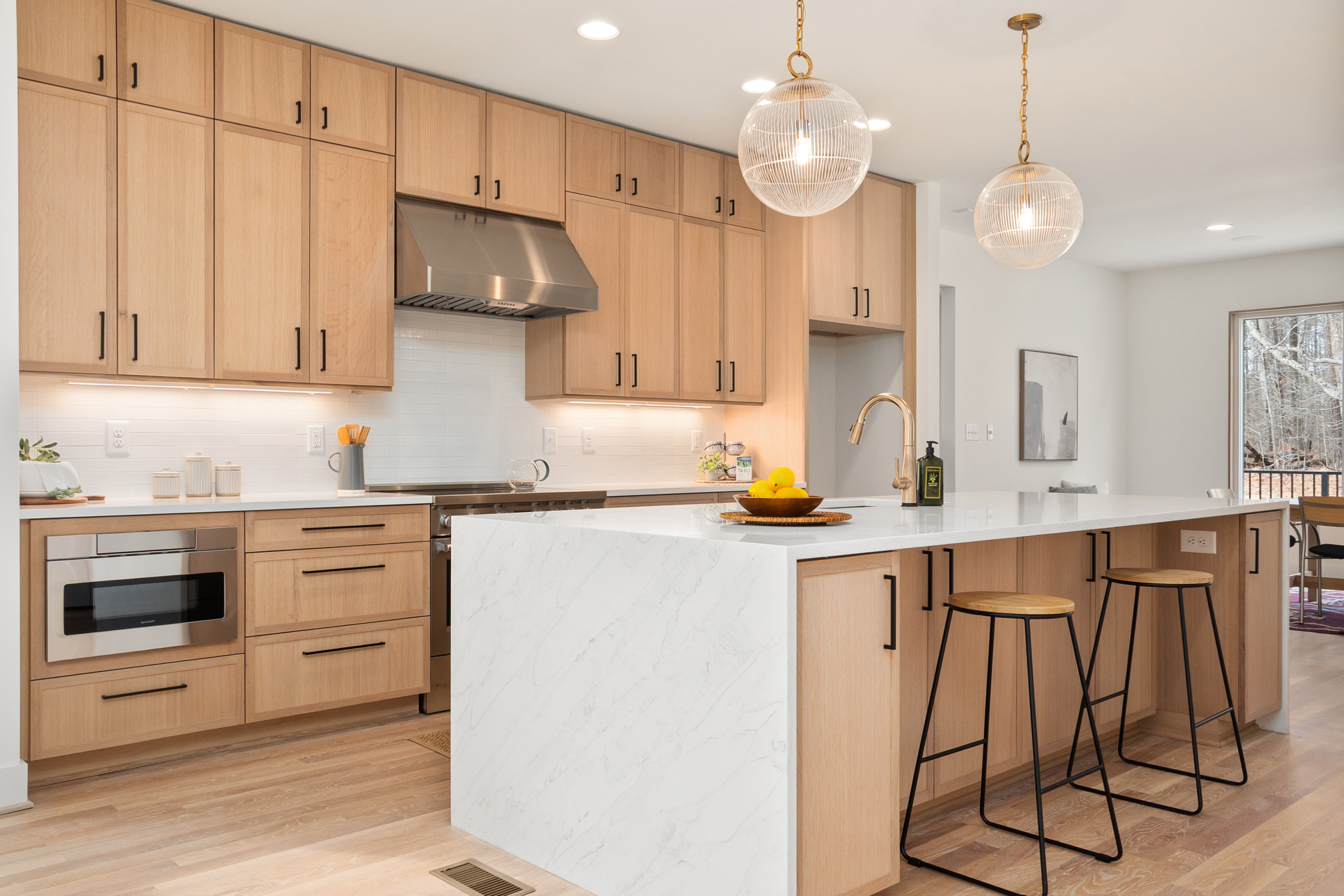
Wood and stone are natural partners, but their undertones need to cooperate. Warm oak sits comfortably with creamy limestone or warmer veined quartz, while walnut can handle cooler grey or darker stone because it already carries more visual weight. Very yellow timber beside a pink or blue-grey stone can make both materials look less deliberate. View the actual samples together in the room instead of selecting each material from separate photographs.
Use Veneer Intelligently
High-quality natural veneer is not automatically a compromise. It can create stable large panels, control grain direction and make premium species practical across extensive cabinetry. Solid timber is valuable for frames, edges, furniture and places where thickness is visible, but it is not always technically preferable for every large door. What matters is the substrate, edge treatment, grain matching and finish. A poorly printed wood-look laminate is a very different material from a well-composed natural veneer.
Control the Number of Wood Tones
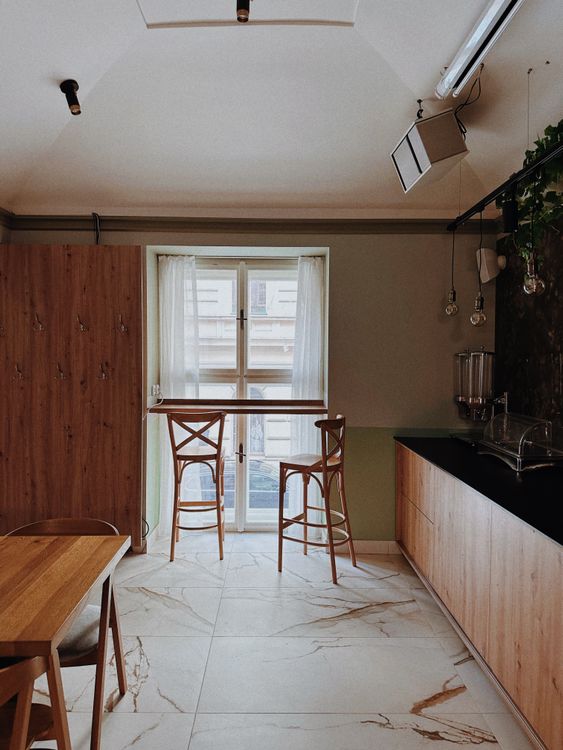
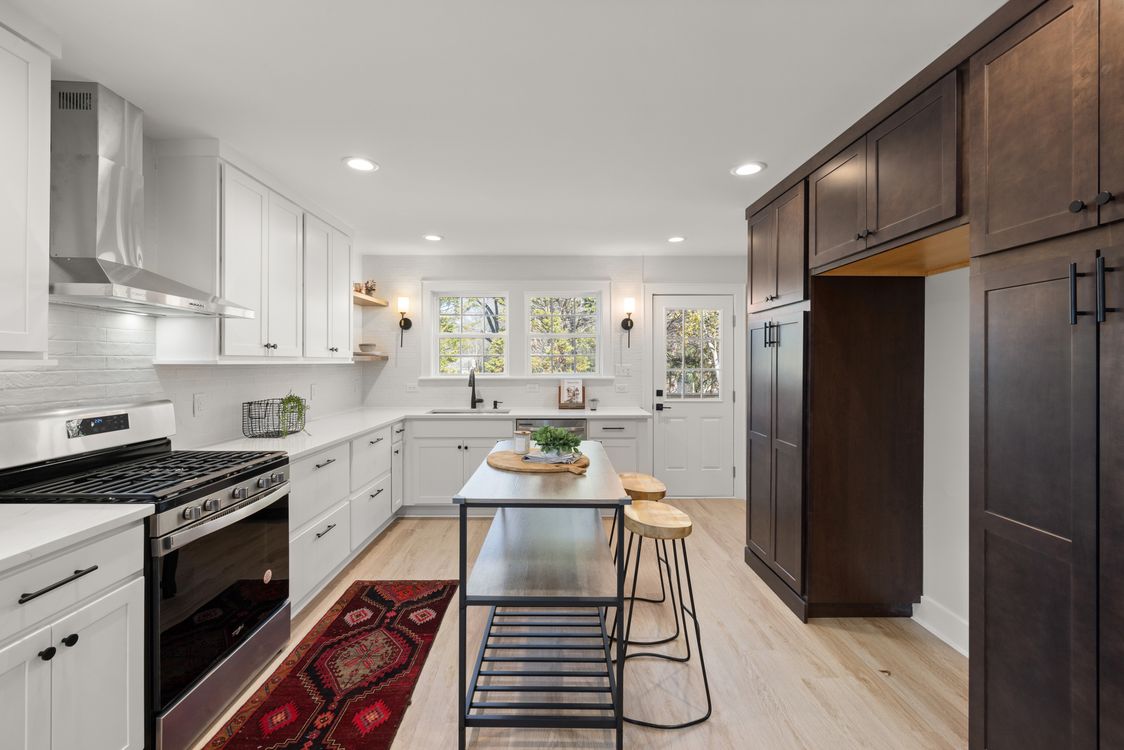
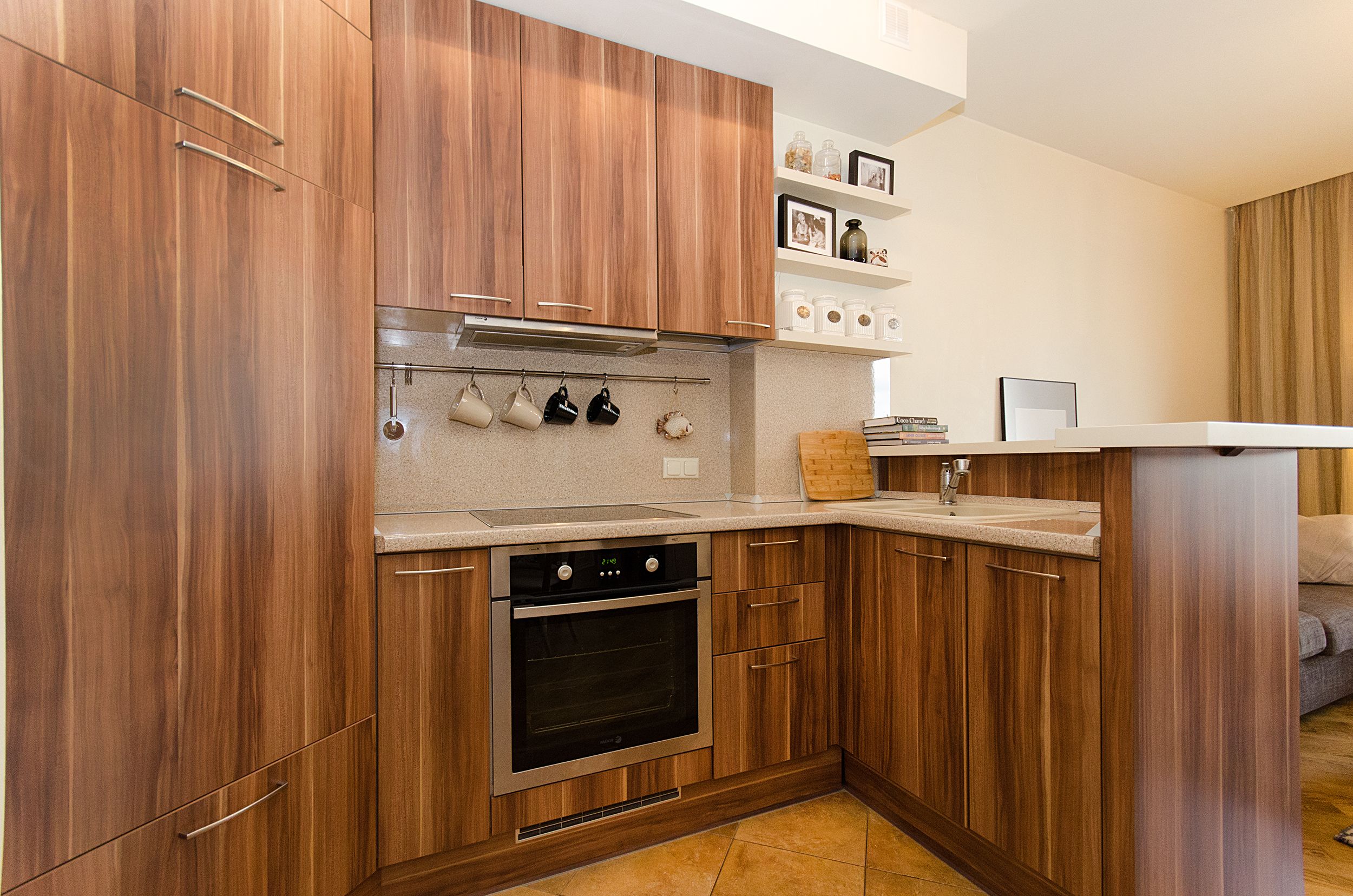
A kitchen may include timber cabinetry, a wood floor, dining furniture and stools, and they do not all need to match. Exact matching can make the room feel overly coordinated. A more useful strategy is to establish one dominant tone and let the others be clearly lighter, darker or quieter. Problems tend to appear when several medium warm woods sit close together but not quite alike. Deliberate contrast feels layered; near-matching often feels accidental.
Protect High-Wear Areas Without Hiding the Material
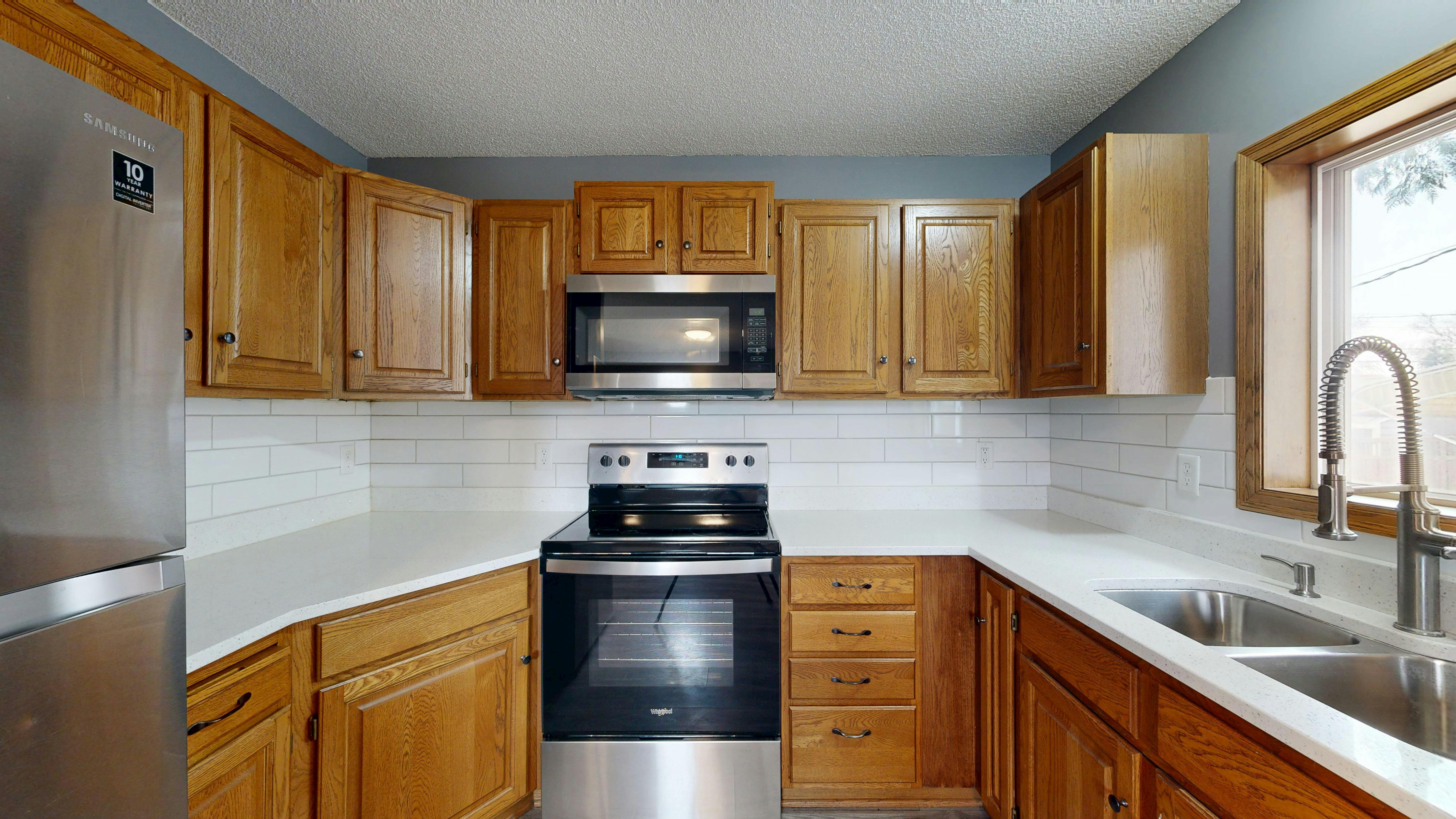
Kitchens expose timber to water, grease, heat and repeated cleaning, so finish selection matters as much as species. Around sinks, dishwashers and floor-level edges, details that prevent standing moisture are especially important. Different lacquers, oils and sealers vary in repairability and maintenance. The goal is not to make wood indestructible but to choose a finish whose aging you can accept and maintain.
Let Lighting Bring the Grain to Life
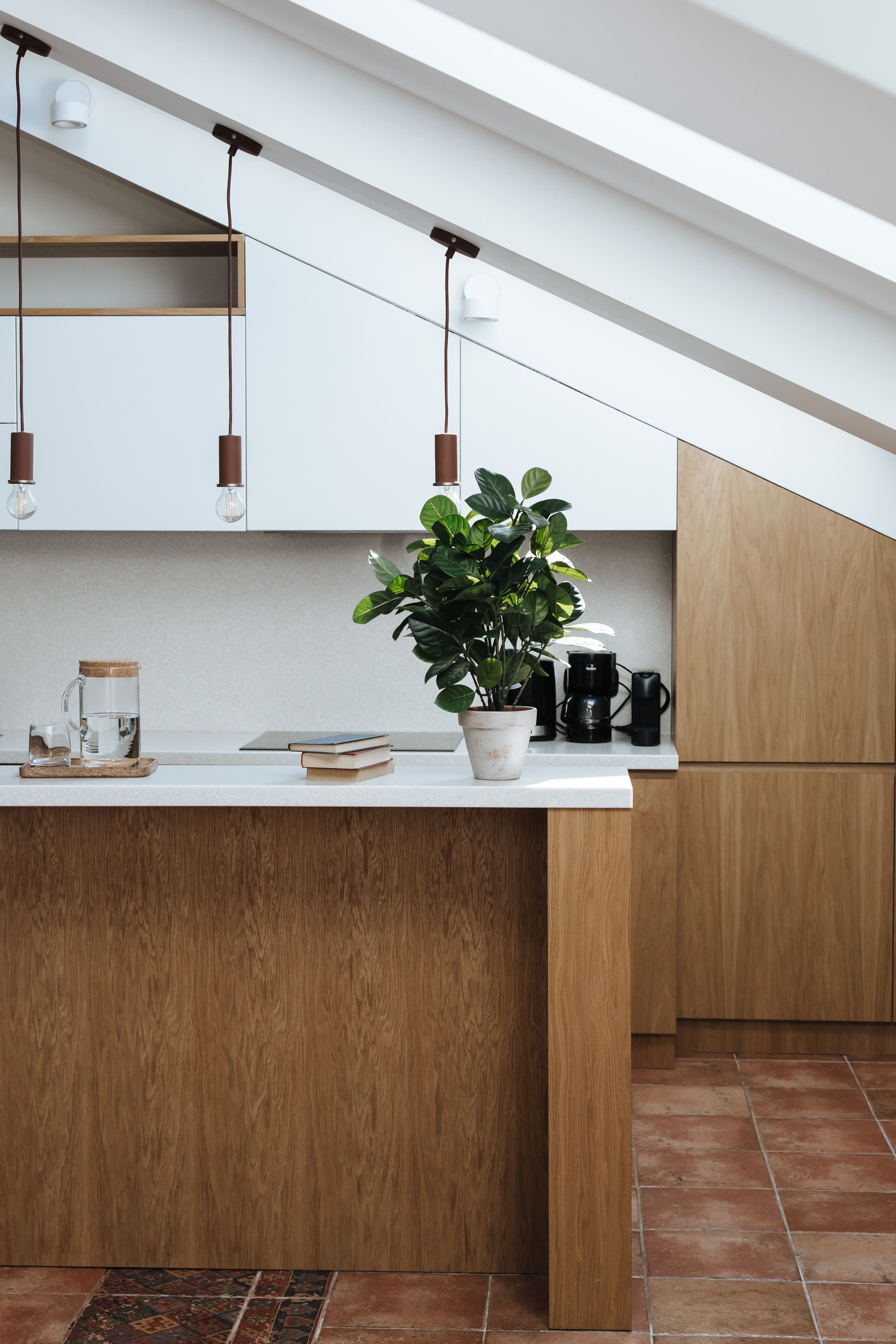
Wood changes noticeably under different light temperatures and directions. Warm lighting can enrich oak and walnut, while very cool light may flatten warmer species or make pale timber appear grey. Direction matters too: grazing light emphasizes grain and gives a veneered wall more depth, while even frontal light reduces contrast. In a wood-heavy kitchen, the aim is to reveal the material without pushing it toward orange or red.
Use Wood on the Island to Introduce Warmth
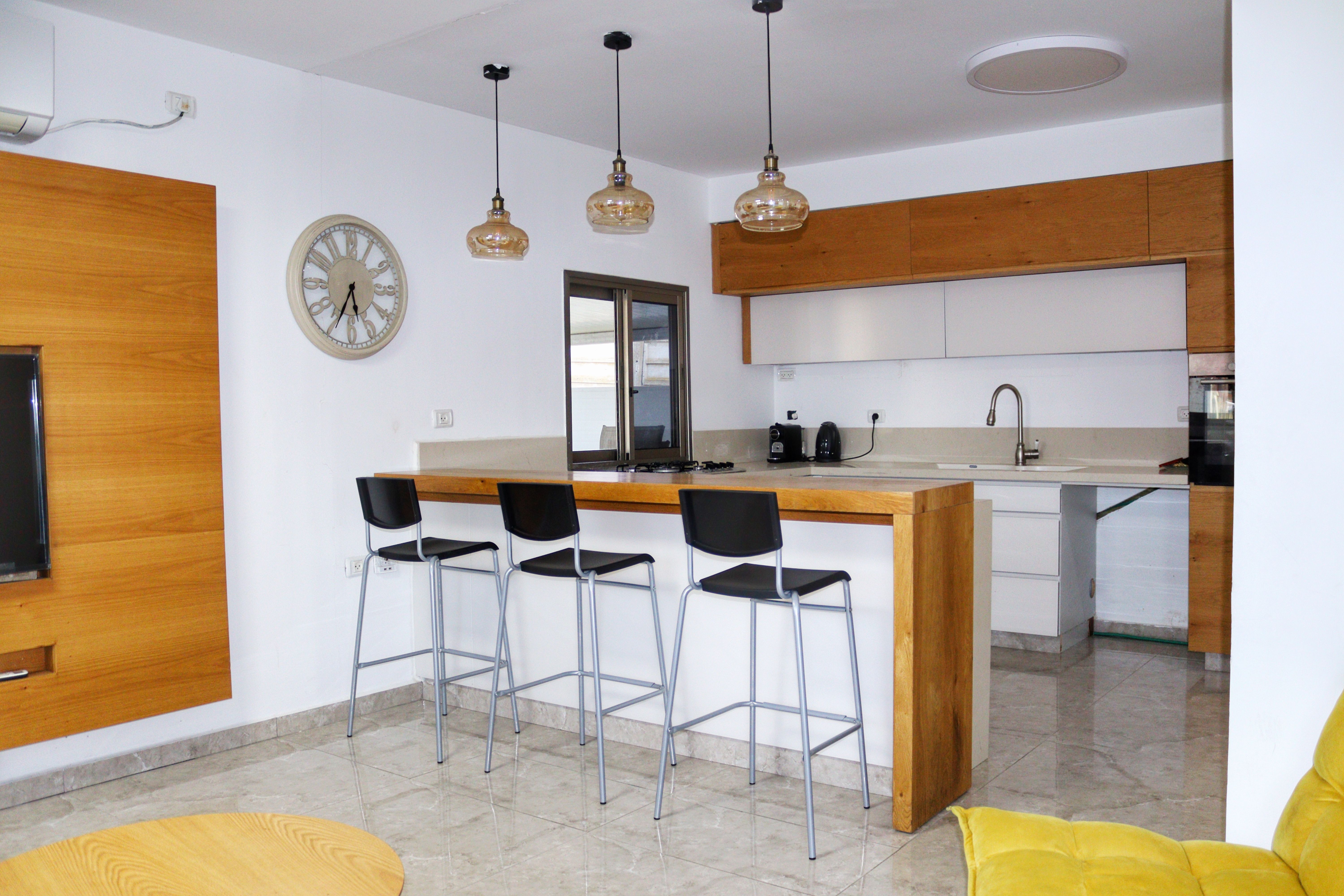
An island is a useful place to concentrate timber when the perimeter cabinetry is painted or visually quieter. Because the island is seen from several sides, wood grain makes it feel more like a freestanding piece of furniture than another fitted cabinet. A pale stone top keeps the mass defined, while matching wood on one nearby shelf or dining element can connect it to the rest of the room without repeating timber everywhere.
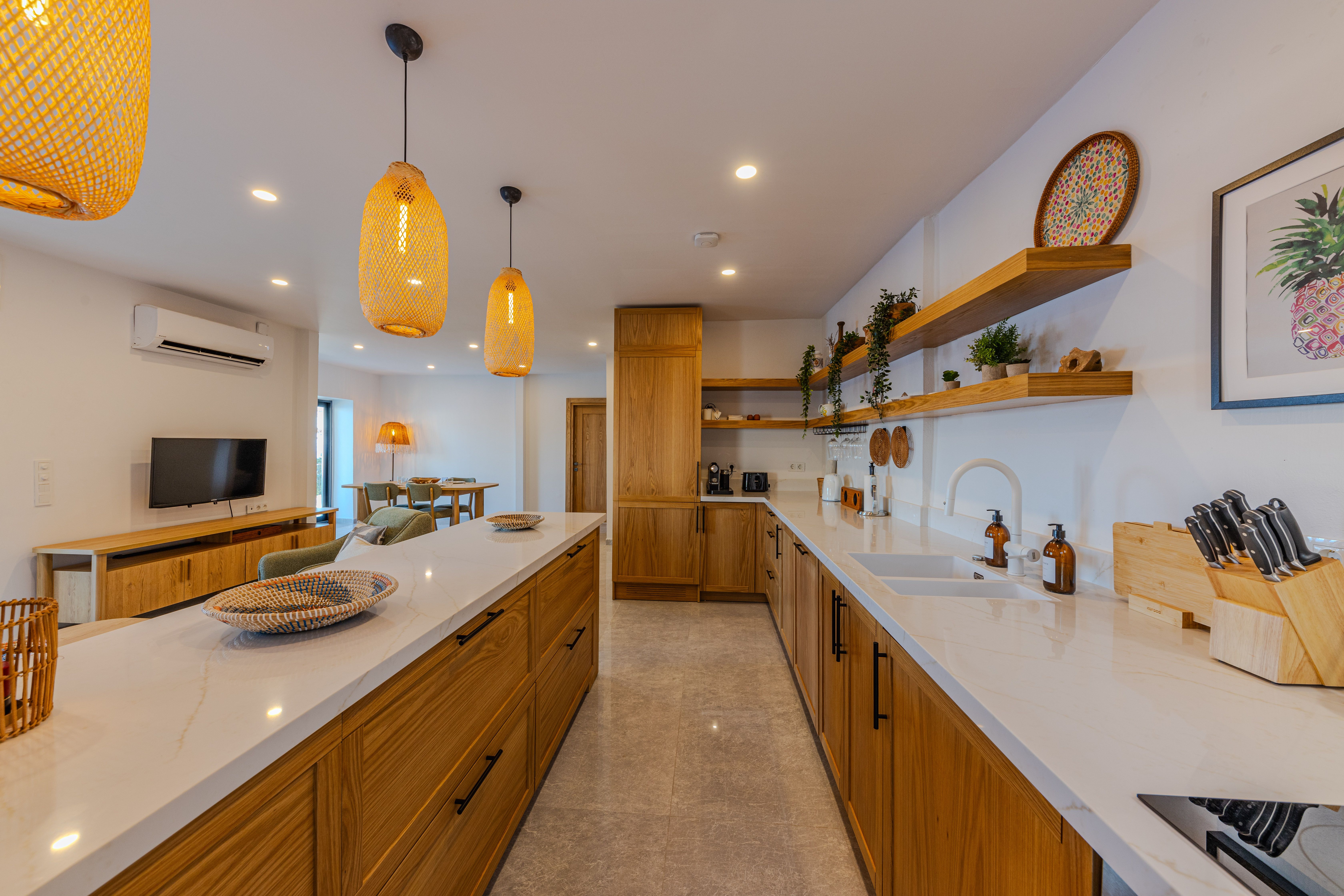
Keep Open Shelving Secondary to the Cabinetry
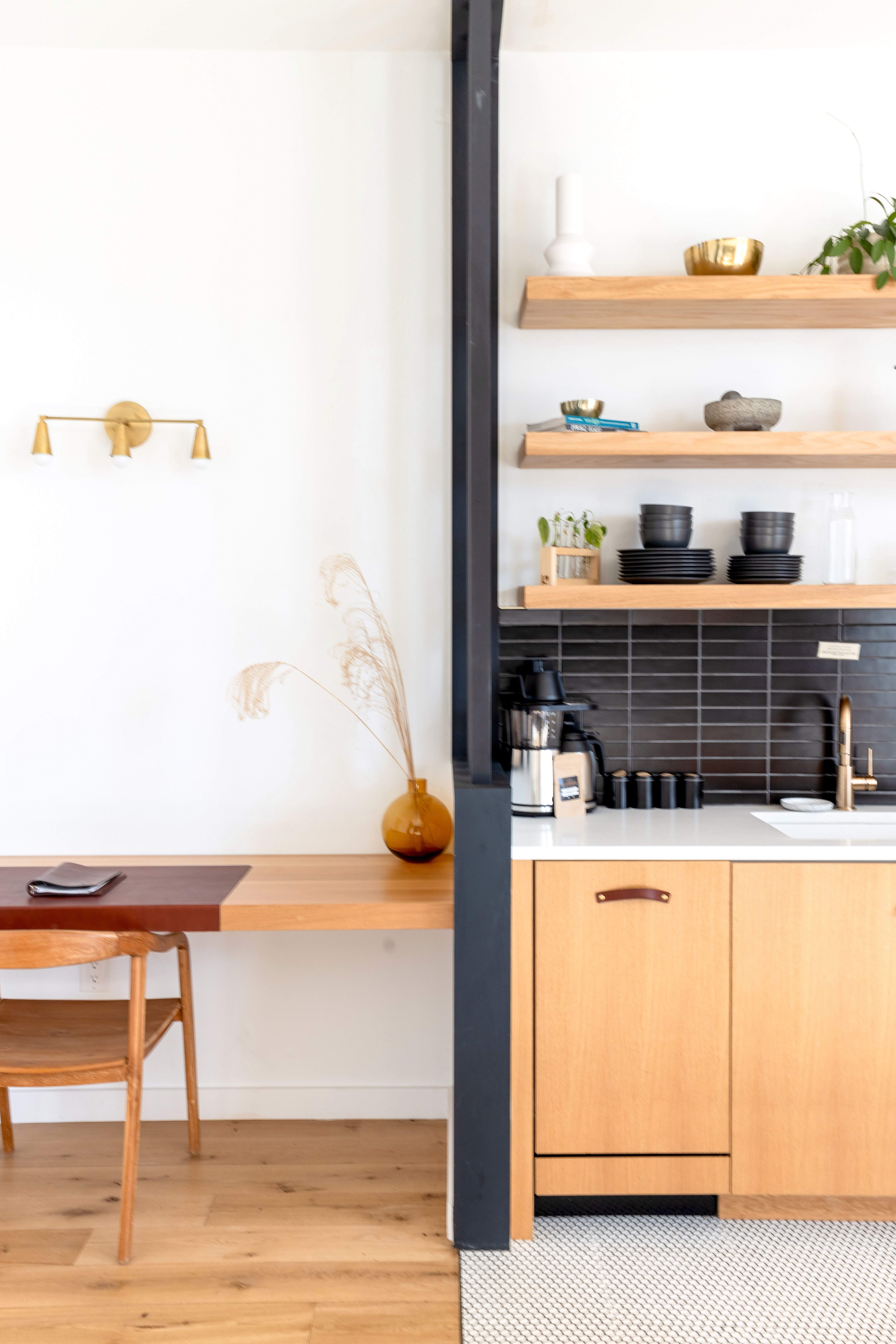
Open wood shelves can repeat the cabinetry material without introducing another large timber surface. They work best when they carry a small group of frequently used objects rather than becoming a decorative collection. If the cabinets already have strong grain, use simpler shelf profiles and leave enough wall visible around them. The shelf should support the material story, not compete with the cabinet elevation.
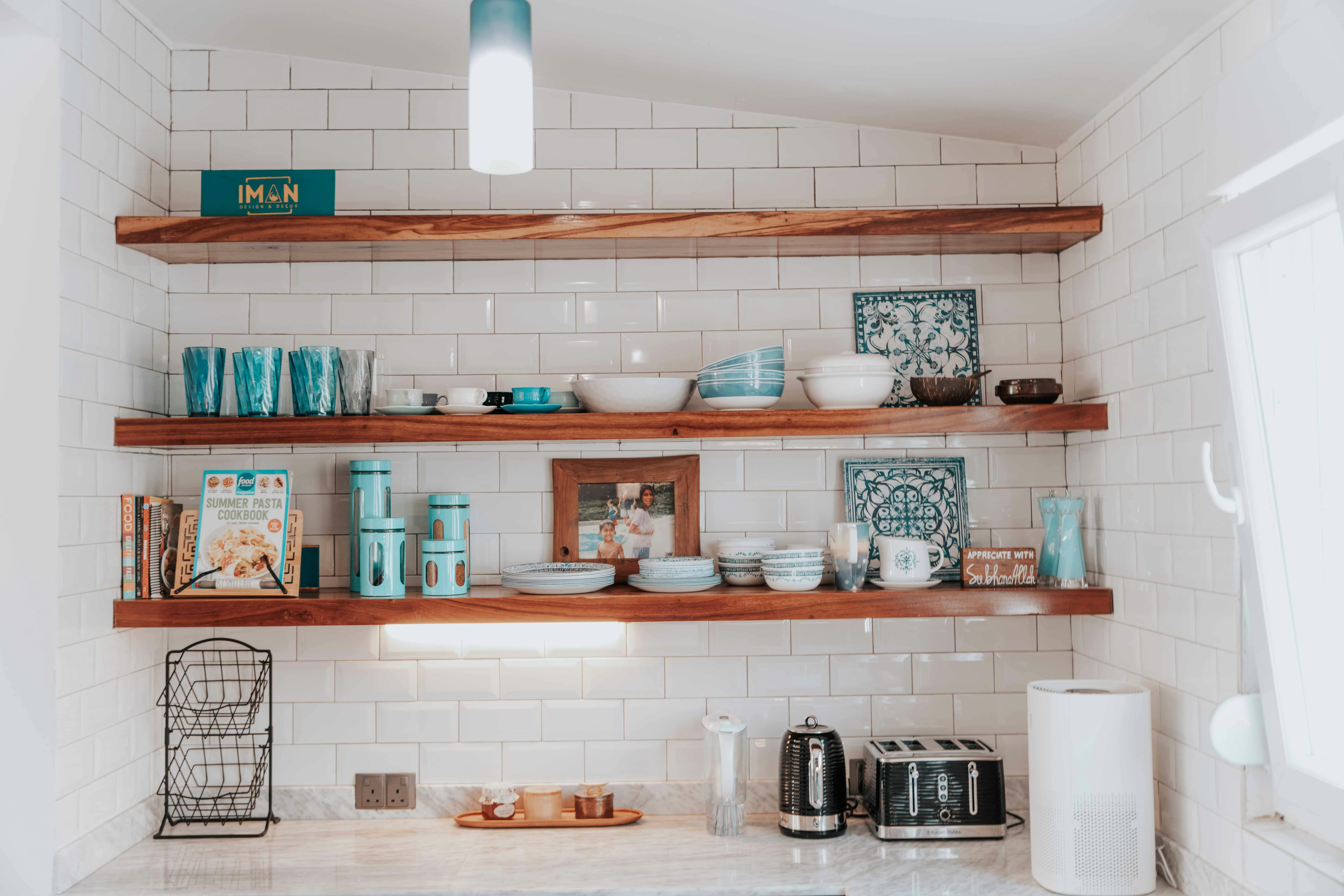
Repeat Wood Beyond the Cabinetry
In an open-plan room, repeating timber beyond the fitted kitchen can make the space feel connected without forcing exact matches. A dining table, shelving system, desk or architectural trim can share the same warmth or grain family while remaining distinct. The strongest repetition usually happens at a different scale: cabinetry may be the dominant timber field, while furniture or shelving becomes the quieter echo.