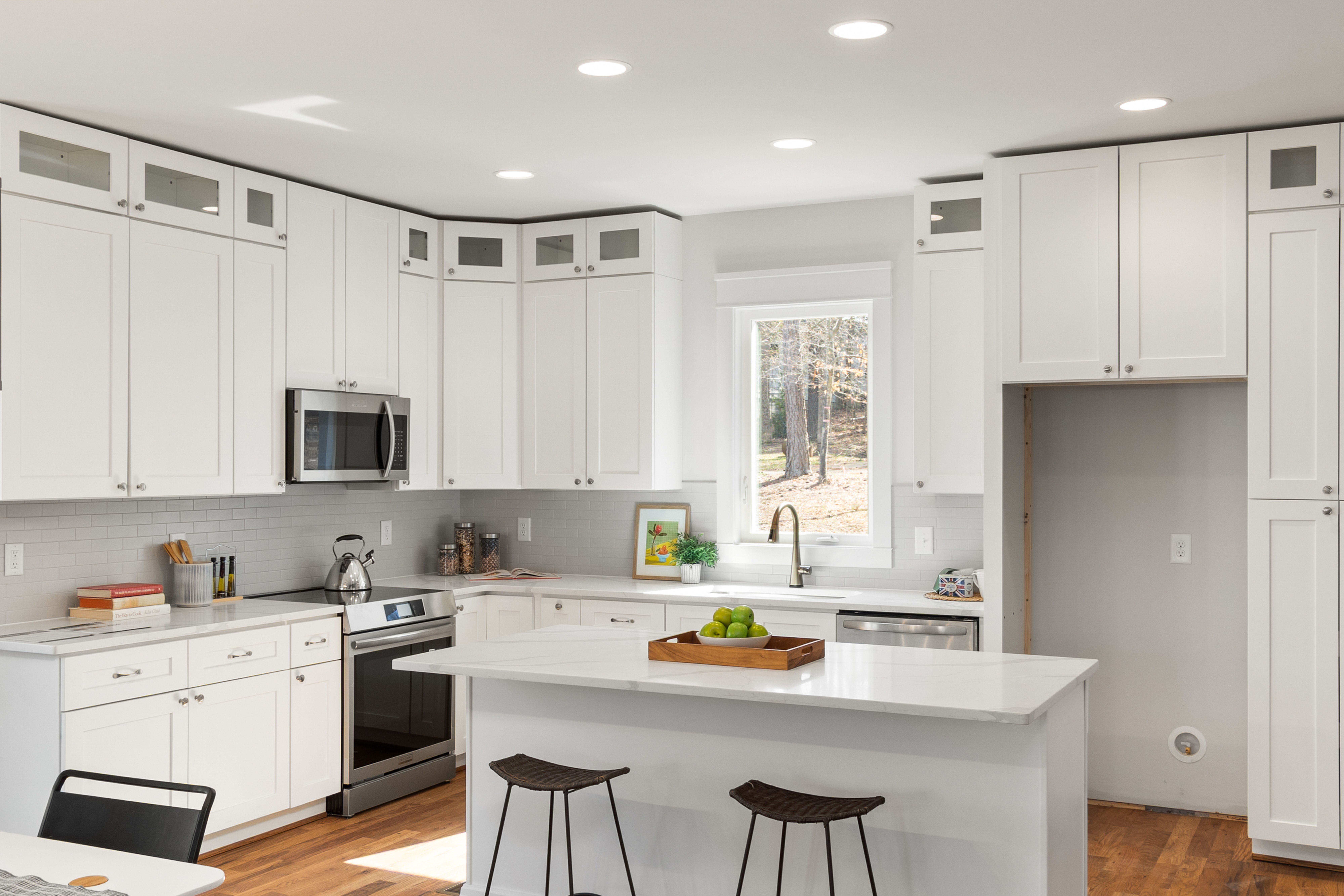
Start With a Light-Reflective Base
A coastal kitchen usually feels convincing before any blue appears. Warm white cabinetry, pale walls and a light worktop can give daylight more surfaces to move across and create the relaxed background the style needs. Avoid using several different stark whites at once; a slightly warmer undertone often sits more comfortably beside wood and woven materials.
Use Soft Blue as an Architectural Color
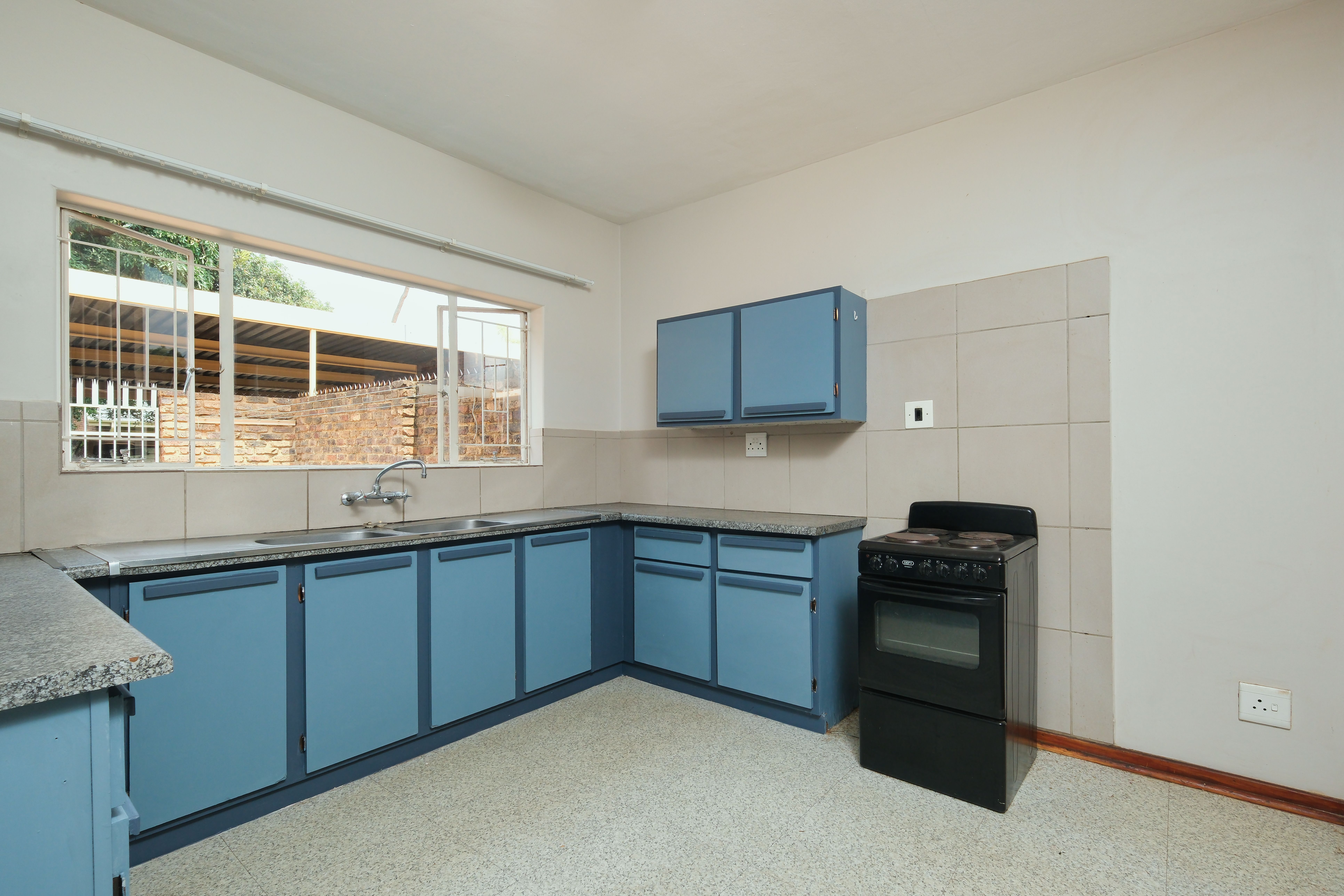
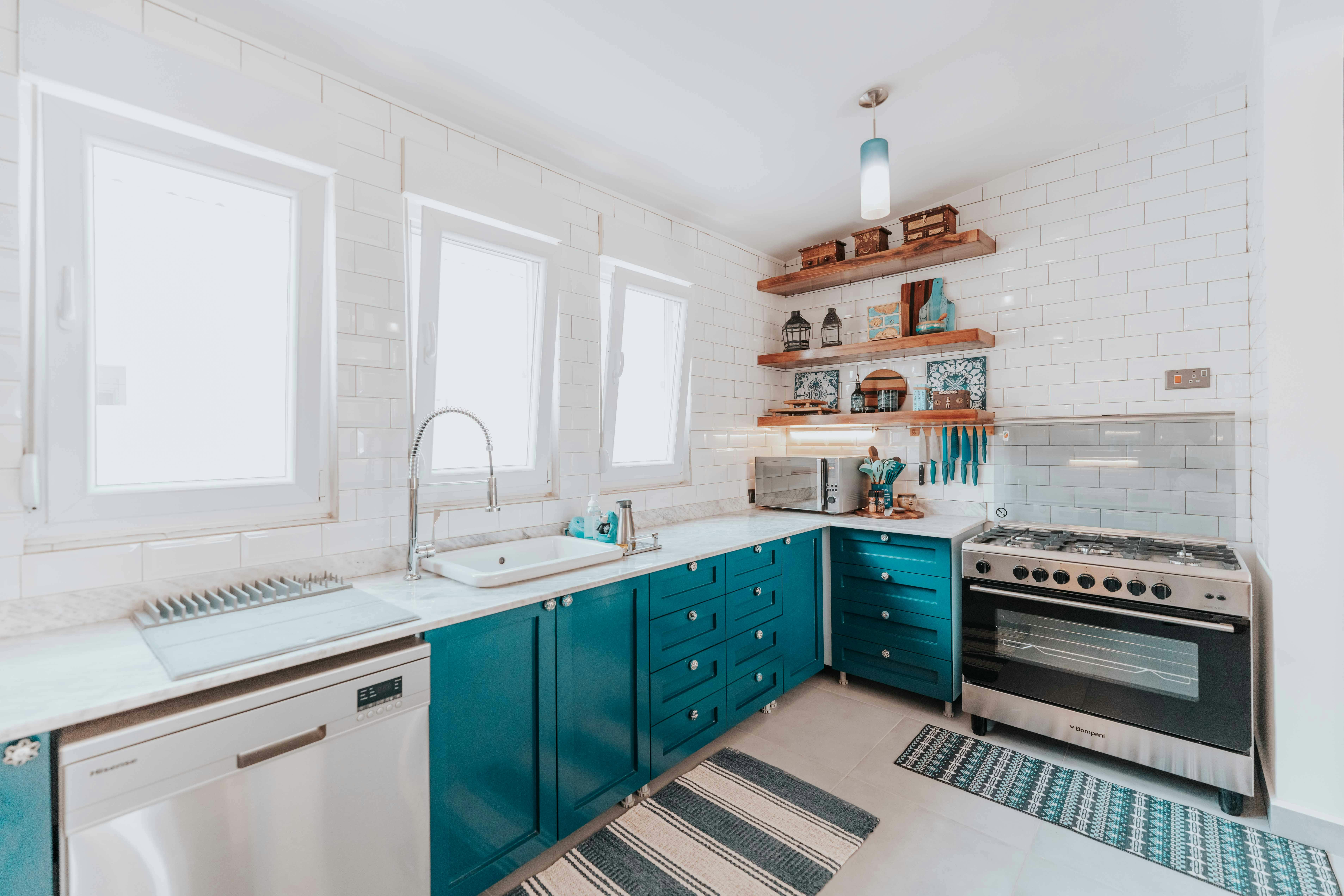
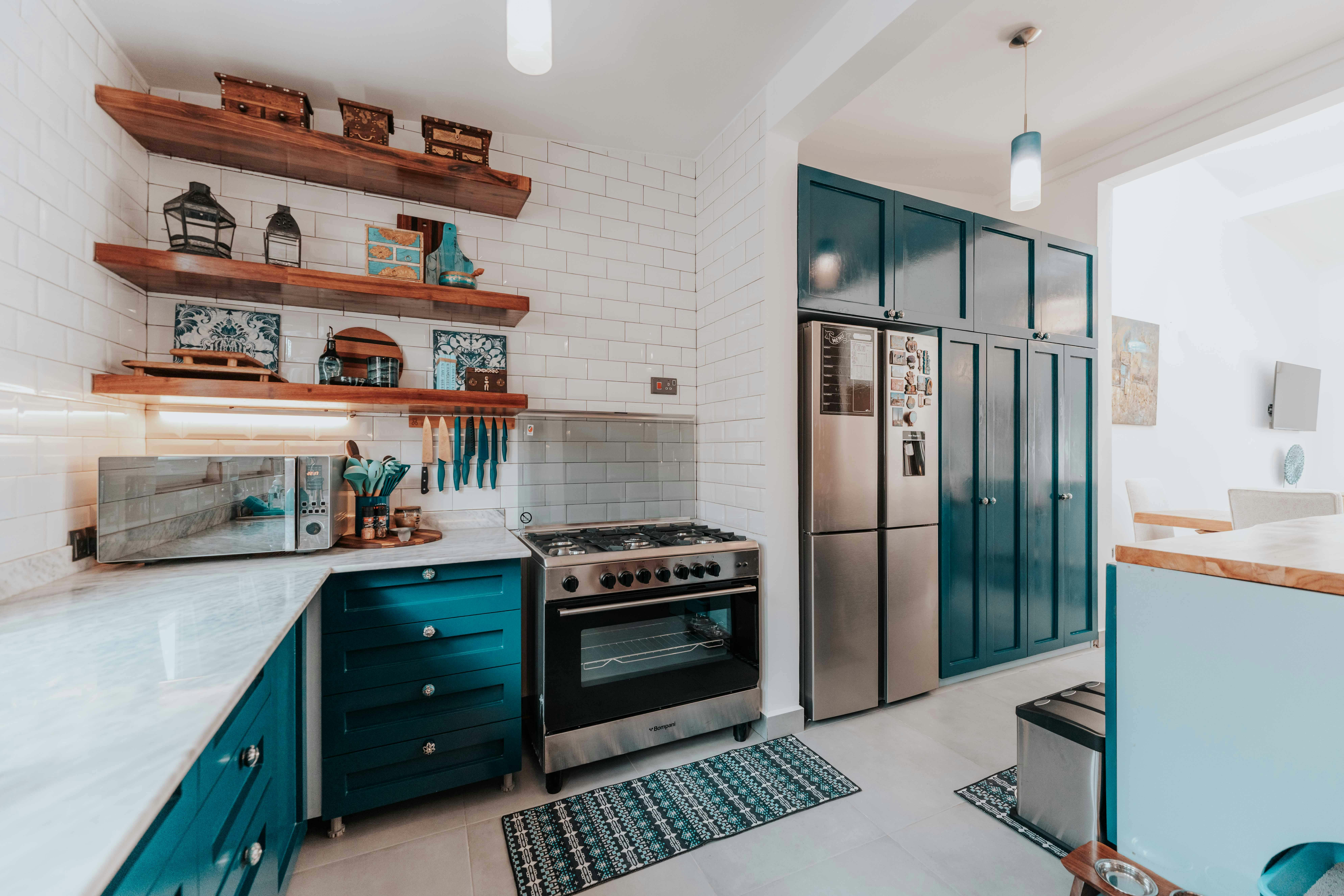
Soft blue works best when it belongs to a real surface such as a cabinet run, island or wall rather than appearing only through accessories. Greyed blue, powder blue and muted blue-green can all feel calm beside pale stone and warm white. Keep the color coherent across one zone so it reads as part of the architecture.
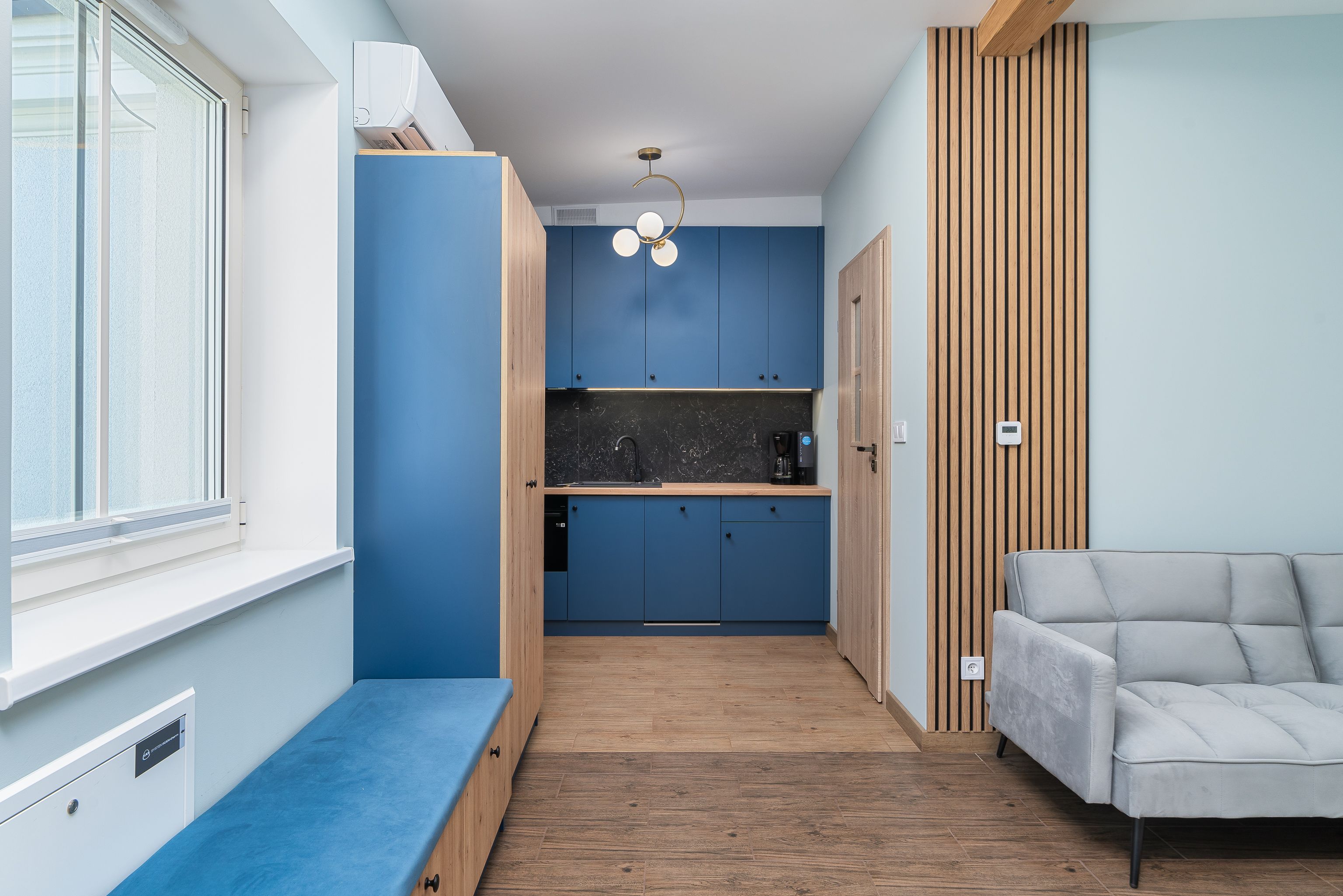
Warm White With Natural Timber
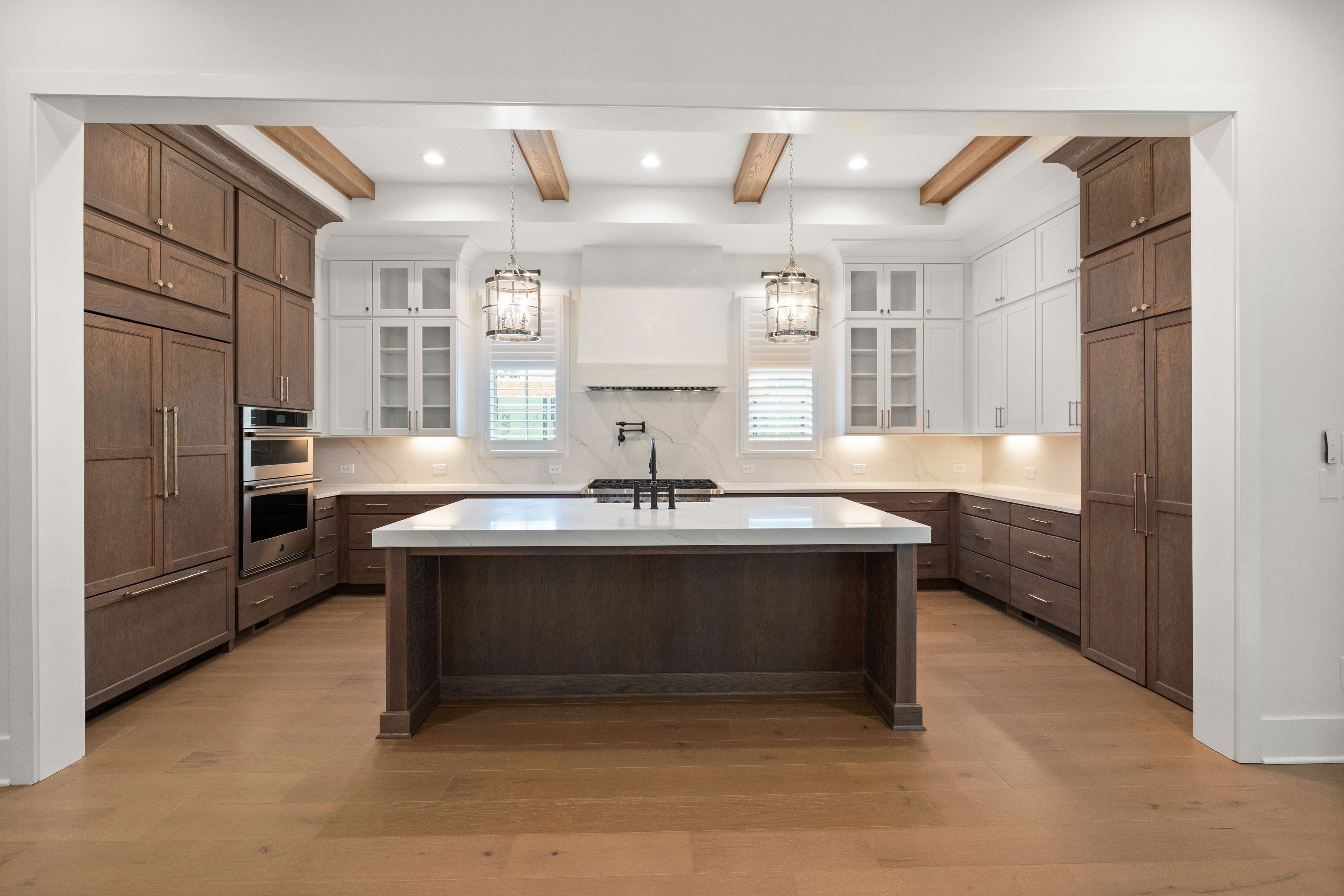
Timber is what stops a pale coastal palette from feeling clinical. Oak, ash and other warm wood tones can appear on stools, shelving, a dining table, floor or selected cabinetry. One substantial timber layer is usually more effective than scattering many small wooden accessories throughout the room.
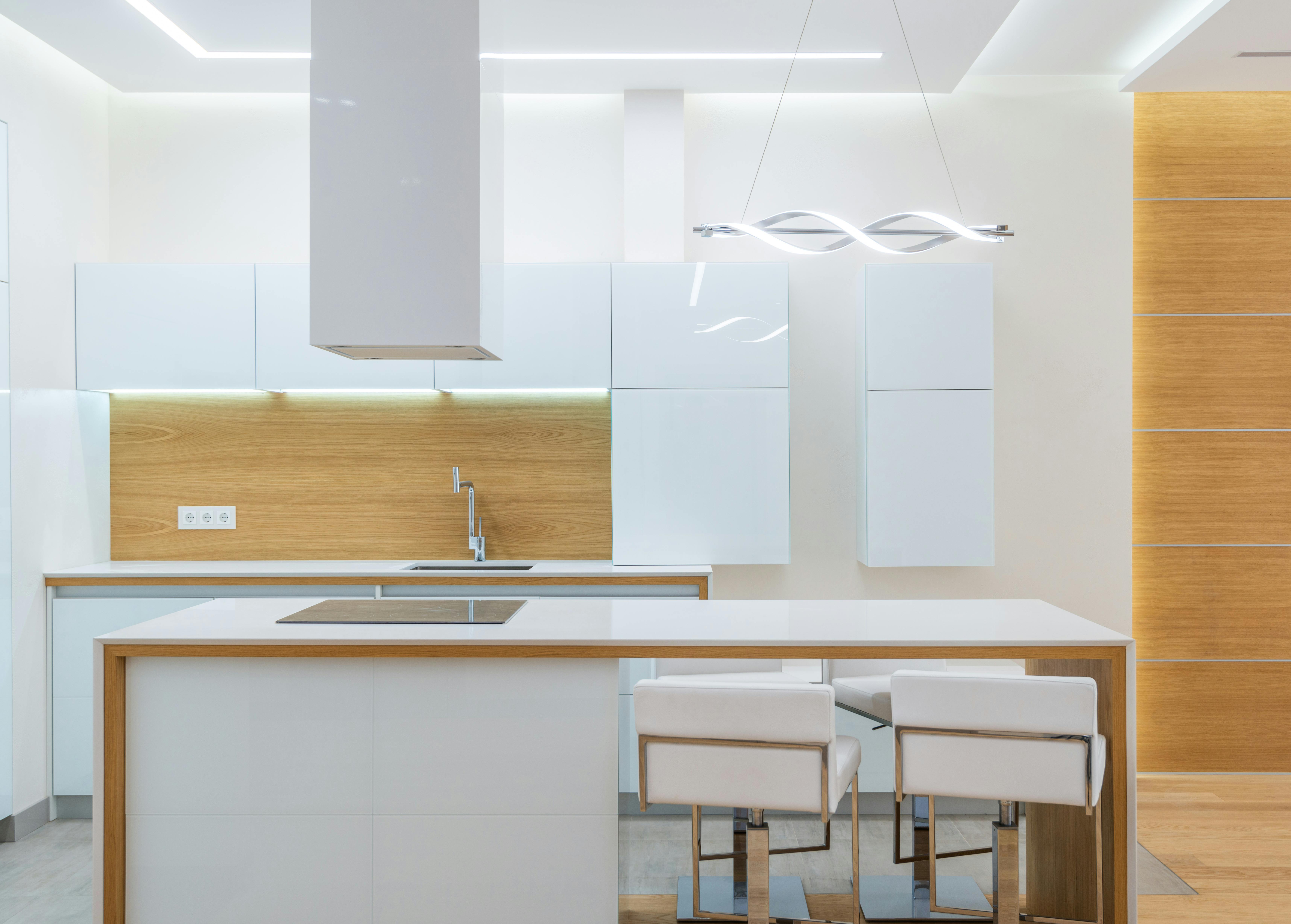
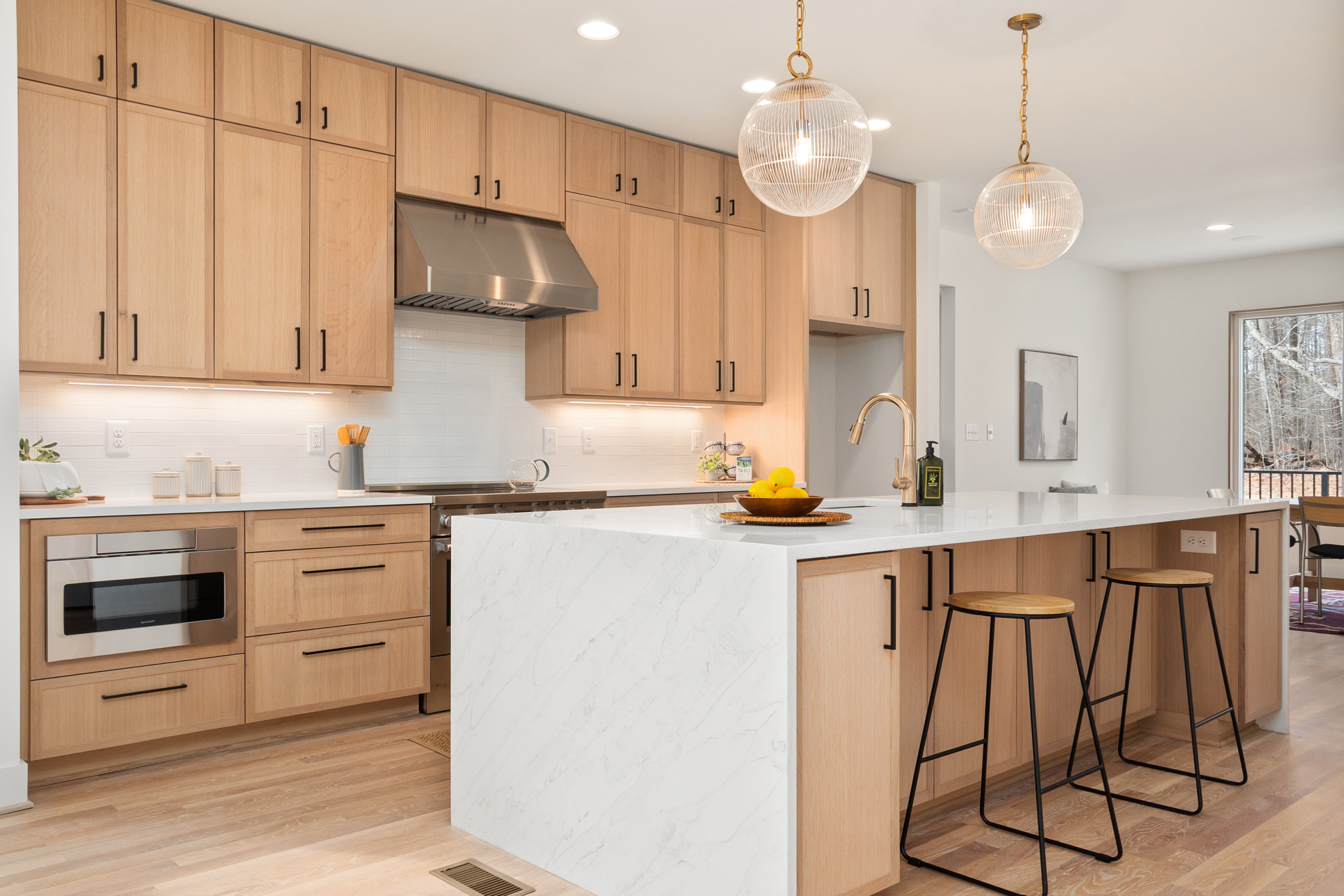
Choose Pale Stone With Gentle Movement
Pale stone can keep the room bright while adding enough variation that the surfaces do not feel flat. Softly veined marble, quartzite or a quieter engineered alternative can work well when the pattern remains secondary to the overall lightness of the room. Pair the stone with the actual timber and cabinet samples rather than choosing each material separately.
Keep Open Shelving Small and Useful
A short shelf can make a coastal kitchen feel lighter than a full wall of upper cabinets, but it should hold things that are genuinely used. Cups, bowls, a small plant or a few serving pieces can remain visible while closed storage handles packaging and larger appliances. The goal is air around the objects, not a permanent styling display.
Add Woven Texture Through One Clear Element
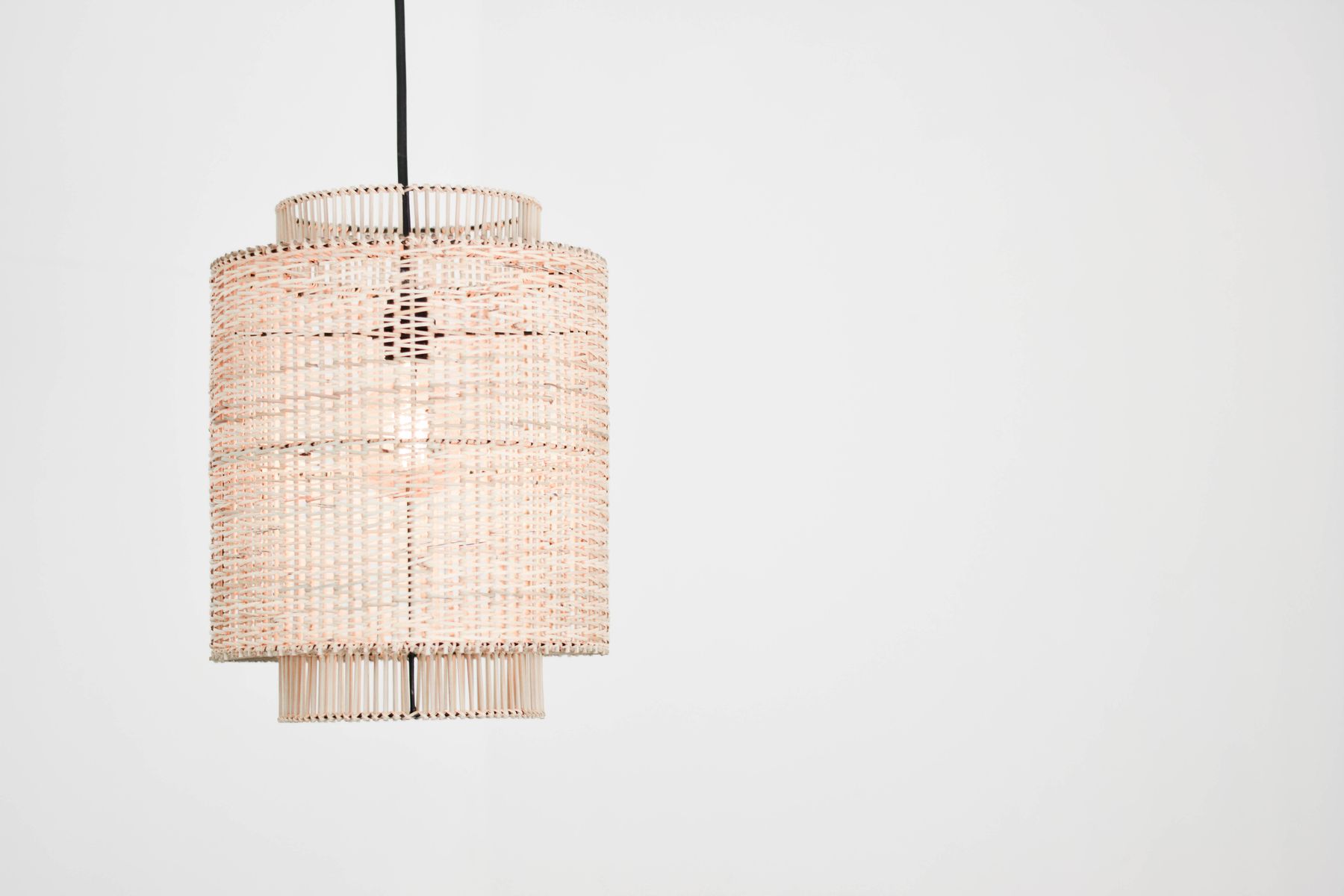
Woven texture can introduce softness without adding another strong color. A pendant, seat, basket or blind may be enough. Use the material where it has a clear function and avoid repeating the same weave across every accessory. In a kitchen, easy cleaning and safe placement still matter more than the decorative association.

Use a Deeper Blue on the Island
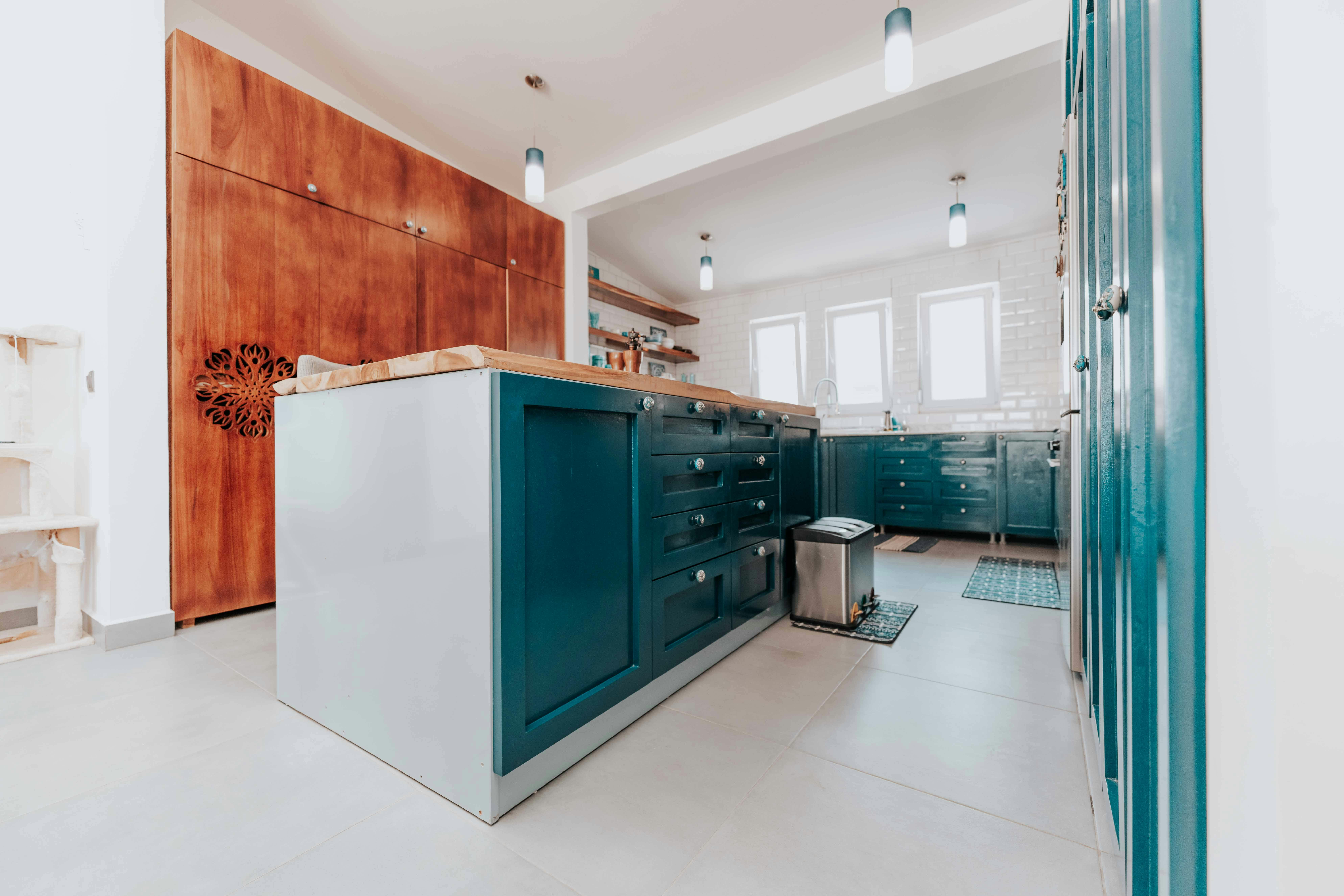
A deeper navy or blue-grey island can anchor a room that would otherwise be very pale. Because the island is seen from several sides, it can carry stronger color without requiring the whole kitchen to become dark. Pale stone above and warm timber nearby keep the contrast balanced.
Keep the Hardware Simple
Nickel, brushed brass, stainless steel and dark metal can all work in a coastal kitchen. The finish matters less than restraint and comfort. Choose hardware that suits the cabinet proportions and repeat it consistently enough to connect the room. Avoid novelty shell, anchor or rope-shaped fittings unless there is a very specific reason to use them.
Let Daylight Do Most of the Work
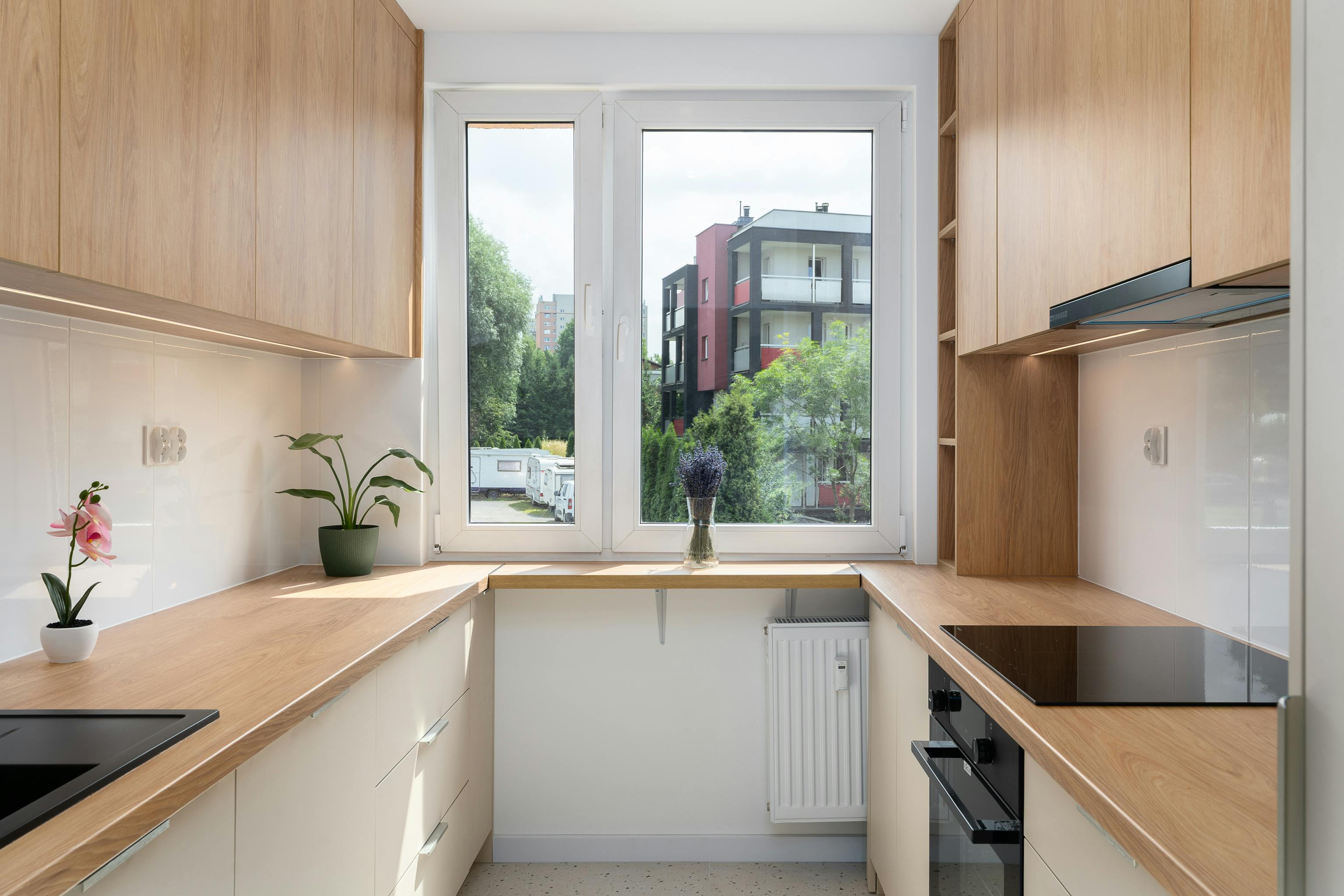
The most convincing coastal kitchens often feel open because daylight reaches the main work surfaces and the window area is not visually crowded. Keep tall storage away from the strongest light source where the plan allows and use pale, matte surfaces to distribute light without excessive glare. At night, warm layered lighting should preserve the relaxed material palette.
Make a Small Coastal Kitchen Feel Airy, Not Empty
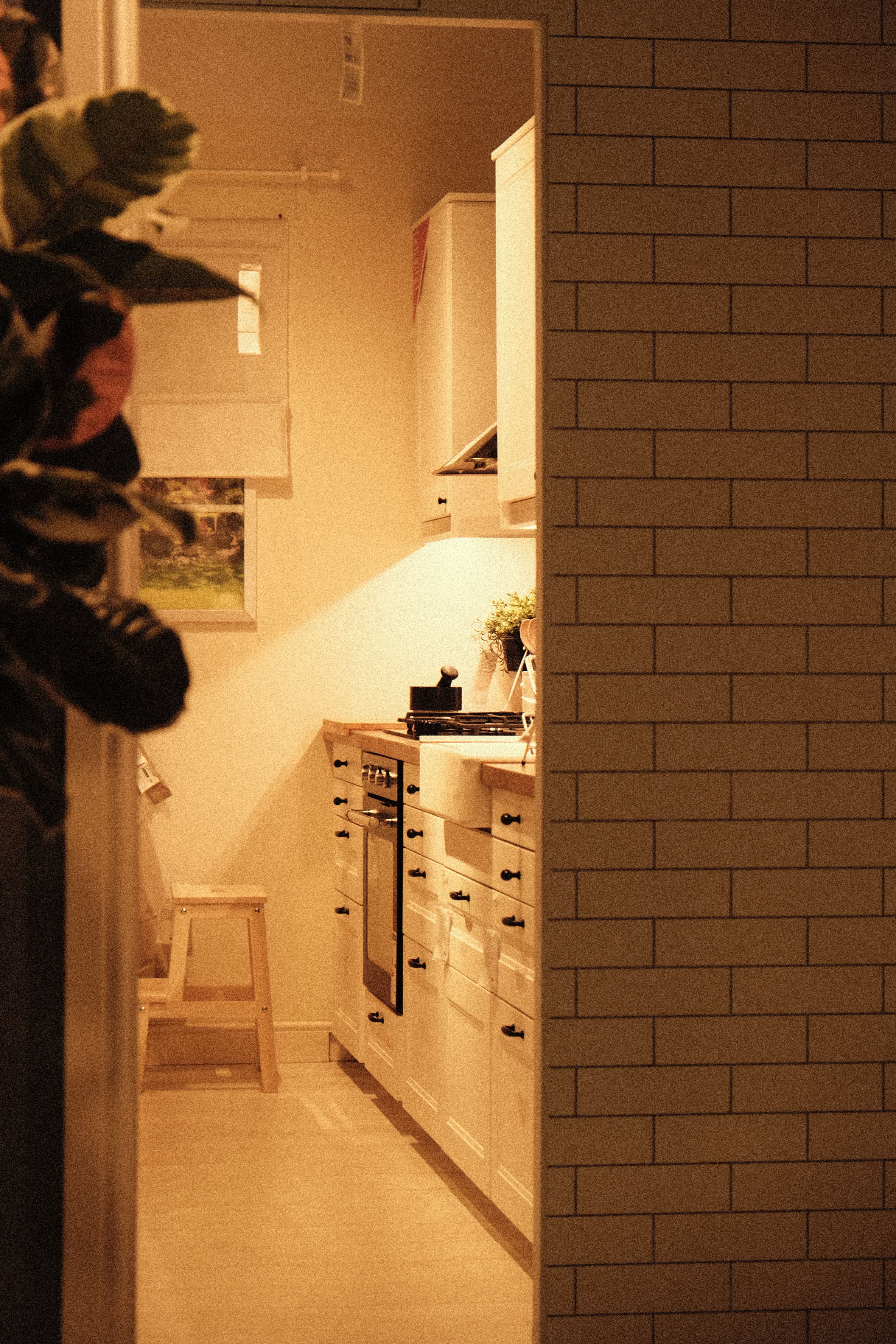
A compact coastal kitchen does not need open shelves on every wall or all-white surfaces to feel light. Concentrate storage, protect one real worktop and use blue or timber in one coherent zone. Visible floor area and a clear route through the room often create more spaciousness than adding decorative 'beach' objects.