Begin With Cabinetry That Can Age Gracefully
Simple framed doors suit farmhouse kitchens because their construction is visible without feeling ornate. Warm white, cream, muted green, blue-grey and natural timber can all work, but the finish should tolerate everyday use rather than depend on a perfect showroom surface. Small signs of wear should feel compatible with the room. Artificial distressing is rarely necessary; real material variation and normal use create more believable character over time.
Use the Island Like a Worktable
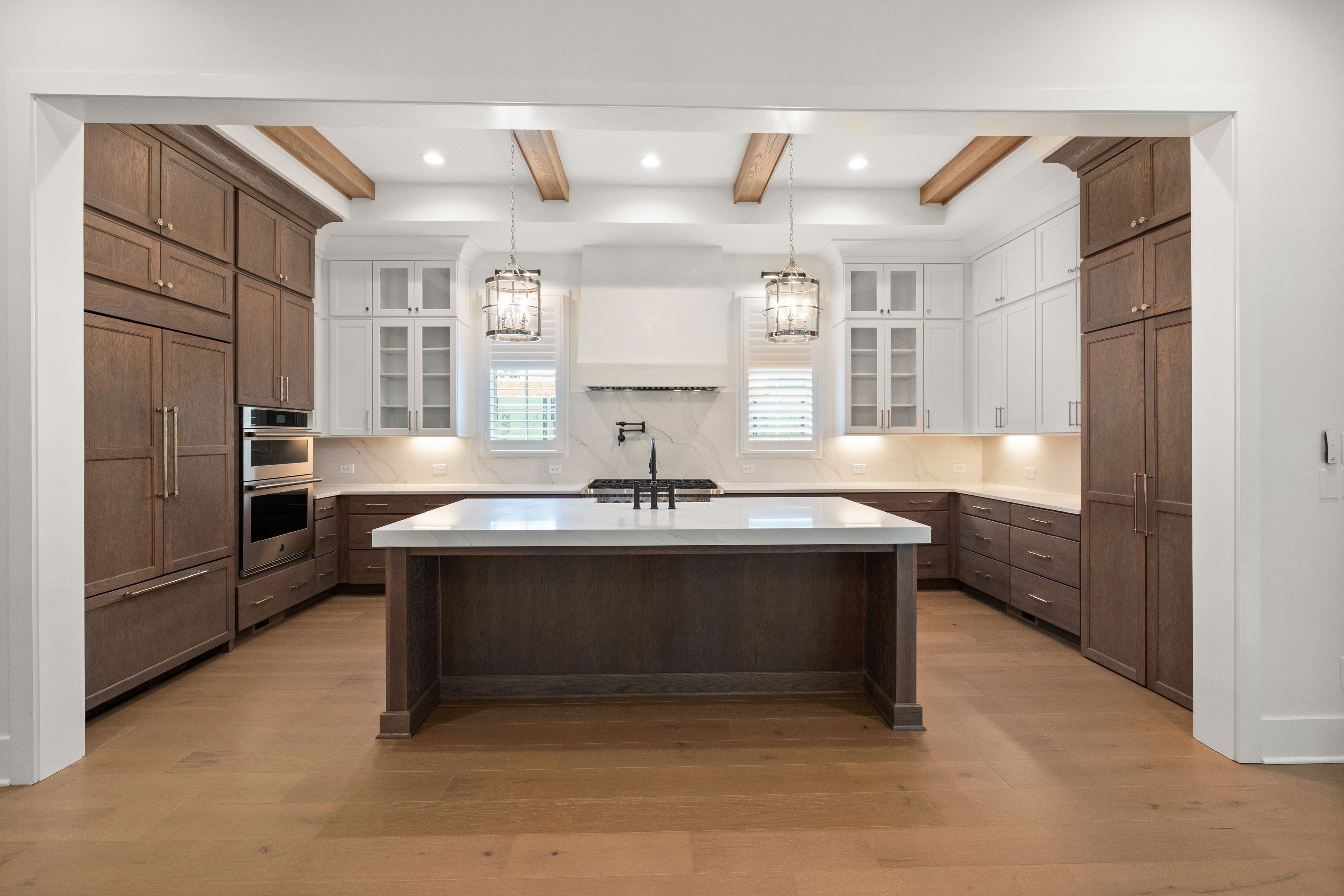
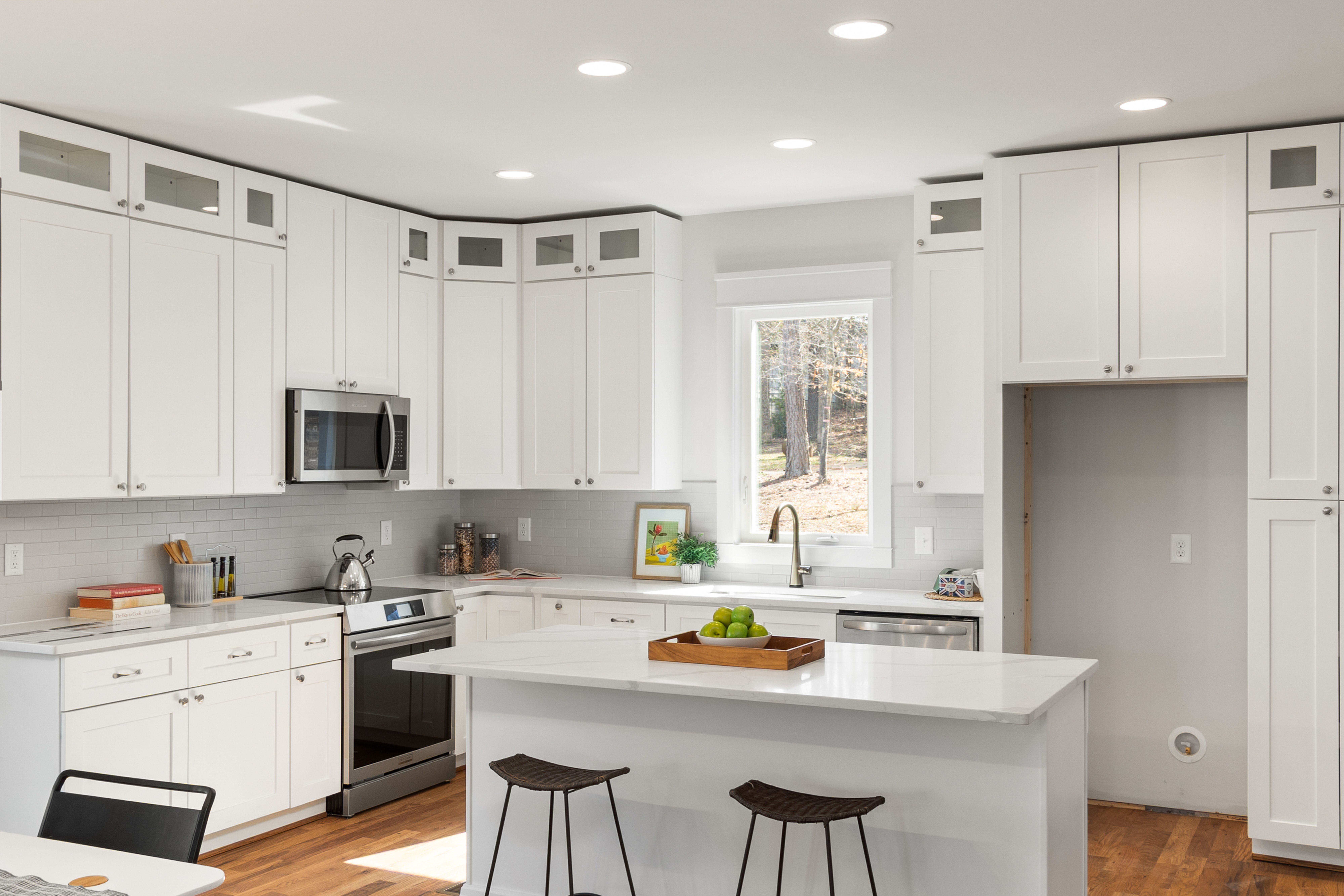
A farmhouse island often feels more convincing when it reads as a substantial worktable rather than a monolithic block. Visible legs, an overhang, a contrasting top or a different paint color can separate it from the perimeter cabinetry. In smaller rooms, a real table or compact butcher-block piece may provide enough preparation and gathering space while keeping the floor visually lighter. The goal is to create a useful center, not simply the largest island the room can physically hold.


Let the Sink Area Carry Some Character
An apron-front sink is one of the clearest farmhouse references, but it should still be selected as equipment first. Depth, drainage, cabinet support and ease of cleaning matter every day. If a ceramic farmhouse sink feels impractical for the household, a simple undermount sink with a substantial faucet can still sit comfortably inside a farmhouse scheme. Let the surrounding cabinetry, worktop and window treatment carry the atmosphere rather than forcing one iconic detail.
Choose Surfaces With Natural Variation
Farmhouse kitchens gain depth from materials that do not look perfectly uniform. Stone with subtle veining, timber with visible grain, handmade-look tile and softly textured ceramics can all contribute. This does not mean every surface should be rustic. A smooth quartz worktop can sit beside painted cabinets and a more irregular backsplash; a refined floor can balance timber elsewhere. The useful contrast is between tactile and quiet surfaces, not between old-looking and new-looking materials.

Make Open Storage Earn Its Place
Plate racks, shelves, rails and glass-front cabinets can support the practical, collected quality of farmhouse design when they hold objects used frequently. Open storage becomes less convincing when it exists only to display decorative pieces that need constant arranging. Keep daily bowls, mugs, jars or utensils accessible and use closed storage for packaging and less attractive supplies. A shelf with breathing room often feels more domestic than a wall filled edge to edge.


Mix Old and New Without Hiding the Modern Parts
A farmhouse kitchen does not become more authentic by disguising every modern appliance. Stainless steel, induction, modern refrigeration and contemporary ventilation can coexist with timber, framed cabinets and traditional forms when the arrangement is calm. The most convincing rooms let the architecture and tactile materials carry the sense of history while the equipment remains straightforward. Trying to make every new object look artificially old often pushes the room toward theme rather than character.
Use Muted Color Instead of Distressing
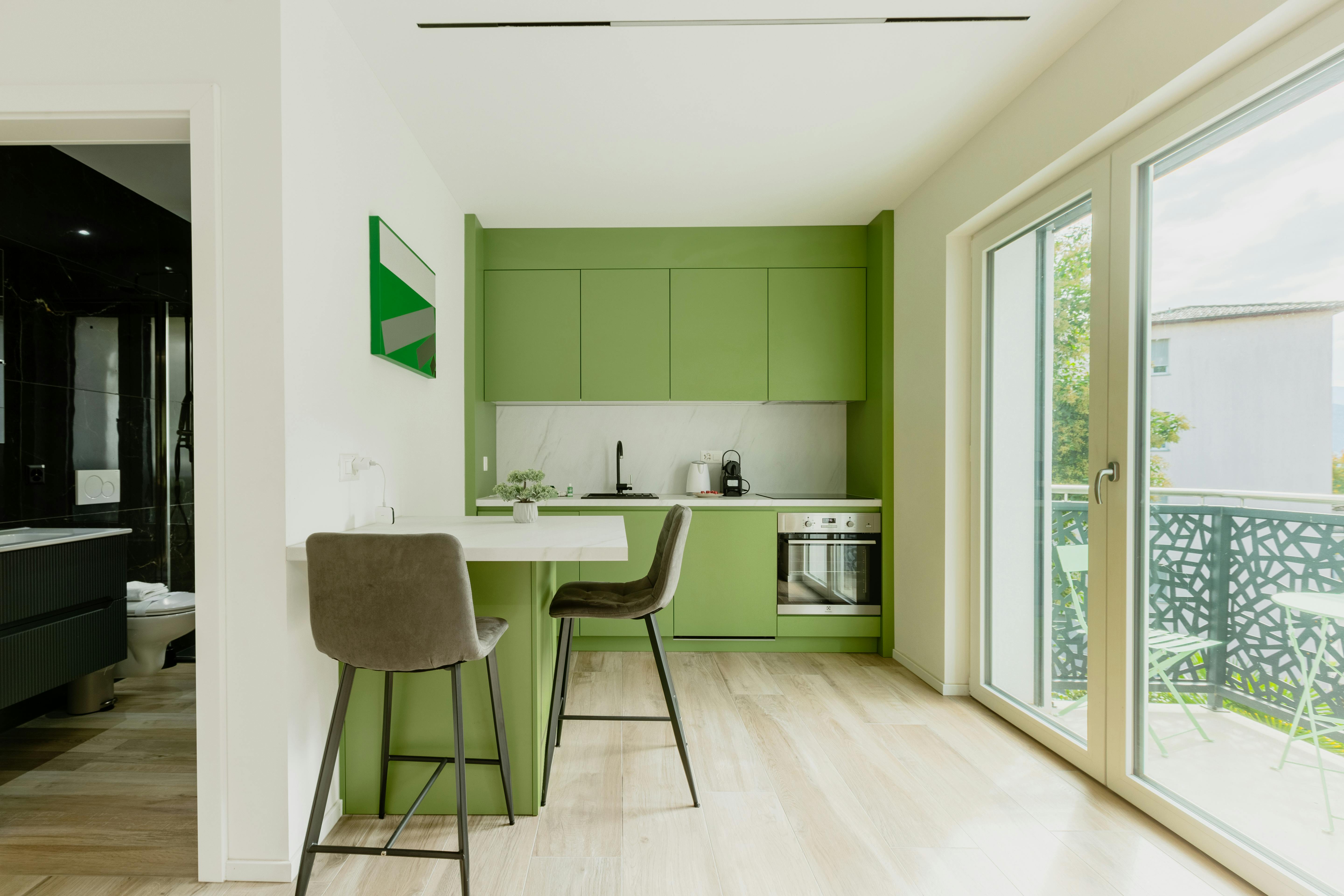
Muted green, dusty blue, blue-grey, cream and earthy neutrals can give a farmhouse kitchen age and softness without relying on chipped paint or faux patina. Color is especially useful when the cabinetry is simple because it creates character while preserving clean construction. A single painted run or island can also sit comfortably beside timber and stainless steel, giving the room a collected quality without making every surface look deliberately old.


Make Dining Part of the Kitchen
Farmhouse kitchens often feel strongest when eating and cooking are visually connected. A timber table, bench or informal dining corner can make the room feel less like fitted cabinetry and more like a lived-in domestic space. The table does not need to match the cabinets exactly. A little variation in tone helps it read as furniture. What matters more is that the dining piece fits circulation and can tolerate everyday use.
Let Wood Carry the Warmth
Wood is often the material that makes a farmhouse kitchen feel established rather than newly assembled. It can appear on worktops, shelving, flooring, a table or selected cabinet fronts. The strongest effect usually comes from one or two substantial timber elements rather than many small wooden accessories. Allow the grain and normal variation to do the decorative work, then keep surrounding surfaces quieter.

Finish With Everyday Objects, Not Farmhouse Props
Linen, cutting boards, ceramic bowls, baskets, fruit, flowers and useful jars can soften a farmhouse kitchen because they belong naturally to the work of the room. The distinction is important: useful objects create atmosphere through daily life, while themed signs and ornamental props often make the space feel staged. Add decorative layers only after the storage, work surfaces and furniture already feel complete.