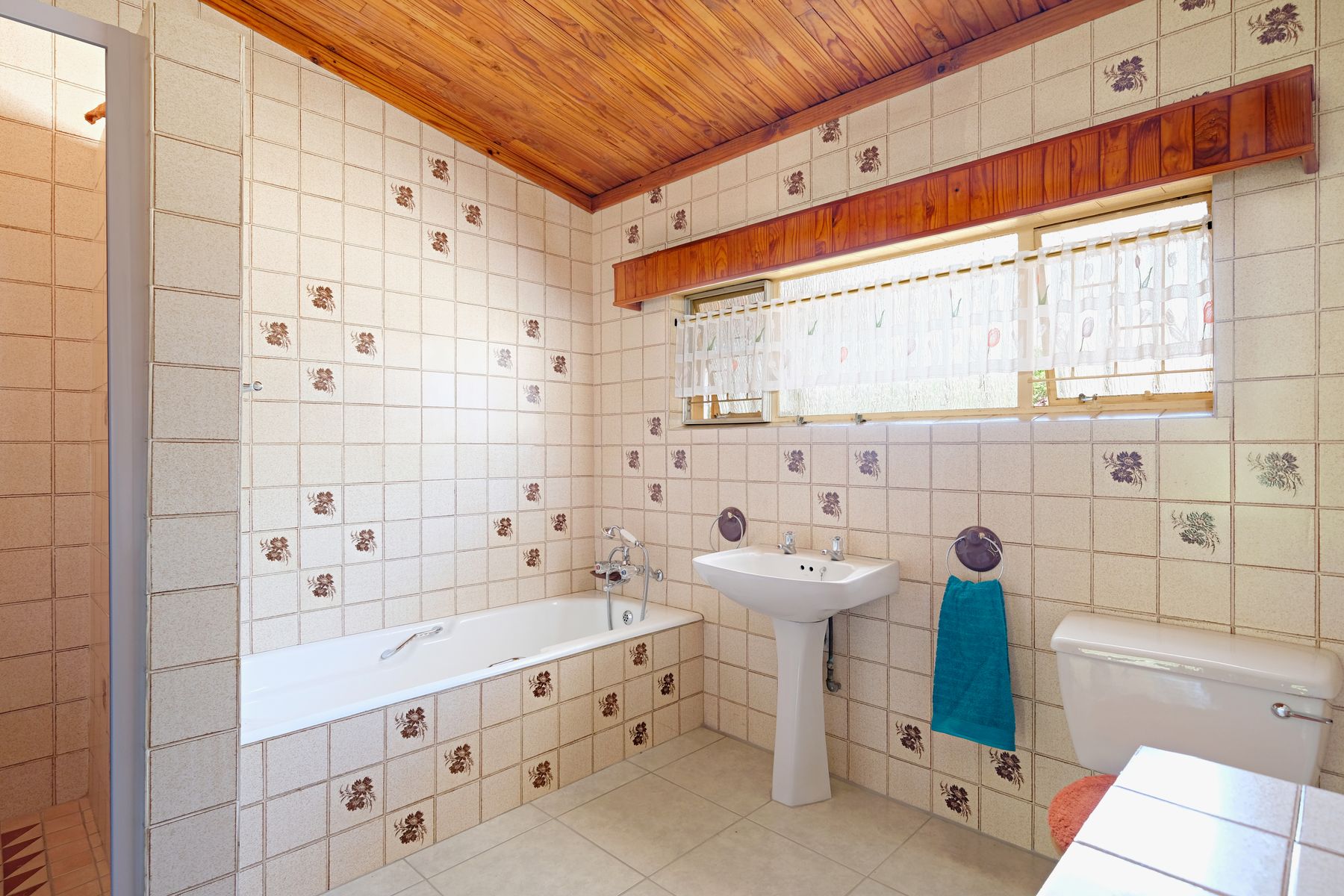
Choose the Floor Material From the Wet Conditions
The bathroom floor needs to tolerate repeated moisture, cleaning and daily foot traffic. Porcelain and ceramic tile are common because they are durable and available in many finishes, while natural stone, wood and other materials require more specific care. Start with suitability for the exact room, then choose the visual character.
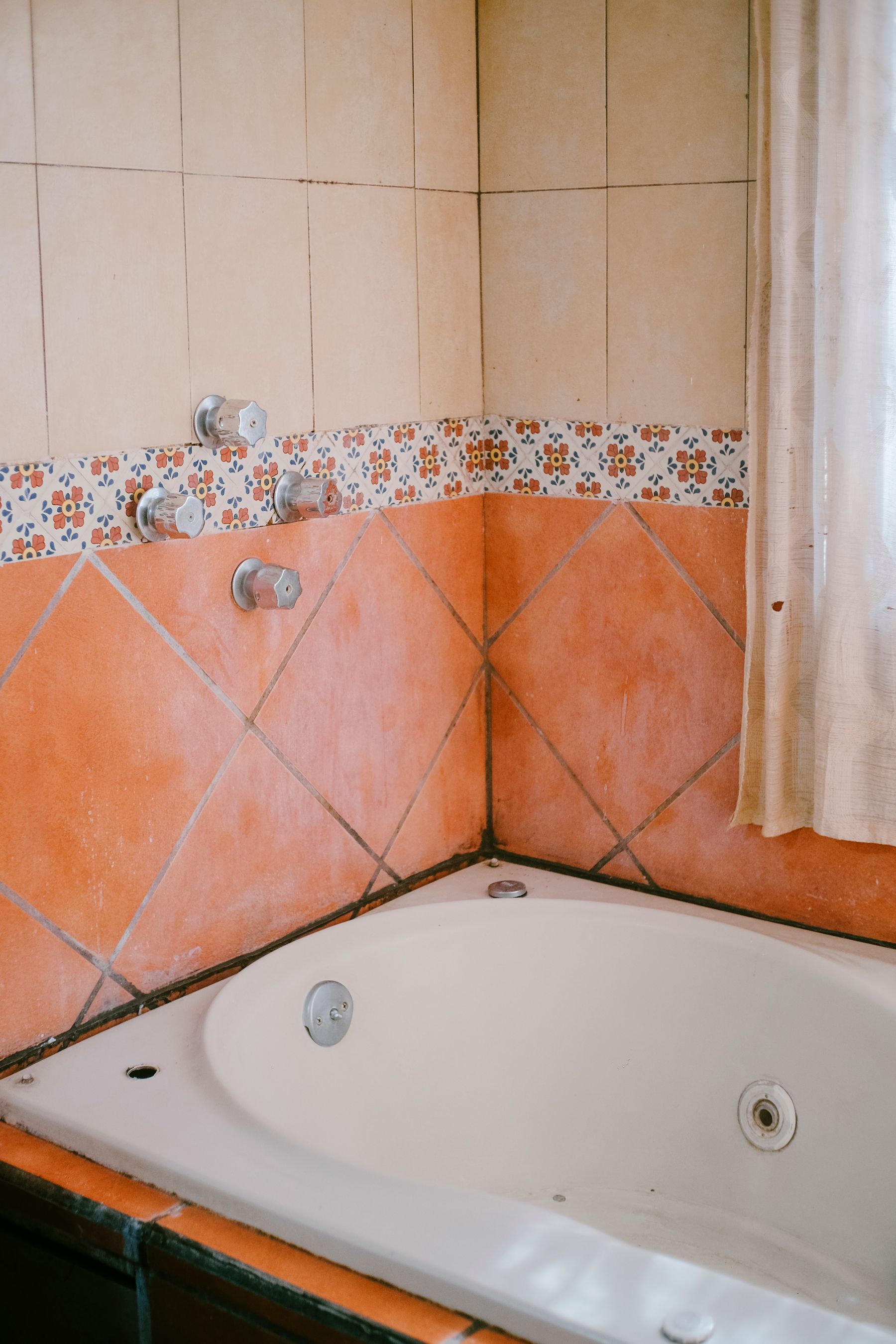
Use Checkerboard for a Strong Graphic Base
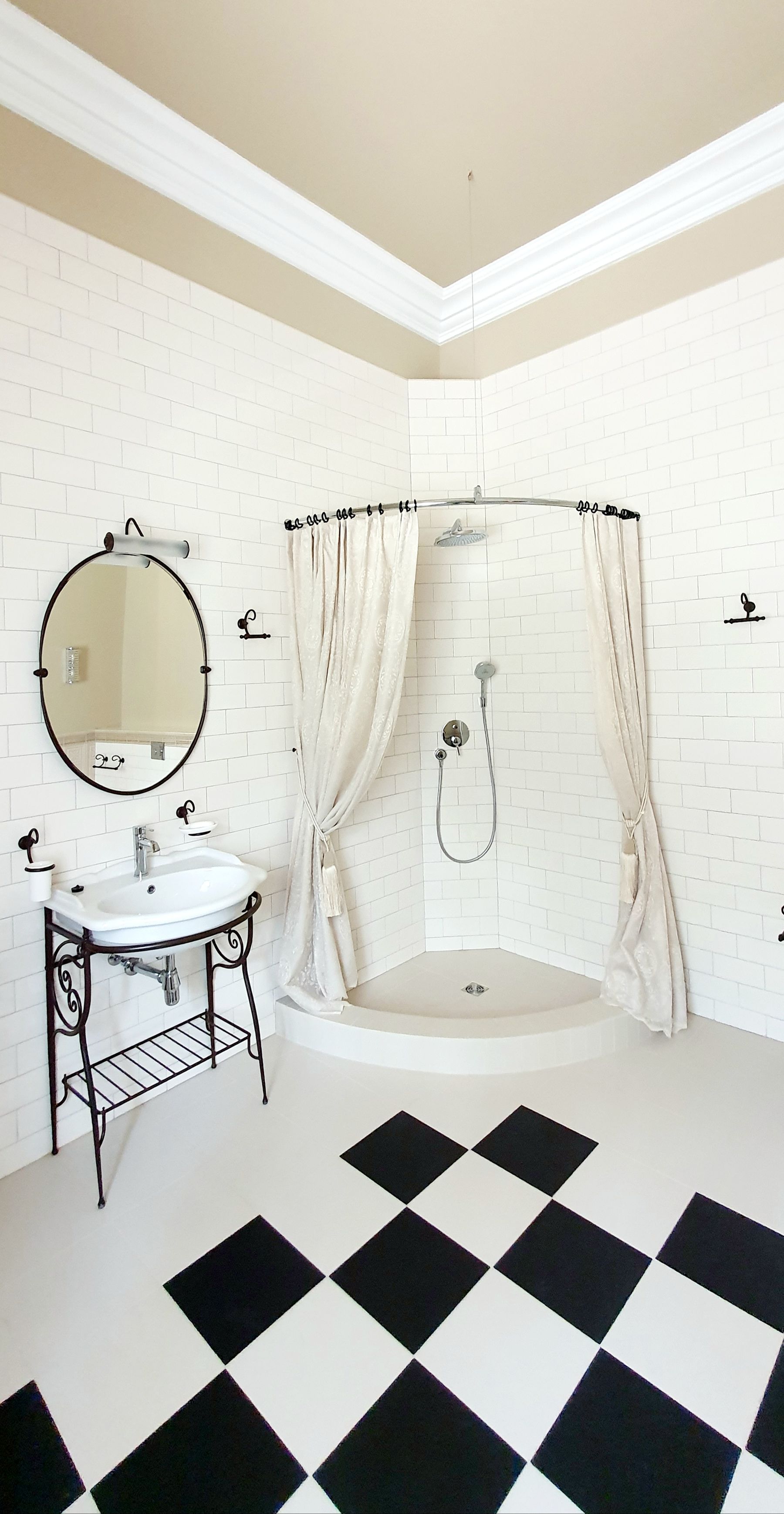
Checkerboard and other repeated geometric patterns can give a bathroom a strong floor identity without requiring decorative walls. The key is scale: smaller rooms generally need enough repeat for the pattern to read clearly, while larger squares can feel bolder and more architectural. Keep the surrounding palette controlled.
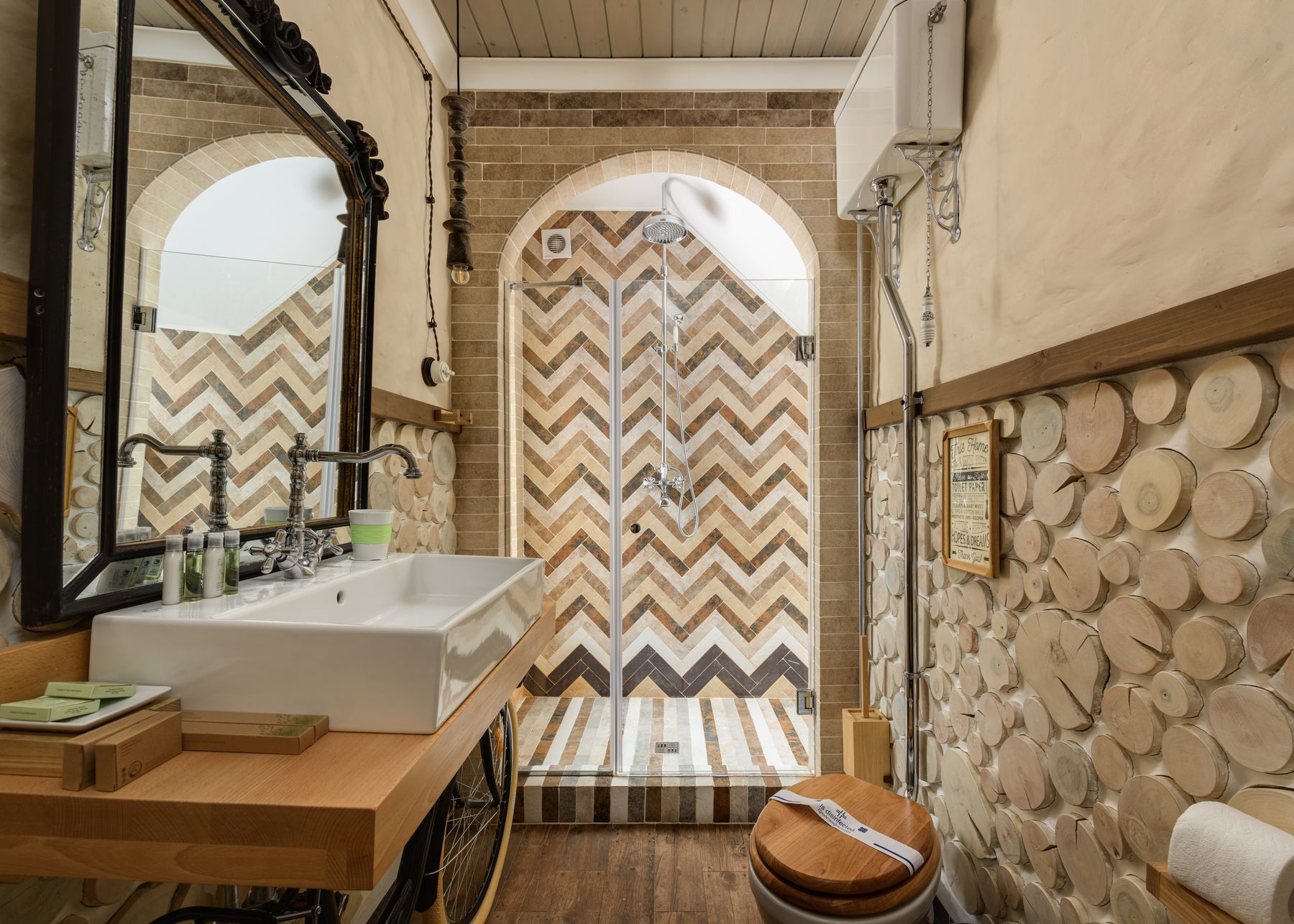
Use Directional Pattern to Add Movement
Herringbone, chevron and other directional layouts can make a small bathroom feel longer or more dynamic. Even when the reference surface is vertical, the same planning principle applies to floors: the direction should support the room's geometry rather than fight it. The more active the floor, the simpler nearby wall tile should be.
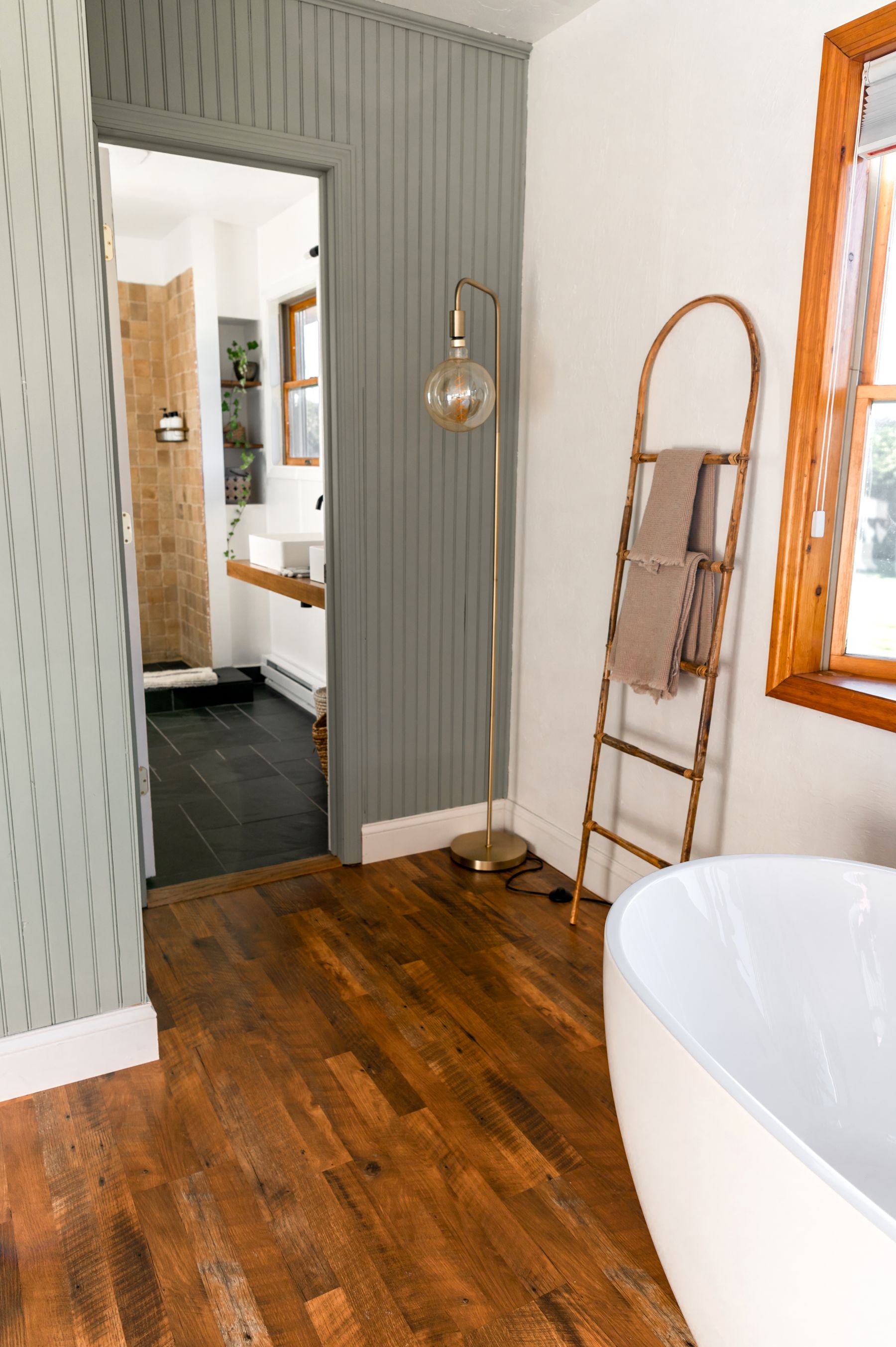
Use Warm Wood Carefully in a Bathroom
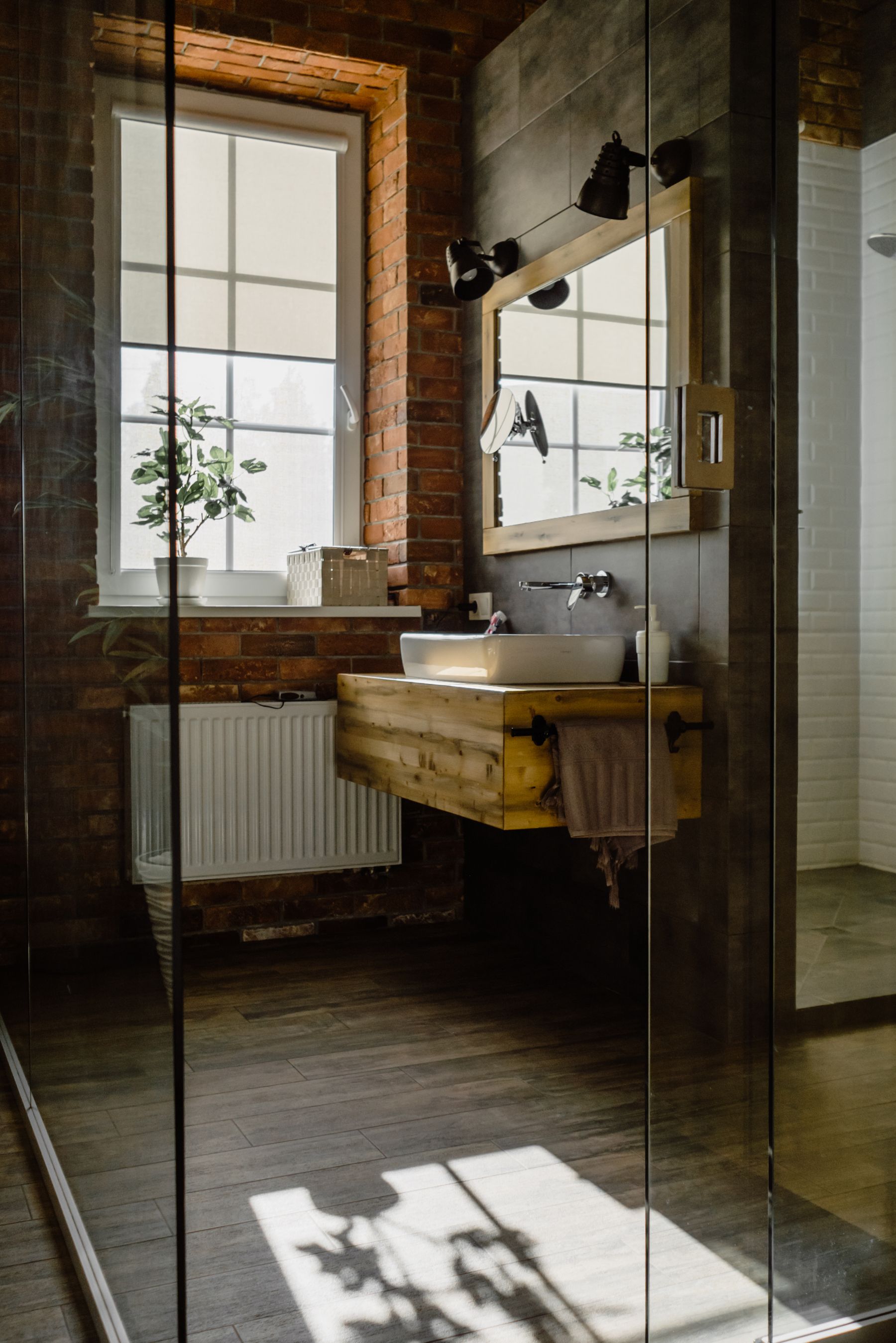
Wood can make a bathroom feel warmer and more residential, but real timber needs appropriate construction, finishing and moisture management. Wood-look porcelain can deliver a similar color and grain effect with different maintenance demands. Decide whether the goal is authentic timber or simply a warm wood visual before choosing the product.
Use Stone Texture Without Making Cleaning Difficult
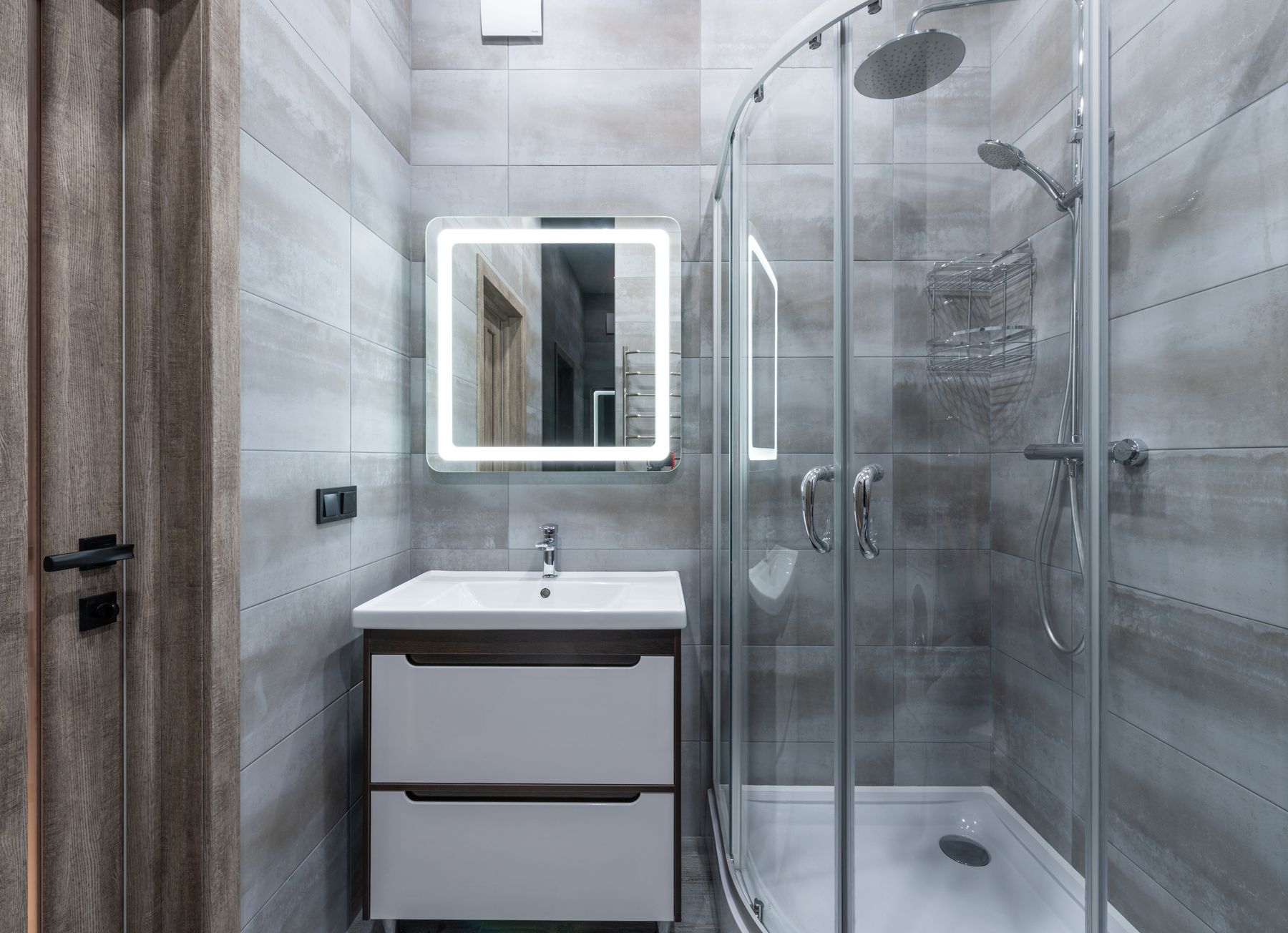
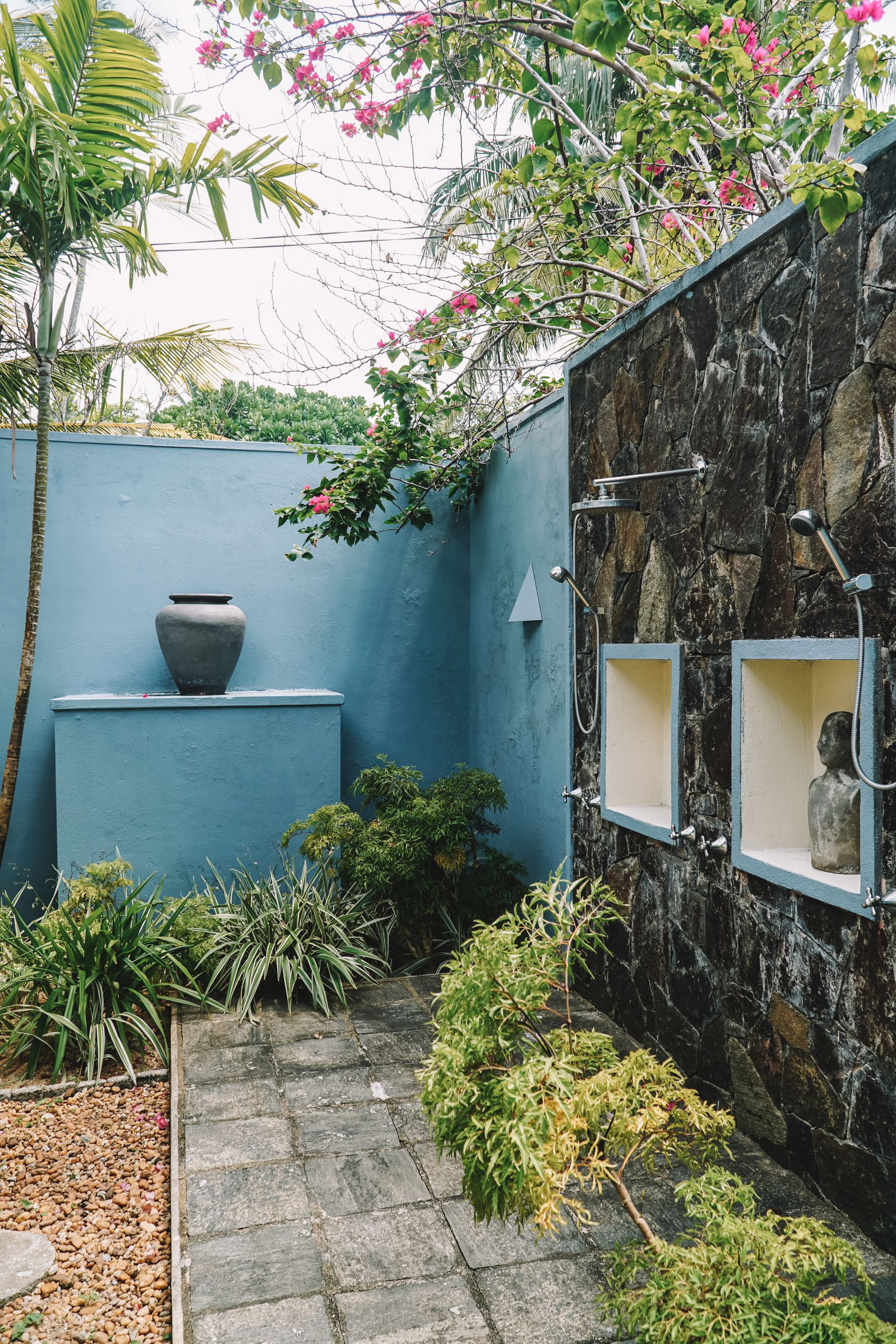
Stone and stone-look tile can add tactile weight and natural variation to the floor. Texture can also make cleaning more demanding, so the finish needs to balance grip, maintenance and visual character. In a heavily used bathroom, a subtly textured porcelain surface may be easier to manage than a deeply irregular natural stone.
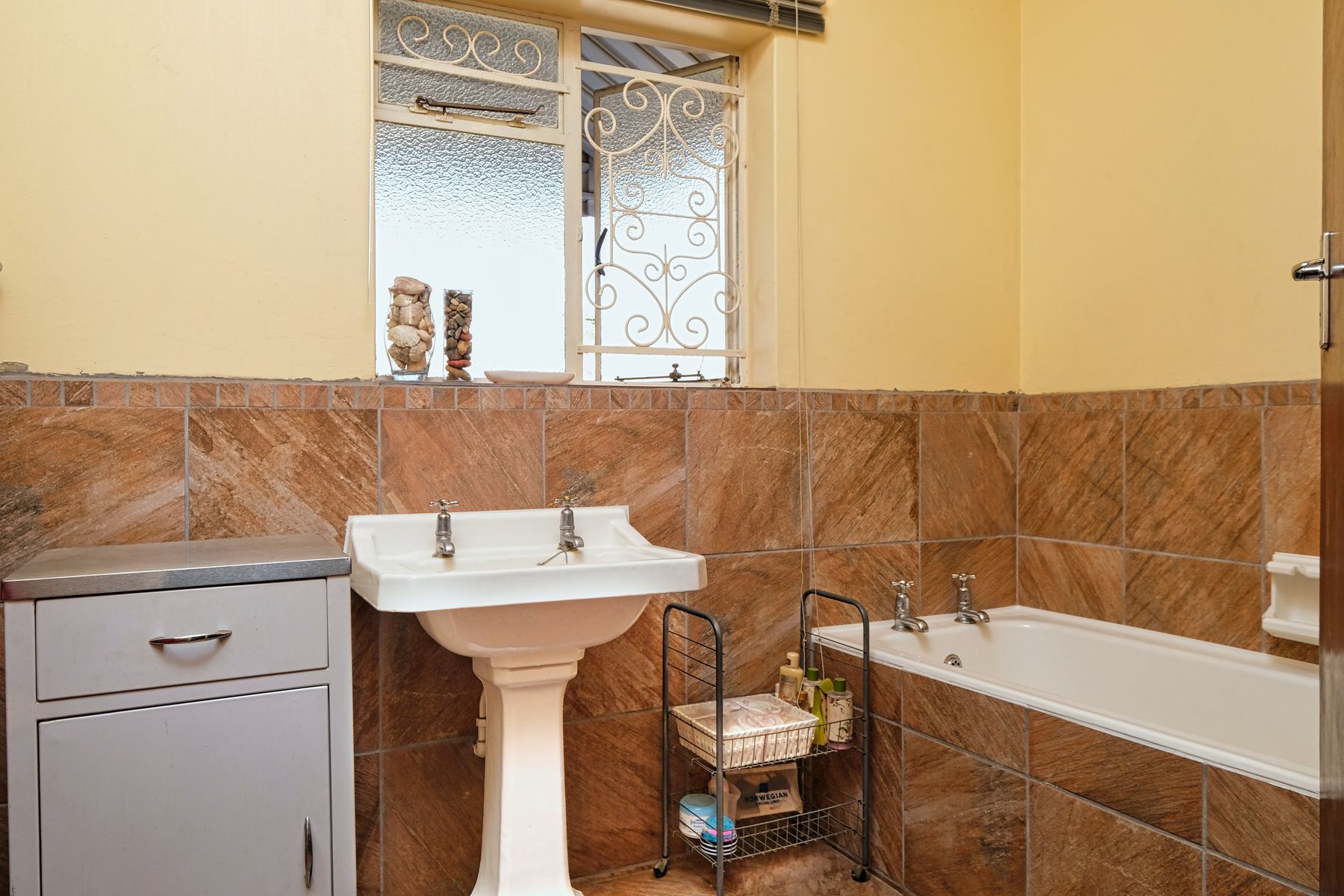
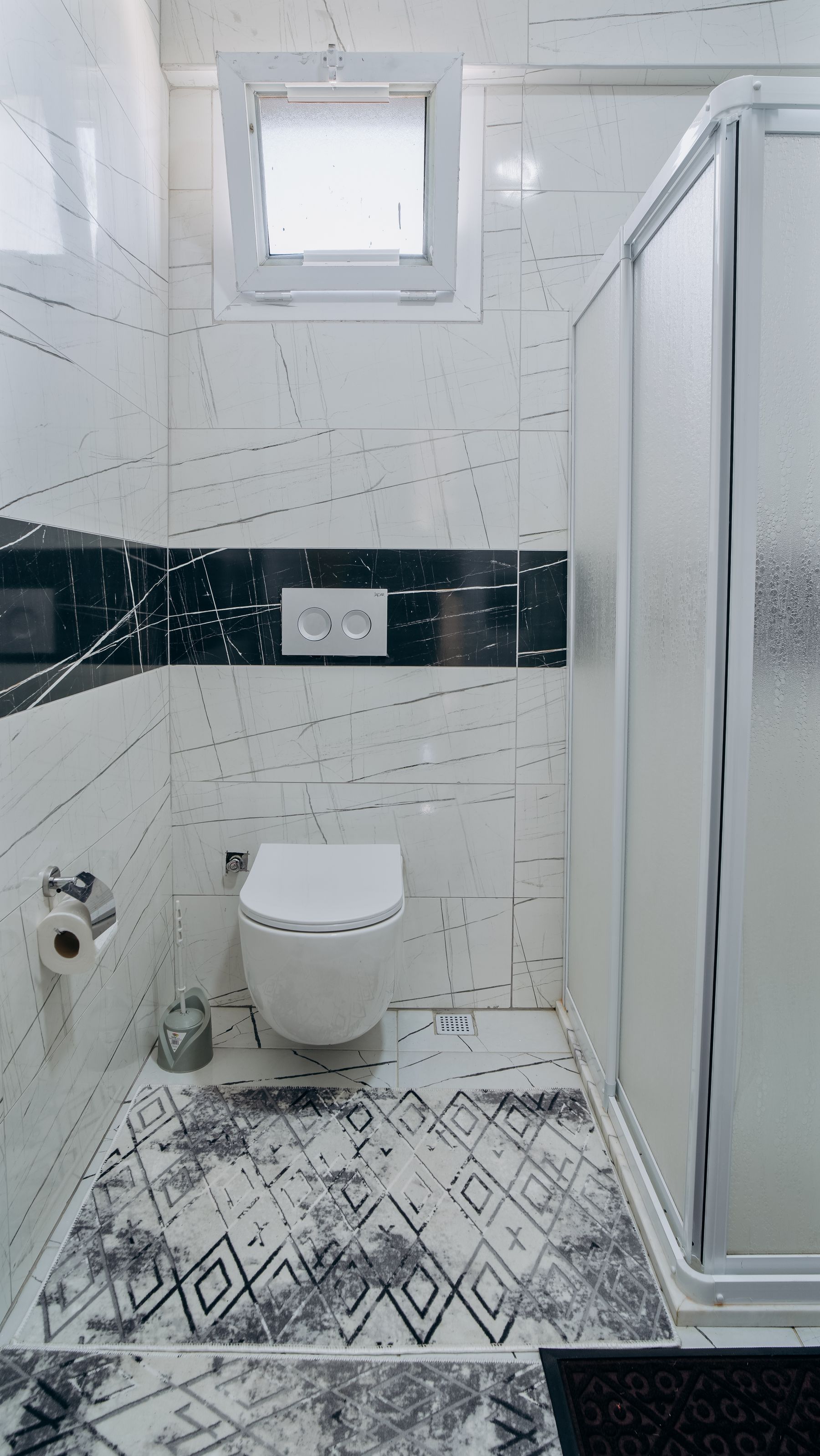
Use Pattern in a Small Bathroom With One Clear Boundary
A patterned floor can make a small bathroom feel intentional when the pattern occupies the full clear floor field rather than appearing in several disconnected patches. Keep the vanity, wall tile and shower glass quieter so the floor remains the main decorative layer.
Use Black and White Flooring for Crisp Contrast
Black-and-white flooring creates a clear visual base that can support modern, vintage, Art Deco or classic bathrooms depending on the pattern. Keep grout and wall finishes controlled so the room does not become overly graphic. This palette works best when one of the two colors still dominates overall.
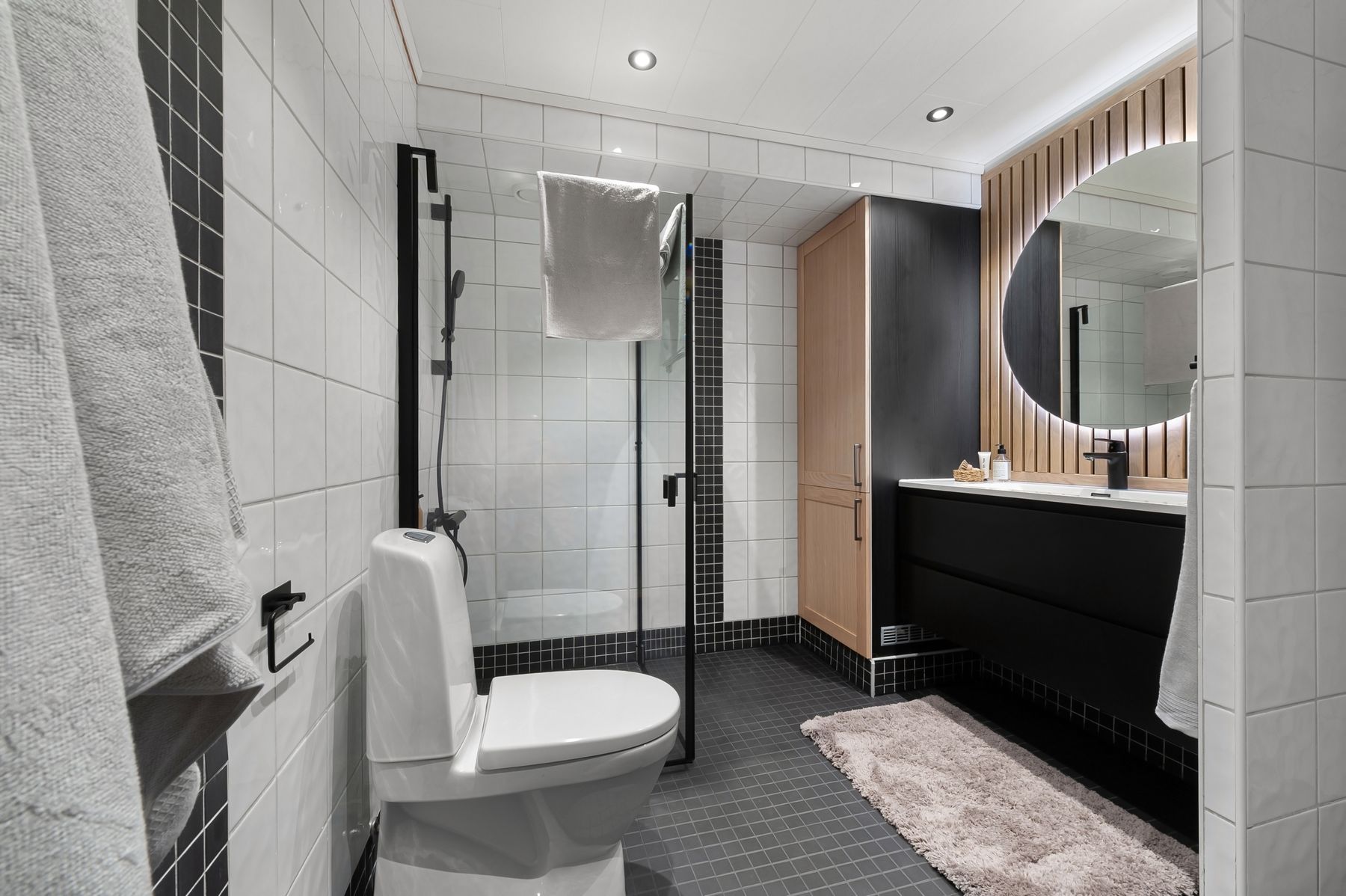
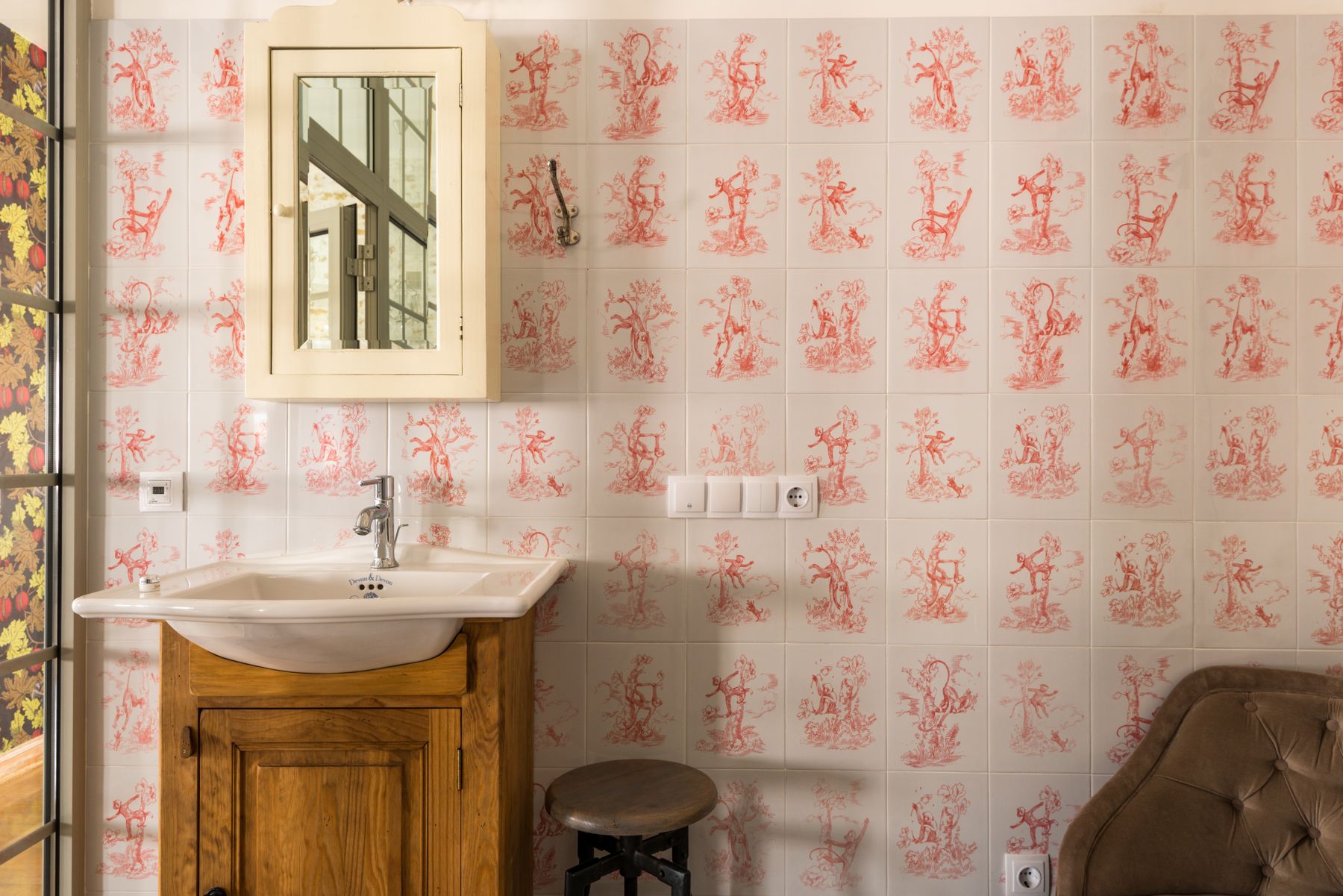
Use Period Pattern Without Overloading the Room
Vintage-style patterned tile can give the floor character, but it works best when the rest of the bathroom does not repeat the same level of ornament. Use one period-referential pattern at floor level and keep walls, storage and textiles quieter.
Use Warm Timber Tone to Soften a Classic Bath
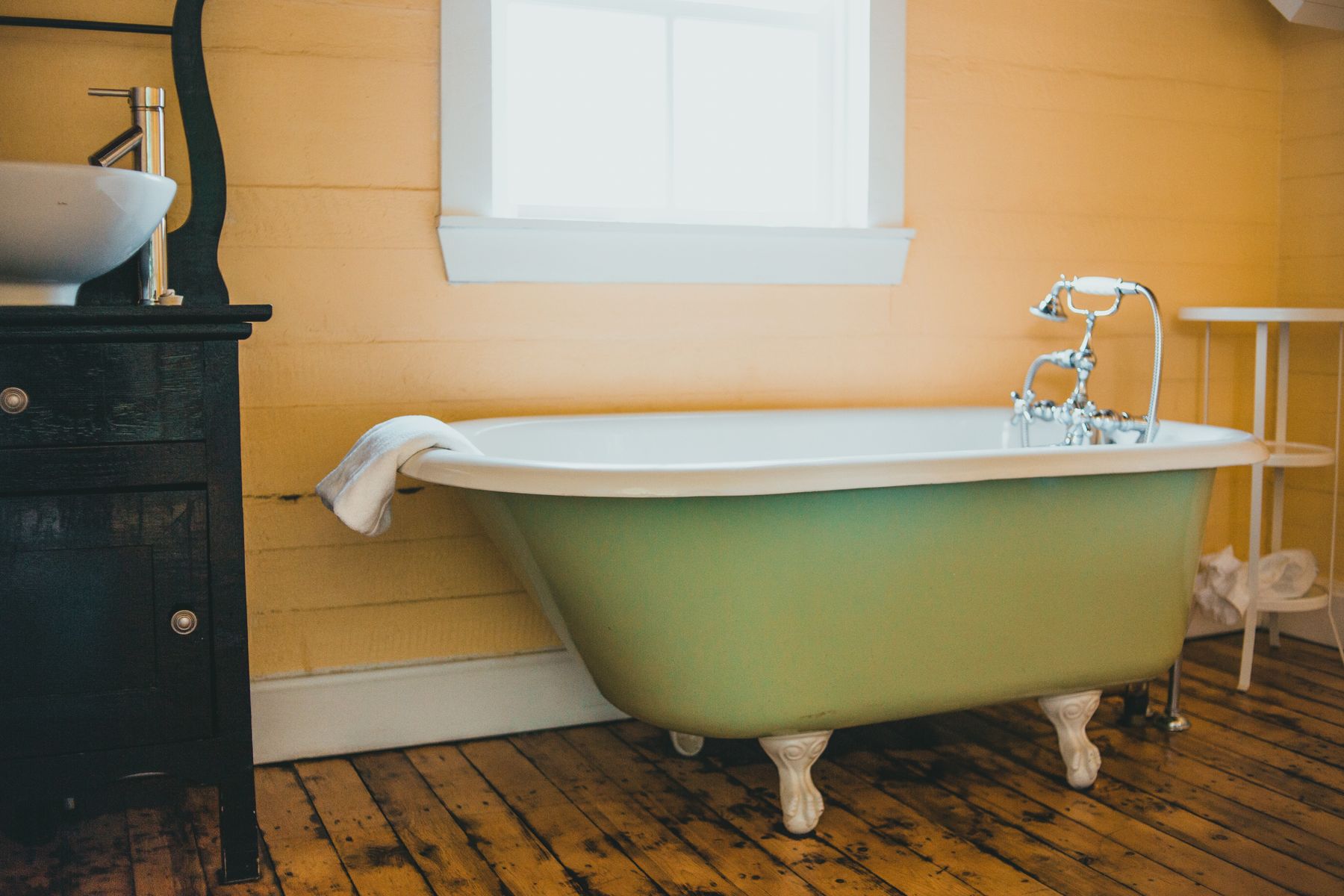
A warm wood or wood-look floor can soften white tubs, painted walls and classic fixtures. This combination works particularly well when the bathroom needs warmth without adding another strong color. The visual idea is simple, but real wood requires careful wet-area detailing and maintenance.
Use a Rug Only in a Drier, Practical Zone
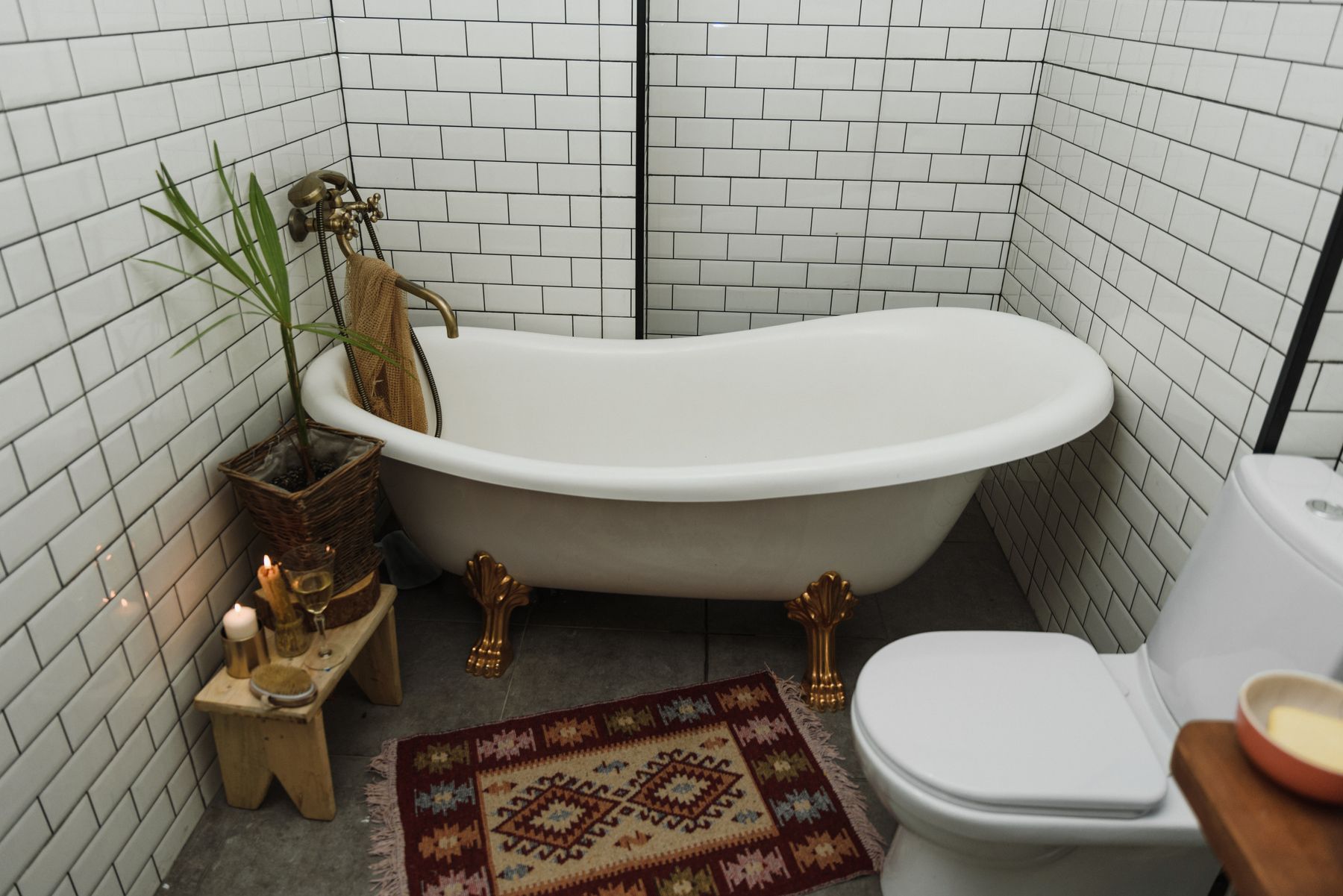
A washable rug can add softness on top of hard flooring, but it should not become a permanently damp surface beside a shower or tub. Use it where it can dry quickly, be removed for cleaning and stay clear of direct water. The floor beneath still needs to perform as a bathroom floor on its own.