Let Colored Sanitaryware Lead
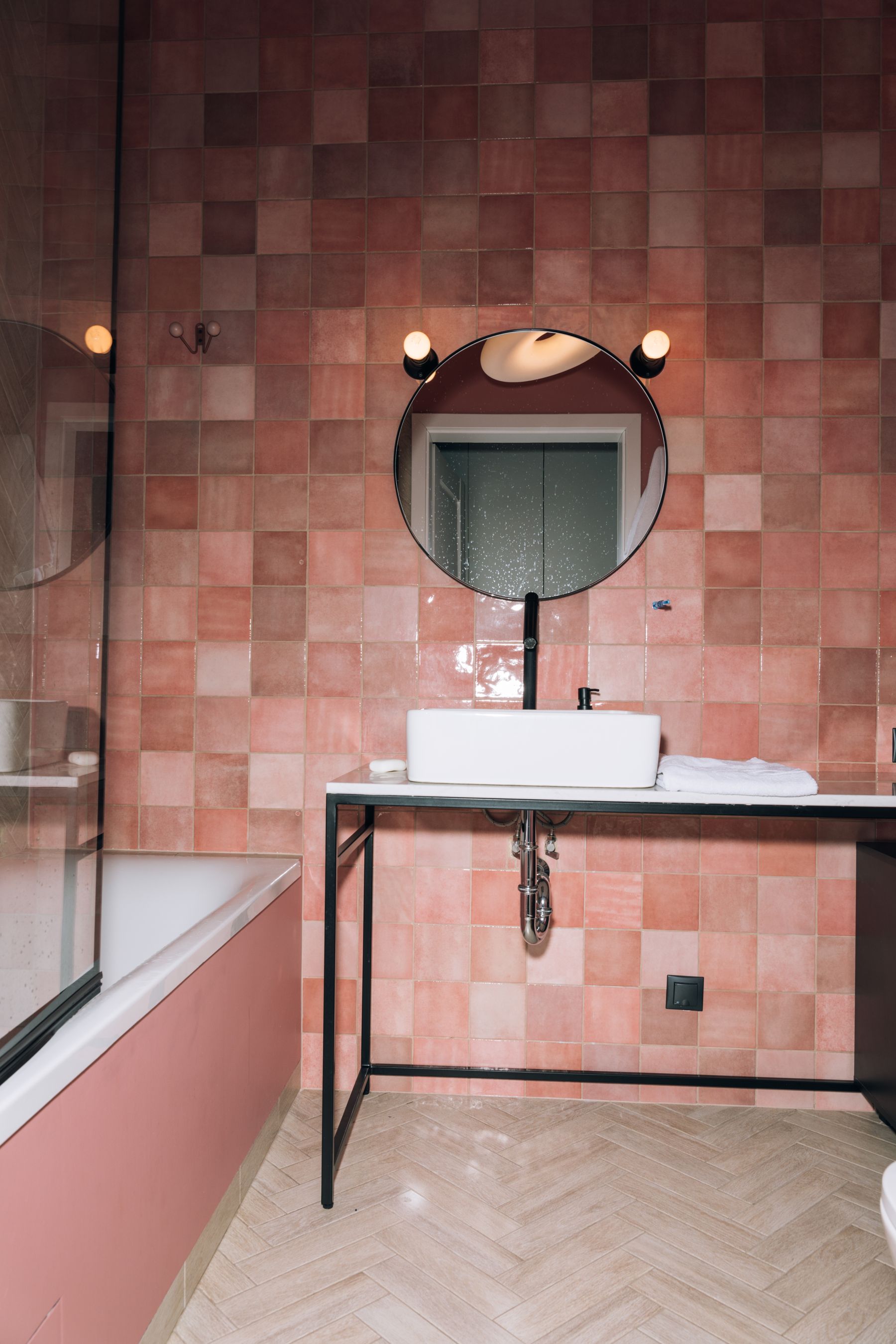
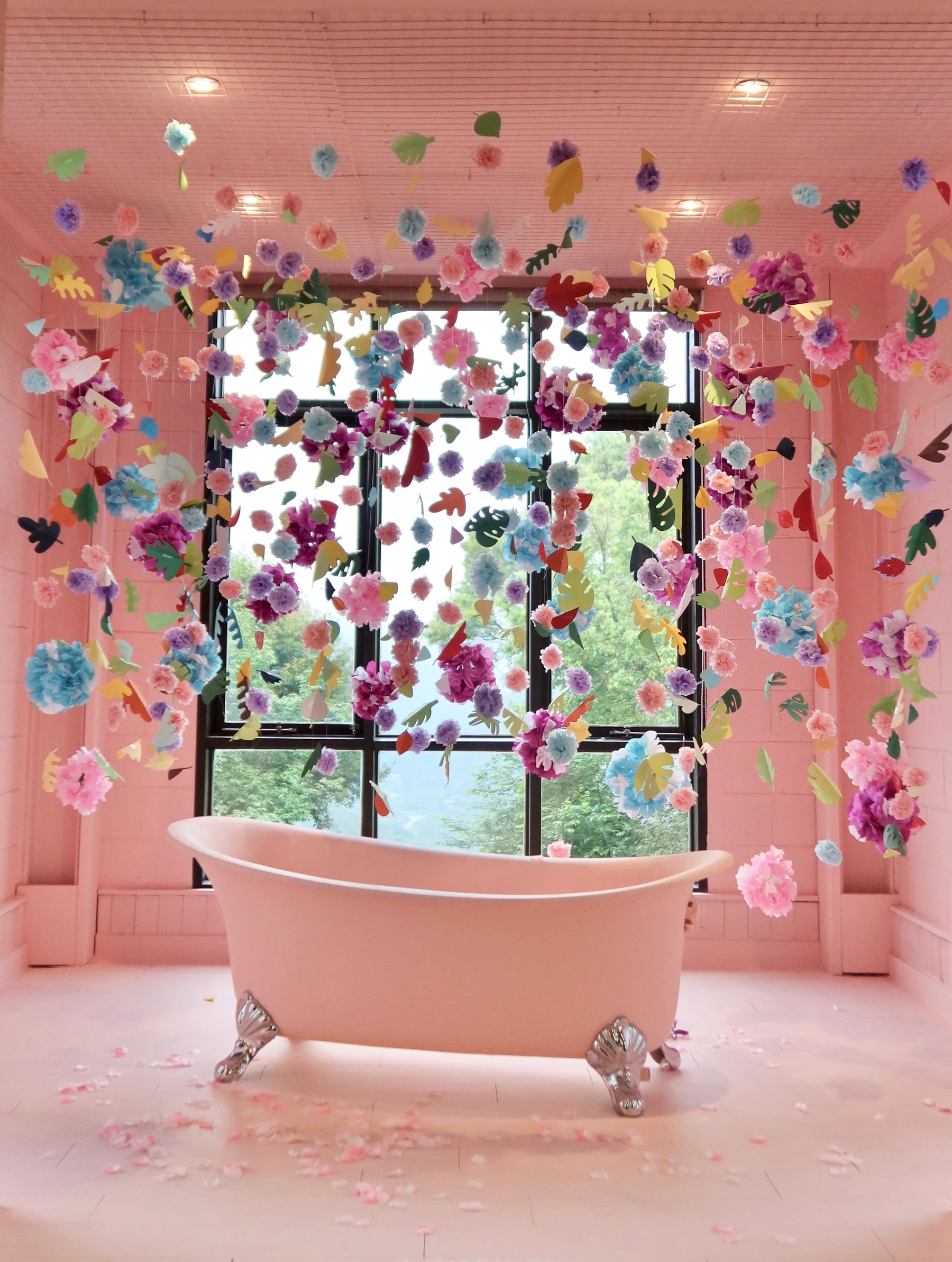
A pink, blue, green or yellow bathtub can establish a retro direction more clearly than a collection of accessories. Treat the colored fixture as the largest color decision, then keep wall finishes, towels and hardware within a supporting palette. If you are preserving original sanitaryware, condition, plumbing compatibility and surface wear matter as much as the color.
Use a Checkerboard Floor as the Graphic Anchor
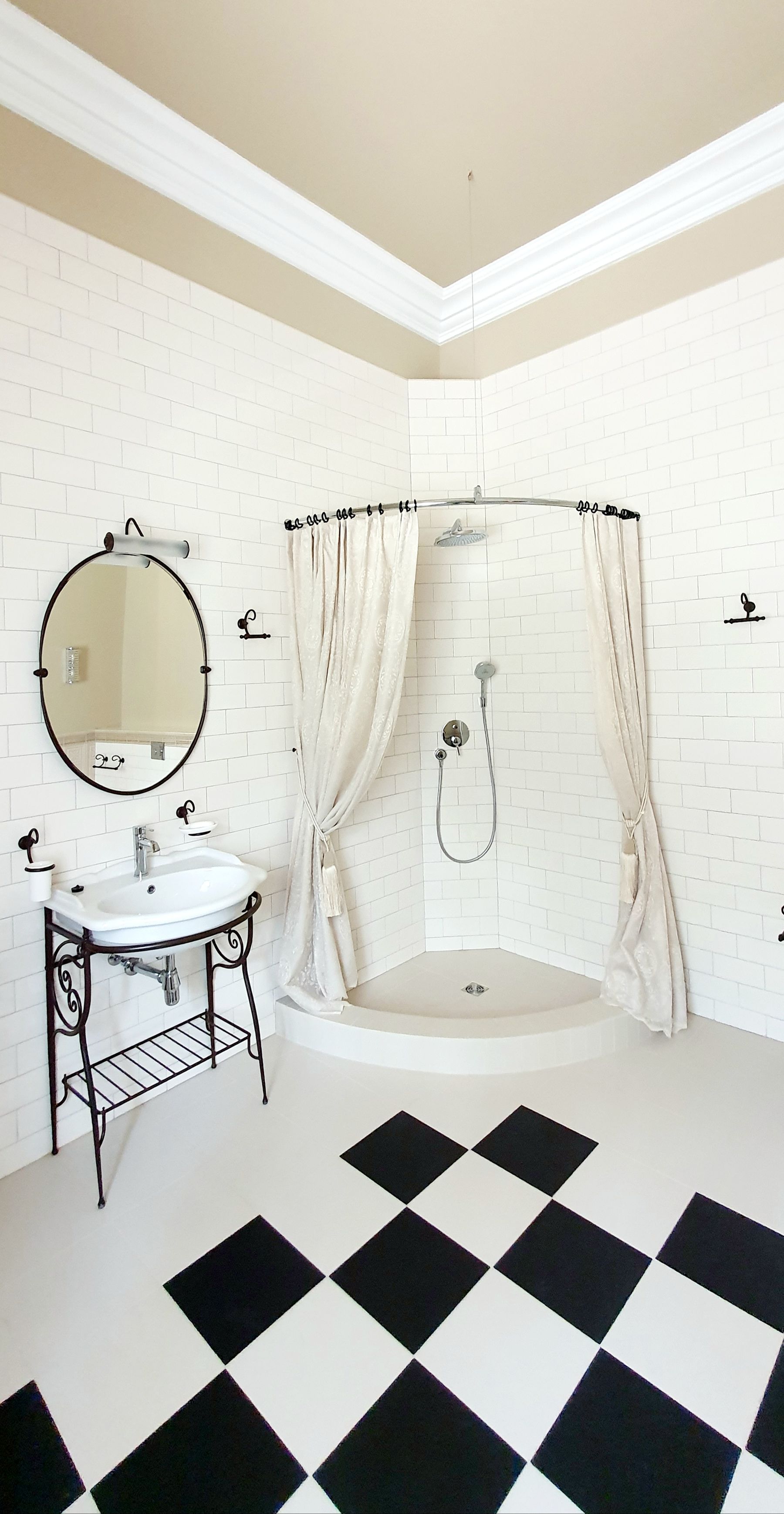
Checkerboard flooring is an efficient retro cue because it creates a strong visual rhythm without requiring patterned walls. Black and white is the classic route, but softer beige, green or blue combinations can feel less literal. In wet spaces, use floor tile with appropriate slip resistance and plan the grid so awkward cuts do not dominate the doorway.
Build a Two-Color Scheme With Real Contrast
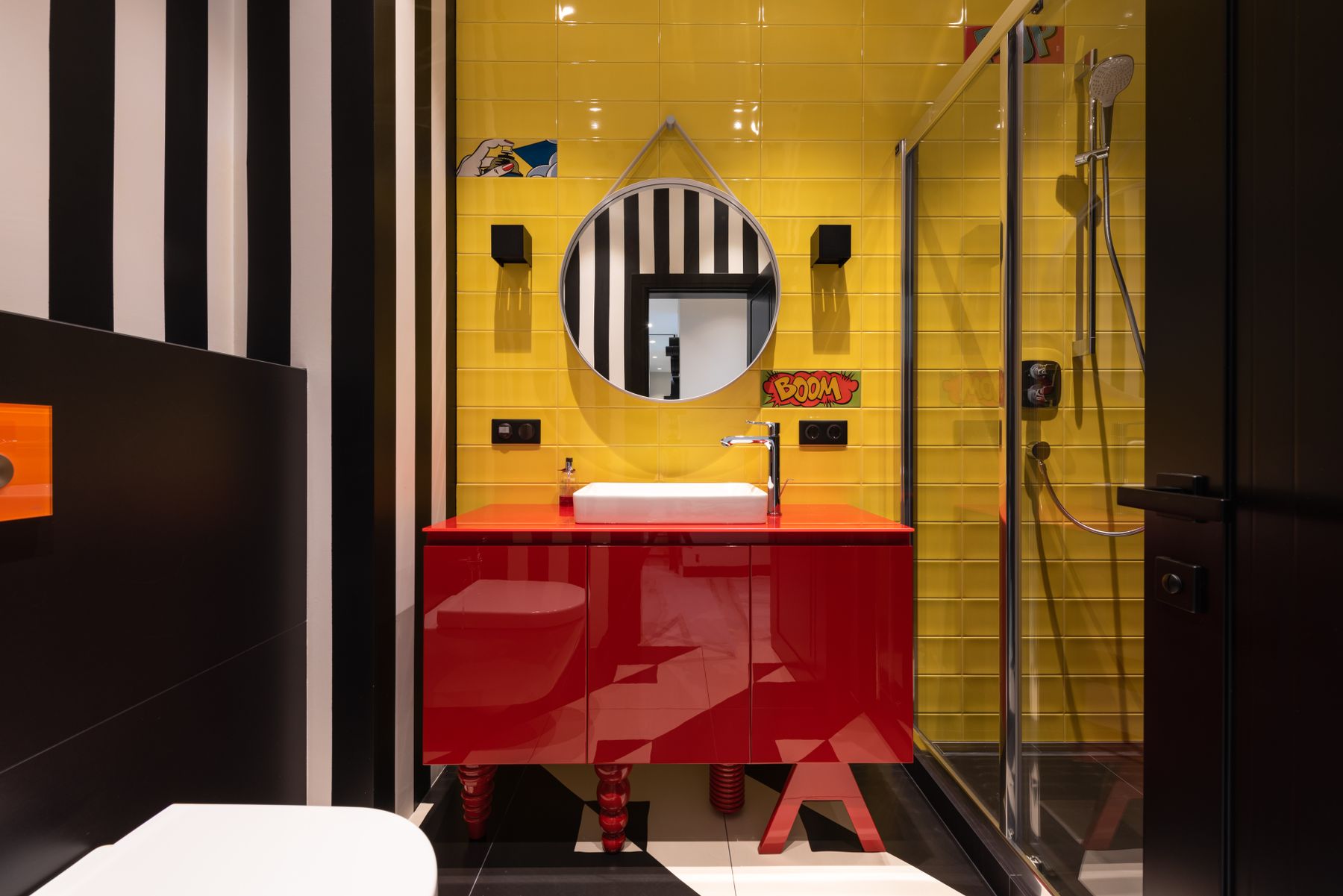
Retro palettes often feel confident because the colors are clearly separated. A yellow tile wall with a red cabinet, for example, reads more intentionally than many small multicolored accessories. Choose one dominant hue and one secondary accent, then use white, cream or another neutral to give the eye somewhere to rest.
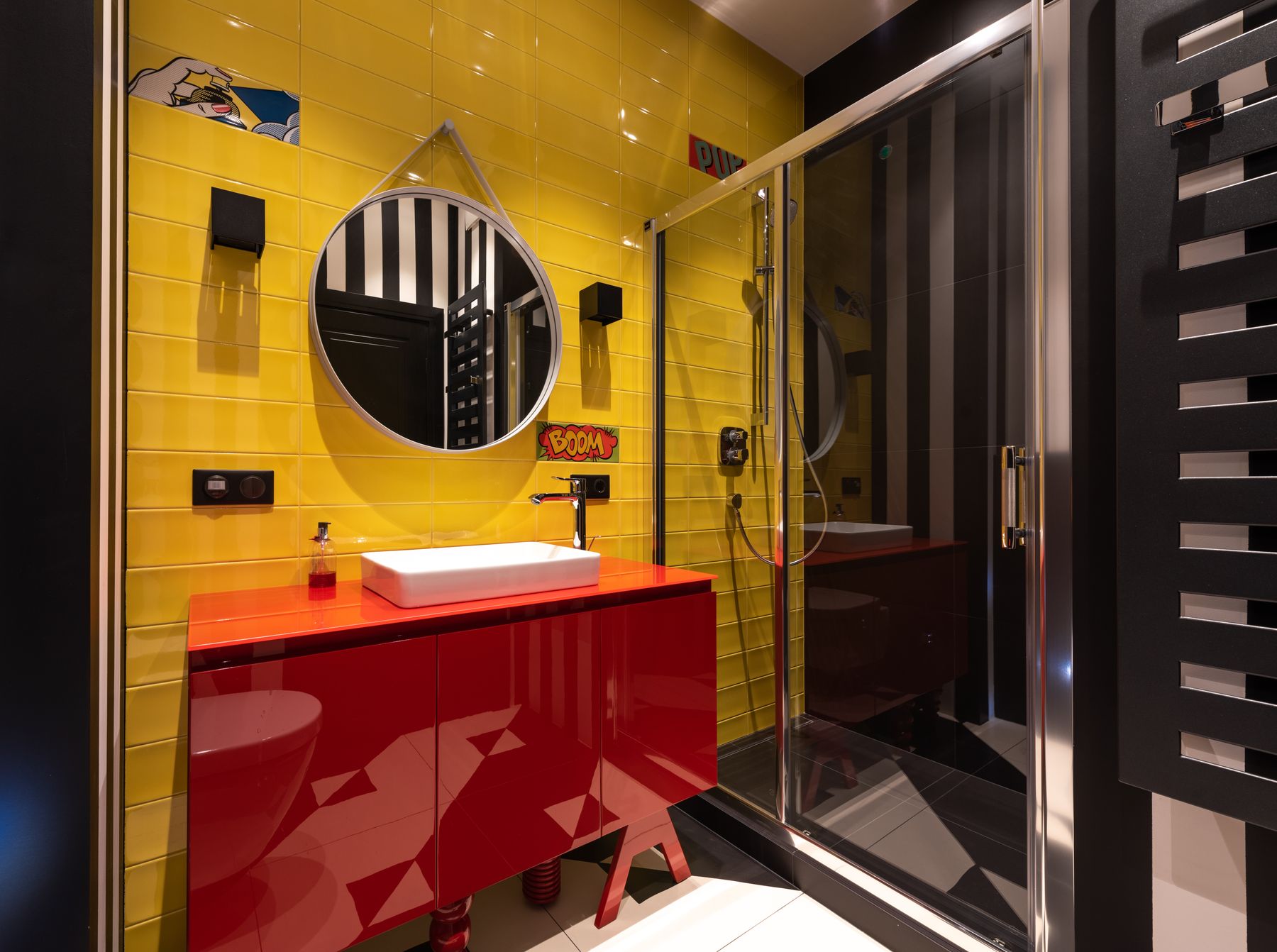
Use the Vanity as the Color Block
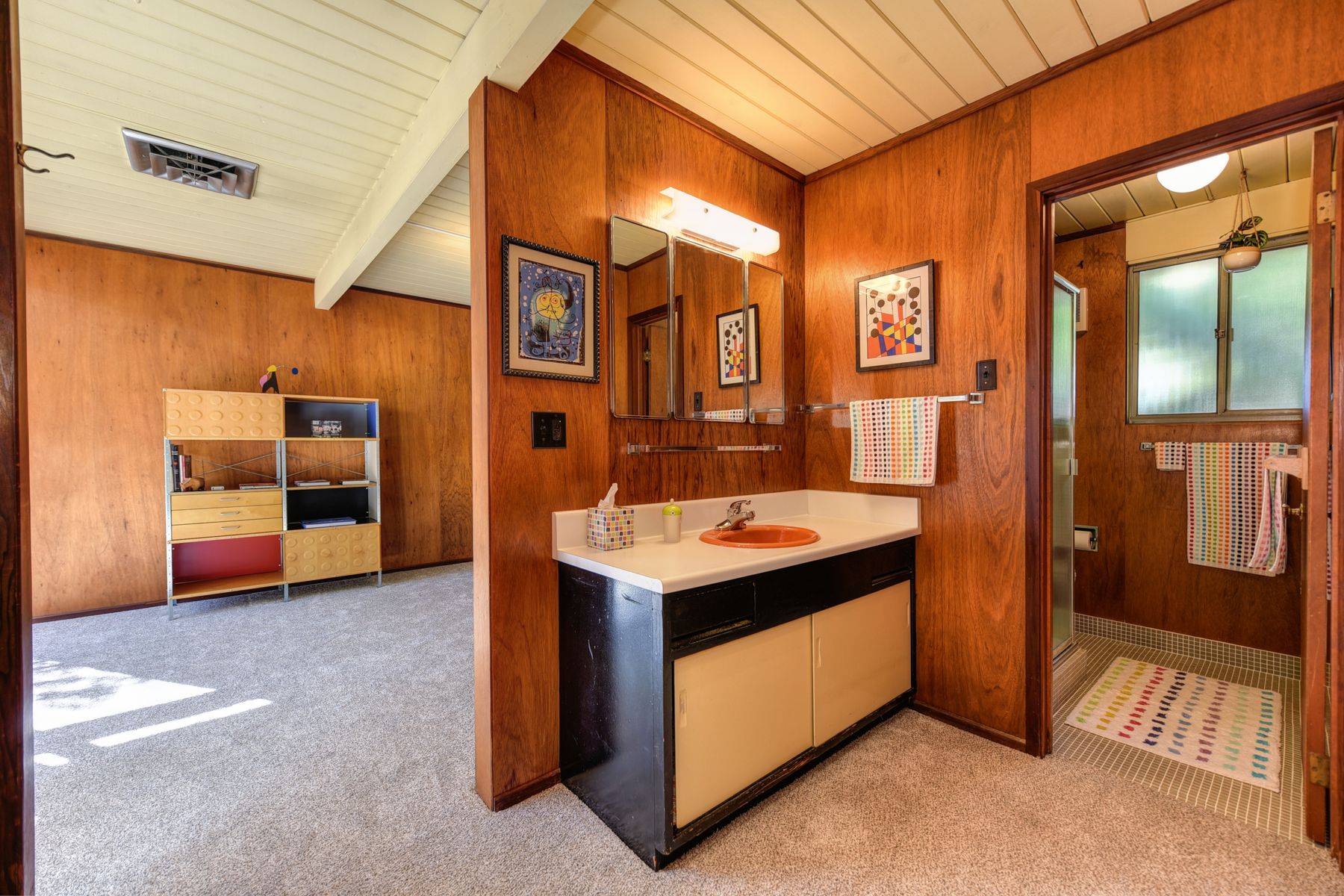
A painted vanity is one of the easiest ways to introduce retro color without replacing every permanent surface. Red, blue, green or mustard cabinetry can provide furniture-scale impact while the sink, toilet and shower remain neutral. Closed storage also keeps contemporary packaging out of sight, which helps the retro visual language stay coherent.
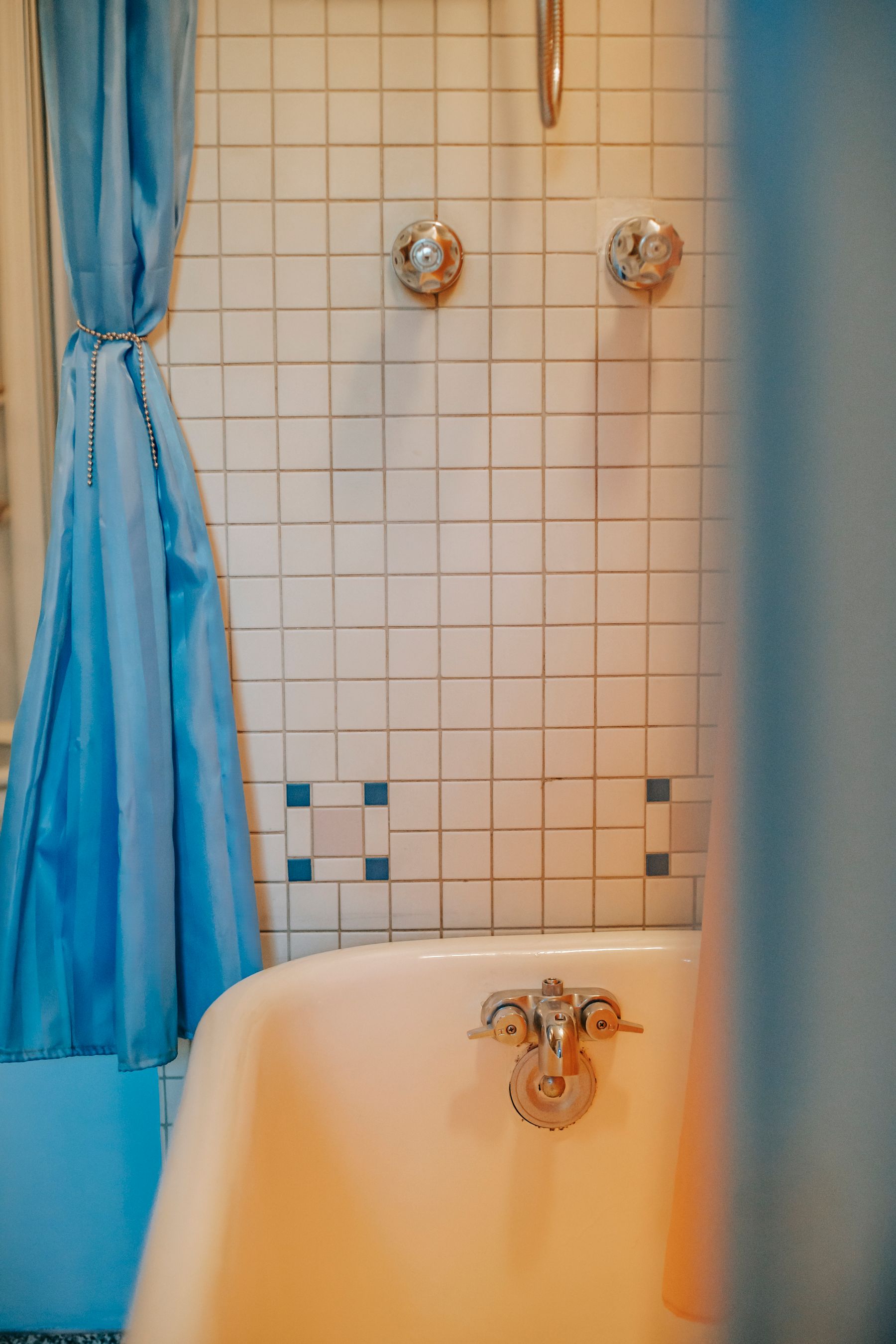
Keep Square Tile Visible as a Grid
Small square and rectangular tiles can instantly create a later-twentieth-century bathroom feel because the grout grid becomes part of the design. Choose grout contrast deliberately: matching grout creates a softer field, while darker lines make the geometry stronger. A shower curtain can add another period-compatible layer without permanently changing the architecture.
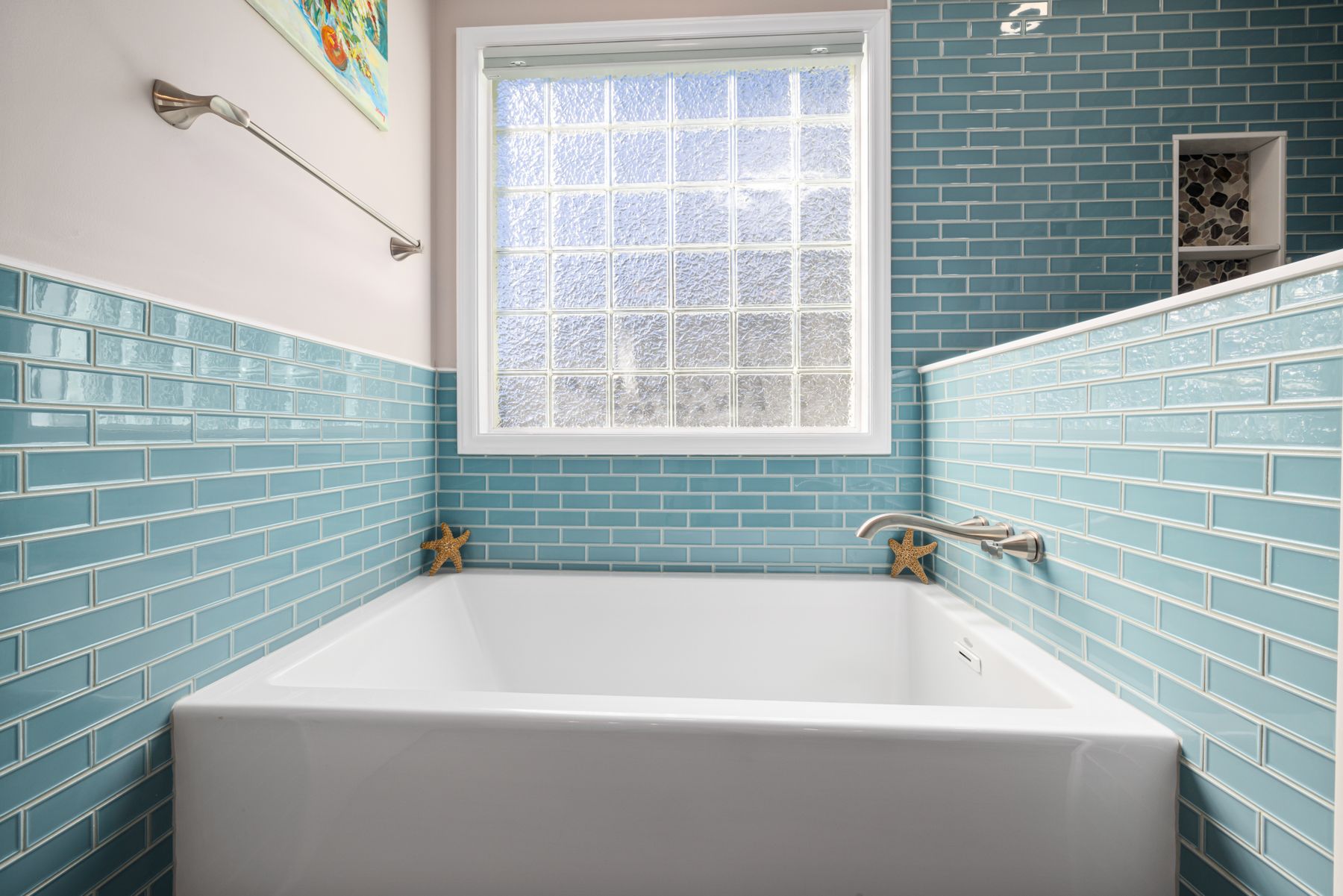
Use Turquoise as a Clean Retro Color
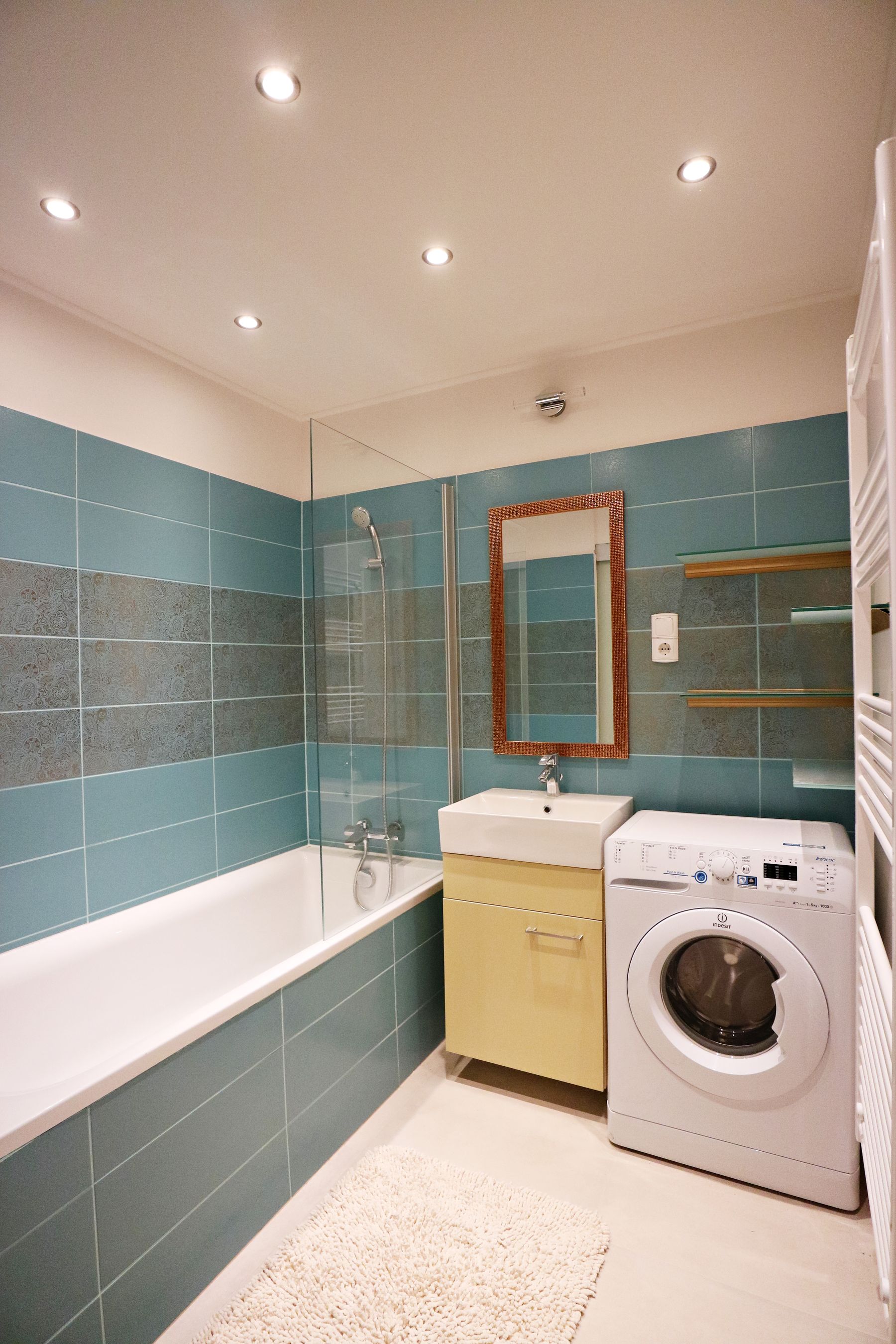
Turquoise and aqua can deliver a strong retro mood while still feeling fresh when paired with white ceramic and simple chrome. Use the color on one tiled wall, tub surround or vanity rather than every surface. A clean white bath keeps the scheme from becoming overly themed.
Keep Decorative Borders Secondary
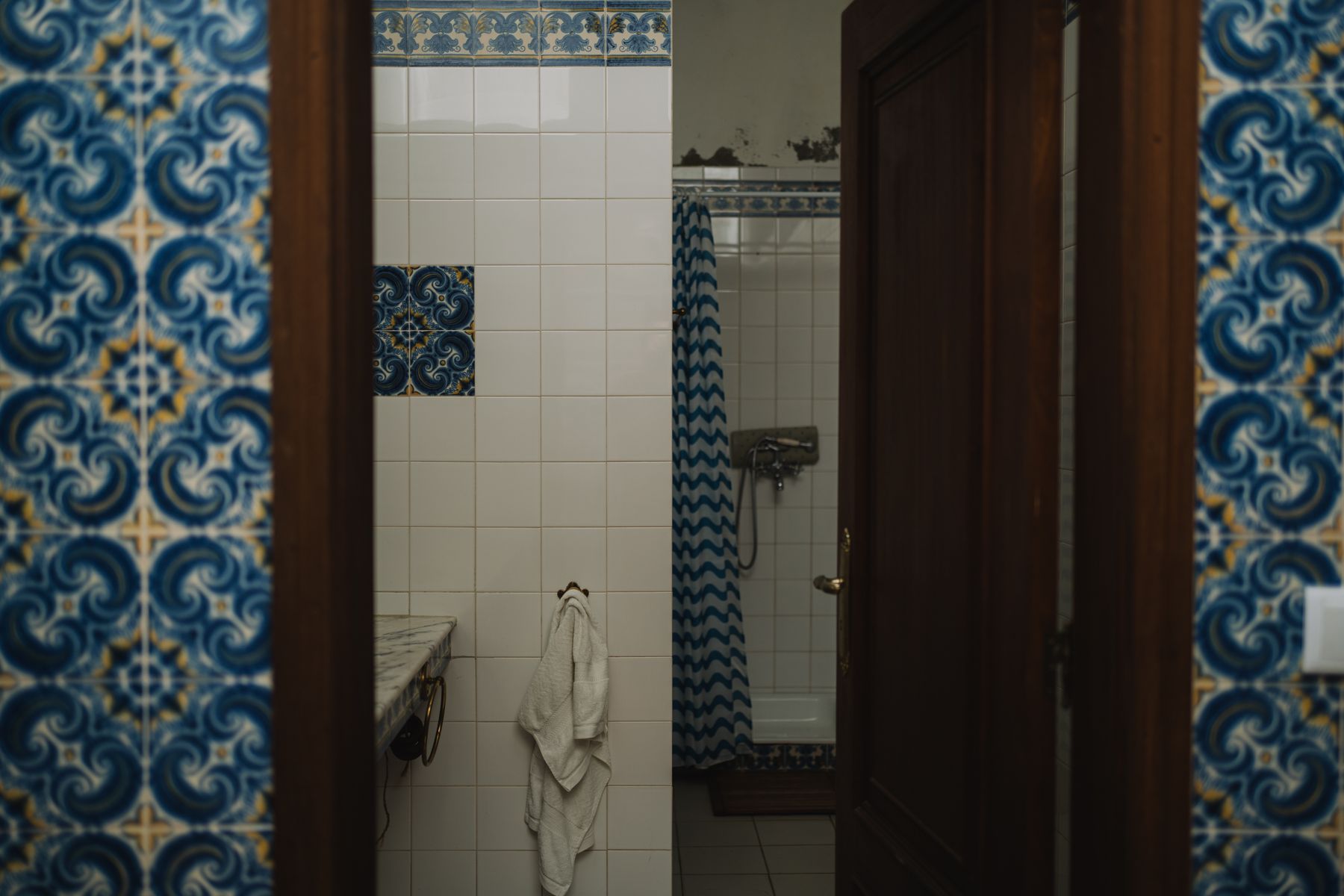
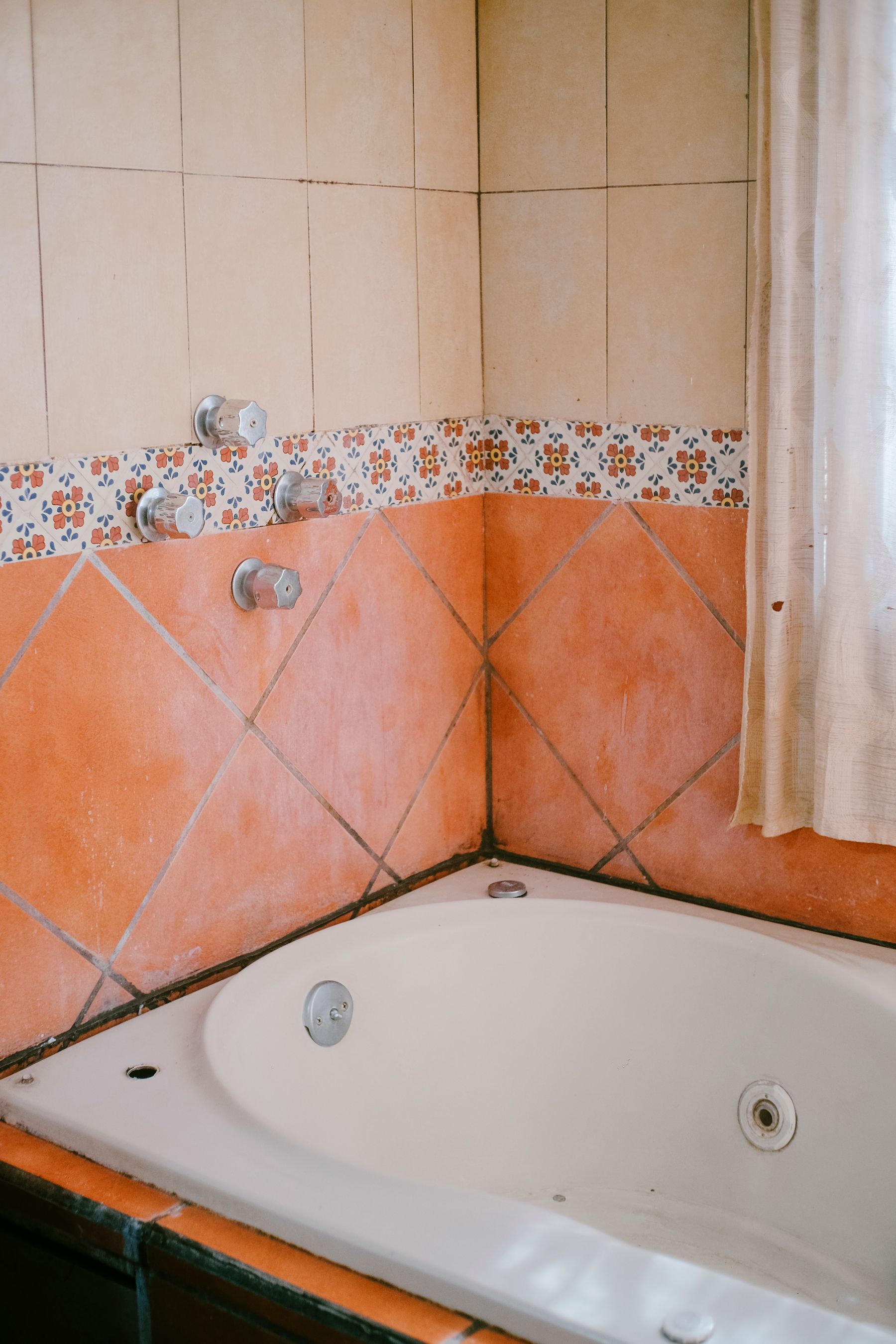
A tile border or patterned band can reinforce retro or vintage character without covering an entire wall. Keep it subordinate to the bath, basin or main tile field so the border reads as a framing device rather than the room's loudest element. This approach also makes it easier to mix original and replacement tile during renovation.
Use Colored Cabinetry Without Dating the Layout
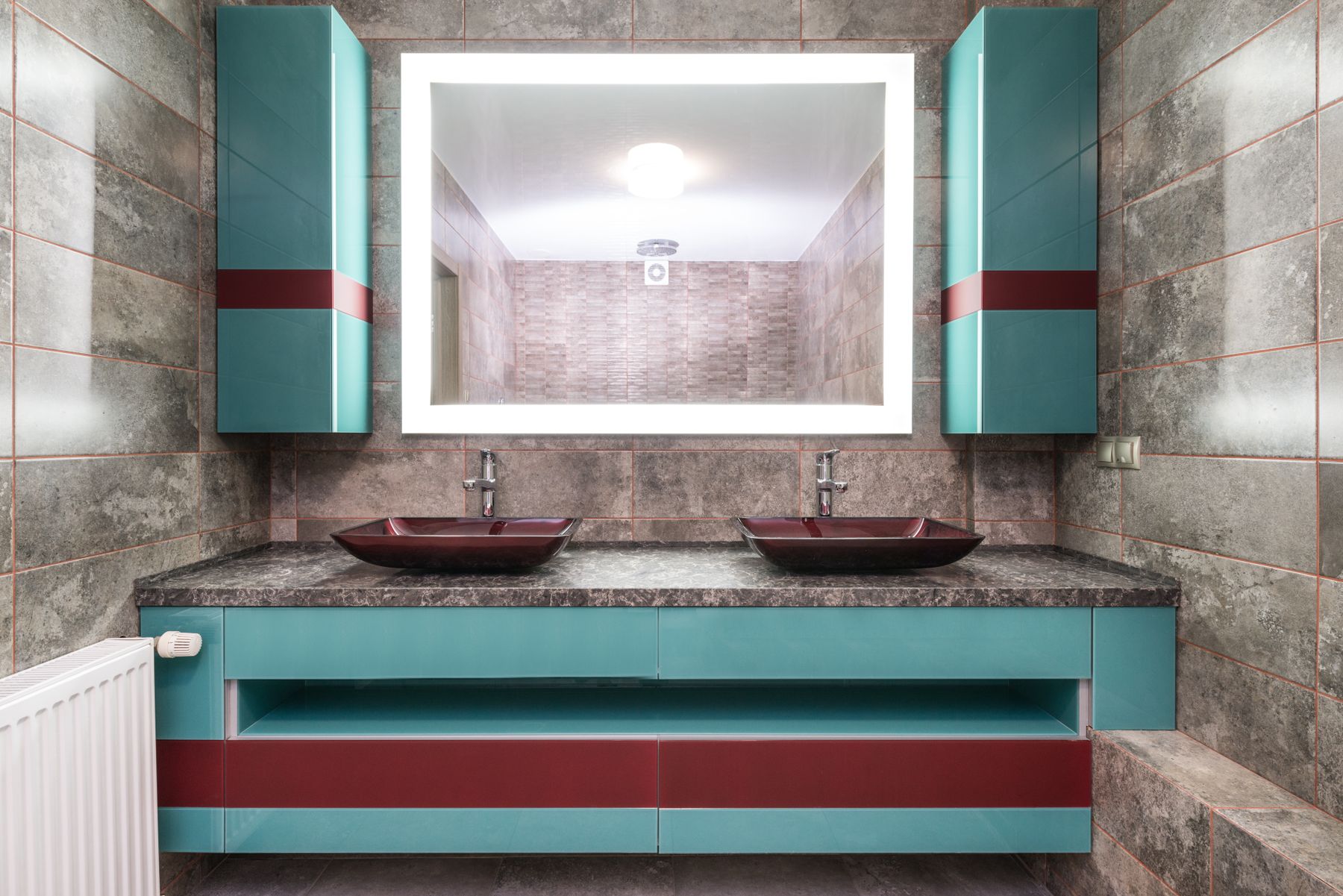
Turquoise or another saturated cabinet color can feel retro even when the storage itself is contemporary. This is useful when you want the visual energy of an older bathroom but need drawers, outlets and modern organization. Keep the cabinet fronts simple enough that color, not decorative molding, provides the character.
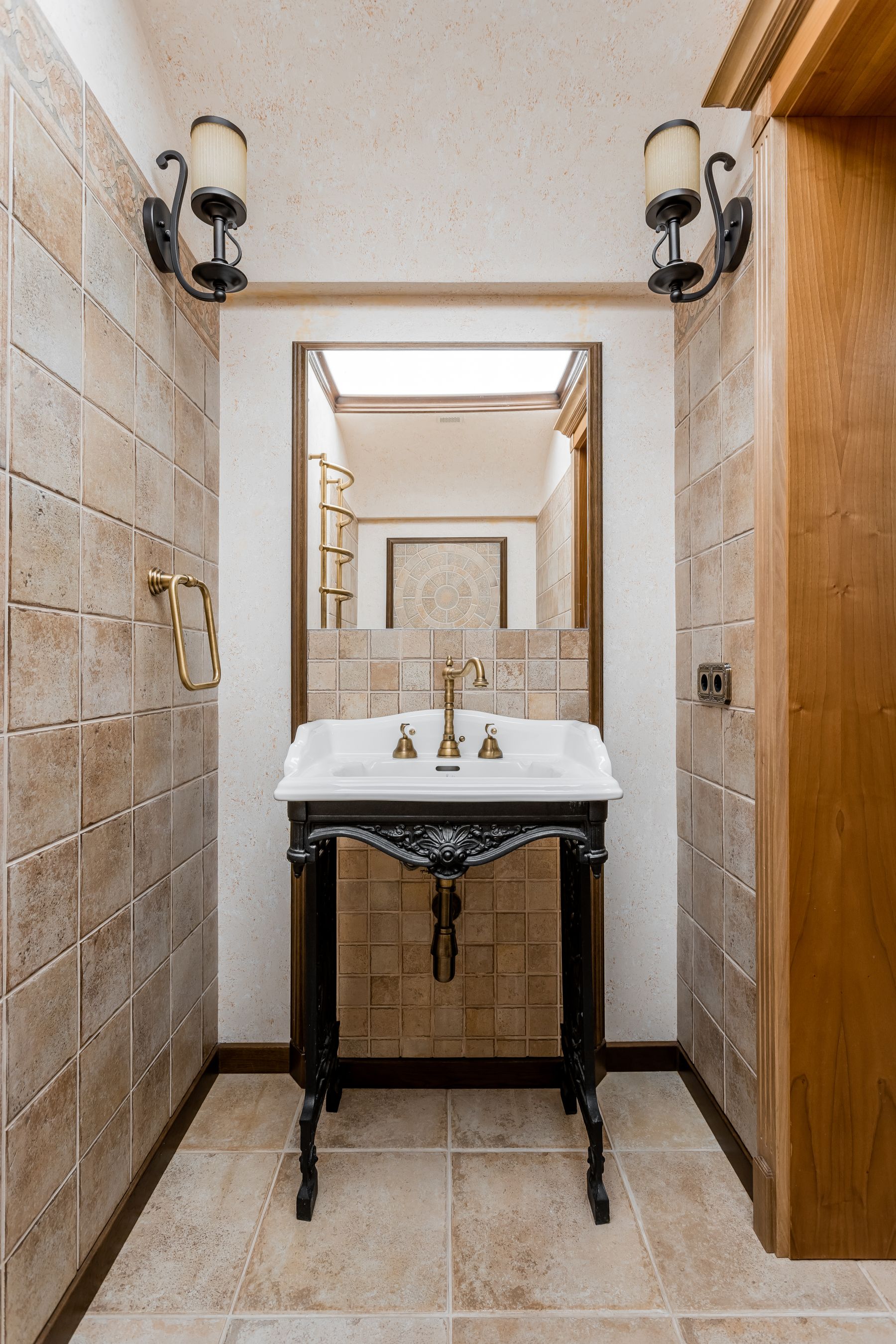
Use One Vintage Fixture Detail in a Modern Wet Zone
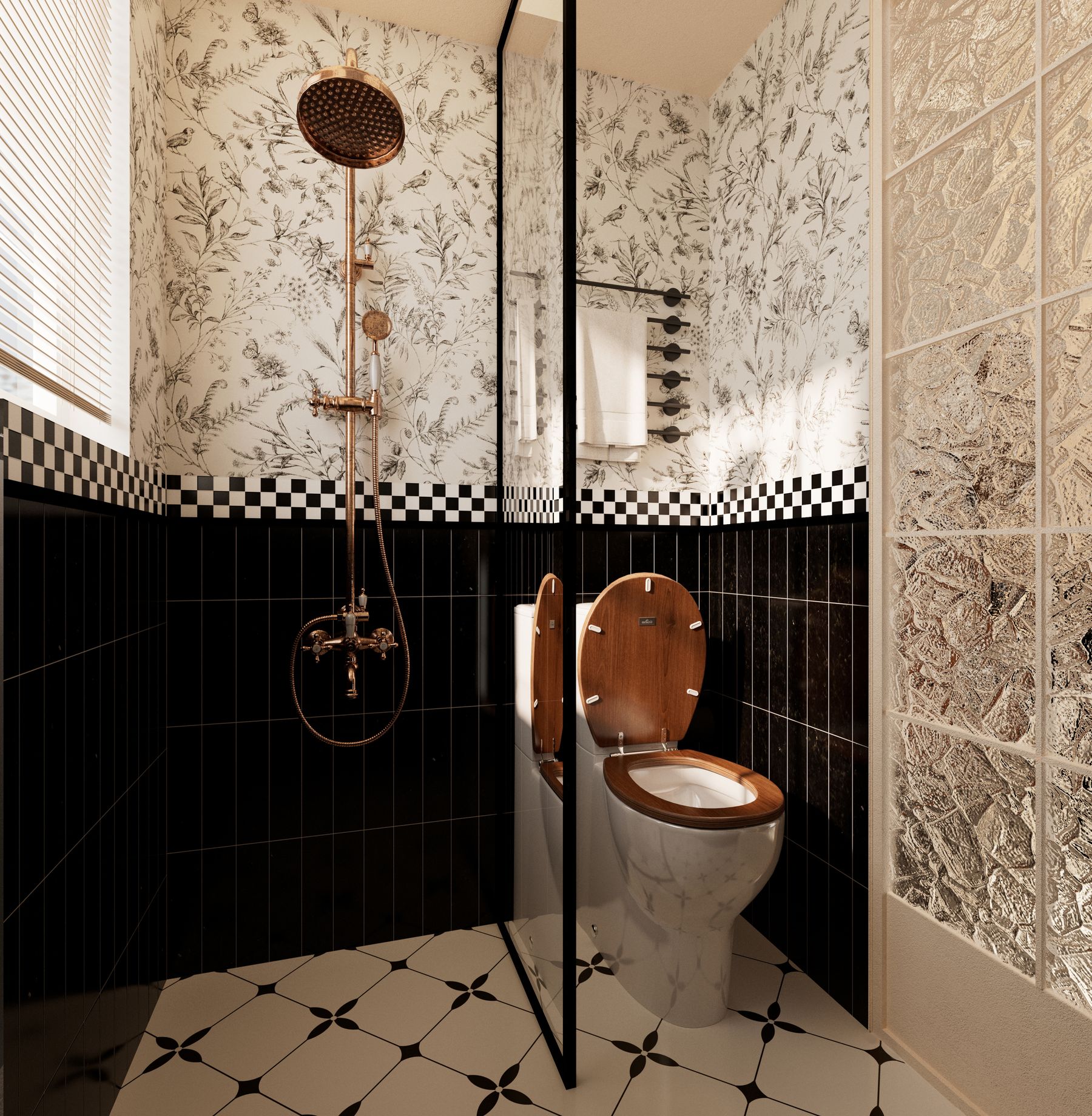
A copper-toned shower set, black-and-white tile or another vintage-looking fixture can give a renovated shower retro character without reproducing an outdated bathroom. Keep the glass, waterproofing and drainage contemporary and let the visible fitting provide the historical note. This approach works well when a full colored suite would be too strong.
Preserve Strong Original Tile When It Still Works
Original blue, green, pink or patterned tile can be the most valuable visual asset in a retro bathroom if it is sound and the substrate is performing properly. Instead of replacing it automatically, consider updating grout, lighting, storage and fixtures around it. Preservation should never override waterproofing or structural problems, but visually distinctive tile is difficult to reproduce convincingly.