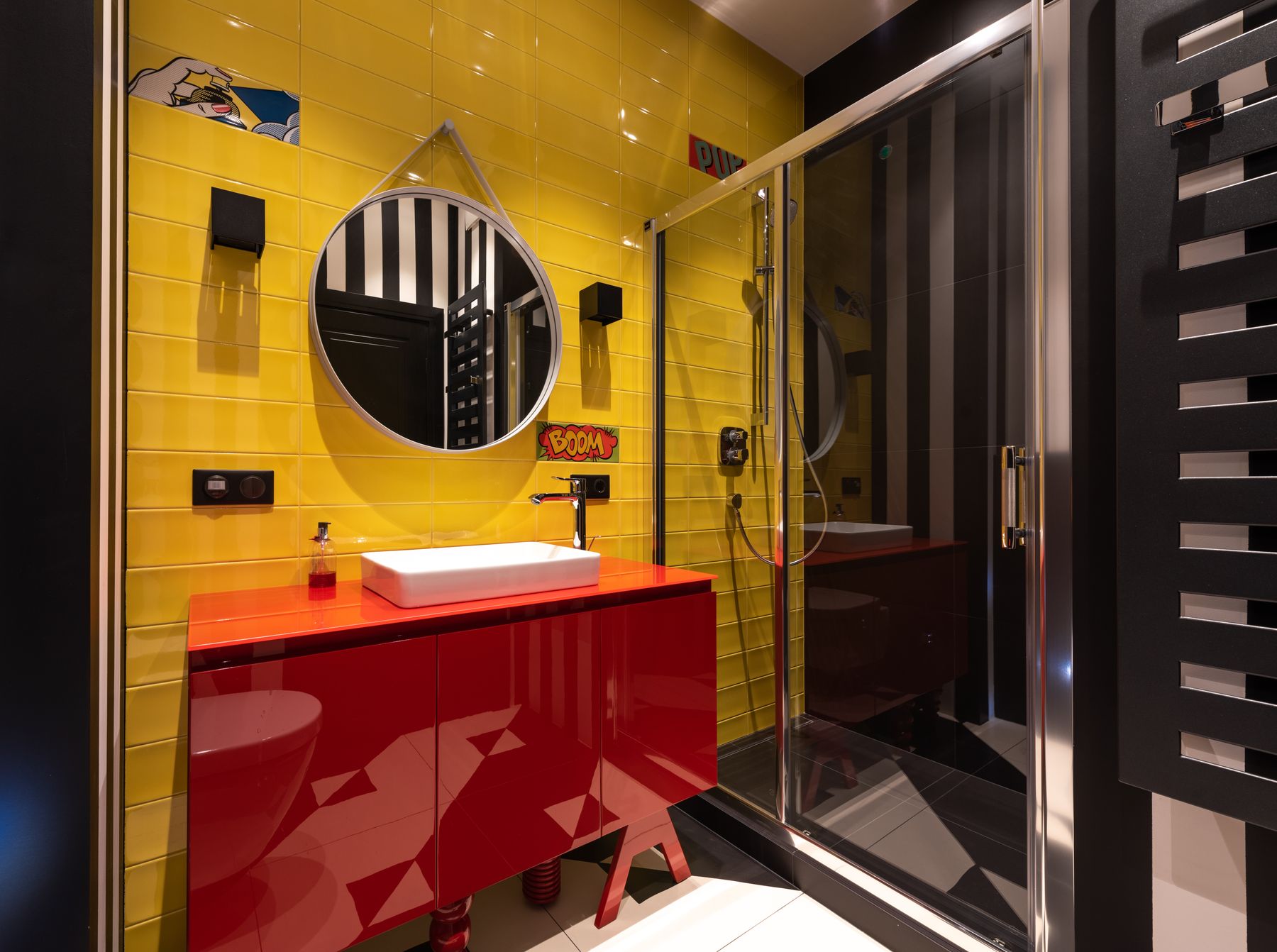
Start With One Strong Yellow Surface
A full yellow tiled wall creates a clearer design decision than several small yellow accessories. Keep the tile format simple enough that the color remains the main story, then use white ceramic or a restrained vanity to prevent the wall from feeling visually noisy.
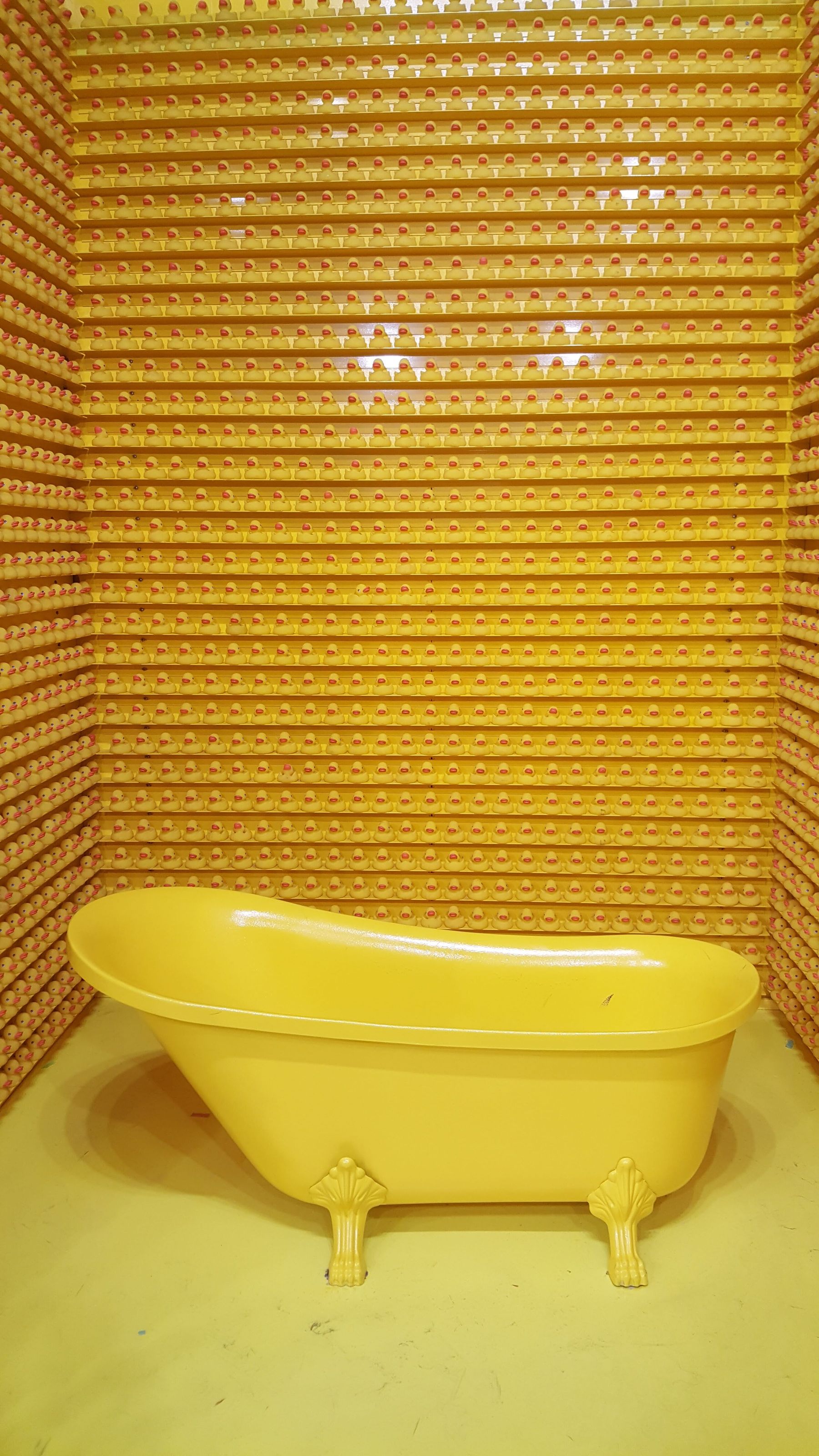
Use a Yellow Tub as the Focal Object
A yellow bathtub can carry the entire color story without requiring yellow tile throughout the room. This works especially well in retro, eclectic or contemporary schemes where the tub is already the visual anchor. Keep nearby walls and flooring quieter so the fixture remains readable.
Use Mosaic for Fine-Grain Warmth
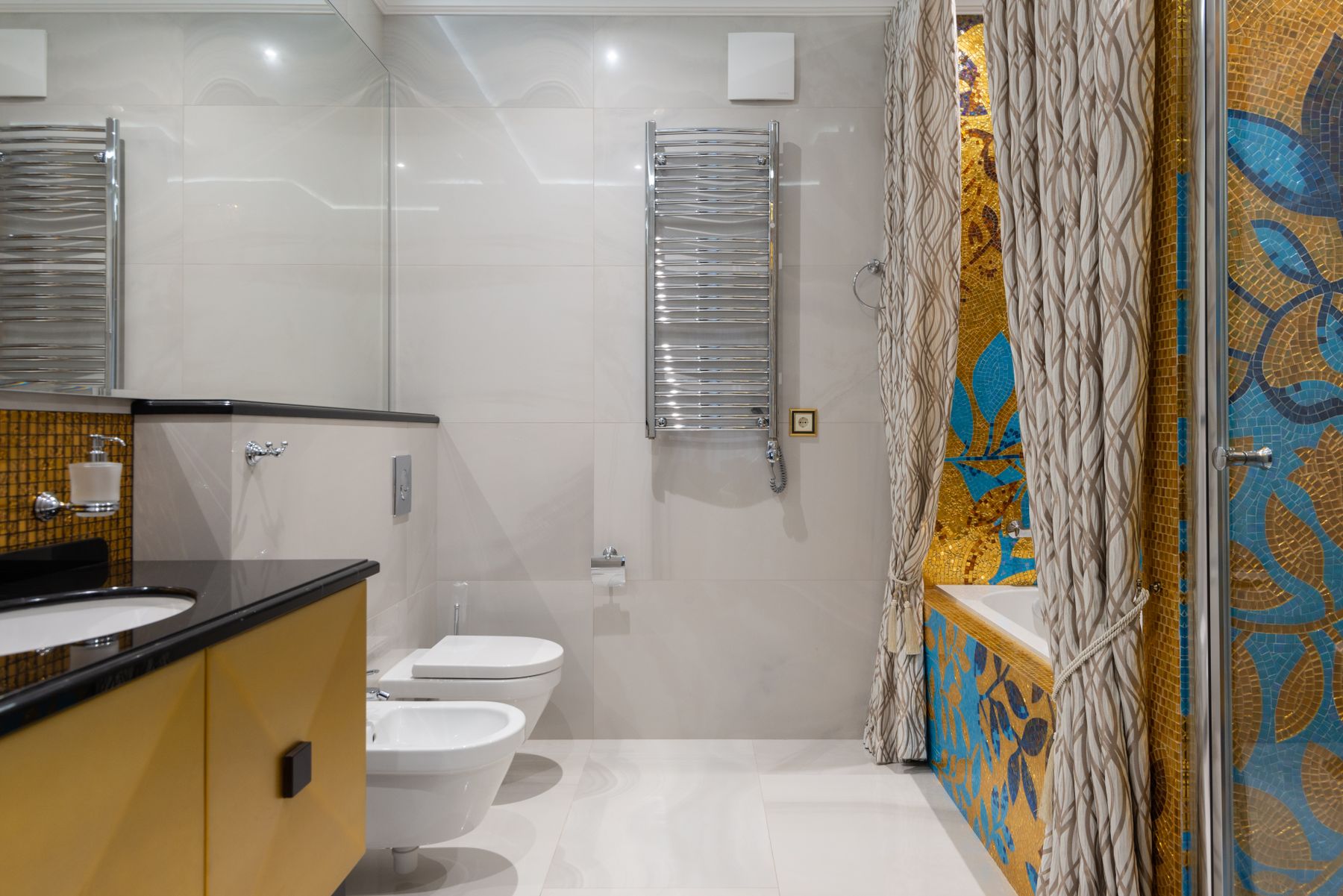
Yellow and gold-toned mosaic can create warmth through many small reflective pieces rather than one flat color field. It works best in a bath surround, niche or defined wall where the scale is visible up close. More grout means more maintenance, so use the detailed surface selectively.
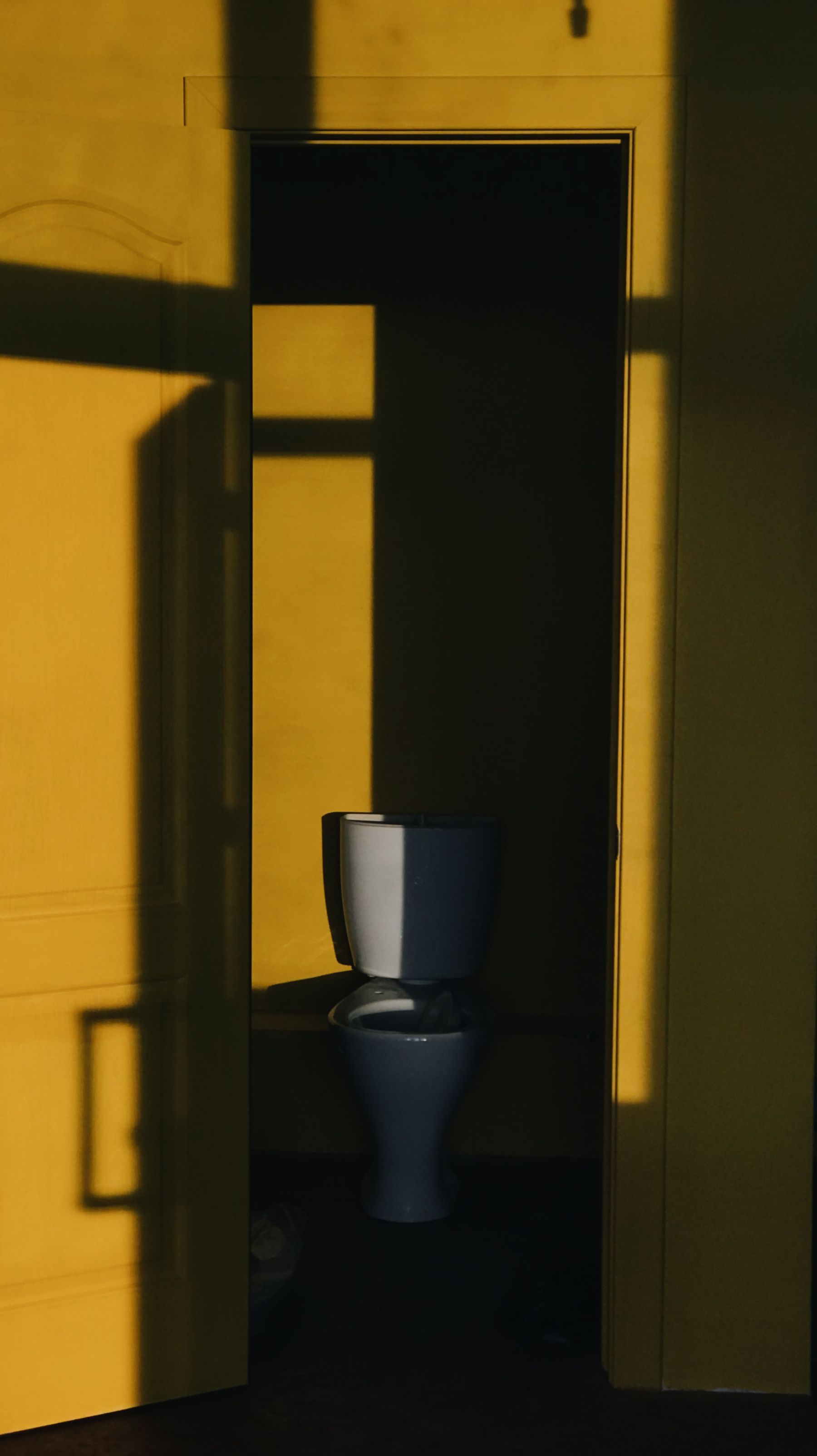
Use Painted Yellow Walls for the Lowest-Cost Big Change
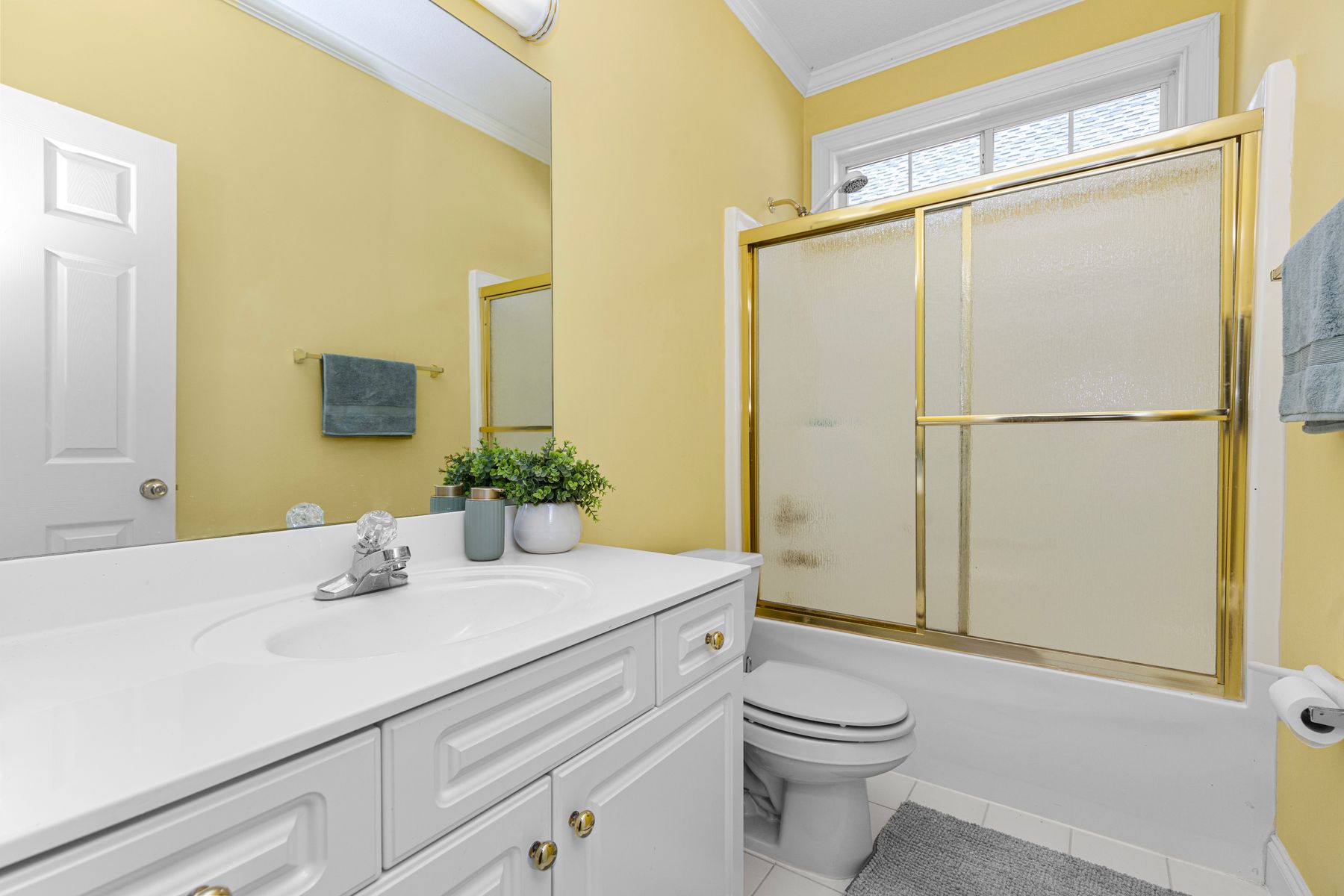
Paint can shift the entire bathroom toward yellow without the cost or permanence of tile. Use bathroom-suitable paint in drier zones and keep direct splash areas protected. Strong shadows and artificial light can alter the color dramatically, so test the shade on a large wall section.
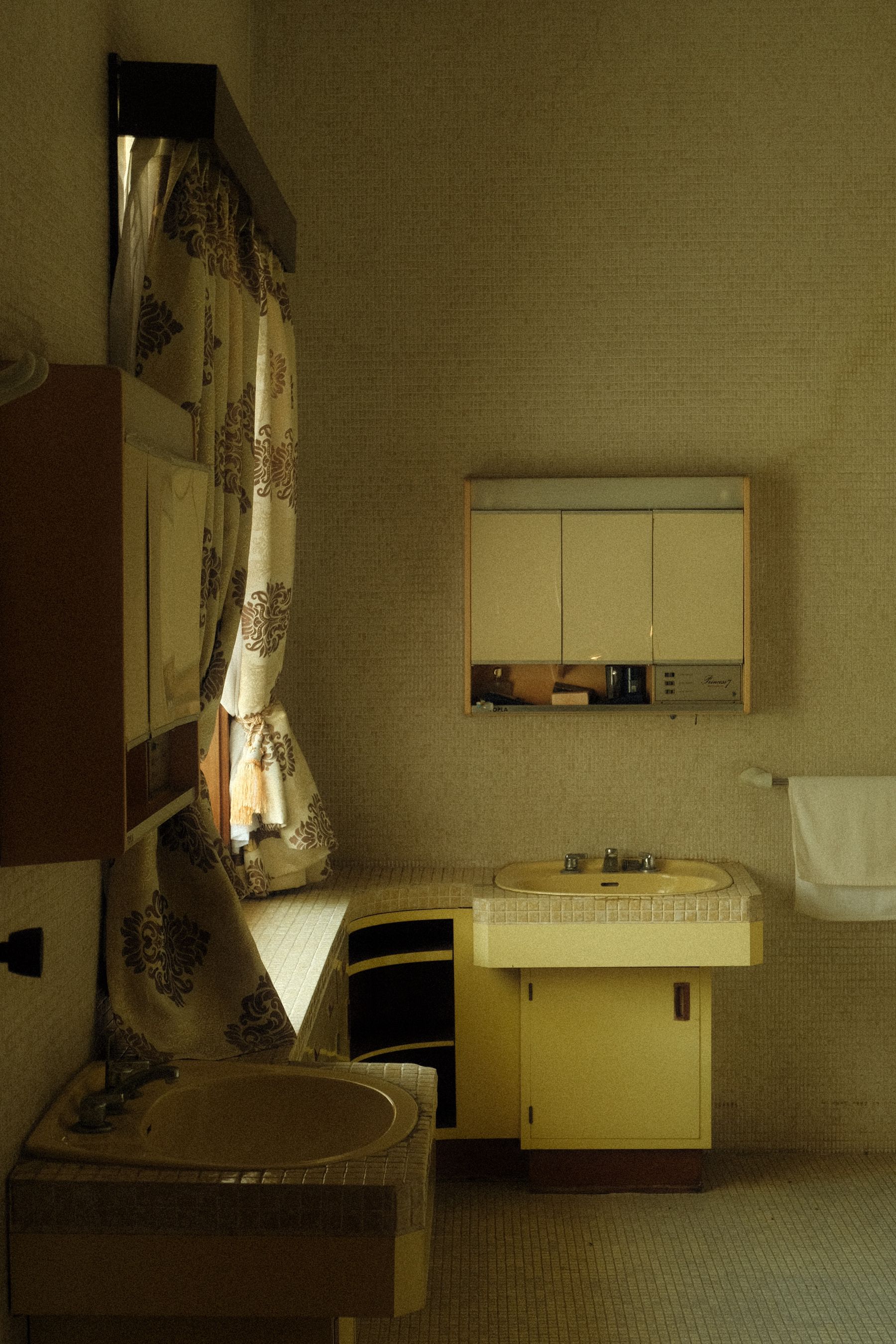
Use Yellow Sanitaryware as a Vintage-Led Move
A yellow sink or other colored sanitary fixture can give the bathroom a genuine period reference without filling the room with retro props. Keep curtains, mirrors and metal finishes quieter if the fixture already carries a strong color and shape. When preserving an older sink, condition and plumbing compatibility matter as much as appearance.
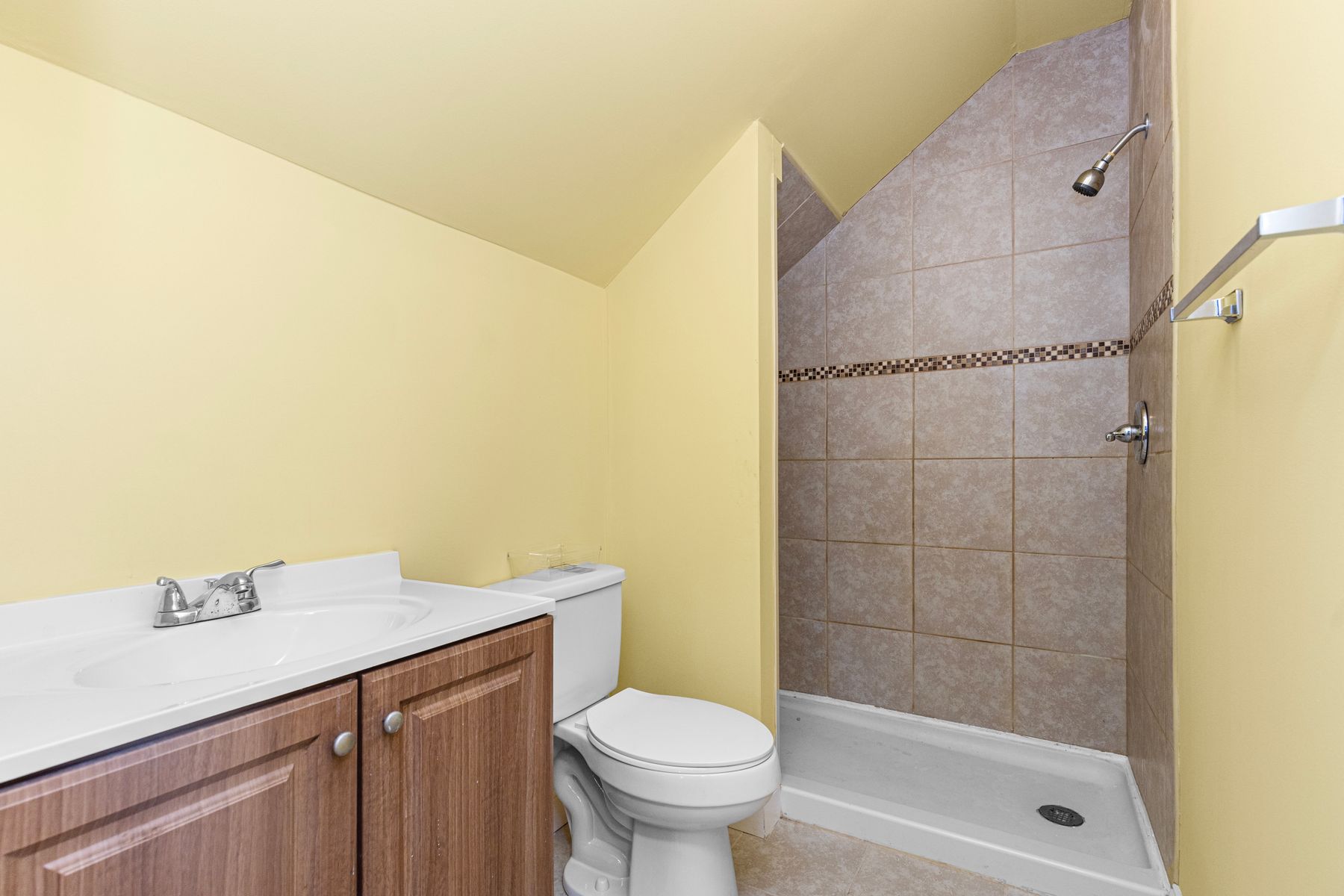
Make Yellow Work in a Small Bathroom
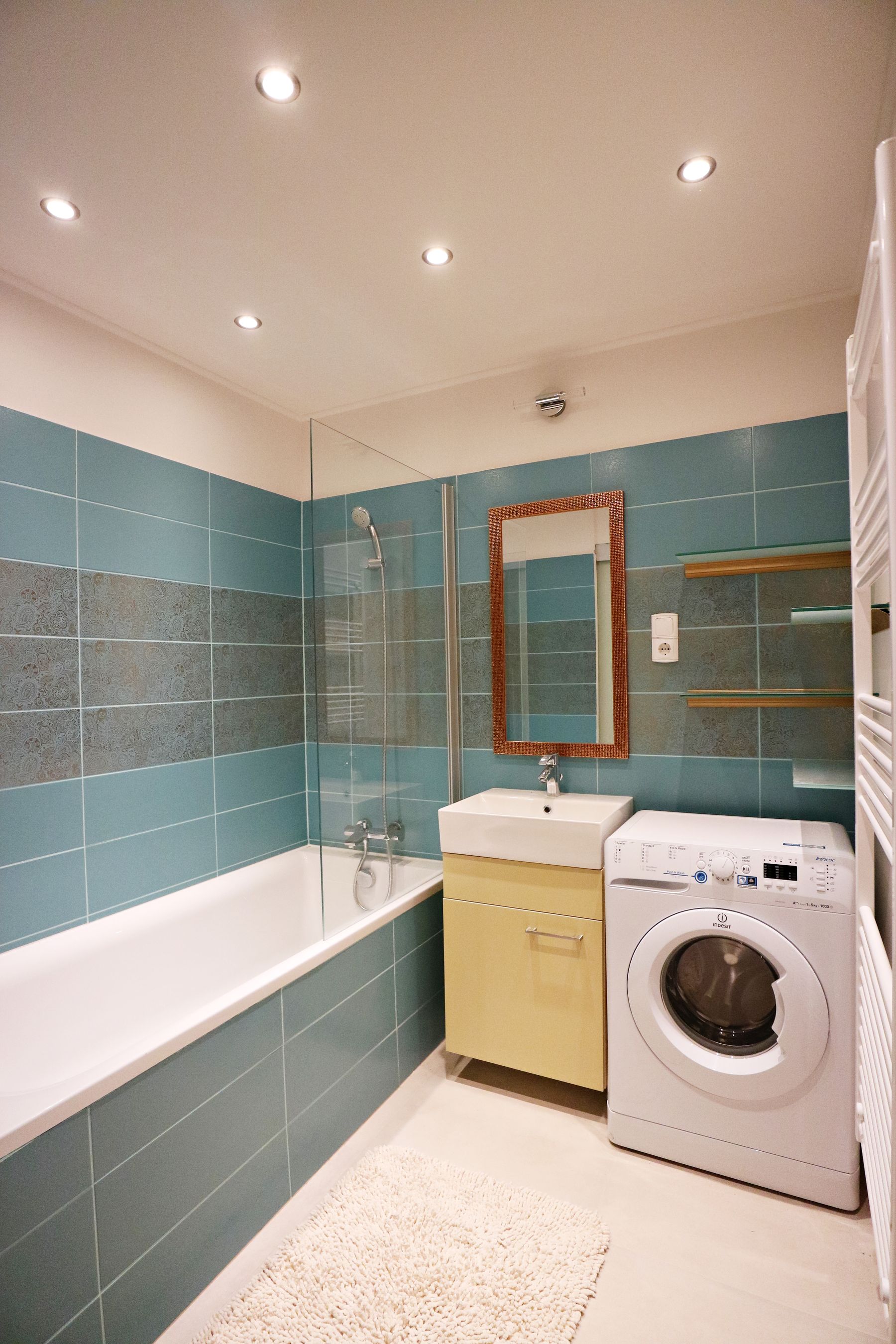
A compact bathroom can handle yellow when circulation, storage and white or neutral surfaces remain clear. Use yellow on upper walls or one main plane while preserving enough light around the sink and shower. Warm wood can also soften the color without adding another saturated hue.
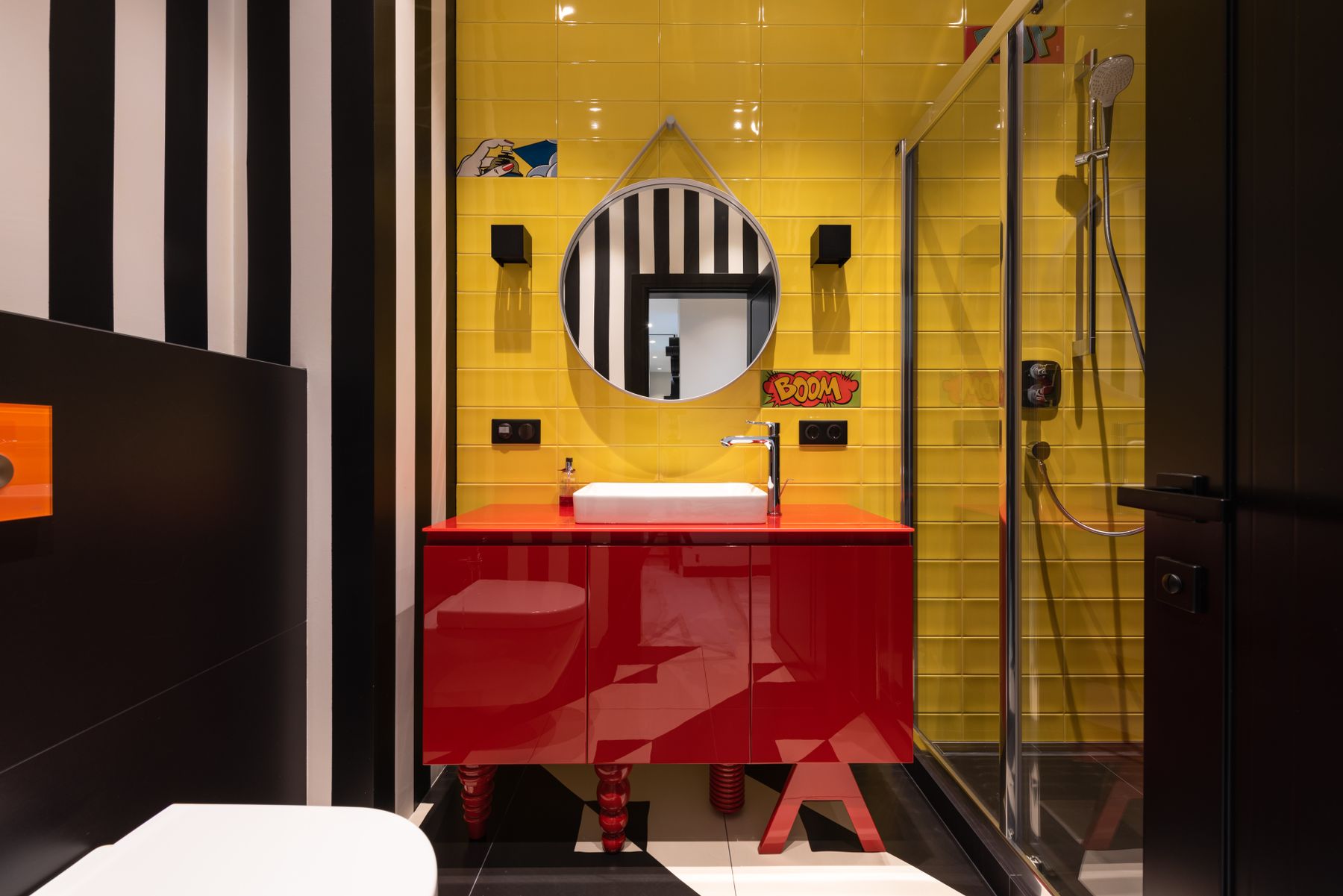
Use Red or Terracotta as a Controlled Counterpoint
Yellow pairs naturally with warmer red, rust or terracotta tones, but the combination needs clear boundaries. A red vanity against yellow tile can work because each color belongs to one object category. Avoid scattering both colors through small accessories where the palette becomes visually noisy.
Use Yellow Textiles as the Easy-Test Layer
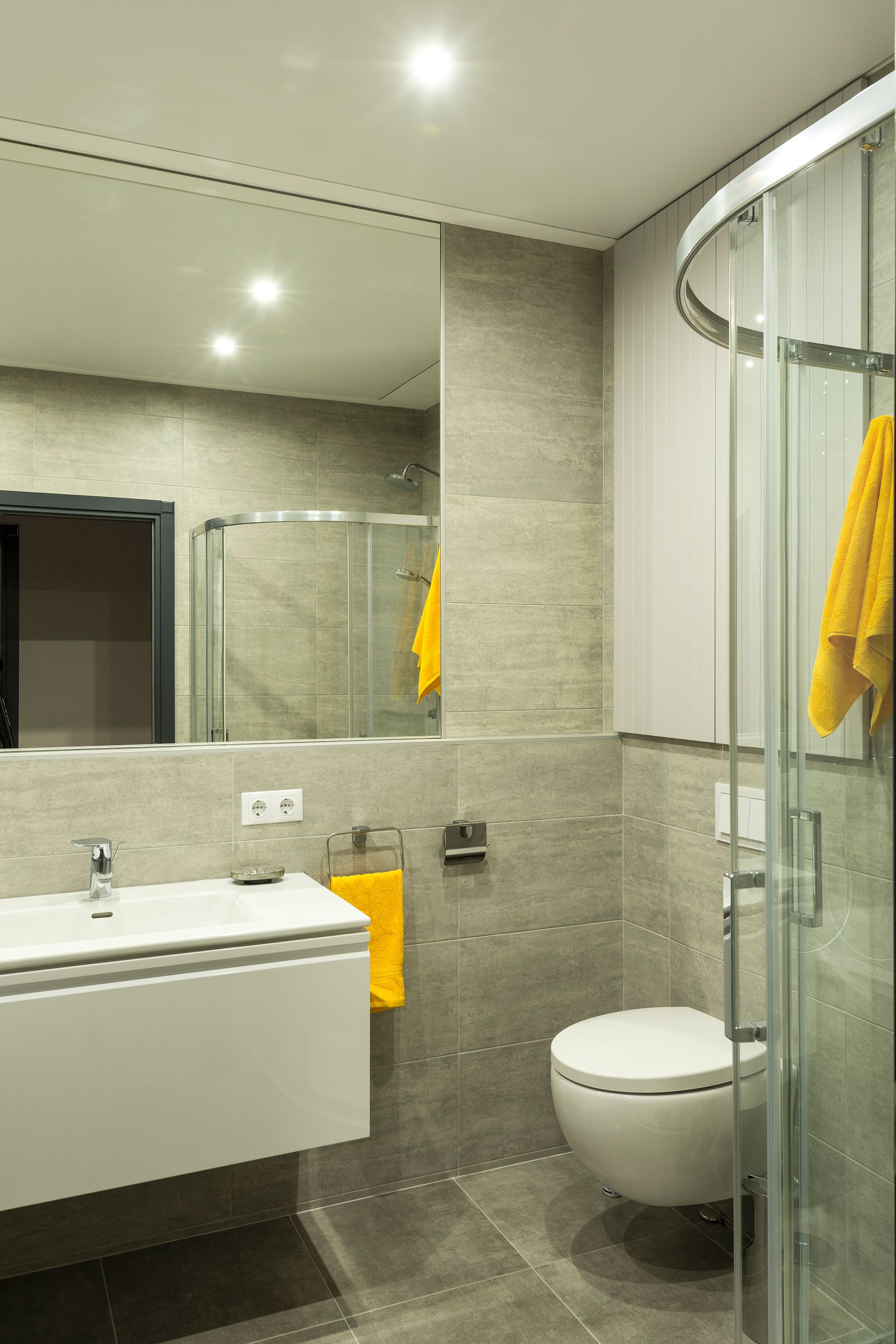
Towels and other washable textiles are the easiest way to test whether yellow suits an otherwise neutral bathroom. This is useful before committing to paint or tile, and it lets the room change seasonally. Keep the accent concentrated so it reads as deliberate rather than incidental.
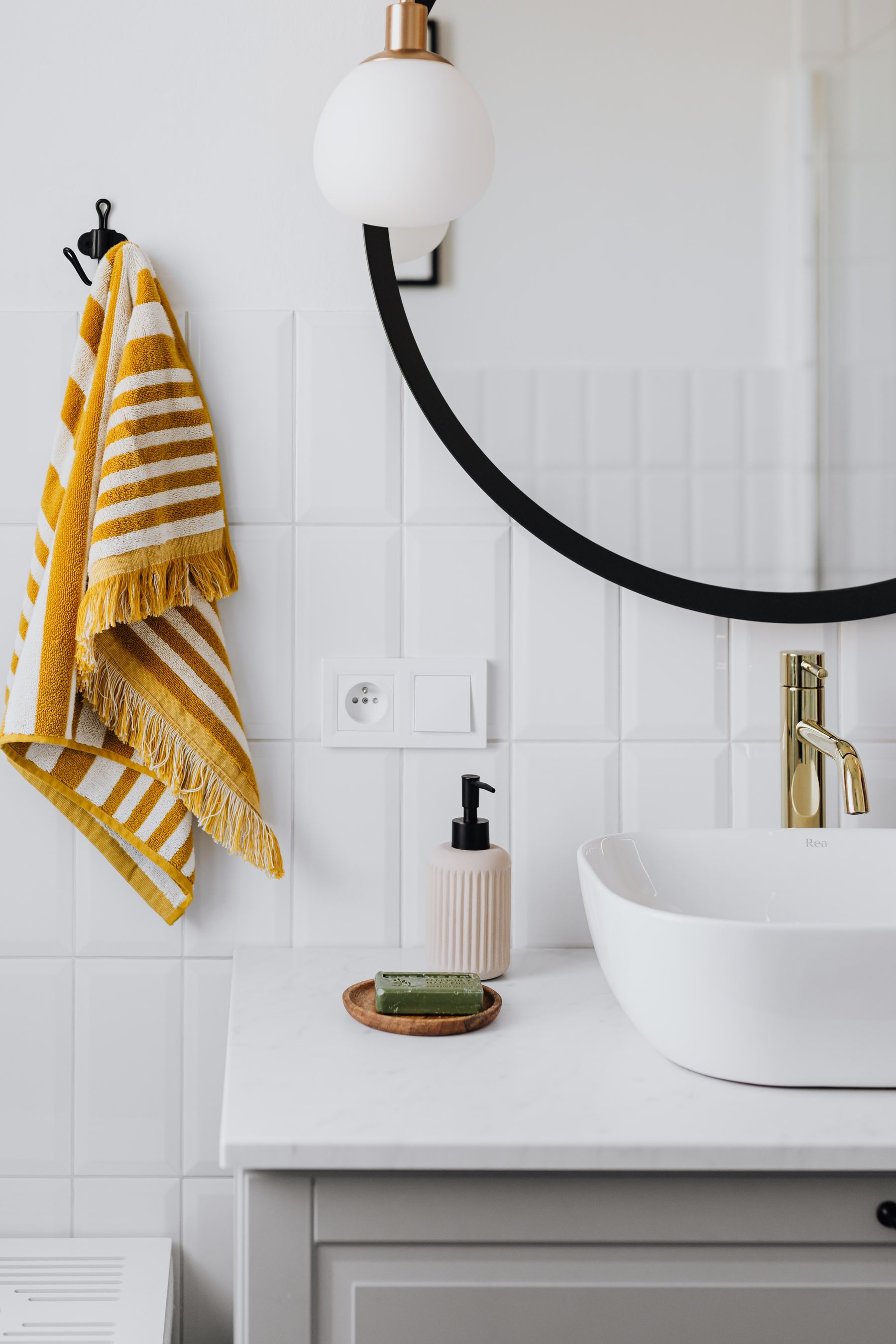
Repeat Yellow in a Controlled Rhythm
A few repeated yellow textiles can create rhythm in a neutral bathroom without changing the architecture. This approach works best when the yellow accents share a similar tone and are separated by plenty of white, grey or stone.
Use Flowers as the Softest Yellow Layer
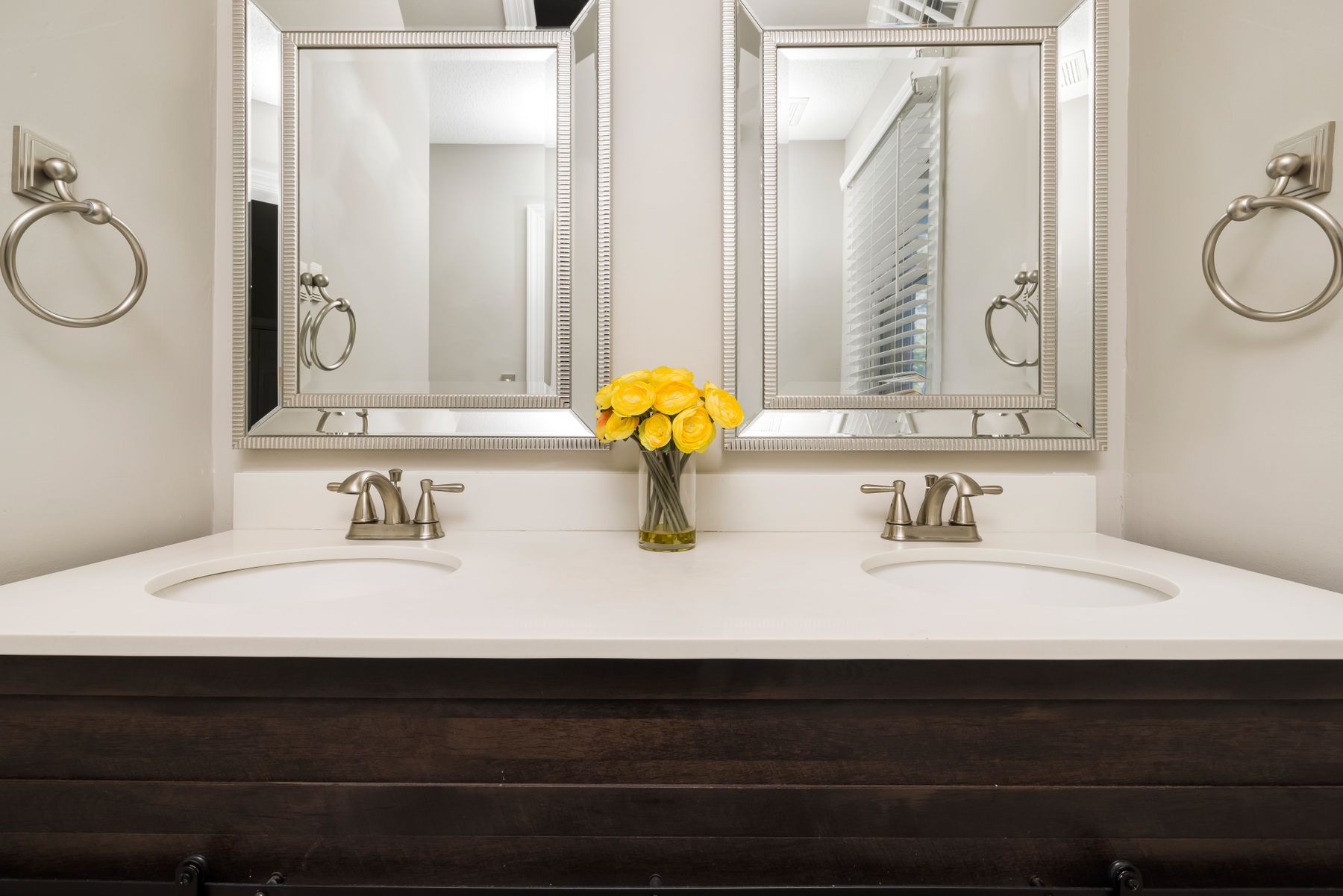
Fresh or dried yellow flowers can add warmth to a neutral bathroom without becoming part of the permanent palette. They work best as a finishing layer after lighting, tile and storage are already resolved. If the room only reads yellow because of one vase, treat it as styling rather than a yellow bathroom scheme.