
Separate Contemporary From Modern
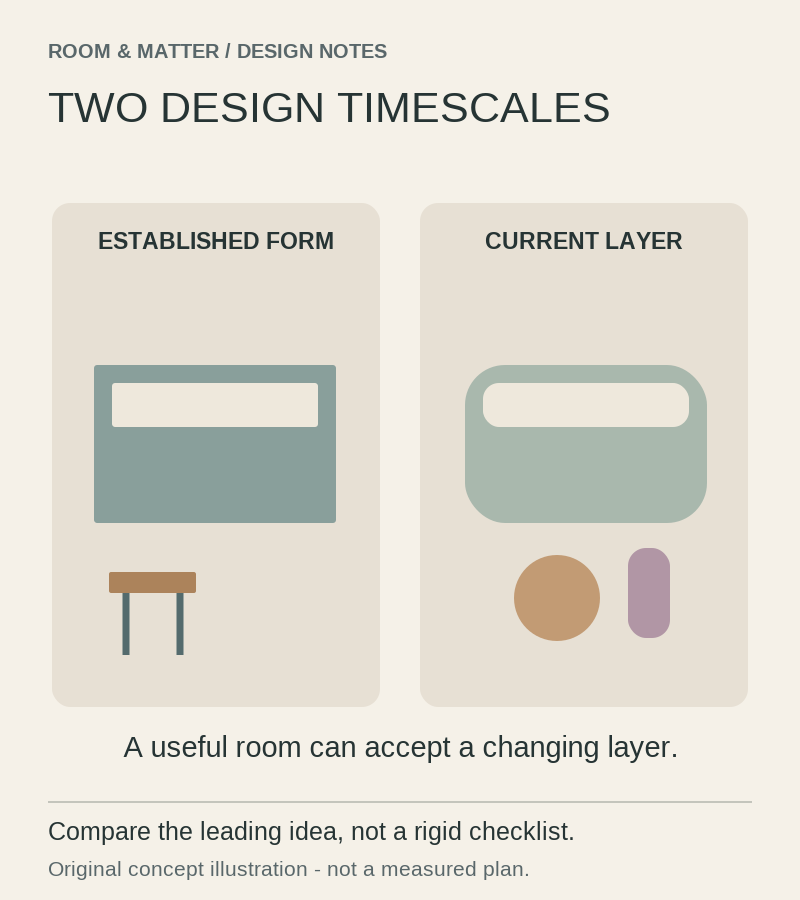
Modern is often used for a more established twentieth-century design vocabulary; contemporary describes an evolving present-day approach. The two overlap, so a single photograph cannot settle the label. Here the distinction is the decision being made: keep a useful architectural framework, then choose current forms, color and materials that suit the person sleeping in the room. The diagram compares example layers rather than prescribing two rigid styles. For a guide led more consistently by geometry and functional planning, continue to modern bedroom ideas. Contemporary choices can be expressive, but they still need comfortable reach, storage and a room that works when the decorative layer changes.
A Long-Life Architectural Base Comes First
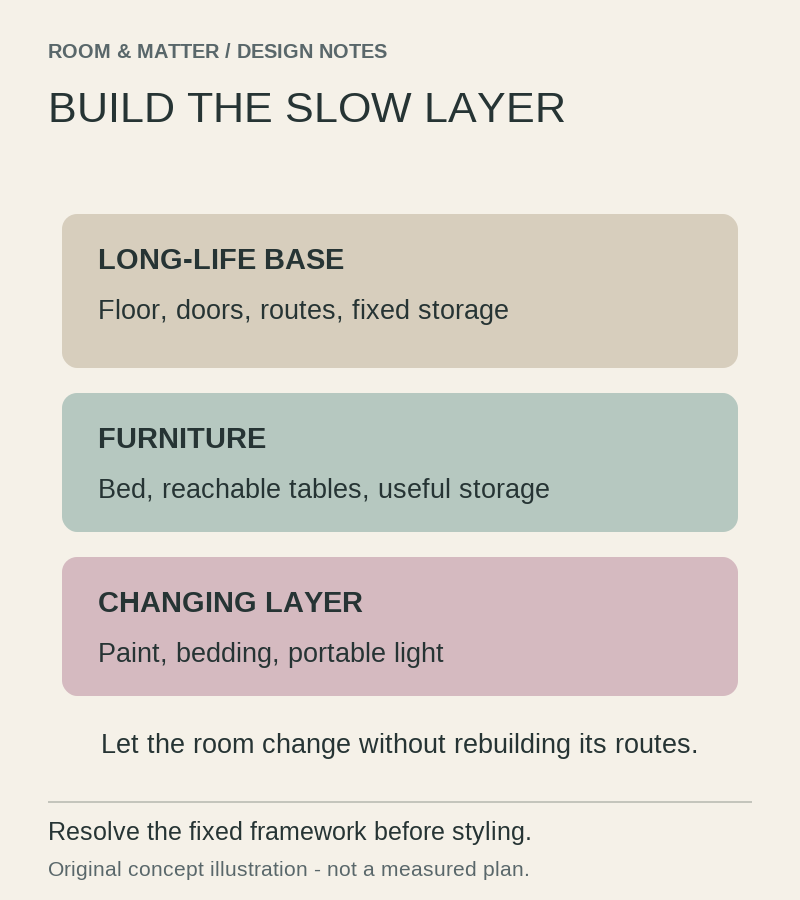
Treat flooring, major wall fields, doors, heating, fixed joinery and electrical routes as the slow layer. These elements can have character, but they should cooperate after a fashionable color or light fitting changes. Confirm bed clearances, wardrobe opening, cleaning access and the path from door to window before specifying decorative panels. A stable architectural base is not timid; it is the framework that allows current furniture and textiles to evolve without repeated waste, construction or compromised circulation.
Use Curves Where They Improve the Experience
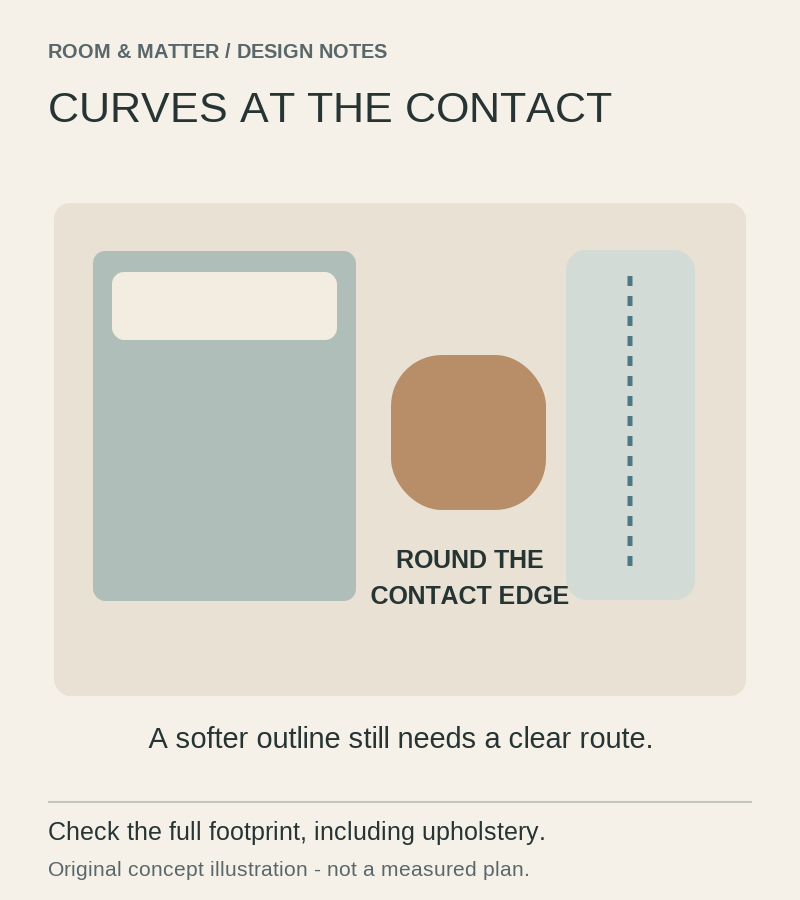
A radiused headboard, oval mirror or rounded bedside table can soften straight walls and cabinetry, but every object does not need the same curve. Choose the location where a rounded edge improves touch, movement or visual flow. Check the real footprint of bulbous furniture and allow clearance around upholstered corners. Repeating one radius at different scales creates coherence; combining arches, waves, circles and scallops indiscriminately turns an inviting form language into a catalogue of trends.

One Intentional Color Field
Contemporary color works best when it occupies enough area to feel structural. Use a colored headboard, enveloping wall, broad rug or bedding field rather than scattering tiny accents across shelves. Muted red, grown-up blue, olive, clay and plum can all feel restful when their undertones suit the room's daylight. If the color is strongly trend-led, place it on paint, upholstery or textiles that can change without disturbing fixed construction. Test large samples beside skin, timber and nighttime light.
Texture Before Additional Objects
Combine surfaces that respond differently to light and touch: matte wall, visible wood grain, softly woven curtain, smooth table and one low-sheen metal. Texture is strongest when it also improves acoustics, warmth or comfort. Avoid repeating the same fashionable boucle, fluting or ribbing across the bed, bench, wall and wardrobe. The bedroom needs areas of visual rest, and deeply textured materials collect dust differently. Sample the complete group in daylight and lamplight before adding decorative objects to compensate for flatness.


The Bed Gets One Leading Gesture
An oversized upholstered headboard can introduce a softer surface and make the bed feel architectural, but its scale must respect windows, switches, sockets and future mattress changes. Inspect the frame, fire performance, cleanability and access behind it before commissioning wall-to-wall construction. If the headboard is the statement, simplify art and bedside lighting around it. A modular or removable panel system can make replacement more practical for a fast-moving fabric color than permanently building every wall around one fashionable profile.
Contrast That Clarifies the Bed Zone
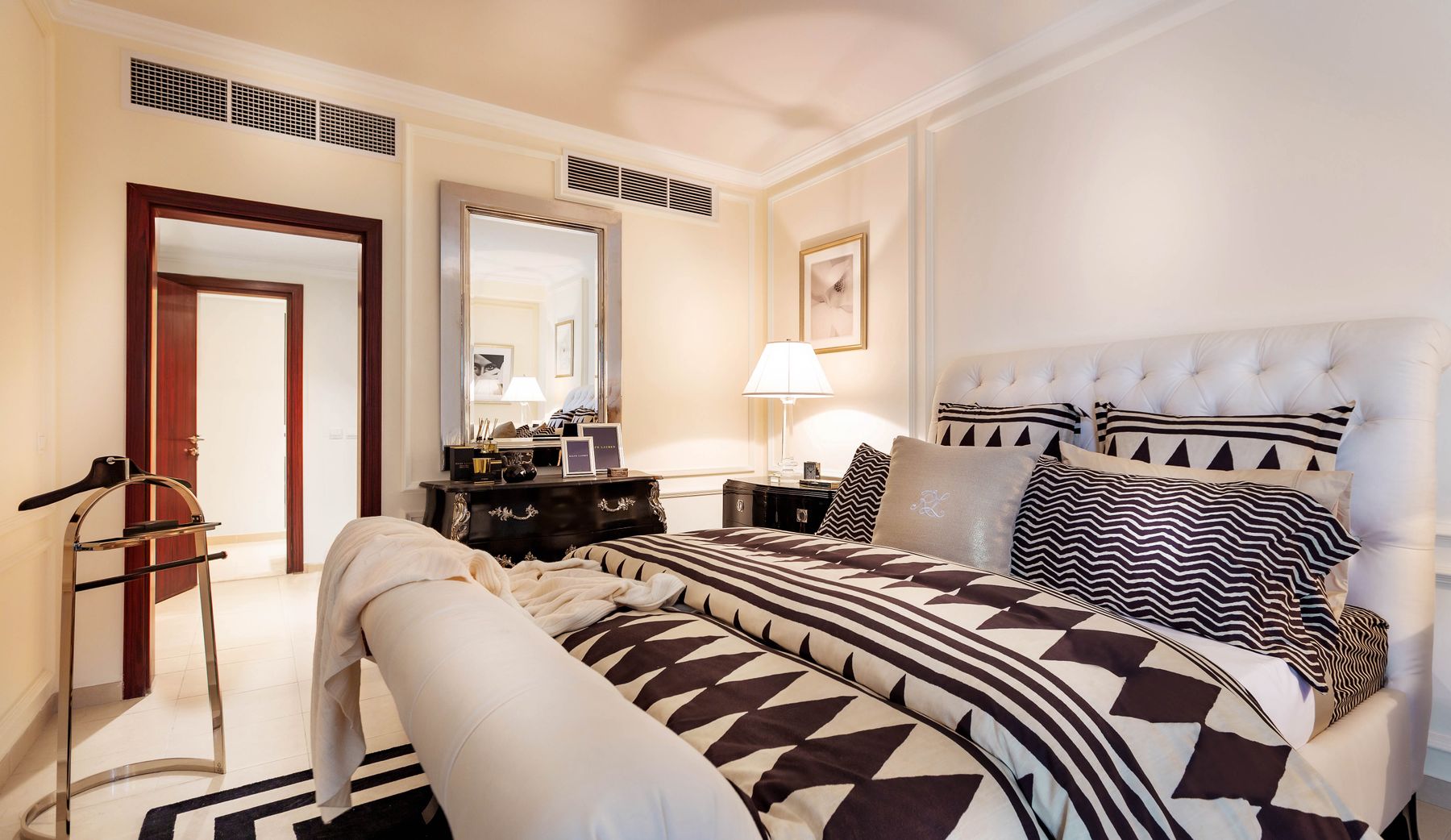
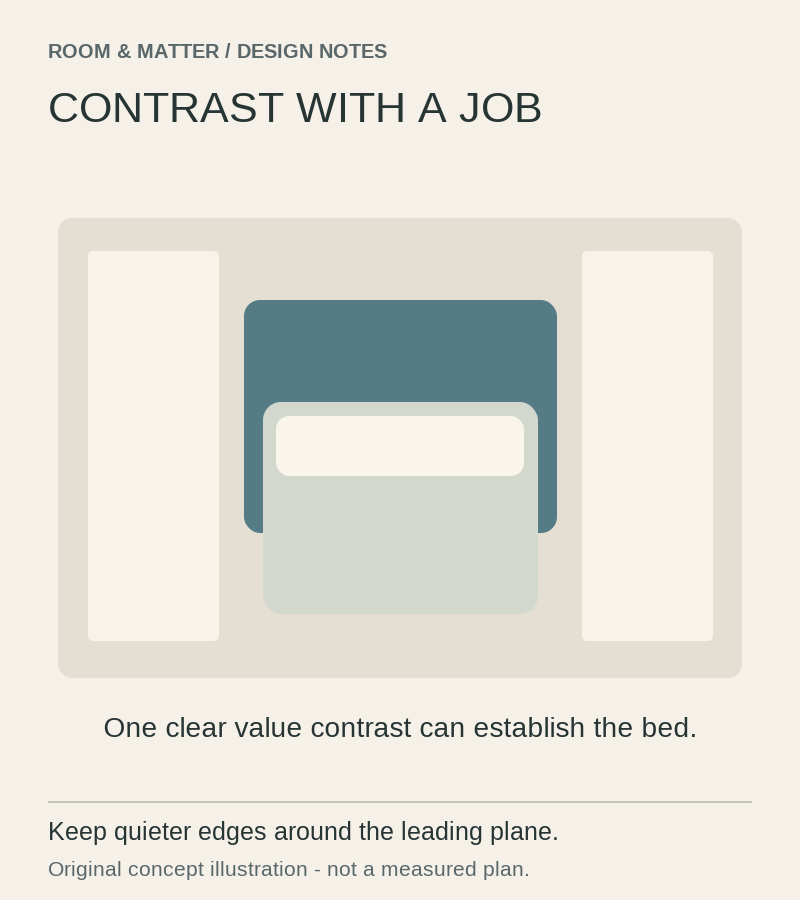
Contrast can come from value, color, texture or shape, but one clear method is usually enough. A darker headboard against pale joinery, crisp bedding against a tonal wall or a curved bed within a rectilinear wardrobe frame gives the eye an immediate hierarchy. Maintain enough contrast at floor edges, switches and furniture for navigation, especially at night. Avoid outlining every object in black; repeated high contrast can make a sleep space feel graphic and active rather than composed.
Warm Neutrals Begin With Undertone
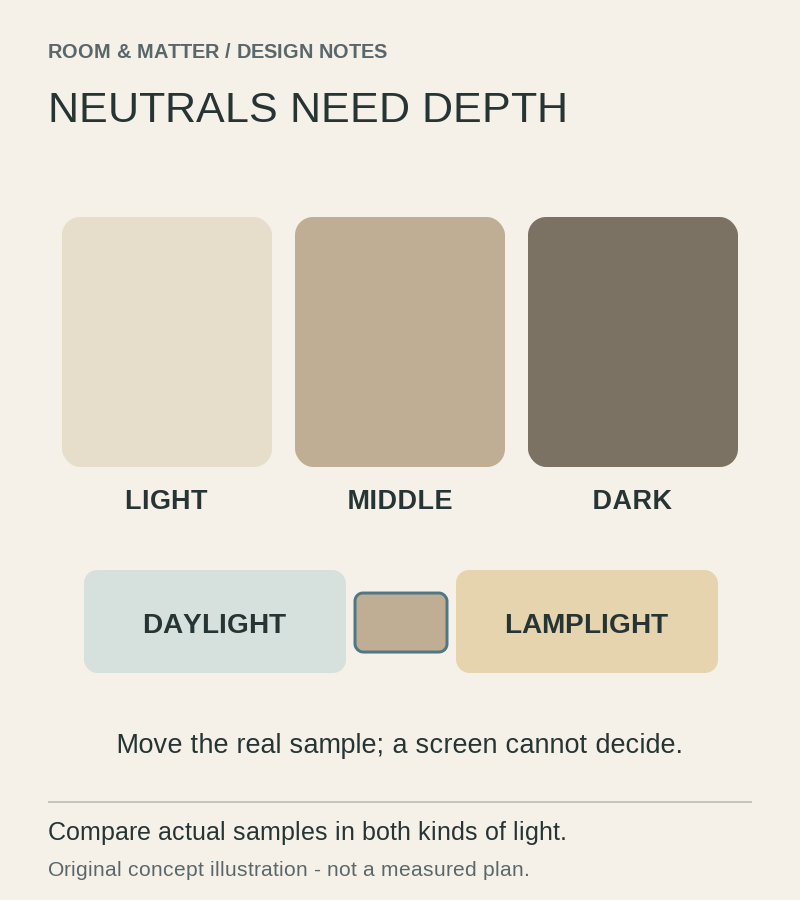
Taupe, mushroom, caramel, softened gray and warm white are useful contemporary foundations only when their undertones cooperate with daylight, wood and upholstery. A color described as calming can turn blue, pink or green in the actual room. Test large movable samples on several walls over multiple days, then compare them under the planned lamps. Build light, middle and dark values rather than matching every neutral exactly. Variation gives depth while a shared undertone keeps the scheme from fragmenting.

Dark Panels as a Defined Volume
Charcoal, deep brown or black paneling can create a cocooning bed zone when its edges follow the architecture. Keep bedding, curtains or adjacent walls lighter enough to reveal form and support nighttime orientation. Panels must not conceal damp, unsafe wiring or ventilation problems, and heavily grooved surfaces increase dusting. If the dark treatment is primarily a fashion choice, paint or removable panels may be wiser than expensive fixed cladding. The goal is depth, not a stage set.

Warm Grain, Sharper Light
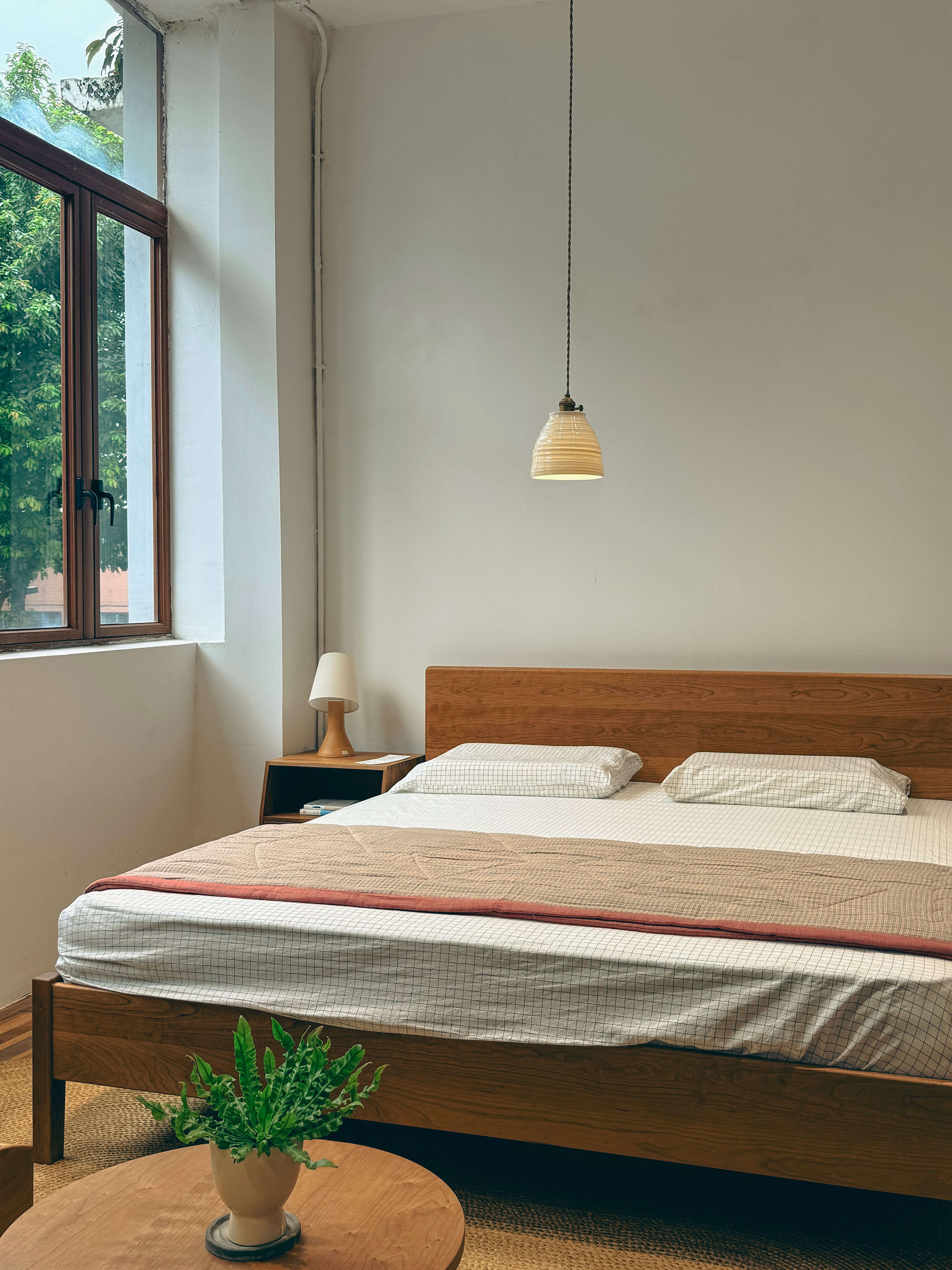
A contemporary material group can stay warm without being uniformly matte. Start with the largest timber field, then choose the smaller surface that catches the light: a lamp, a glass top or a restrained piece of hardware. The bedside detail isolates that relationship in a mixed-style room; it is not a prescription for case-style furniture or rustic cladding. Compare the reflective object from the pillow as well as the doorway, because a bright highlight may be pleasant in one view and distracting in another. Leave the remaining finishes quieter, and check fingerprints and cleaning on an actual sample. The same choice can connect adjoining rooms without repeating every material; contemporary apartment ideas extends that coordination beyond the bedroom.
Layer Light as Atmosphere and Task
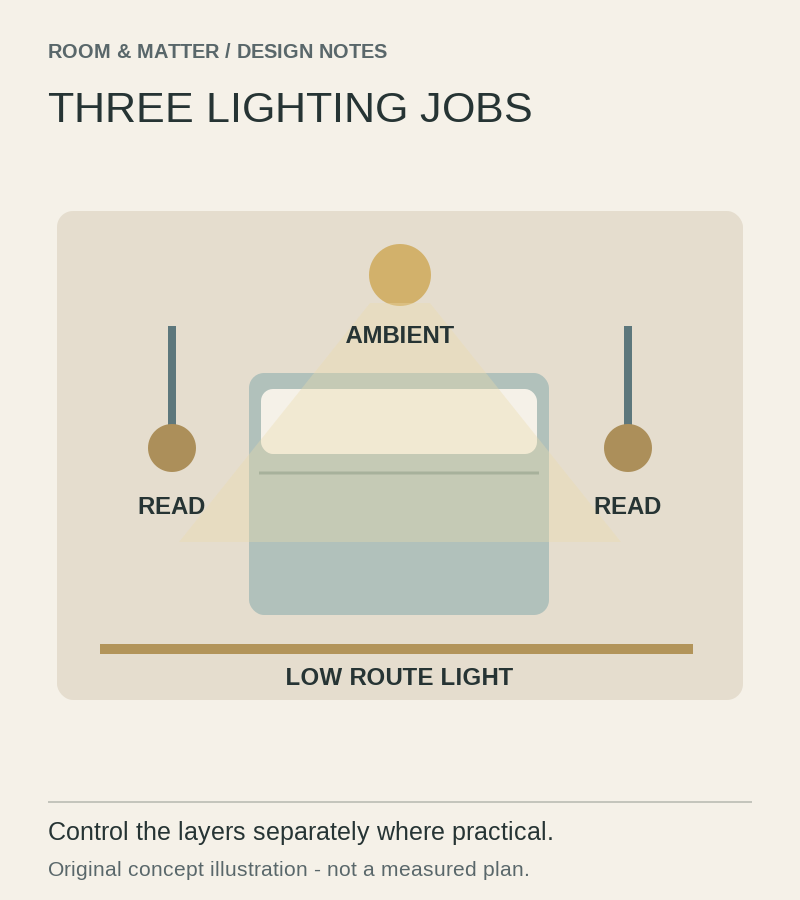
Combine ambient light, independent reading sources and a low nighttime route. Sculptural pendants or portable lamps can provide the current layer, but glare, cable routes, switch access and color rendering decide whether they work. Integrated light should remain serviceable and avoid trapping the room in obsolete controls. Put major layers on separate dimmers or switches, and keep hot fittings clear of textiles. The living-room lighting guide offers a broader framework for balancing task, ambient and accent light.
Size the Rug Around Real Movement
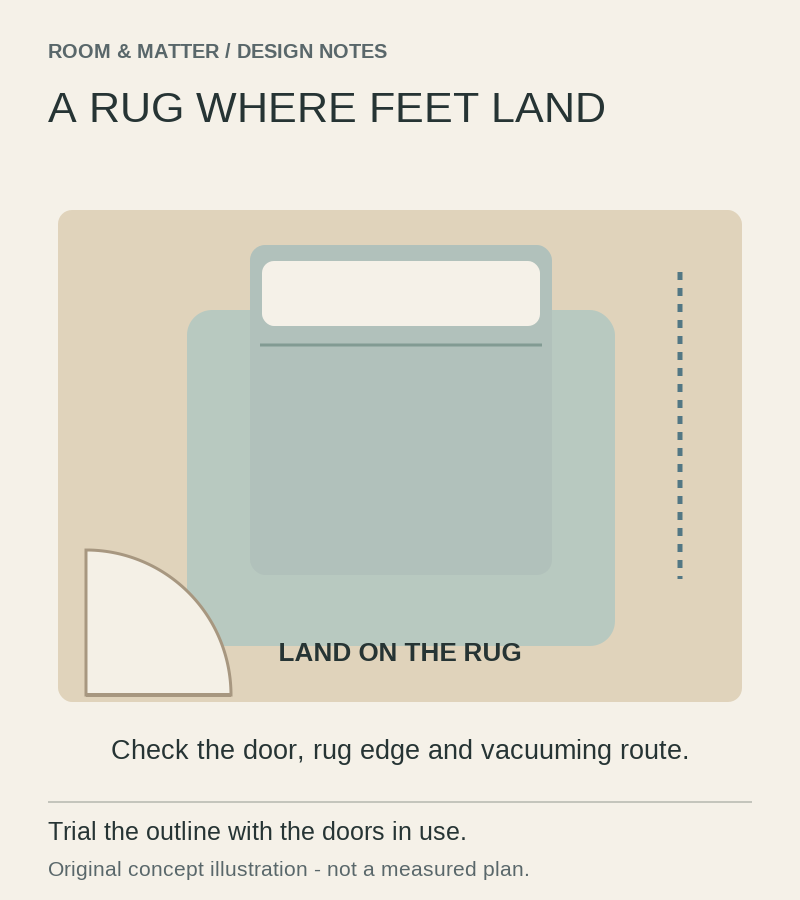
A bedroom rug should serve the sides used for getting in and out of bed, reduce echo and remain stable in the nighttime route. A single broad rug can create a quieter outline than several small pieces, but access for vacuuming still depends on the actual bed and rug edge. If a bold color or organic shape is the contemporary gesture, keep the surrounding floor and bedding controlled. Confirm door clearance, underlay compatibility and cleaning needs before buying; high pile and raised edges may conflict with accessibility, pets or robotic cleaning.

Dress Windows for Sleep and Softness
Window treatments can add a softer layer to clean-lined rooms, but decorative fullness still needs to support privacy and easy operation. Pair a sheer or textured curtain with a lined layer, blind or shutter where greater light control is needed; confirm the actual product specification instead of judging the photograph. Preserve heating, ventilation and handle access, and check the nighttime exterior view. Decorative ceiling tracks can make a room feel taller, yet the stack should not consume useful daylight. Choose cleanable fabric and hardware strong enough for repeated daily movement.
Art as a Deliberate Counterpoint
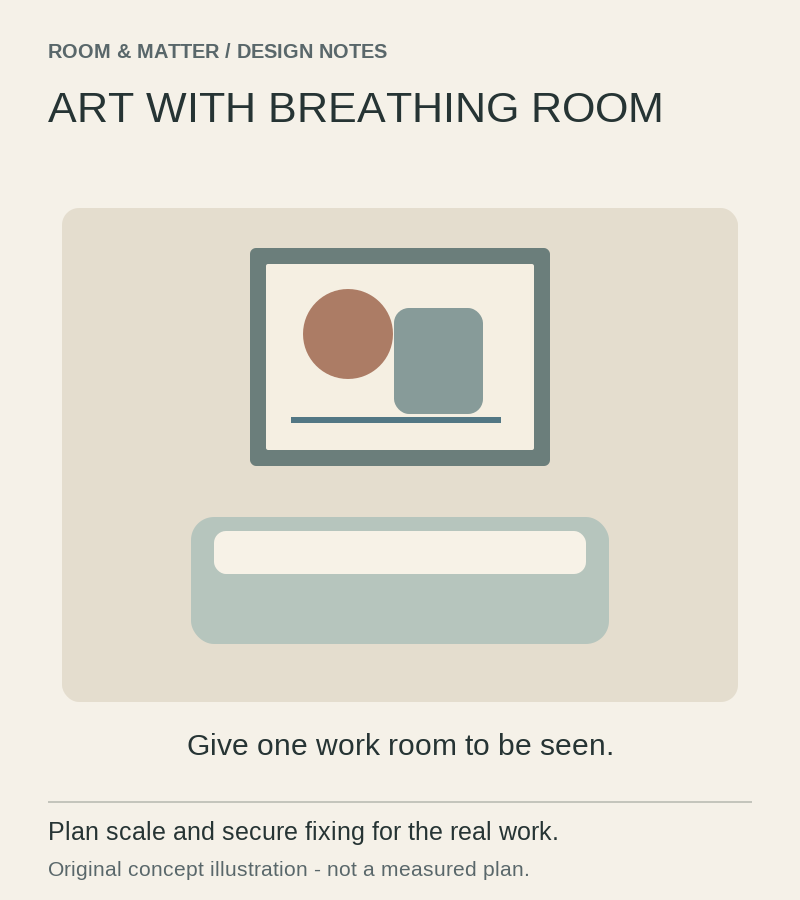
Art can bring personal color and irregularity to tailored joinery and upholstery, but the bedroom rarely needs a gallery on every surface. Choose scale in relation to the bed, verify secure hanging and protect valuable work from direct sun or humidity. Avoid placing heavy glass directly above a sleeping position without suitable professional fixing. A contemporary room should not rely on generic abstract prints to prove it is current; work with genuine meaning will outlast the surrounding trend cycle.
How Ceiling Light Shapes the Room
A sculptural pendant, fan or discreet recessed system can organize the ceiling plane, but it must suit room height, bed position and maintenance. Avoid placing bright downlights directly over the pillow or relying on a dramatic fitting for all illumination. Fans need correct clearances and quiet operation; integrated LEDs need replaceable components or a realistic service plan. Coordinate ceiling elements with sprinklers, detectors and ventilation rather than treating each one as an isolated object.

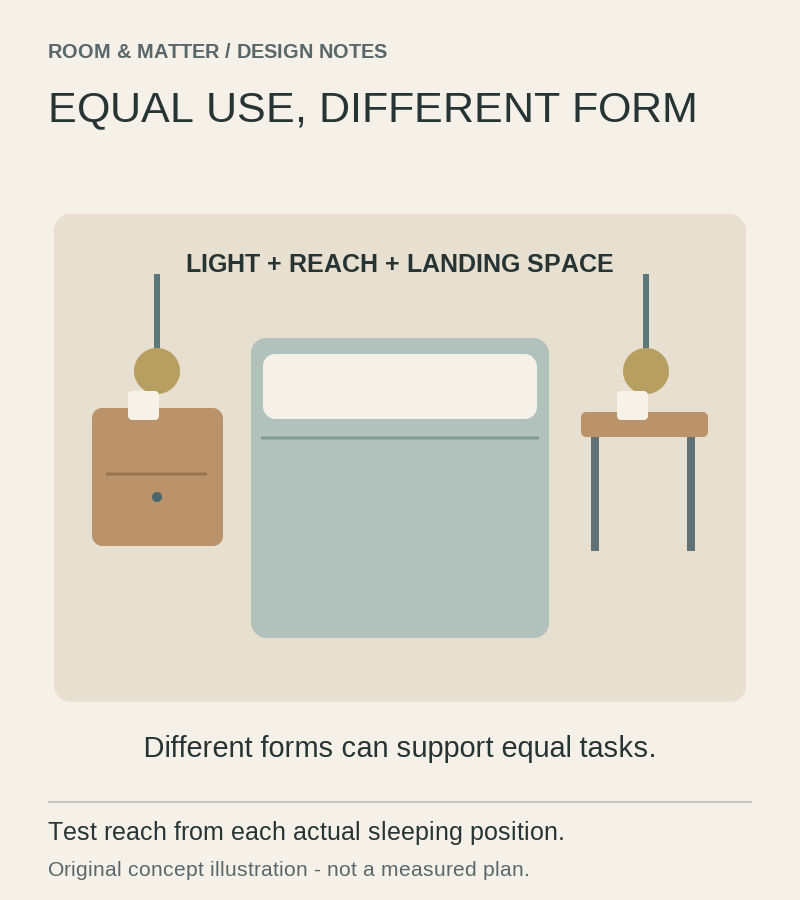
Equal Function at Both Bedsides
Bedside tables need not match, but each sleeper should have reachable light, charging, water and a stable landing surface. Choose height relative to the mattress and keep cables away from bedding and feet. Wall-mounted or hanging lights can free small tables, provided controls remain accessible. If asymmetry is the current design move, equalize function rather than forcing visual symmetry. One side may use a drawer and the other a shelf, but neither should be left with only a decorative object.

Storage Fronts That Step Back
The wardrobe need not compete with a colored bed or shaped headboard. A continuous, quieter set of fronts gives those replaceable choices room to change. The photograph pairs tall plain doors with more decorative furniture and lighting, demonstrating that the storage plane can remain useful through a shift in taste. Before choosing its finish, list the clothes, luggage and linen it must hold; draw the interior around those contents and the opening space available beside the bed. Decide how you will grip each door, clean it and reach the top compartments. If adding a fashionable texture to the fronts, ask how a damaged part would be replaced without remaking the whole run. Visual calm is the outcome of resolved storage, not a substitute for it.
Test the Window Ledge Before Building
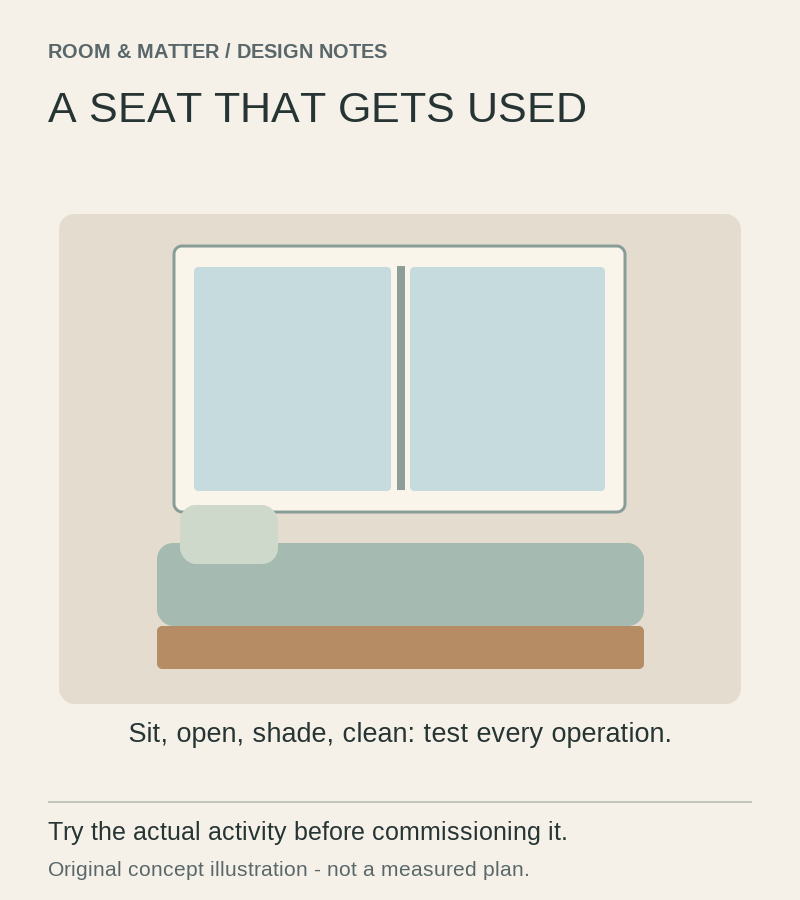
A reading ledge or bench can make a bedroom multifunctional without adding another loose chair, but it needs comfortable depth, back support and access to the window. Control glare, overheating and privacy before adding cushions. Storage below must open without trapping fingers or blocking the route. If the seat is too shallow for reading, design it honestly as a luggage or dressing bench. Built-in features should respond to daily use rather than exist only as a contemporary photograph.

A Compact Room Needs a Clear Lead
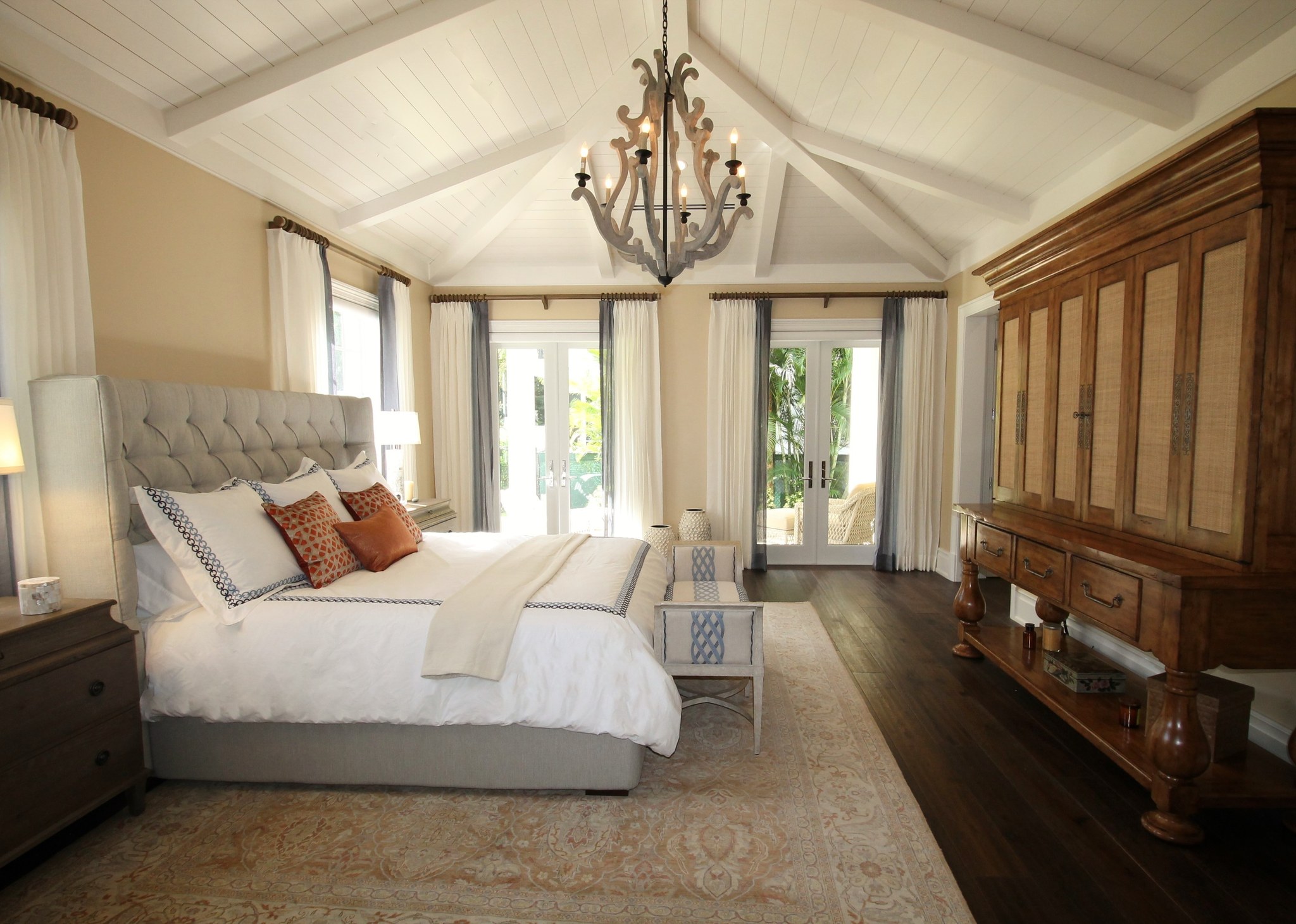
In a compact bedroom, choose where the contemporary character will be most legible from the entrance. It might be one light fitting, a broad textile or a shaped bed, but the room does not need a reduced version of every trend. The attic photograph has strong fixed roof lines; the colored fitting is a small movable emphasis within them. Test the full bed footprint and wardrobe operation first, then remove secondary pieces that occupy the useful edge of the floor. Keep the route readable in low light. If a desk or guest function must share the plan, the zoning examples in small apartment ideas help decide which job takes precedence. A clear lead lets even a modest change feel deliberate.

Replaceable Layers for a Contemporary Rental
Use paint where permitted, broad textiles, a sculptural plug-in lamp, freestanding storage and one current chair or table before applying wall products. Verify lease terms, substrate and removal method for adhesive panels, wallpaper or hooks, and document the original condition. Portable pieces can move with changing taste and tenancy. Avoid spending heavily on faux built-ins that obstruct outlets or ventilation. A rental feels contemporary through proportion and editing, not because every surface imitates permanent architectural work. In the photograph, the freestanding bed and textile layers are the transferable part of the idea; the glass enclosure is architecture, not a suggested temporary divider.
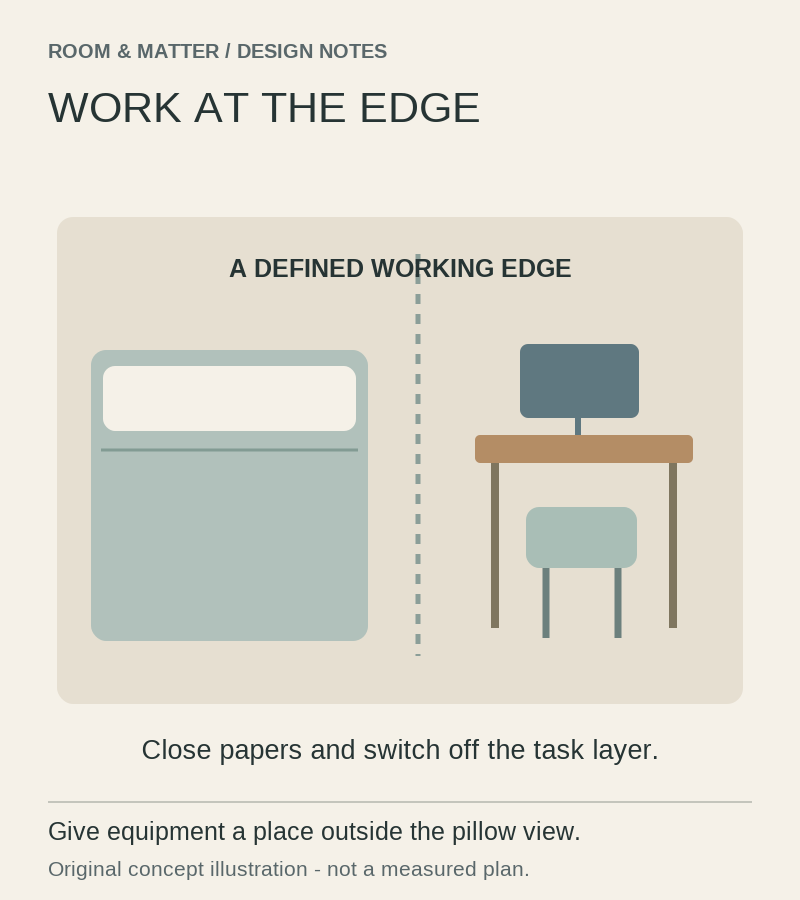
A Work Edge You Can Close Down
A bedroom workstation needs a defined end as much as a defined place. Locate it along a side wall or another edge where papers and the active screen can leave the sleeping view when work is finished. Give the desk its own useful light and storage for the small items that otherwise migrate to the bedside. If the desk is concealed in contemporary joinery, confirm room for the chair, equipment heat and access to cables before closing it in. A movable visual boundary can help, but do not assume a decorative screen will fit the route. The concept drawing separates two jobs without prescribing dimensions. Test a normal workday and the evening shutdown before commissioning anything permanent.
One Sculptural Object With a Clear Purpose
A ceramic lamp, irregular mirror, carved table or sculpture can add the expressive edge associated with contemporary rooms. Give it enough surrounding space and verify stability, cleaning and reach. Avoid placing heavy or sharp objects where they can fall onto the bed, and do not let a decorative bedside piece displace water, glasses or reading light. One object with genuine craft or meaning generally outlasts a cluster of trend accessories selected only to fill a photograph.


Expressive Flooring and Its Maintenance Cost
Stone, terrazzo or high-contrast timber may give a contemporary room identity, but bedroom flooring still needs thermal comfort, acoustic control and safe nighttime movement. Polished surfaces can glare or feel cold, while deep texture complicates cleaning. Use a correctly sized rug where it improves touch and sound rather than hiding an unsuitable floor. Check slip resistance, underfloor heating compatibility and repairability before choosing a pattern. Permanent flooring should survive after the current upholstery color changes.
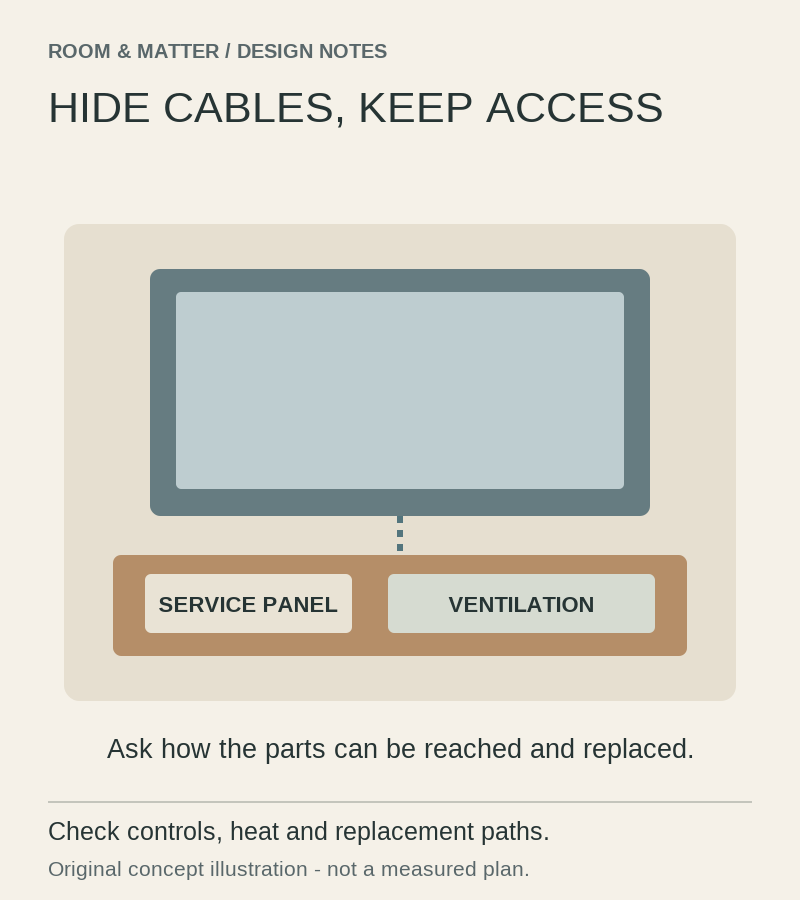
Keep the Next Device Change Simple
Plan a device change before detailing a seamless wall. A screen, charging point or motorized shade may be useful today and need a different connection later; the decorative front should not make that ordinary replacement a building project. Locate the working parts and note which panel opens, how equipment is removed and which controls still work without the app. Follow the actual equipment instructions for heat and ventilation, and route power supplies away from bedding. The illustration marks access relationships only, without specifying cable installation or ventilation area. Keep the technology visually secondary to the bed and material palette. Integration has earned its place when a future repair can happen without sacrificing the room.
Plan Shared Bedrooms Around Equal Control
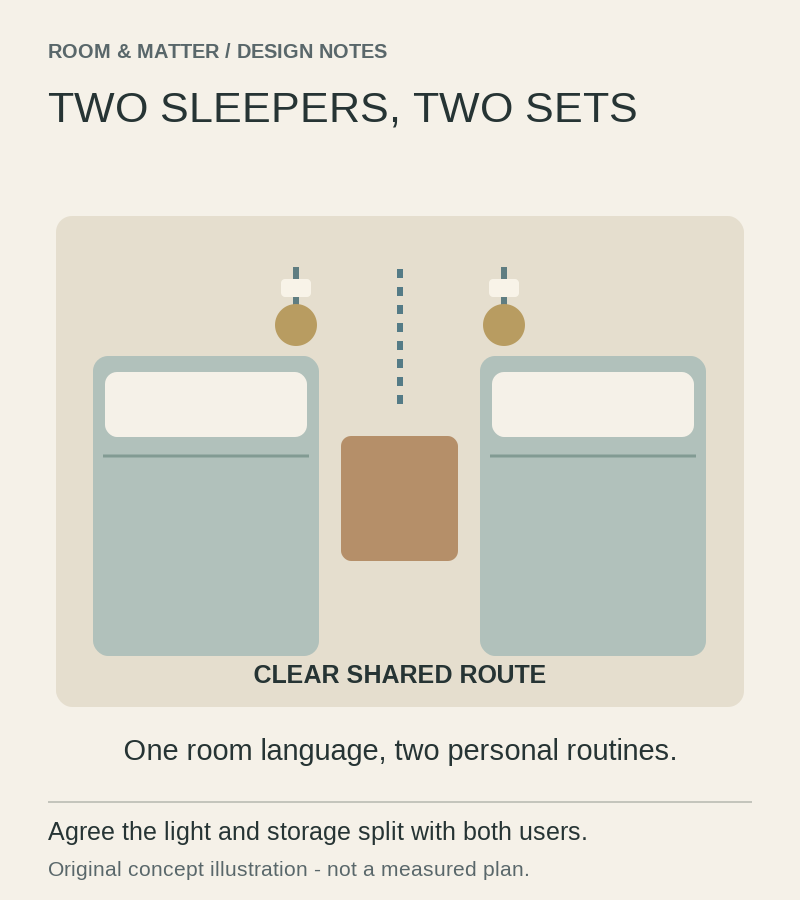
In a couple's or twin bedroom, each sleeper needs reachable light, charging, storage and influence over comfort. A common headboard line, rug or wall color can connect different bedside choices without forcing identical furniture. Keep the central route and window access clear, and consider different reading or sleep schedules when locating controls. Contemporary design is flexible enough to express two users; symmetry should never require one person to accept weaker function or inaccessible storage. For a twin arrangement, agree which table compartments and controls belong to each person; a matching bedcover alone does not resolve different bedtime routines.
A Contemporary Children's Room Must Evolve
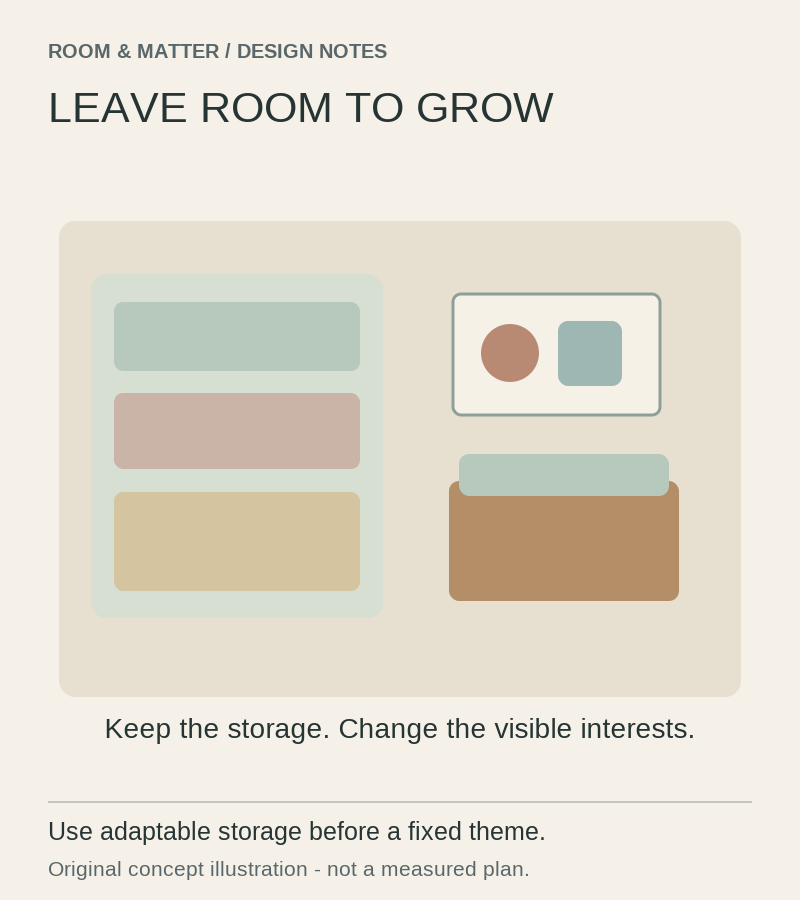
Use adaptable storage, safe beds, durable surfaces and accessible display zones as the long-life layer, then place changing interests in bedding, paint and art. If considering a bunk or other specialist bed, follow its age limits and the applicable product and installation requirements. The illustration uses low storage and a bench, not a bunk design. Avoid over-customizing joinery around one short-lived theme. A contemporary children's room should support growth, play, homework and changing identity while allowing components to be repaired, replaced or reassigned.
Fit the Bed to Its User
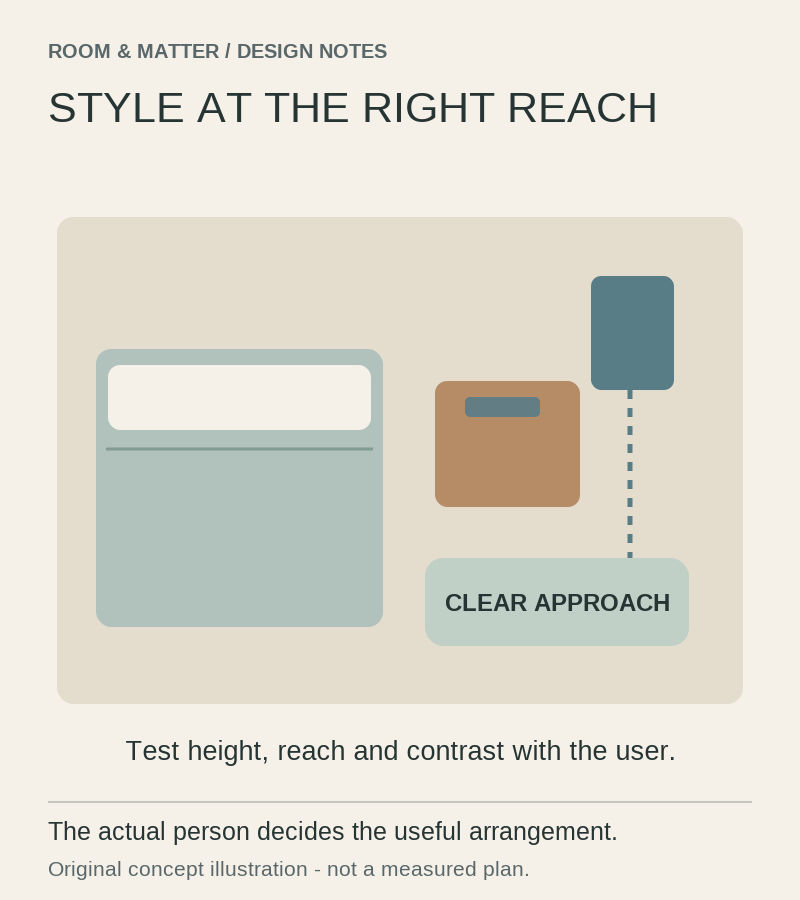
Judge the fashionable bed profile from the position of the person who uses it. A low plinth may look composed yet make standing up awkward; a deep upholstered edge can add an unexpected distance to the mattress. Trial the mattress height and the approach with that person, then place lighting controls and a stable landing surface where they can actually be reached. Make the route legible against the floor and avoid adding an ornamental table at the point where someone turns. Requirements differ, so project-specific access planning may be needed. The symbolic illustration identifies questions to resolve and makes no accessibility-compliance claim. The contemporary character can come from a softer outline or a textile instead of a difficult bed height.
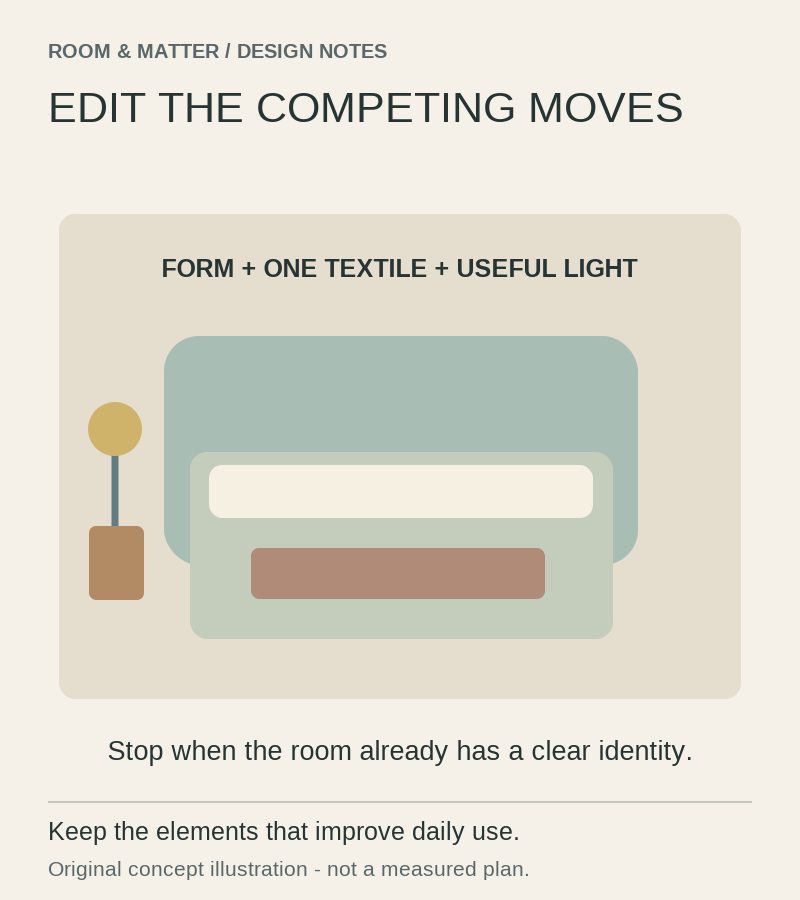
Edit Trends Before They Become a Theme
Stand at the doorway and identify which gesture leads: the bed silhouette, a substantial color field, a single light fitting or a material plane. Then check the view from the pillow and the route to storage. If several unrelated shapes compete in all three views, take one portable element out and see whether the room becomes clearer. Keep the fixed parts that support the routine, and use bedding or a lamp for a change you may want to reverse. The original illustration deliberately stops at a shaped headboard, one contrasting textile and a useful light. Finishing a contemporary bedroom means knowing when its next addition would make daily use worse or dilute a personal choice already working.