Let games and conversation share the room
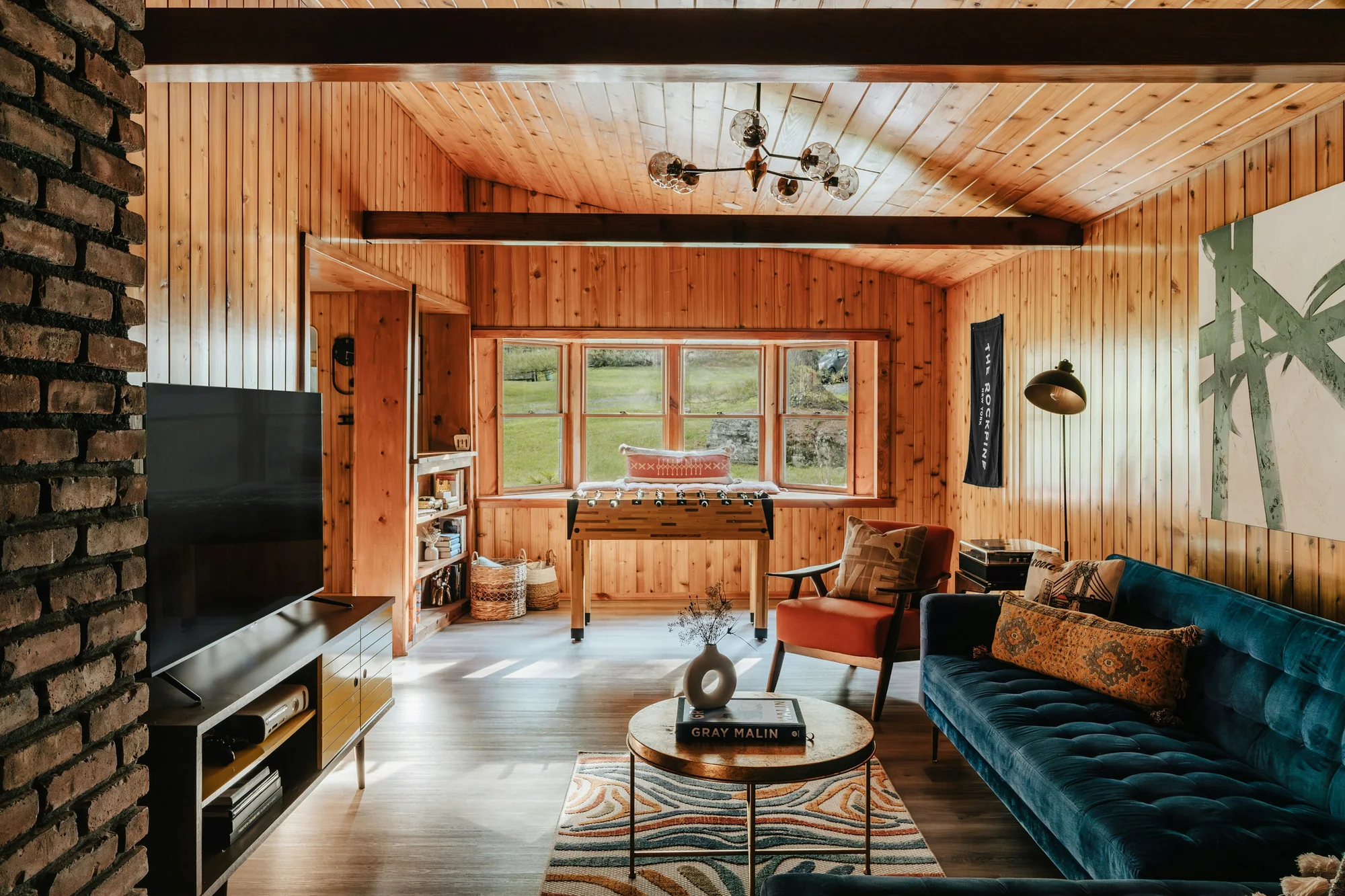
A recreation room does not need to split into a silent TV zone and a separate corner full of equipment. In the warm, wood-lined room pictured here, the foosball table sits in the window bay while a blue sofa and round coffee table make a comfortable place to watch, talk and take a break. Because the game has its own edge of the room, it does not occupy every route through the seating area.
This is a strong direction for a family room or a basement that hosts different age groups at once. Keep the sofa and screen in a natural viewing relationship, and leave enough access on both long sides for play; the pictured table sits close to the window bay, so check both sides before copying the layout. If players would have to stand in a doorway or squeeze between the table and a chair, move the game toward a freer edge rather than centering it for symmetry. A compact tabletop game may work better when the room has only one clear circulation path. For help planning seating and walking routes in a tight room, see Small Living Room Ideas.
The visual trick is to furnish the room as a lounge first. A warm rug, sturdy coffee table and upholstered seating make it pleasant even when nobody is playing. Game equipment becomes an invitation, not the only reason to enter.
Give the pool table the space it needs
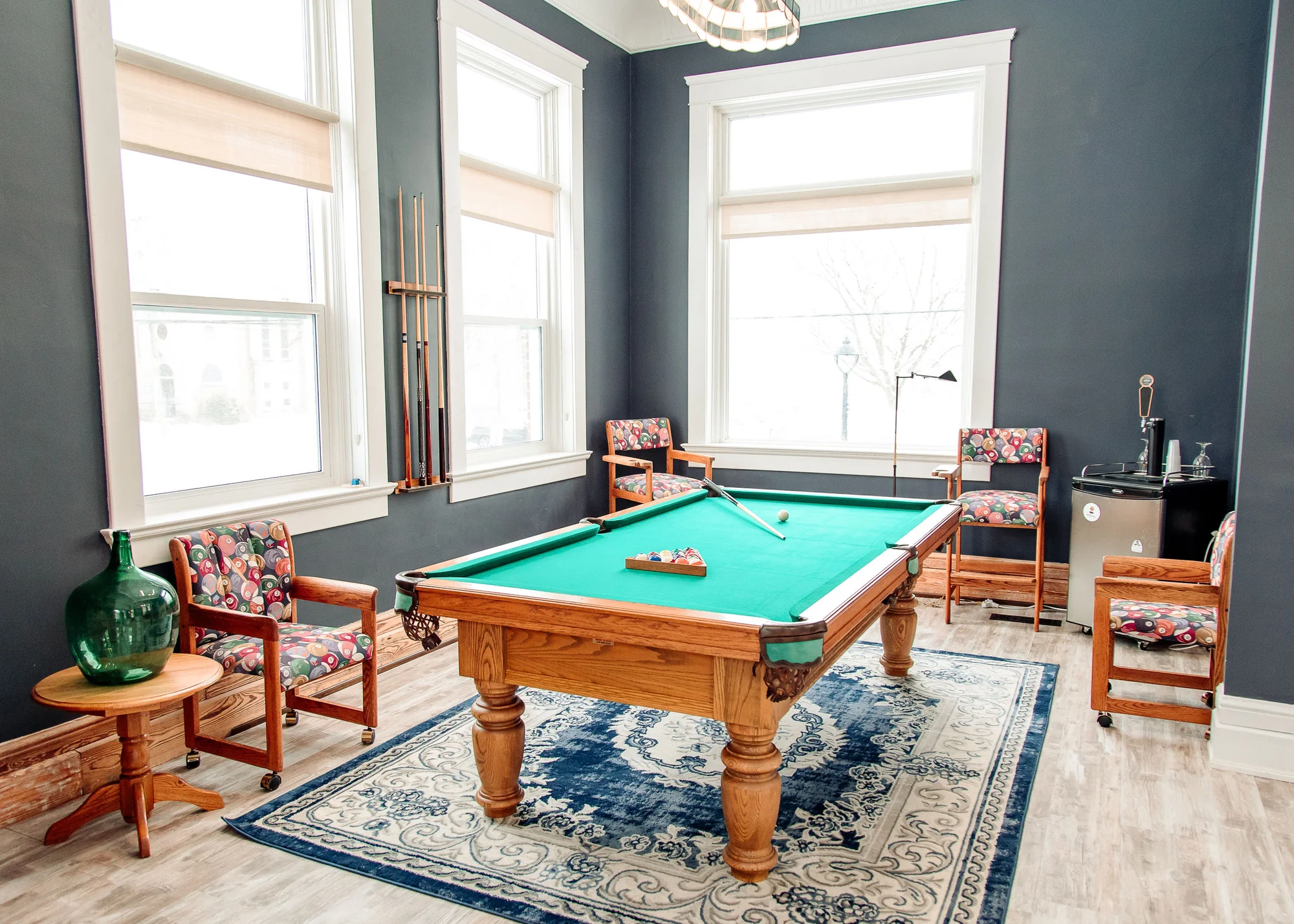
The green-felt table in this traditional room sits among patterned chairs, a large rug and deep-colored walls. It proves a billiards room can have as much personality as a sitting room. It also presents the most important decision: a pool table is not sized by its footprint alone. Players need to move a cue around every side, including near walls and furniture.
For context, Brunswick Billiards’ room-size guide places a nominal 8-foot (2.4 m) pool table with a standard 58-inch (147 cm) cue in a room roughly 13–14 ft wide by 17 ft long (about 4.0–4.3 × 5.2 m). Use that as a planning range, not a fit guarantee. Check the manufacturer’s room-size chart for the table and cue you actually intend to use; shorter cues and other table sizes change the answer.
Once you know the play zone, place chairs beyond the cue path rather than scattering them along the rails. Keep overhead light centered on the playing surface and place side tables where they will not become obstacles. If the room is just large enough for the table but too small for comfortably moving around it, choosing a smaller game can create a much better social space than forcing in the billiards table you imagined.
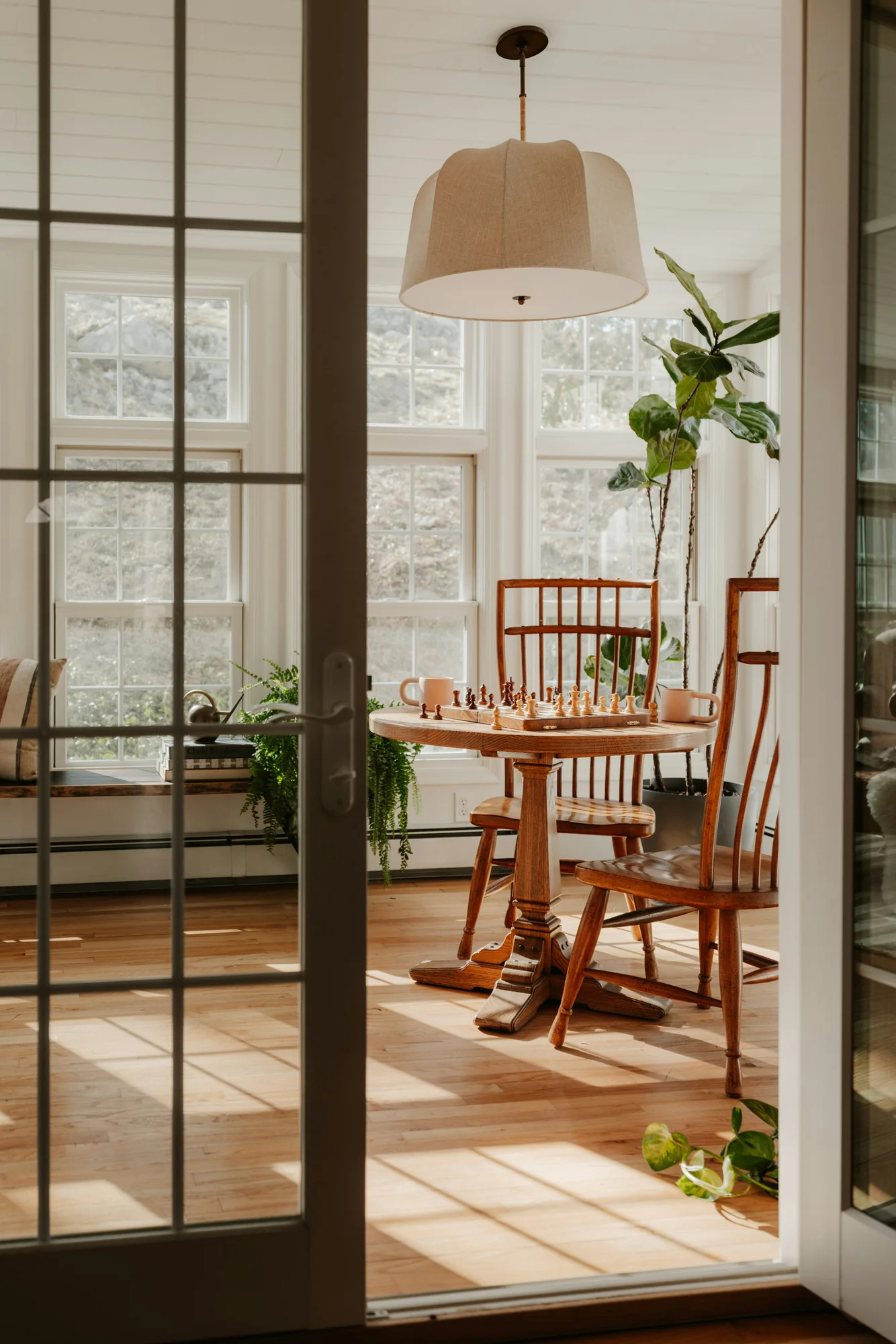
Let an everyday dining table host board-game night
Some of the most useful game rooms are not separate rooms. A sunny corner with a wooden table, comfortable dining chairs and a pendant light can become a place for cards, puzzles and board games after dinner. The chess set already laid out on this table makes the point: the same furniture serves meals, games and everything in between.
Choose a tabletop that leaves room for game pieces as well as elbows and drinks, then test it against the games you actually bring out. A small two-chair table suits cards or a compact game; larger boards and several players call for a larger surface and more chairs. It is worth pulling every chair back before making the final choice, particularly near a door or a narrow passage.
A shallow drawer, nearby low cabinet or lidded basket keeps boxes from piling up on the table. Good overhead light helps everyone read cards; a dimmer or separate lamp makes the corner comfortable the rest of the evening. When a game might last for days, plan where its pieces will go at mealtime instead of assuming the dining table can stay occupied.
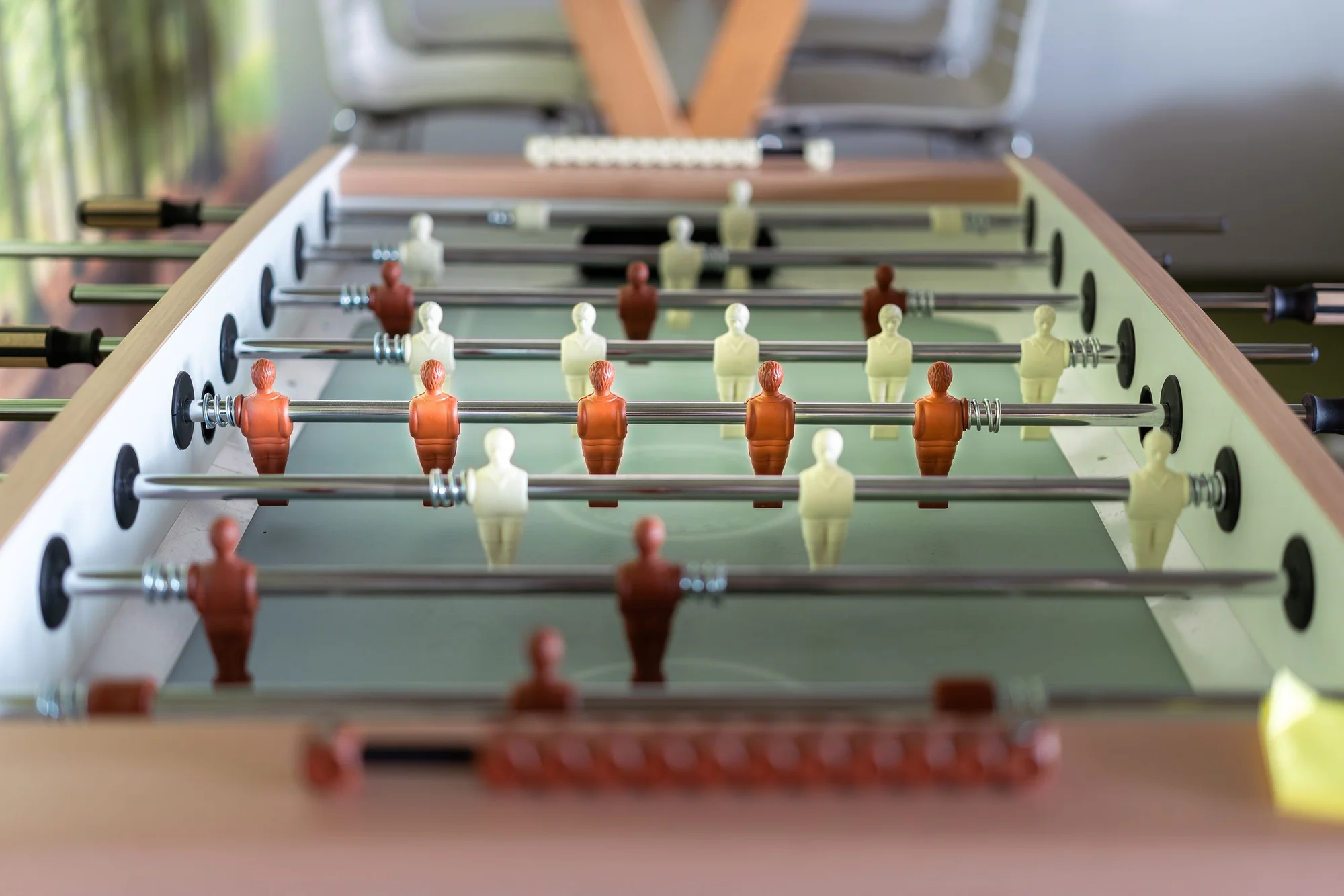
Choose foosball for quick, sociable rounds
Unlike the open-plan room layout discussed earlier, the choice here is about the game itself: foosball is appealing when you want an active game that people can join between conversations. It has a different rhythm from a long billiards match: someone can stand up from the sofa, play for a few minutes and return to the group. The close-up of cream and brown players on metal rods highlights how much of the experience happens along the sides of the table.
Do not use the cabinet dimensions as the only measure of fit. Players stand at the long edges, reach for moving handles and need room to shift their weight. Check the specific table’s manual and try marking its play zone on the floor before purchase; the pool table clearance above is no substitute. Keep fragile floor lamps or drinks away from the handles and leave a direct route to the seating area.
If a full-size table would make the room feel like an obstacle course, a tabletop version is a more convincing choice than an oversized showpiece. For a larger lounge, foosball works especially well as the secondary game near a screen or snack shelf, provided active play does not block anyone else’s route through the room.
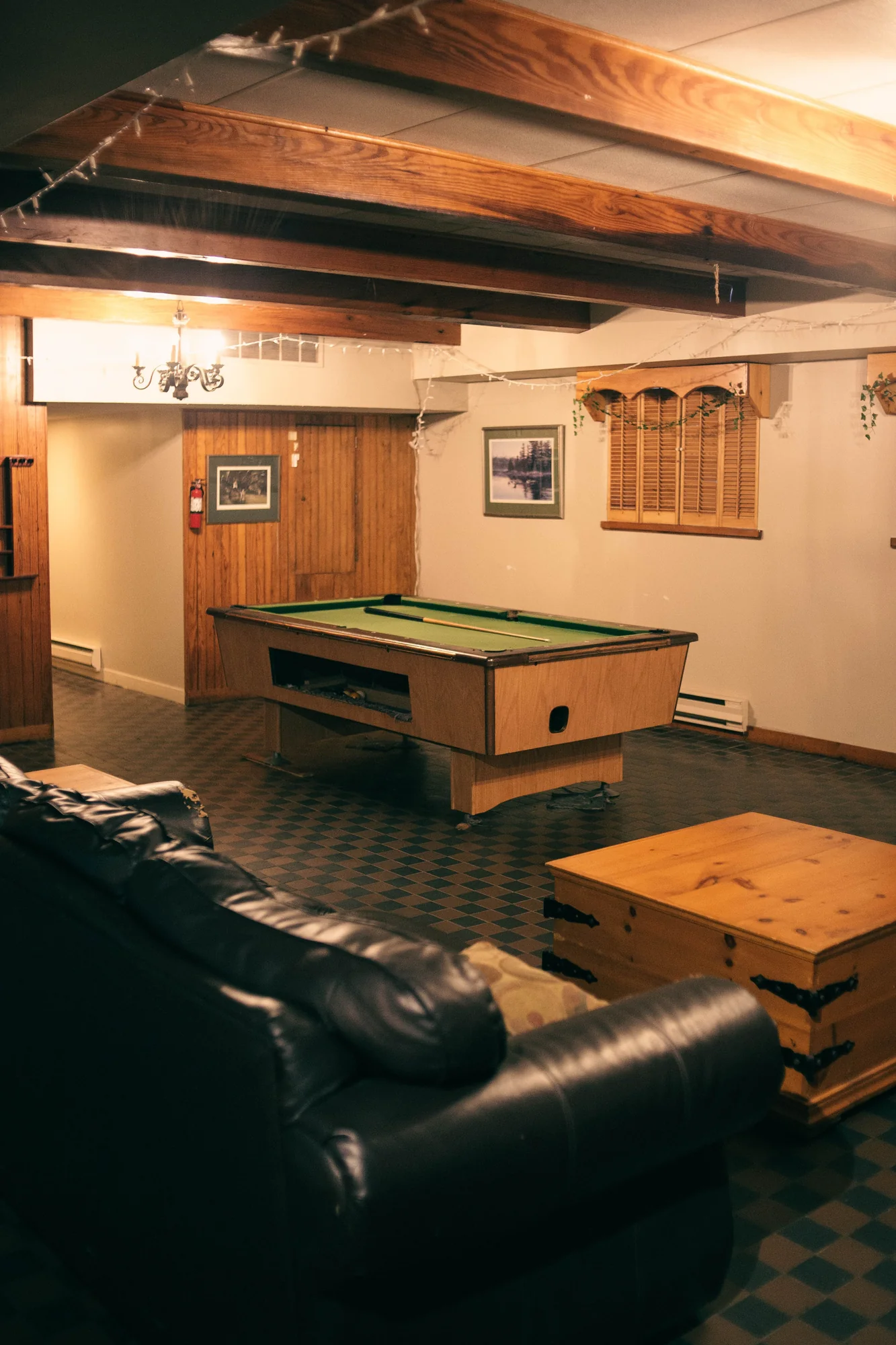
Make the basement feel like a living room first
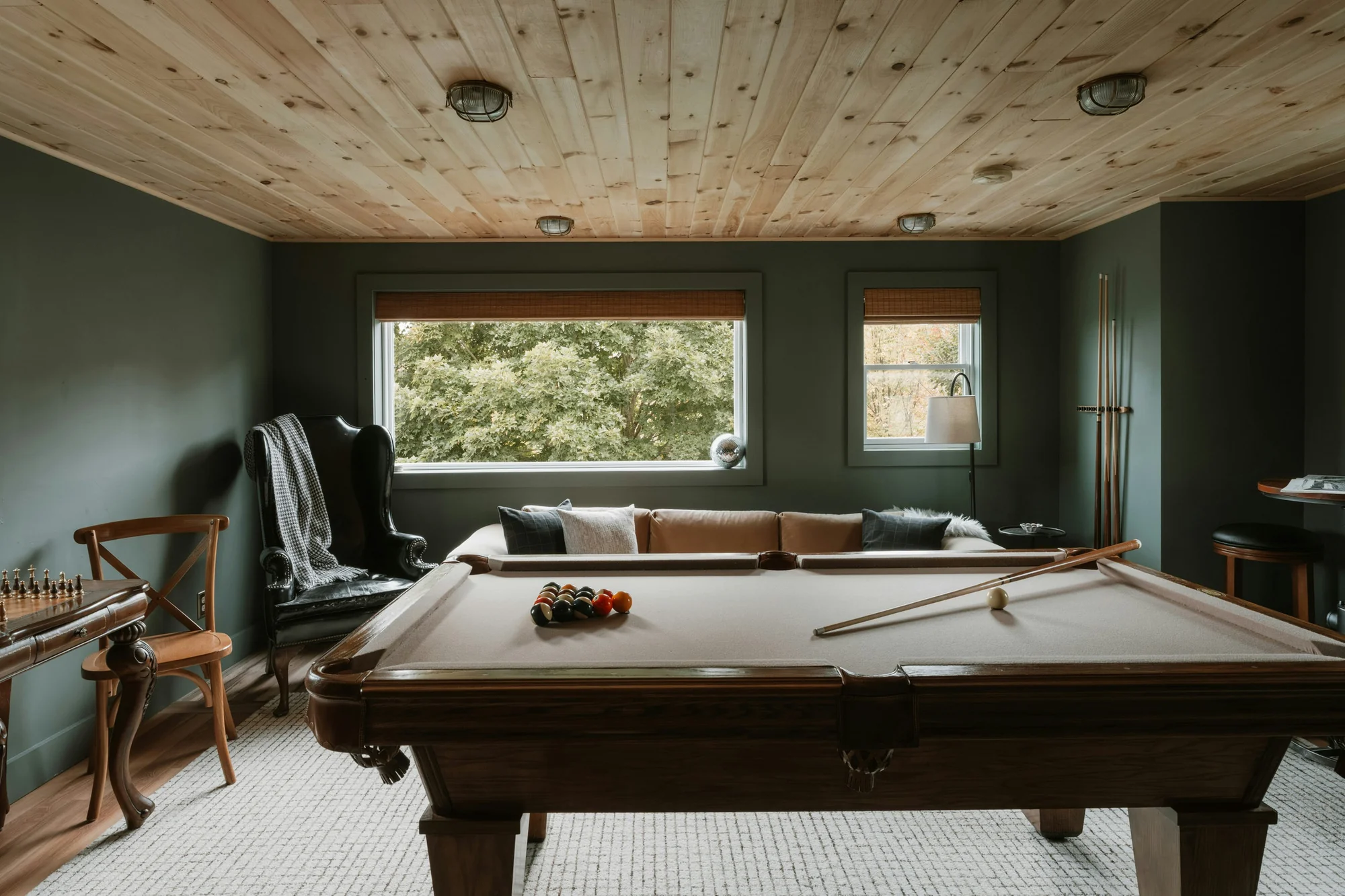
A basement game room can easily become a collection of hard surfaces: equipment against the walls, bare lighting above and nowhere inviting to sit. In the beamed room pictured here, wood ceiling beams and wall paneling warm the space while a dark sofa and coffee table occupy the foreground. The pool table sits further back, so the room has two distinct reasons to use it.
Borrow the relationship rather than copying the furniture. Put the most comfortable seats where people can talk or watch and keep a separate lane around the main game. Add a lamp near the sofa, practical overhead lighting at the table and a rug only where its edges will not interfere with play. A side table for drinks can reduce the temptation to put glasses on equipment.
Below-grade rooms need more than a cozy palette. Before turning an unfinished basement into a routinely occupied game room, check moisture, ventilation, safe access and exits against your actual building and local requirements. Once the basics are right, textiles and light can help a utilitarian basement feel like the room everyone chooses on a quiet evening.
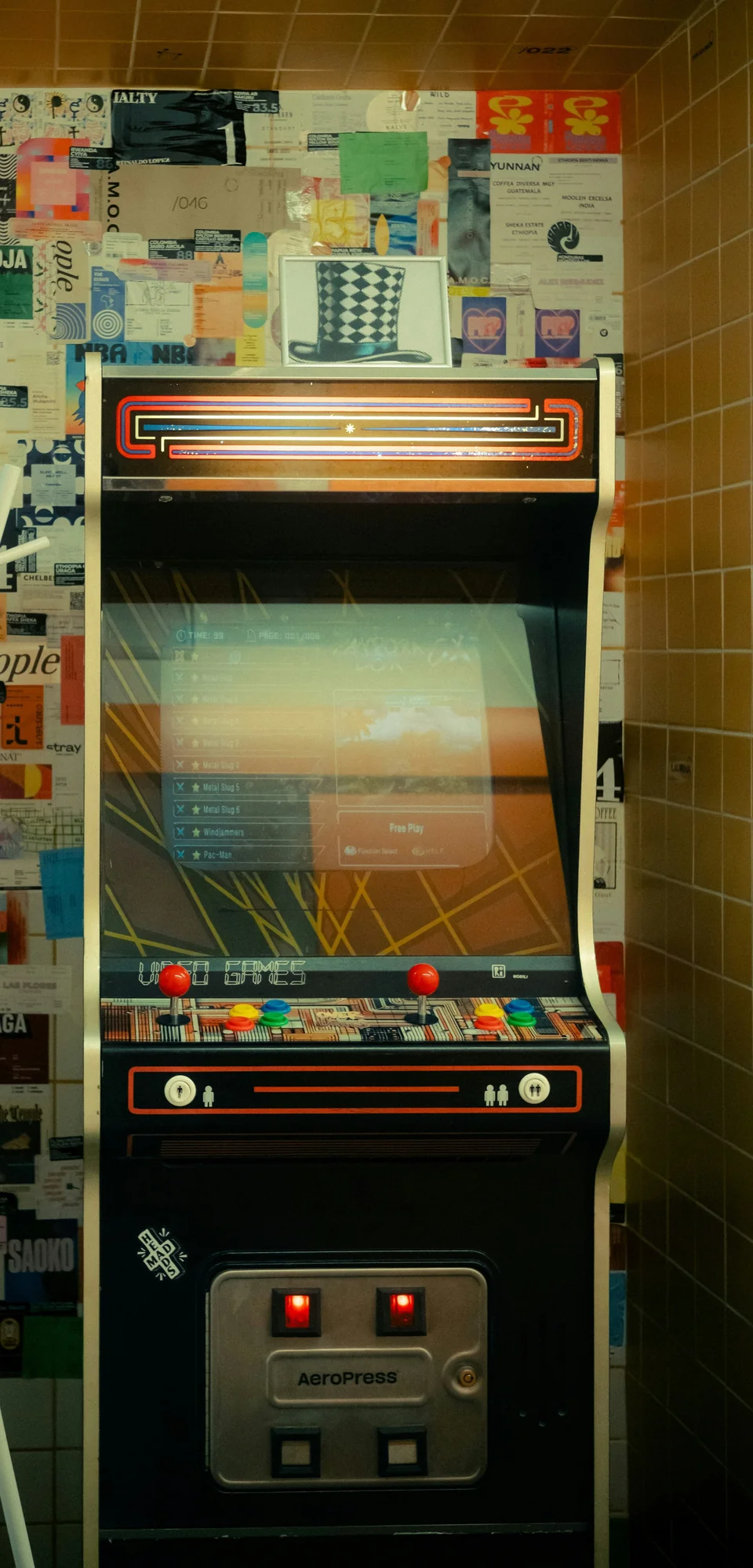
Make one arcade cabinet the character piece
A single upright arcade machine can give a small recess a purpose without covering the entire room in game-themed decoration. In this narrow setting, colorful paper on the back wall and the cabinet’s bold face make a focused, nostalgic composition. There is visual energy in the corner, while the rest of the home can remain calmer.
Treat the machine as furniture with a working side, not as a poster against the wall. Leave standing space at the controls, check how service access works for the specific model and make sure a suitable outlet is available without a cable crossing a walking route. An original vintage cabinet and a current reproduction may have different needs, so ask the maker or seller about the model you are considering.
This is especially effective in a hallway niche or the end of a wider family room, as long as the player is not blocking circulation. Repeat a single color from the cabinet in a nearby cushion or small object rather than decorating every surface to match. One great object usually makes a stronger point than an entire set of novelty accessories.
Let a retro screen anchor a compact game shelf
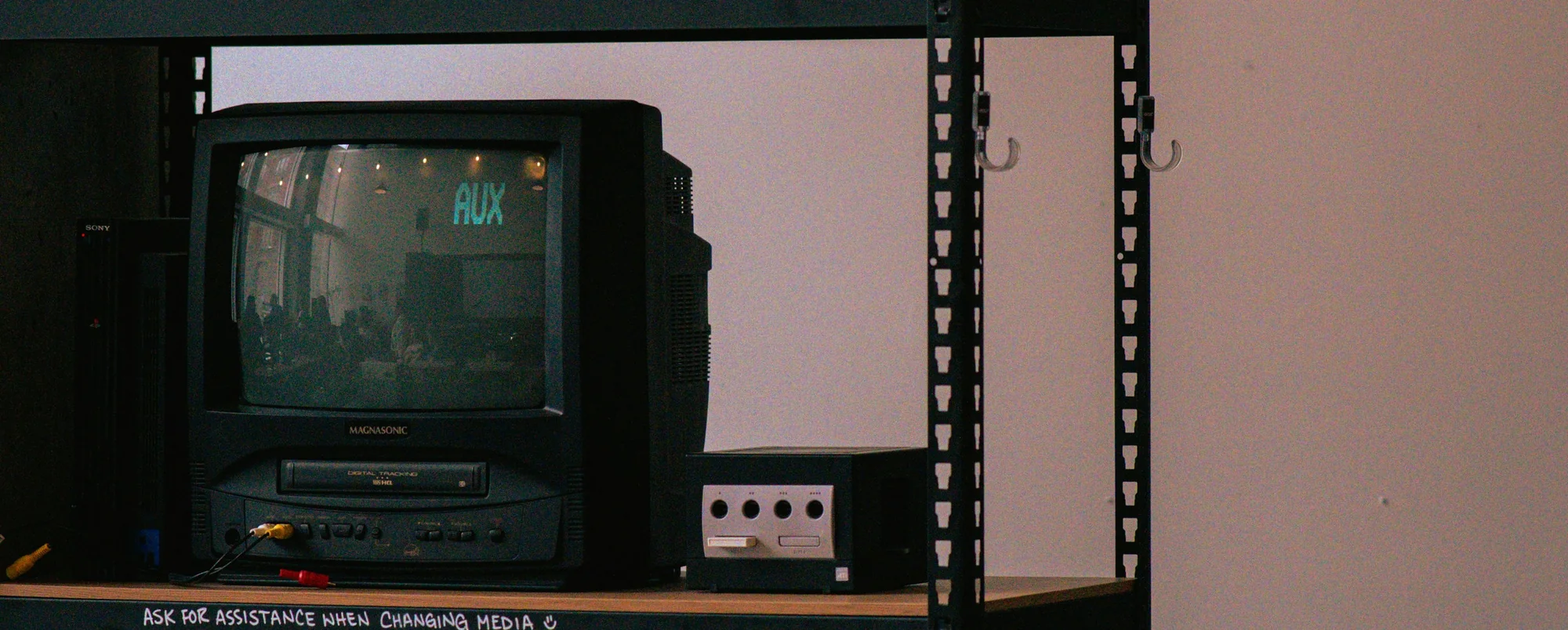
A small CRT television and a square game console sit on the same slim black shelf. The photograph shows how little floor space a dedicated retro setup can occupy when the screen and its hardware share one sturdy surface. A shelf like this can give a spare corner a distinct purpose without turning the entire room into an arcade.
Put frequently used controllers and games within easy reach, and reserve a drawer or a box for spare cables and adapters that create visual clutter. If you use open shelving, check the weight rating, secure tall furniture as required and give electronics the ventilation their manuals specify. A compact screen on a shelf can be an intentional choice for retro play, as it is here.
This approach works in a bedroom corner or small rec room because the screen and console share a short stretch of wall. Keep clear space in front for a seat and for access to controls. If your collection includes game cases, give them a nearby closed drawer or a separate shelf instead of piling them around a ventilated screen. Make the setup usable before adding nostalgia-themed accessories.
Share a gaming desk without crowding the room
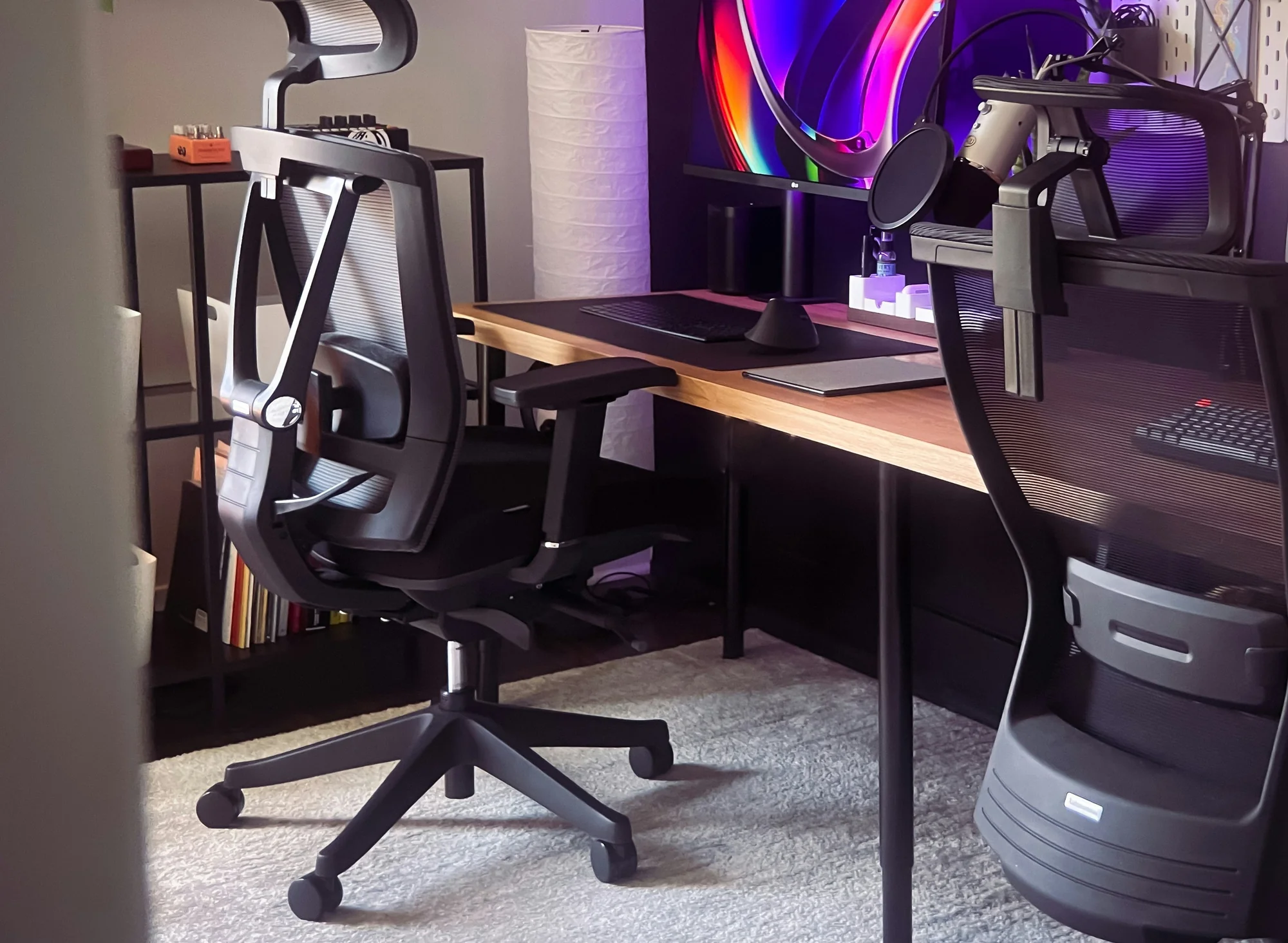
A long desktop can make room for a gaming station and a second seat without pretending that two complete PCs are already installed. The photograph shows two mesh chairs, one continuous wood surface and a single monitor. That layout suits a flexible game-and-computer corner: one person can play while another uses the open end for a board, controller or laptop, or the desk can serve different activities at different times.
Test the shared surface from both chairs. Roll each one back and check the route behind it; make sure armrests do not collide or prevent anyone from reaching the desk. If you plan to add another computer later, mark the footprint of its display, keyboard and mouse before committing. Leave room for cables, power access and ventilation rather than assuming a second station will fit just because a second chair does.
One unbroken desktop gives the room a tidy line and can keep chargers, headphones and game accessories within one storage zone. A drawer or compact shelf can serve the shared equipment without filling every inch of the top. This is primarily a decision about flexible seating and usable surface area; the next section concerns how the corner looks once those practical needs are settled. For work-first desks and storage choices, see Home Office Ideas.
Decide whether your gaming corner should blend in or stand apart
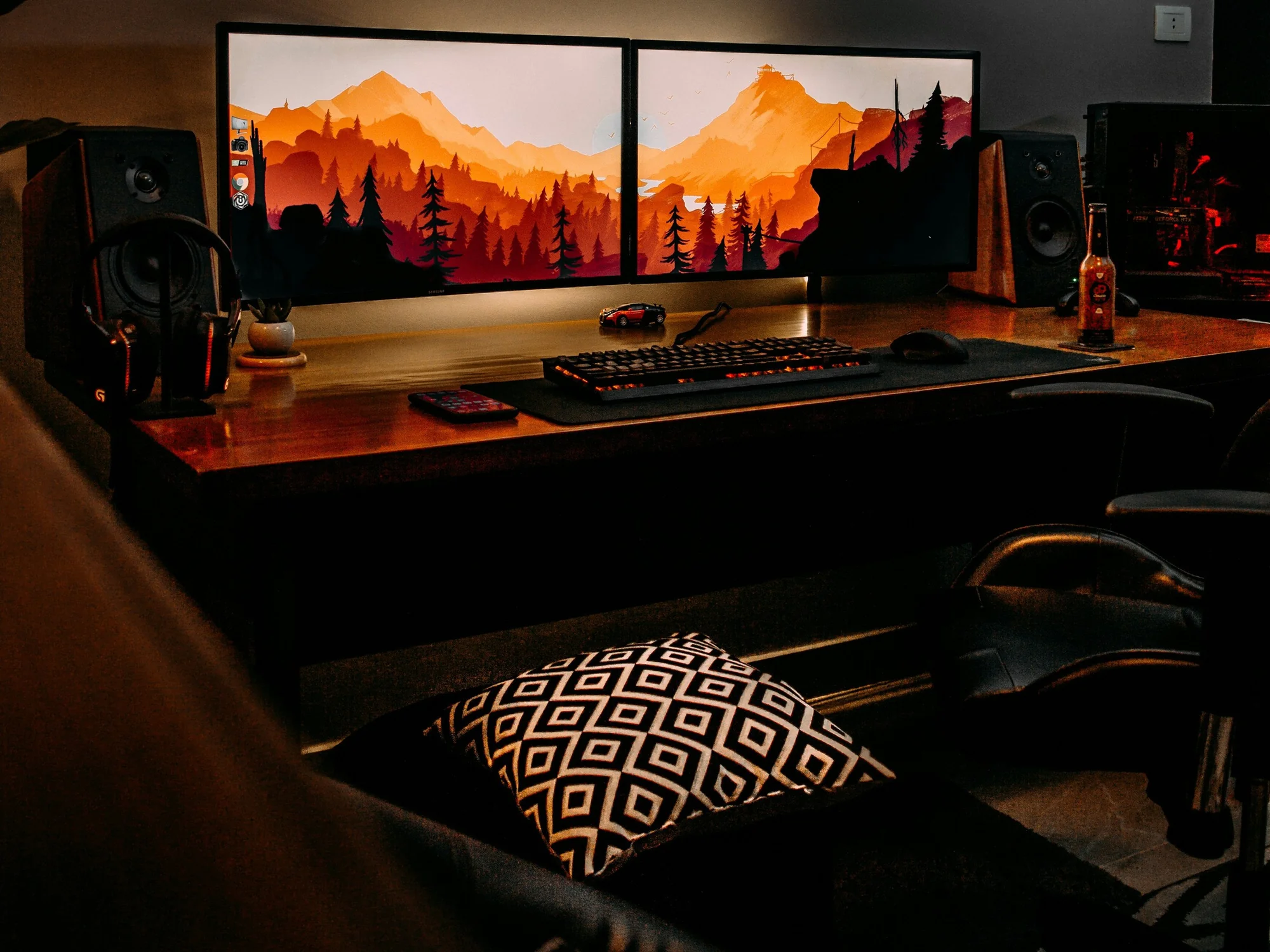
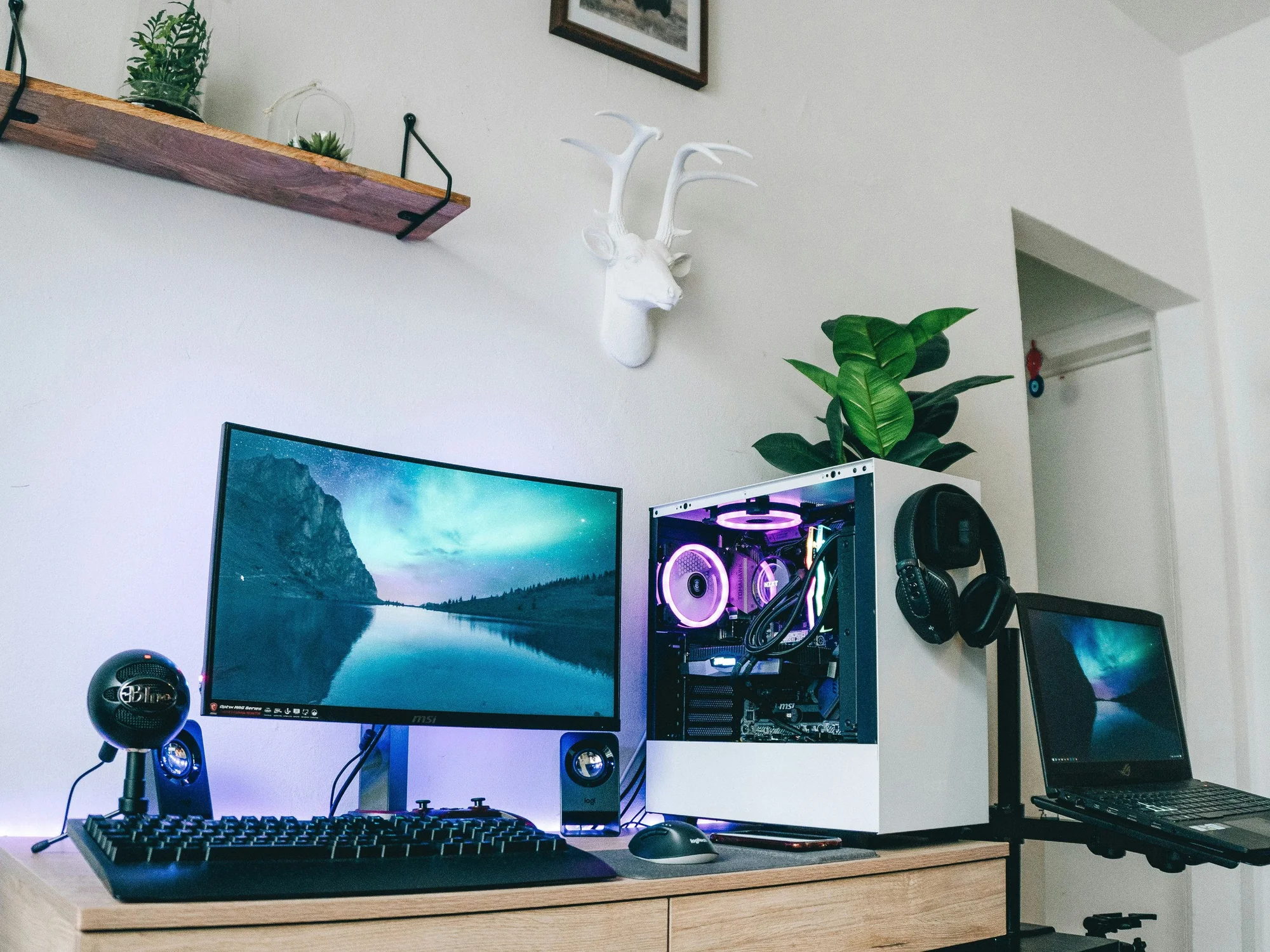
Once the desk is planned around the activities it must hold, make a separate decision about its visual character. Not every gaming desk needs the same mood. A darker wall and warm side lighting can make a monitor-heavy setup feel enclosed and distinct; a pale room with a wood desktop can let the equipment blend into the rest of the home. These two photographs show the choice more clearly than a list of accessories could.
Choose the darker approach when you can control reflections and add enough light to see the keyboard, shelves and floor without relying on the monitor. It can work as a deliberate zone in a dedicated game room, though a small space may feel more enclosed. The brighter approach suits a room that also serves everyday household life: white walls, a straightforward wood surface and a visible computer tower make the technology look less separate from the furniture. Even here the tower and a light strip add a little color glow, so decide how much of that you want.
Judge both versions from the chair, not only from the doorway. Look at the screen during the hours you would actually play, then decide whether window shades, a better lamp position or a less reflective wall behind the display would help. The right palette is the one you will still enjoy when the equipment is turned off.
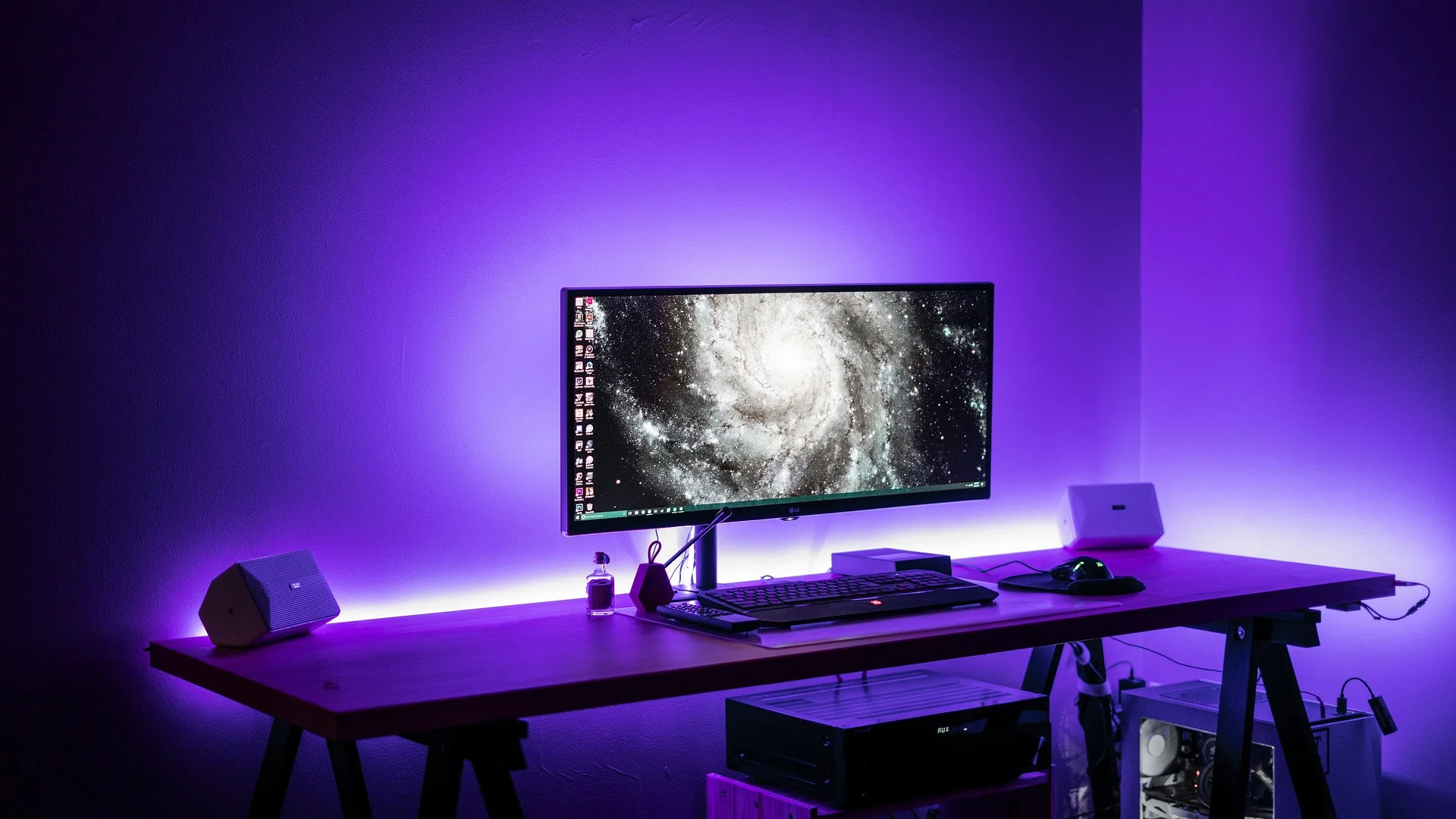
Use light in layers, not as a permanent neon effect
The violet glow behind this single-screen desk is an atmospheric touch, but light is an operational choice, separate from the number of seats or the color of the furniture. It is not the only light a game room needs. Think about what happens before and after the screen is on. The same corner may be used to find a cable, read a manual, sort cards or clean the floor, none of which is easy when color lighting is the sole source of illumination.
A useful combination is ordinary general lighting, a controllable task lamp and low-level indirect accent light for evenings. Place each source where it helps a real activity. Indirect light behind a desk can add depth without filling every wall with bright strips; a lamp at the tabletop gives people an option when they want to look away from the monitor. Avoid visible points of glare from the normal seated position.
The same layering works across the whole room. A pool table wants even light directly above the playing surface, a dining-table game night does best with a pendant that can be dimmed once the cards are put away, and a sofa zone feels better with a lamp than with one more overhead fixture.
If you are planning permanent wiring, use a qualified professional and the applicable local requirements. For plug-in lamps and strips, follow the product instructions rather than assuming that any decorative installation is safe or compatible with dimmers. A restrained lighting plan is more versatile than a room that looks spectacular only in one color.