Start With One Working Shelf
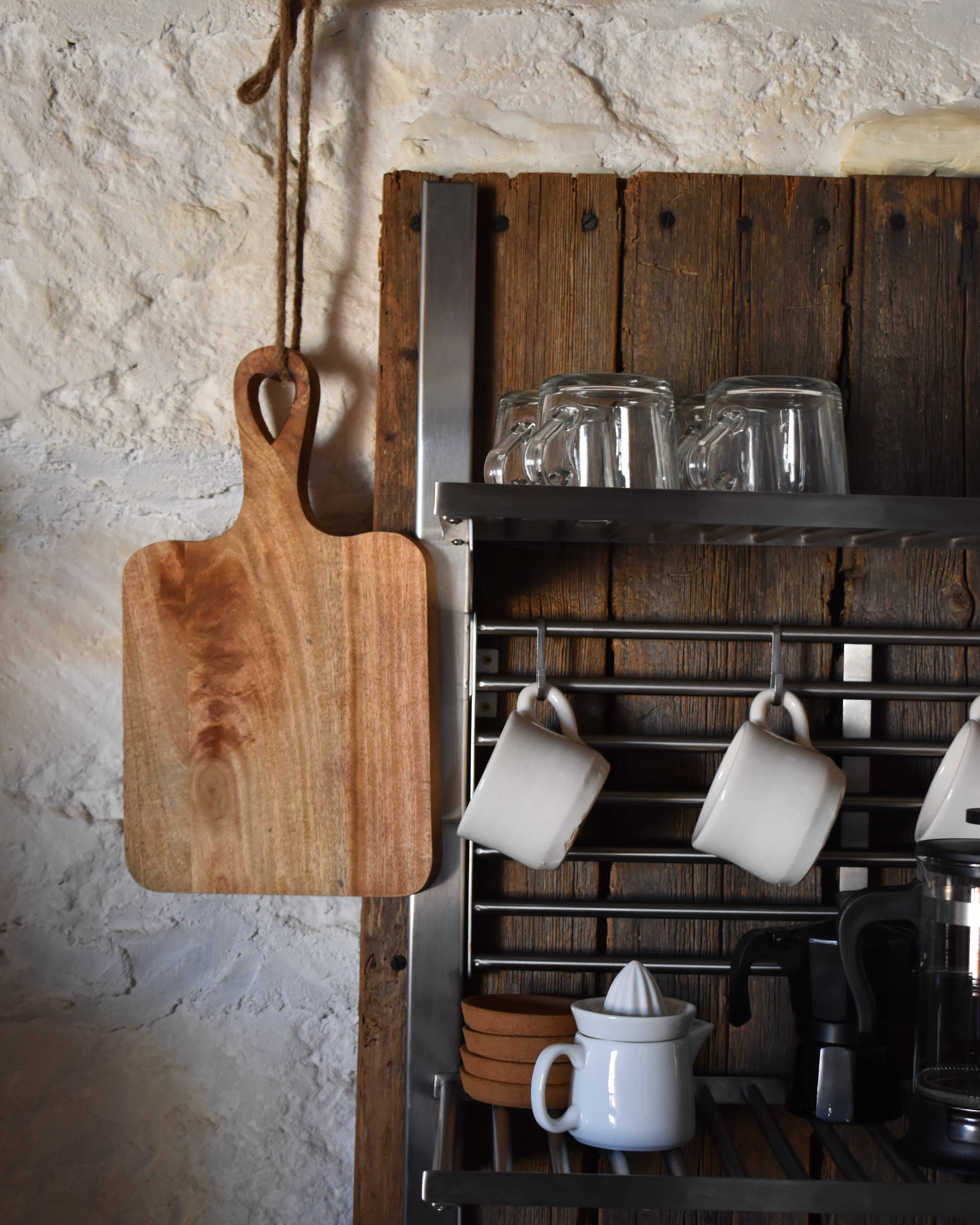
Before removing upper cabinets, test a single shelf where it can support one repeated task. Cups near the sink, bowls near the breakfast area or oils beside preparation can justify easy reach. Keep the contents narrow enough that each item can be lifted without rearranging a display. A successful working shelf reduces movement and releases counter space; it does not need to carry every category in the kitchen.
Set Shelf Depth From the Objects
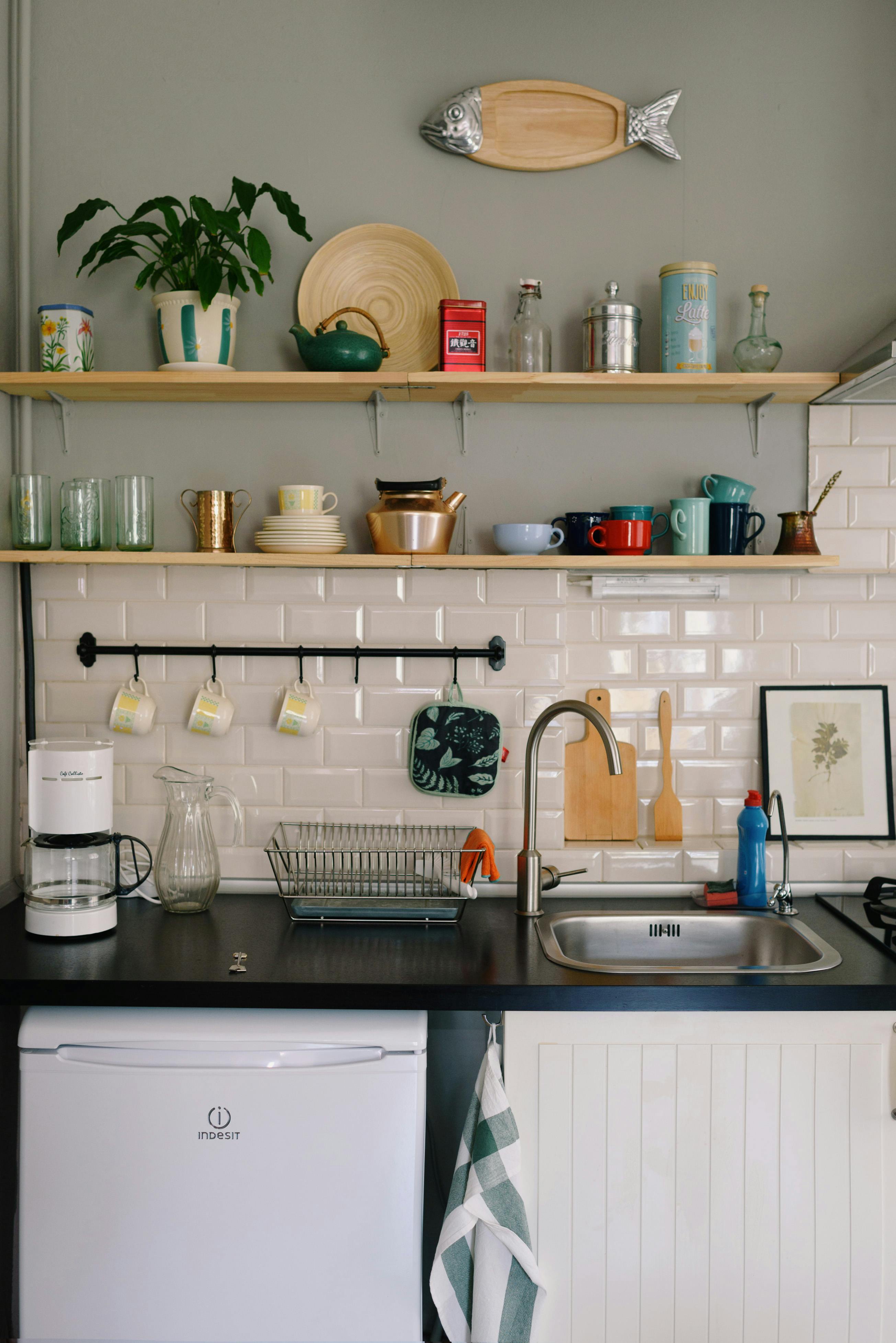
Measure the widest plate, bowl or container intended for the shelf and allow a stable surface without adding unnecessary projection. A shelf that is too shallow can leave objects insecure, while a deep one can shade the counter and make the back row hard to reach. Consider the height and activity below it, including the faucet, small appliances and head position when leaning over the worktop.
Place Shelves at a Comfortable Reach
The lowest shelf should clear the work beneath it while remaining useful to the people who cook. Higher shelves may suit light occasional objects, but they should not require unsafe reaching during a busy task. Check sightlines as well as arm reach: several closely stacked shelves can make a compact counter feel enclosed. Use a full-size paper or cardboard mock-up before drilling.
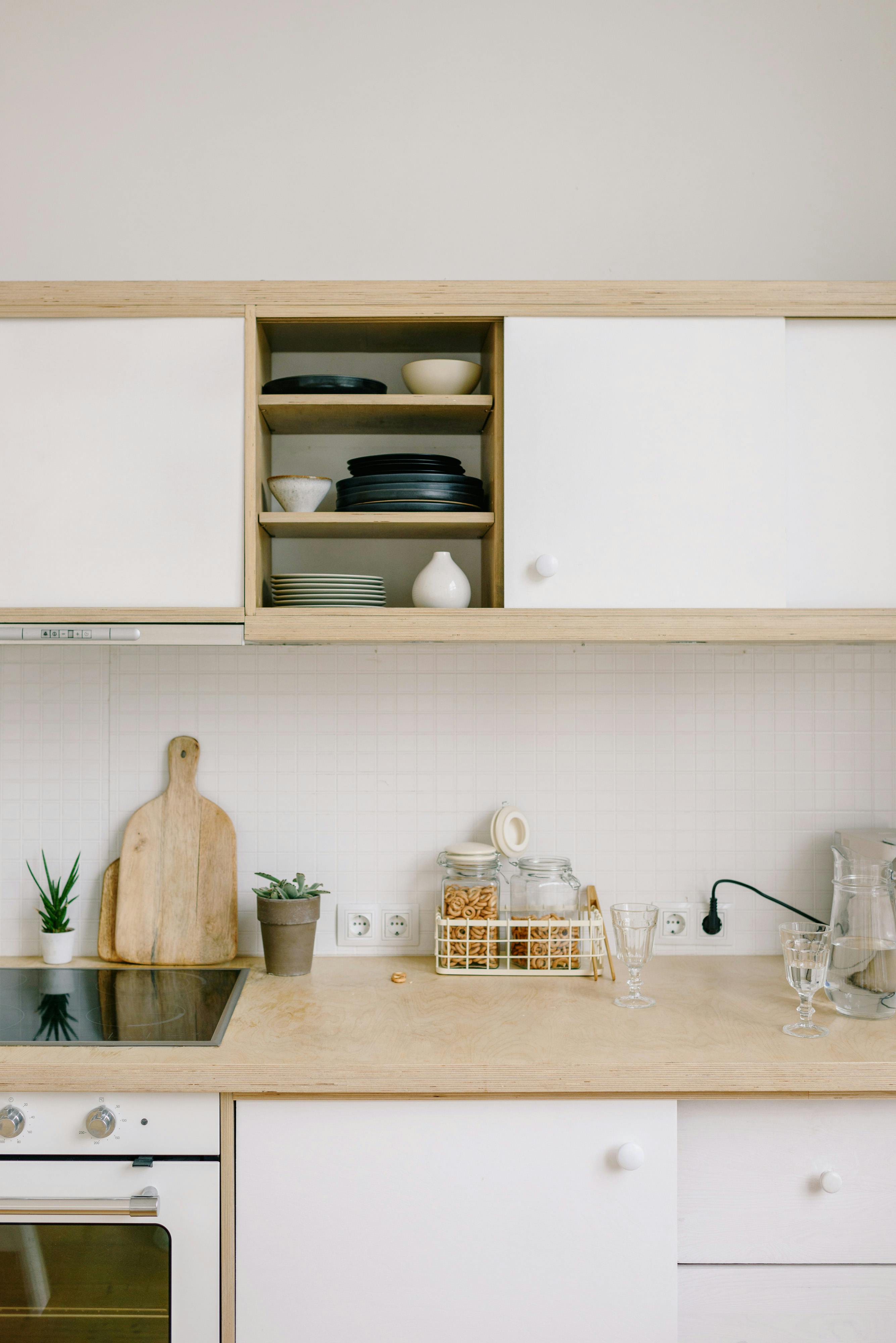
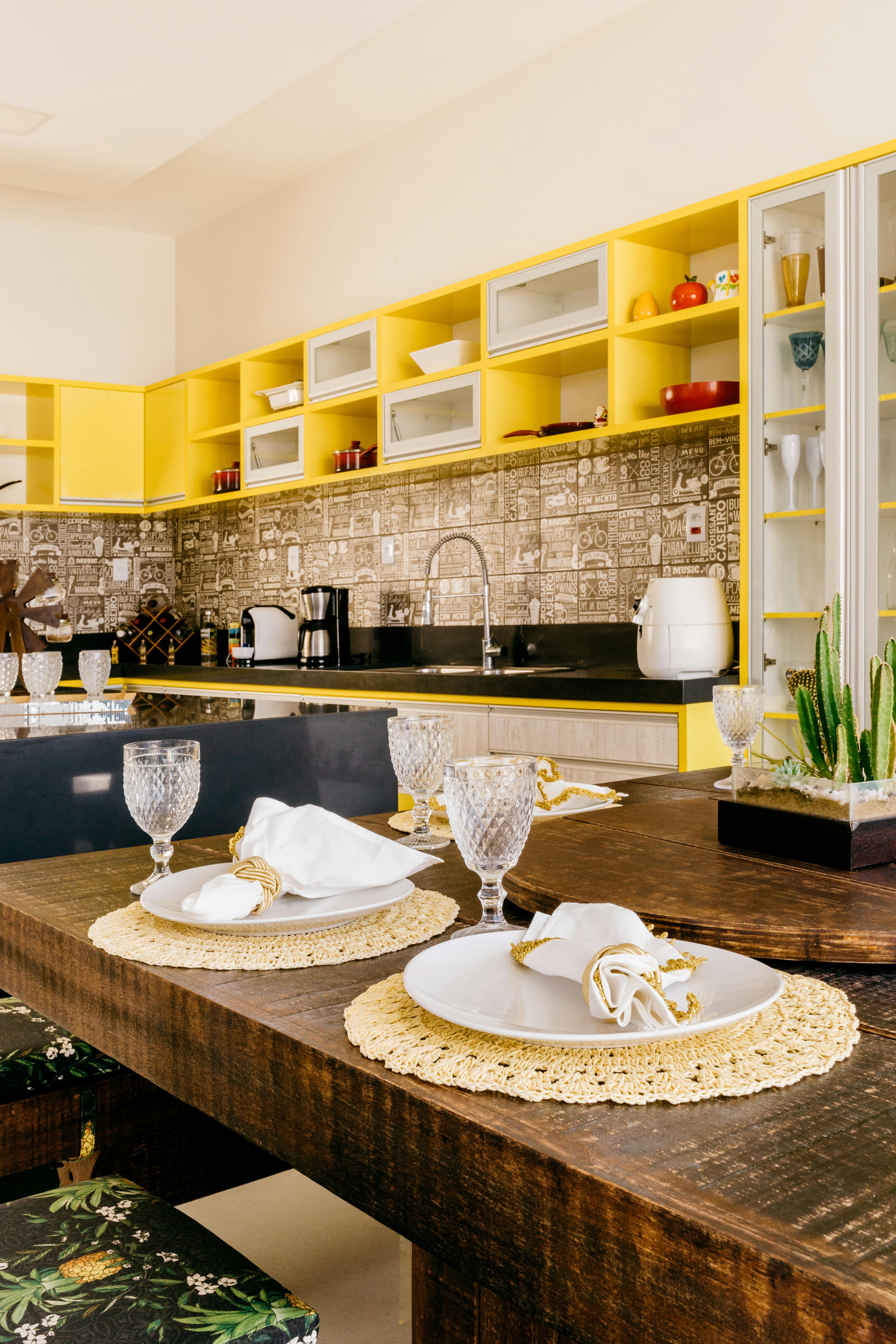
Keep Open Shelves Away From Heavy Splatter
Shelves beside the range or directly in a steam path may expose dishes, books and decorative objects to more residue than expected. Frequently washed cookware can tolerate a different location from rarely handled display pieces. Review extraction, heat and manufacturer clearances around cooking appliances before adding storage nearby. If the only available wall sits in a demanding zone, closed storage may be the lower-maintenance choice.
Choose Supports as Part of the Design
Visible brackets can add rhythm and make the support logic clear, while concealed supports create a quieter line but place different demands on the shelf and wall. Appearance does not confirm load capacity. The suitable fixing depends on the shelf material, span, contents and wall construction. Have the final assembly specified and installed for its real load rather than copying bracket spacing from a photograph.
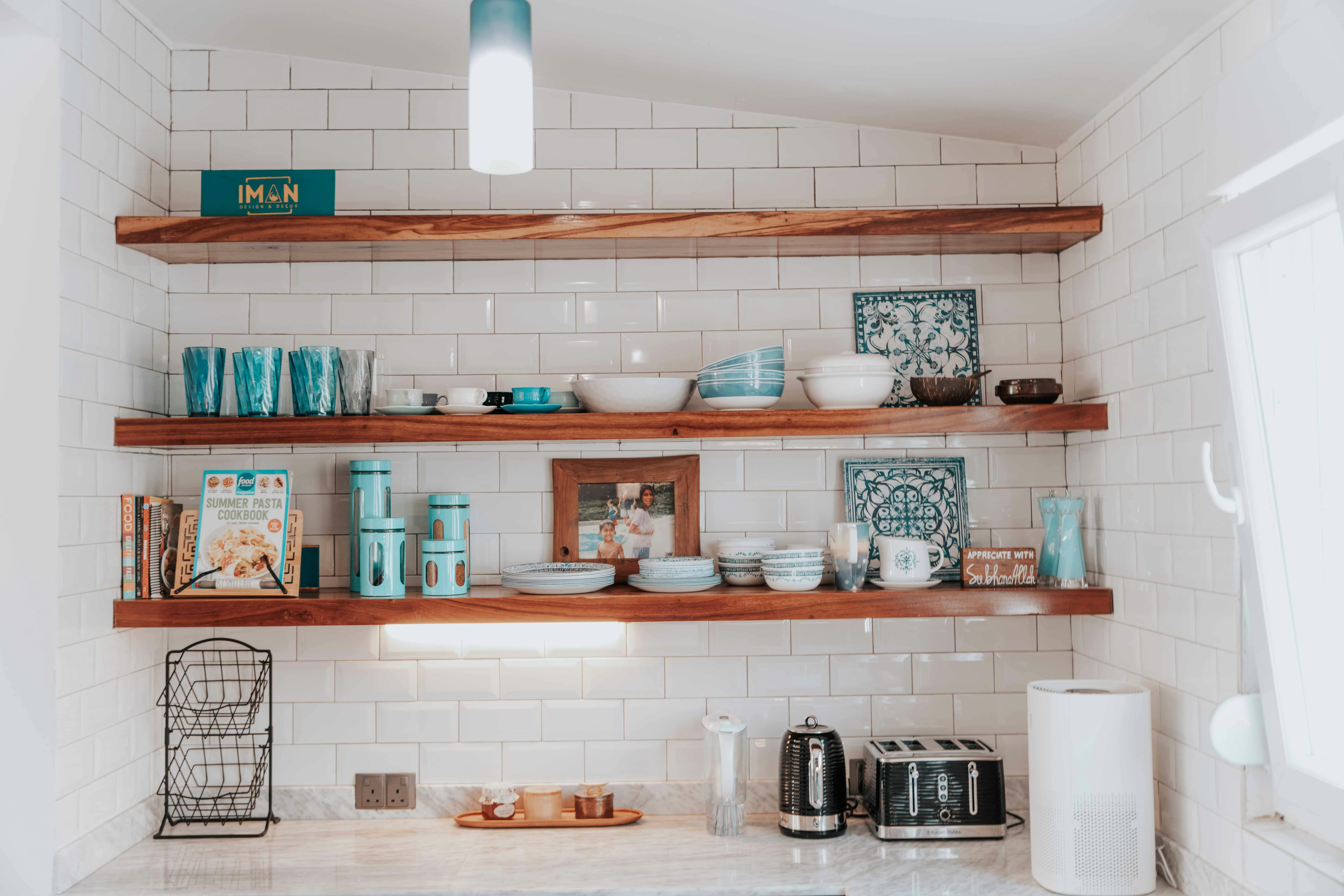
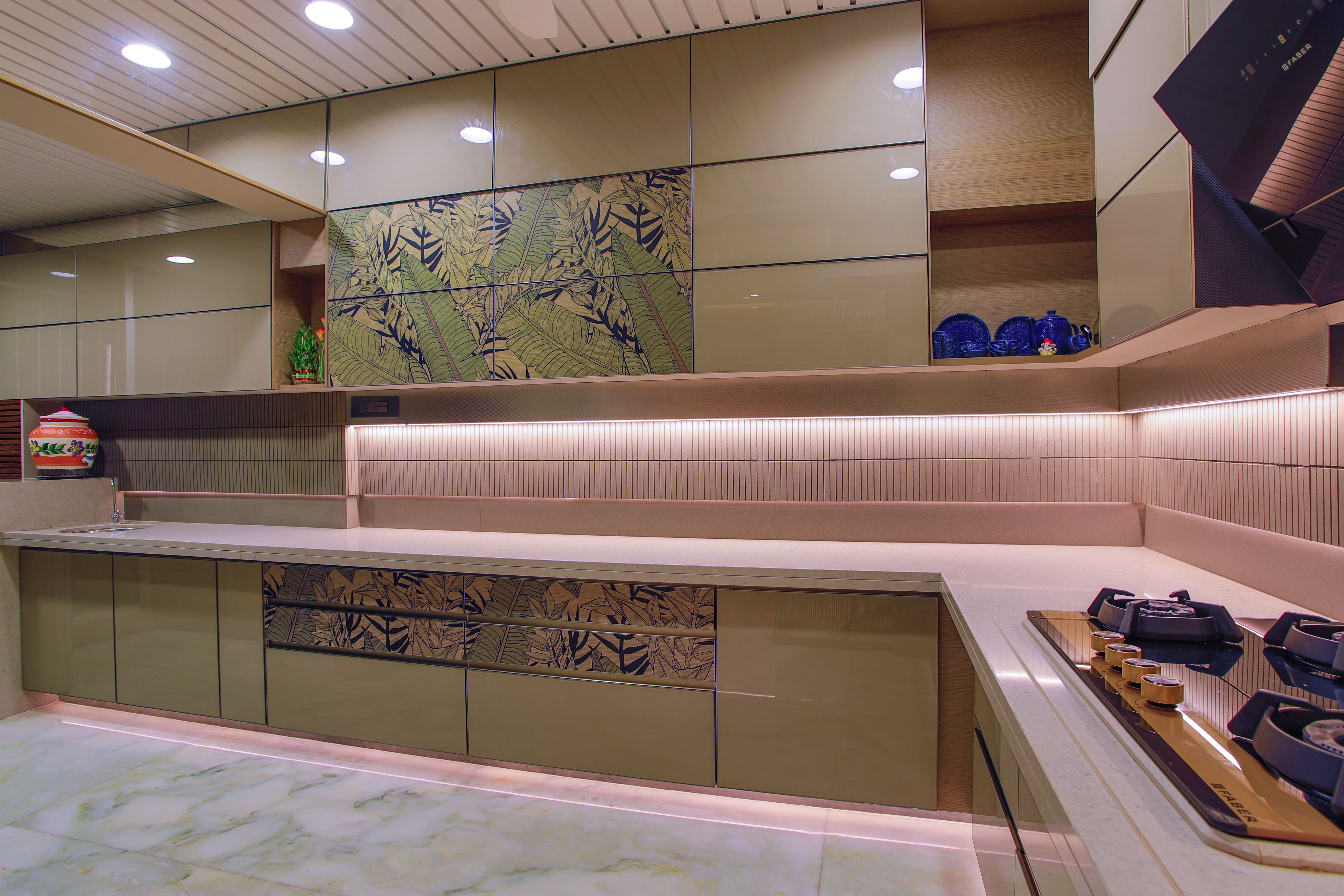
Mix Open Shelves With Closed Cabinets
Open shelving does not need to replace every upper cabinet. Keep food packages, cleaning supplies and mismatched equipment behind doors, then use shelves for a focused group of attractive, durable or frequently used items. Concentrating open storage in one section creates breathing room without giving up all concealed capacity. Compare the complete inventory before removing cabinetry that currently performs useful work.
Use a Narrow Ledge for Small Essentials
A picture-ledge-depth shelf can hold a small group of spices, cups or framed art where a standard shelf would project too far. Its limited depth should determine the contents; do not balance oversized objects on a narrow edge. Add a retaining detail only if it suits the objects and can be cleaned easily. A ledge is useful when the need is access or a small visual pause, not substantial capacity.
Edit and Clean the Visible Inventory
Open shelves expose every item to view and to the room's dust, moisture and cooking residue. Keep objects used often enough to be washed or wiped routinely, and move surplus pieces into closed storage. Leave hand space around heavier items and avoid stacking so tightly that one plate requires unloading a tower. Review the shelf after ordinary cooking rather than styling it once and assuming it will remain unchanged.