Keep the Cabinetry Quiet
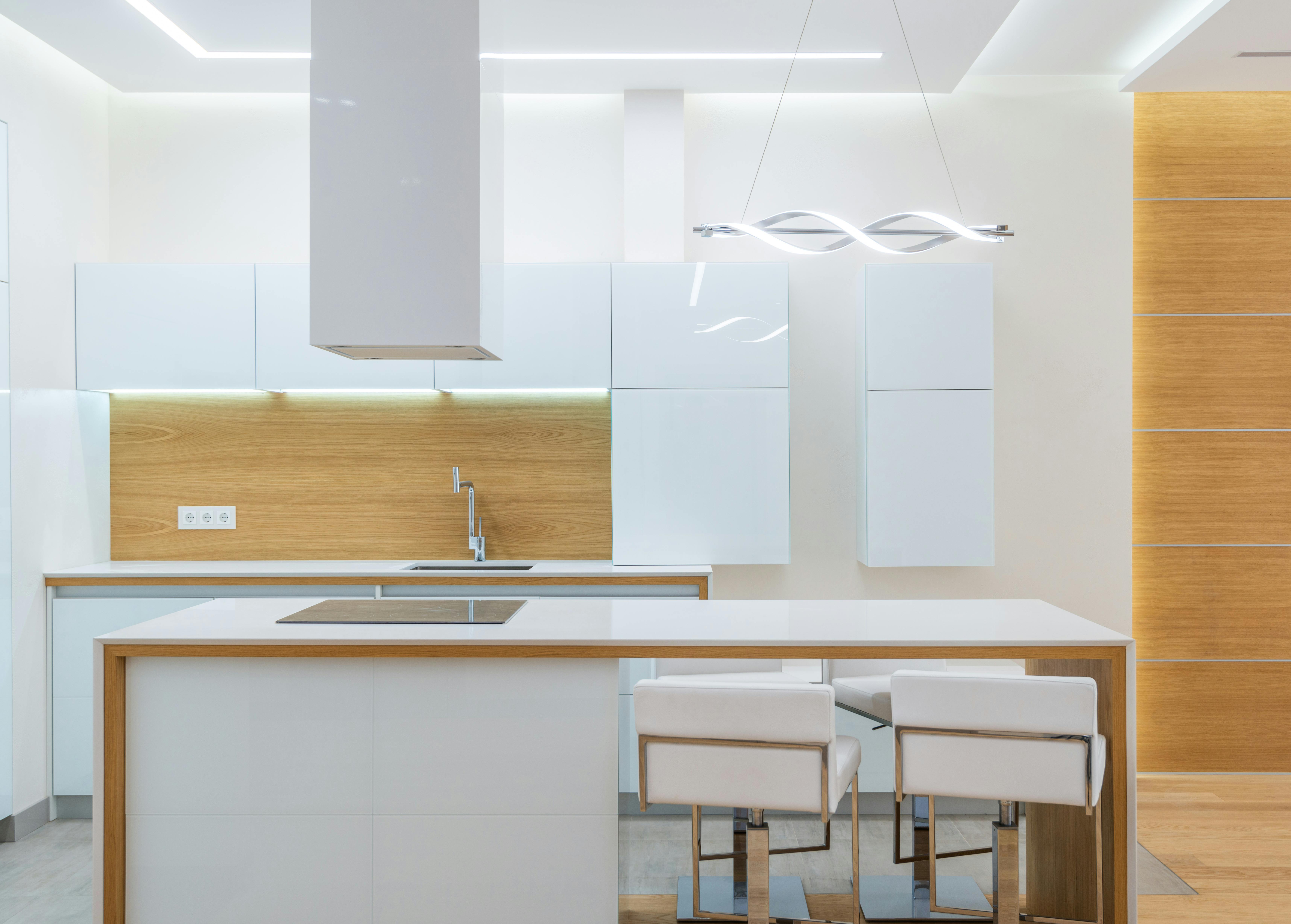
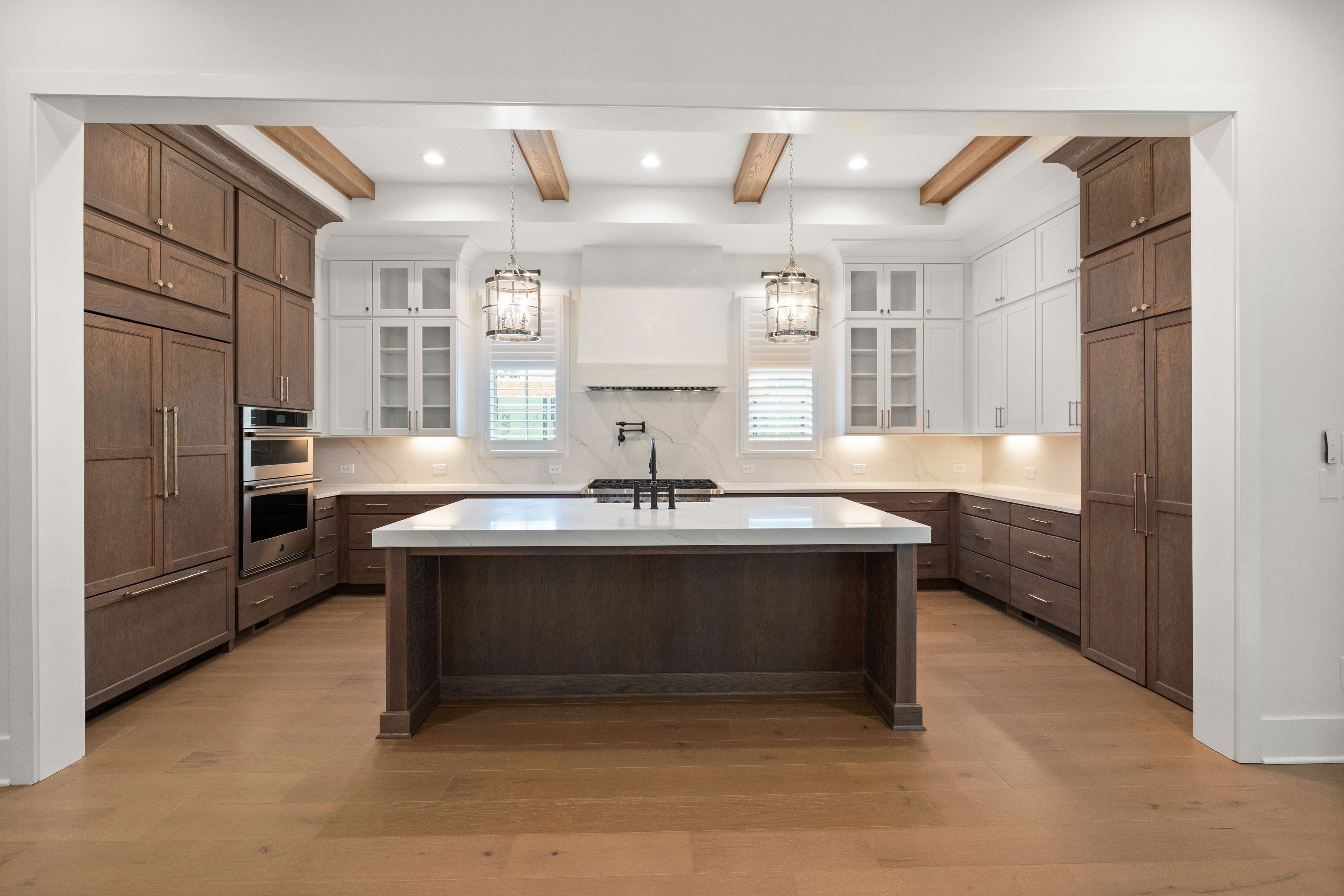
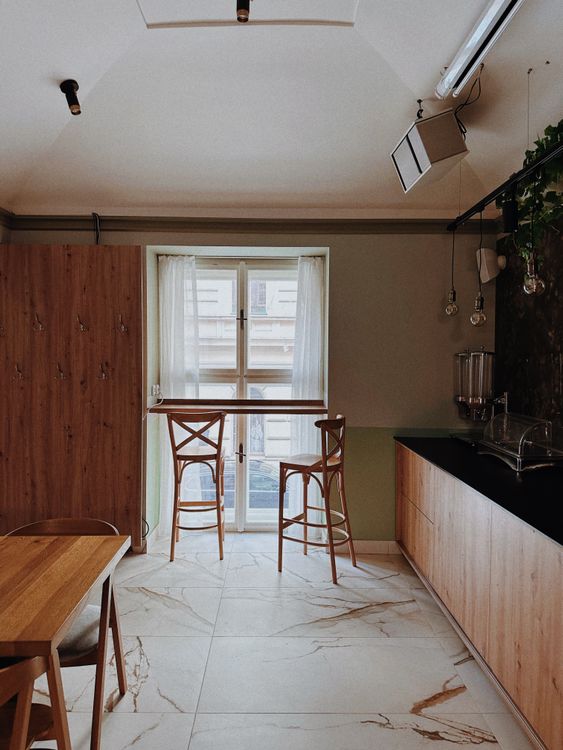
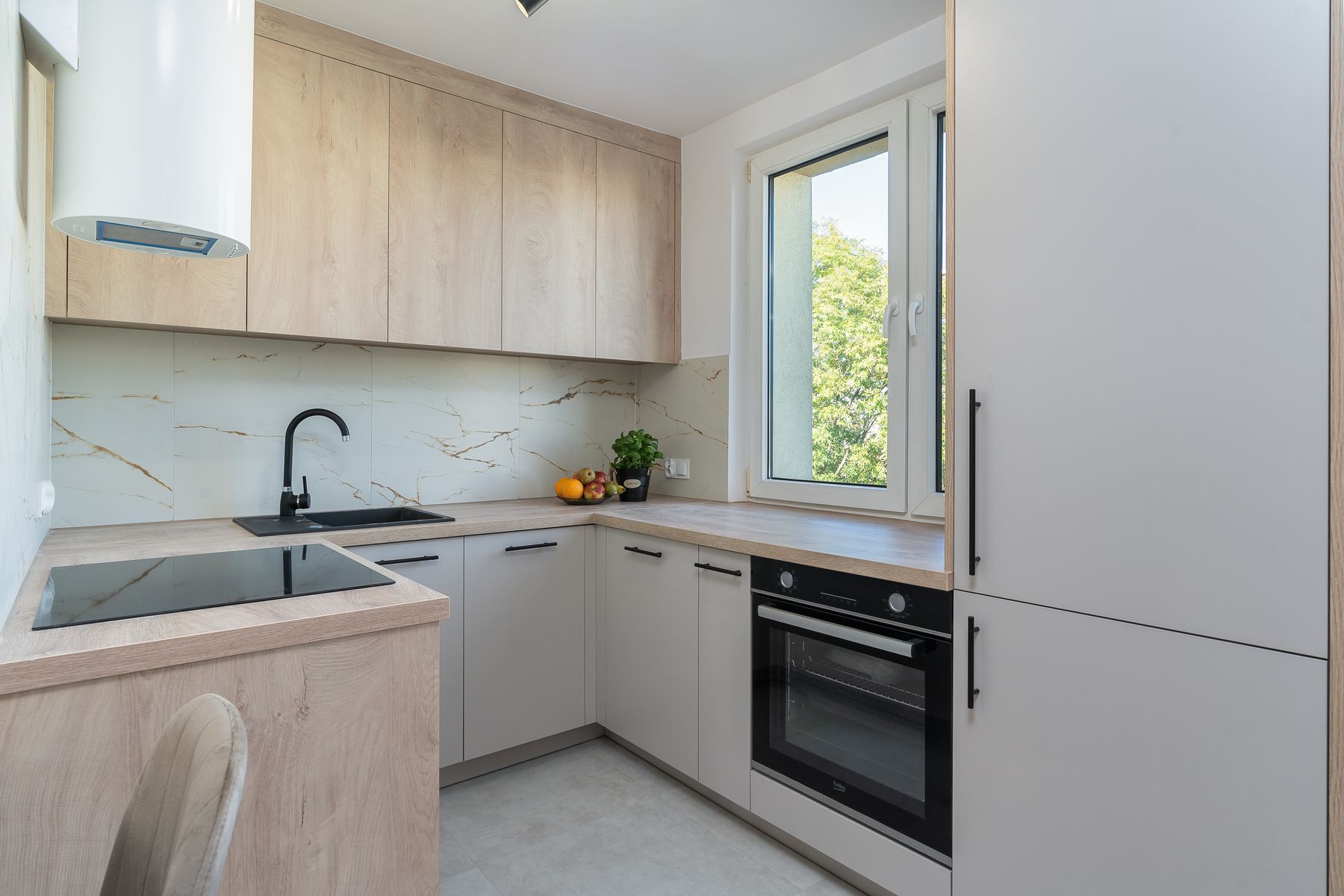
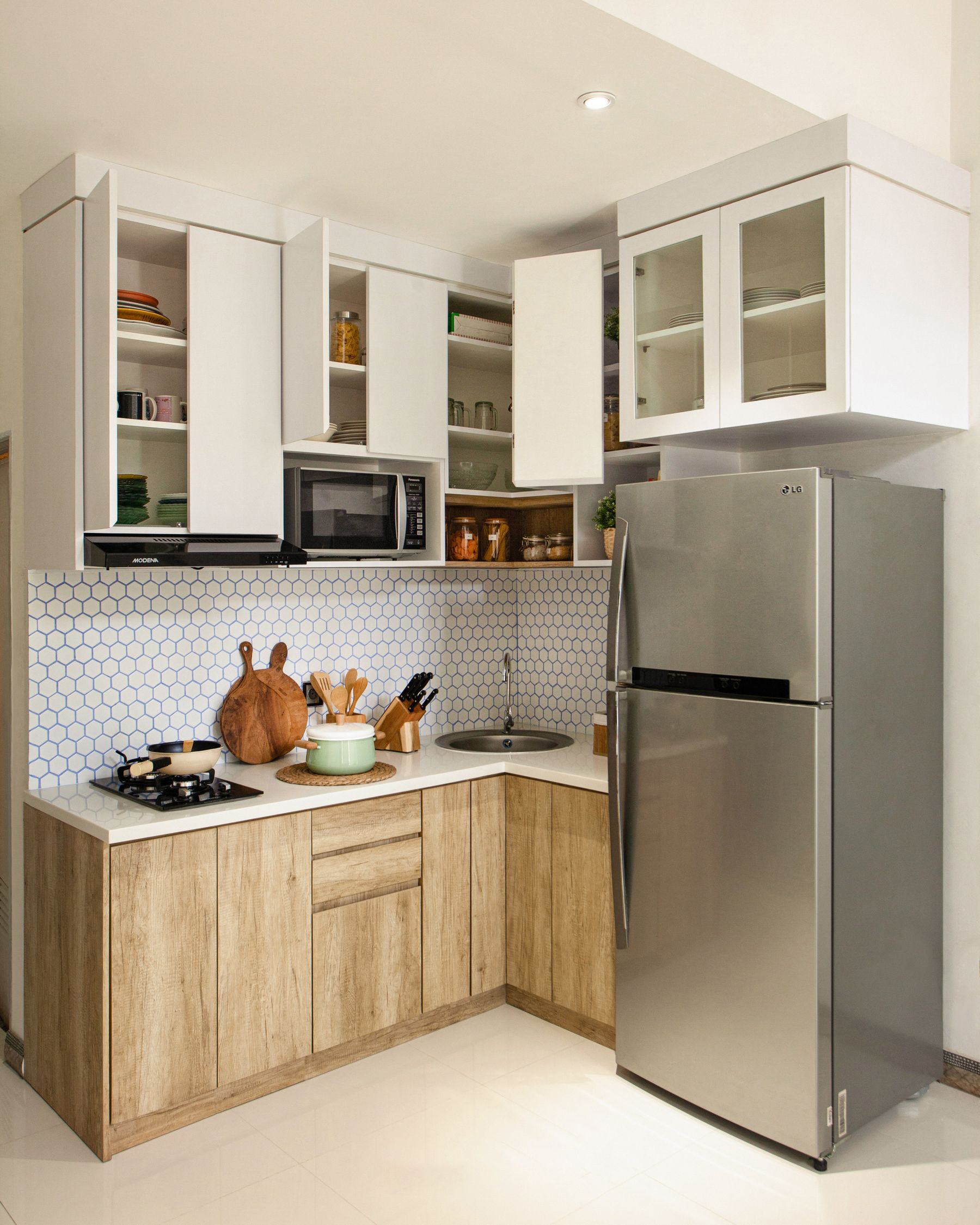
Flat or lightly framed doors make a useful background for a kitchen that includes visible utensils, plants and a dining table. Quiet does not mean every front must be identical: a small glazed cupboard or open niche can interrupt a larger run when it has a clear role. Keep the main door lines coherent and avoid using every spare gap as display space.
Bring in Pale Wood
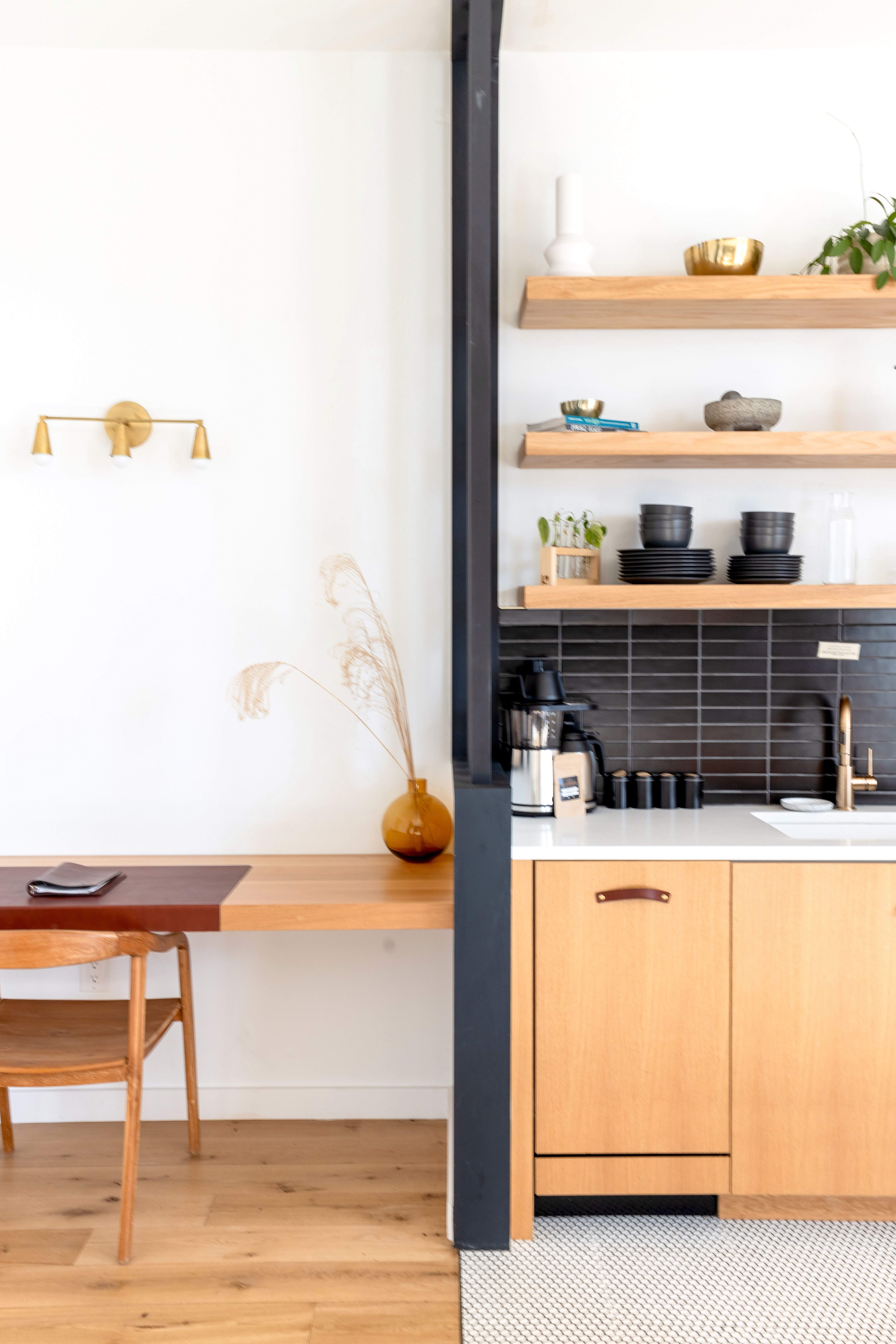
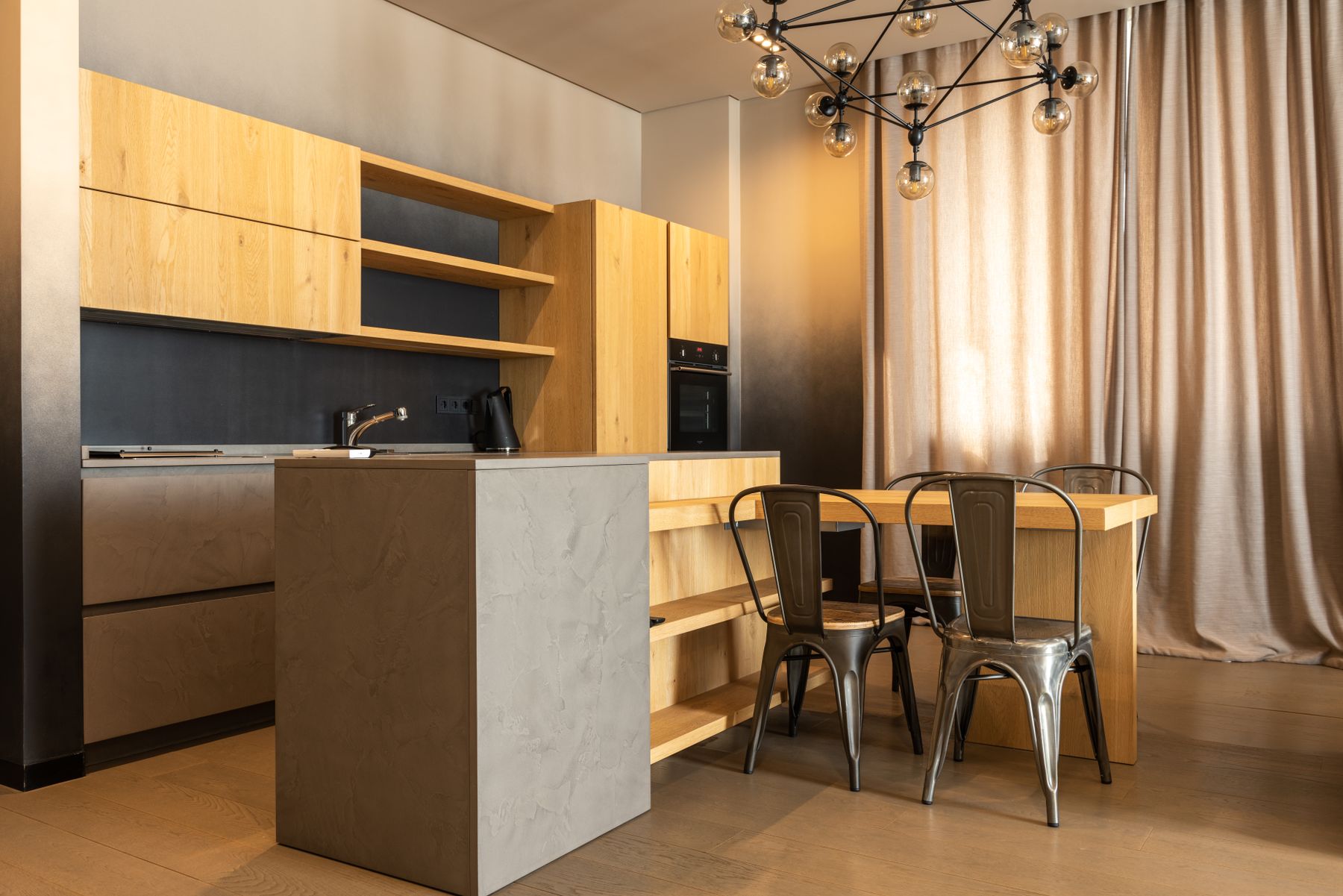
Wood adds warmth most convincingly when it appears in a substantial, useful place: cabinet fronts, a table, floor or shelf. Pale oak and similar tones sit comfortably beside warm white, while visible grain prevents the palette from feeling flat. Allow modest variation between timber elements instead of forcing every chair, shelf and cabinet to match exactly.
Make Storage Part of the Design
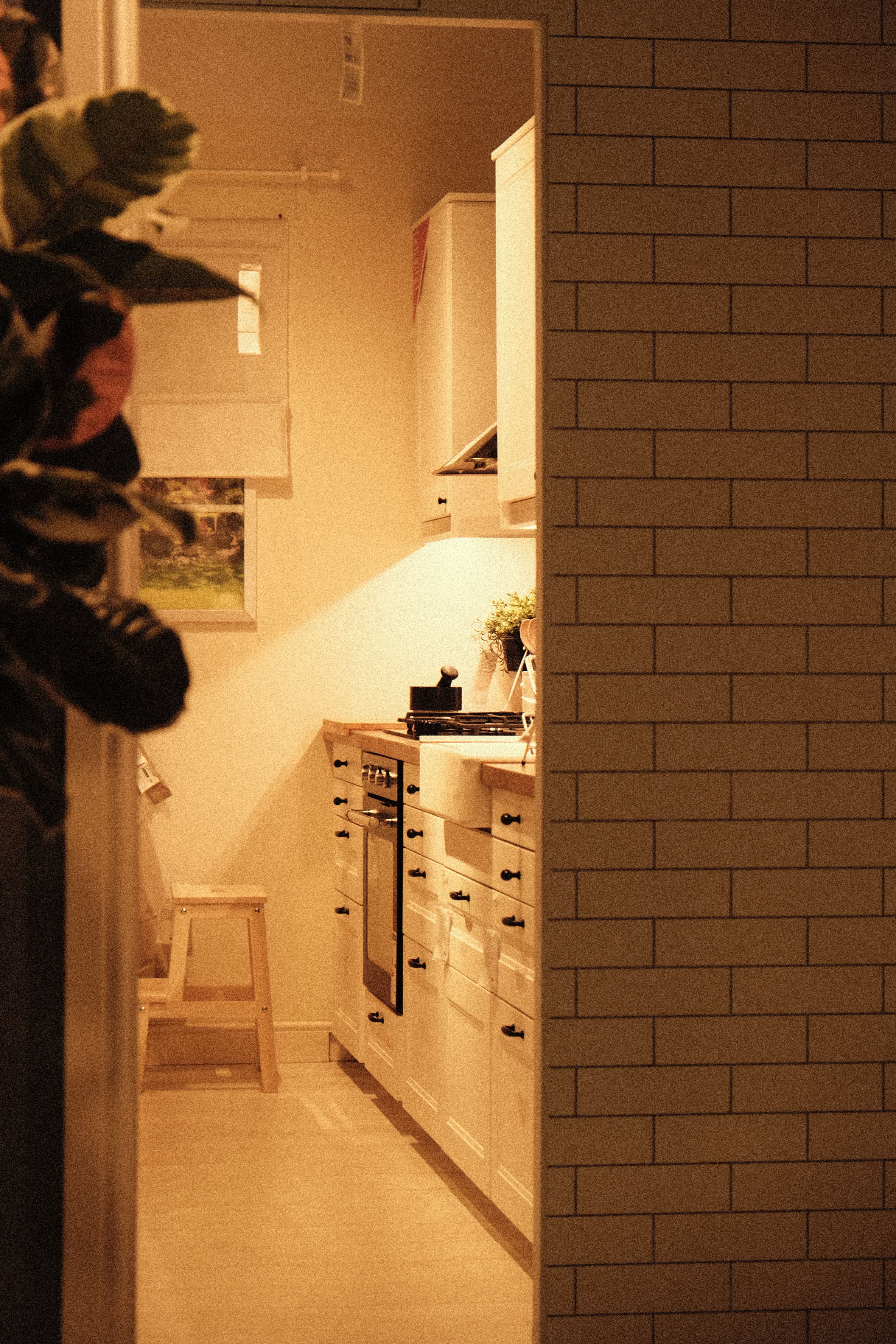
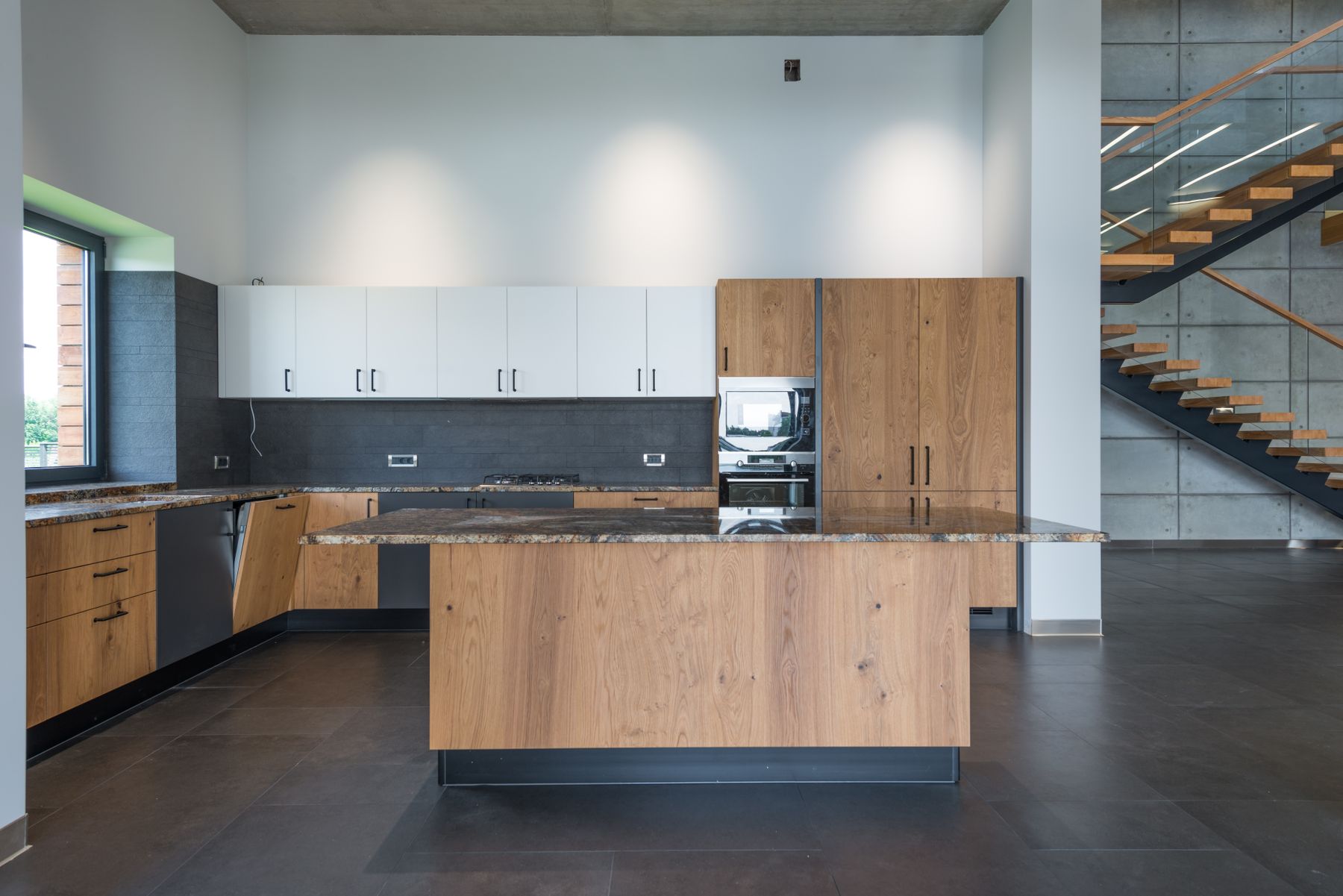
Start with what you cook, drink and wash on an ordinary day. Pans should be reachable near the hob, cups near their daily routine and occasional equipment behind closed doors. A compact kitchen can mix one open niche with closed and glazed cupboards, but it still needs somewhere for packaging and appliances that do not improve the view.
Use Simple Lighting With Good Scale
A dining pendant can make a modest table feel like a destination while task lighting supports the counters. Choose the visual weight of the fitting in relation to the table and the room. Simple globes, shaded pendants and restrained spots can all work; no single light shape makes a kitchen Scandinavian by itself.
Let Daily Kitchenware Earn a Place on a Shelf
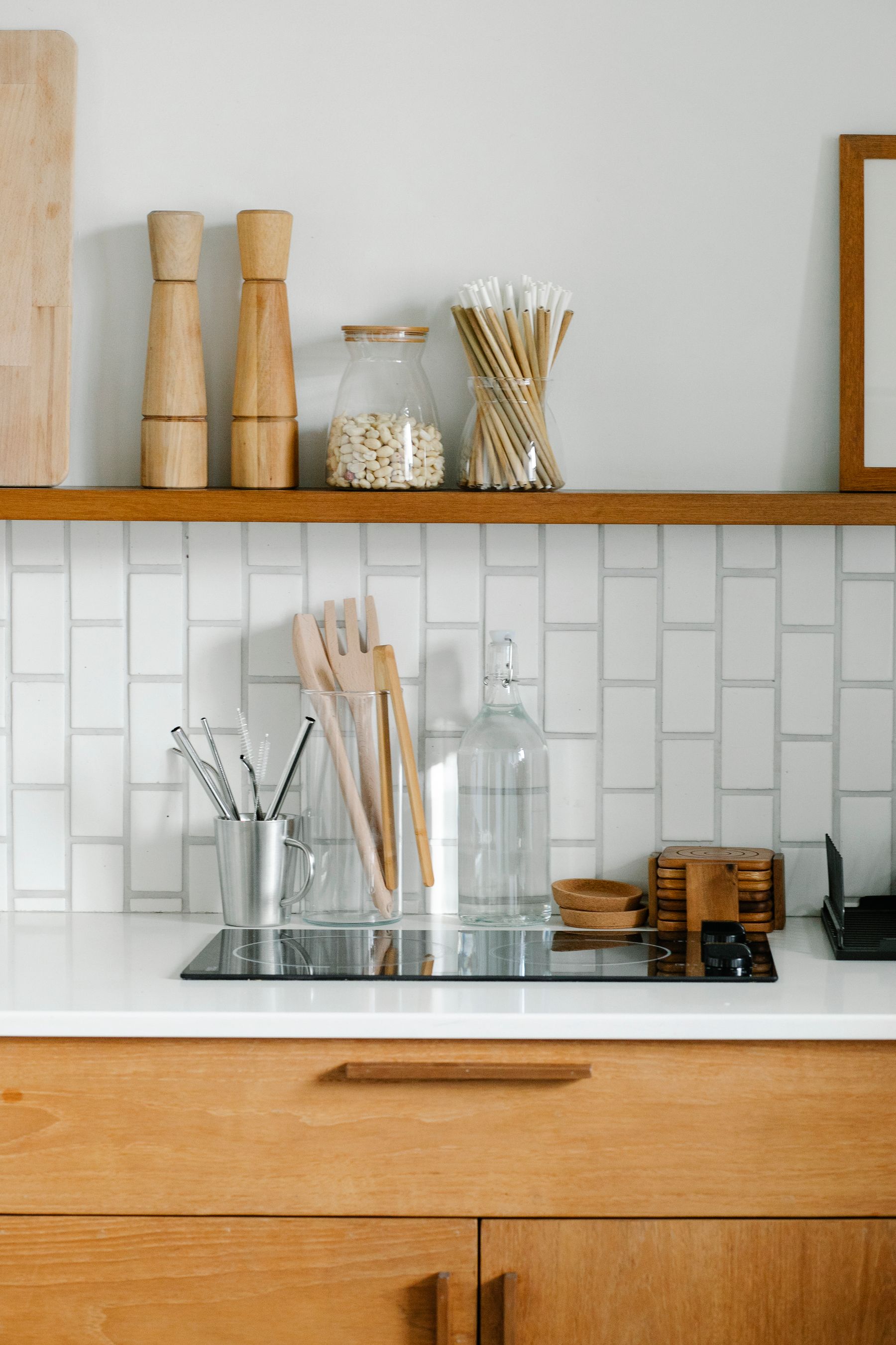
A short wood shelf can hold the jars, cups or bowls you reach for frequently. Repeating a material or color keeps the arrangement coherent without requiring identical containers. Keep the shelf away from the busiest splash area where possible and leave enough room to lift one item out without rearranging everything beside it.
Add a Muted Color Where It Helps
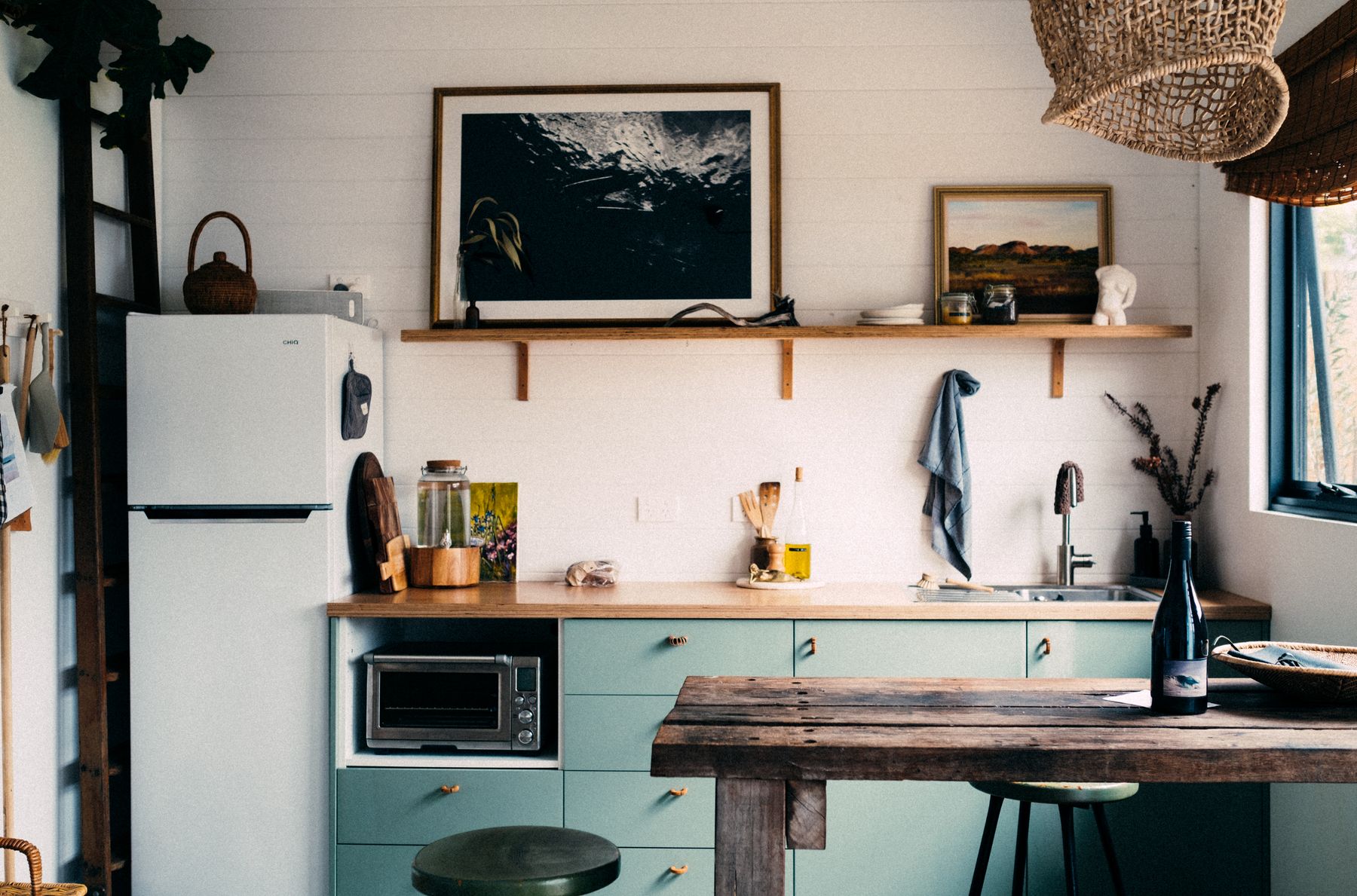
Soft green, blue-grey or a warm earthy tone can give a pale kitchen more personality without taking over. Use color on one cabinet run, curtain or dining element, then let wood and lighter surfaces connect the rest. The aim is an easy relationship between the colors rather than a strict ban on decoration.
Make Room for an Informal Dining Spot
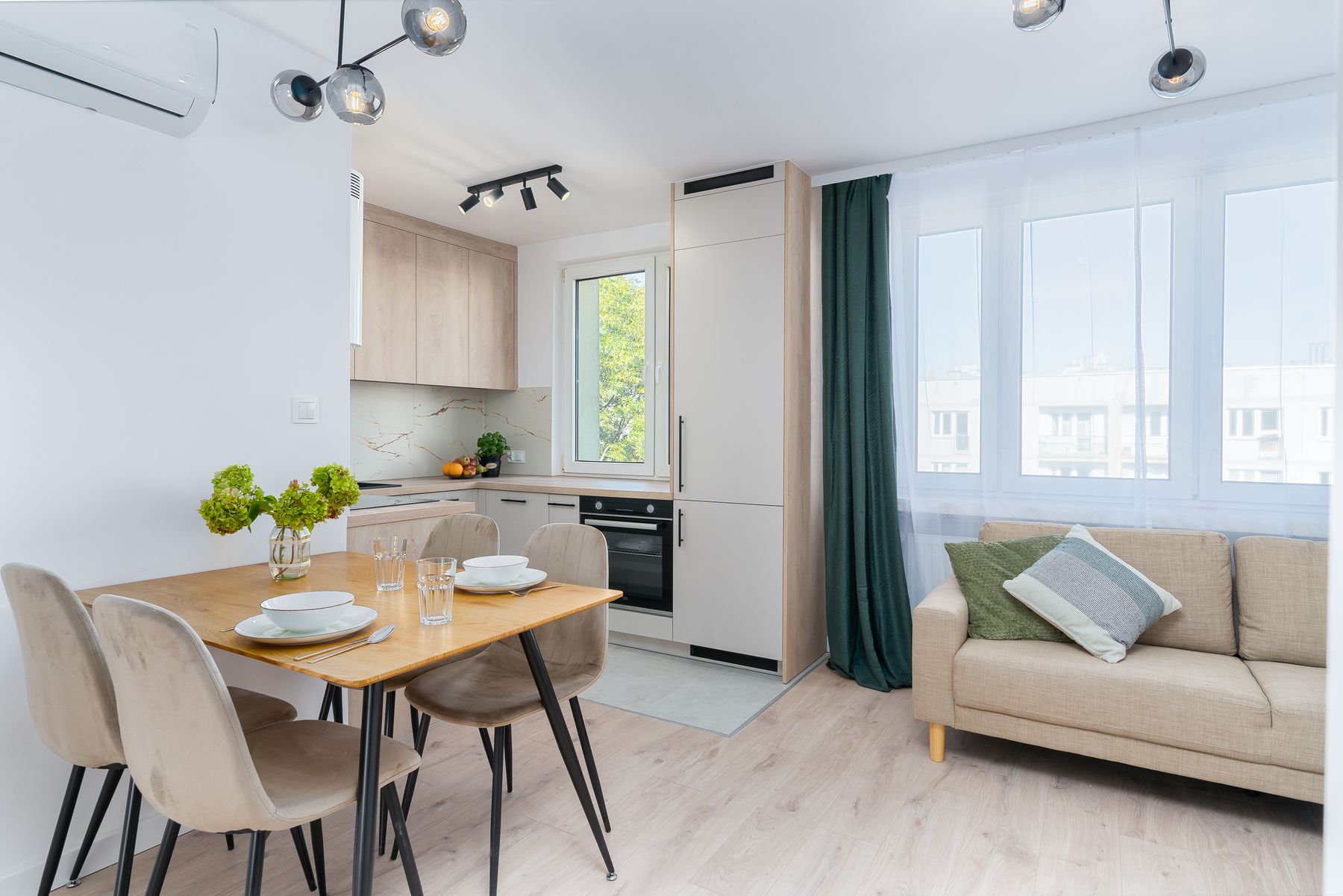
A small table can be more useful than an island when the kitchen shares a room with living space. It offers flexible seating and keeps the floor visible around its legs. Upholstered chairs add softness, while simple wood chairs can work with washable cushions when that better suits the household.
Keep Daylight and Everyday Texture in Balance
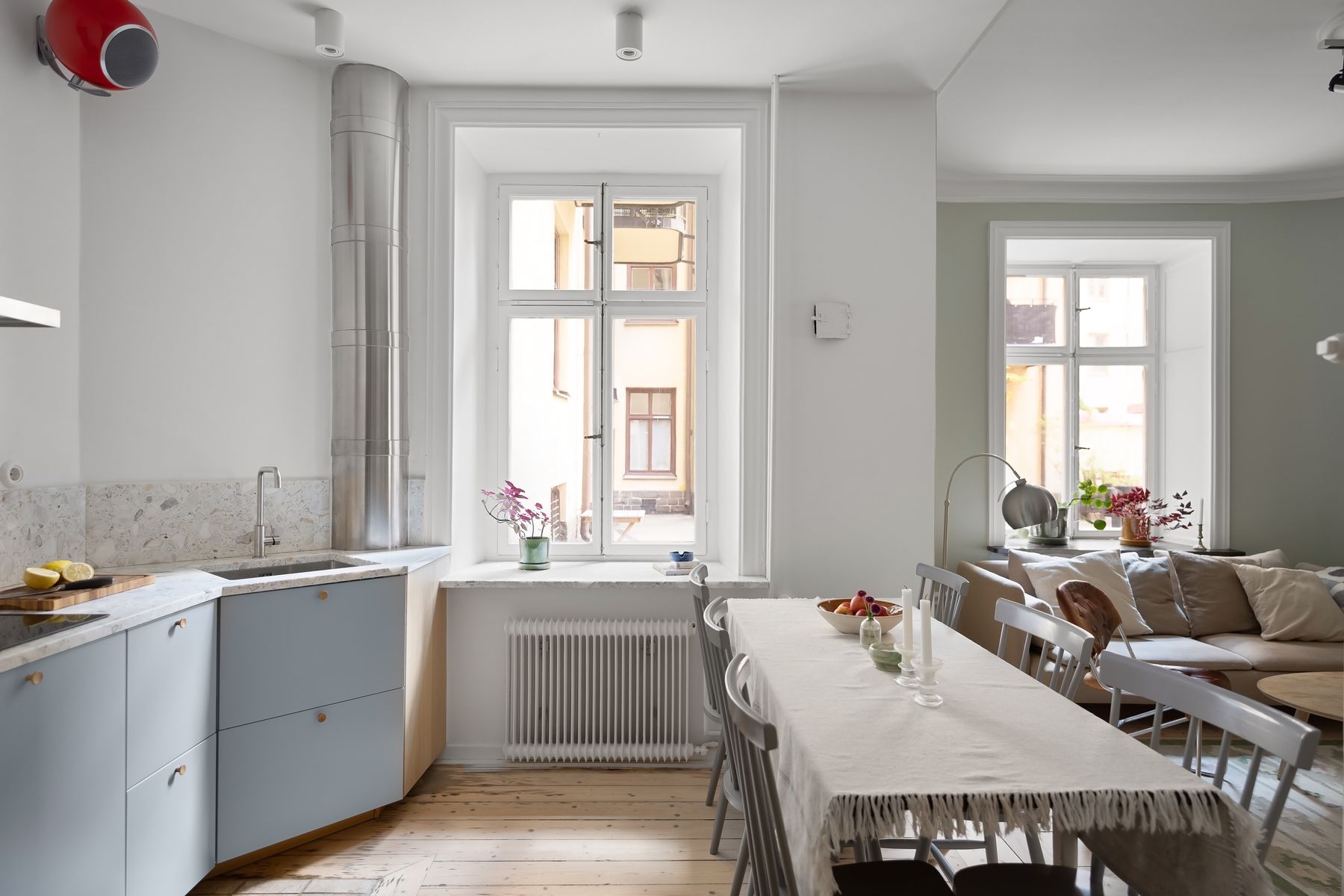
Keep the window area visually clear enough for daylight to reach the room, then add softness where it is useful: a cloth at the table, a comfortable seat or a small rug in a dry area. Brightness does not require bare surfaces. If the kitchen is naturally dark, pale cabinetry can help reflect light but cannot replace a good evening lighting plan.
Use One Dark Detail for Definition
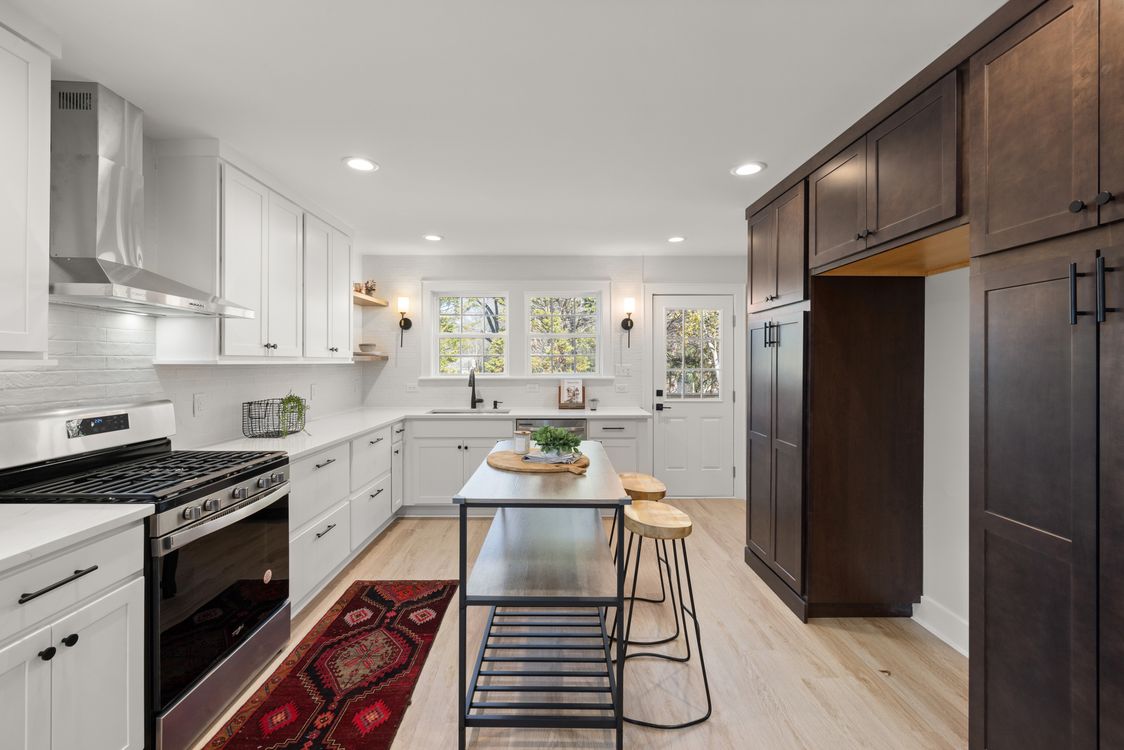
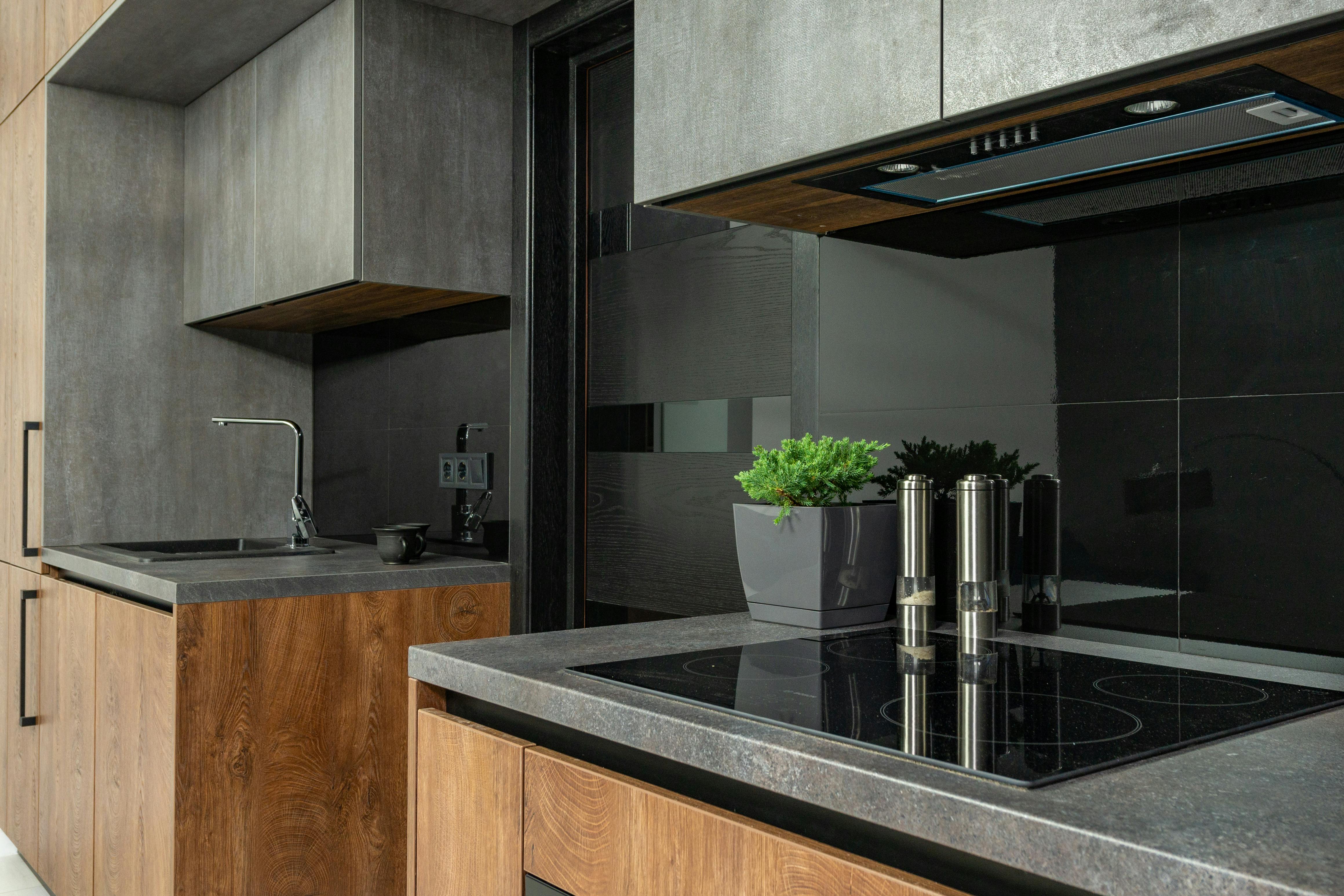
A pale Scandinavian palette often benefits from one darker anchor: a faucet, dining chair, pendant, worktop edge or appliance zone. The darker value gives light timber and warm white more definition without outlining every surface in black. Keep the contrast concentrated so the room remains bright rather than graphic.
Carry the Timber Into the Adjoining Room
In open-plan homes, repeating one timber tone beyond the fitted kitchen can make the whole room feel related. A dining table, shelf or desk can echo the warmth of the cabinet fronts without matching them exactly. Use the material at a different scale so the kitchen and living zone remain connected but distinct.