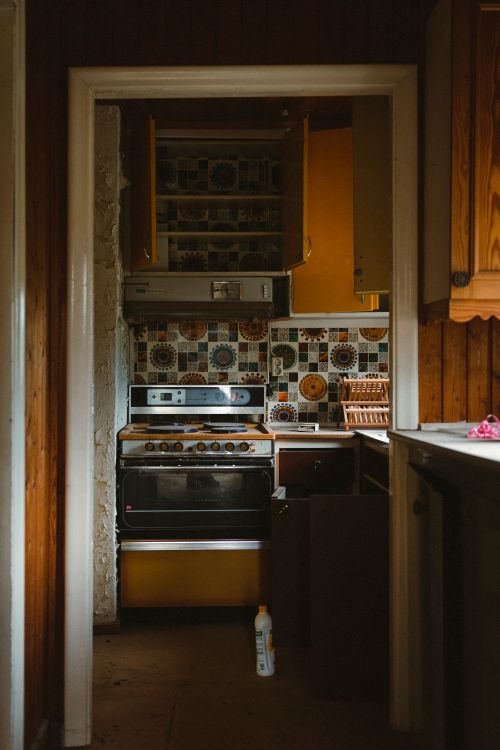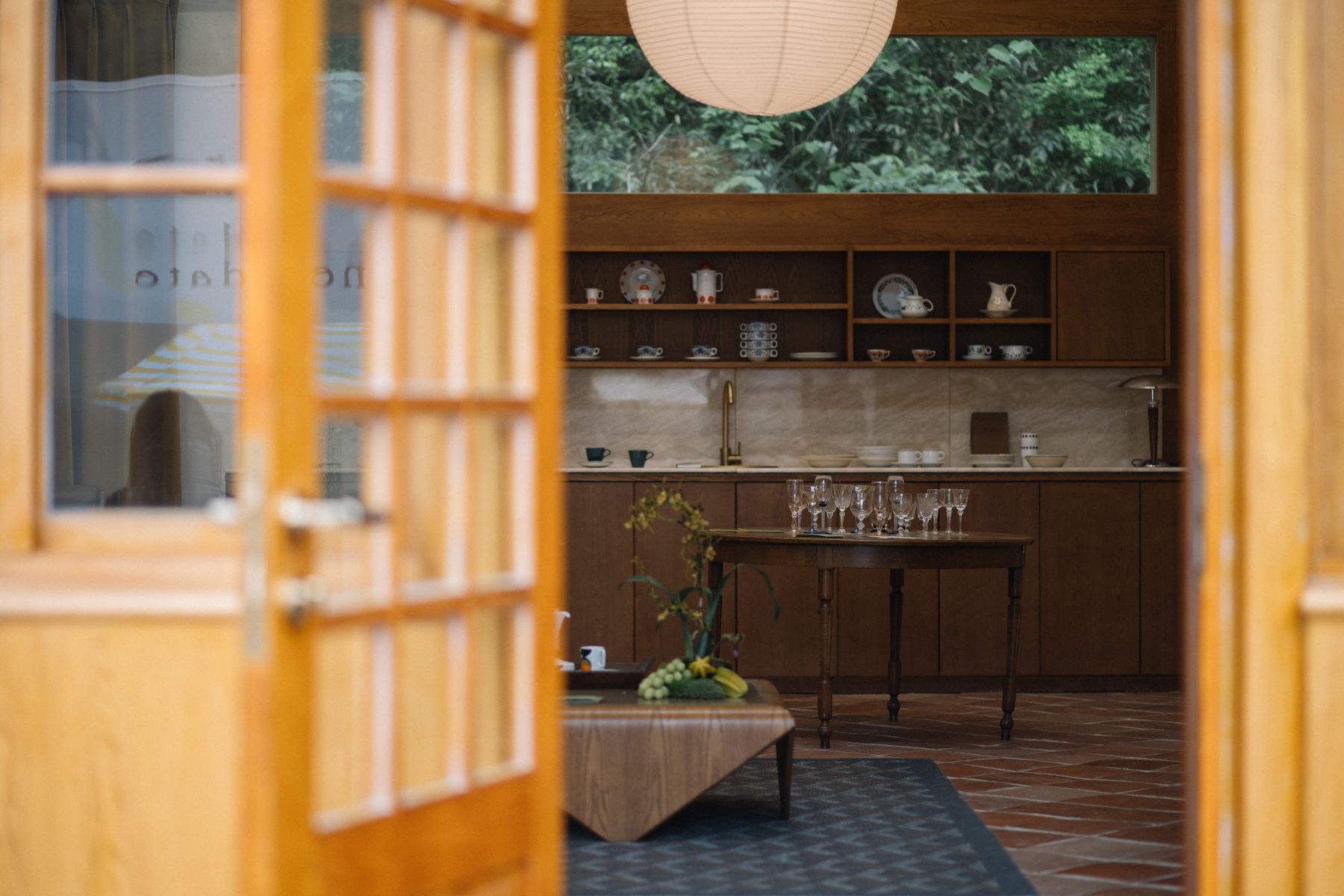
Start With Warm Wood
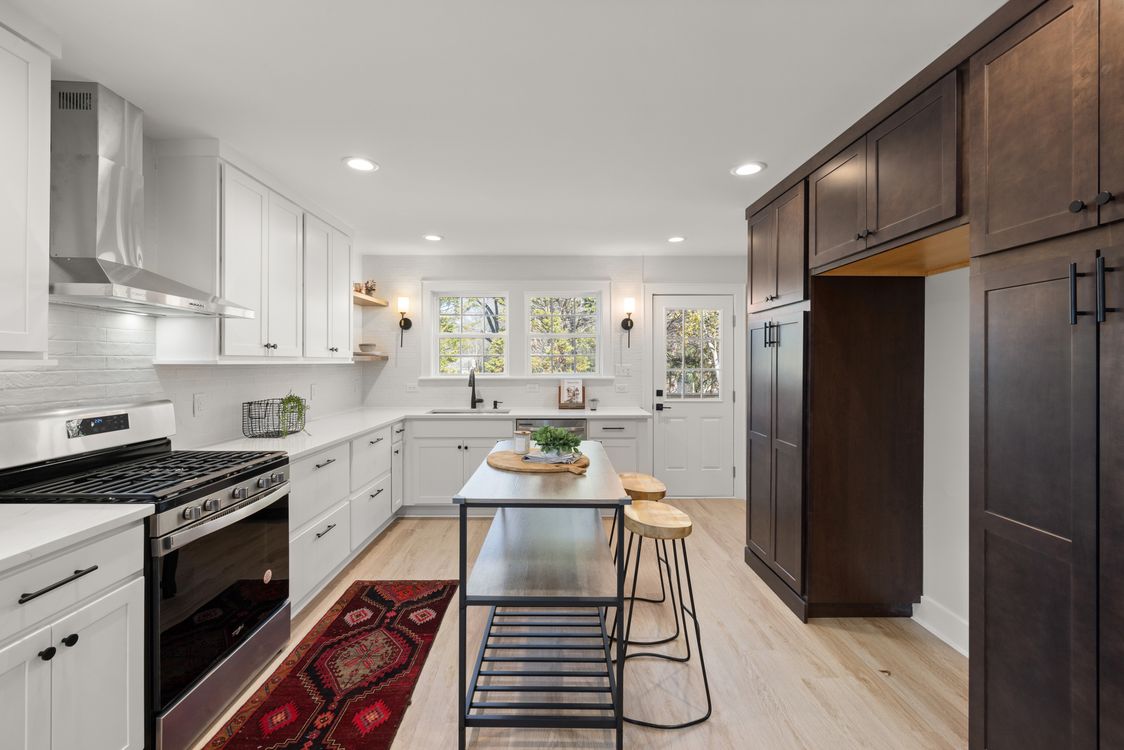
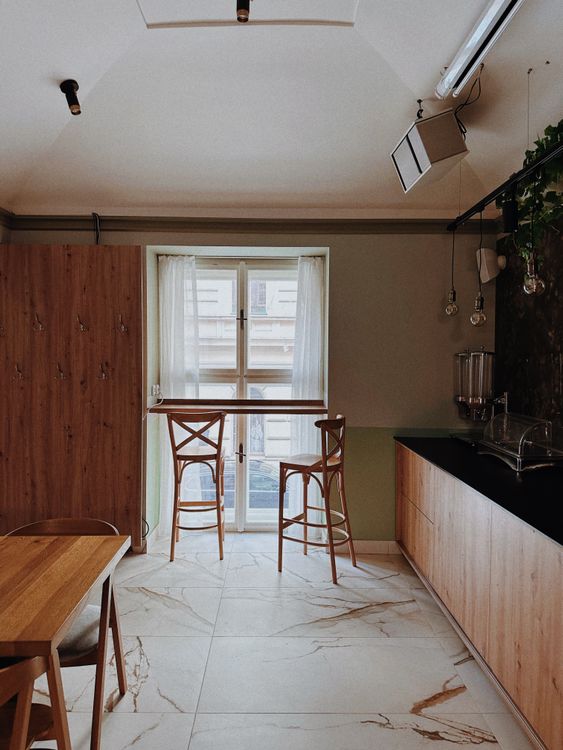
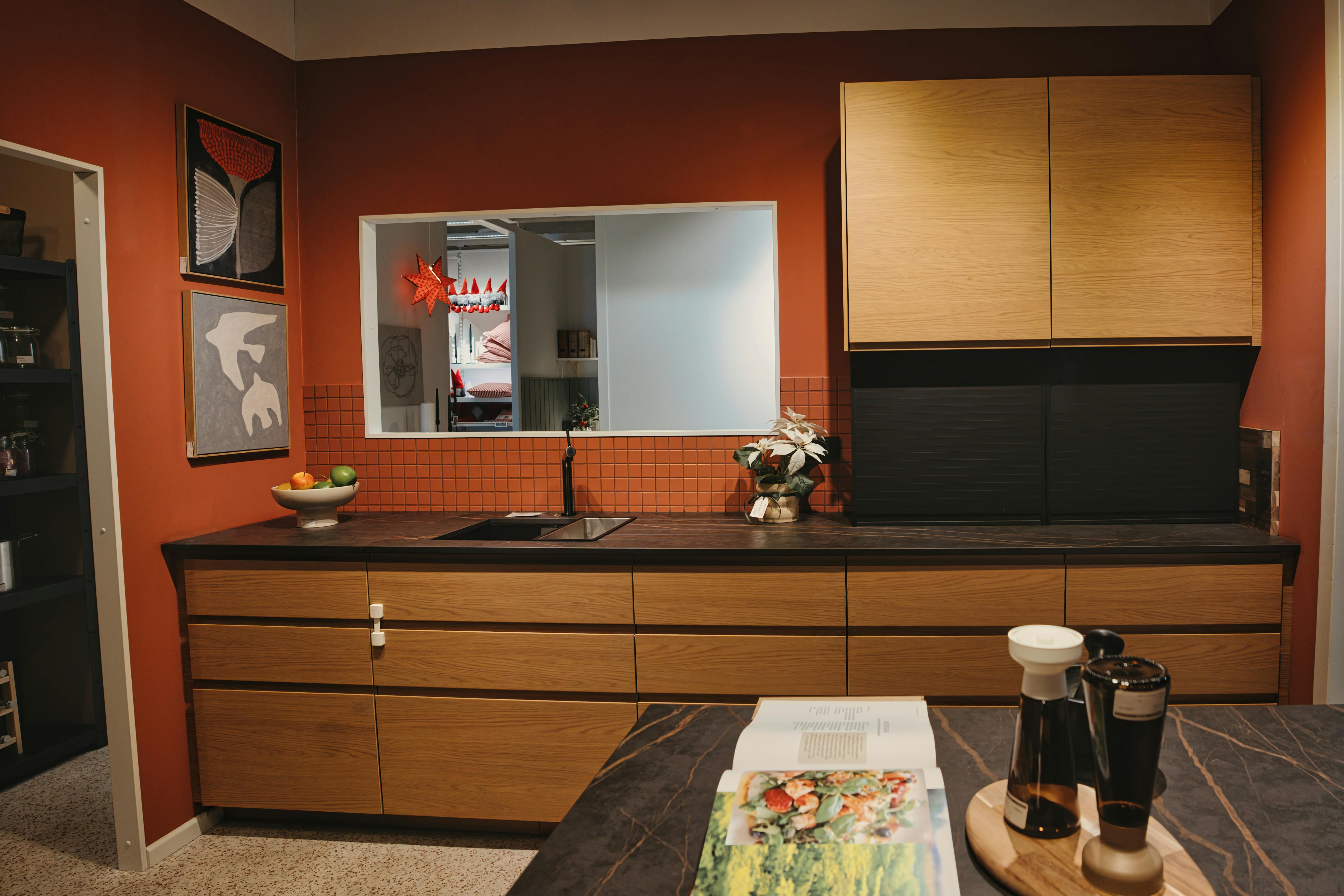
Wood is most convincing when it forms part of the architecture: cabinet fronts, a doorway, shelving or a substantial table. Walnut is an obvious mid-century reference, but oak and other warm finishes can work just as well when the grain and color suit the room. Keep one timber family dominant and let smaller pieces vary slightly rather than forcing an exact match. Pale walls and stone give richer wood enough breathing room to remain legible.
Use Geometry Selectively
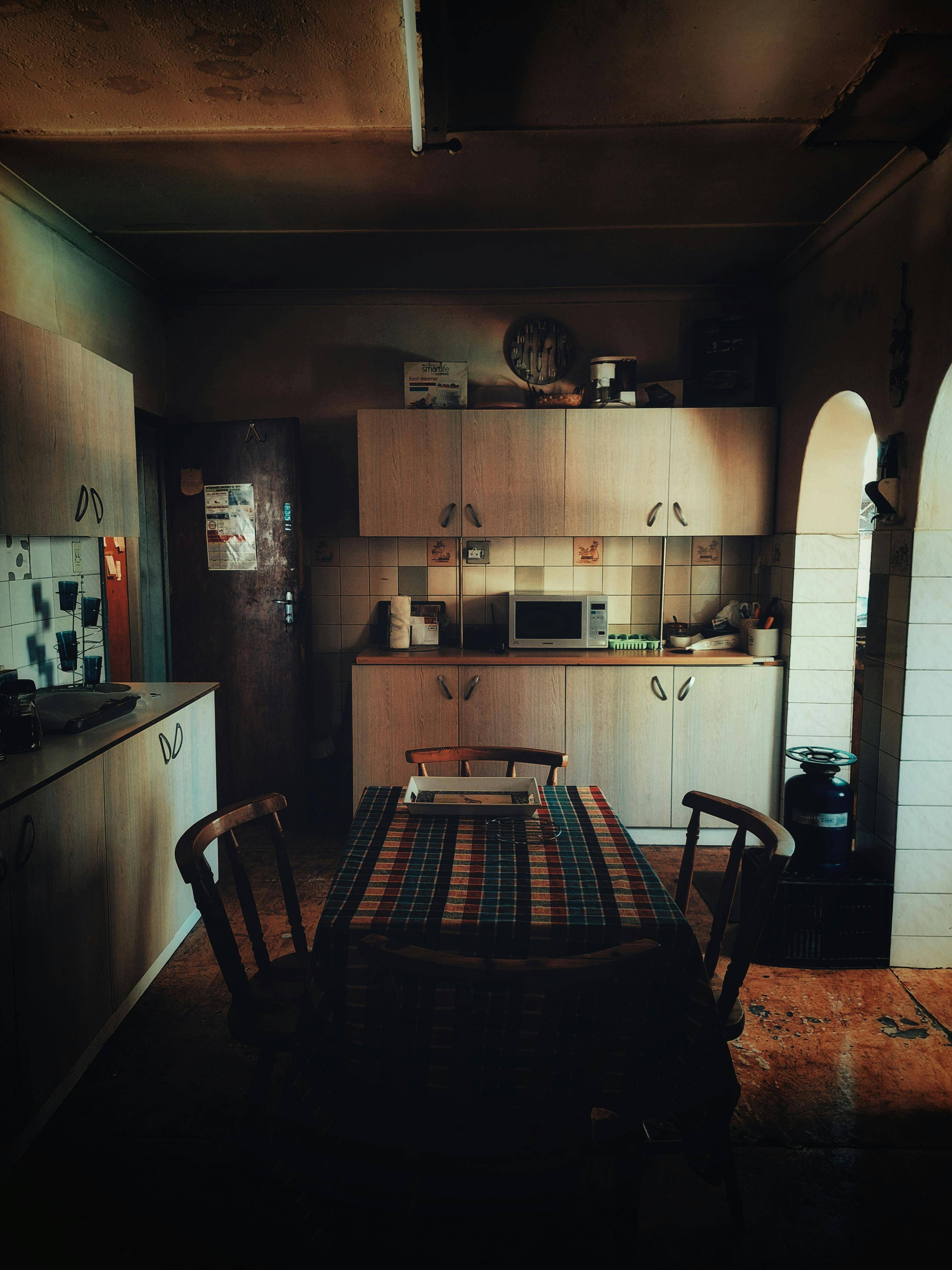
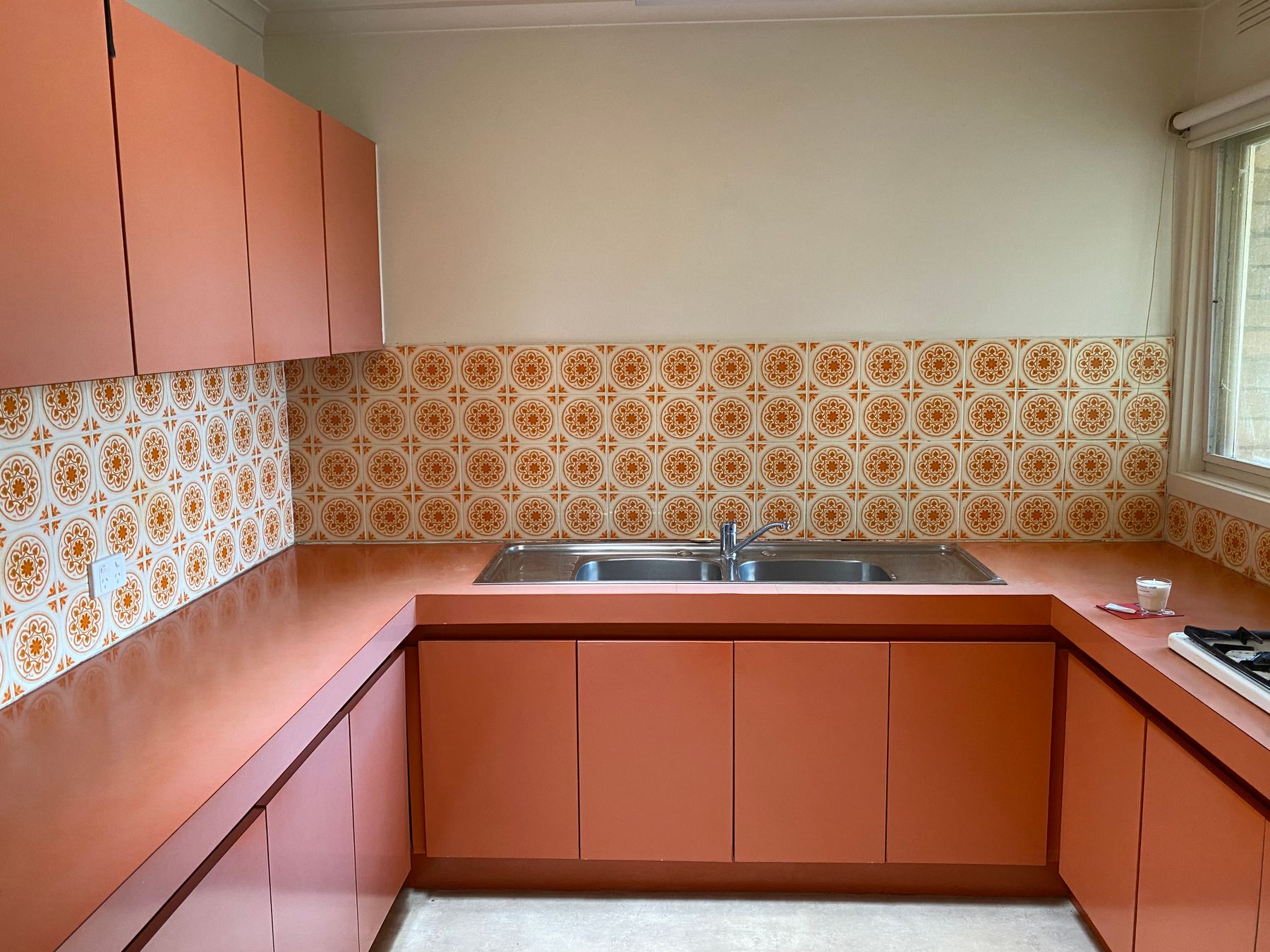
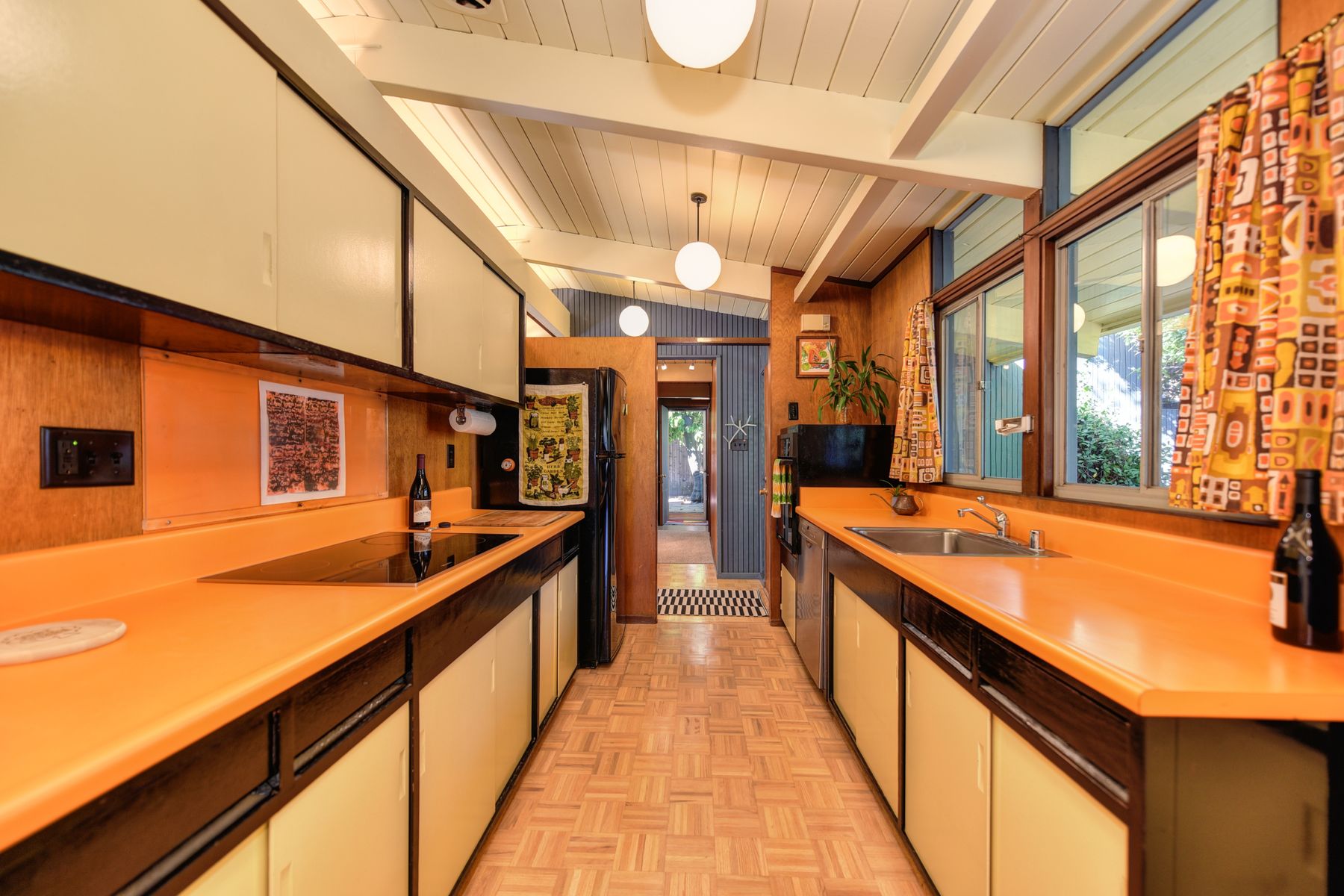
Repeating tile, a patterned curtain or one graphic surface can give simple cabinetry a stronger identity. The key is containment. A backsplash can carry the pattern while adjacent cabinet fronts stay plain, or a dining textile can introduce geometry without turning every surface into a motif. Strong repeats are easier to judge across several tiles or a full fabric width than from one sample.
Choose Sculptural Lighting
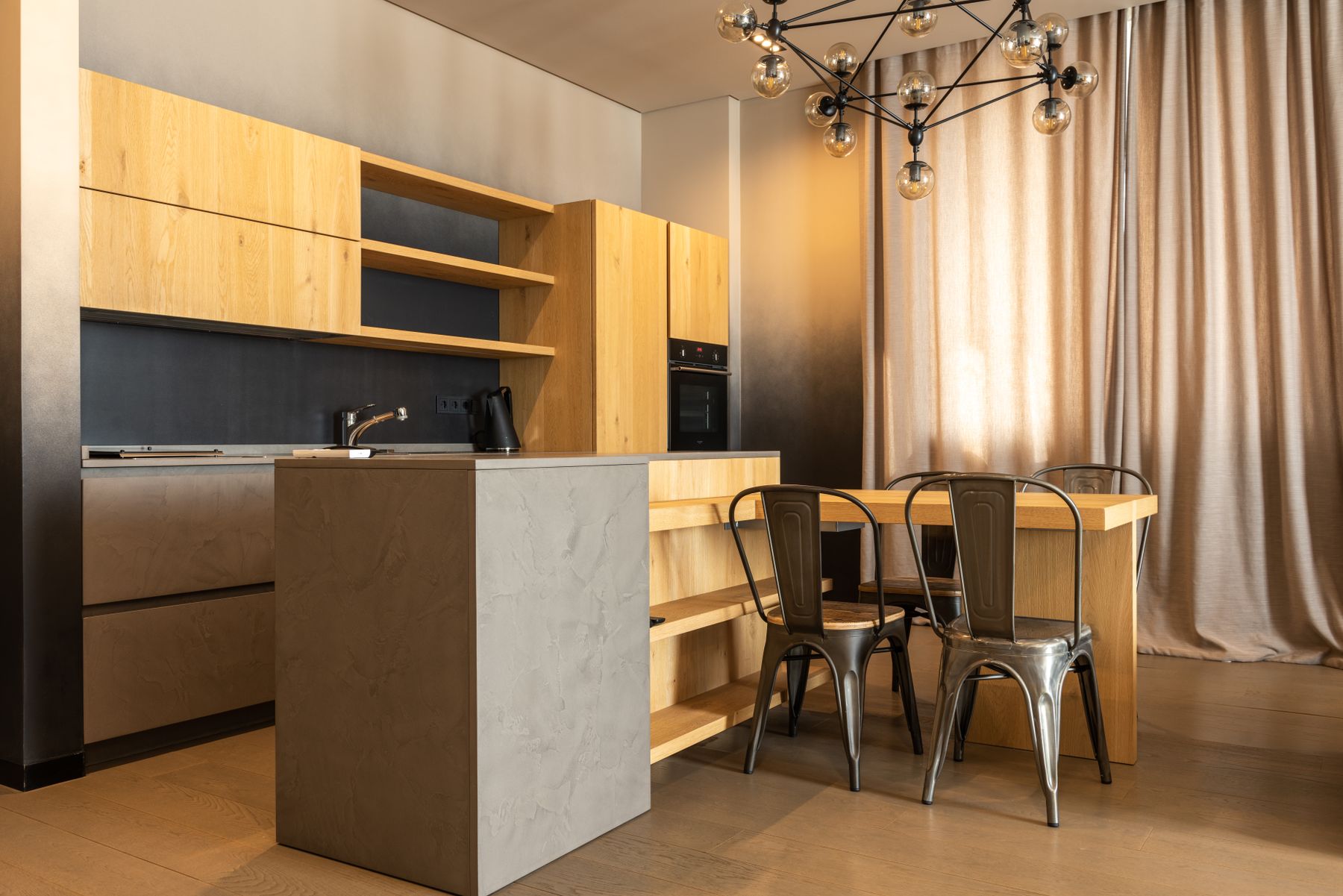
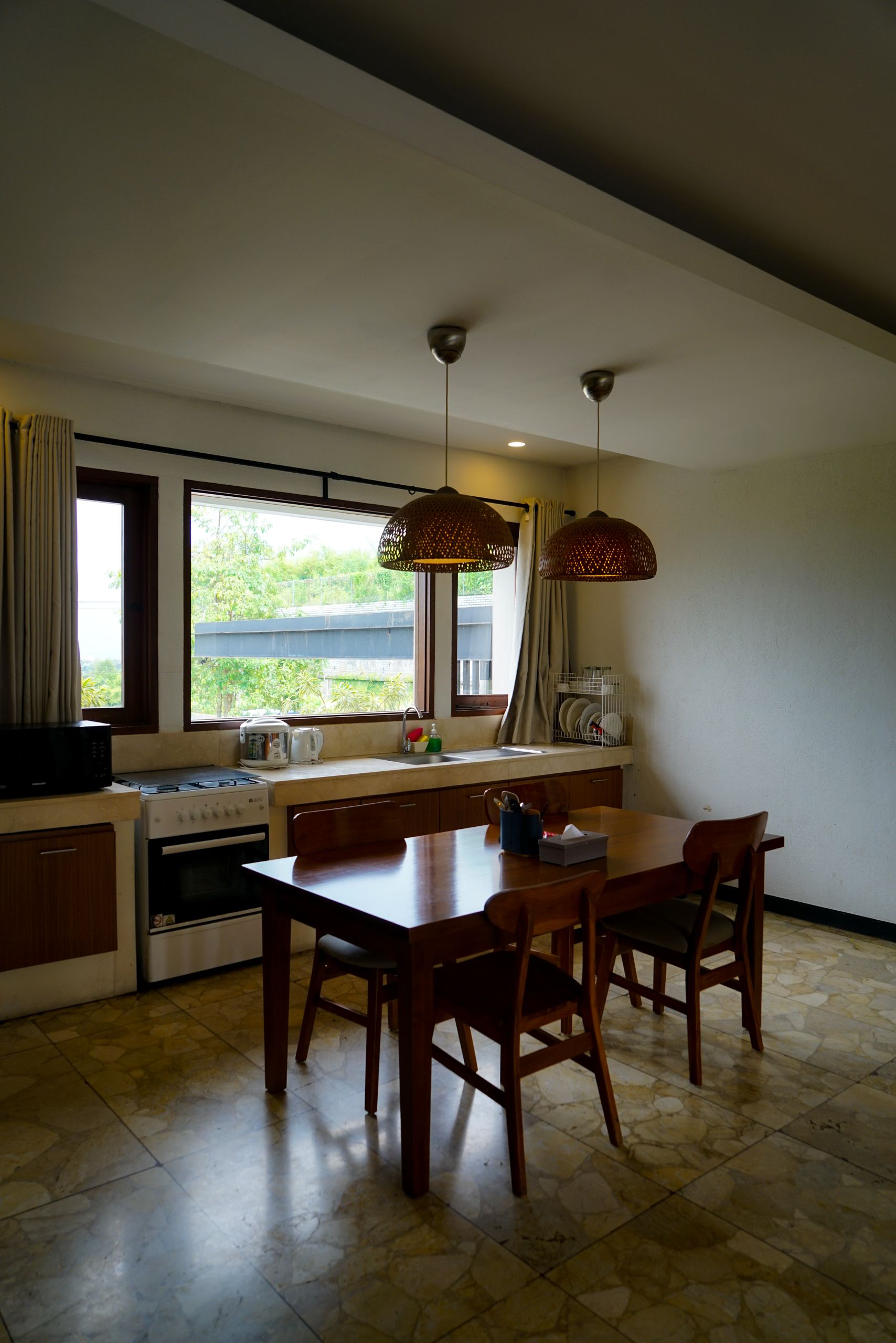
A branching fitting, globe pendant or simple sculptural light can introduce the curved forms that straight cabinetry lacks. Choose the fixture in relation to the table or island beneath it rather than treating it as a standalone object. Check glare from a seated position and keep a separate task-light layer for preparation and washing. One expressive fitting usually has more impact than several competing statement lights.
Build a Breakfast Nook
A compact eating area is an easy place to introduce curved chair backs, tapered legs or a pedestal table without changing the fitted kitchen. Start with circulation, then choose the furniture. A round table can remove sharp corners from a tight route, while a wall bench can work where loose chairs would obstruct movement. In an existing kitchen, this smaller furniture group can carry much of the style on its own.
Give One Warm Color a Clear Role
Orange, ochre, rust and terracotta can introduce a clear mid-century cue, but they do not need to cover every cabinet. One counter, tile band, curtain or piece of furniture may be enough. Keep a substantial amount of neutral wall, timber or stone around the color so it reads as a deliberate focal move rather than a theme.
Use Furniture-Like Storage for Daily Pieces
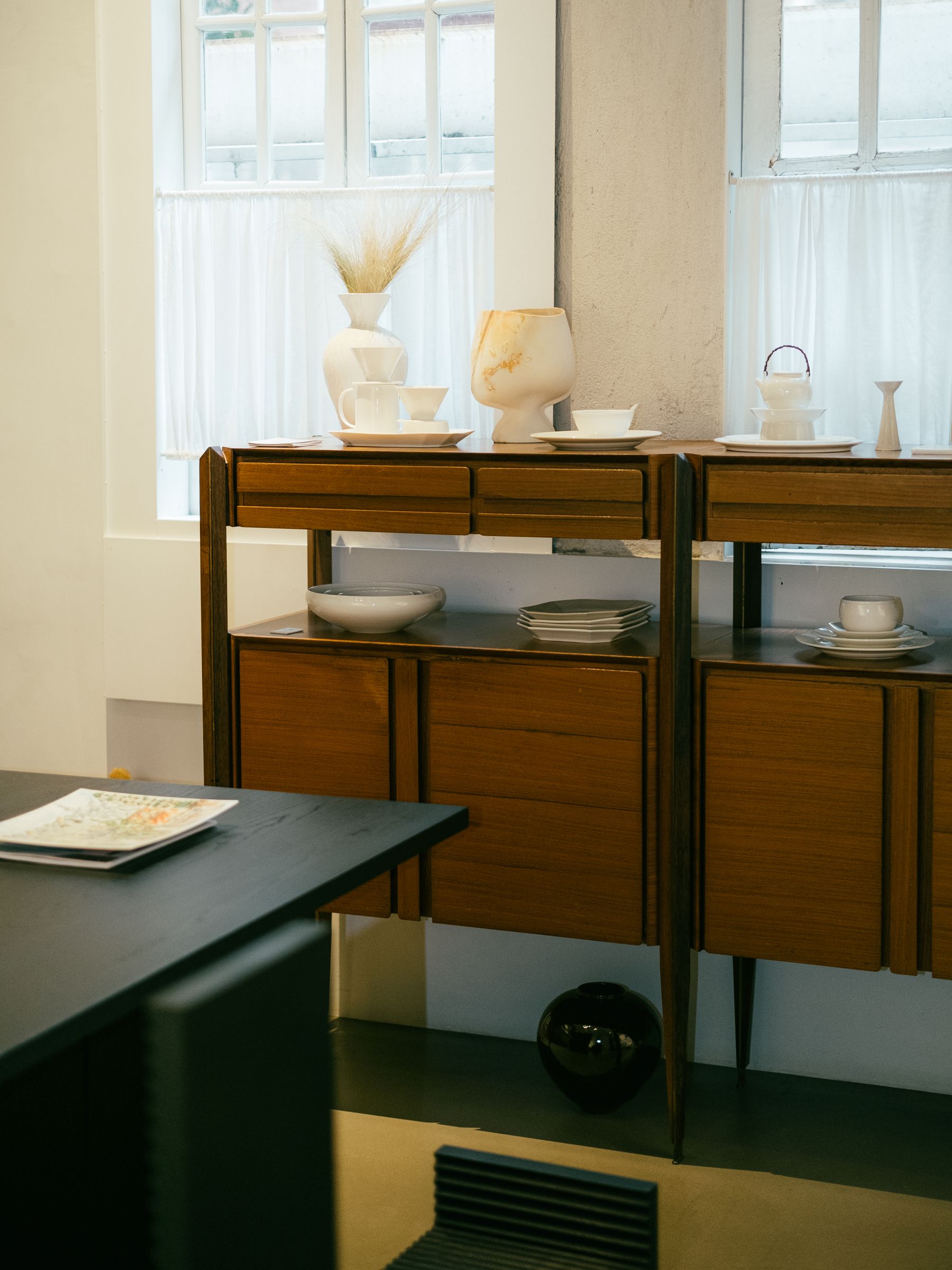
A sideboard or cabinet on slender legs can bring a lighter furniture silhouette into the dining end of the kitchen. Closed compartments keep packaging and occasional items out of sight, while a small amount of open display can hold tableware used often. Vintage storage can work beautifully, but measure shelf depth and door clearance before buying; attractive proportions do not guarantee useful capacity.
Keep a Small Kitchen's Materials Focused
A compact kitchen can suggest the style through a few strong relationships rather than a long list of period details. Choose one main wood surface, one worktop treatment and one expressive element such as a light or stool. Keep everything else close to that palette. Counter seating can work when there is enough room behind occupied stools; if there is not, a small separate table may be more practical.

Use Muted Green as a Softer Period Reference
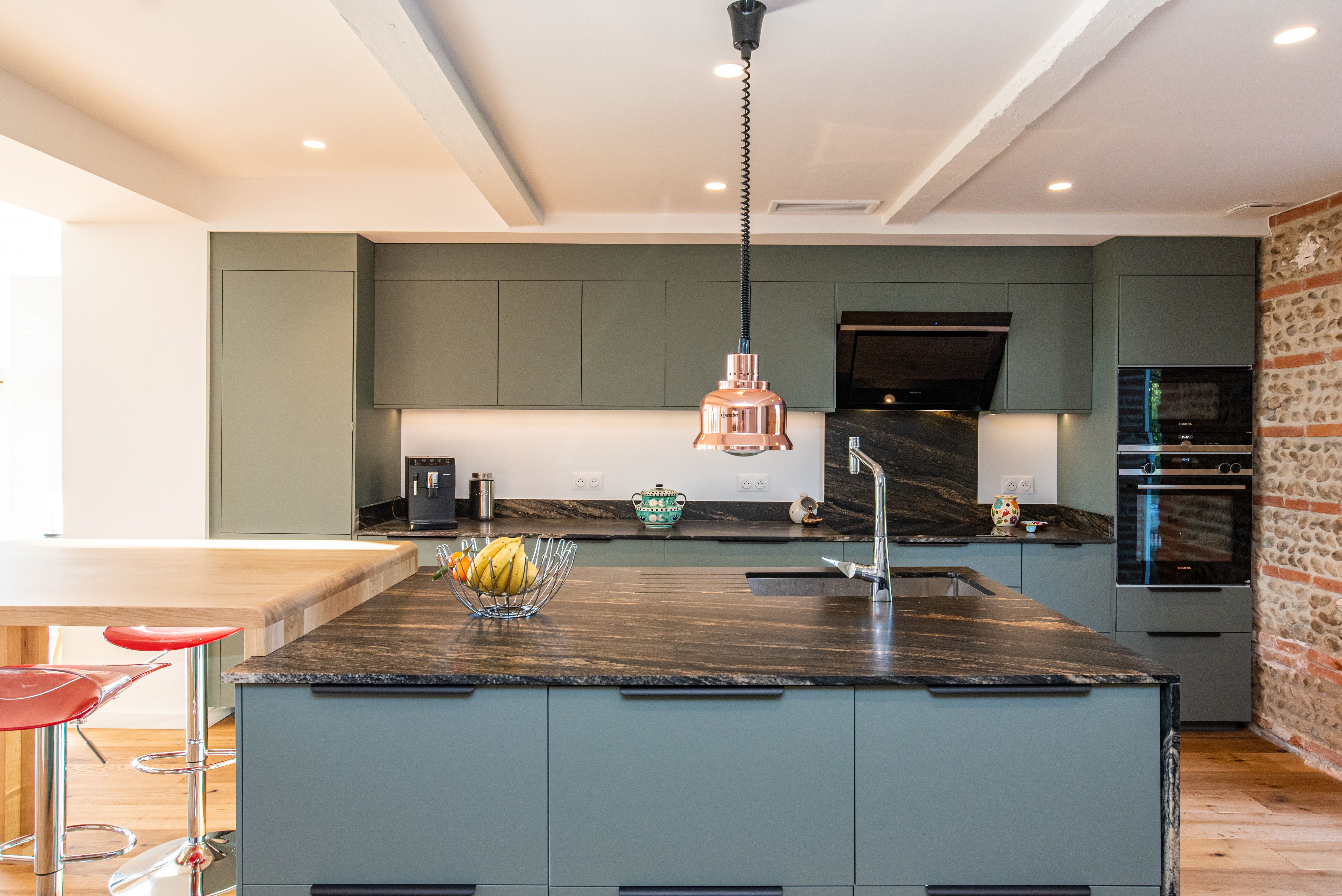
Muted green can reference mid-century palettes without making the kitchen feel overtly retro. Olive, moss and grey-green sit particularly well beside warm wood, pale stone and copper or brass. The color can cover one cabinet run or island while the rest of the room stays quieter. Because green shifts strongly with light, test the sample beside the timber and worktop before treating it as a neutral.
Keep Appliances Contemporary
A mid-century-inspired kitchen does not need retro-styled appliances. Contemporary ovens, refrigerators and ventilation can sit comfortably beside warm timber and simple cabinetry when their placement is visually controlled. Group larger appliances where possible and let the cabinet material, furniture and lighting carry the era reference. This usually ages better than making every piece of equipment imitate the past.
Use One Vintage Detail Instead of Recreating a Period Set
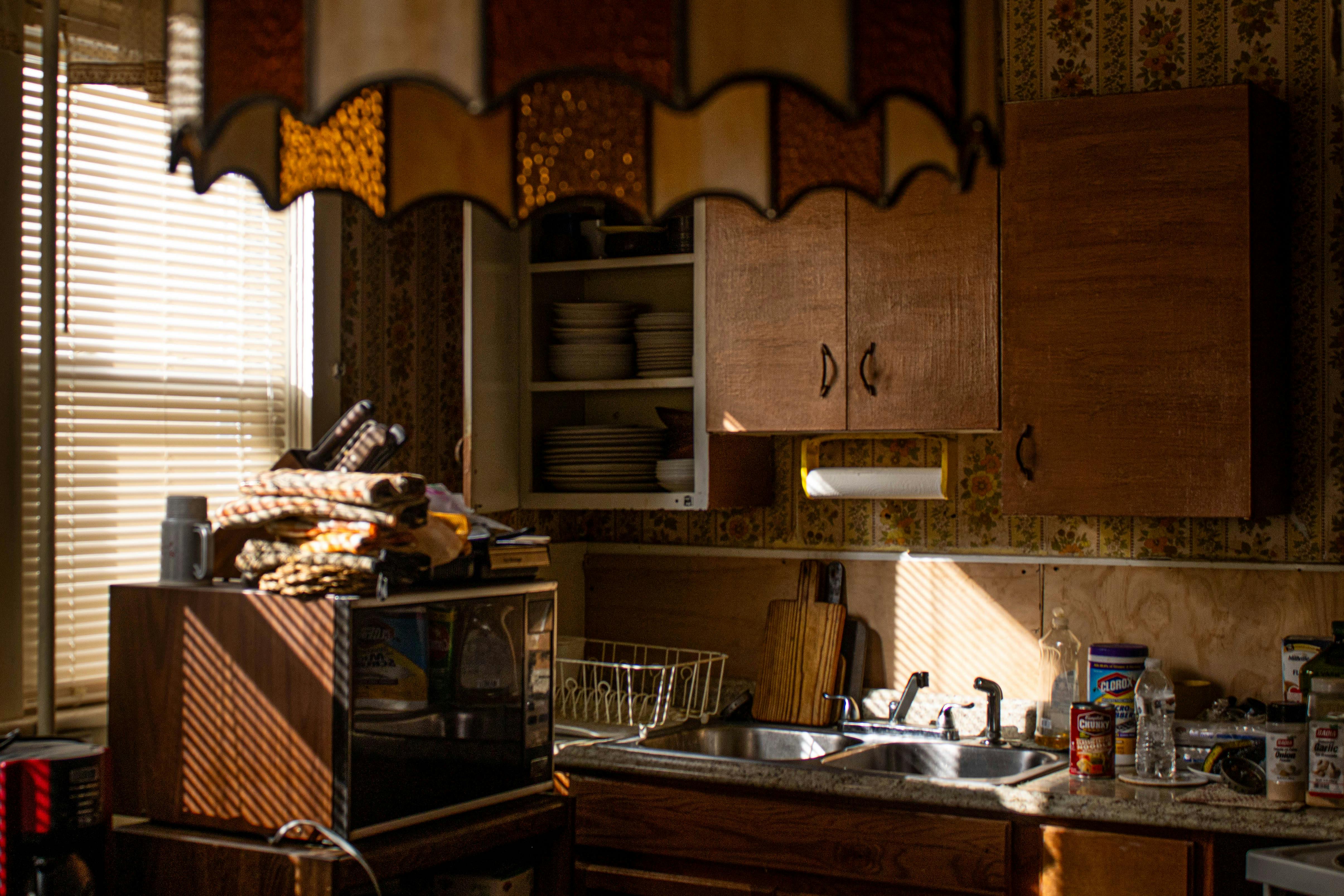
A vintage cabinet, scalloped shade, old stool or original wall finish can bring real character into an otherwise updated kitchen. The most convincing approach is selective: keep one or two older details visible and allow contemporary worktops, storage and appliances to remain functional. This creates tension between old and new rather than turning the room into a reproduction set.