Make a Gallery Wall Read as One Composition
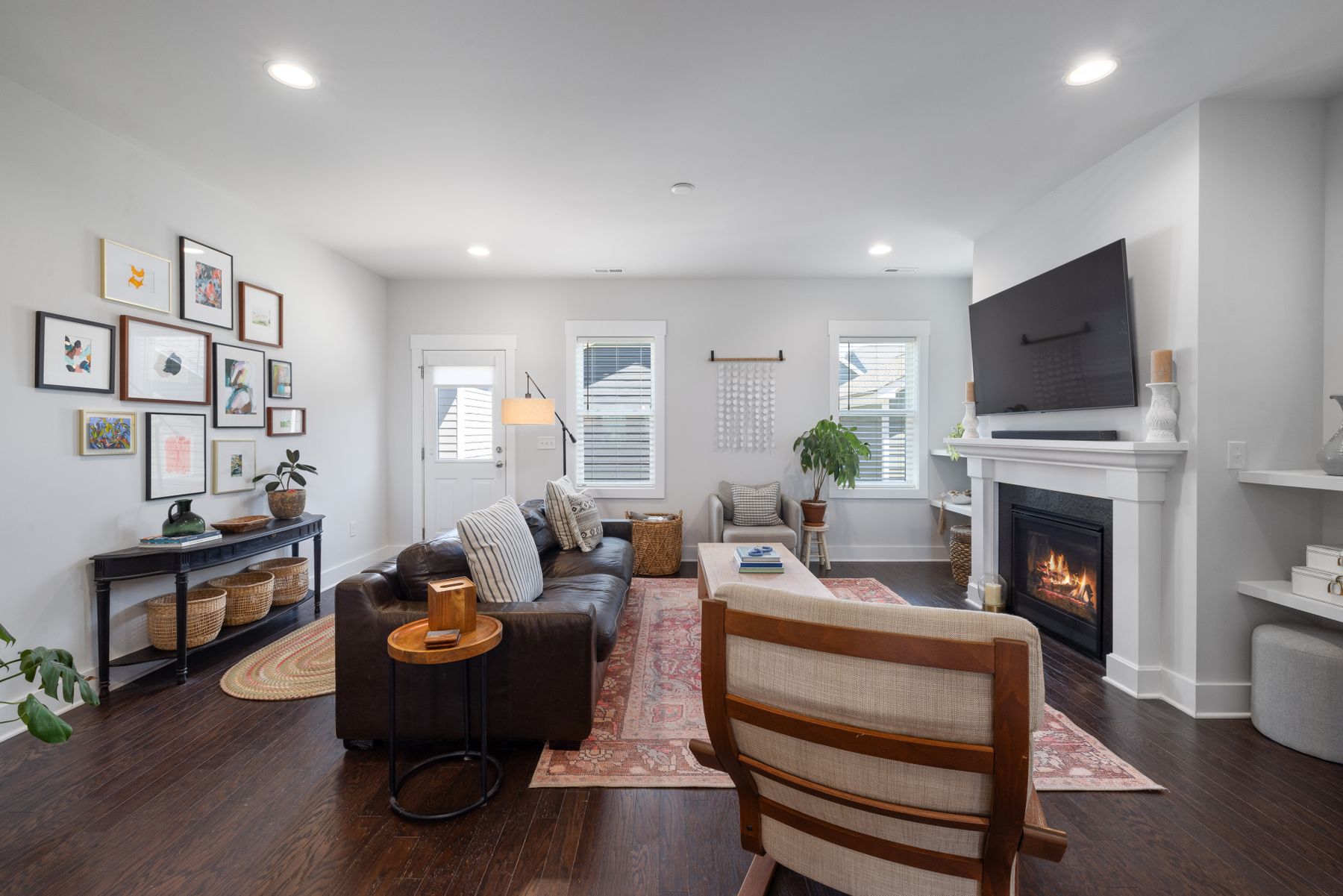
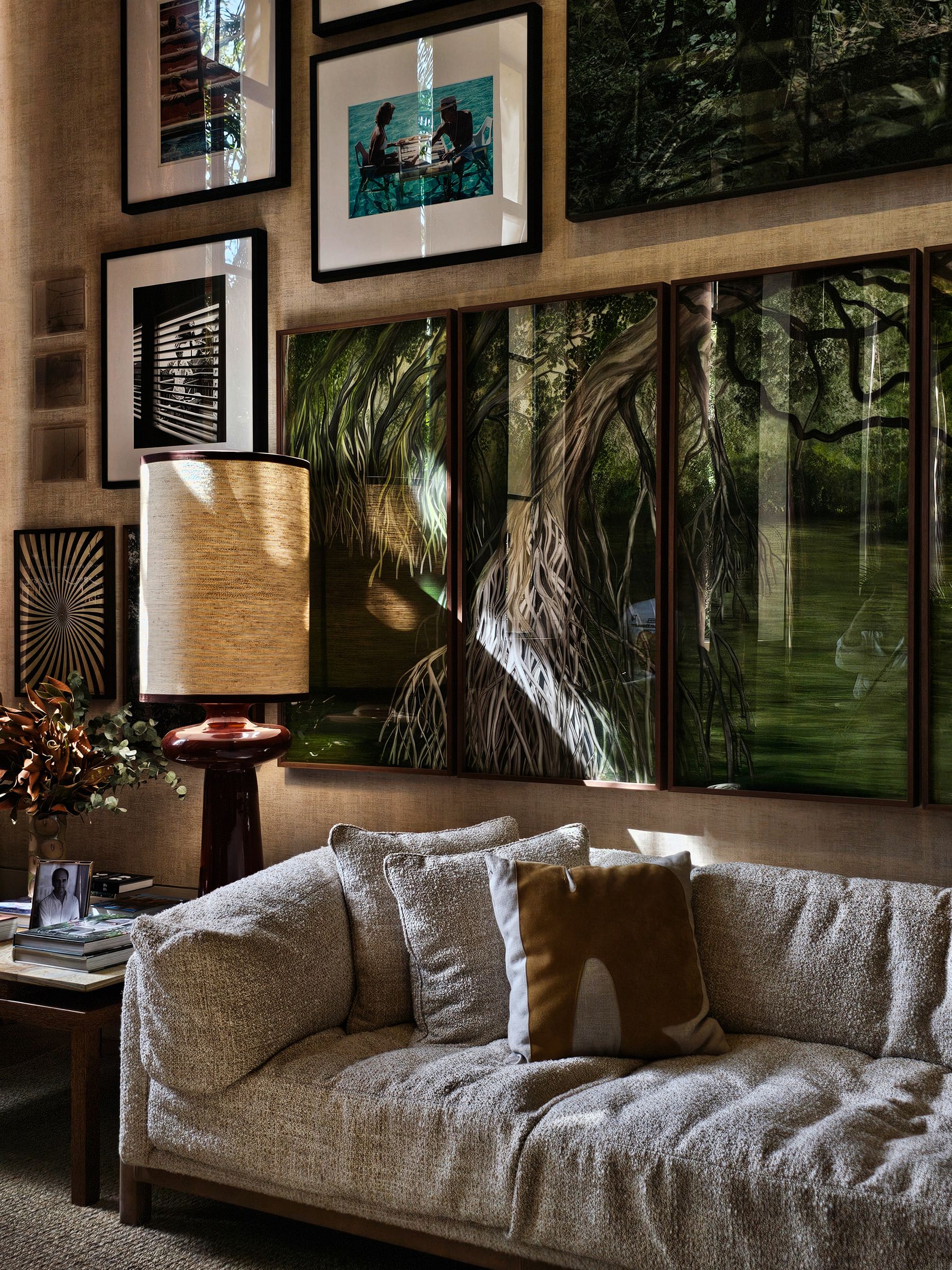
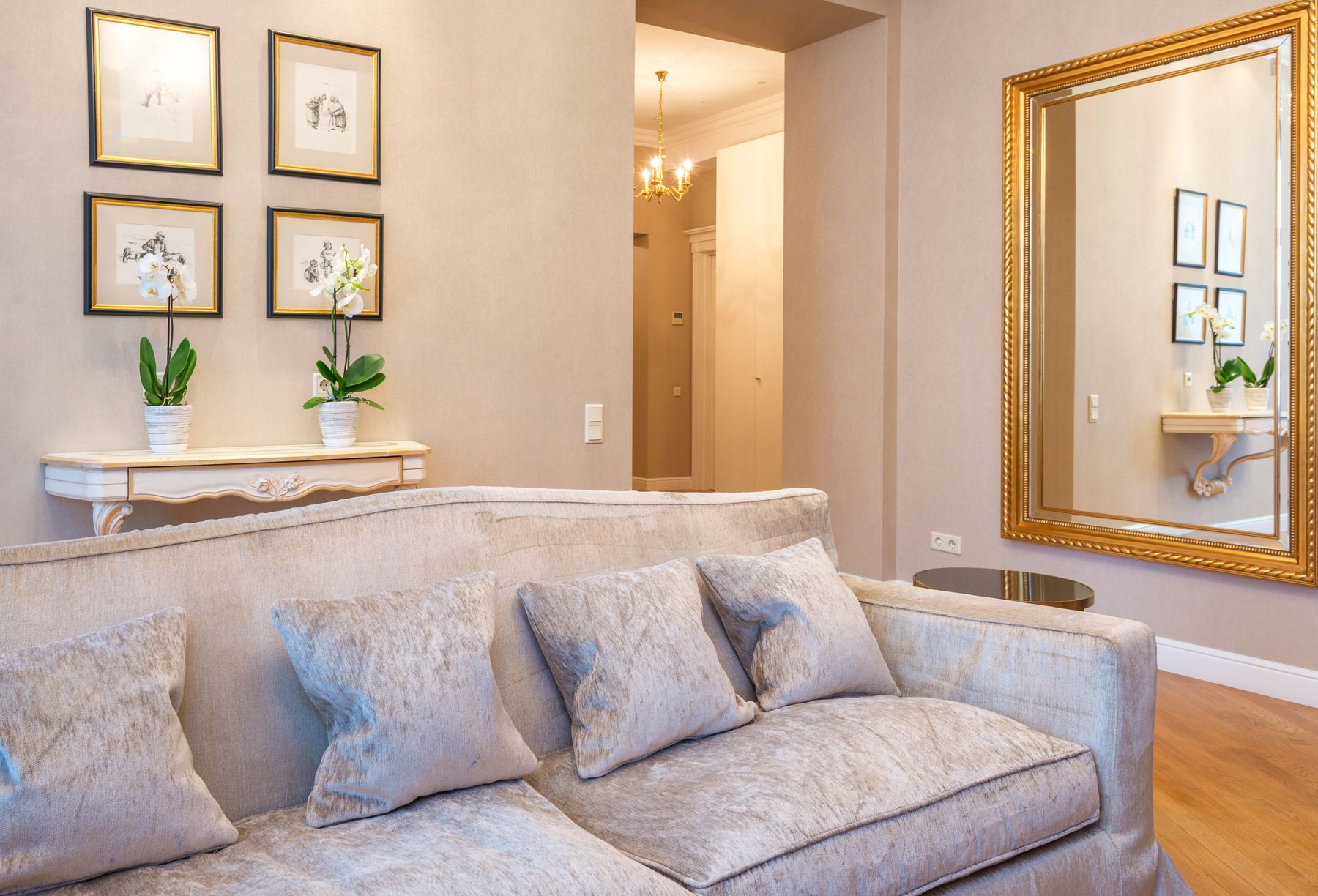
A gallery wall can combine photographs, prints and personal pieces without using matching frames. Give the group a clear overall shape related to the sofa or console beneath it, then adjust spacing so the eye can move between pieces. Lay the arrangement on the floor or make paper templates before putting holes in the wall. Leave room for the sofa back, lamps and anyone standing up; the display should belong to the seating zone rather than drift toward the ceiling.
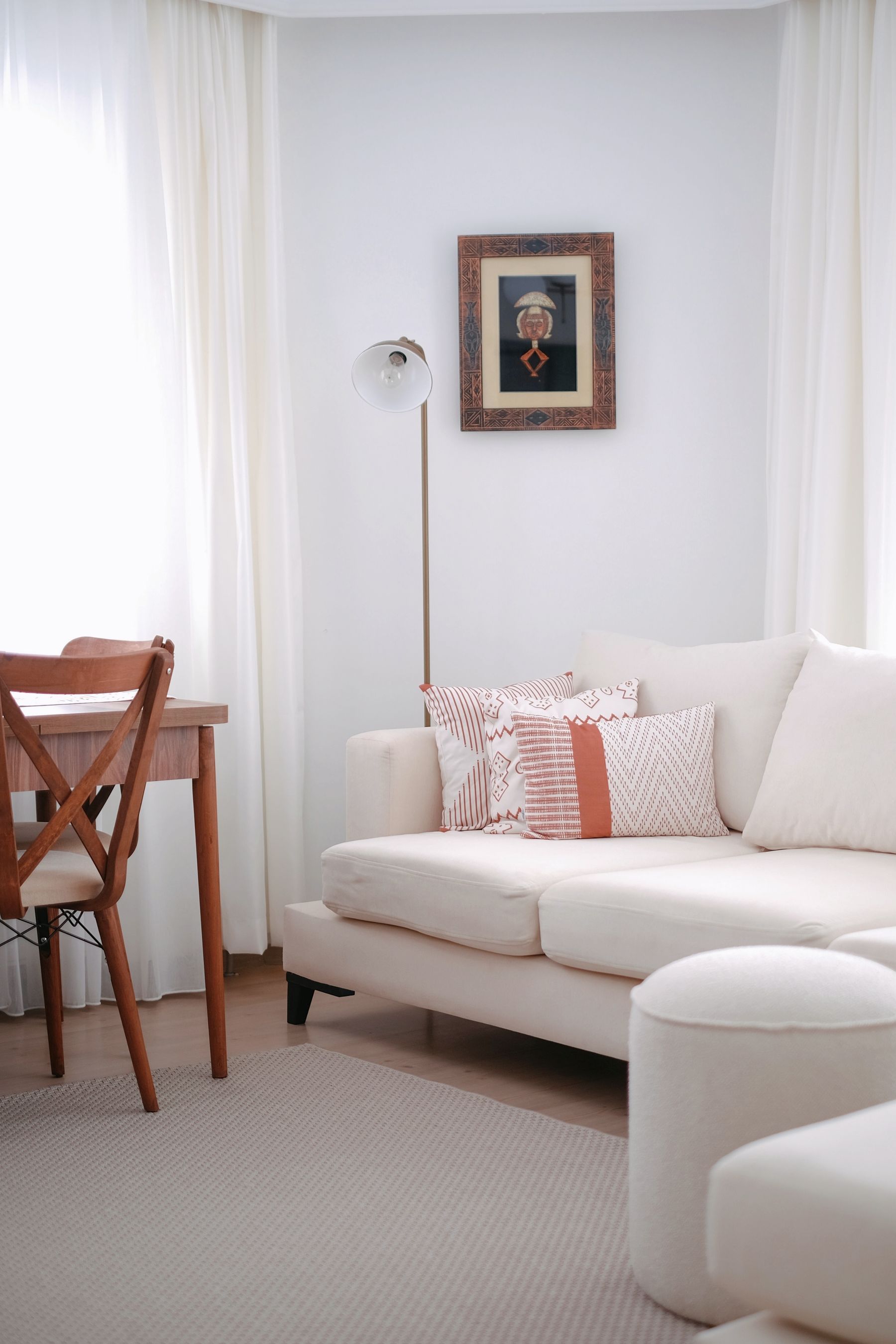
Let a Single Piece Have Enough Space
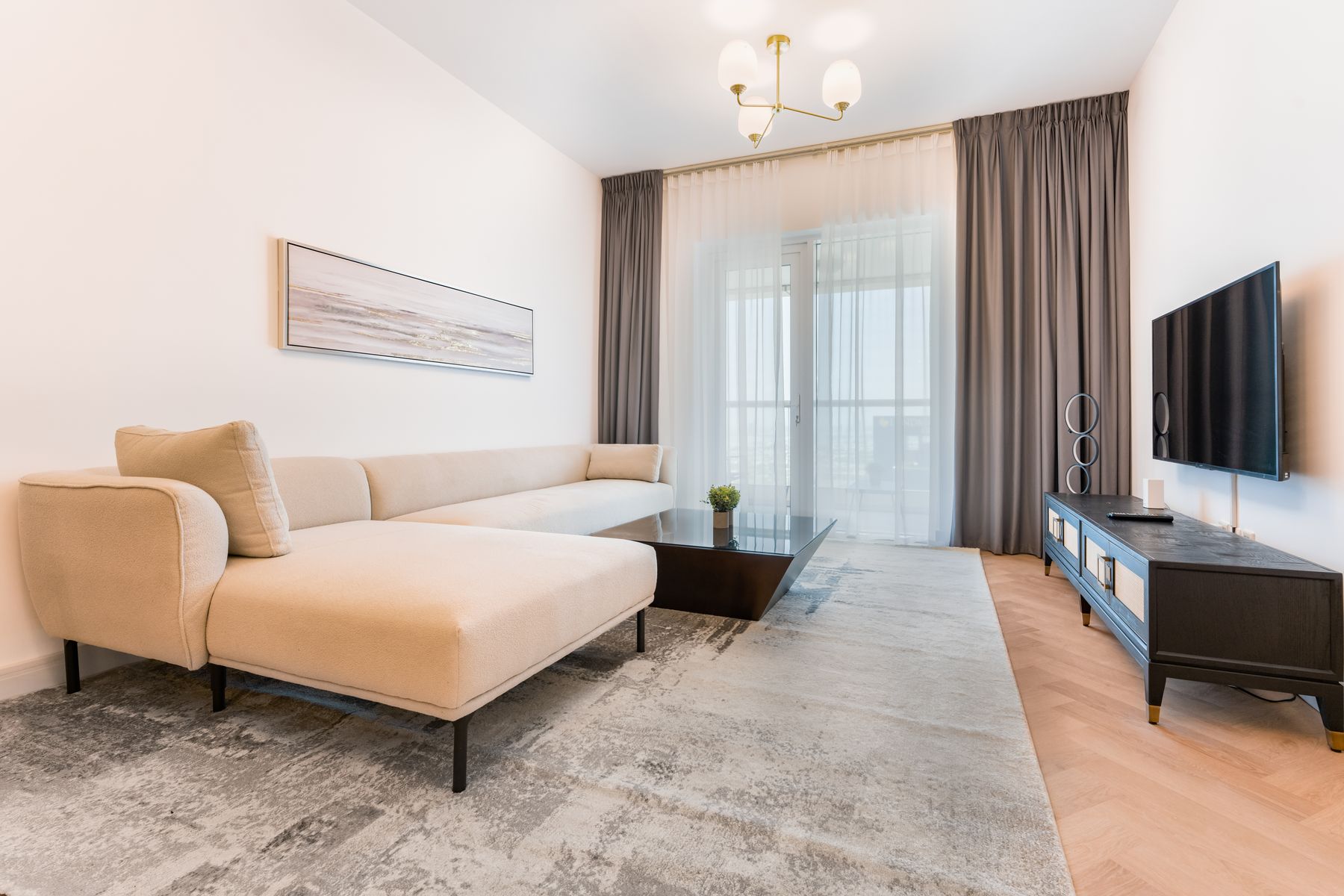
One large work, or a smaller work with generous negative space, can be more effective than several unrelated prints. Judge its scale against the furniture below and the wall edges rather than the frame in isolation. A floor lamp, curtain or nearby doorway already contributes to the composition. Check the seated viewing height and the artwork's surface under daylight and lamplight, especially if glass reflections will obscure it.
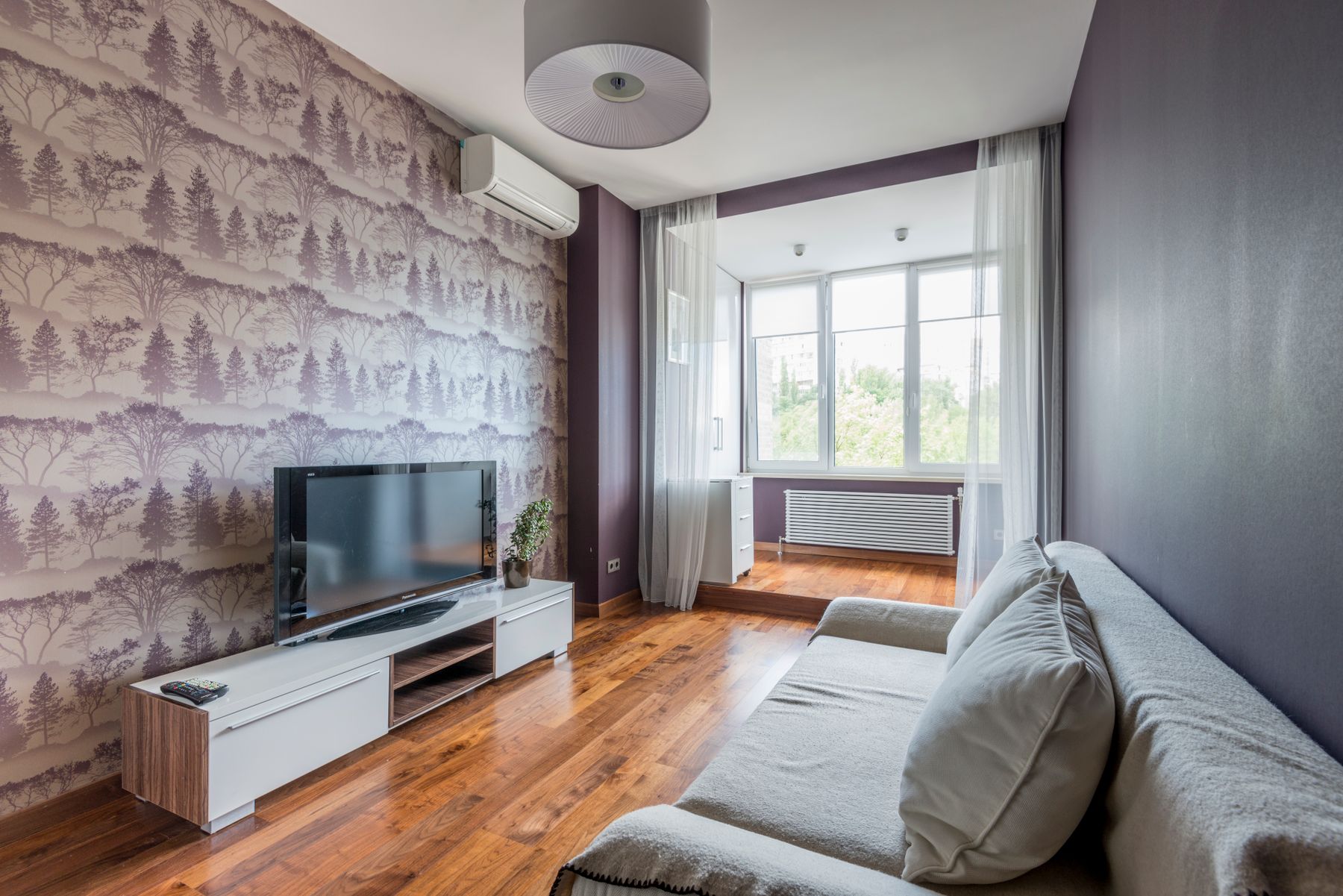
Use Wallpaper Where Pattern Has a Purpose
Wallpaper can soften a long wall or establish a focal zone, but pattern scale and contrast change how calm the room feels. In this room the tree motif sits behind the television, so the screen and pattern share attention. Test a large sample from the sofa and at several times of day. Confirm wall preparation and the material's removal or cleaning needs before committing, especially in a rental or a room used heavily by children or pets.
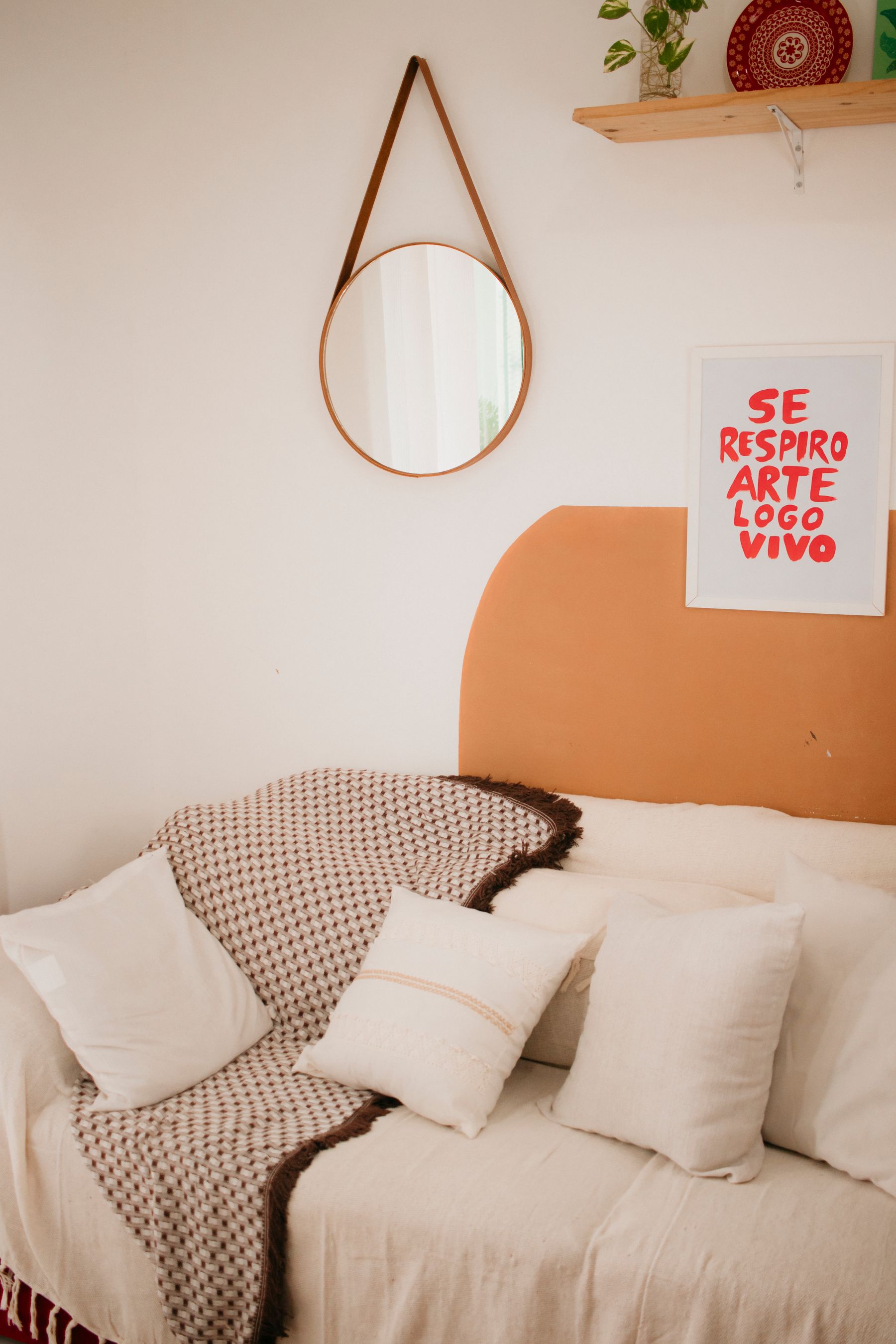
Paint a Defined Shape Instead of Another Entire Wall
A painted arch or block can give a sofa a visual anchor when a full dark accent wall would be too strong. Its edge should relate to the furniture rather than end at an arbitrary point. Consider how the color meets art, shelves and switches, and test the chosen paint in the room's actual light. A simple shape is relatively easy to revise, but a clean boundary still takes careful masking and a sound wall surface.
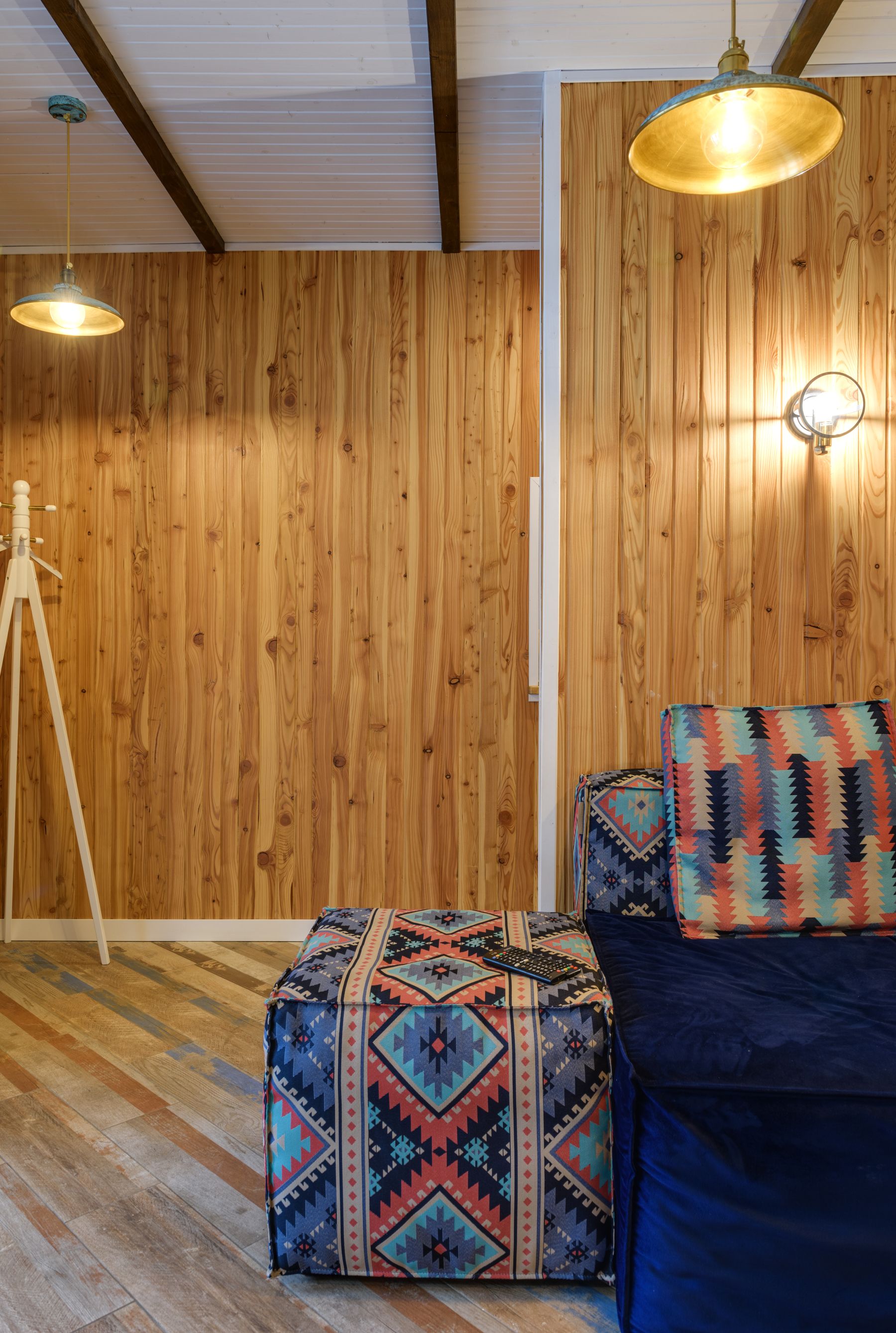
Bring Texture Through Paneling
Paneling can make a plain wall feel more architectural through grain, shadow and repeated lines. Decide whether it should cover the whole surface or stop at a purposeful boundary, such as a seating niche. Wood tone and joint spacing can change the apparent width or height of the room; view a real sample beside the floor and upholstery. For a permanent installation, plan outlets, wall condition, fixing method and any required clearances before panels are cut.
Place a Mirror for the View It Reflects
A mirror is most useful when it returns daylight, a pleasing view or a sense of depth from the positions people use. Check what it reflects at eye level from the sofa and entry; a television, cluttered shelf or direct lamp glare may become more prominent. Give the frame enough wall area to sit comfortably beside art or architecture. Use a fixing method suited to the mirror's weight and the actual wall material.
Combine Closed Storage With One Display Niche
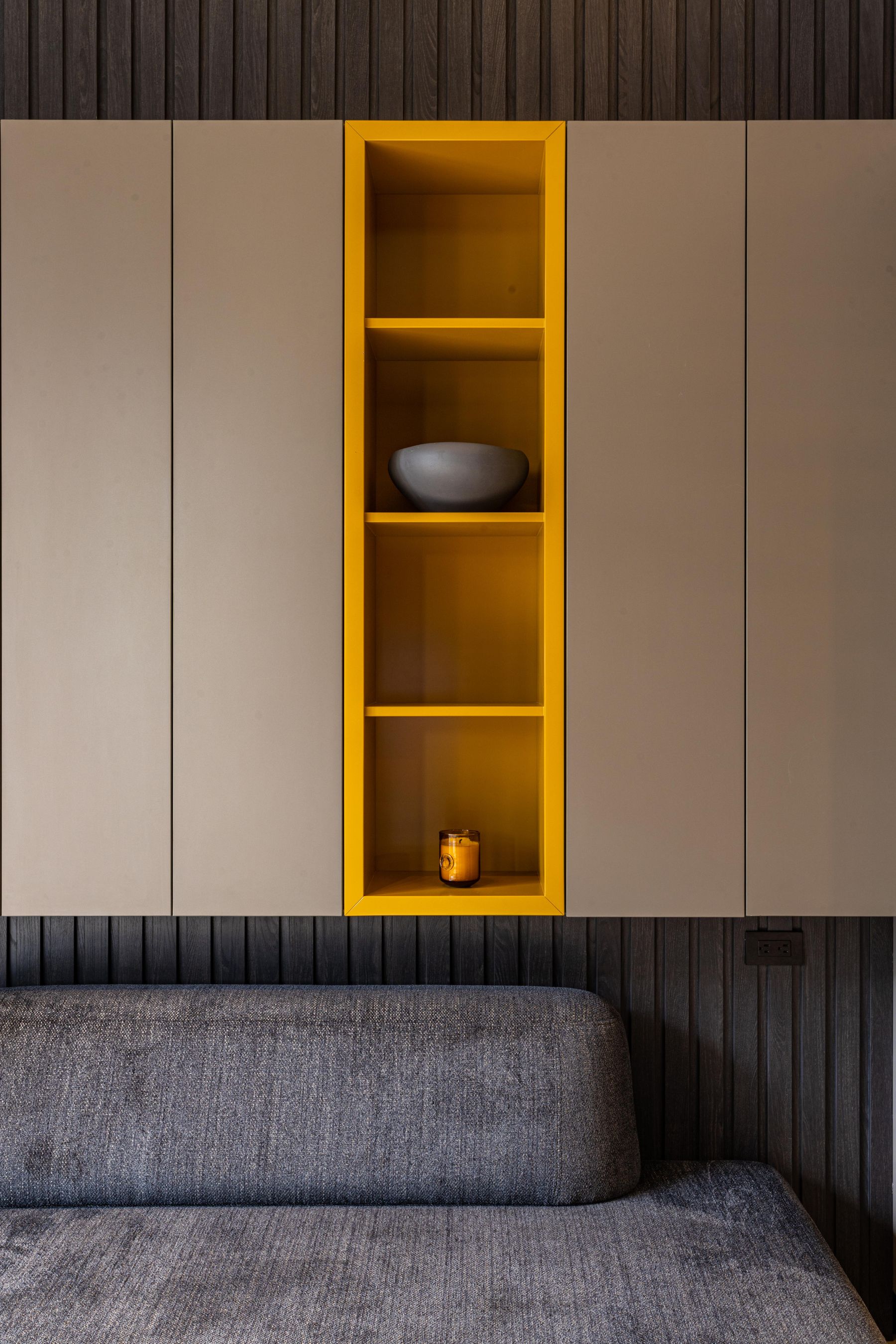
Wall-mounted storage can free floor space and give small objects a home, but it should be sized to the actual books, games or equipment the room holds. Combining closed doors with one open niche makes the display more deliberate than a scatter of small shelves. Check head clearance over the sofa, how doors open and the wall's capacity for the intended load. Shelves are useful only when their contents can be reached and maintained.
Let an Architectural Feature Lead
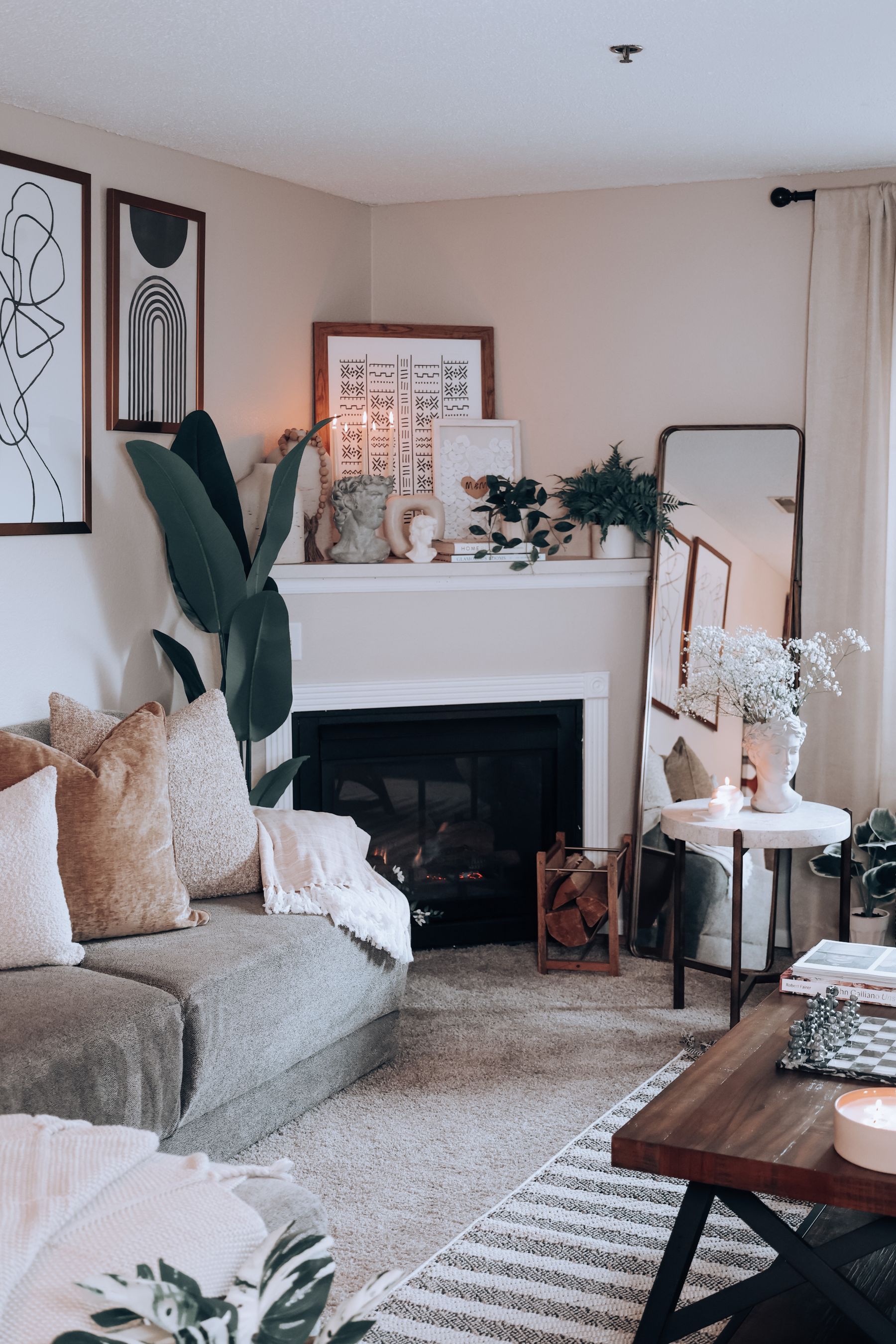
A fireplace, deep alcove or strong molding may already give the room its focal wall. Work with its proportions before adding a second bold wallpaper or gallery treatment nearby. Keep art and objects related to the feature while preserving their own breathing room. If a fireplace is active, follow the specific appliance and material requirements for heat and clearances; a styled photograph does not establish safe placement.