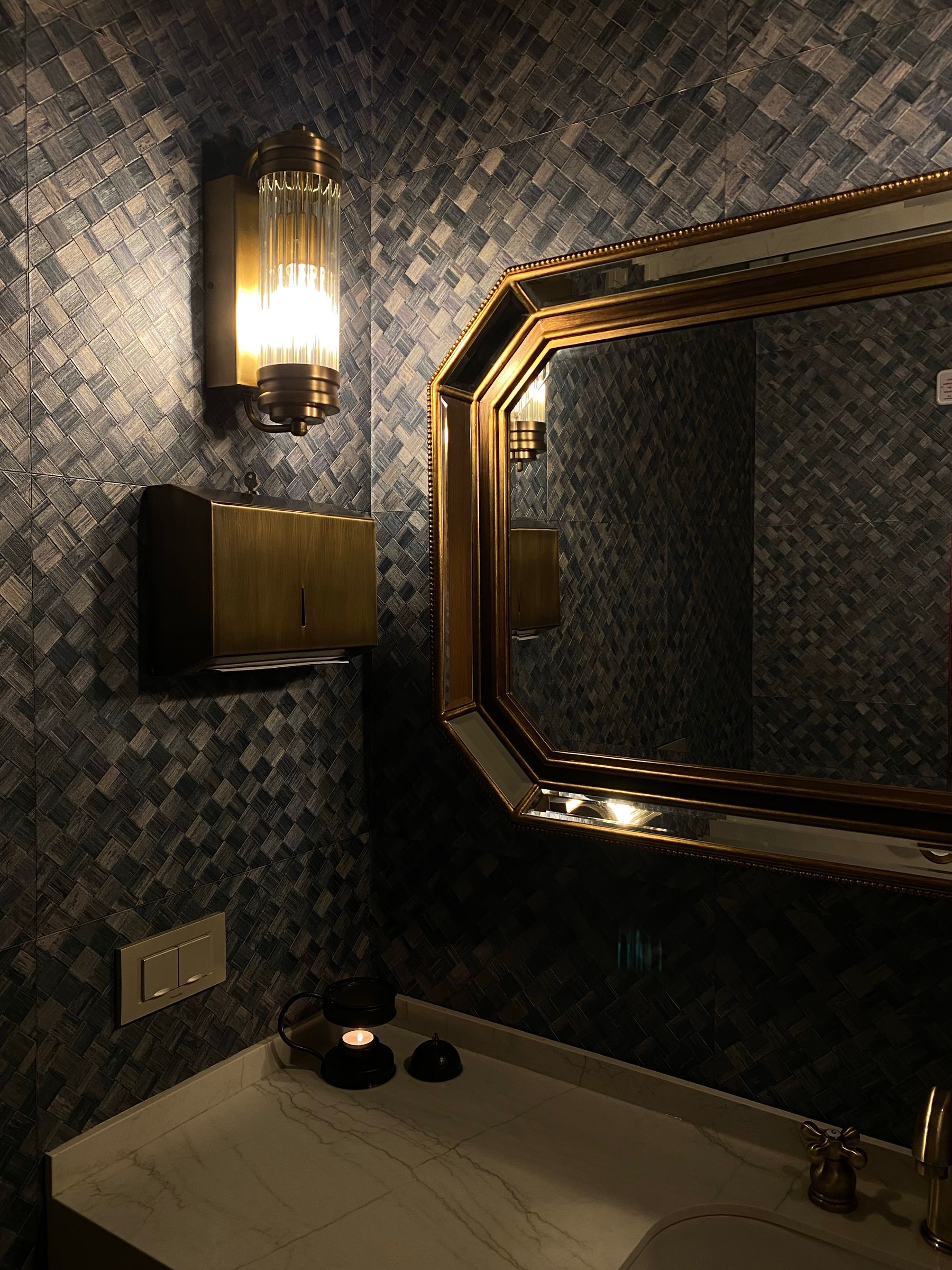
Start With One Geometric Surface
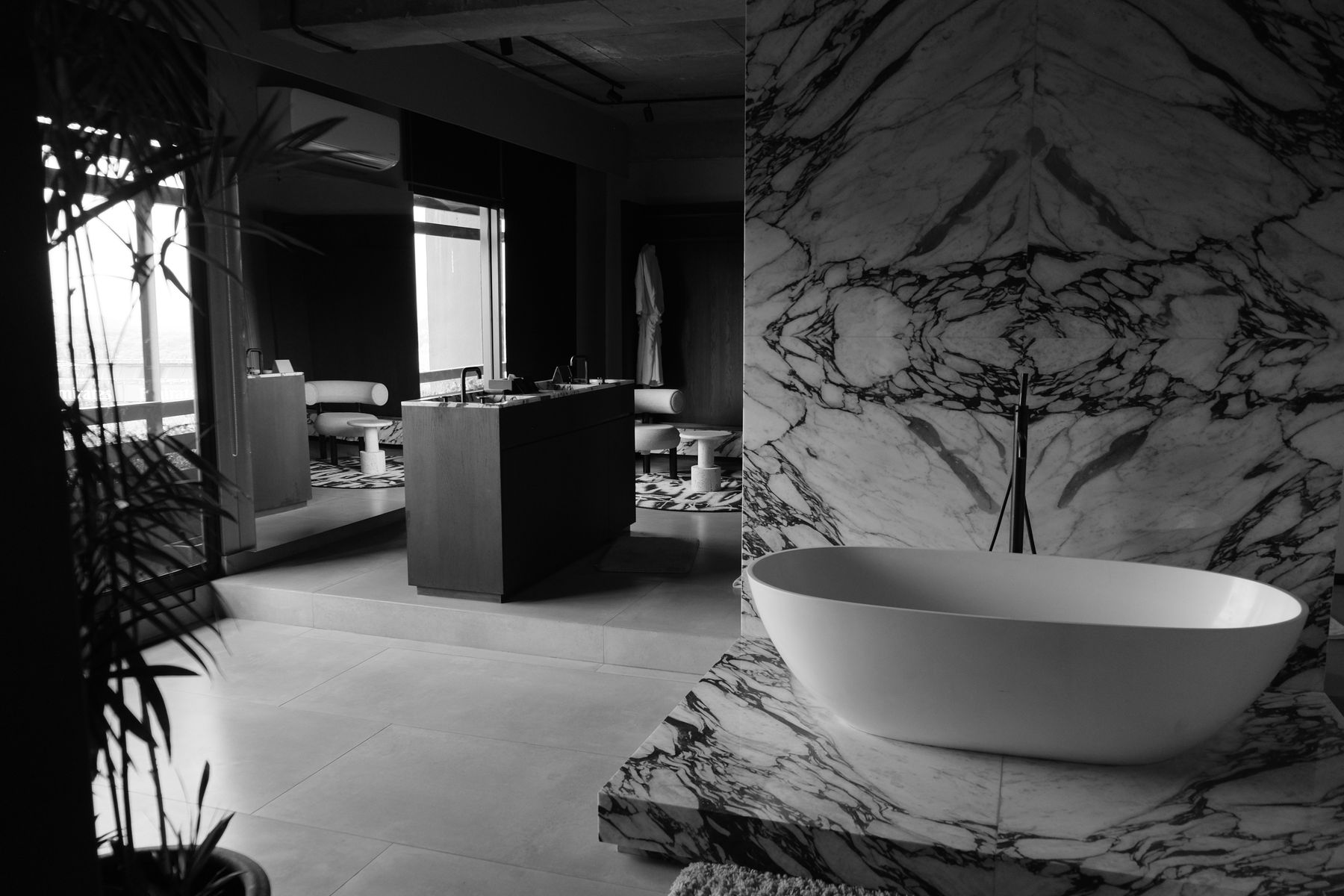
Geometry is one of the clearest Art Deco references, but it works best when concentrated. Use a patterned floor, vanity wall or shower surface as the main graphic field and keep adjacent planes quieter. A strong motif needs enough uninterrupted area to read clearly; repeating different patterns around every fixture usually weakens the effect.
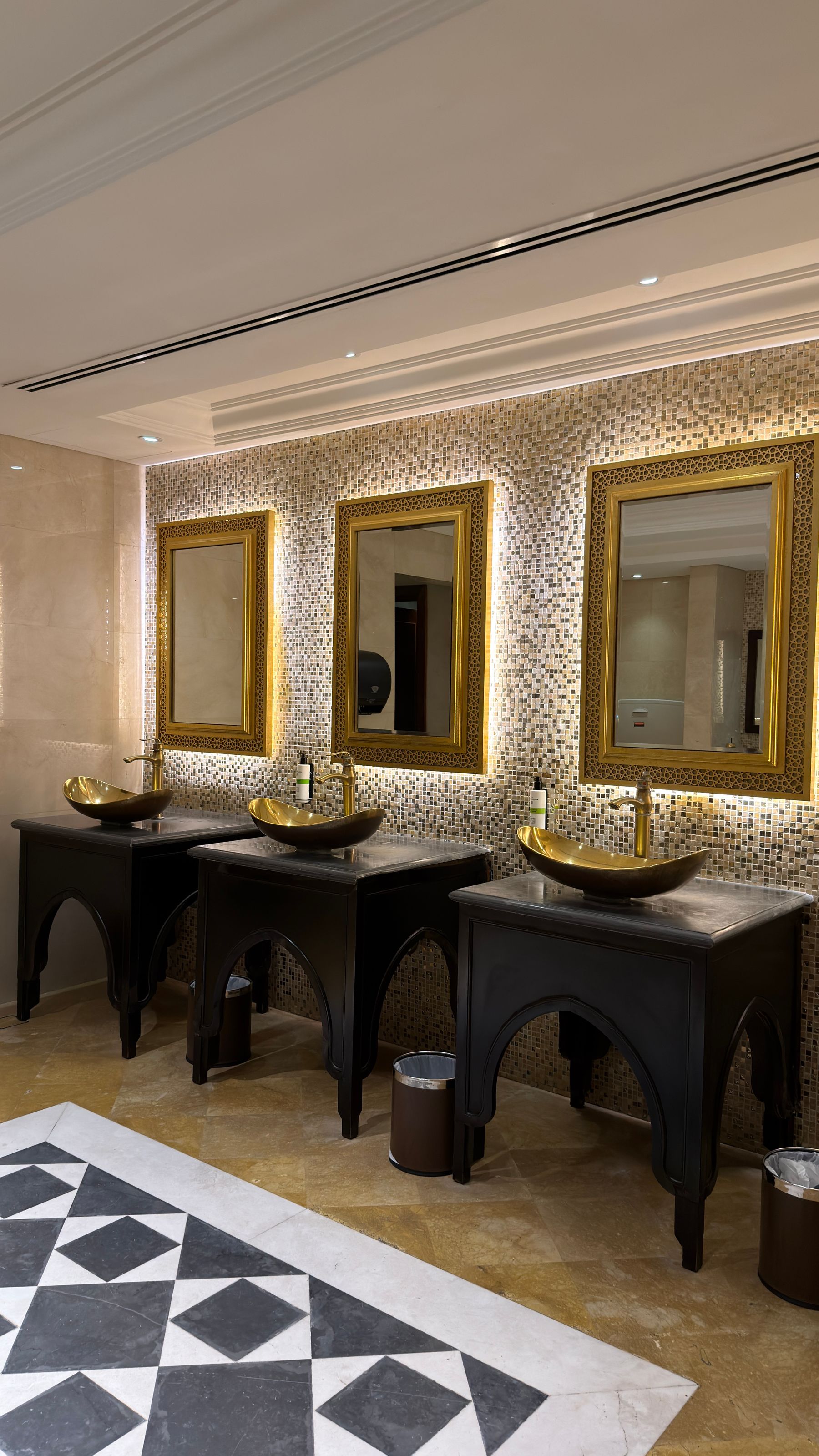
Use Symmetry at the Vanity
Paired sinks, repeated mirrors and balanced lighting can create the formal rhythm associated with Art Deco interiors. Symmetry should still serve the users and available wall width, so do not force equal spacing where plumbing or storage becomes awkward. When the main vanity elevation is balanced, smaller decorative details can be simpler.
Pair Black With Warm Metal Selectively
Black and gold are an easy shorthand for Deco, but the combination feels more refined when black occupies a clear object or plane and metal appears as a highlight. Dark sinks, a black vanity or a patterned floor can provide depth while gold or brass marks the mirrors and fixtures. Avoid turning every hinge, drain and accessory into a decorative metallic accent.
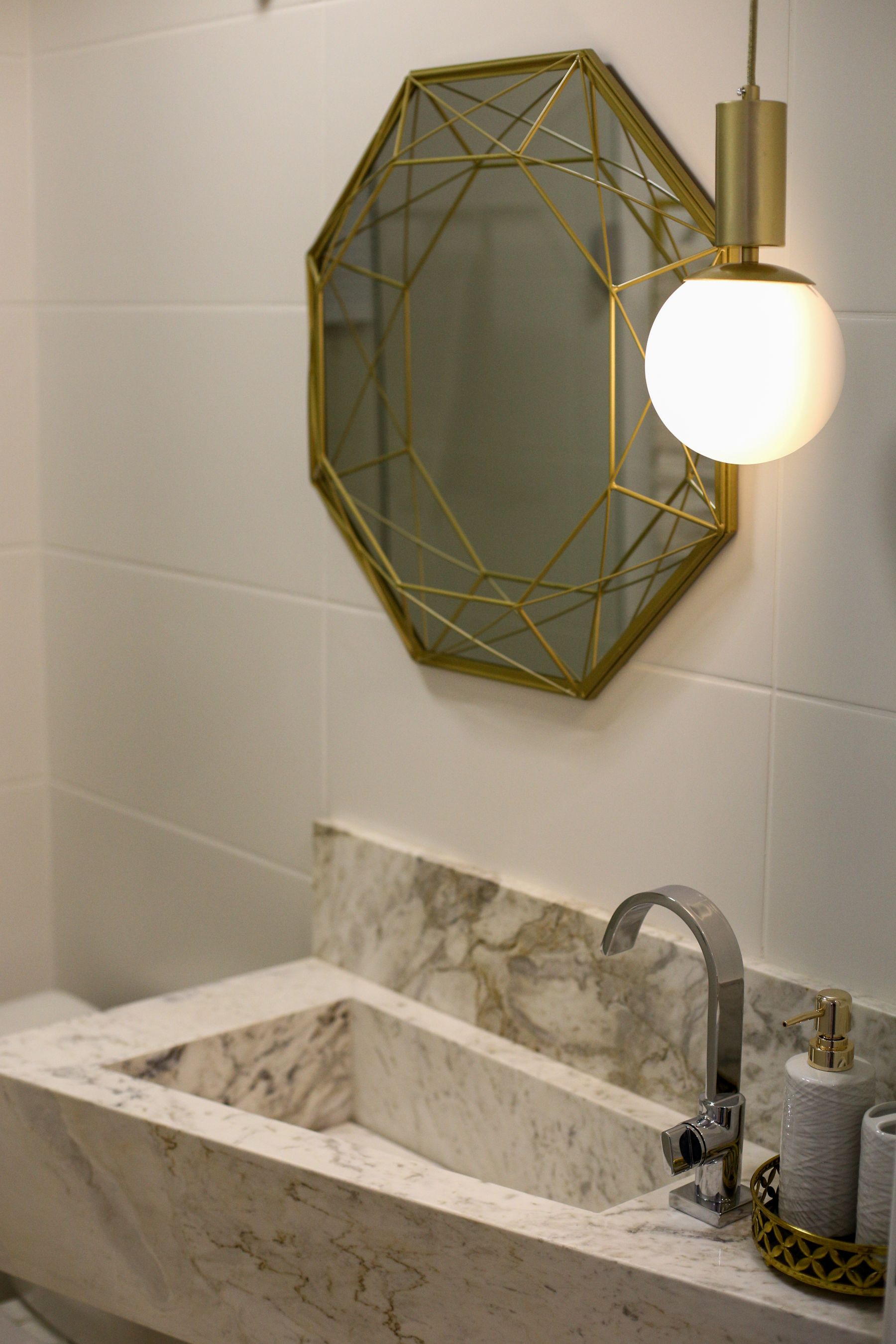
Let the Mirror Carry the Shape
A geometric, faceted or unusually shaped mirror can introduce Deco character without changing every permanent finish. It works particularly well above a simpler marble or stone basin because the frame becomes the decorative line. If the mirror is visually complex, keep the surrounding lighting and tile quieter.
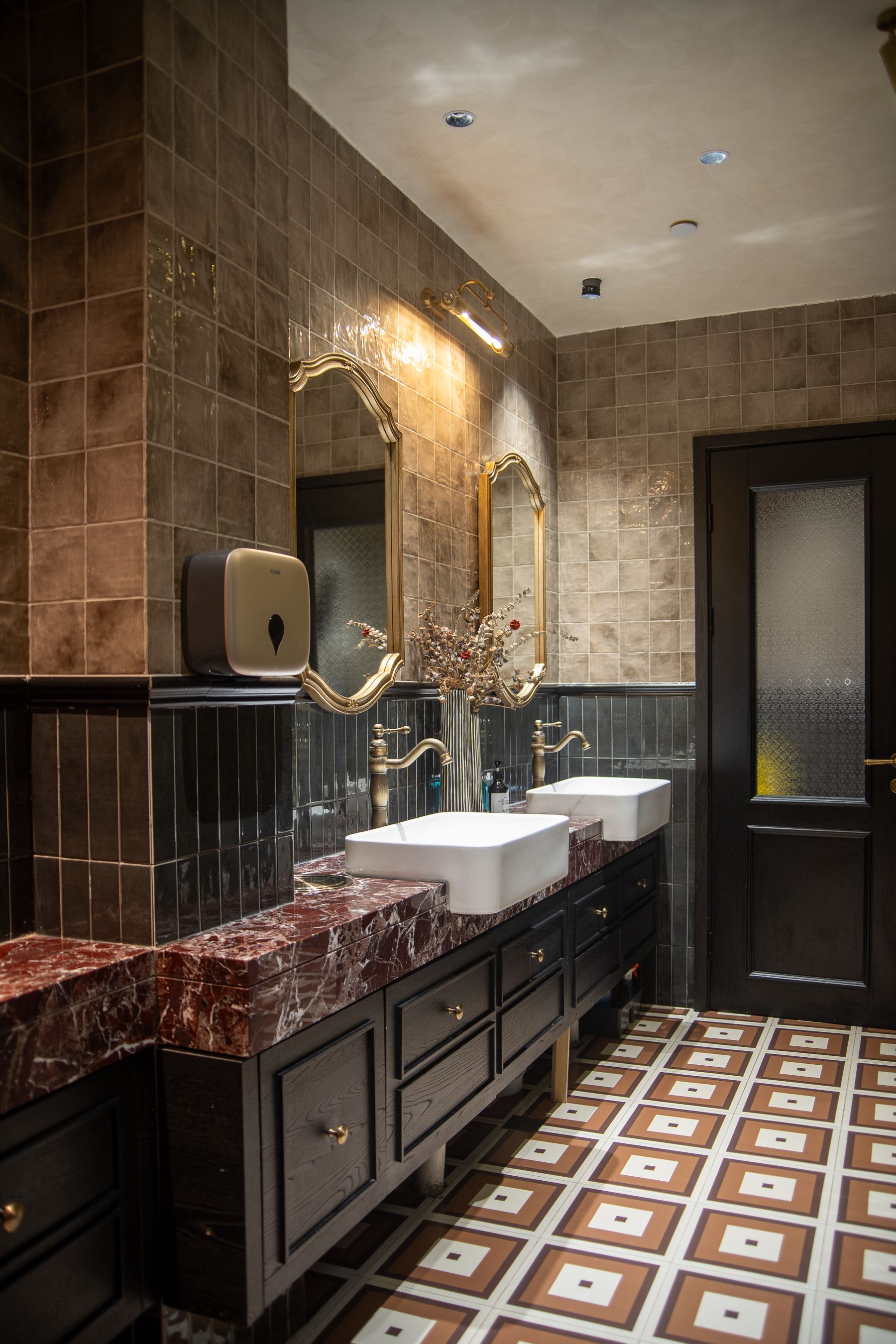
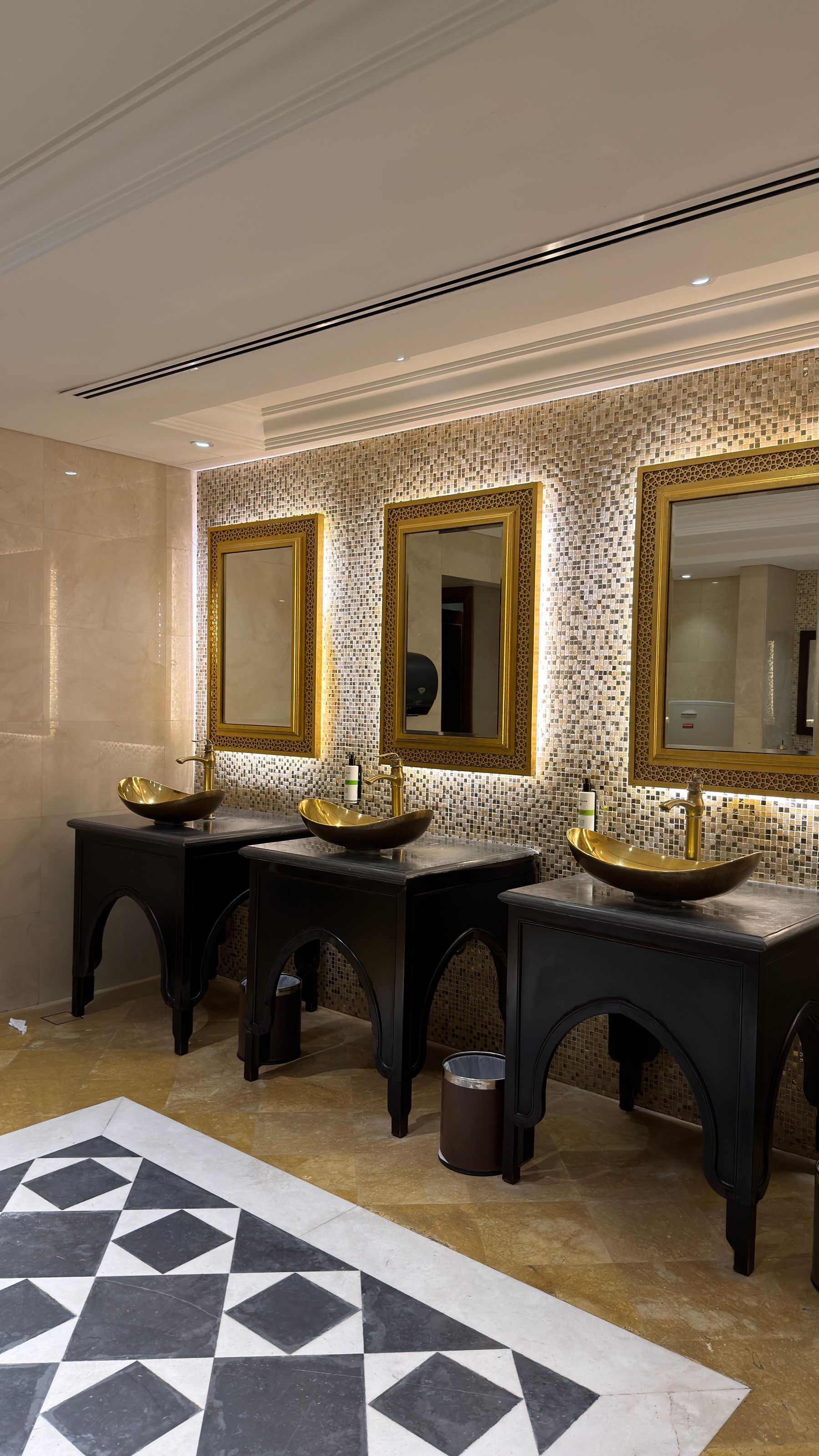
Repeat Mirror Shapes for Rhythm
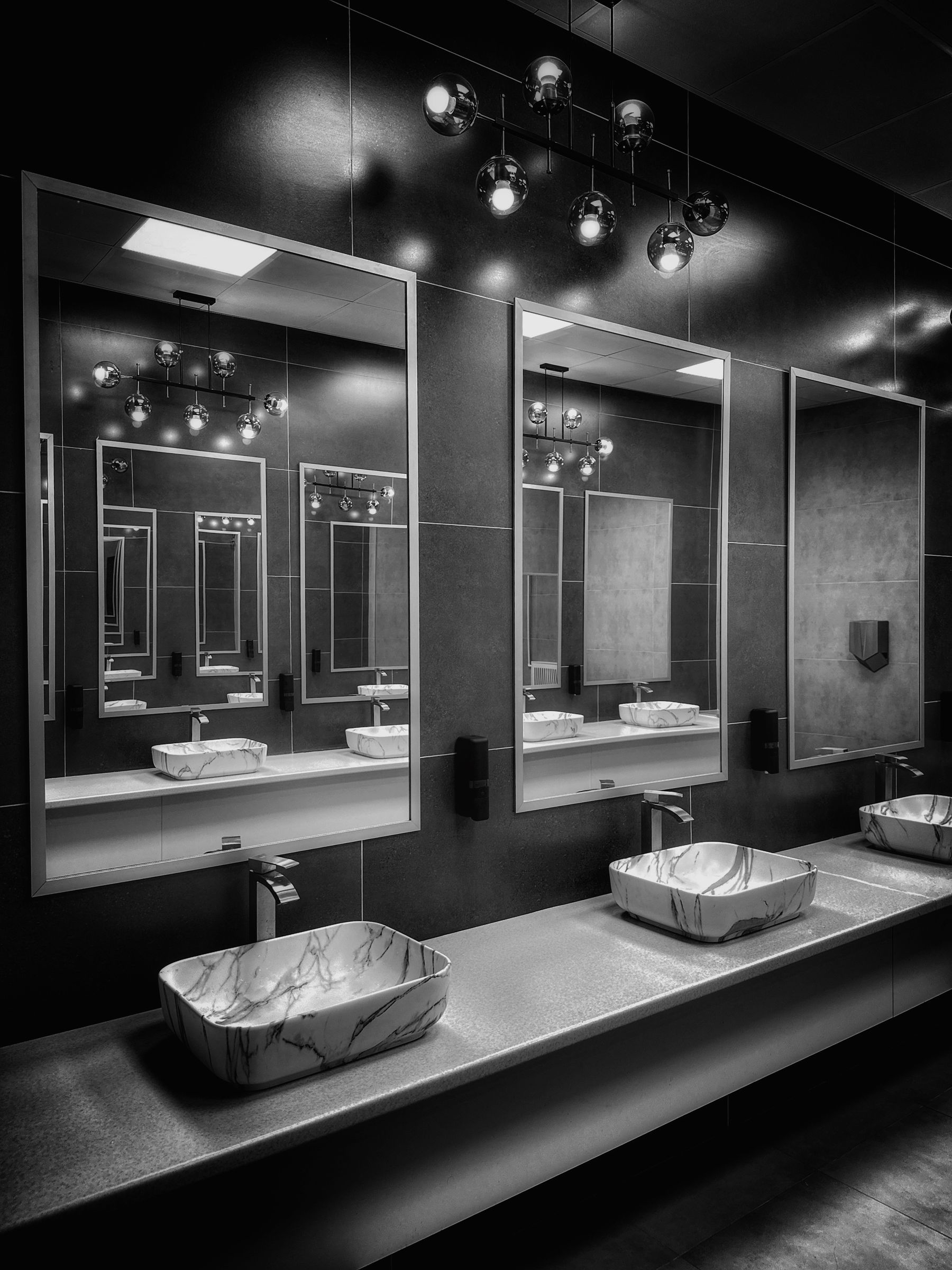
Repeated mirrors can create the ordered rhythm associated with Deco interiors, especially over a double vanity. Keep the spacing consistent and let lighting reinforce the repetition rather than interrupt it. Marble and brass can support the composition, but the mirror sequence should remain the clearest organizing device.
Concentrate Ornament Around One Focal Point
Art Deco can accommodate ornament, but the room becomes more sophisticated when the decorative intensity is concentrated. An ornate mirror, metallic faucet and expressive light can work together at the vanity while the floor and other walls stay calmer. This hierarchy prevents the bathroom from reading as a collection of unrelated glamour cues.
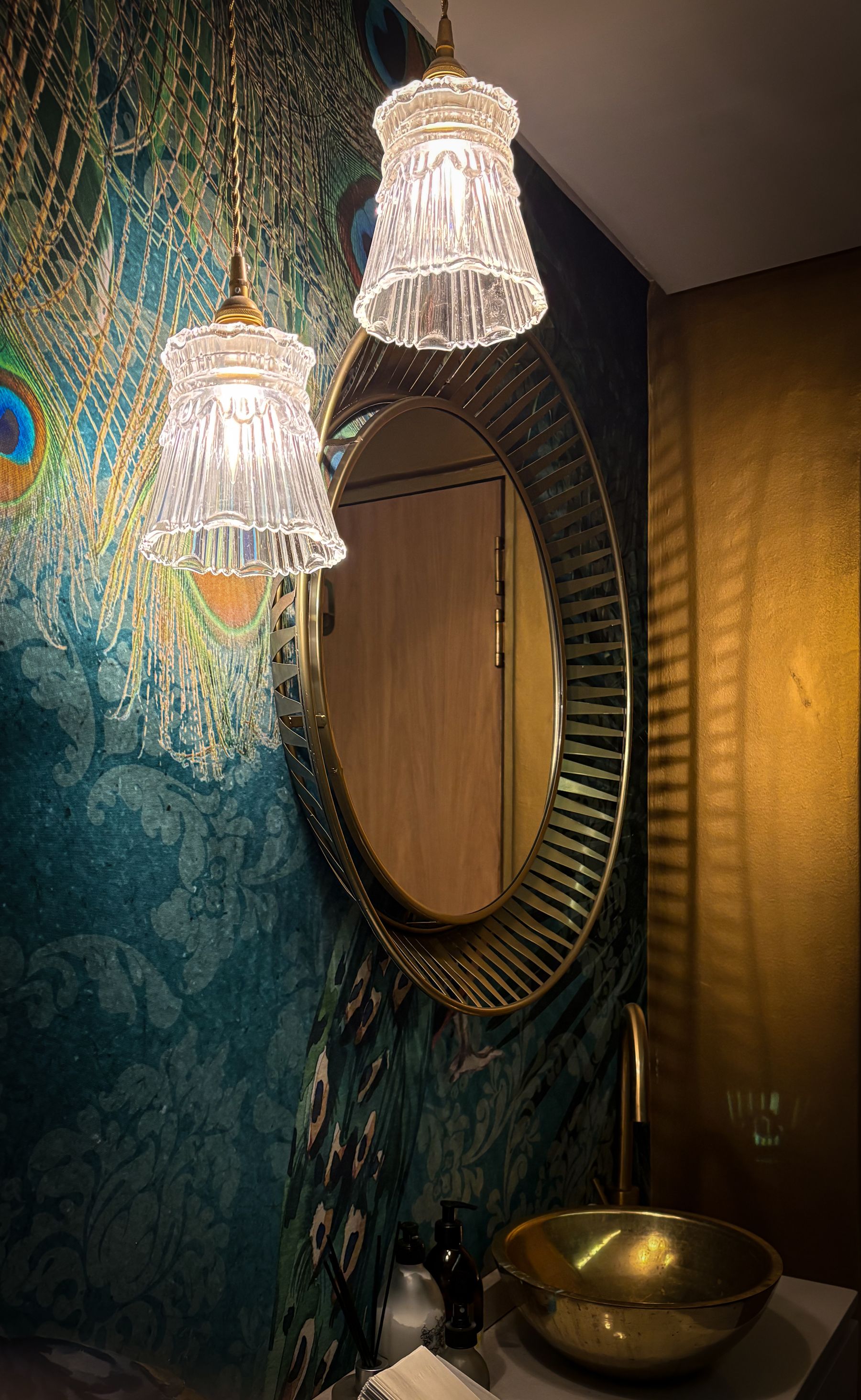
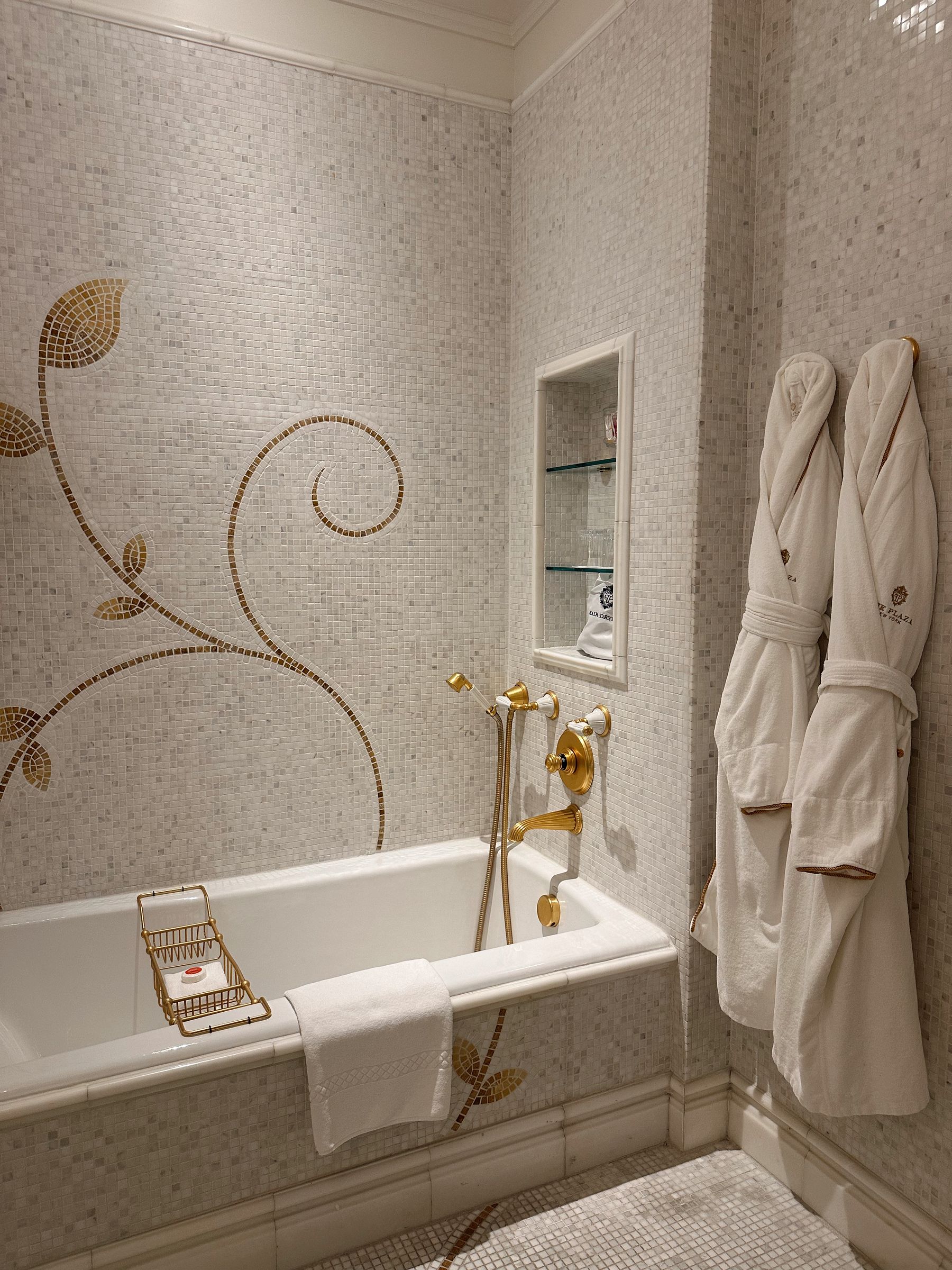
Use Mosaic as a Fine-Grain Pattern
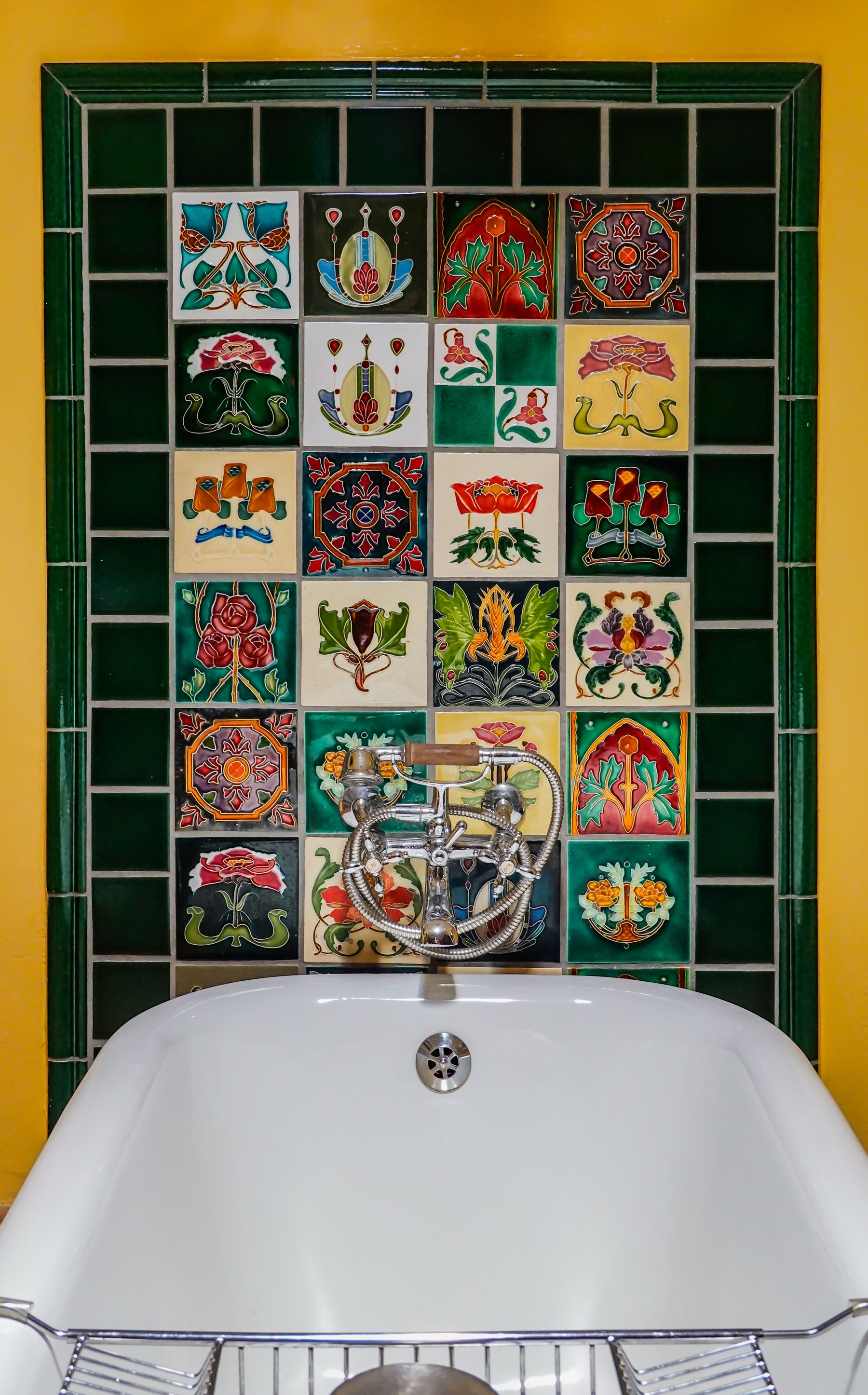
Mosaic can reference the fine-grain geometry and decorative surfaces associated with Art Deco, particularly around a bath or vanity. Because small tile introduces more grout lines, it should be placed where cleaning and maintenance remain realistic. Pair detailed mosaic with larger, quieter surfaces so the room has a clear visual scale hierarchy.
Use Monochrome Geometry for a Cleaner Deco Route
A black-and-white palette can create a crisp Deco reference without relying on gold or saturated color. Decorative tile around a mirror, border or floor can provide the geometry while white sanitaryware keeps the room bright. Strong contrast makes alignment especially visible, so tile transitions and grout planning matter.
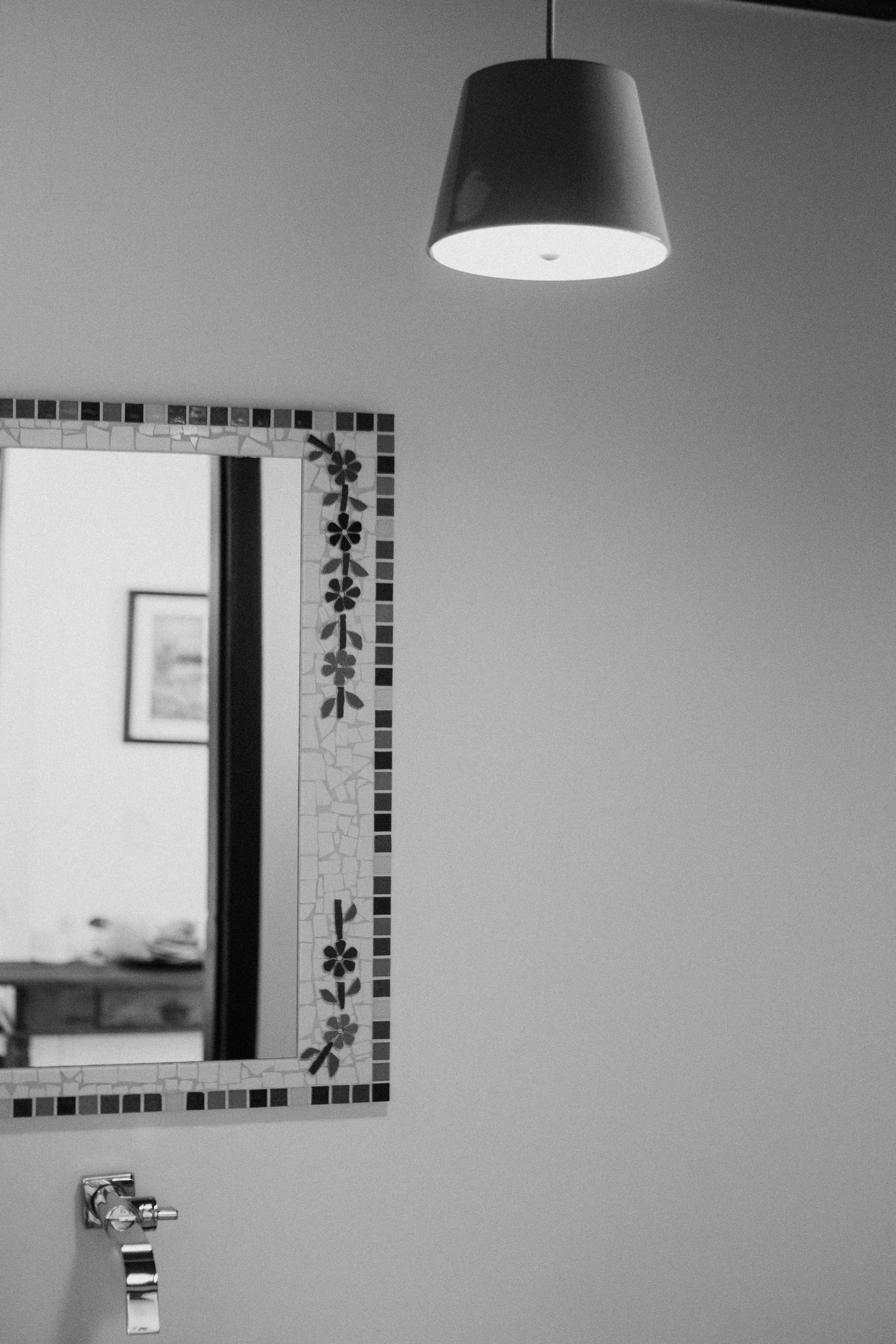
Let the Floor Be the Main Graphic Move
A geometric black-and-white floor can carry the Art Deco identity while walls and cabinetry remain simple. This is particularly useful in smaller bathrooms where a patterned wall might fragment the space. Slip resistance and grout maintenance still matter, so the graphic layout should be chosen from suitable wet-area products rather than appearance alone.
Use Repetition to Finish the Composition
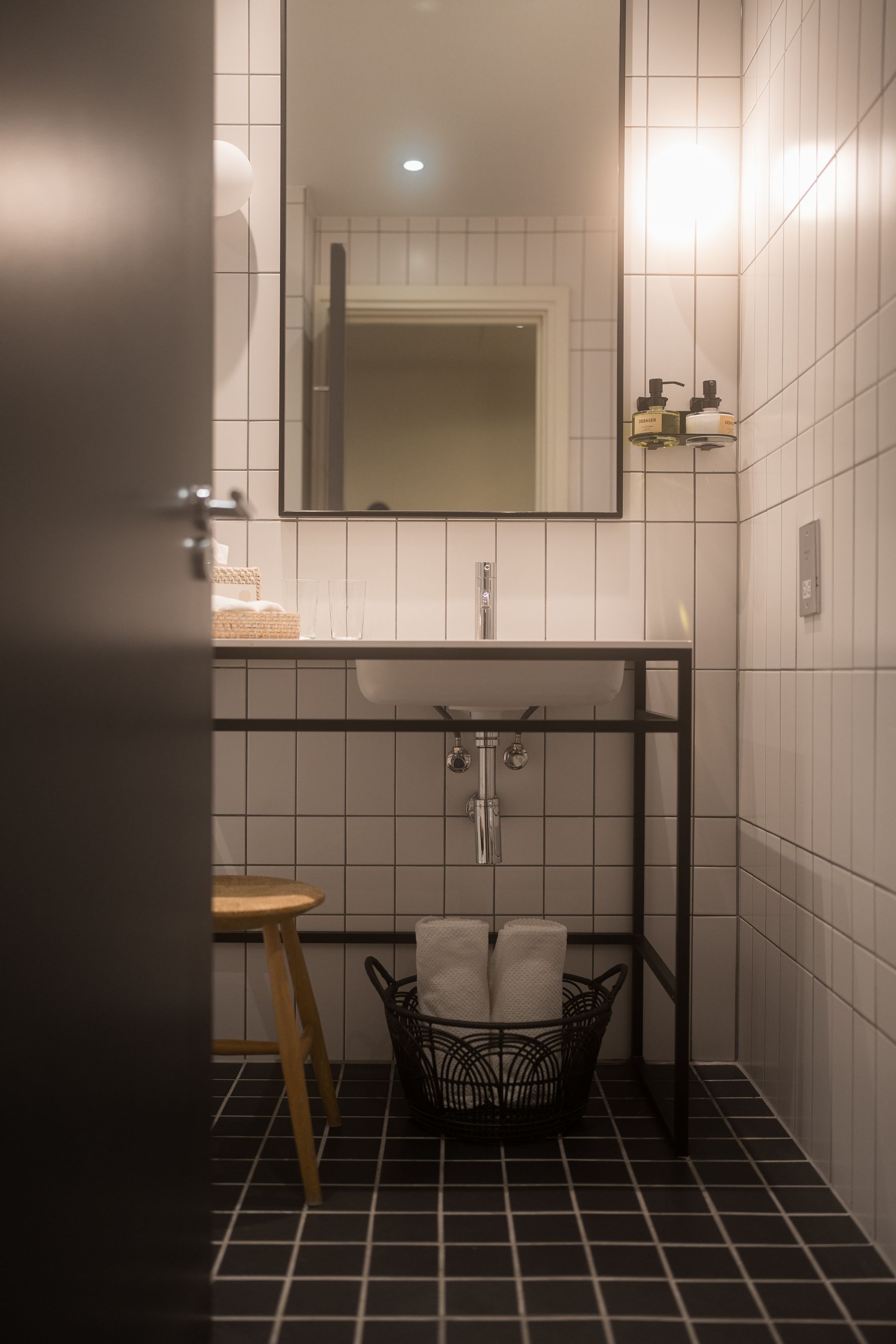
The final Art Deco layer is often repetition rather than additional decoration. Mirror shapes, vertical lights, metal lines or tile borders can repeat at measured intervals and make the room feel designed as a whole. Once the rhythm is established, stop adding motifs; visual discipline is what separates a strong Deco-inspired bathroom from a themed one.