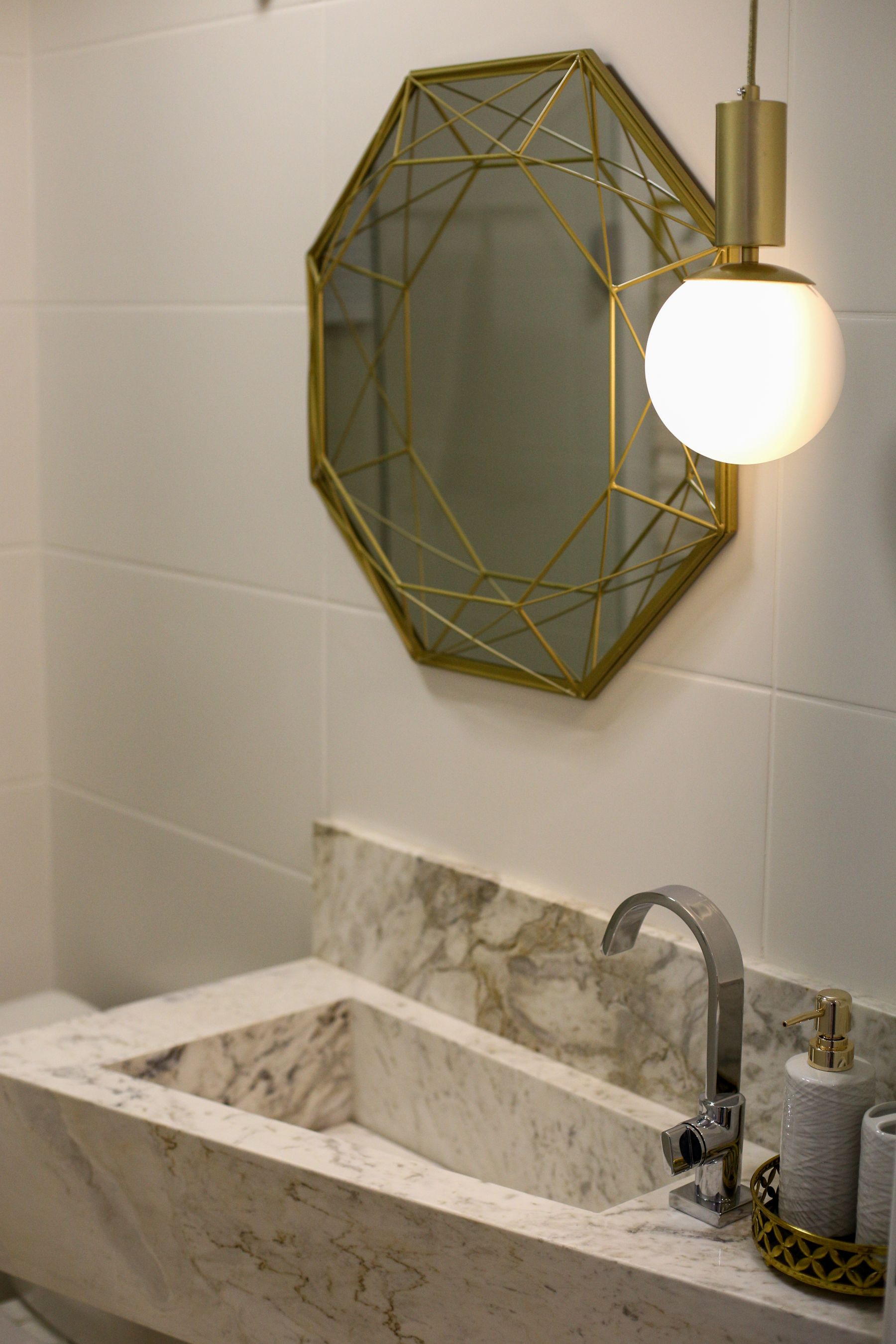
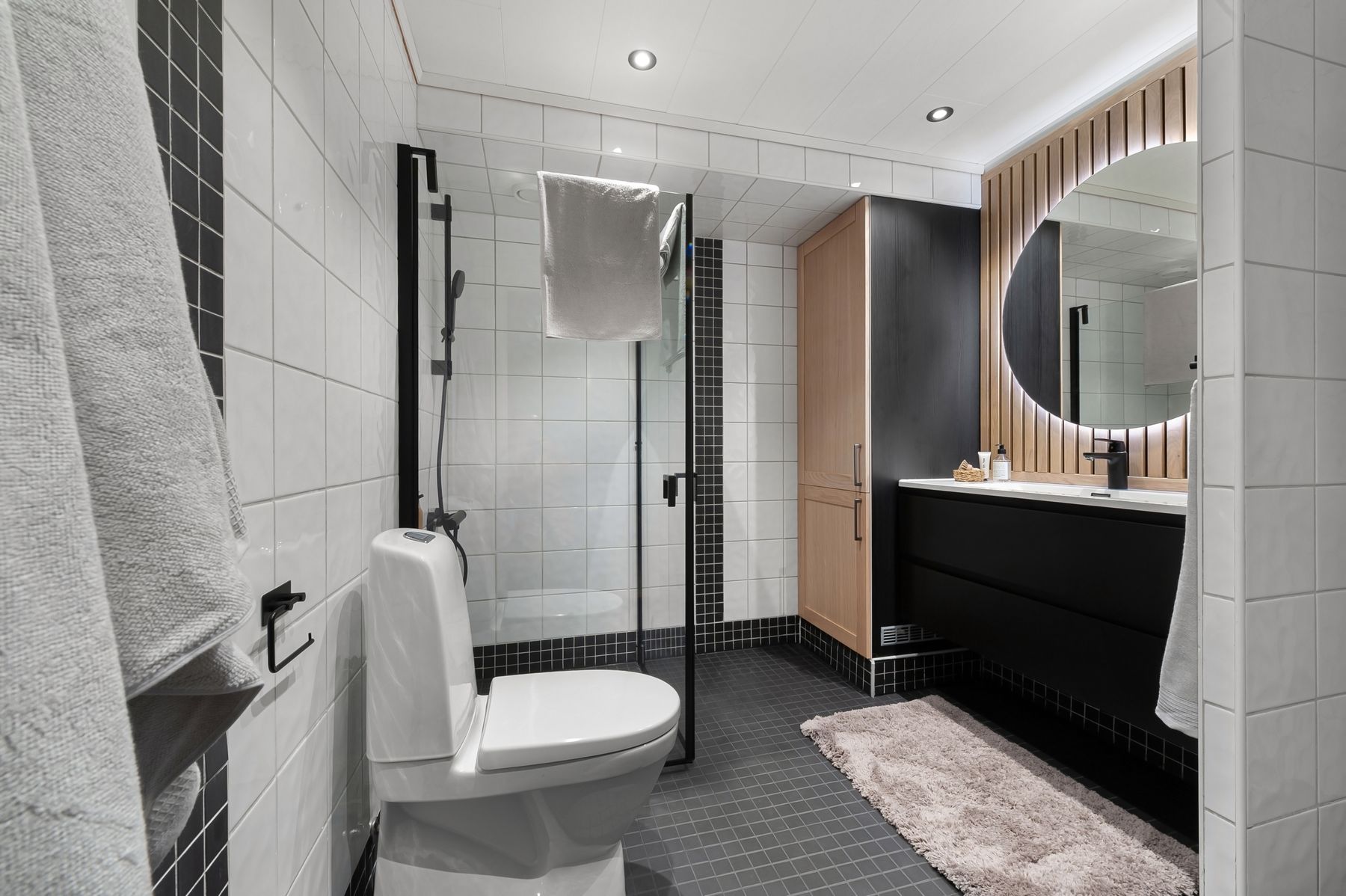
Start With One Visual Rule
An eclectic room needs a clear reason for unlike pieces to belong together. Repeating black and white, one warm metal or one geometric shape can create that structure. Once the rule is established, other elements can vary more freely without making the bathroom feel random.
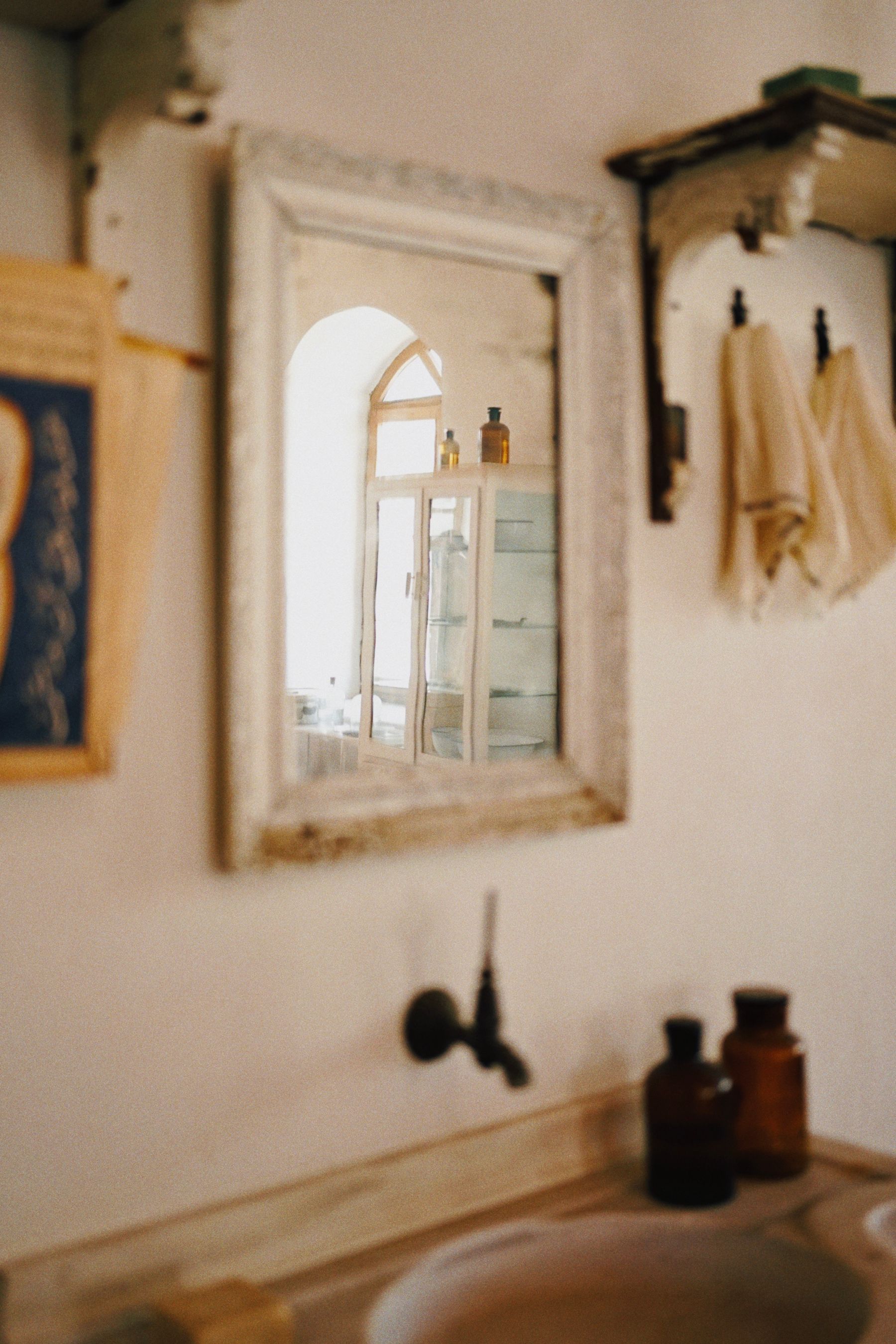
Mix Periods Through the Mirror
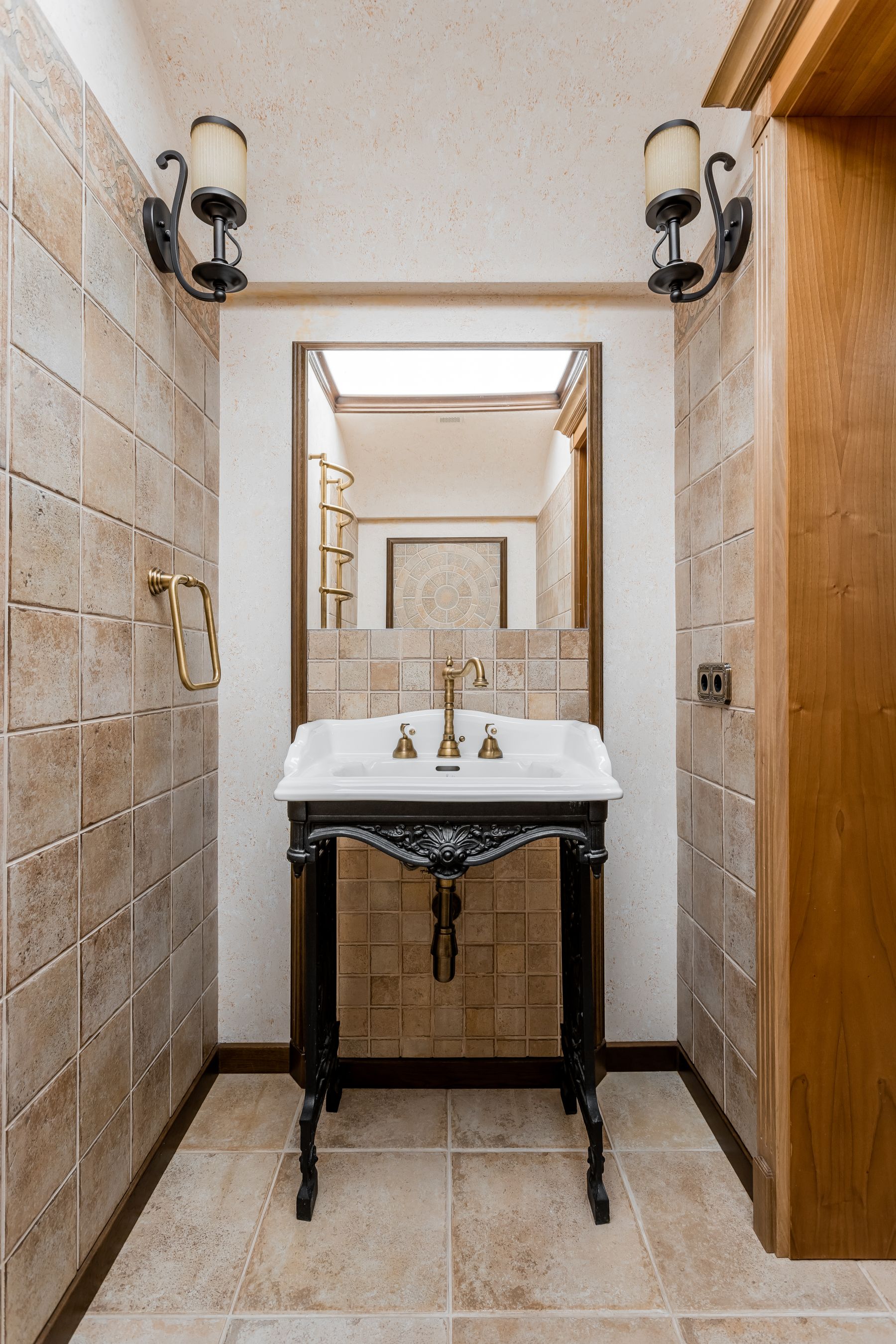
A classic or vintage-style mirror is one of the easiest ways to bring an older reference into a newer bathroom. Keep the sink, lighting and storage more current so the room reads as deliberately mixed rather than historically reproduced.
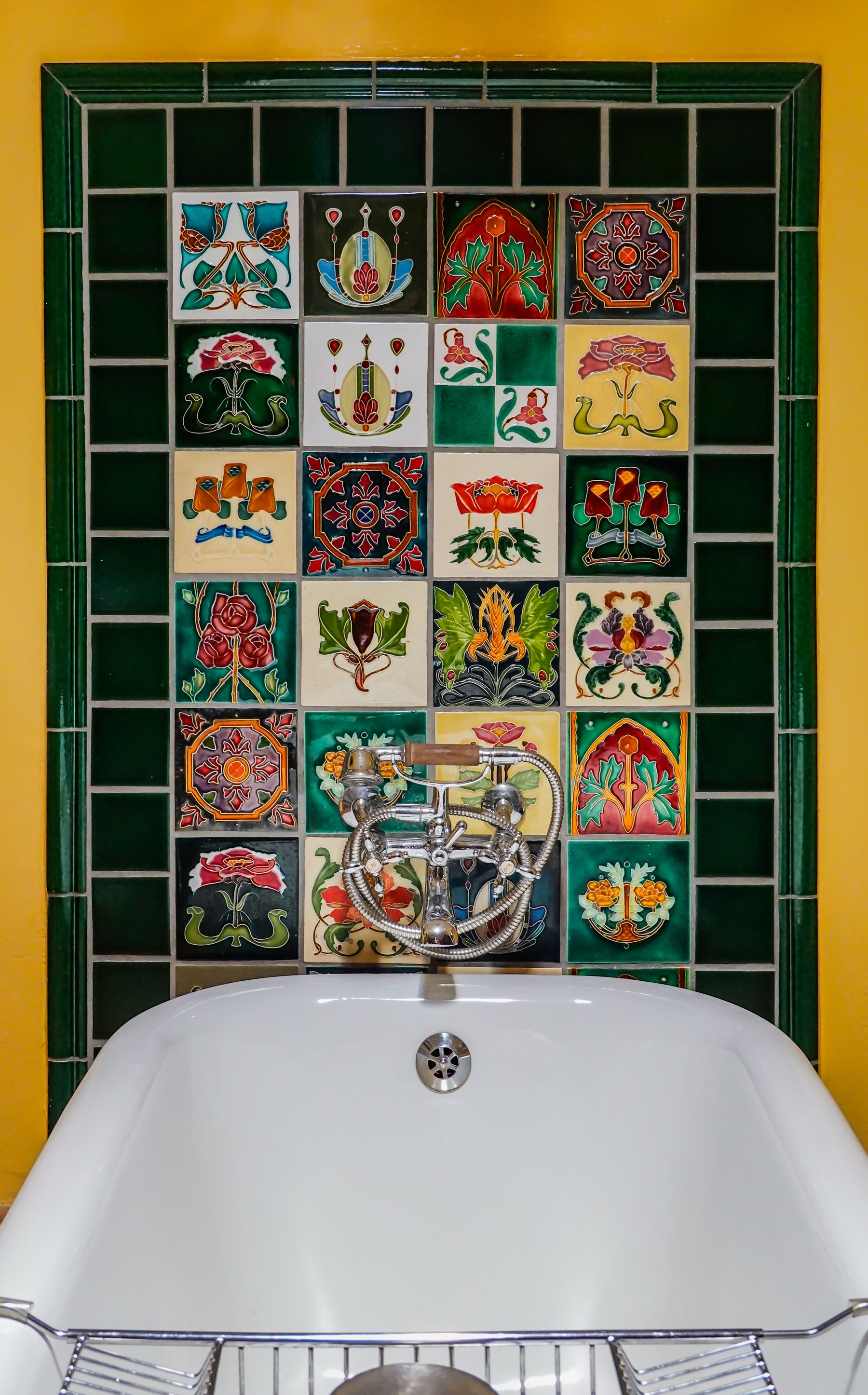
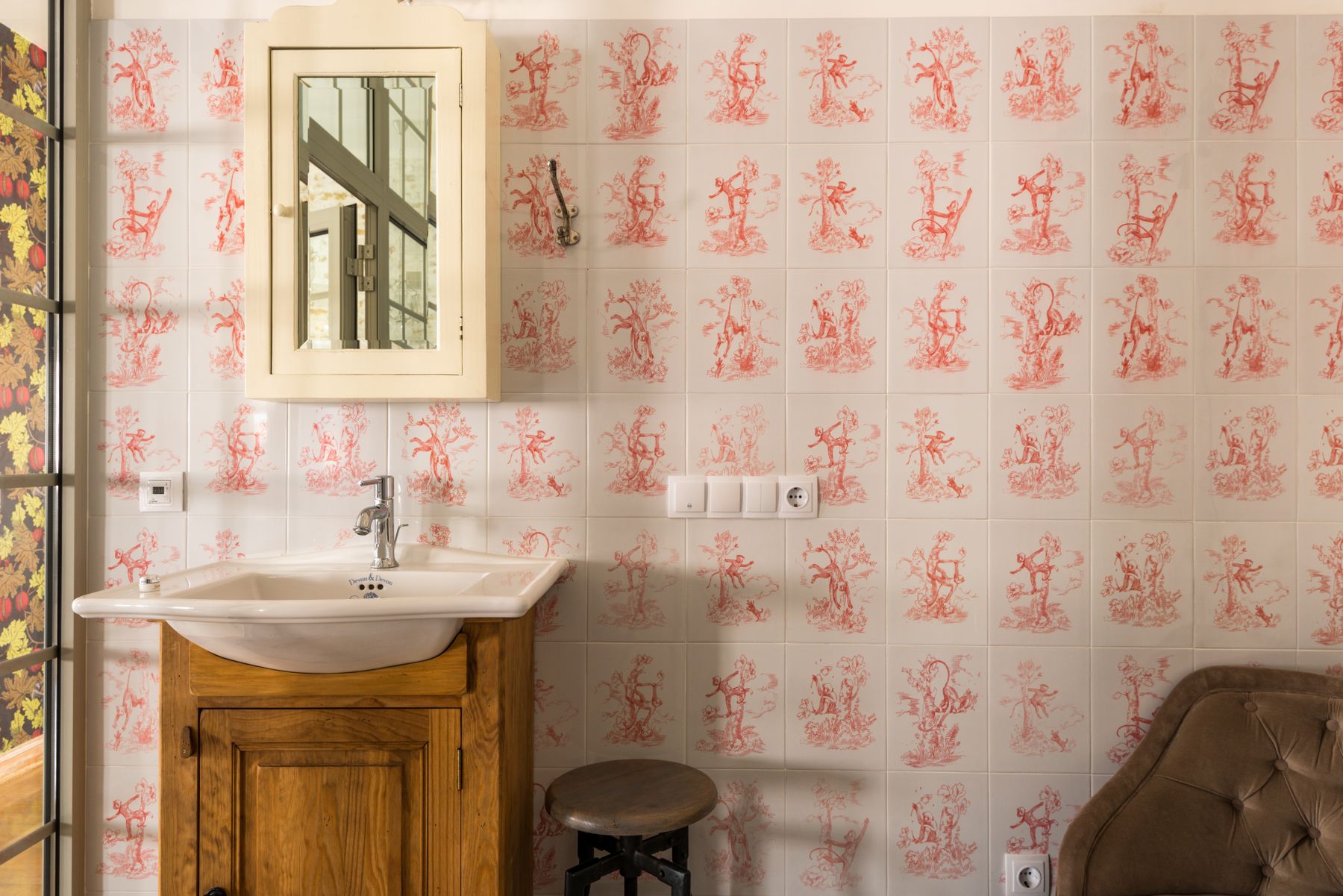
Use Patterned Tile as One Collected Layer
Patterned tile can bridge vintage, Mediterranean, Art Deco or more contemporary references depending on color and scale. Give it one clear boundary, such as the floor or vanity wall, and keep surrounding surfaces calmer.
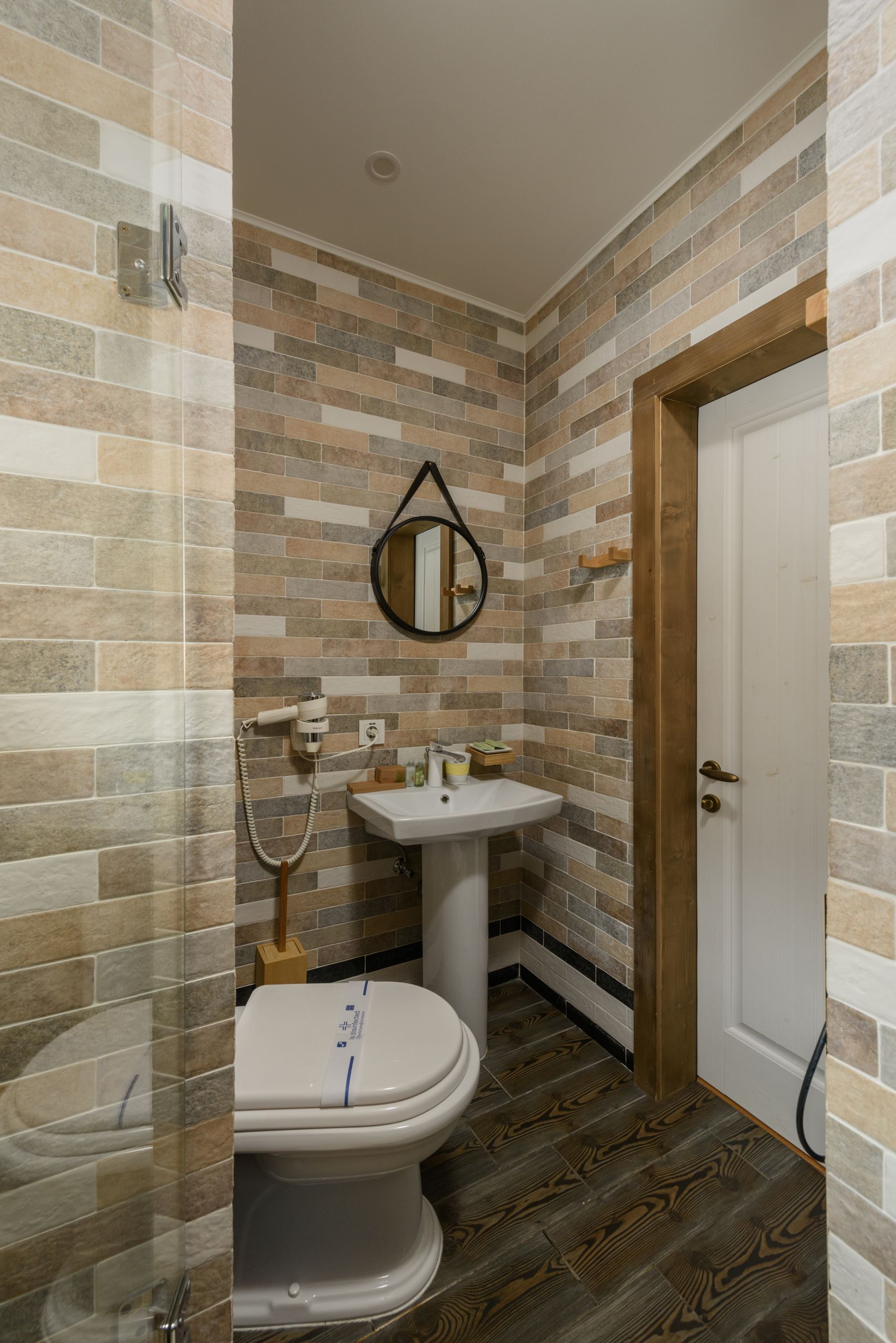
Use a Shaped Mirror to Introduce Another Design Language
A round, faceted or otherwise shaped mirror can introduce a Mid-Century, Art Deco or contemporary note without changing the whole room. Shape is often easier to mix than another strong color because it changes the composition while keeping the palette stable.
Use Color to Connect Different Styles
A consistent green, blue or warm neutral can connect pieces from different periods more effectively than matching every material. Use the same color family across tile, paint or a small object so the room has continuity even when the forms vary.
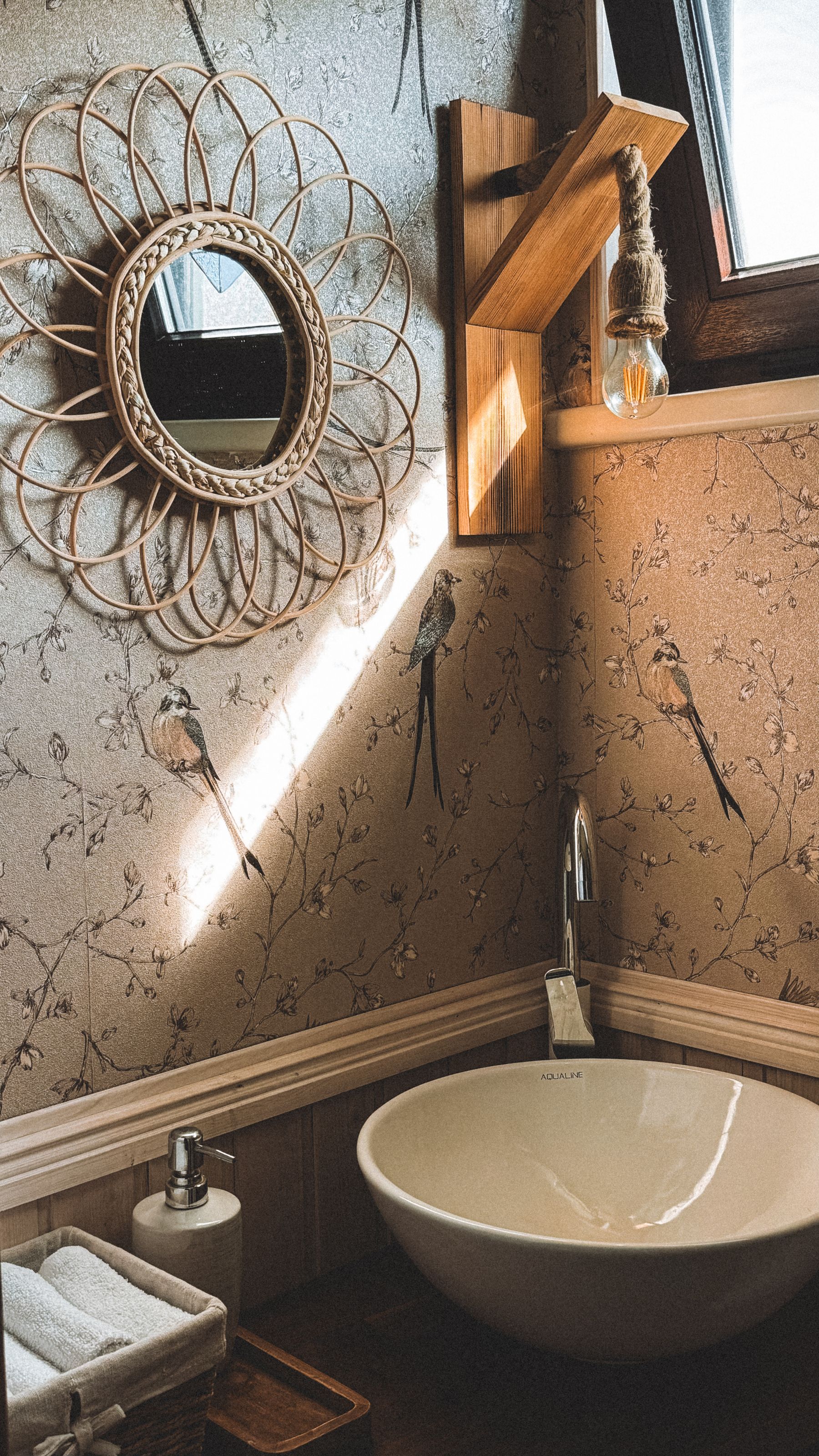
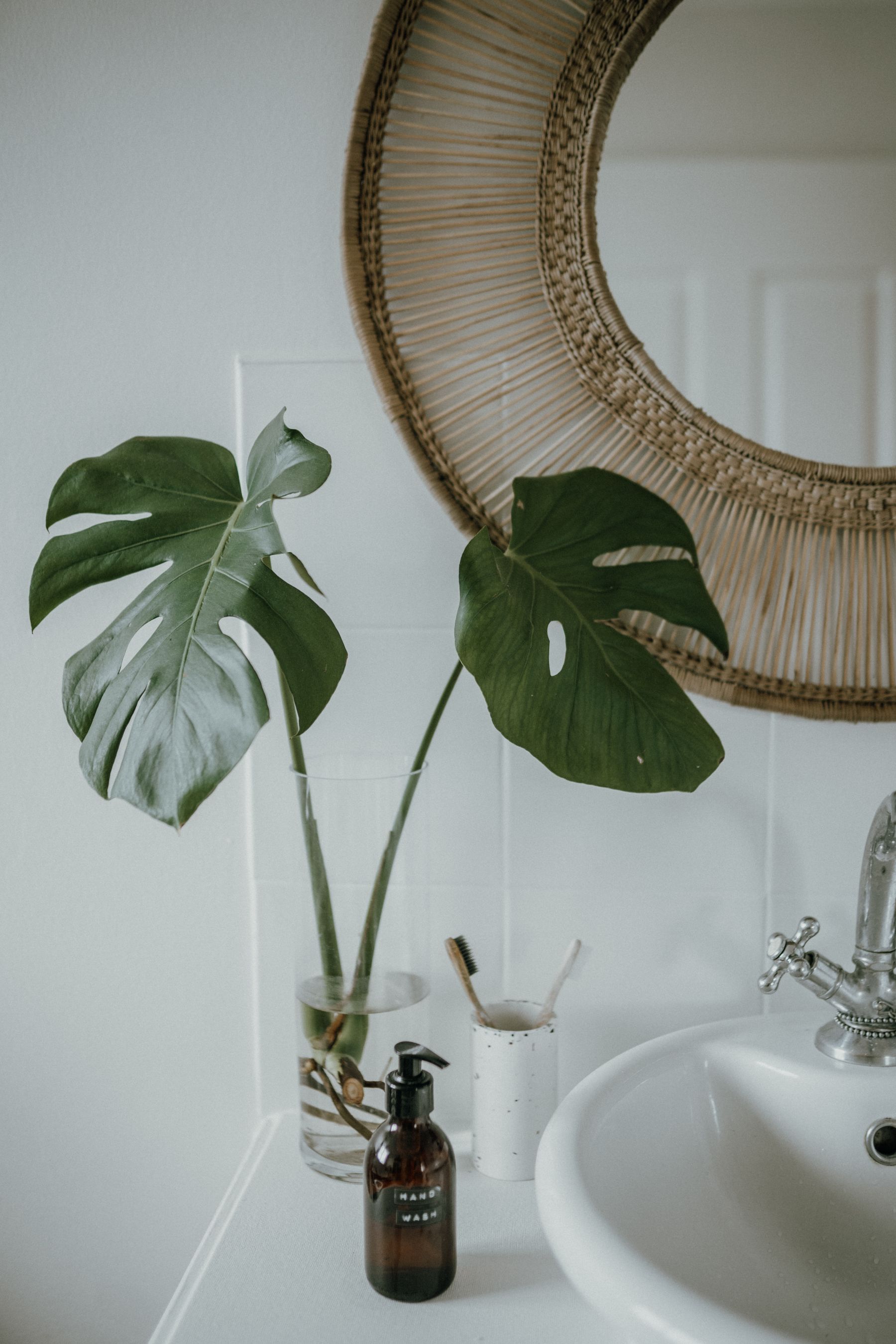
Add Woven Texture Without Turning the Room Boho
Woven texture can soften tile and metal, but eclectic does not require a full bohemian layer. Use one basket, mirror frame or textile and let it sit beside more structured pieces. The contrast is the point.
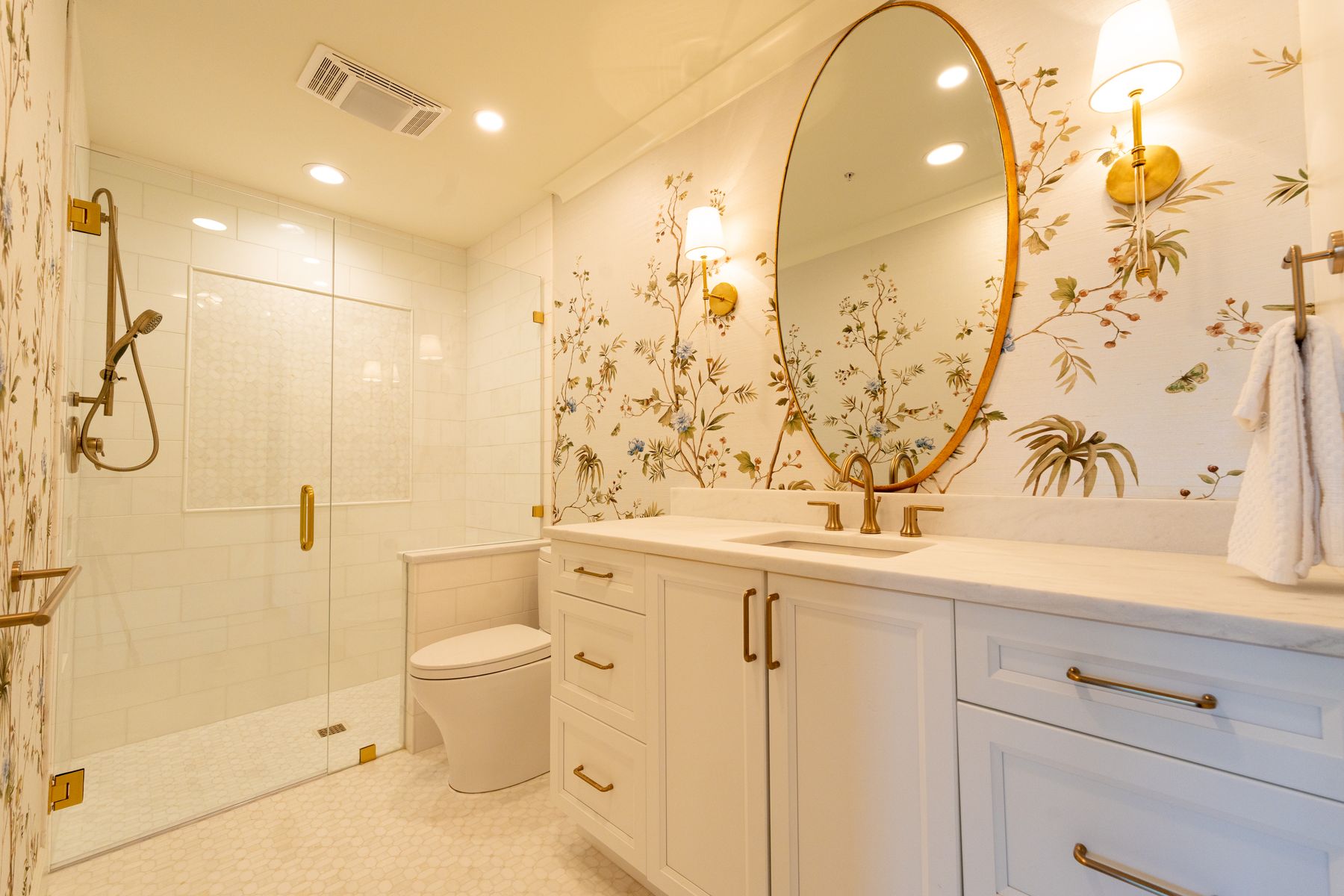
Use Floral Pattern as One Deliberate Contrast
Floral wallpaper can sit comfortably beside contemporary lighting, a simple sink or cleaner cabinetry when it has one clear zone. That contrast can make the room feel collected rather than coordinated from one showroom.
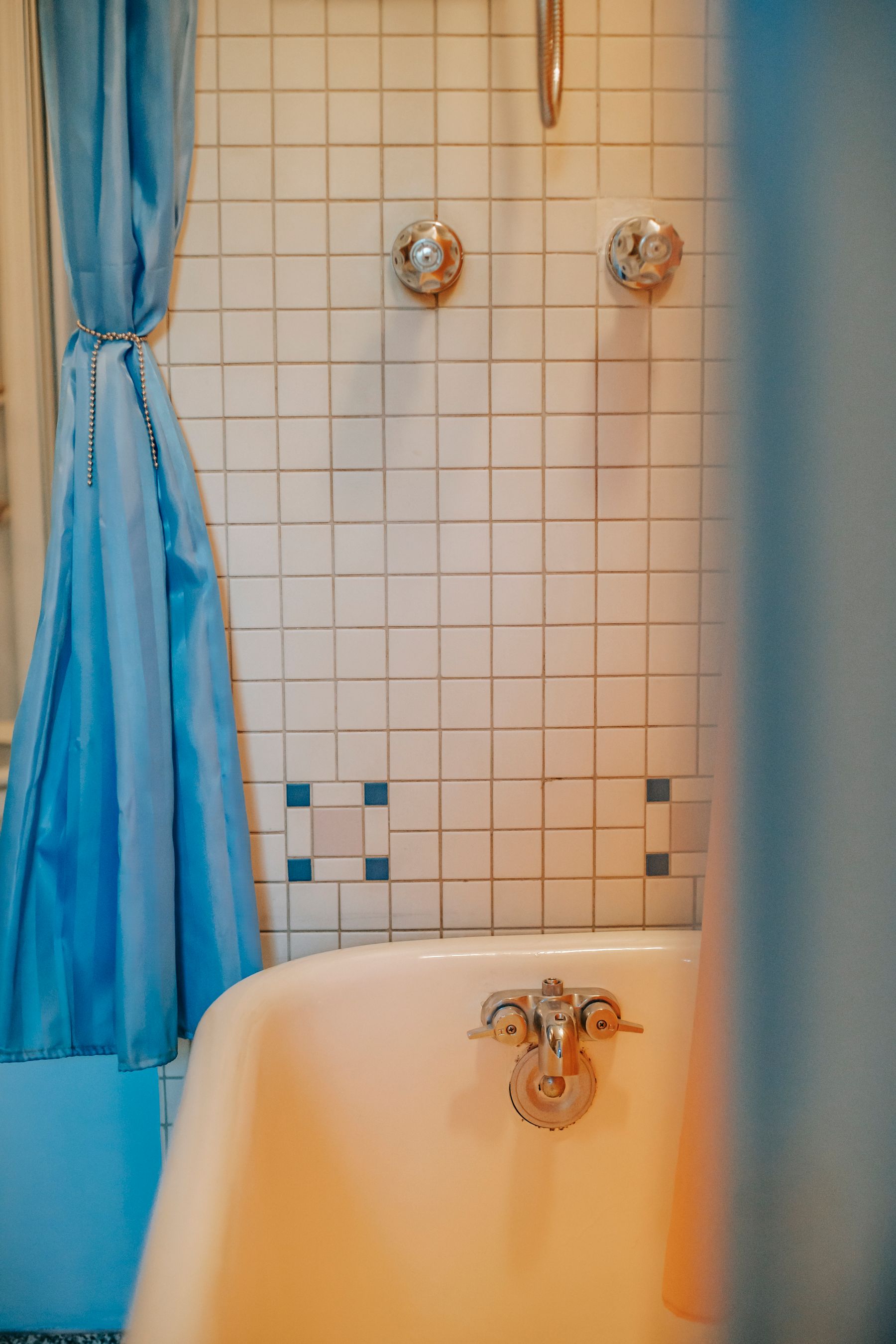
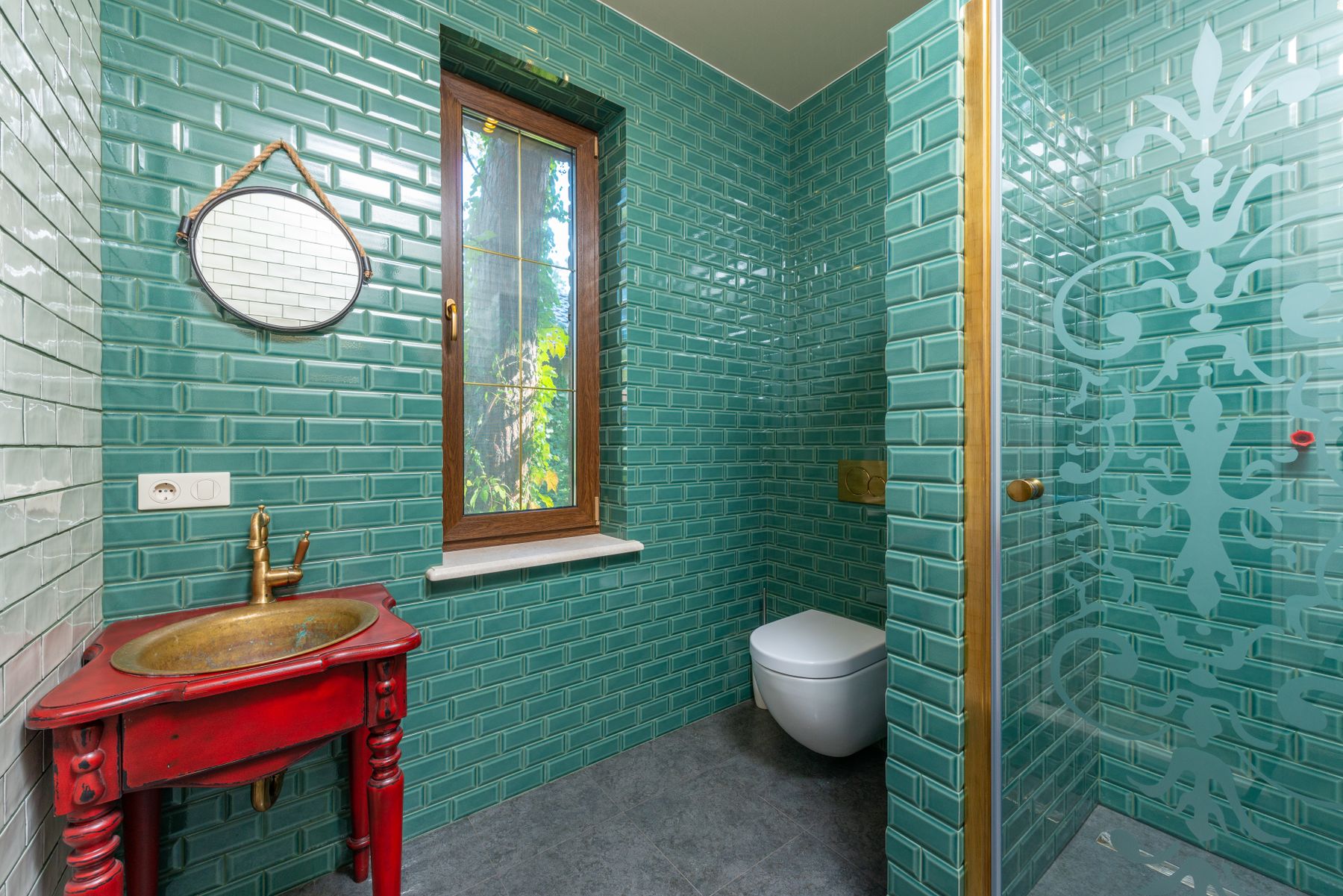
Use Strong Tile Color With Simple Fixtures
A saturated tile field can give the room energy while straightforward white ceramic and simple metal fixtures stop the mix from becoming chaotic. The color can reference retro, Mediterranean or contemporary interiors depending on what sits beside it.
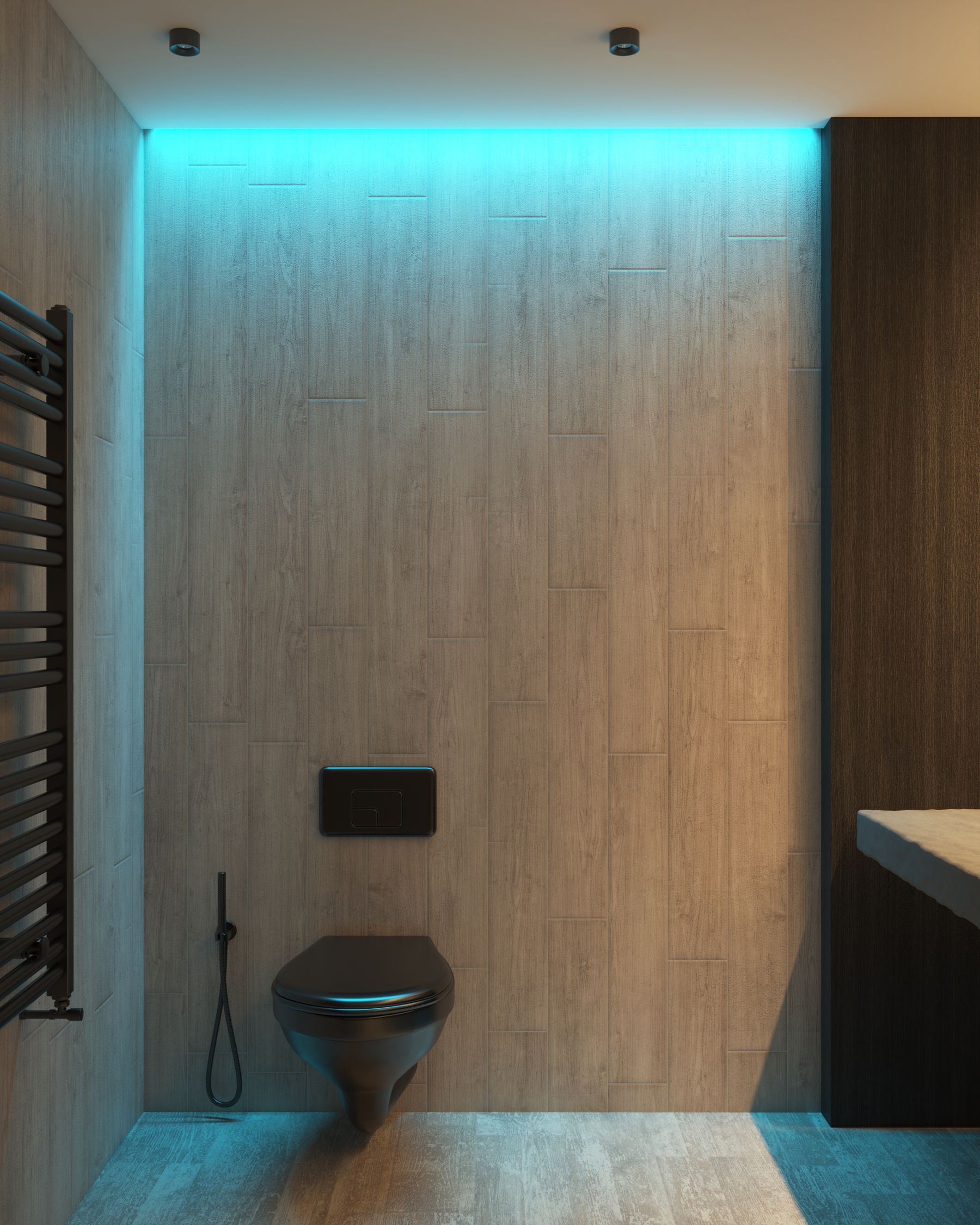
Use Warm Wood as the Common Material
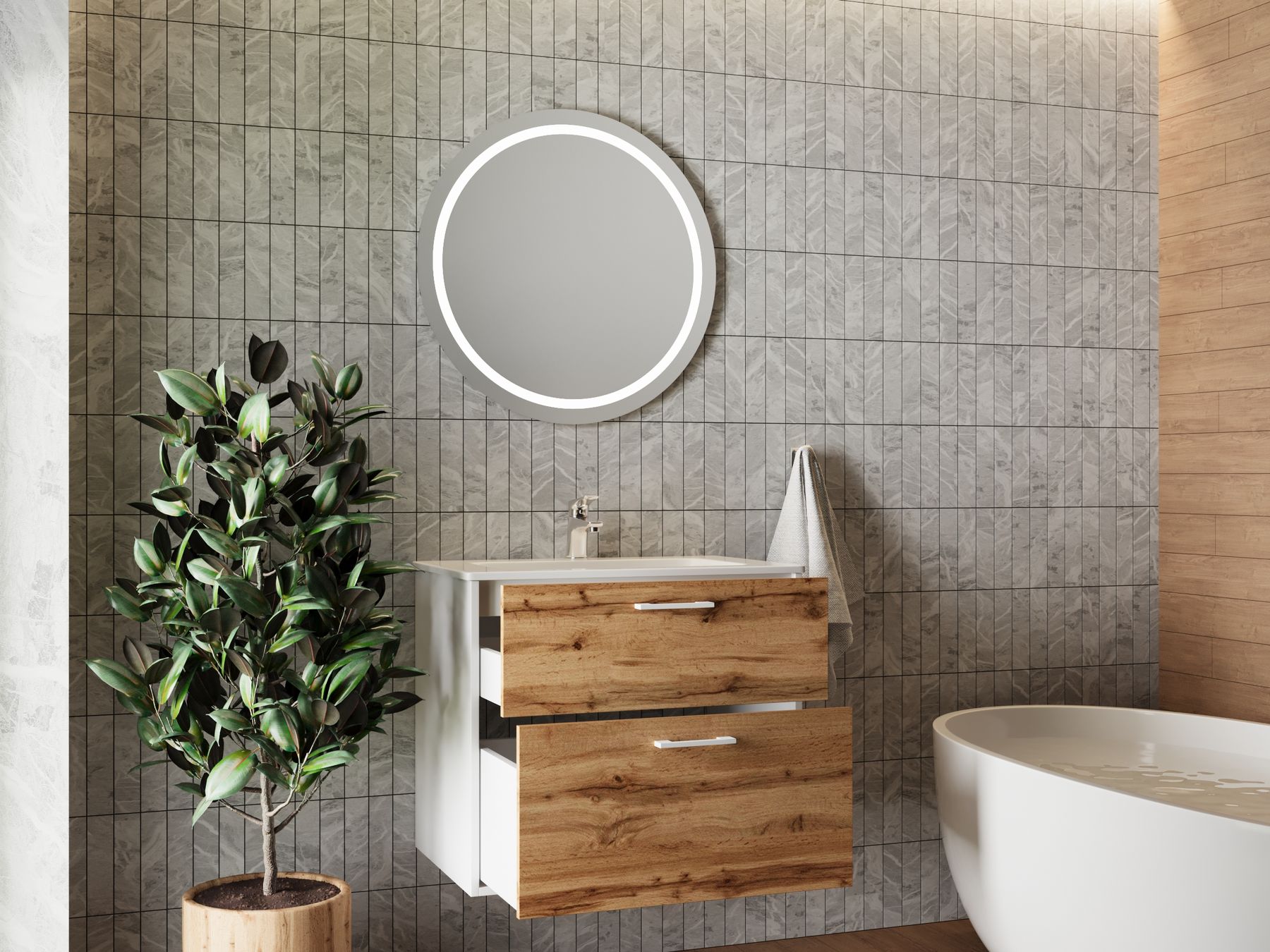
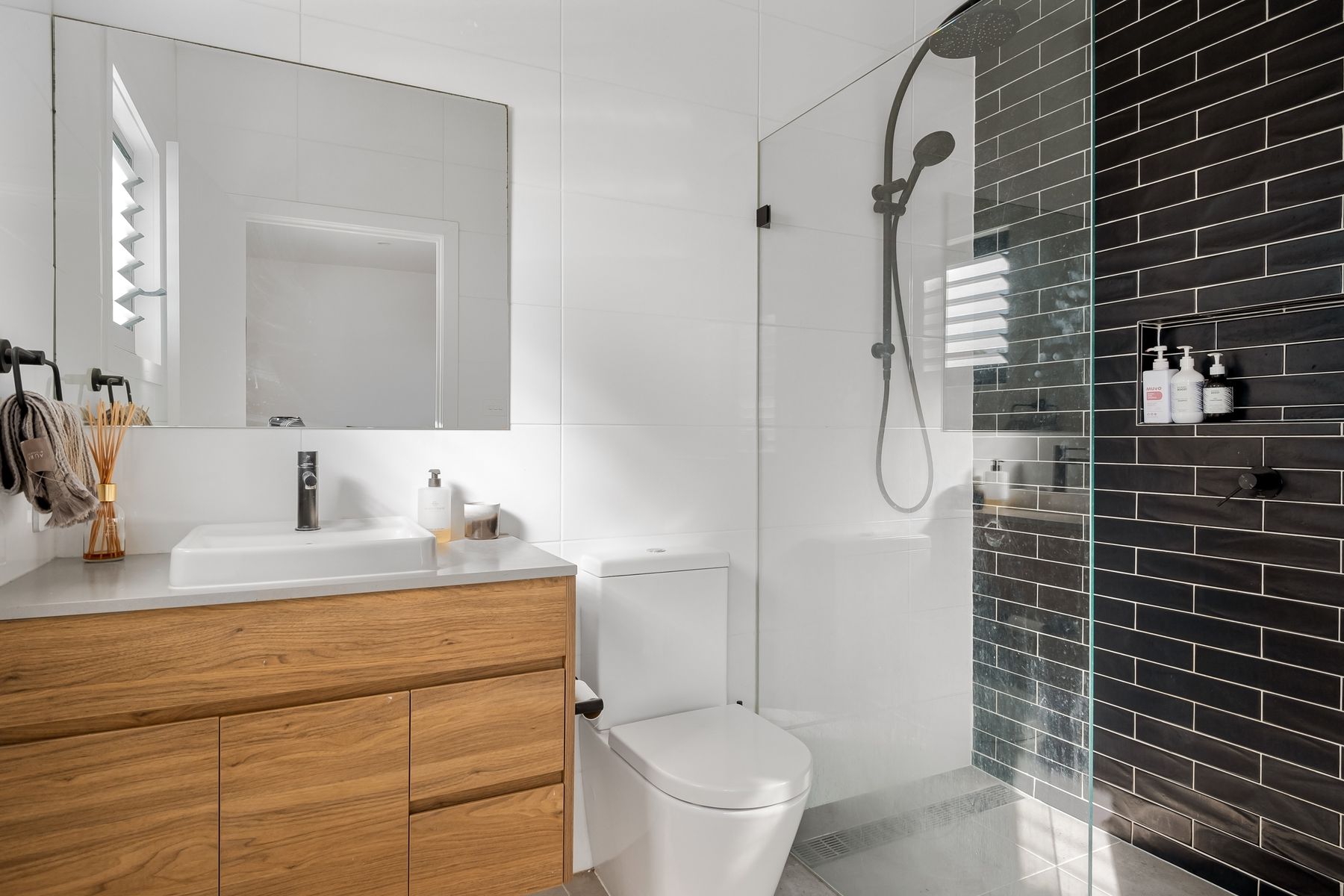
Warm wood can make very different pieces feel related because grain and tone provide a consistent natural layer. A timber vanity or mirror frame can connect colored tile, vintage details and modern lighting without forcing every element to match.
Edit the Final Layer Aggressively
Eclectic rooms benefit from editing more than almost any other style. Once the major pieces are installed, remove duplicate patterns, extra accessories and small objects that compete with the strongest surfaces. The goal is variety with hierarchy, not maximum quantity.