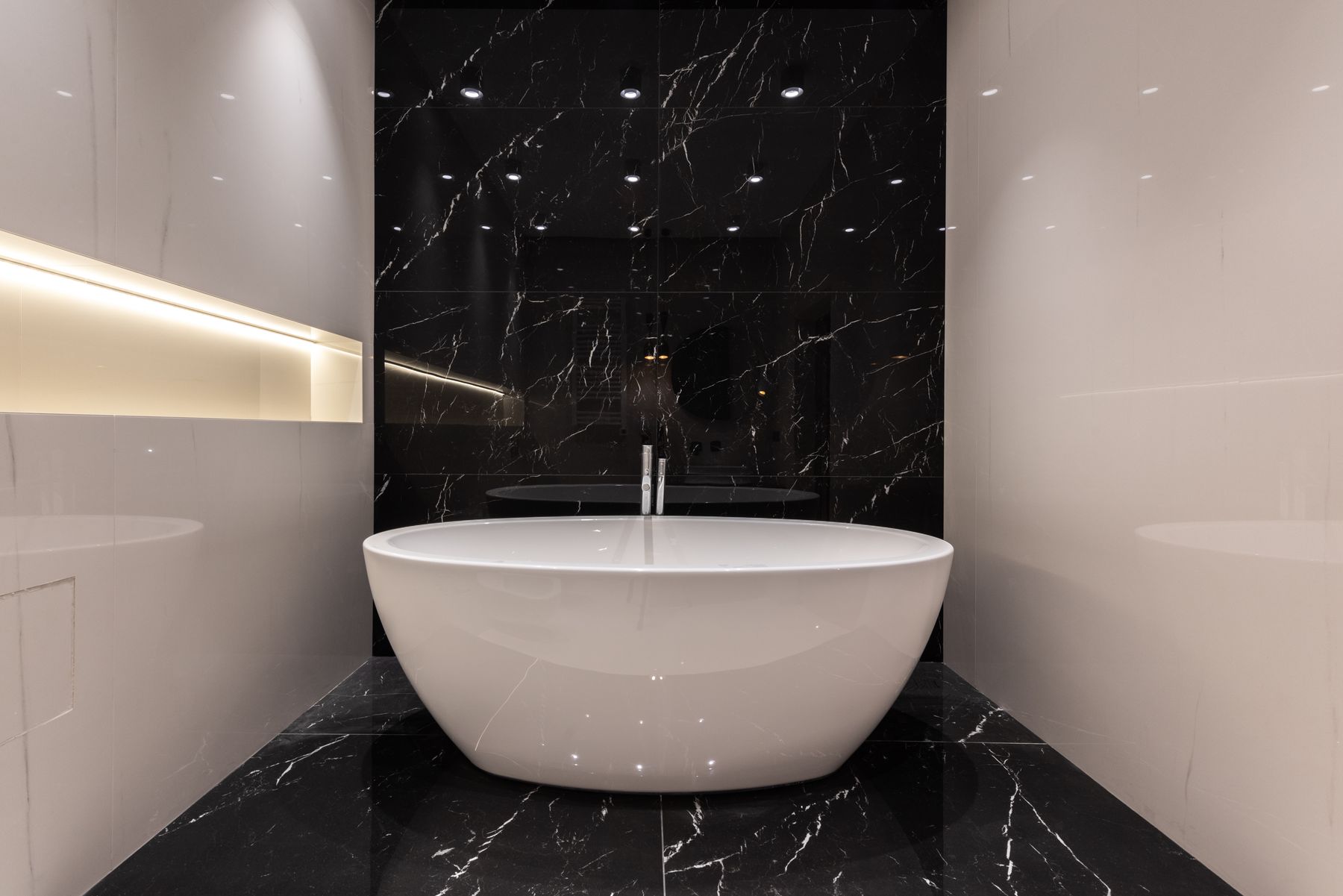
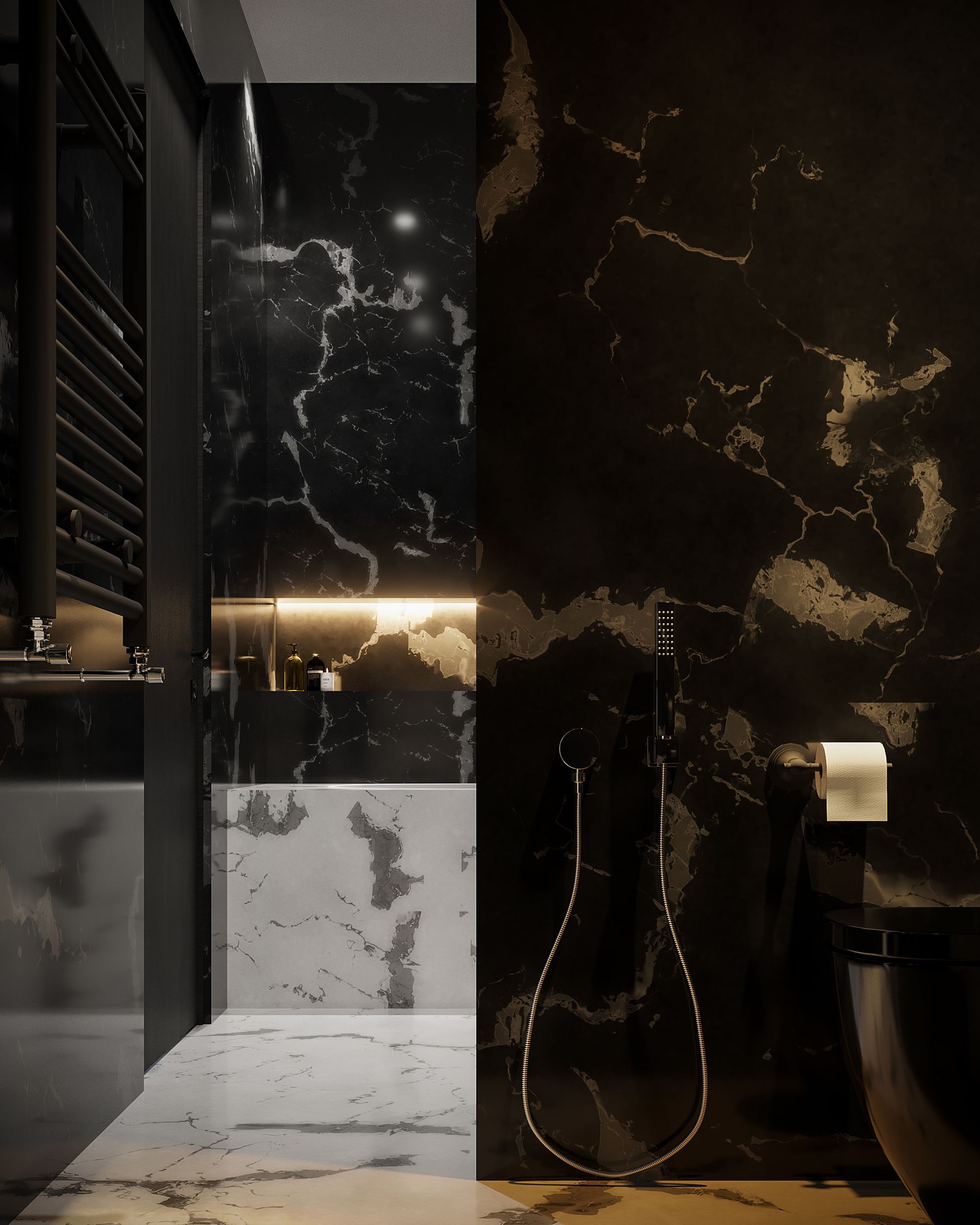
Choose the Main Black Surface First
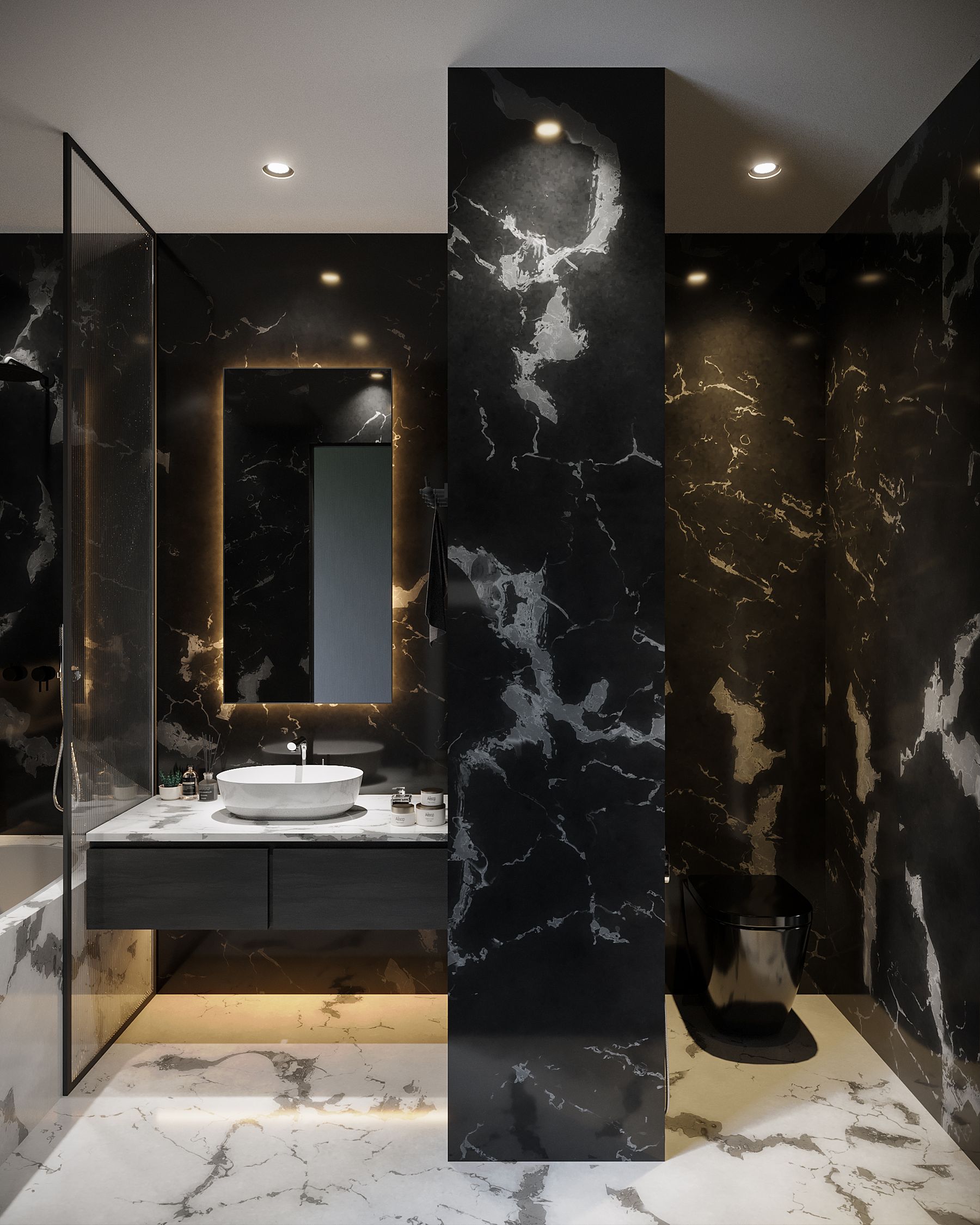
Start with the element that will carry most of the darkness: a marble wall, tiled shower, vanity or floor. Once that choice is made, surrounding finishes can be lighter, warmer or more reflective. This prevents the room from becoming a collection of unrelated black products and gives the palette a clear hierarchy.
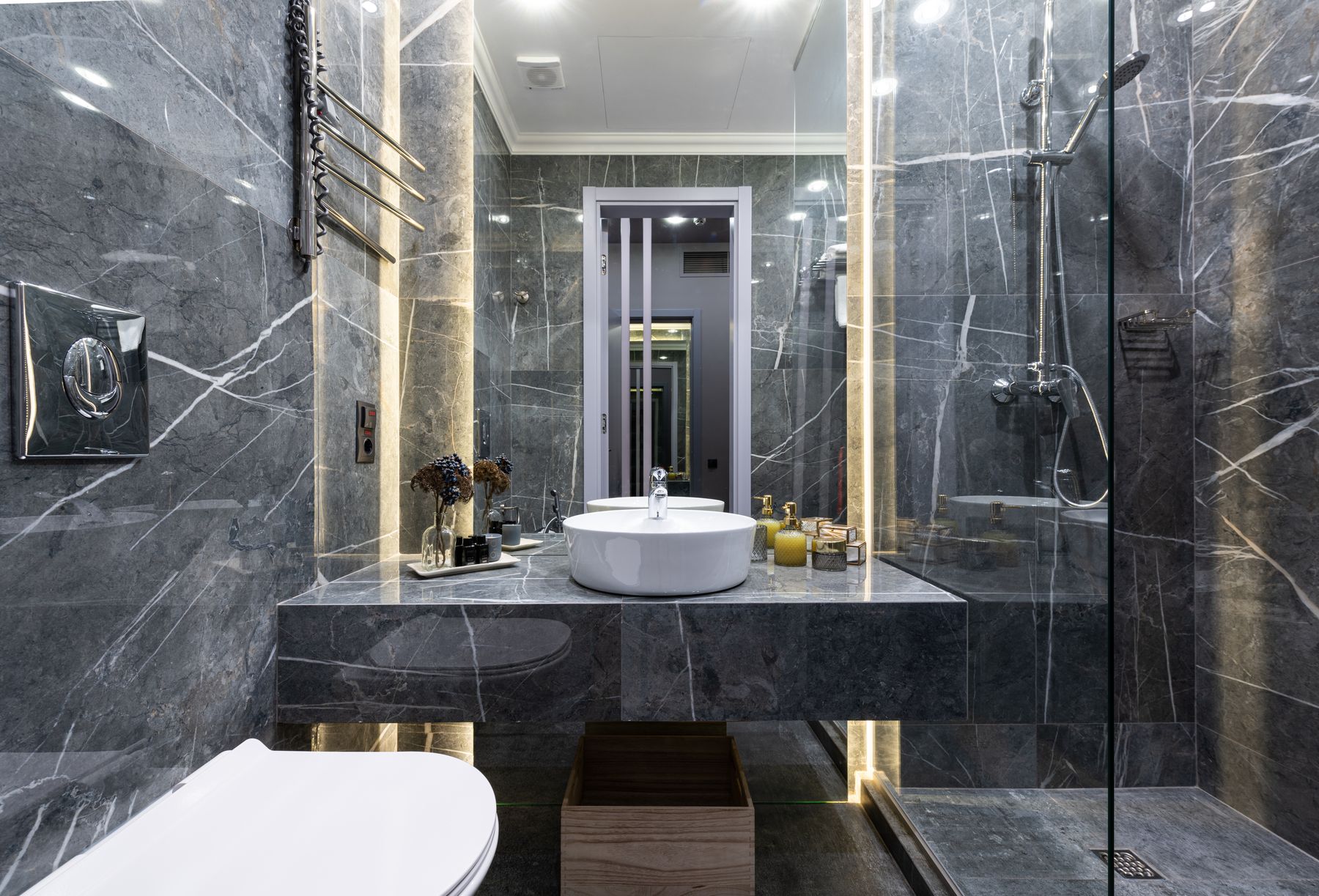
Let Veining and Sheen Break Up Dark Stone
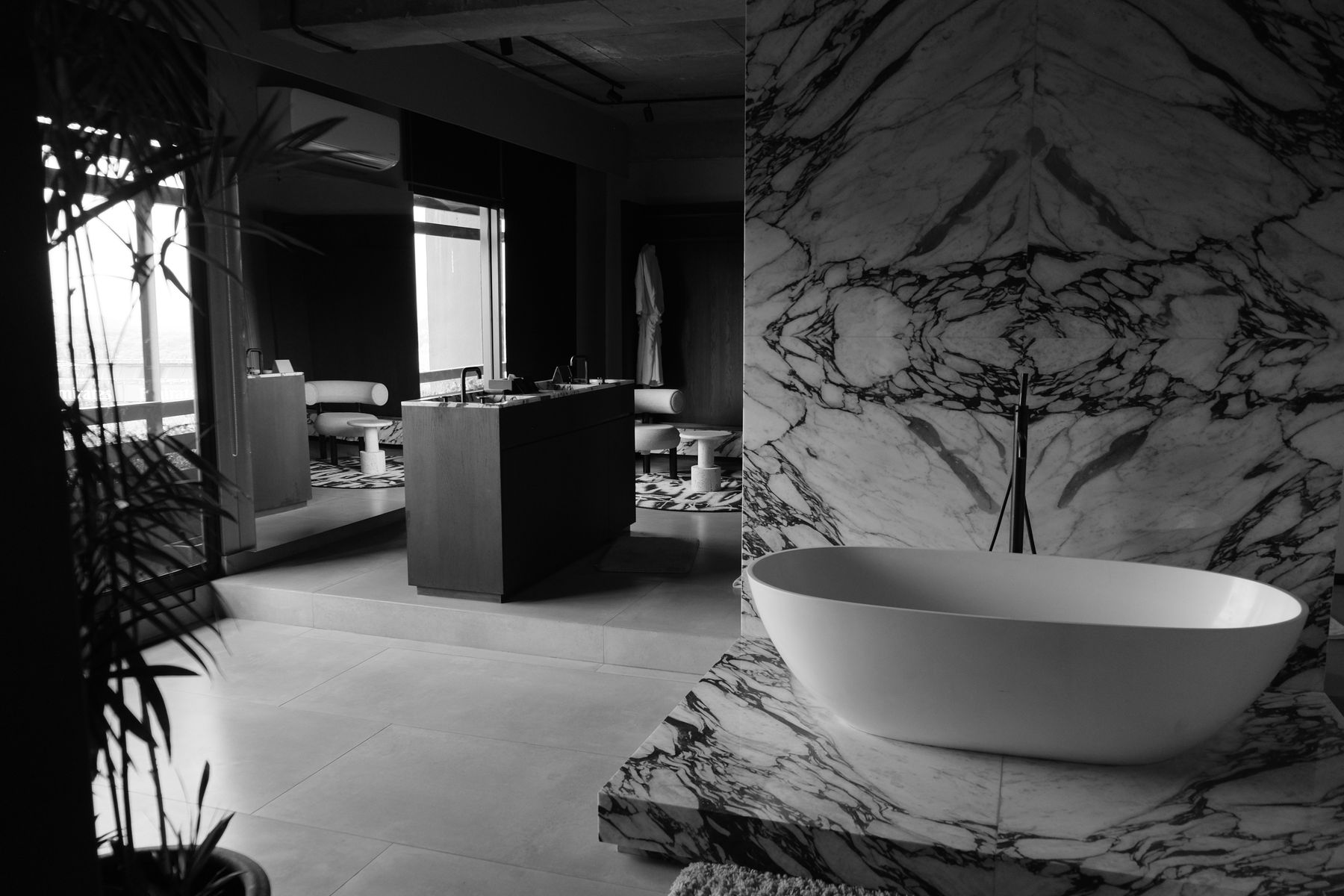
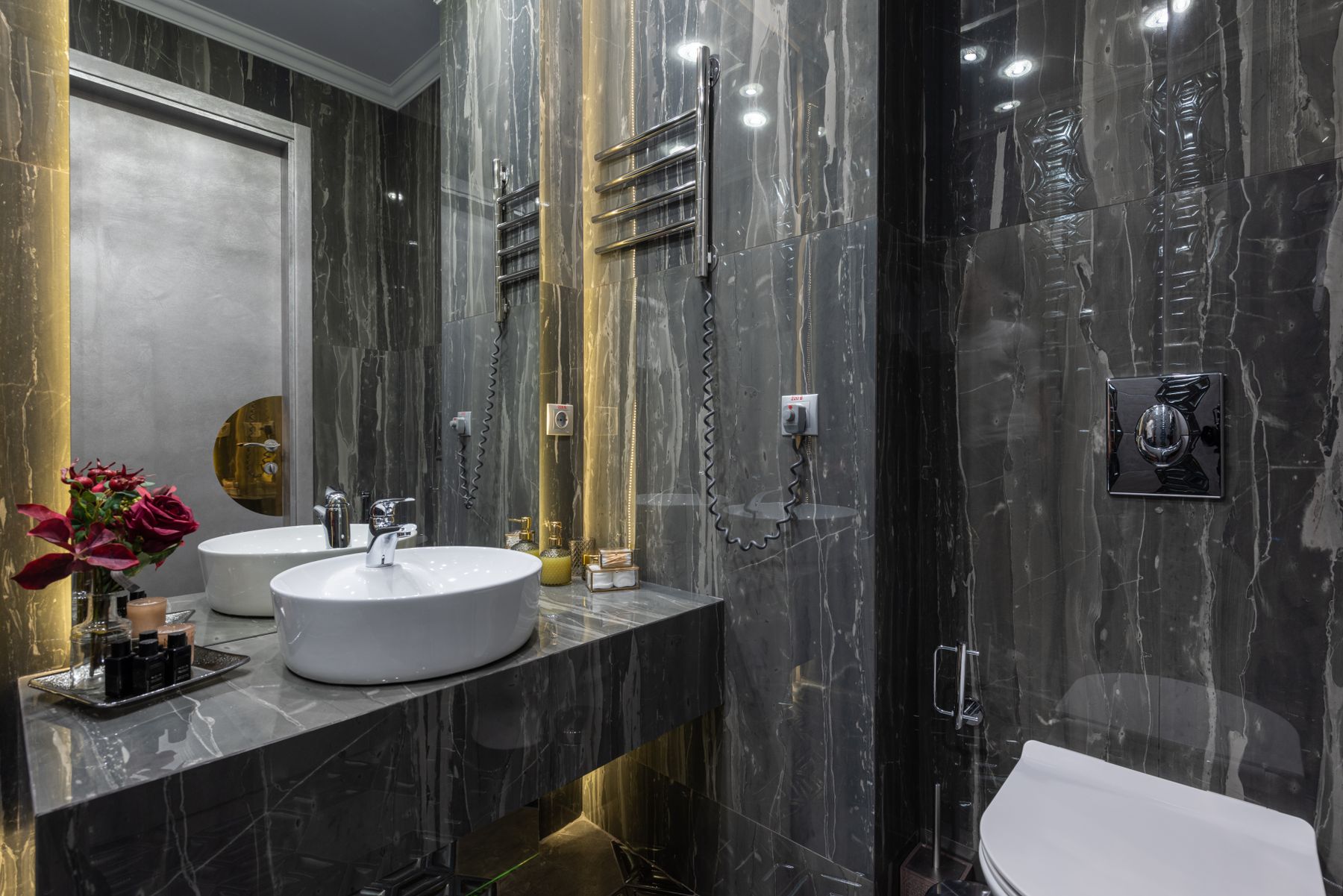
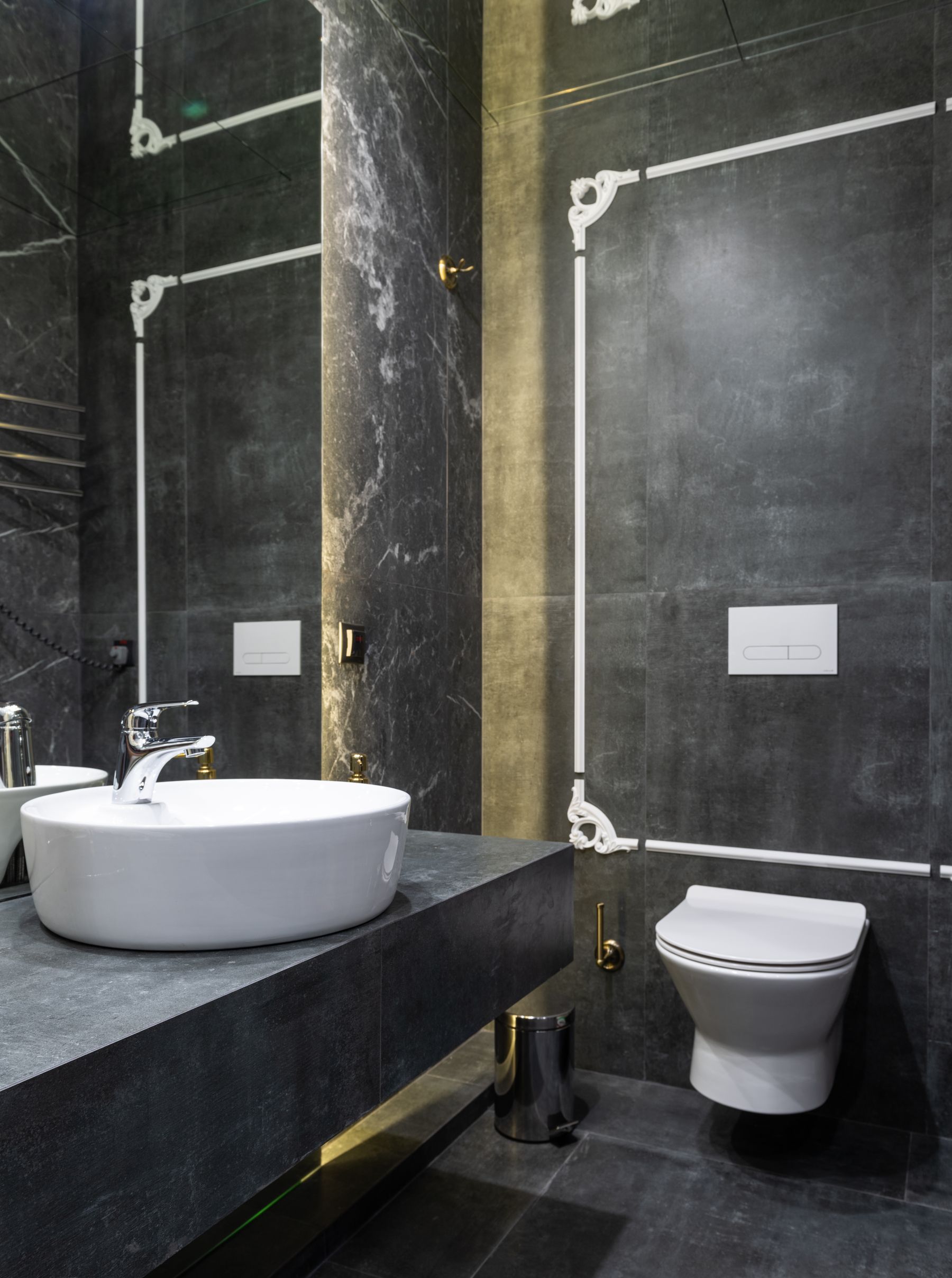
Black marble and marble-look porcelain work well because veining keeps the surface from reading as a flat void. Honed, polished and satin finishes also reflect light differently, creating depth without adding another color. In wet zones, maintenance and slip resistance matter as much as the pattern.
Make the Shower the Darkest Zone
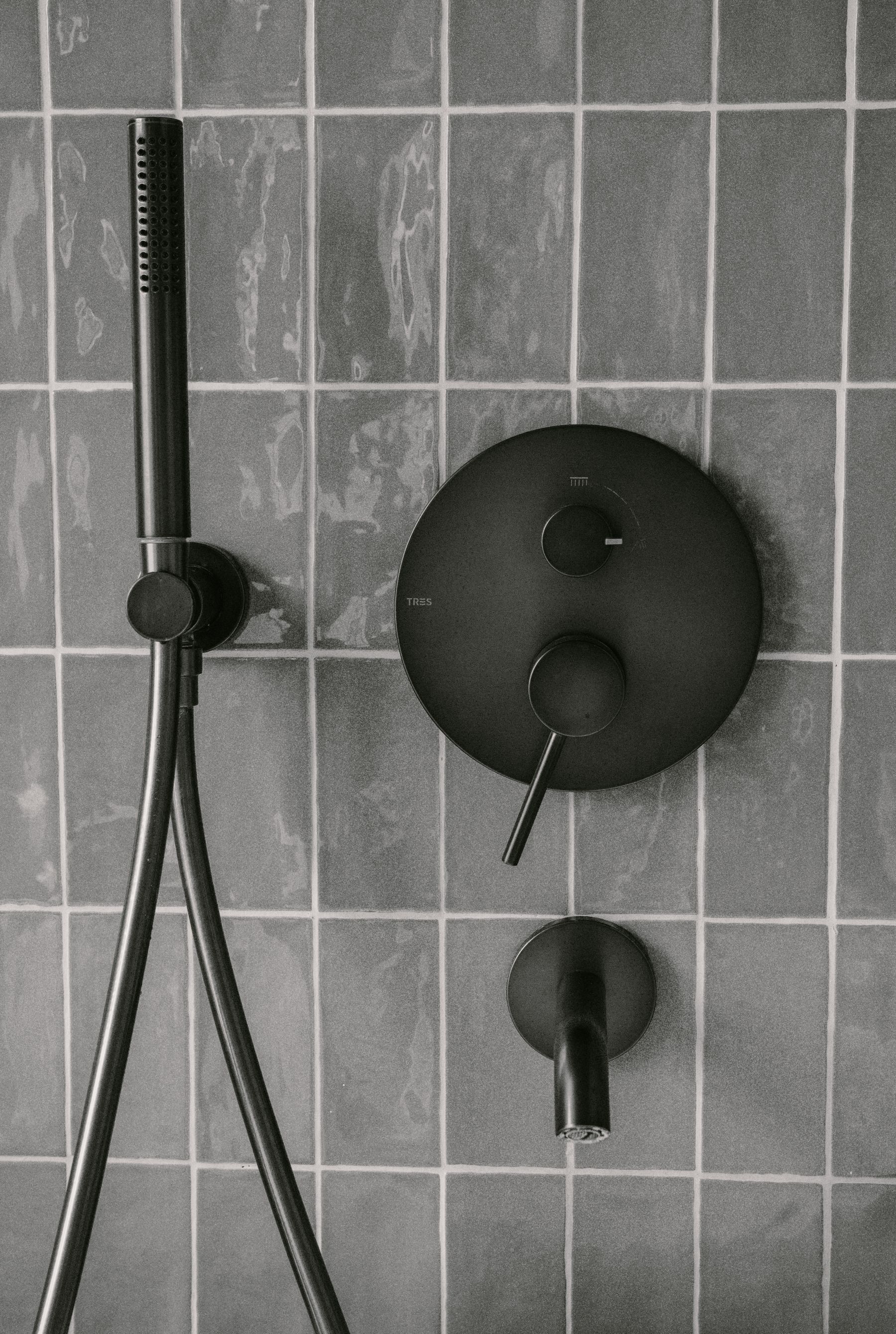
A black tiled shower is a practical place to concentrate darkness because the wet zone already benefits from a durable hard finish. Clear glass preserves sightlines, while a pale sink or lighter adjacent wall keeps the shower readable. Check how grout, fixtures and controls contrast against the tile after dark.
Use Black Sanitaryware Selectively
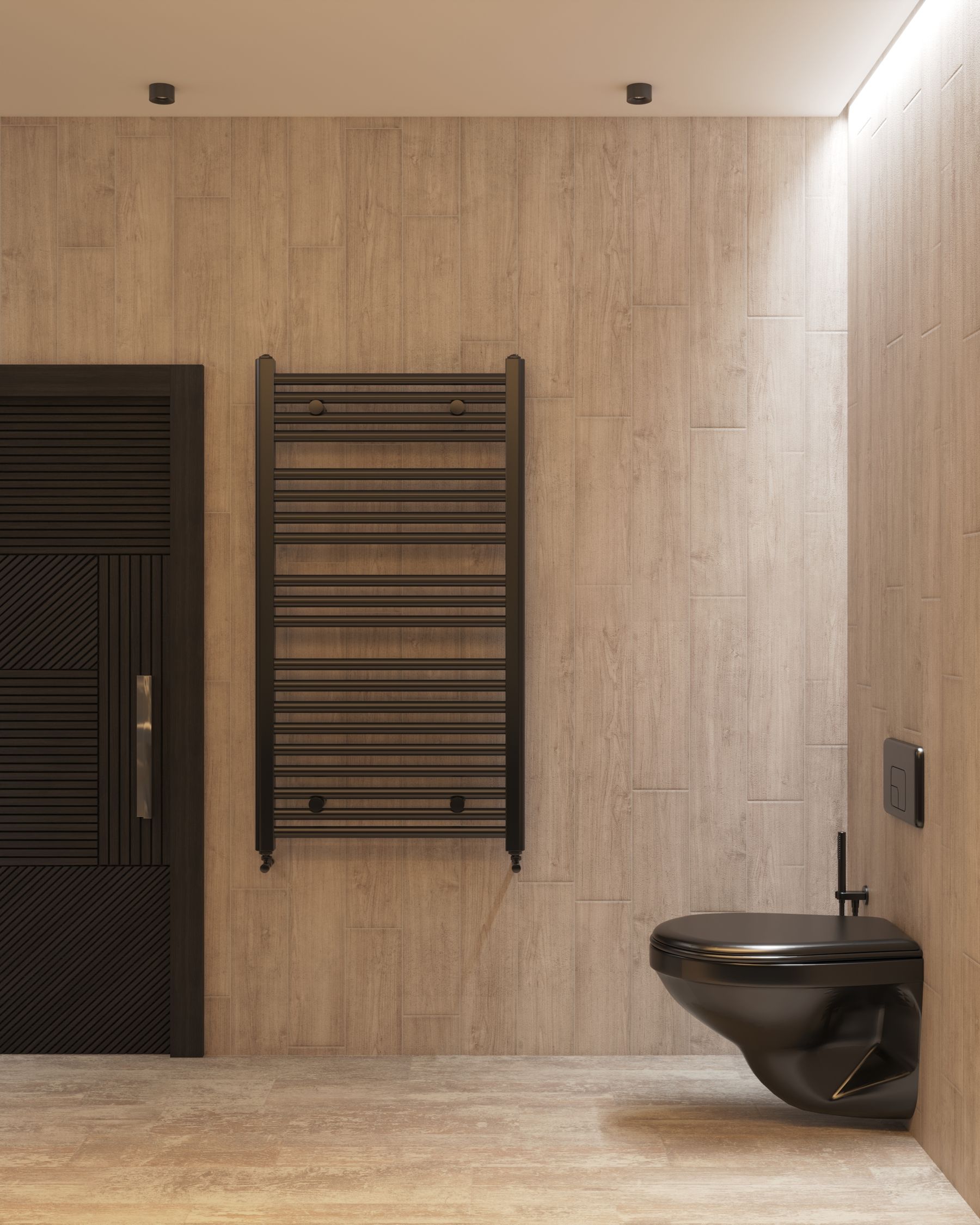
A black toilet, basin or bath can make the color feel integrated into the architecture rather than applied through accessories. One black sanitary fixture is often enough; matching every ceramic element can reduce contrast and make the room harder to read. Matte finishes also show mineral deposits differently from glossy ceramic.
Let the Vanity Wall Reflect Light
Large mirrors are especially useful in black bathrooms because they return light and prevent the vanity wall from becoming visually dense. A pale sink, glass surface or polished faucet can create small highlights without changing the black-led palette. Keep the countertop clear so those reflections remain visible.
Use Matte Black Hardware as Structure
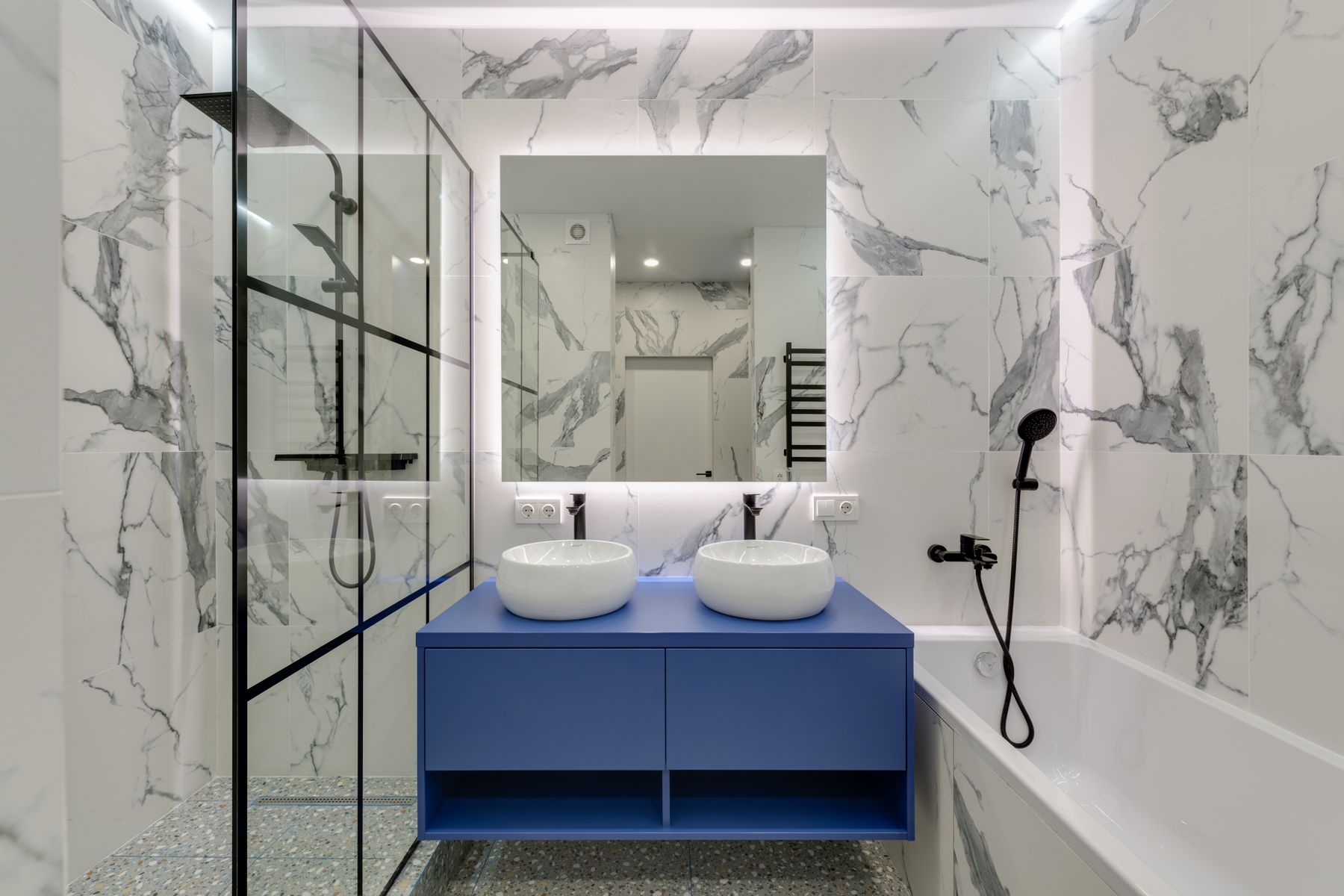
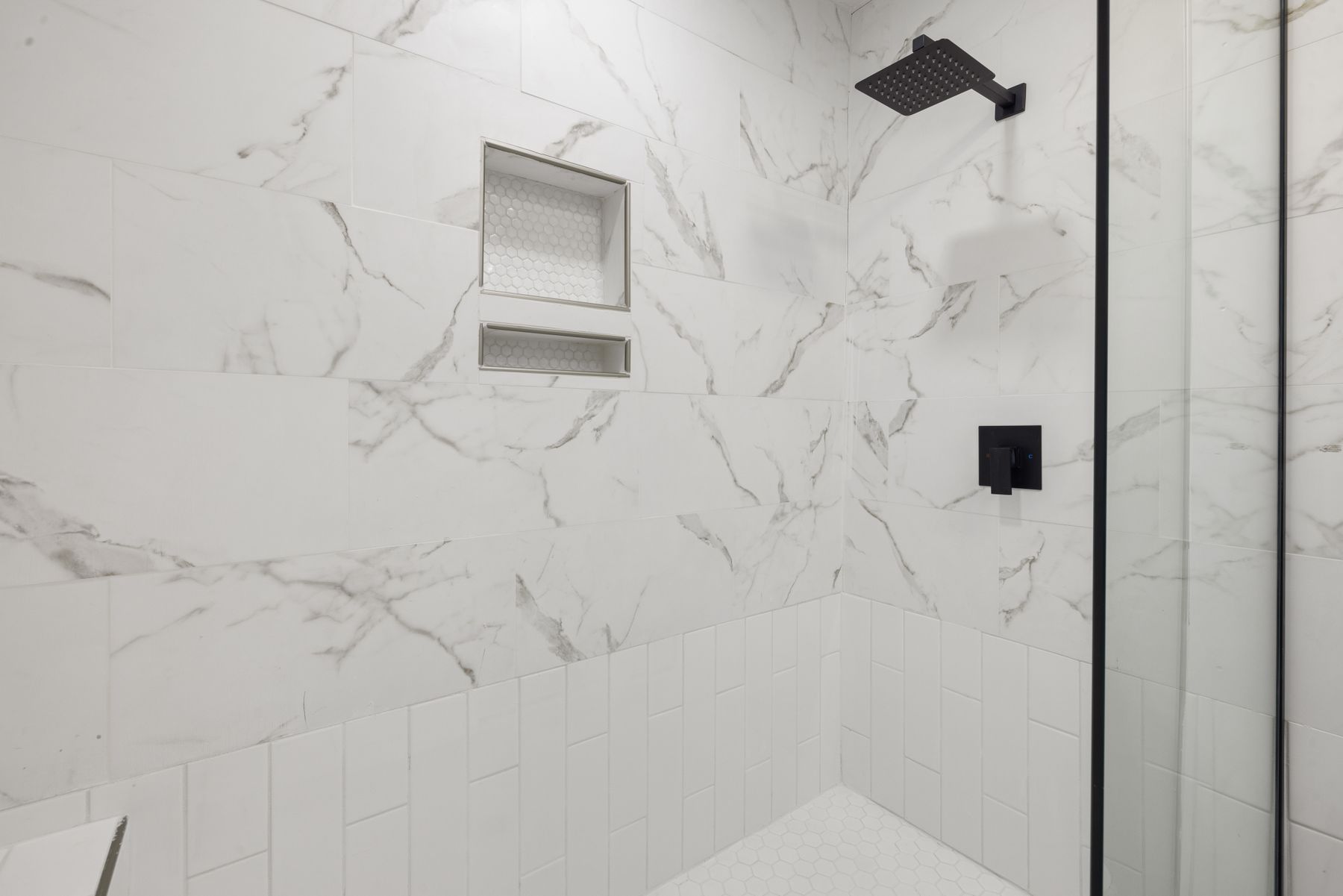
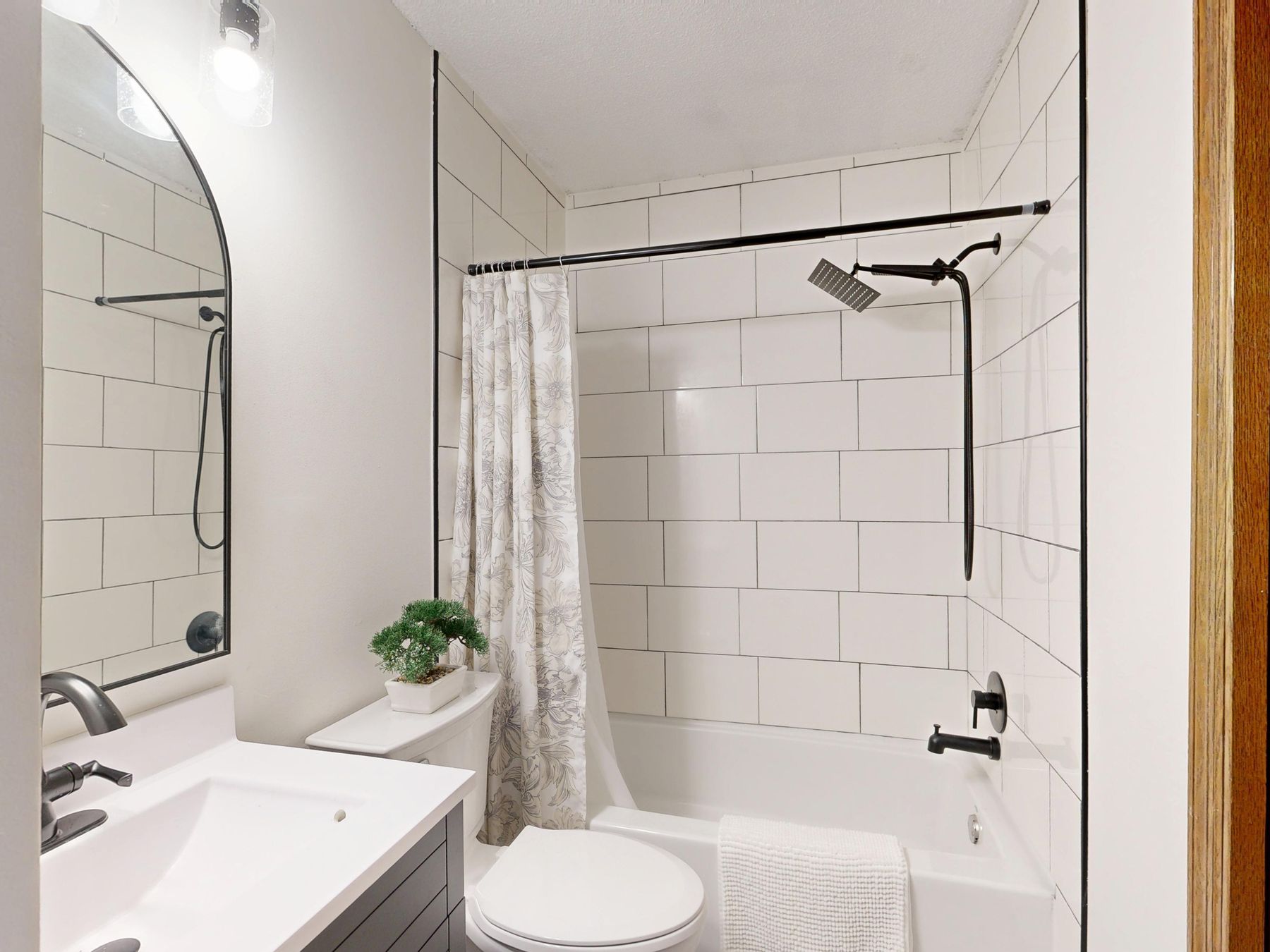
Black shower controls, taps and rails work best when they outline the room rather than compete with a dark background. On lighter tile, they create crisp structure; on black tile, they should differ in sheen or be supported by enough task lighting to remain visible. Consistency matters more than using black on every small fitting.
Warm the Palette With Wood
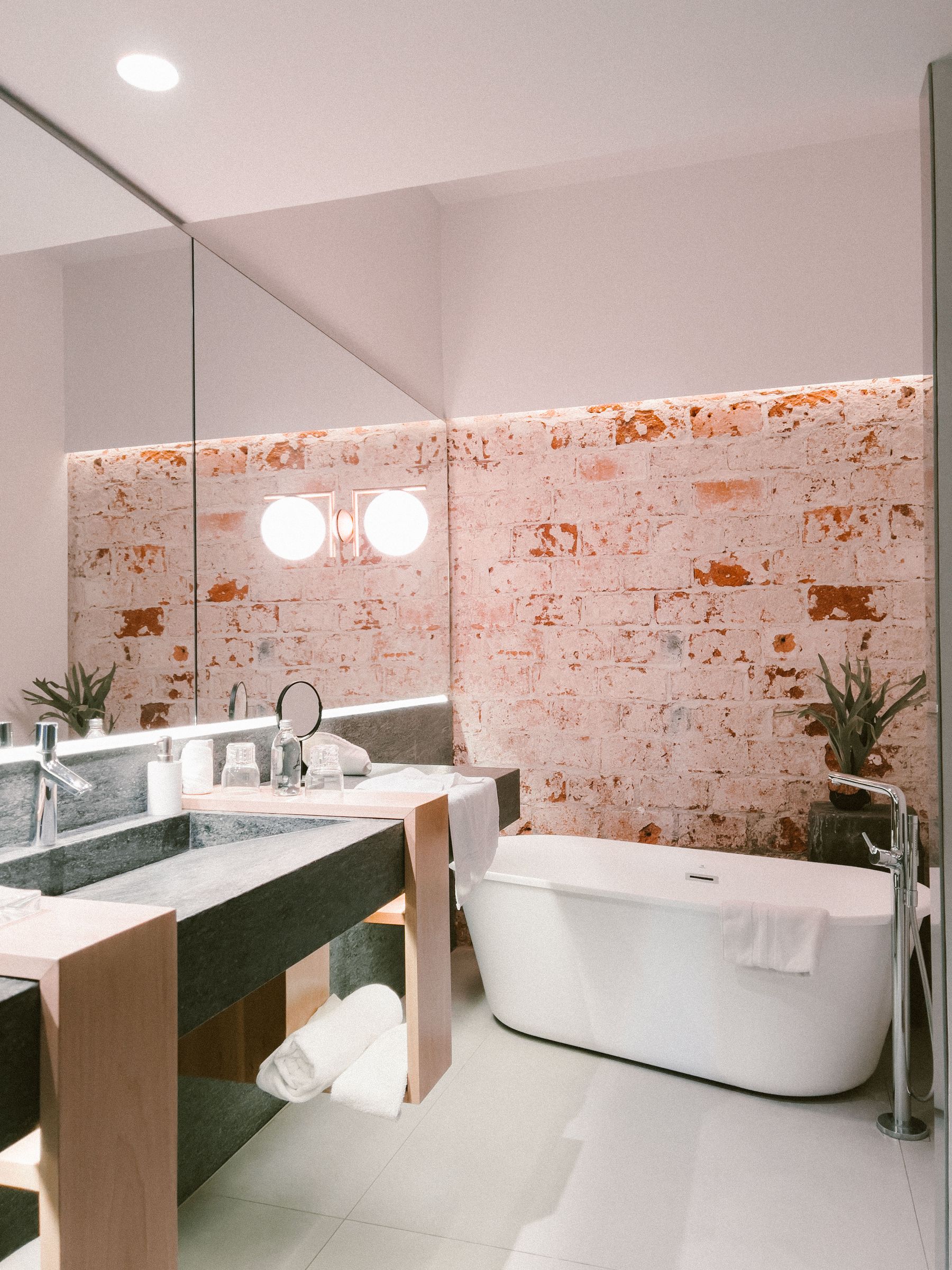
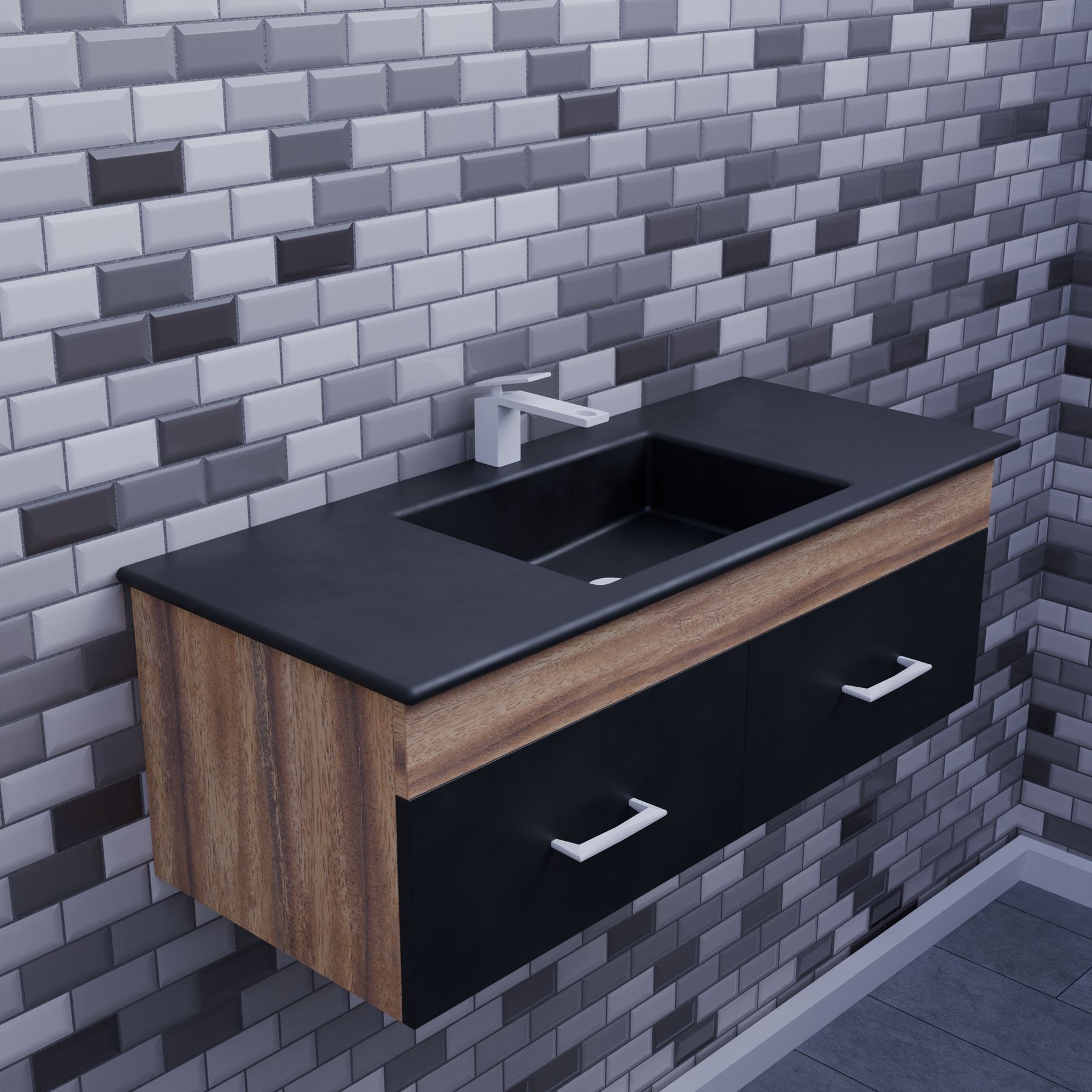
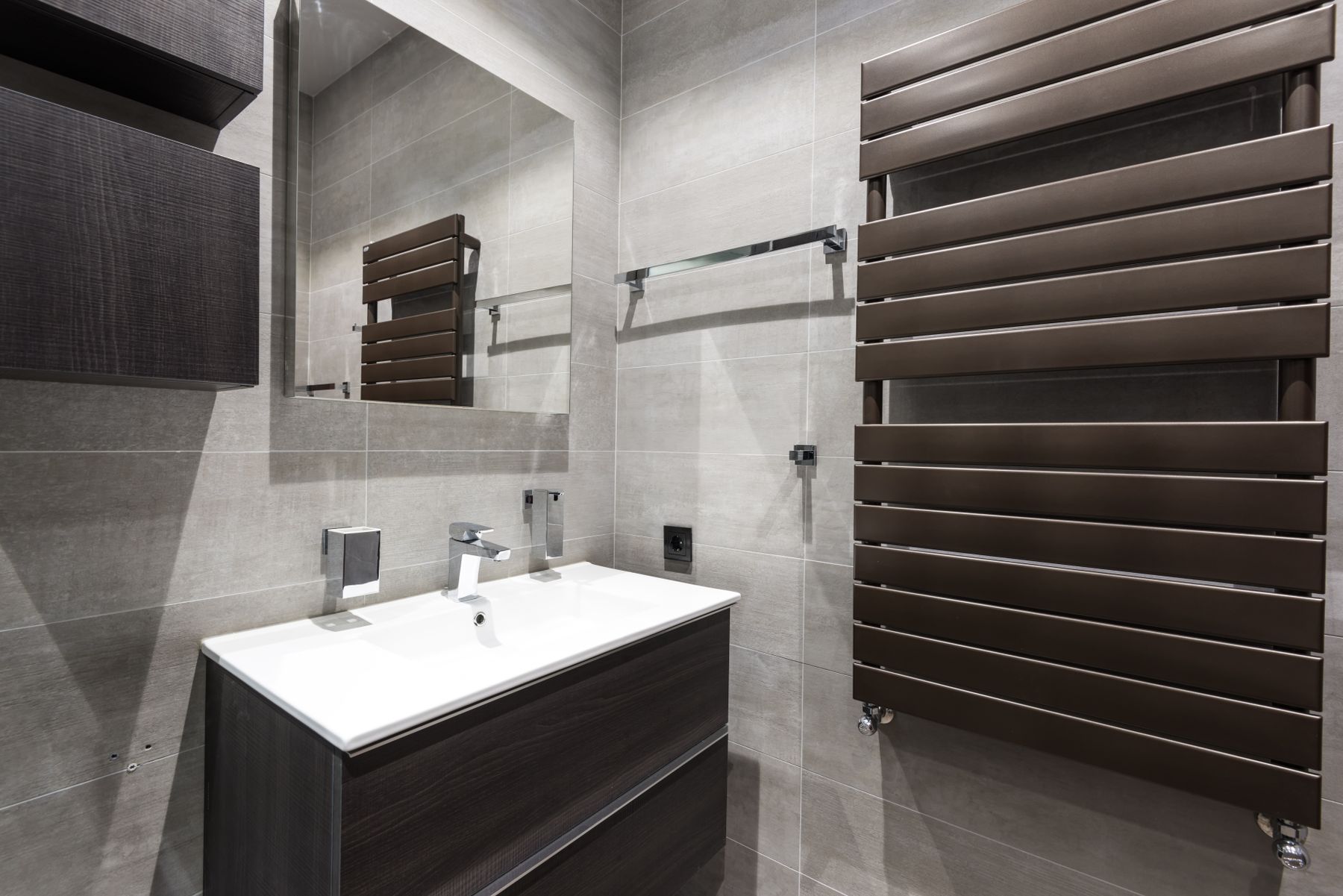
Timber is one of the easiest ways to prevent a black bathroom from feeling cold without weakening the dark color story. A wood vanity or shelf introduces grain and warmth at furniture scale while black tile and fixtures remain dominant. Bathroom cabinetry still needs moisture-appropriate construction and finishes.
Keep Some Ceramic Pale
White or pale ceramic can be useful in a black bathroom because it identifies functional elements instantly. A basin or tub can provide a clean break inside a darker vanity or wall composition. The result still reads as a black bathroom when dark surfaces remain the dominant visual field.
Vary Dark Finishes Instead of Adding More Color
A black bathroom can gain depth through polished stone, matte cabinetry, textured tile and reflective glass rather than through several accent colors. These differences become especially important after sunset, when dark surfaces can visually merge. Layered lighting should reveal edges, texture and vertical planes instead of simply making the room brighter.
Use Black as an Accent in the Lightest Version
If the room has limited daylight or is very small, black can still lead the design through fixtures, frames and key furniture rather than full-height dark walls. White tile and pale surfaces preserve brightness while black shower fittings and lines create the structure. This is the most accessible route for a black bathroom without moving into a fully monochrome black-and-white scheme.