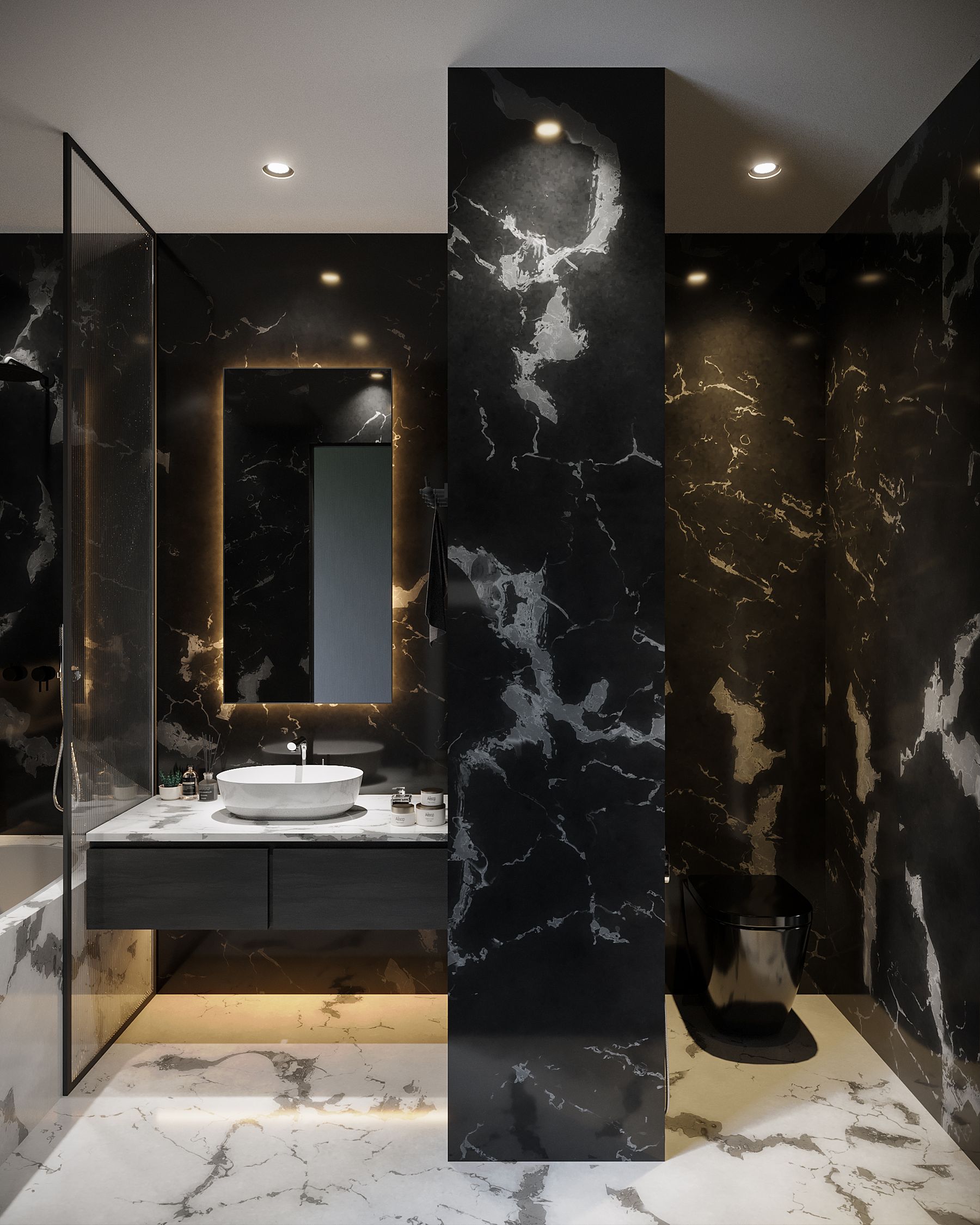
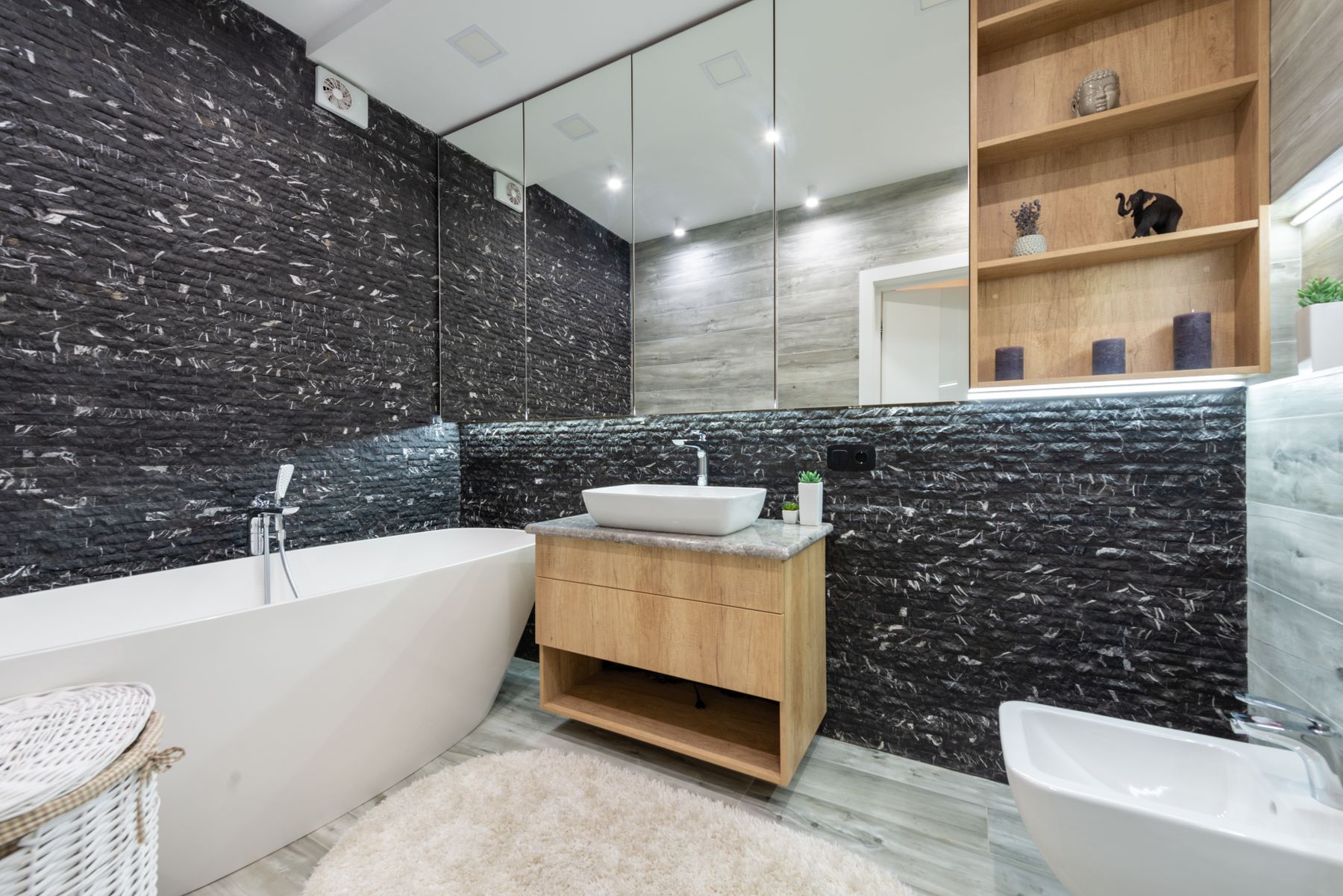
Start With One Dark Material at Full Scale
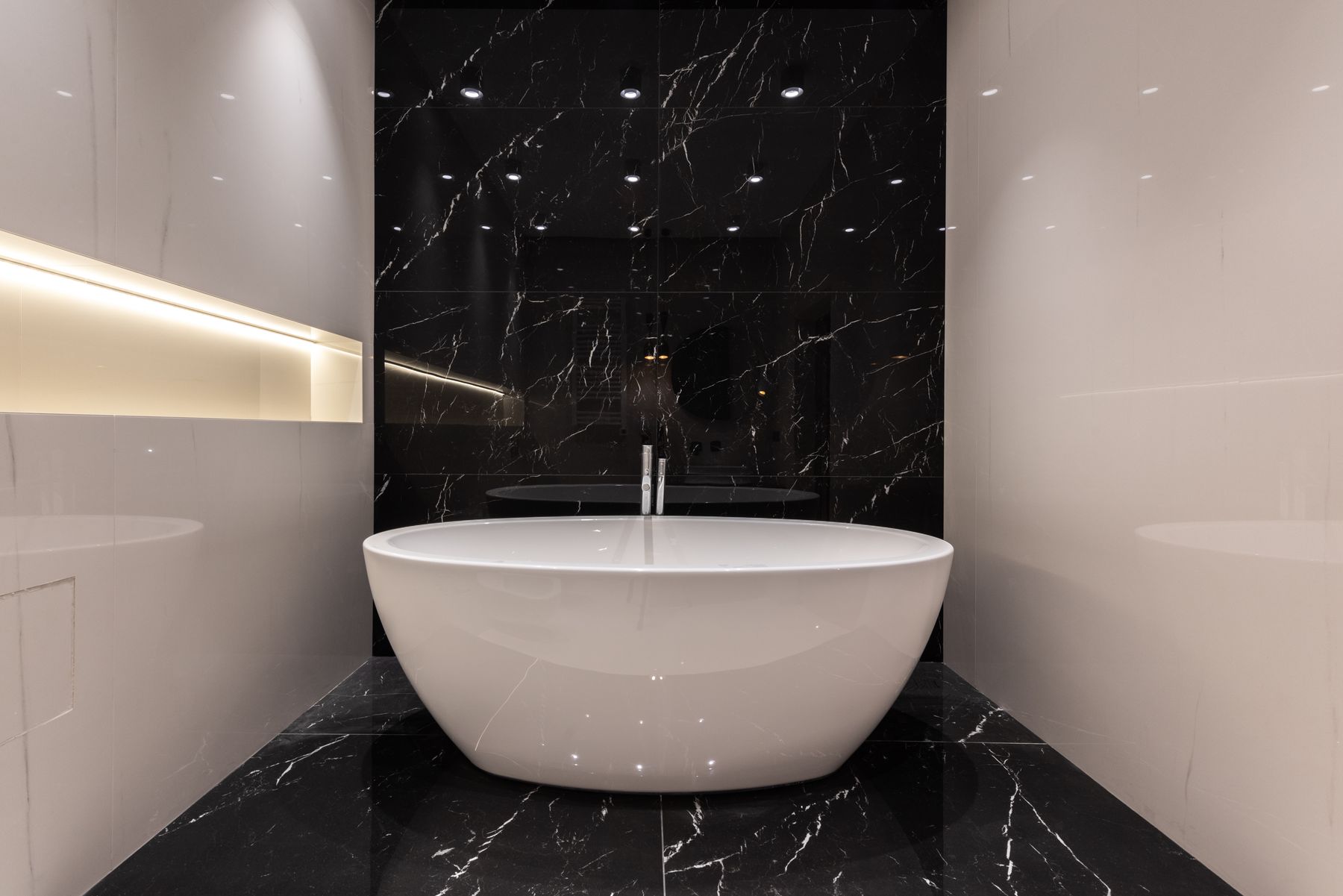
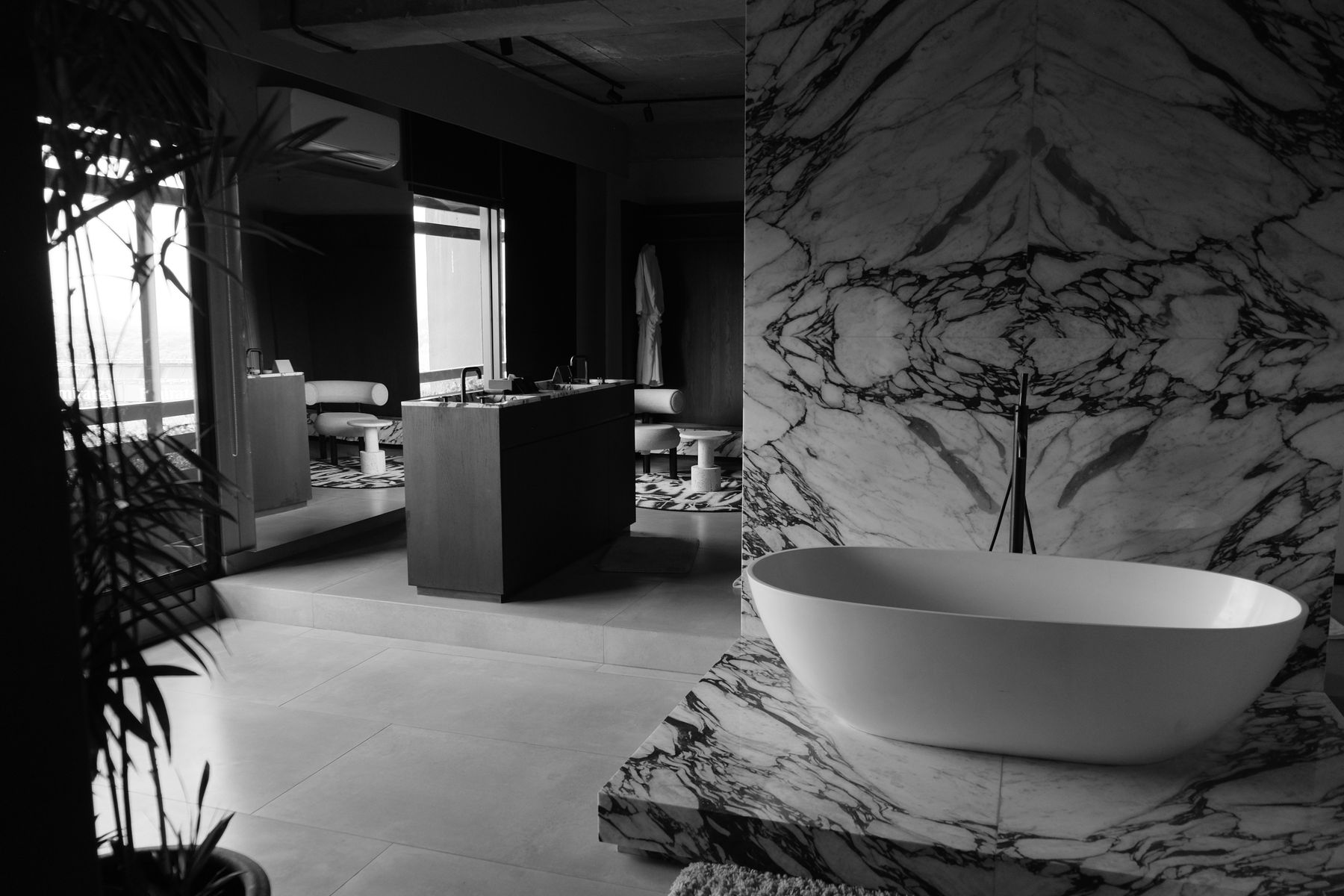
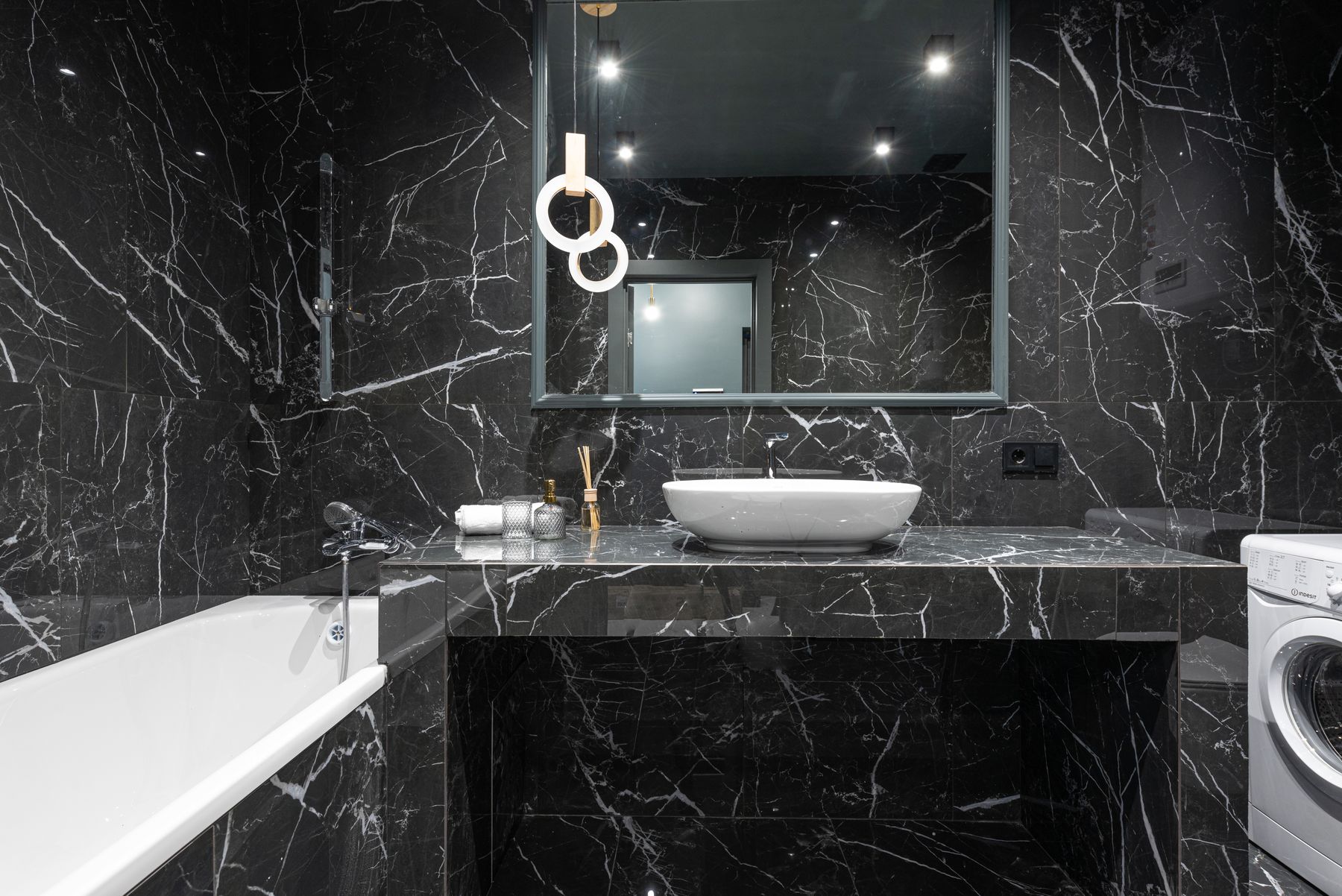
Dark stone or stone-look tile feels more convincing when it occupies one substantial wall or bathing zone rather than appearing as small decorative fragments. Choose the dominant dark surface first, then let sanitaryware, timber and metal create contrast around it. Very dark finishes show water marks, dust and soap differently, so maintenance should be considered alongside the visual effect.
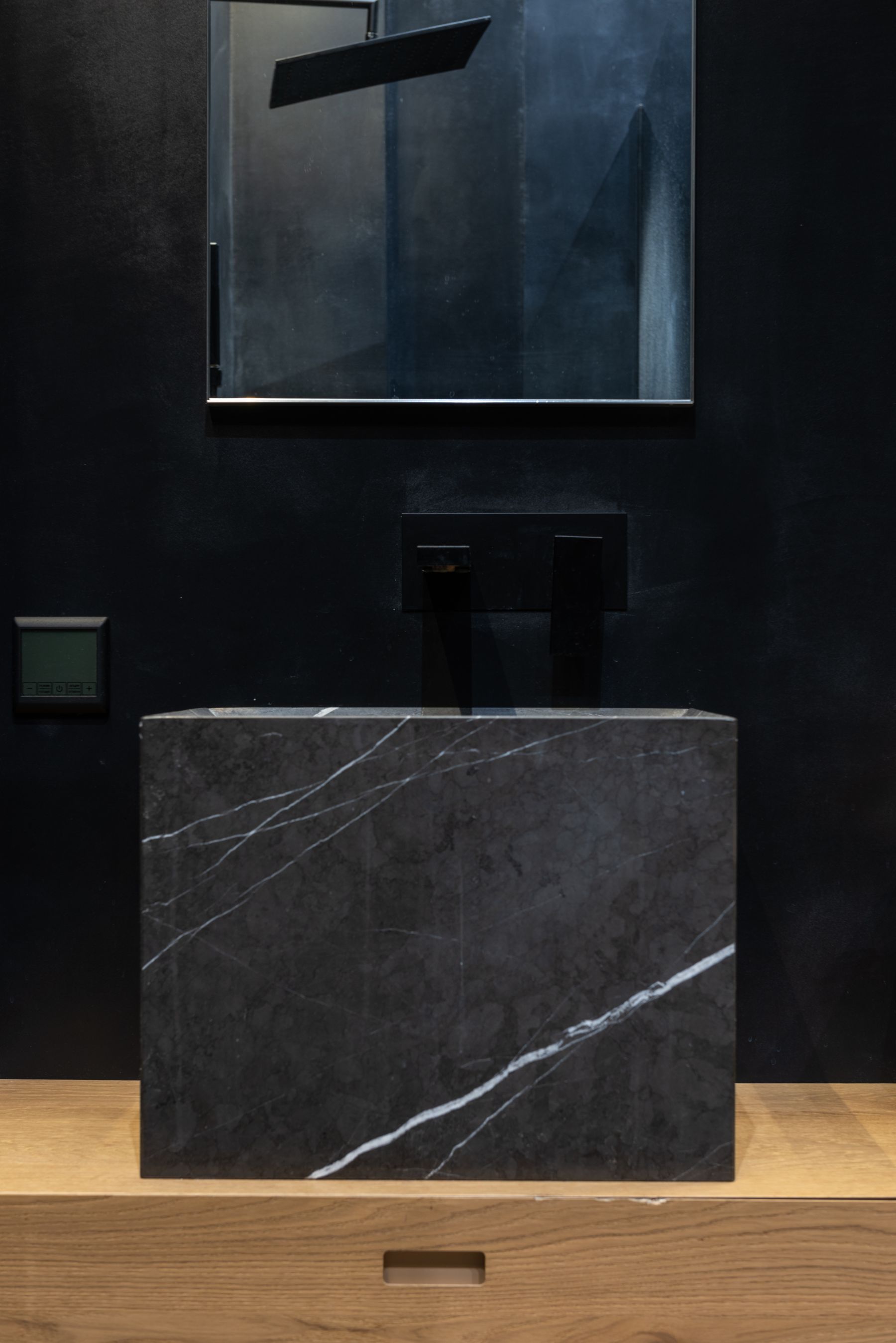
Use Warm Wood to Stop Black From Feeling Flat
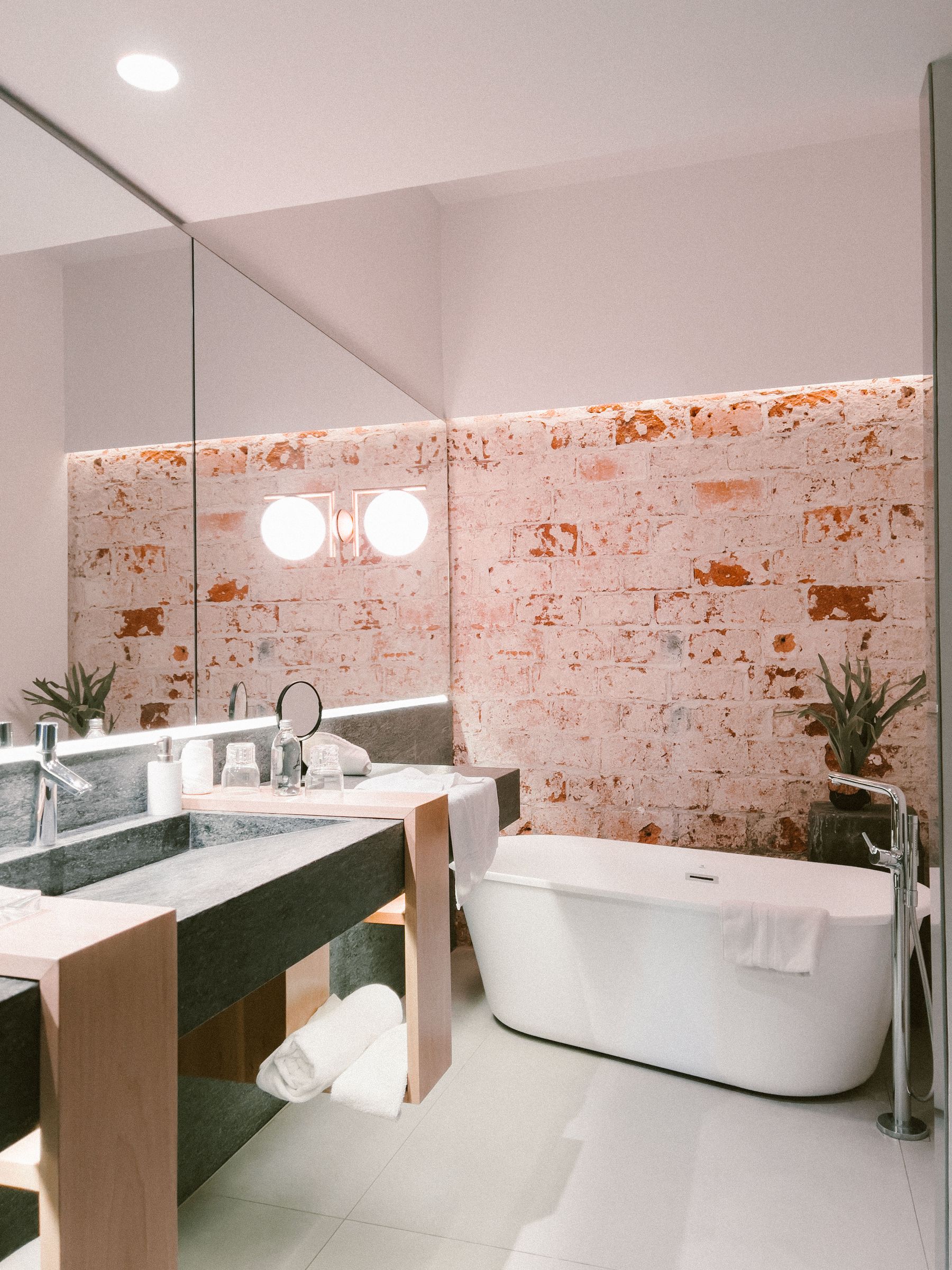
Black stone and tile gain depth when they sit beside visible wood grain. A vanity or shelf in a warm timber tone can interrupt the darkness without making the room feel less dramatic. Bathroom cabinetry still needs moisture-appropriate construction; the warmth should come from a durable material choice rather than decorative props.
Let Black Tile Define One Functional Plane
Black tile can make a vanity or wet wall feel architectural, but its grout and sheen determine whether the surface reads as one mass or a visible grid. Lower contrast grout feels quieter, while reflective tile catches more light and reveals texture. Keep controls, edges and cleaning access visible against the dark field.
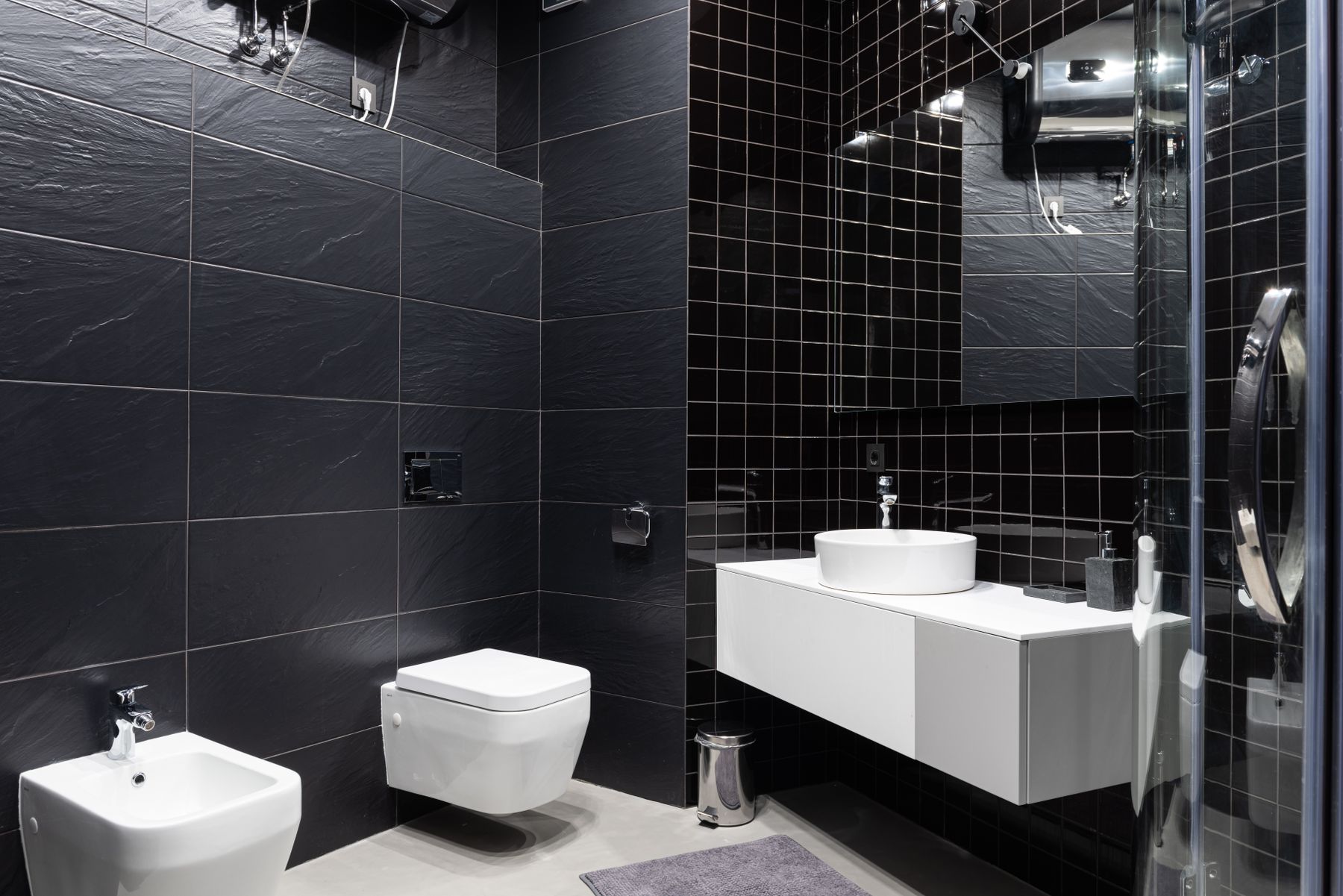
Make the Shower the Darkest Zone
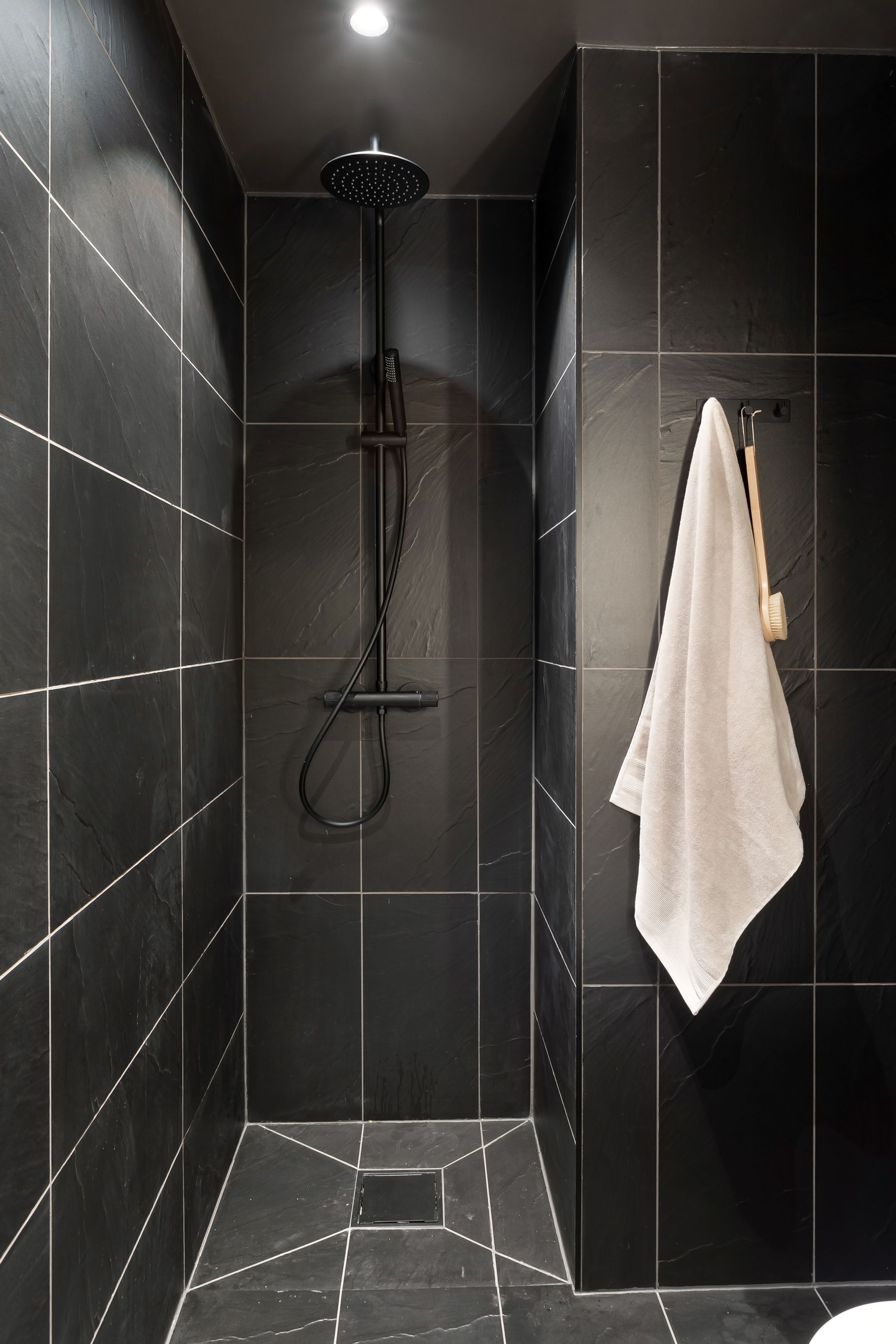
A black shower enclosure or tiled shower wall can concentrate the gothic mood where a durable hard finish already makes sense. Keep towels, controls and edges visible through contrast, and use lighting that reaches the shower rather than leaving the darkest part of the room underlit. Waterproofing and slip resistance remain technical requirements regardless of color.
Use Warm Metal as a Narrow Highlight
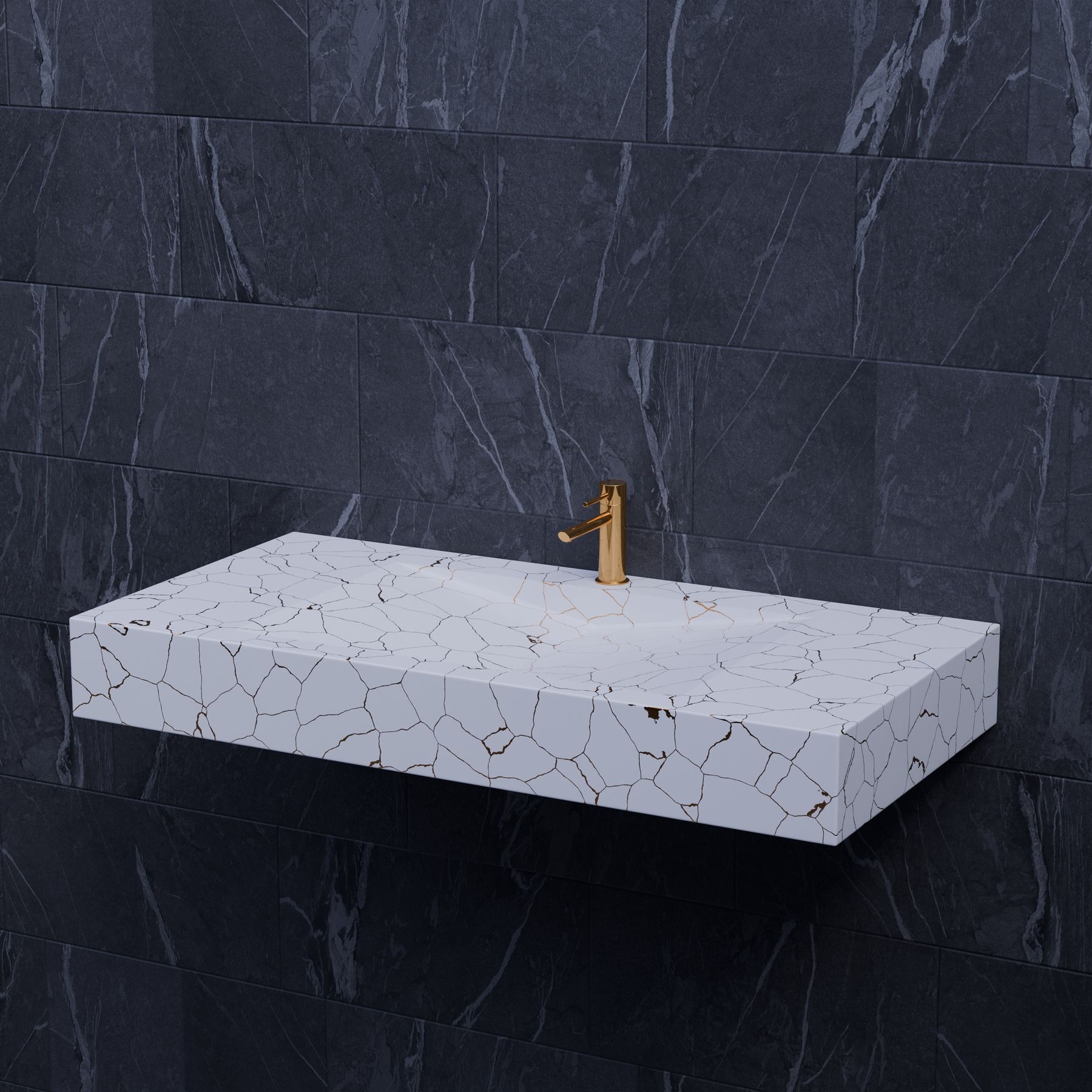
Brass or gold-toned metal can look especially rich against black stone, but it works best as a line and point of light rather than a dominant surface. Faucets, shower controls, mirror trim or a small light fitting can provide enough contrast. Avoid adding gold to every accessory simply because the palette is dark.
Let Dark Cabinetry Carry the Furniture Weight
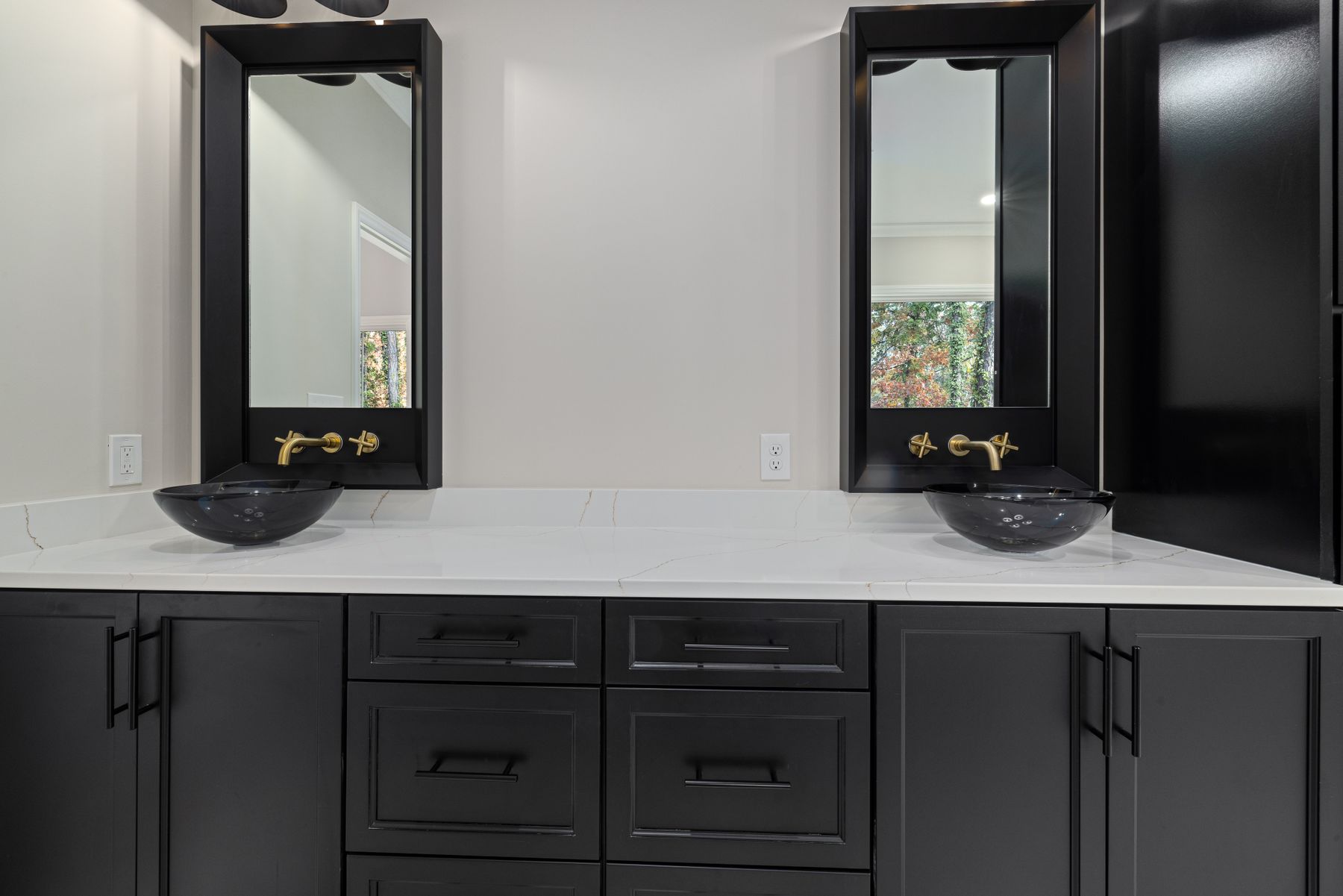
Black or very dark cabinetry can add the furniture-like weight associated with a gothic-inspired room while keeping storage practical. Pair it with a lighter countertop, reflective mirror or warm hardware so the cabinet edges remain clear. Deep cabinetry is particularly useful for hiding modern packaging and electrical grooming tools that would otherwise weaken the visual atmosphere.
Use a Classic Bath Without Making the Room Historical
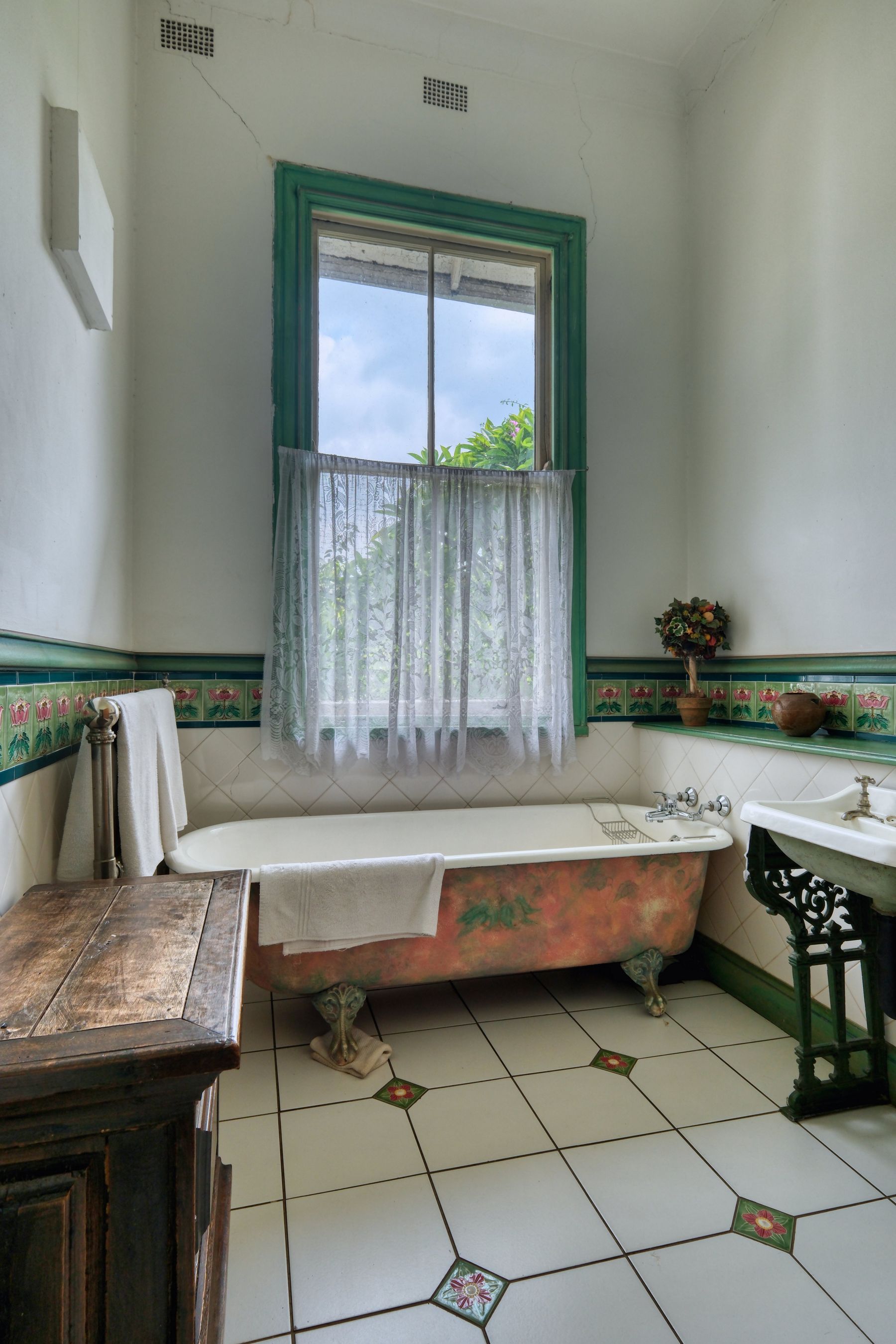
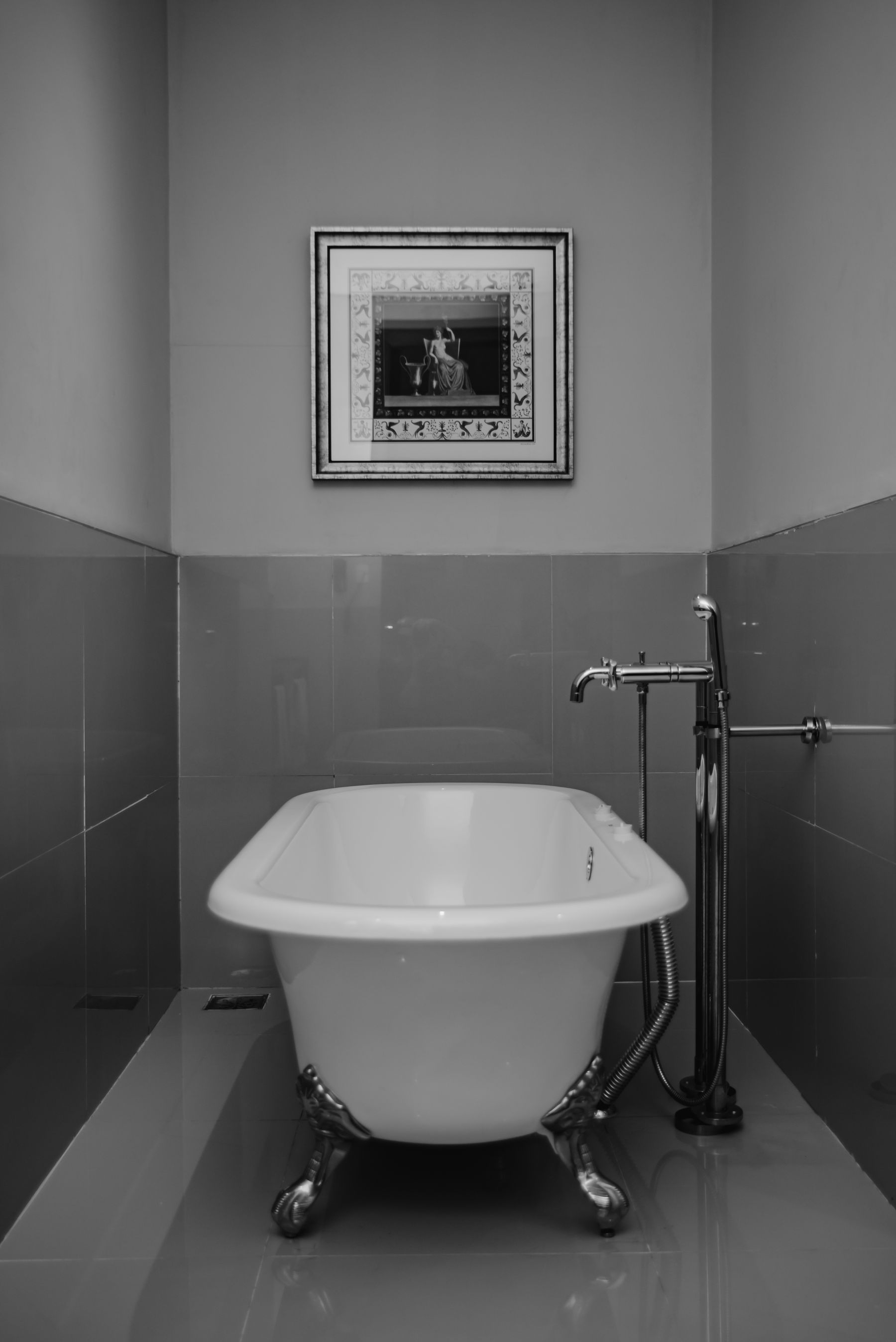
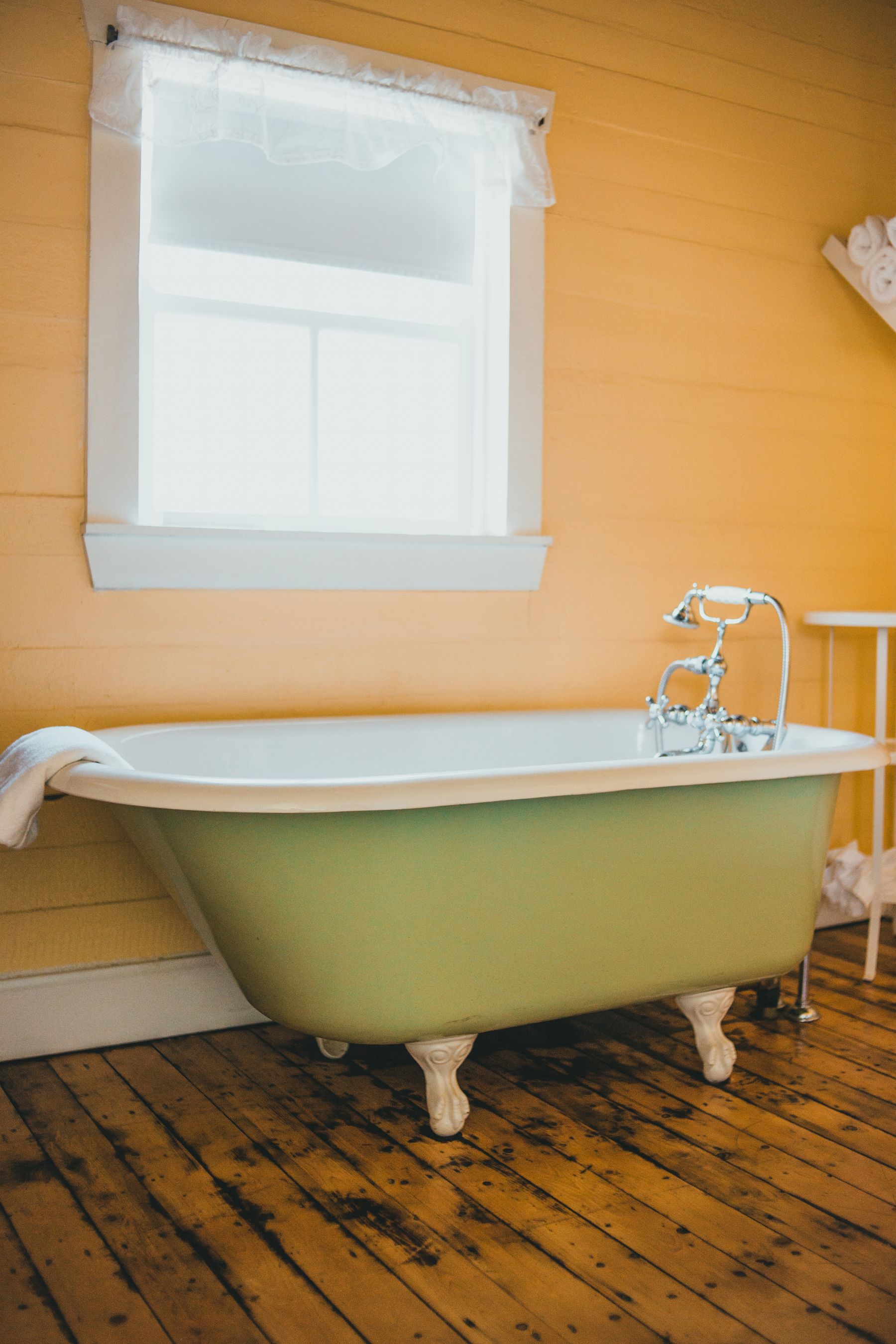
A clawfoot or classic freestanding bath can introduce romantic historical character into an otherwise contemporary dark bathroom. It does not need matching reproduction taps, ornate tile and antique furniture at the same time. The contrast between a recognizable old form and a controlled modern shell often feels more convincing than a full period reconstruction.
Use Deep Green as an Alternative to All Black
Forest green, bottle green, burgundy or another deep jewel tone can create the same visual richness as black while adding more color depth. A painted bath or vanity is an effective place to use it because the color remains concentrated. Pair the jewel tone with warm metal, pale tile or timber so the room keeps enough contrast.
Build a Layered Lighting Plan for Dark Surfaces
Dark marble and tile absorb more light than pale surfaces, so one ceiling fixture rarely produces a usable bathroom. Combine mirror task lighting with ambient and bathing-zone light, and use reflections deliberately rather than depending on very bright bulbs. Electrical design in bathrooms must follow local wet-area requirements.
Know Where an All-Black Scheme Needs Relief
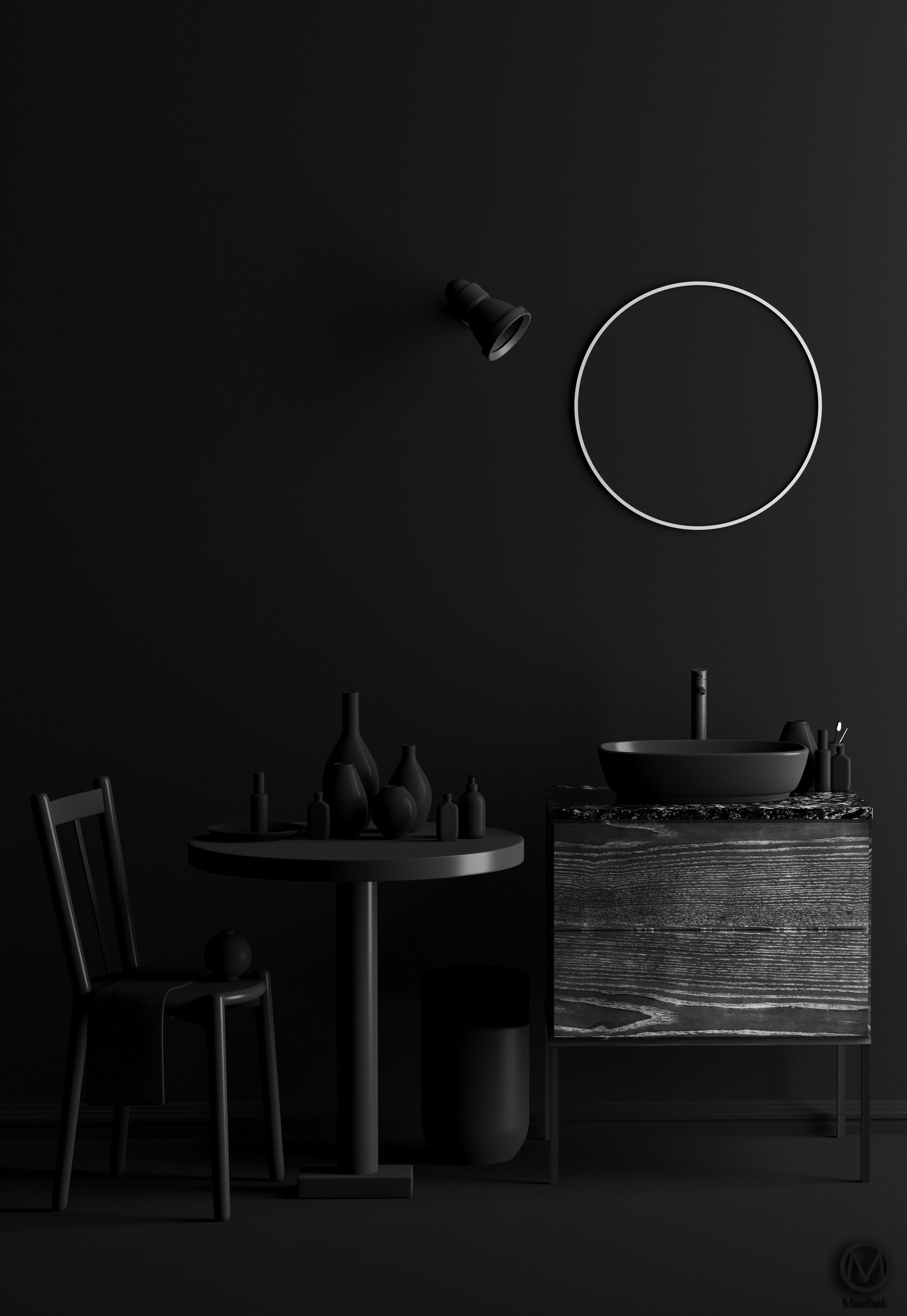
An almost all-black bathroom can be striking, but it demands more discipline than a mixed palette. Vary matte and reflective finishes, keep sanitary functions readable and introduce relief through light, metal, glass or a controlled pale element. If every object, wall and fixture has the same value, the room loses depth instead of gaining drama.