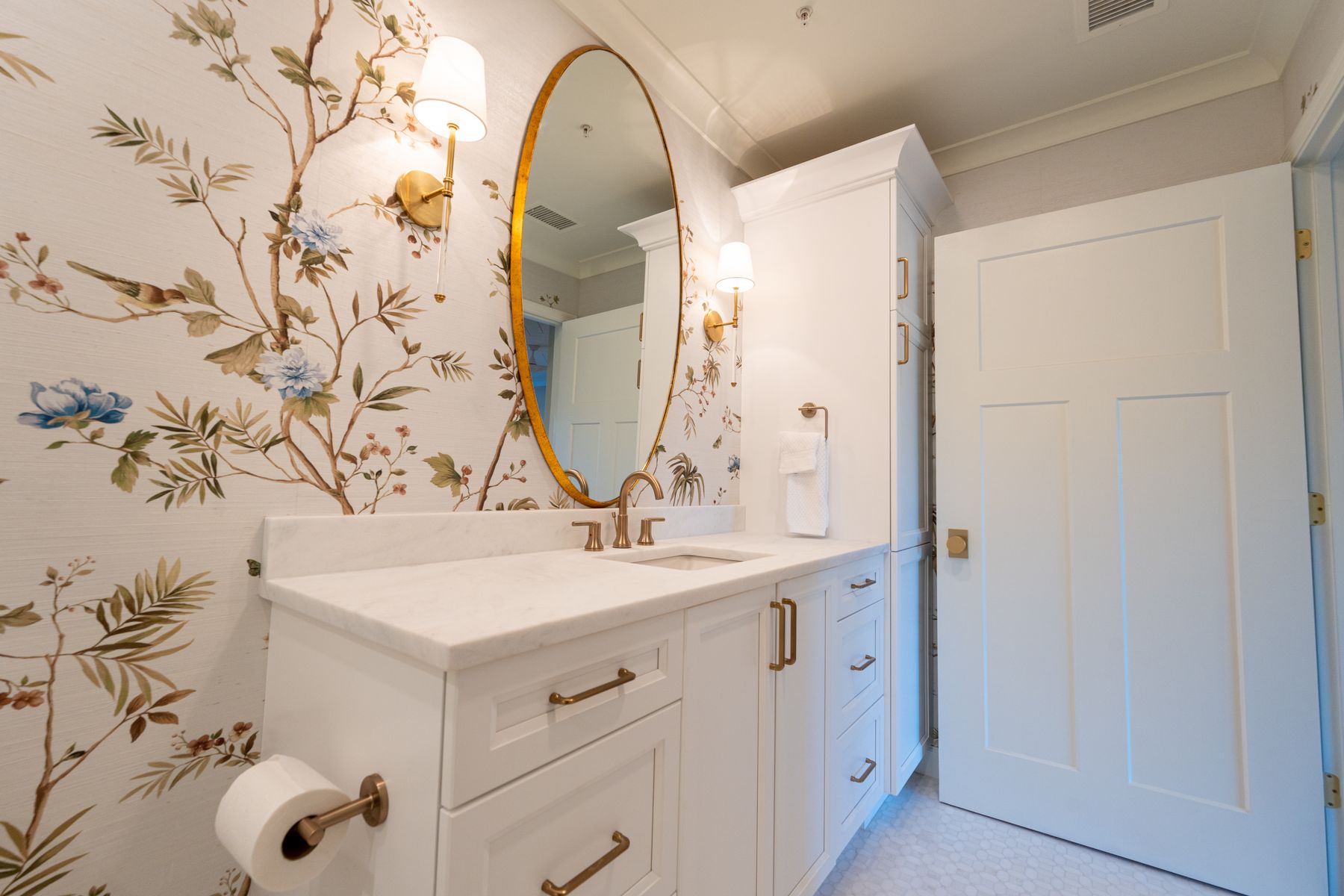
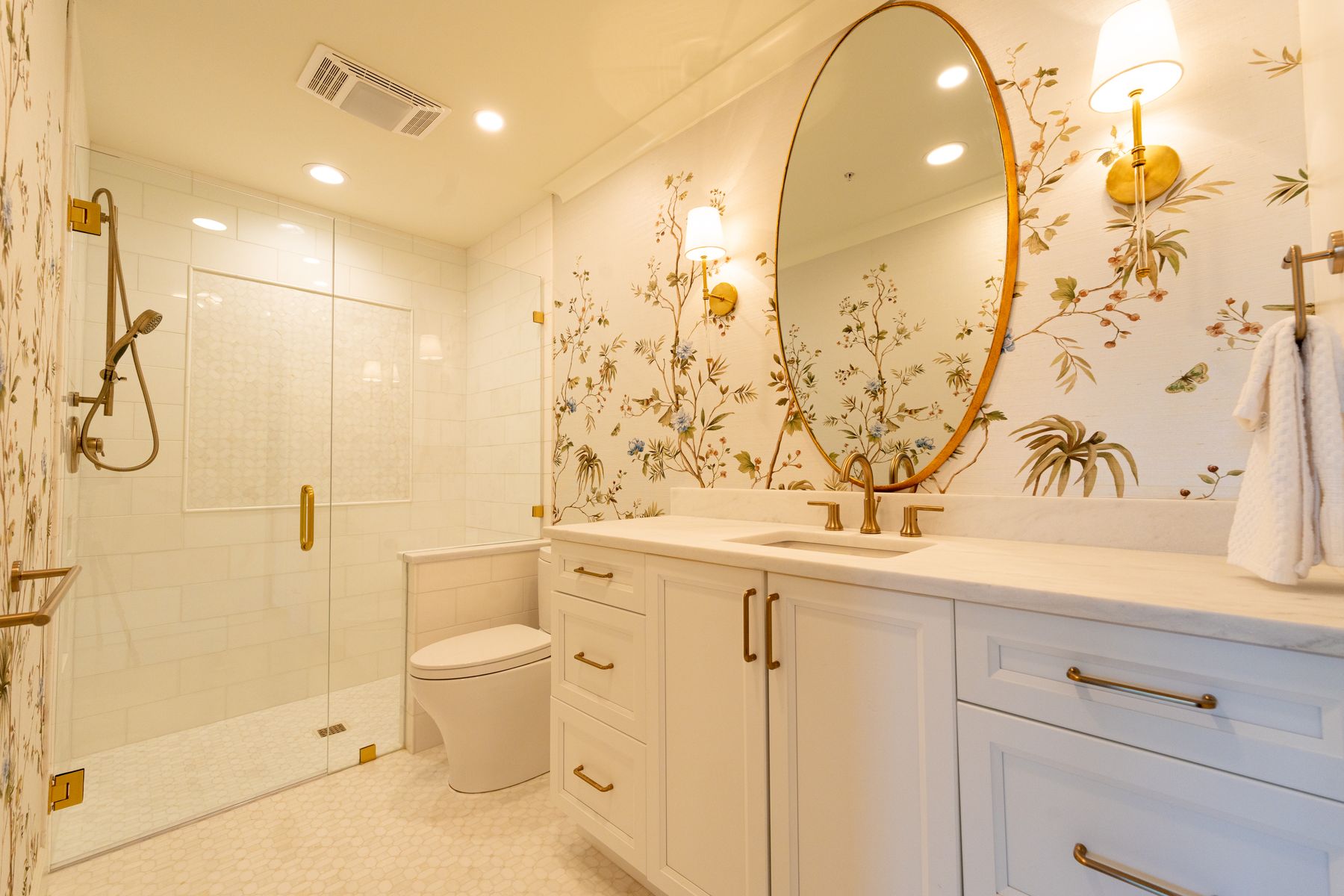
Use Floral Wallpaper as the Main Romantic Layer
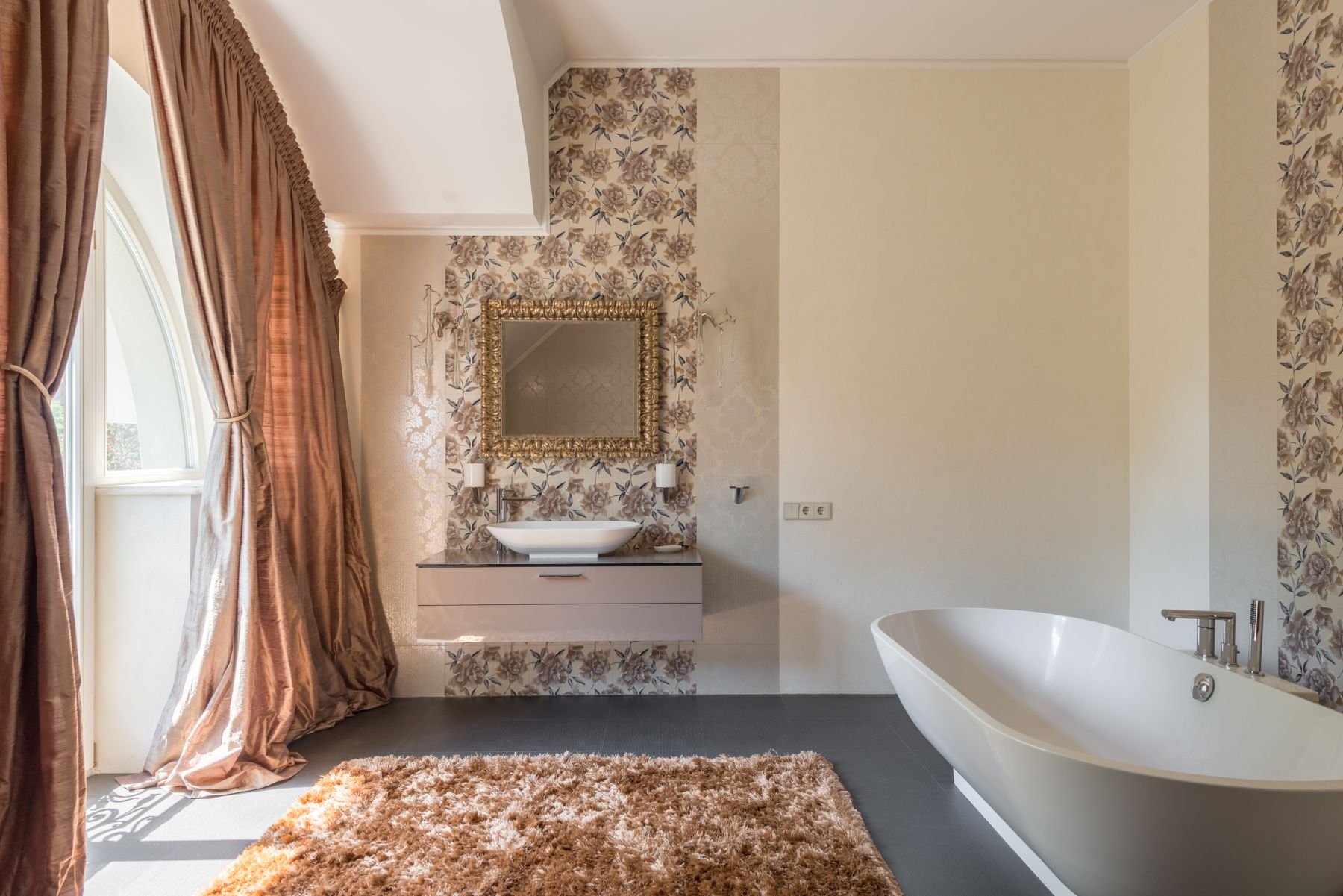
Floral wallpaper can establish the shabby chic mood immediately, especially behind a vanity or in a drier upper-wall zone. Keep tile and cabinetry simpler so the pattern has room to breathe. In a full bathroom, ventilation, splash exposure and the wallpaper manufacturer's suitability guidance matter; use durable wet-area finishes where water contact is frequent.
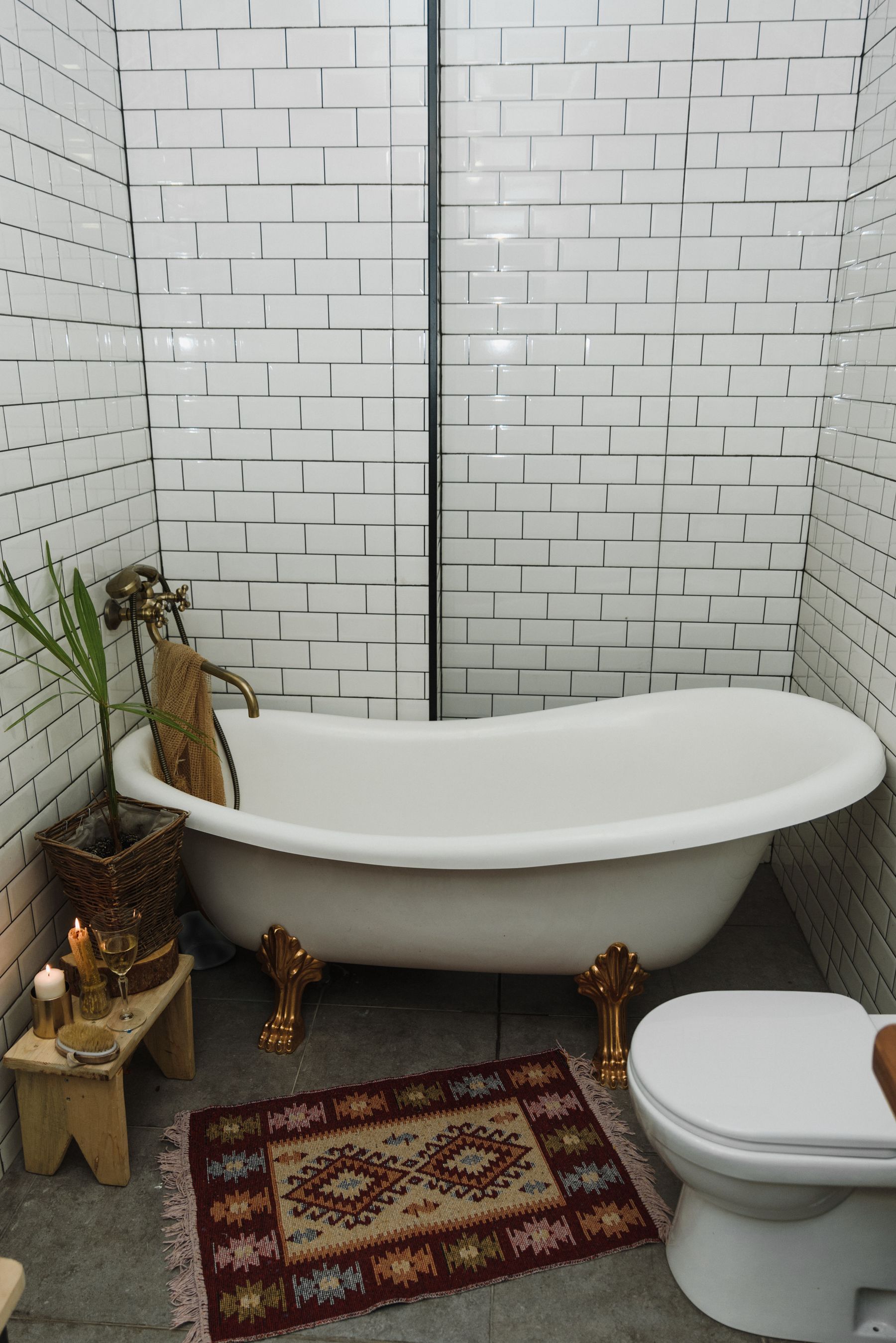
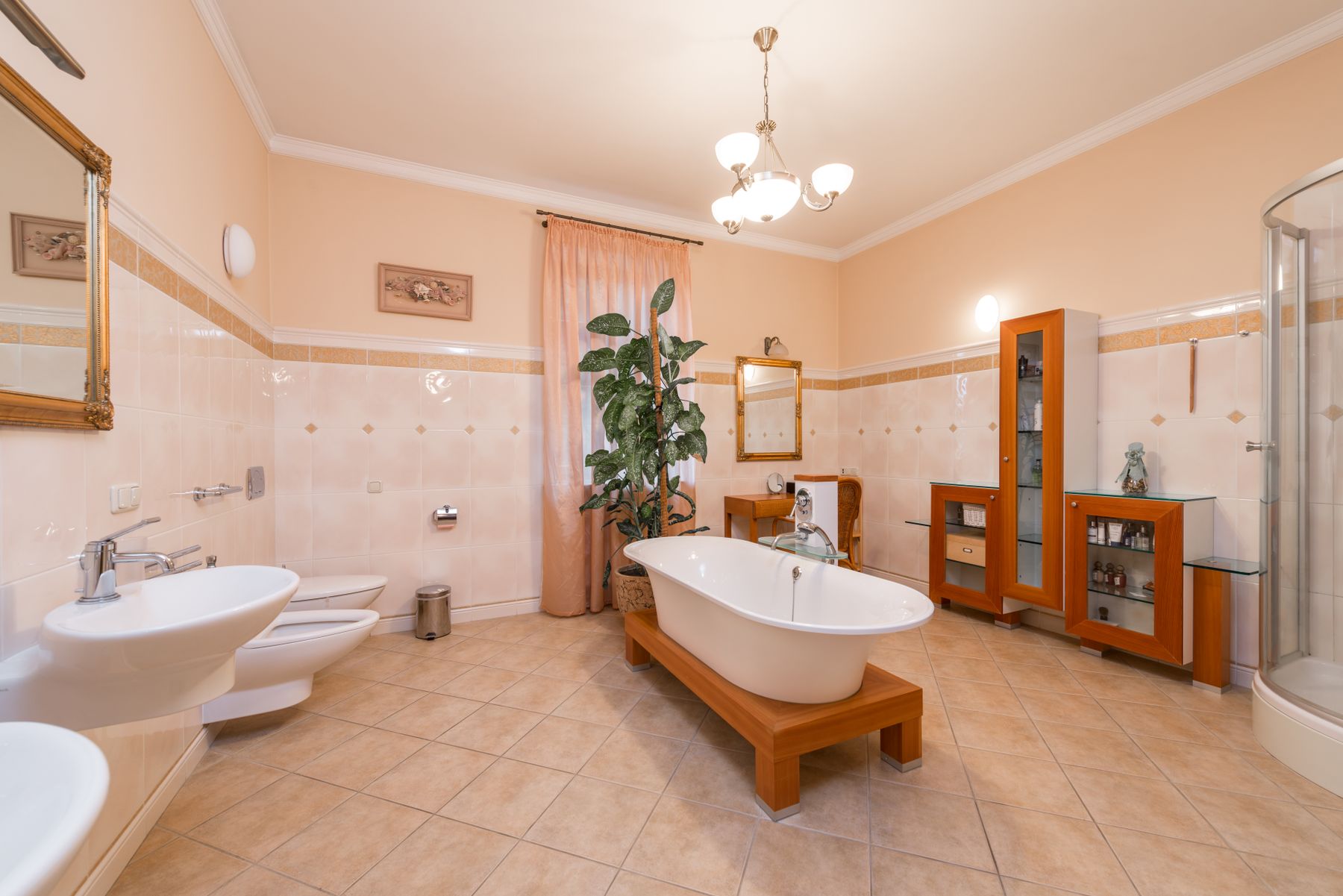
Keep the Tub Classic and the Surroundings Light
A white clawfoot or traditionally shaped freestanding bath fits shabby chic well because it adds a familiar vintage silhouette without requiring ornate decoration everywhere. Keep nearby walls pale and let one rug, stool or plant add softness. Make sure there is enough space for safe entry, cleaning and faucet access around the tub.
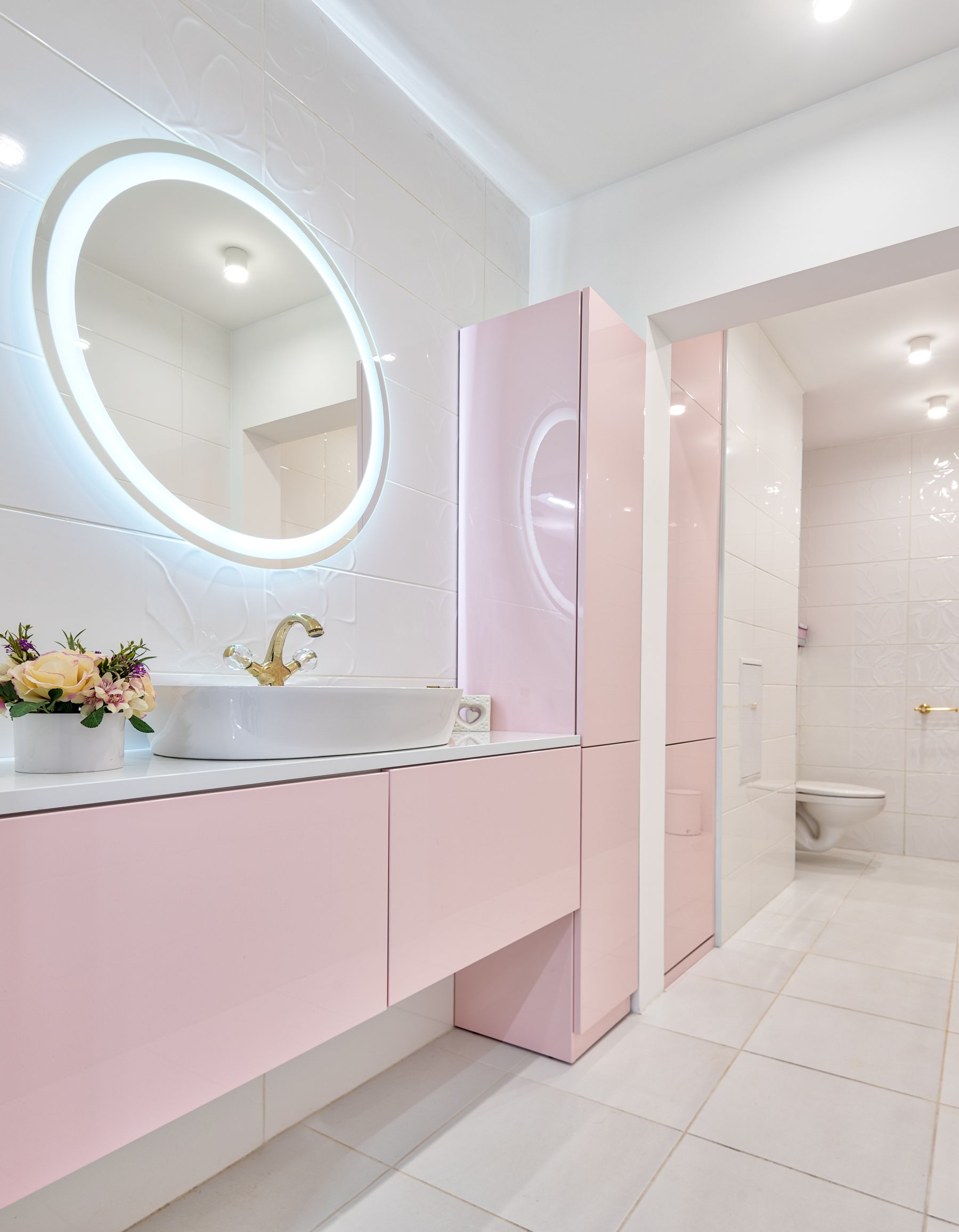
Use Pale Painted Cabinetry Instead of Faux-Aged Everything
Soft pink, warm white, pale grey or muted sage cabinetry can create a shabby chic feel without heavy distressing. A smooth painted finish is usually easier to clean and more durable than deliberately chipped paint in a humid room. If you want patina, keep it subtle and away from handles, splash zones and surfaces that need frequent wiping.
Use Floral Tile as a Smaller Pattern Moment
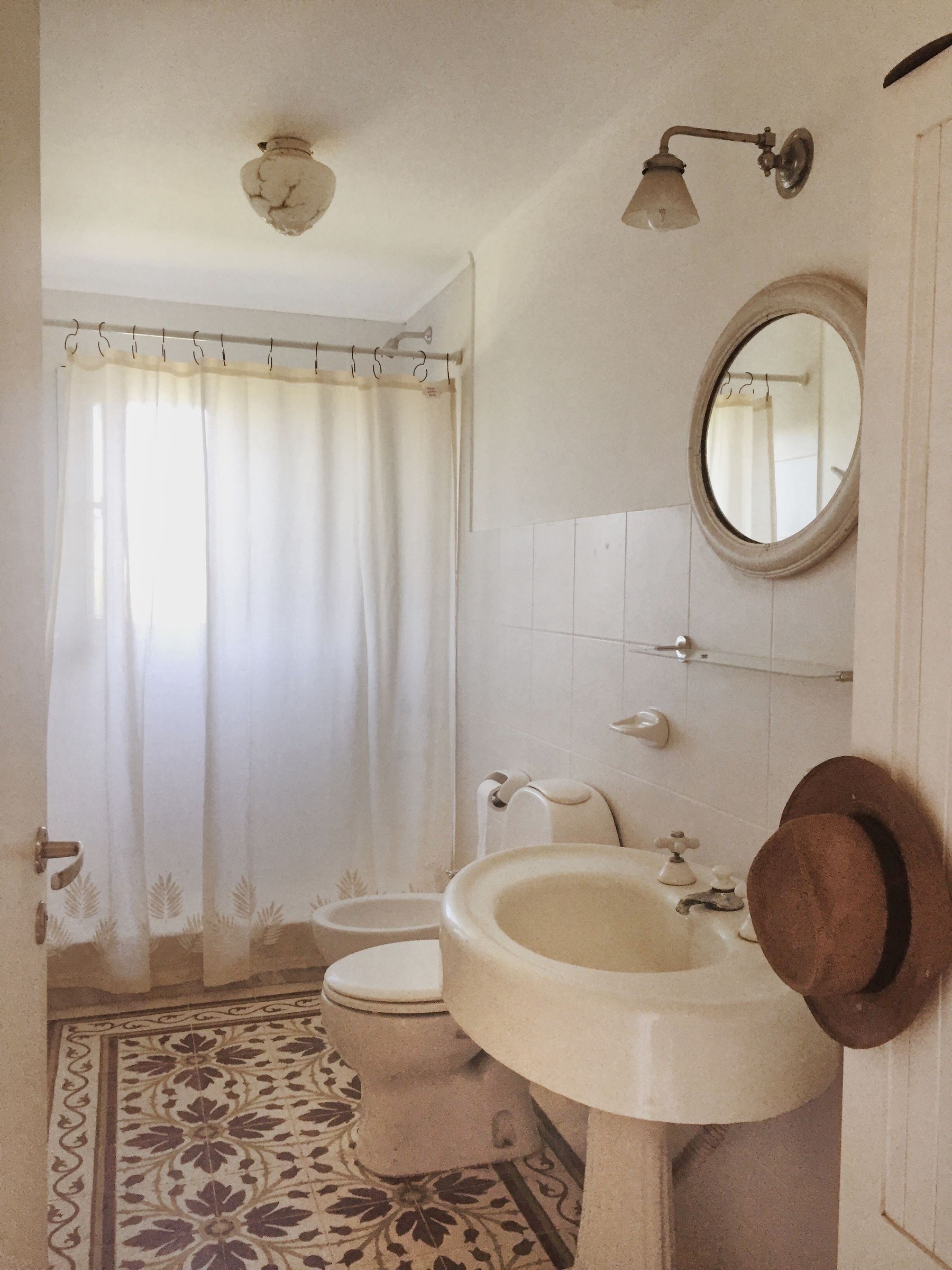
Floral or decorative tile can add vintage charm when it is confined to a backsplash, shower niche, floor inset or one wall. Because tile is more permanent than wallpaper or textiles, use a pattern you can live with beyond the current styling layer. Surrounding surfaces should stay relatively quiet so the room does not become visually busy.
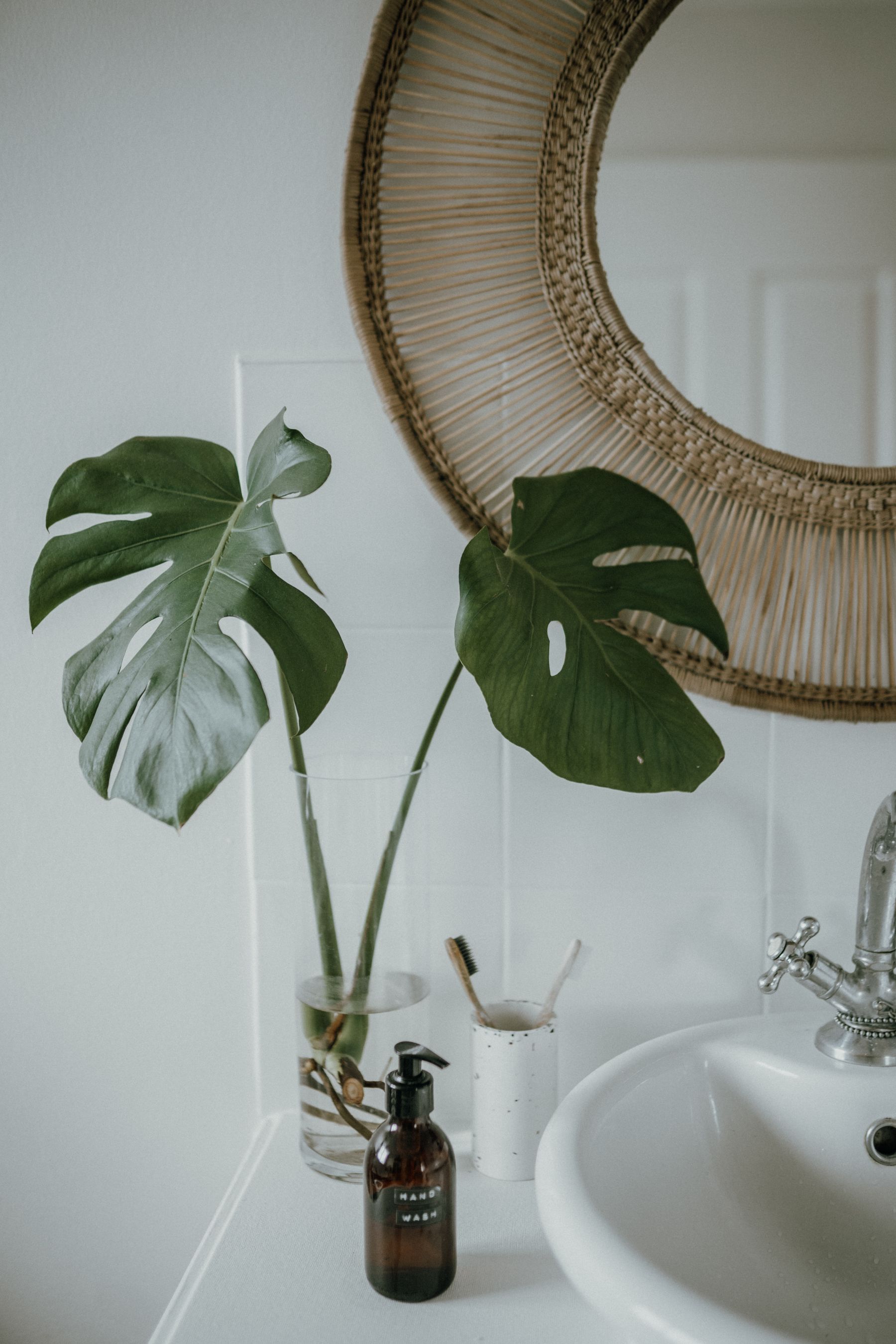
Let One Vintage Mirror Carry the Collected Character
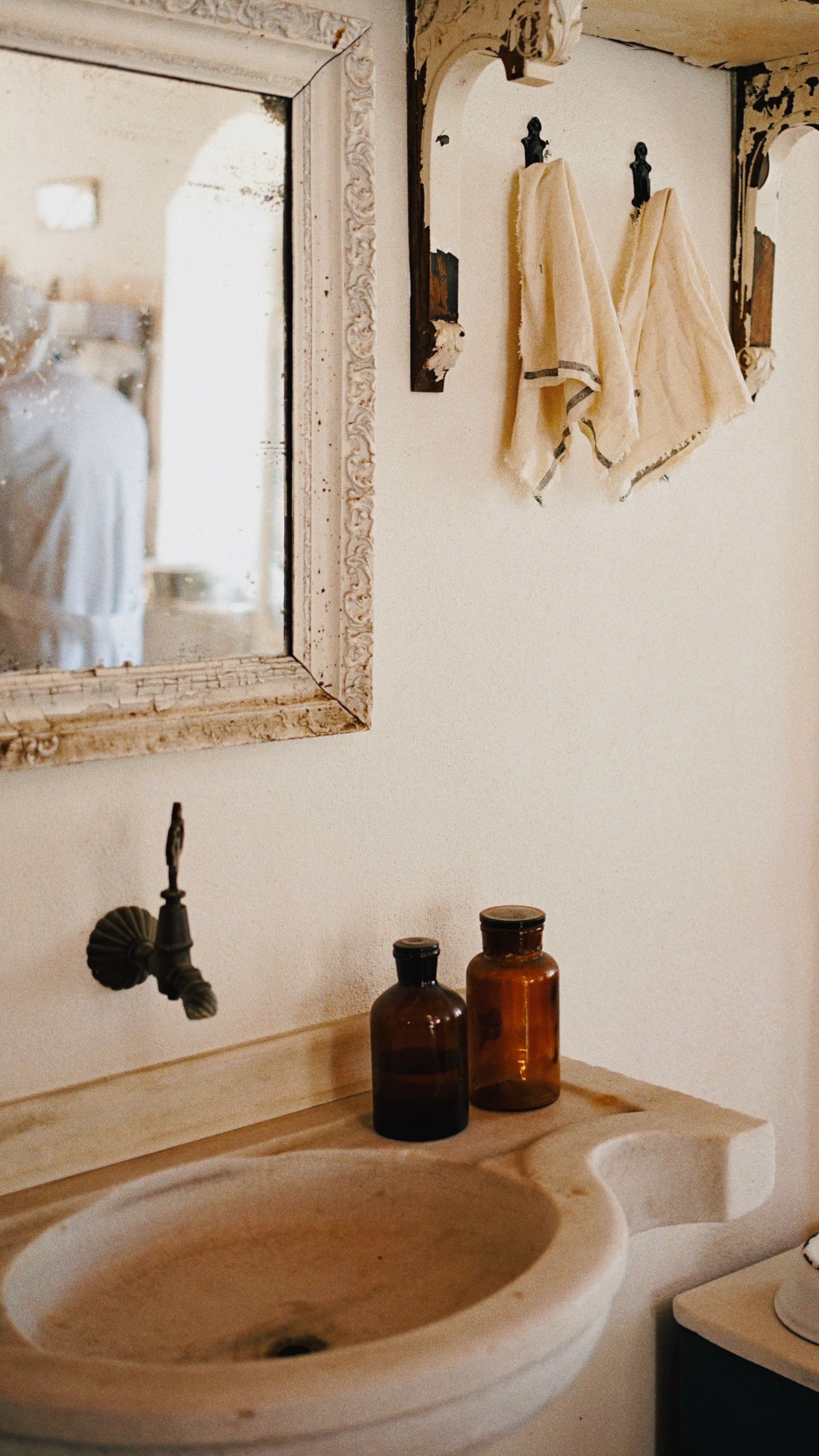
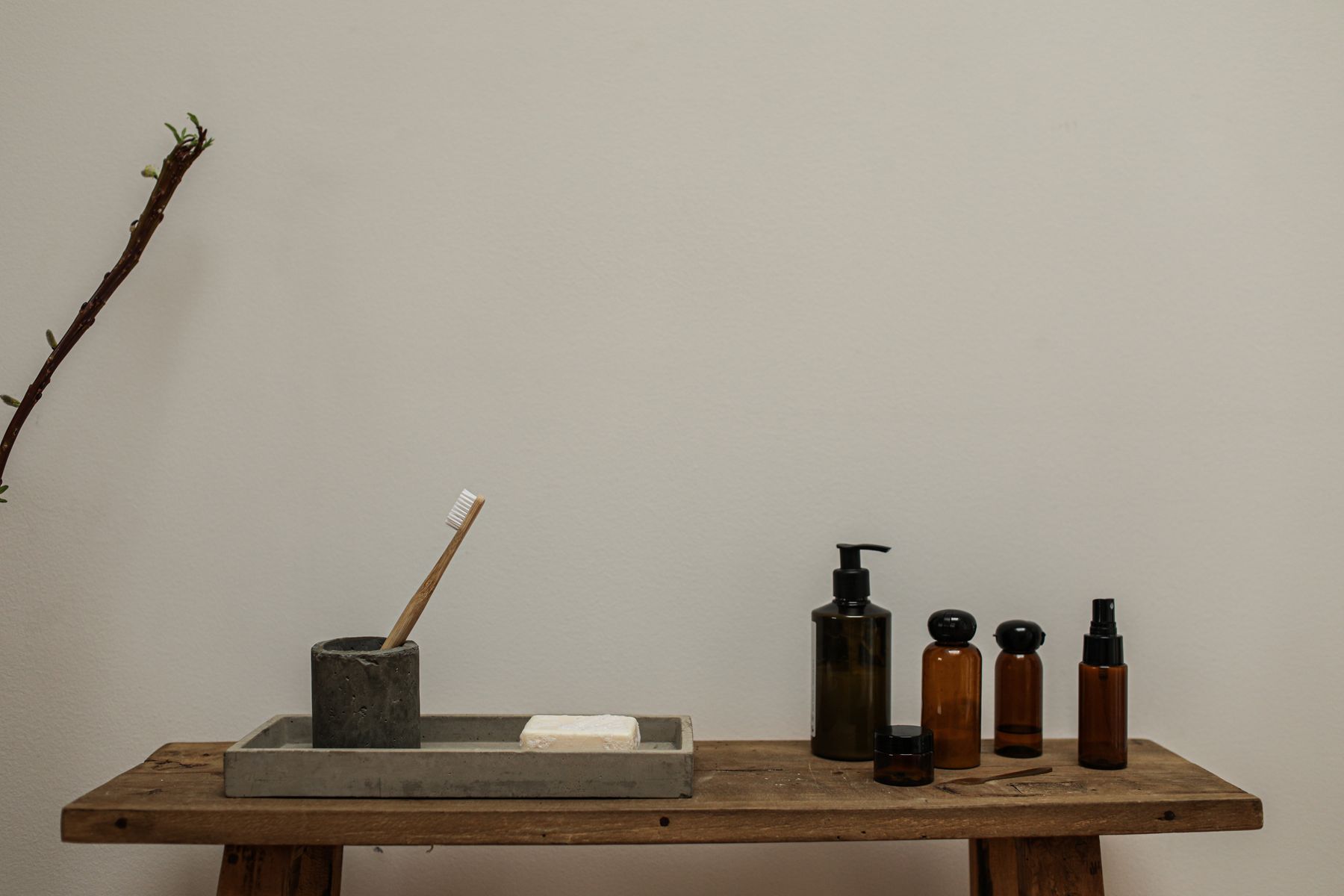
An older-looking framed mirror, a few amber bottles or one small shelf can make the vanity feel collected without filling it with decorative objects. Keep daily-use items contained and allow the mirror to be the main historic detail. Too many antique accessories around water quickly become difficult to dust, wipe and organize.
Use One Floral or Decorative Mirror as the Focal Point
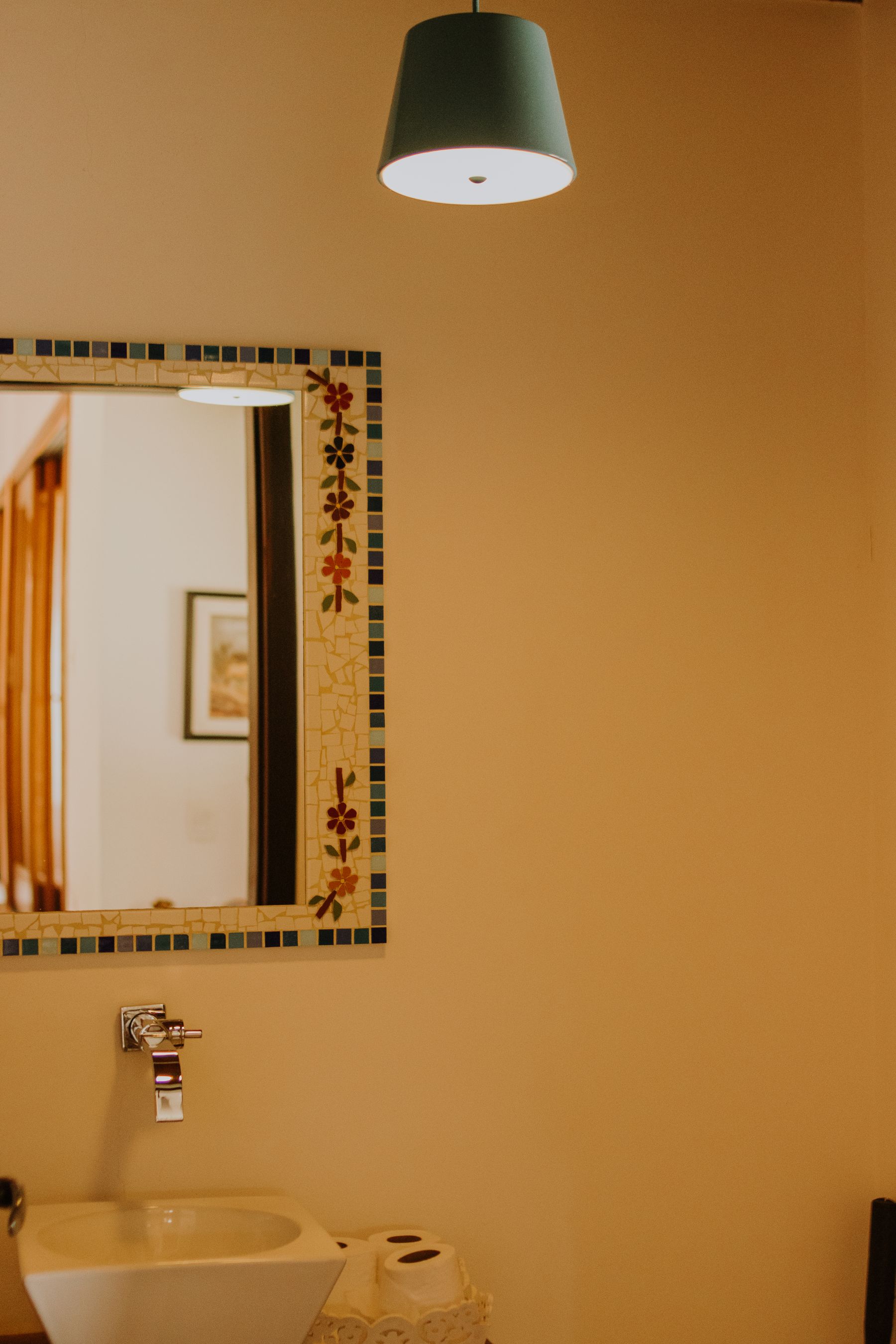
A floral-framed or decorative mirror can provide the romantic note when the rest of the bathroom is restrained. This is especially useful if you prefer plain tile and simple cabinetry but still want a softer decorative identity. Keep nearby sconces and accessories understated so the mirror remains the single ornate object.
Use Pastel Color Without Making the Room Sugary
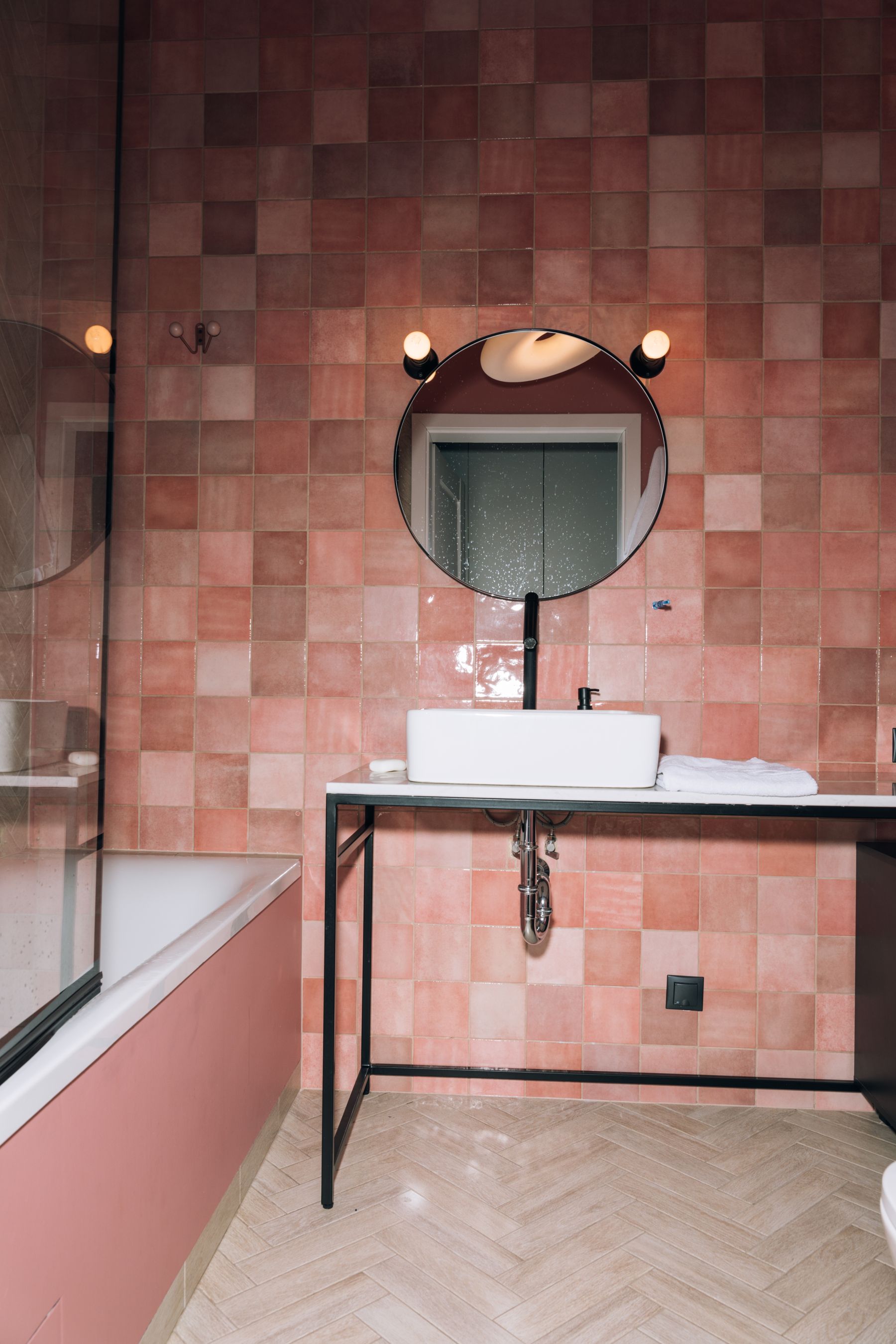
Pastel pink, blue, sage or cream can soften a bathroom, but the palette needs neutral breaks. Pair one pastel with white, warm stone, pale wood or a modest metal finish rather than using several sweet colors at once. This keeps the space more livable and lets floral or vintage details feel intentional.
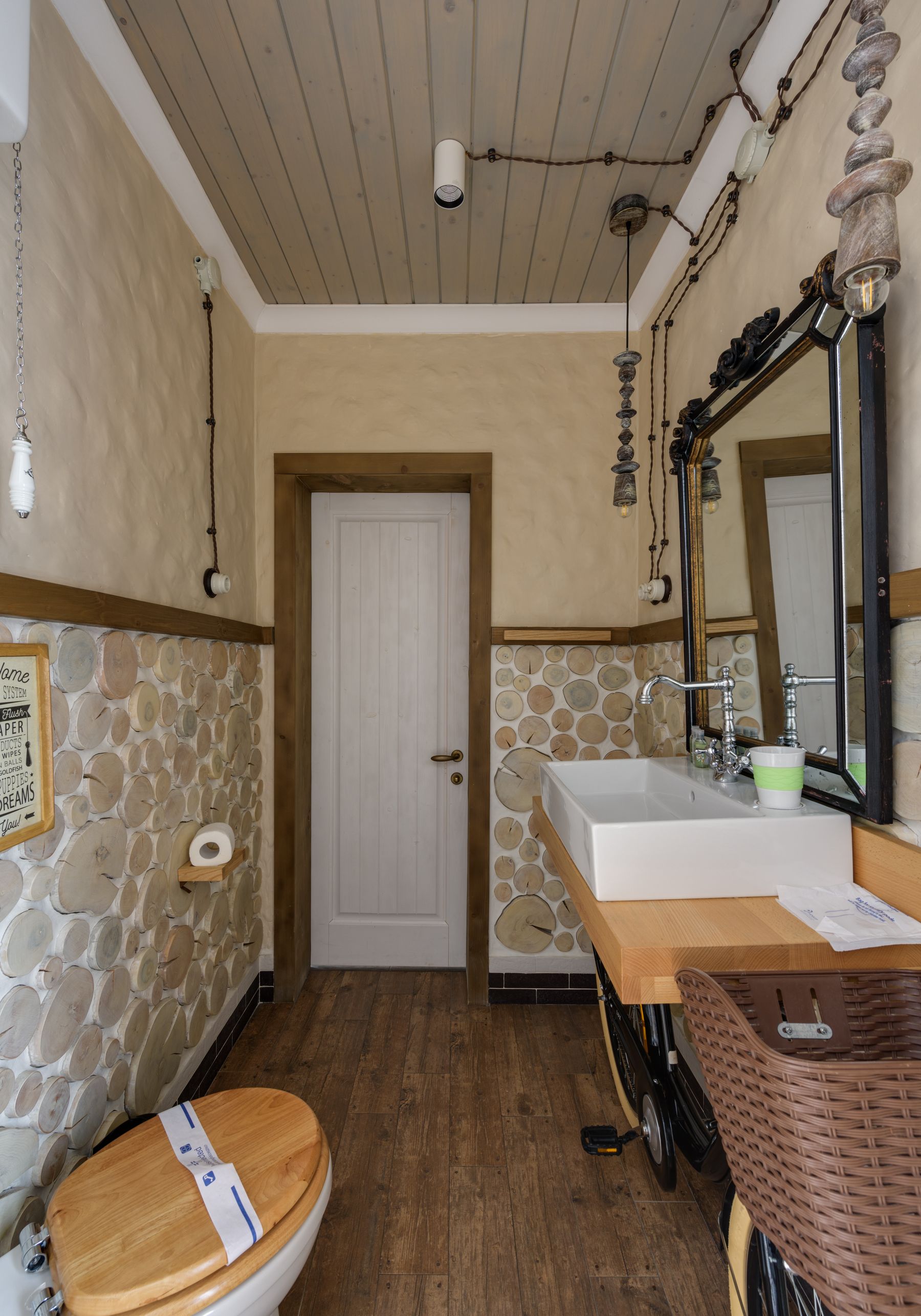
Use Rustic Detail in Small Functional Doses
A small wood stool, tray, amber bottle or natural brush can add the slightly imperfect layer associated with shabby chic without making the entire room rustic. These pieces work best when they have a real use and can be moved for cleaning. Avoid unfinished timber or absorbent decor in places that remain wet.
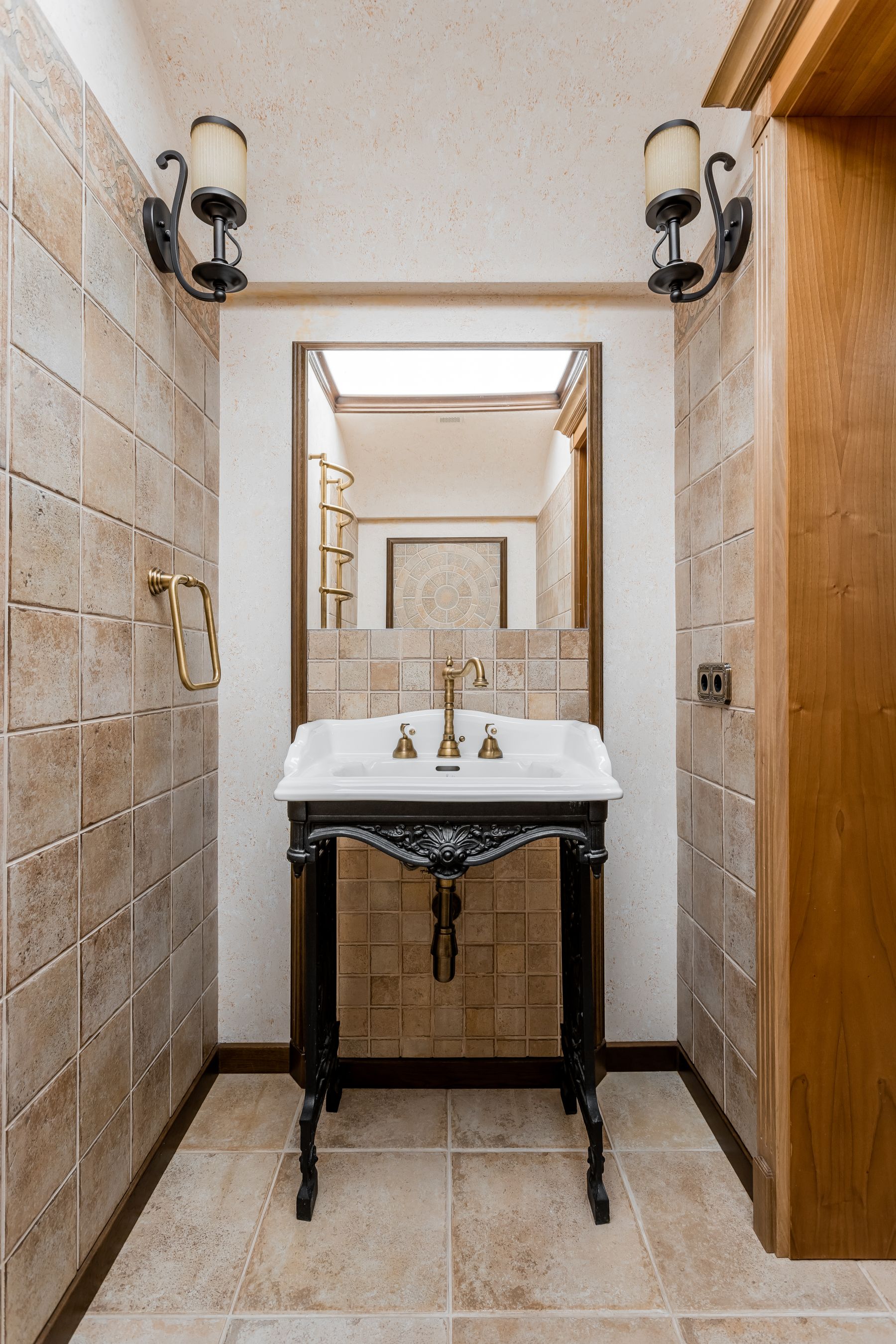
Use a Decorative Sink Area With Restraint
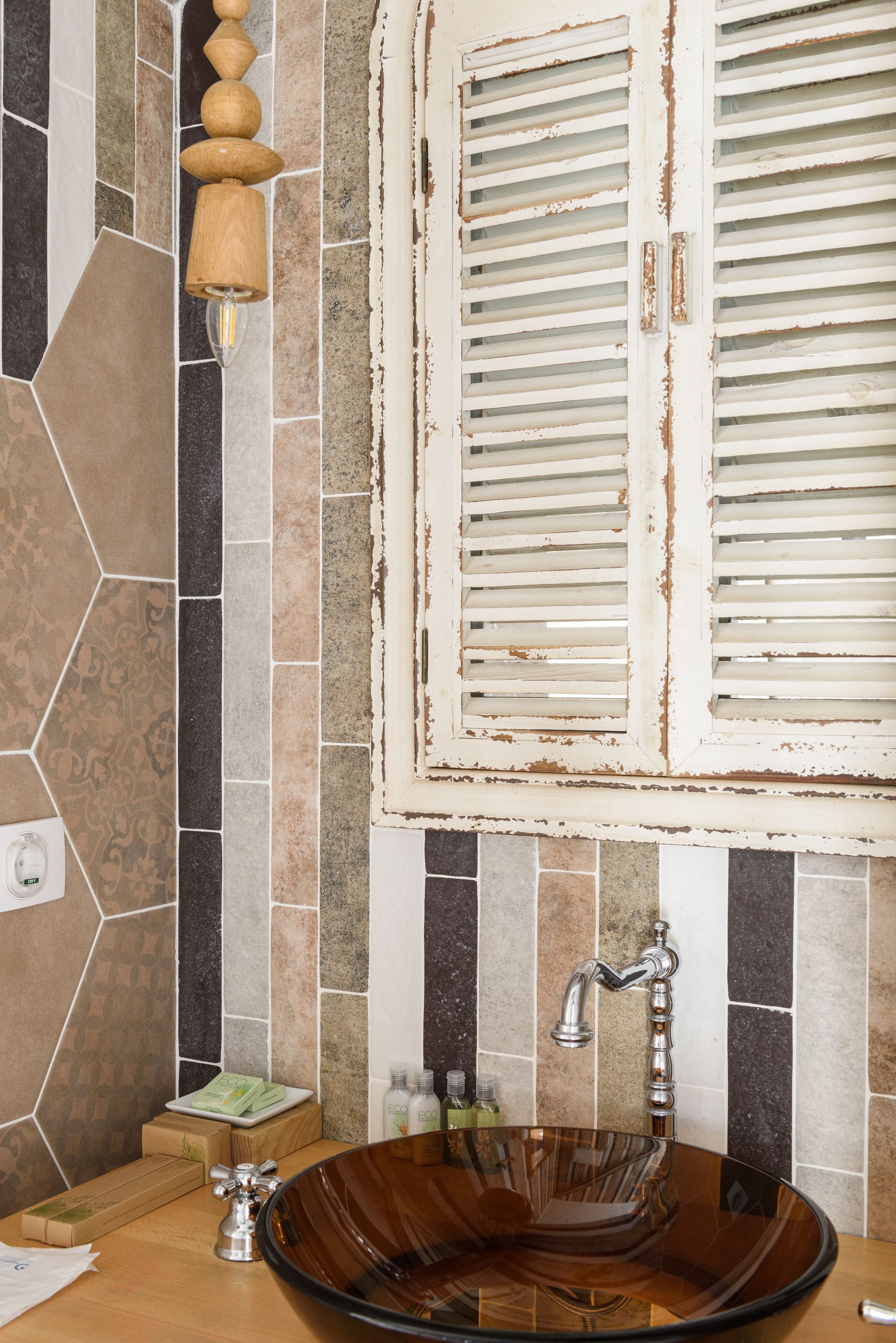
A shaped basin, textured tile or shuttered window can make the sink wall feel more characterful, but those details need a hierarchy. Choose one dominant texture and keep the faucet, storage and countertop relatively simple. Shabby chic works best when the room feels gently layered rather than assembled from many unrelated vintage effects.
Finish With Soft Pattern and Clear Surfaces
The final layer should make the bathroom feel softer, not busier. Floral wallpaper, a curtain, one rug or a small group of flowers can be enough once the tub and cabinetry already provide vintage character. Keep counters and the bath edge mostly clear so the room remains easy to reset after daily use.