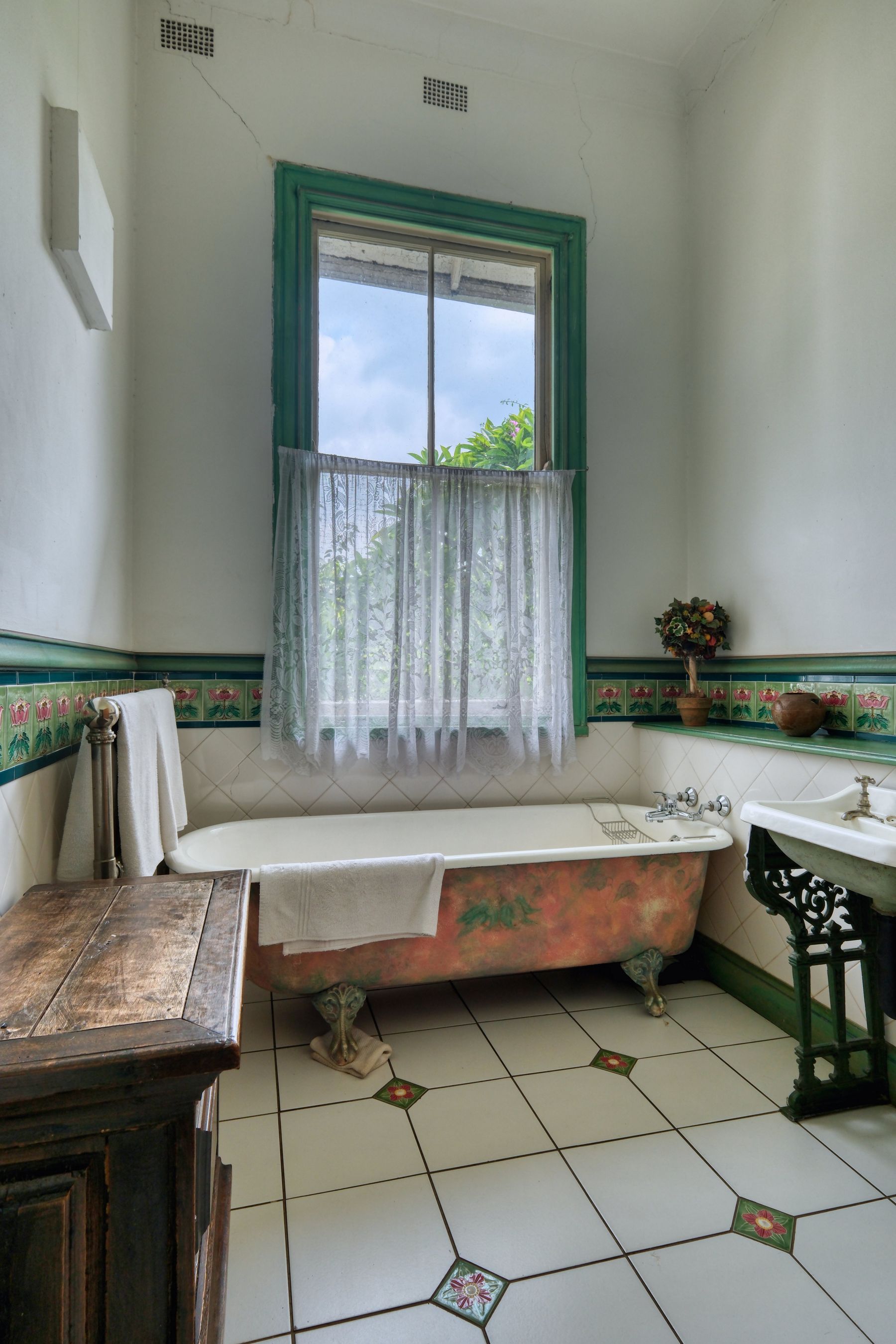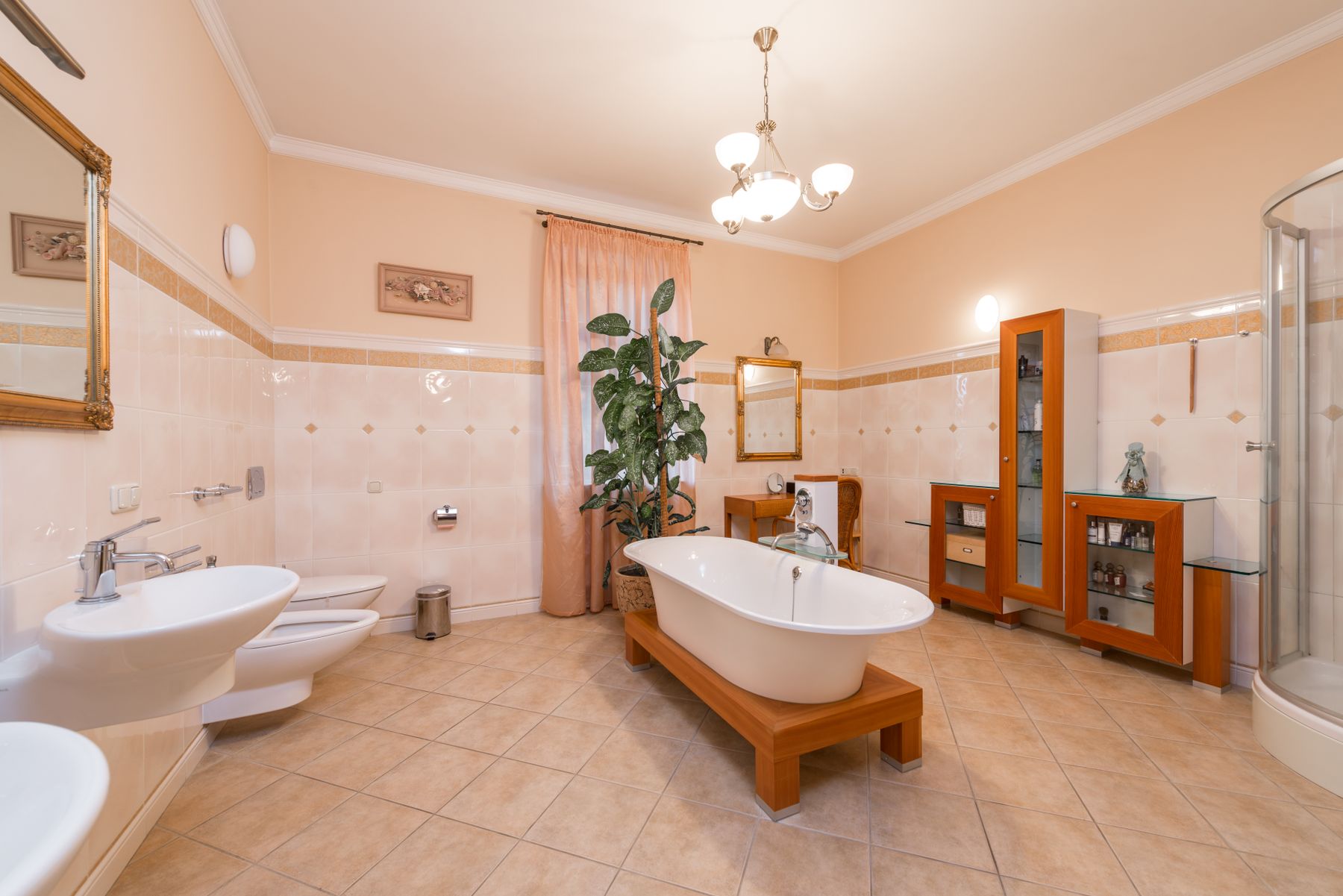
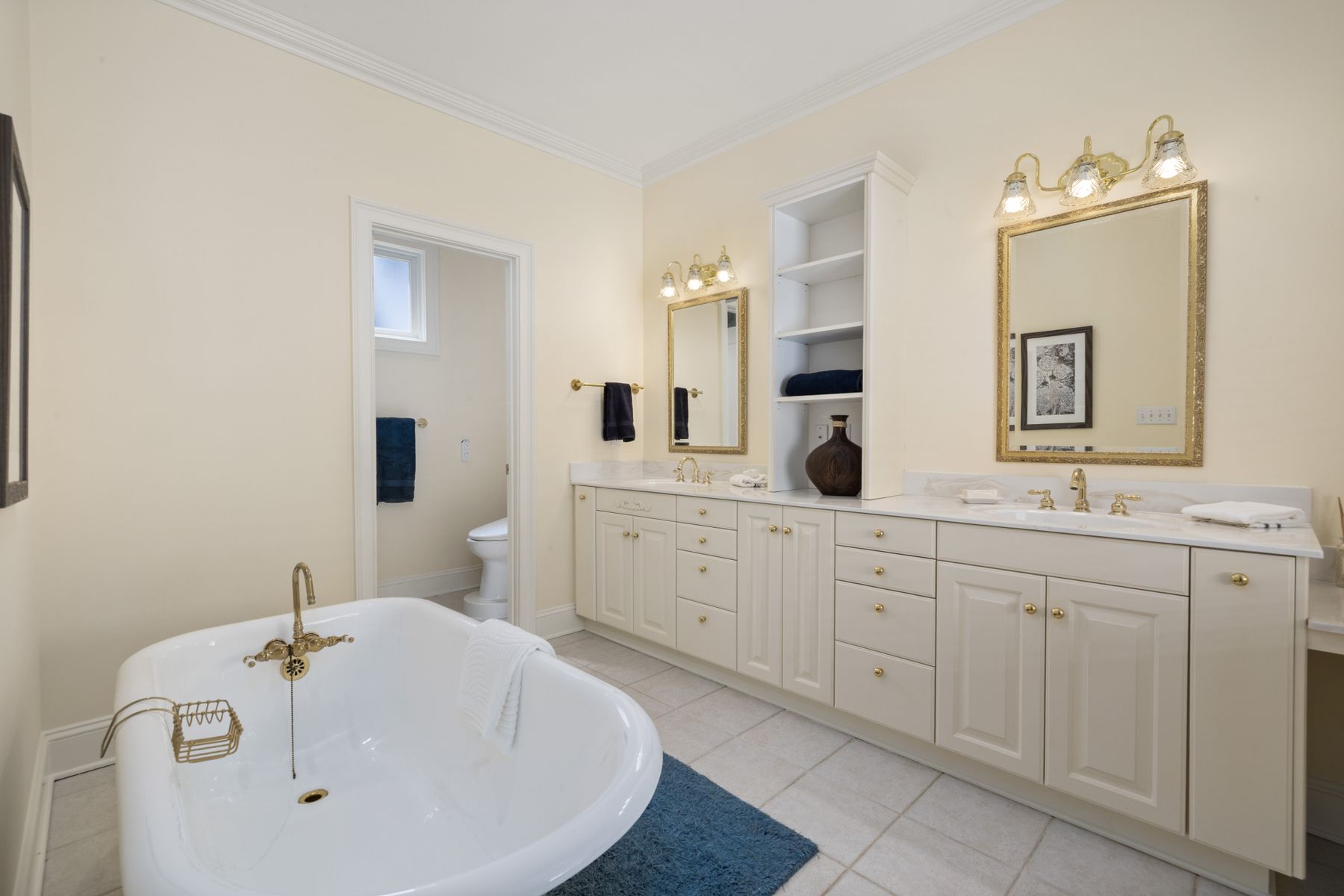
Start With Balanced Proportions
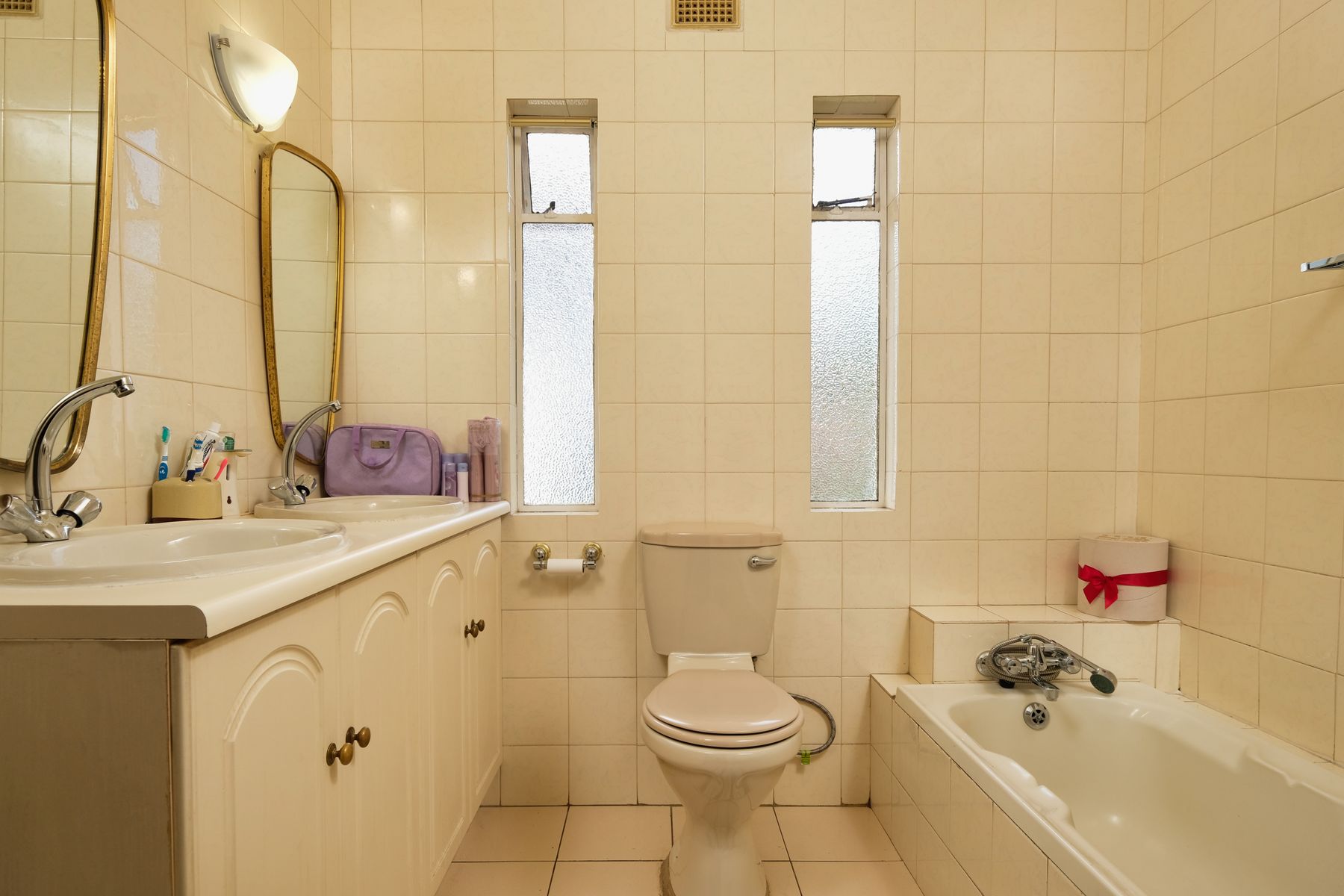
Traditional bathrooms often feel calm because the larger elements have clear relationships to one another. A centered tub, paired vanity elements or a mirror aligned with the basin can create order before decorative details are introduced. Perfect symmetry is not required, but strong visual imbalance is more noticeable in a style built on classic proportion.
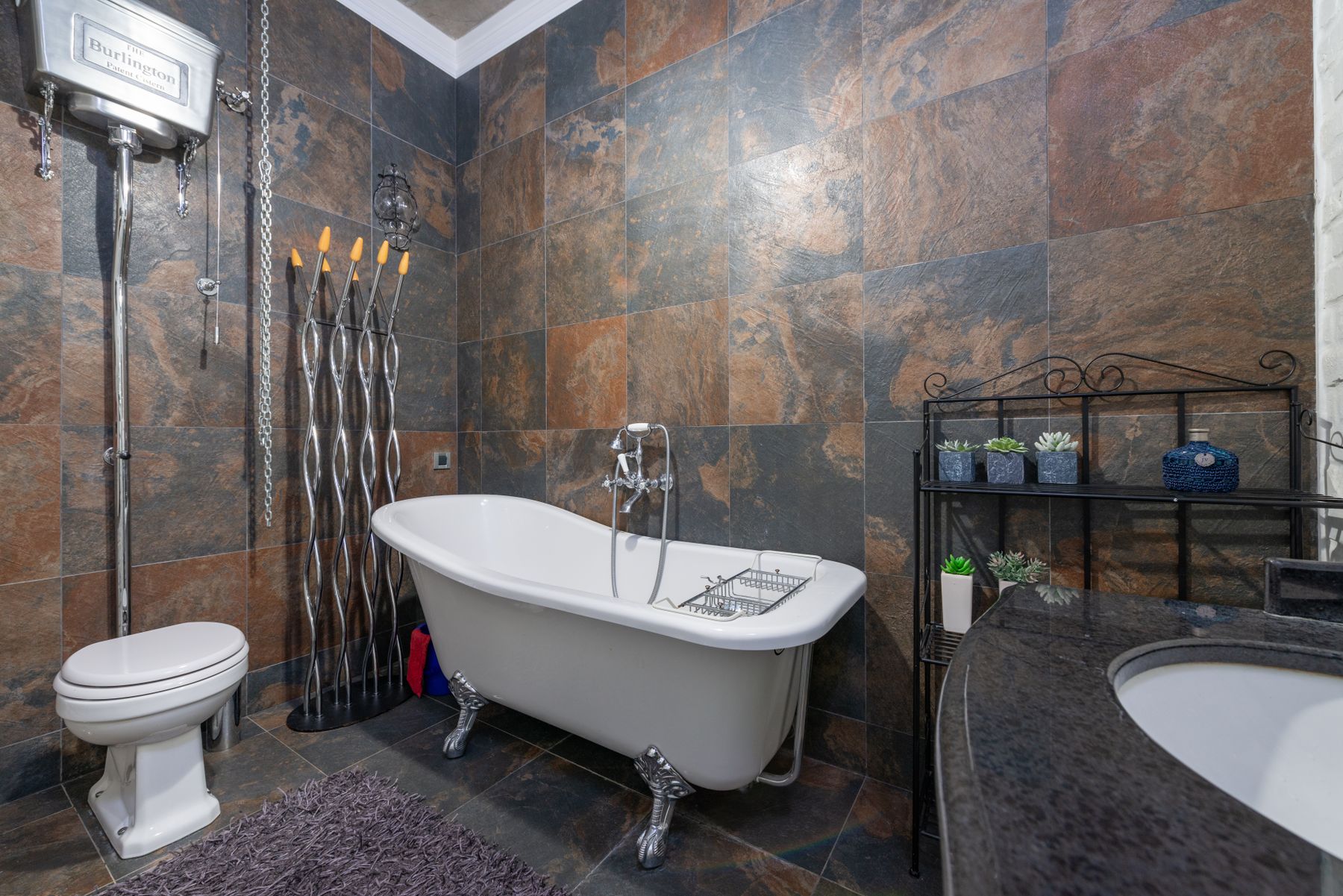
Use a Classic Bath as the Main Historic Note
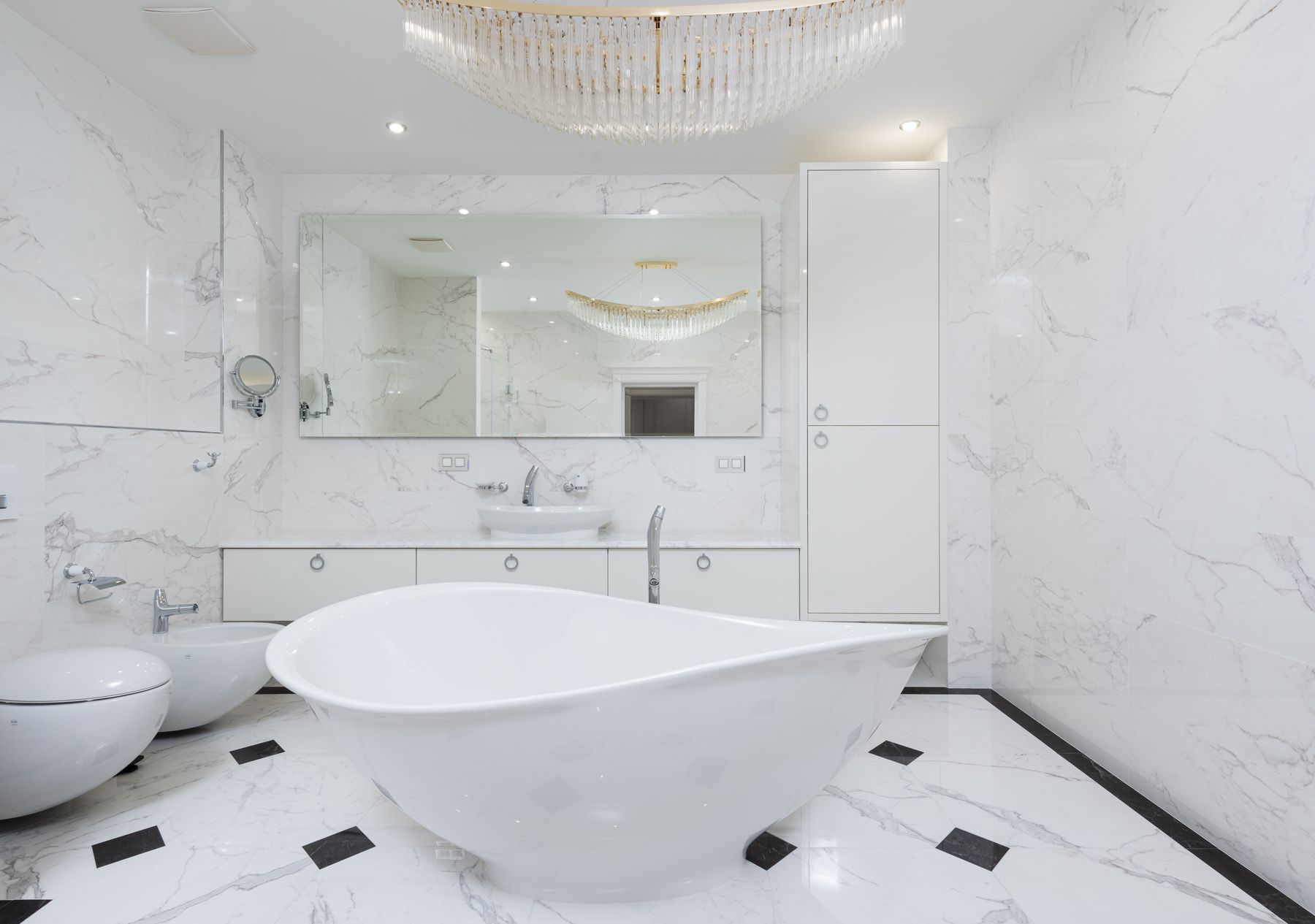
A clawfoot or traditionally shaped bath can establish the direction with one clear gesture. The surrounding tile, shower glass and storage can remain much simpler and more current. Before choosing a freestanding model, allow enough room for entry, cleaning and access to the filler and waste.
Make the Vanity Feel Like Furniture
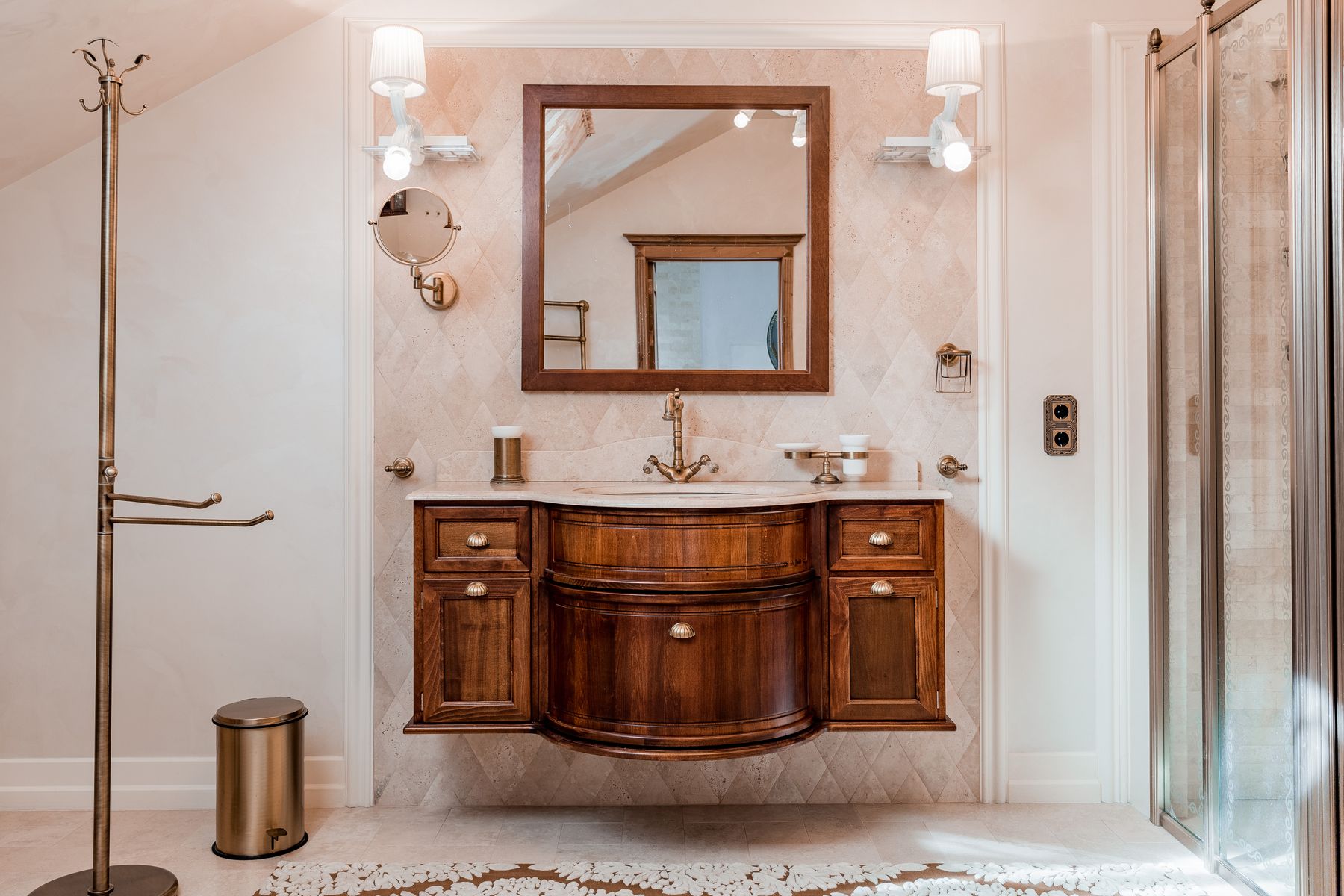
Framed doors, visible proportions and a substantial countertop give a traditional vanity more furniture-like presence than a flat anonymous cabinet. Drawers and cupboards should still follow daily storage needs, and the vanity height should work with the basin and users. Decorative molding is most successful when it does not create hard-to-clean recesses.
Use Decorative Lighting as a Supporting Layer
A chandelier or decorative pendant can reinforce traditional character in a larger bathroom, but it should not be the only useful light source. Mirror-area task lighting and safe general illumination still matter. Fixture location and wet-area suitability must follow local electrical requirements, especially near a bath or shower.
Warm the Room With a Wood Vanity
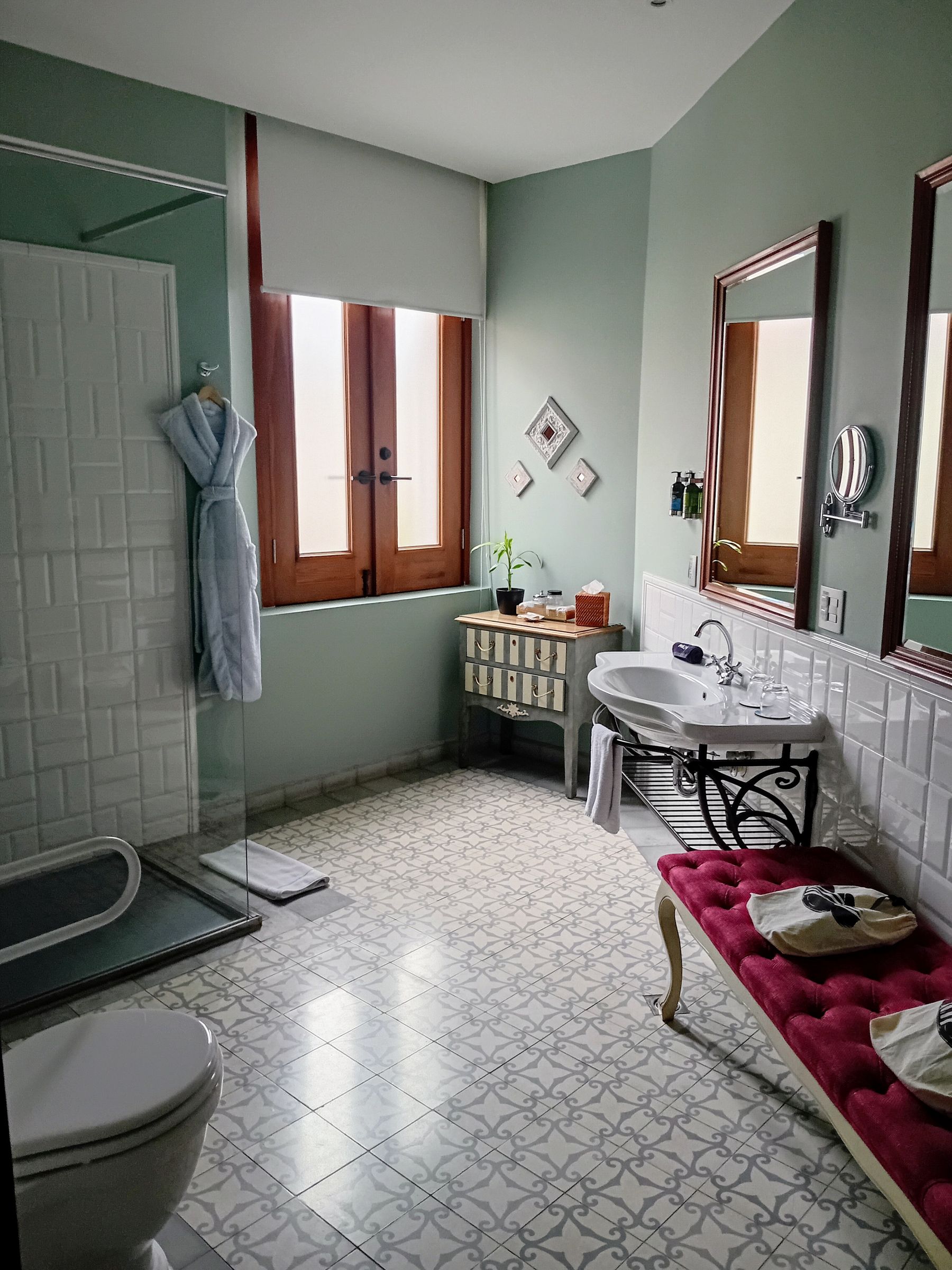
Wood cabinetry can keep a traditional bathroom from becoming too pale or formal. Medium and deeper wood tones work particularly well with white ceramic, stone and warm metal. Bathroom cabinetry should be designed for humidity, and large expanses of wood are usually easier to balance when walls and floors remain comparatively quiet.
Let One Mirror Carry the Ornament
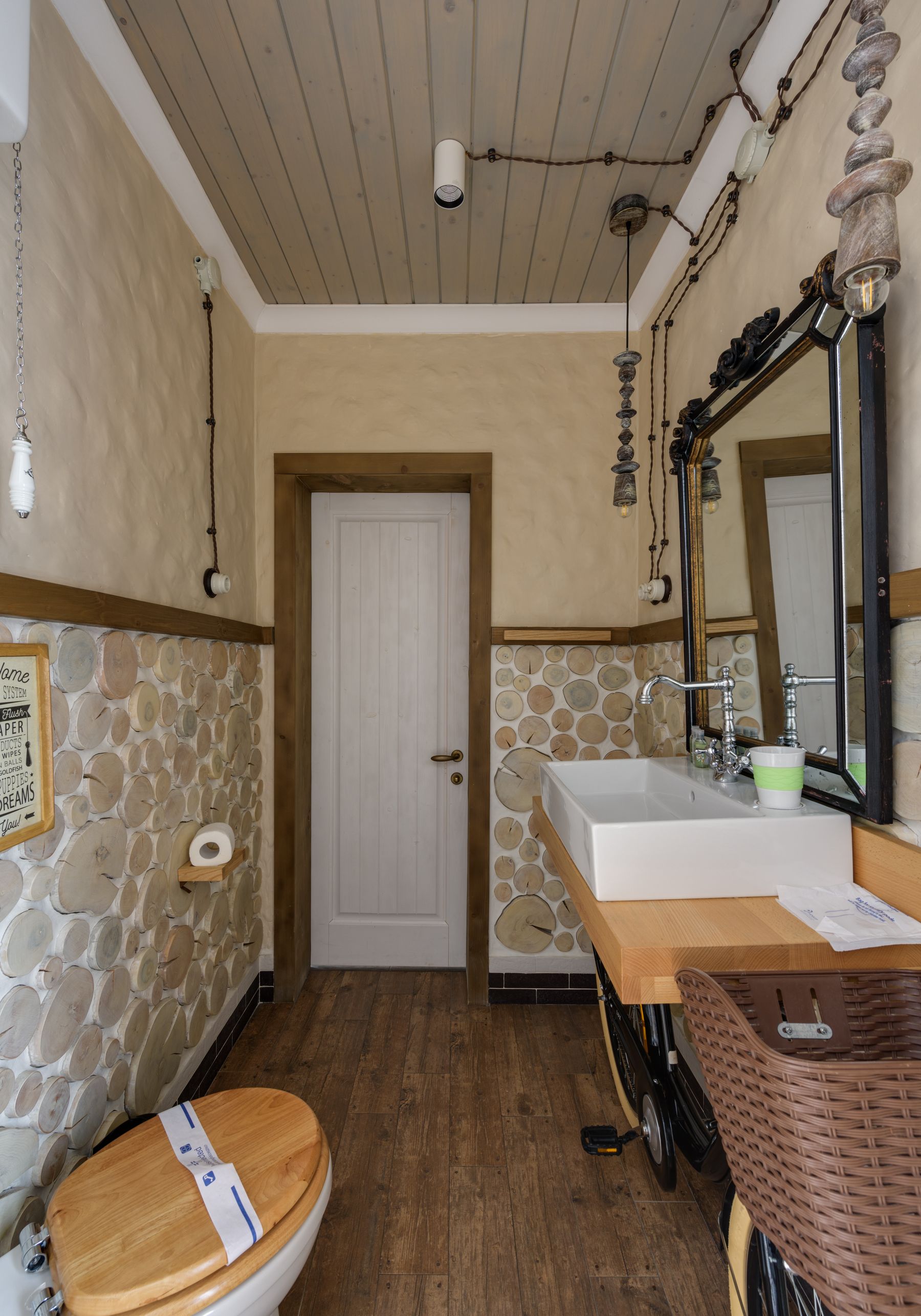
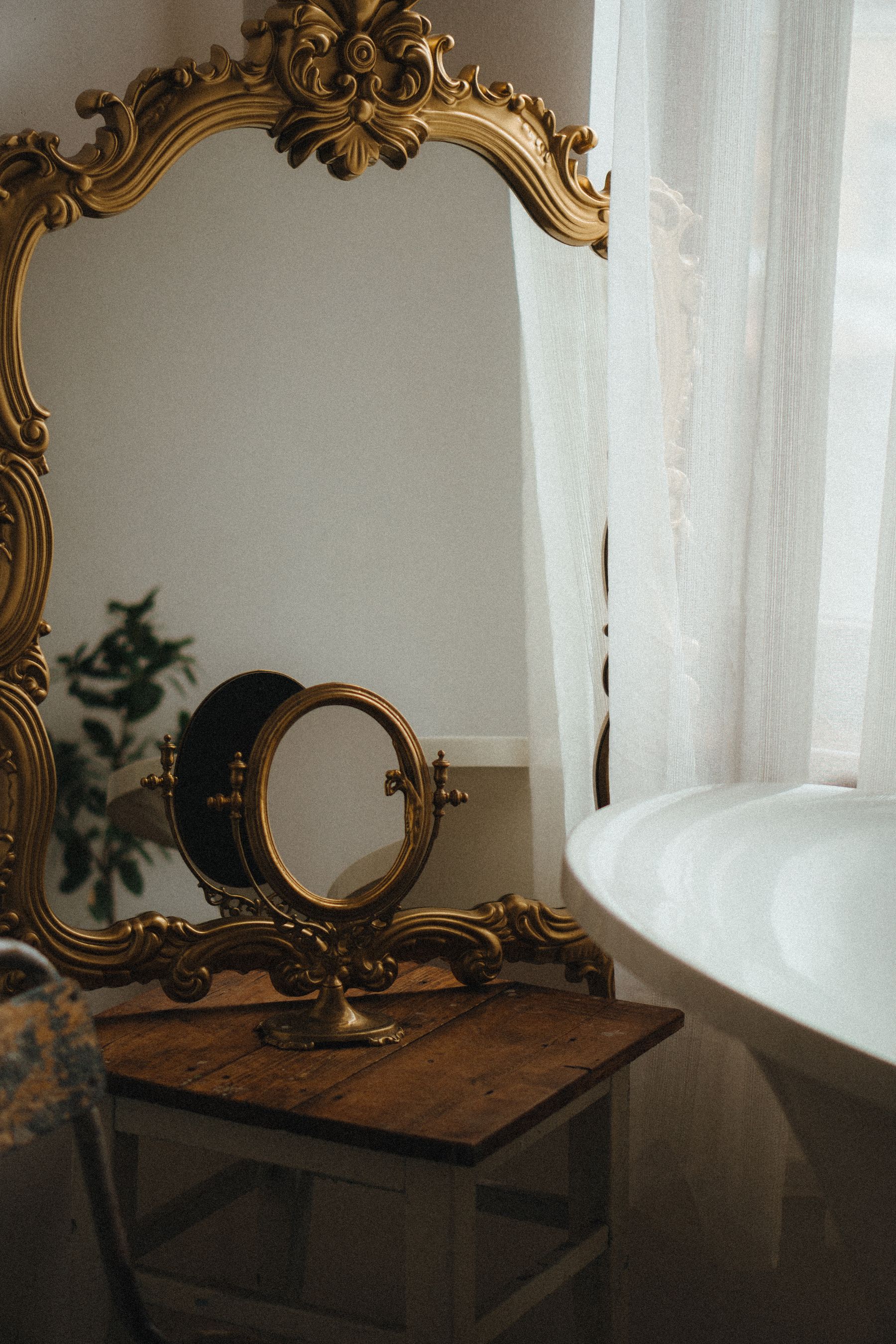
An ornate or shaped mirror can provide all the decorative detail a classic vanity wall needs. When the frame is elaborate, use simpler sconces, tile and countertop styling around it. This keeps ornament concentrated at a natural focal point instead of spreading trim and decoration across every surface.
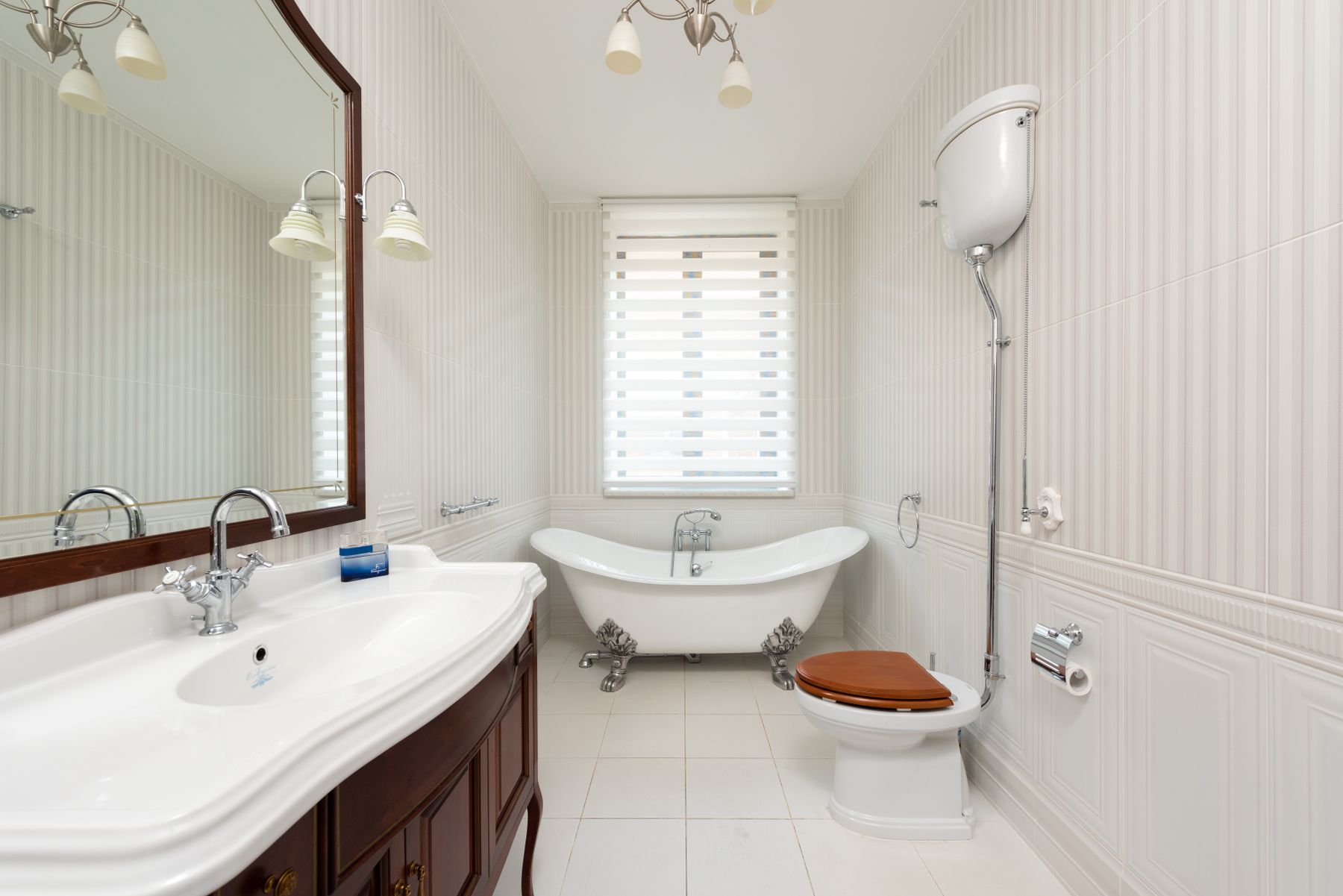
Keep Wallpaper Above the Hardest-Working Wet Zone
Striped, floral or understated patterned wallpaper can soften a traditional bathroom, especially above tile or in a drier bath zone. In full bathrooms, ventilation, splash exposure and the manufacturer's suitability guidance matter. Use tile or another durable finish where water contact is frequent.
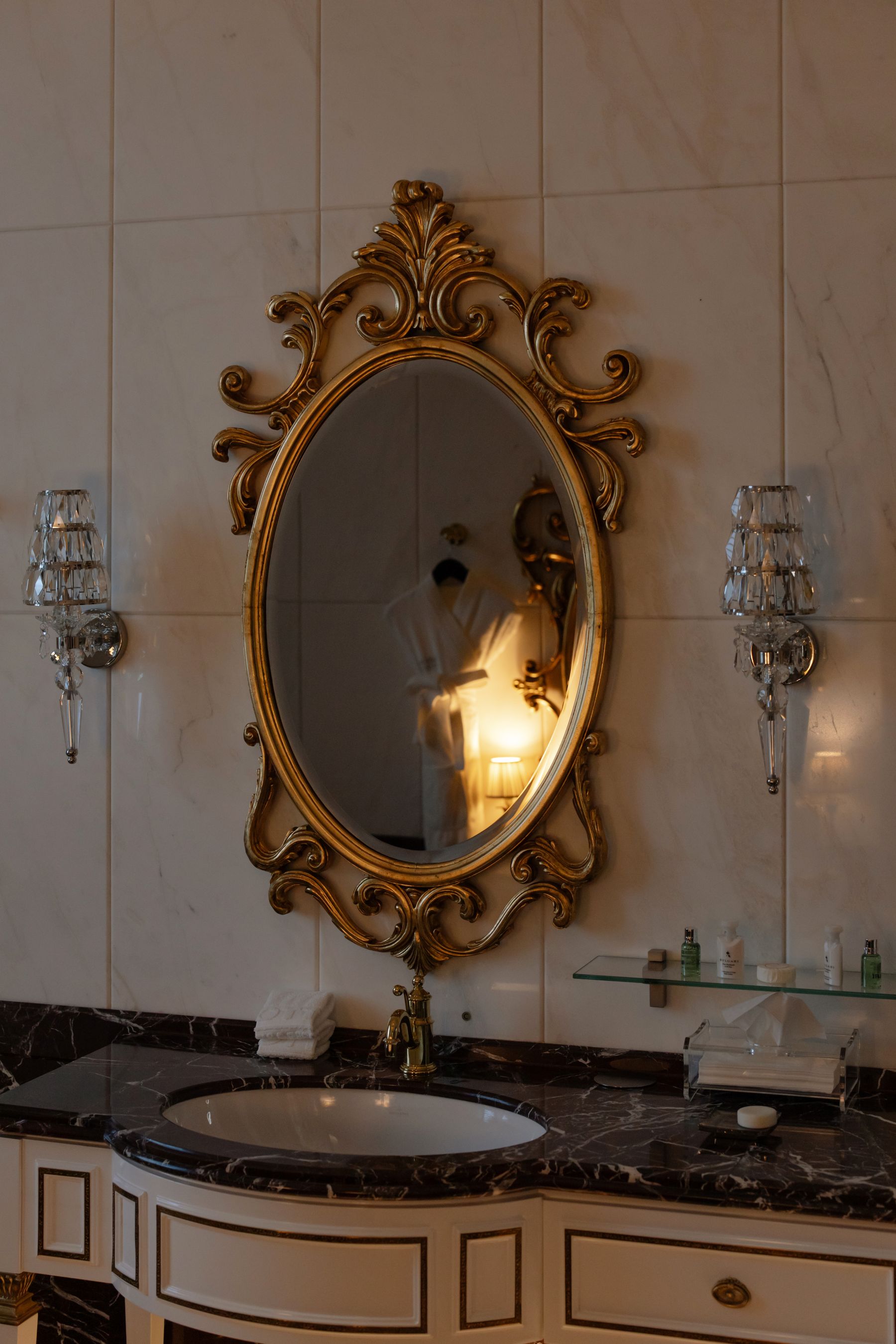
Pair the Mirror With Balanced Sconces
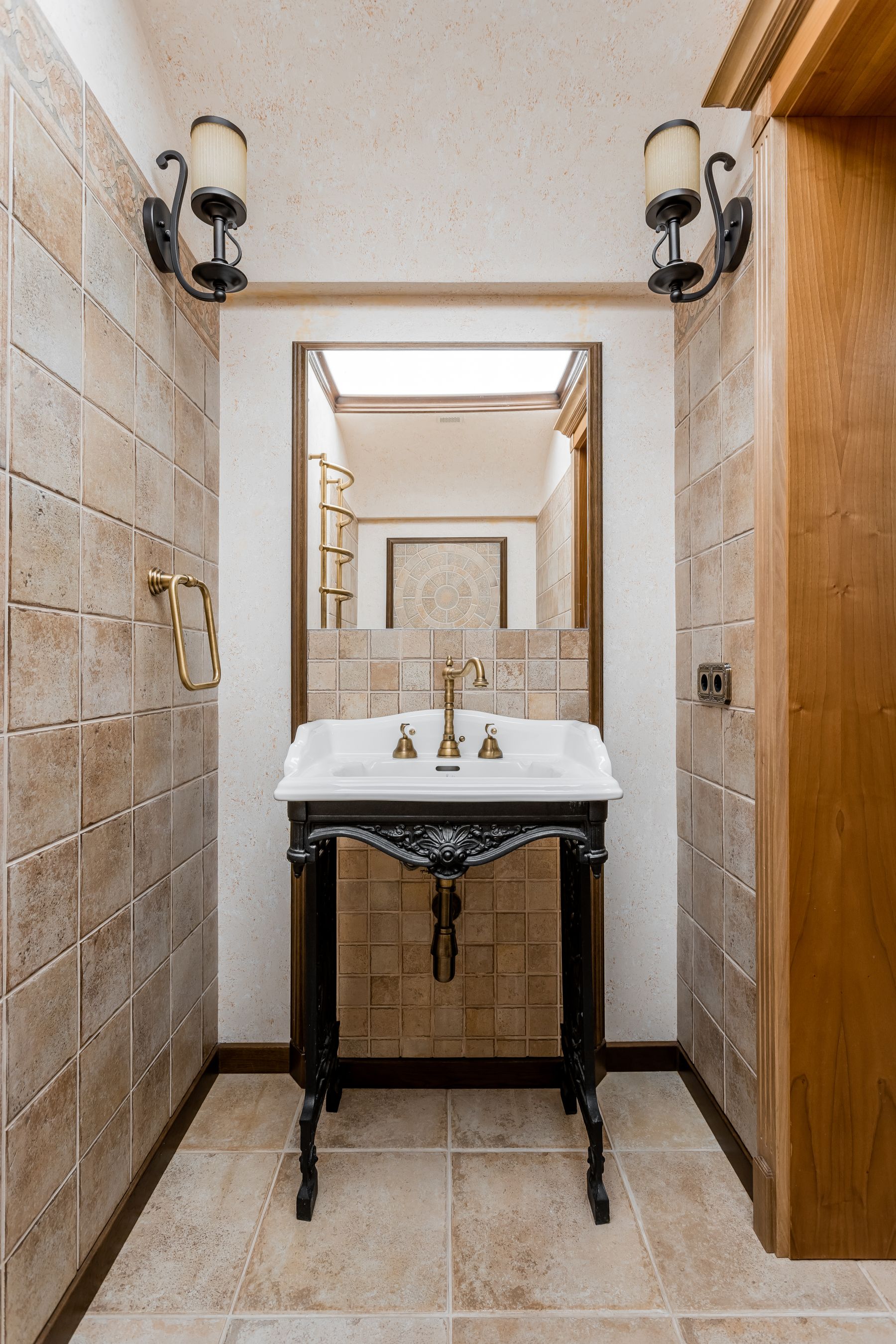
Paired sconces beside an oval or framed mirror reinforce the balanced structure associated with traditional bathrooms and can improve facial lighting. Place them for useful illumination rather than strict historical effect, and choose wet-area-rated fixtures where required. If side lighting is not possible, a well-positioned light above the mirror can still maintain the visual order.
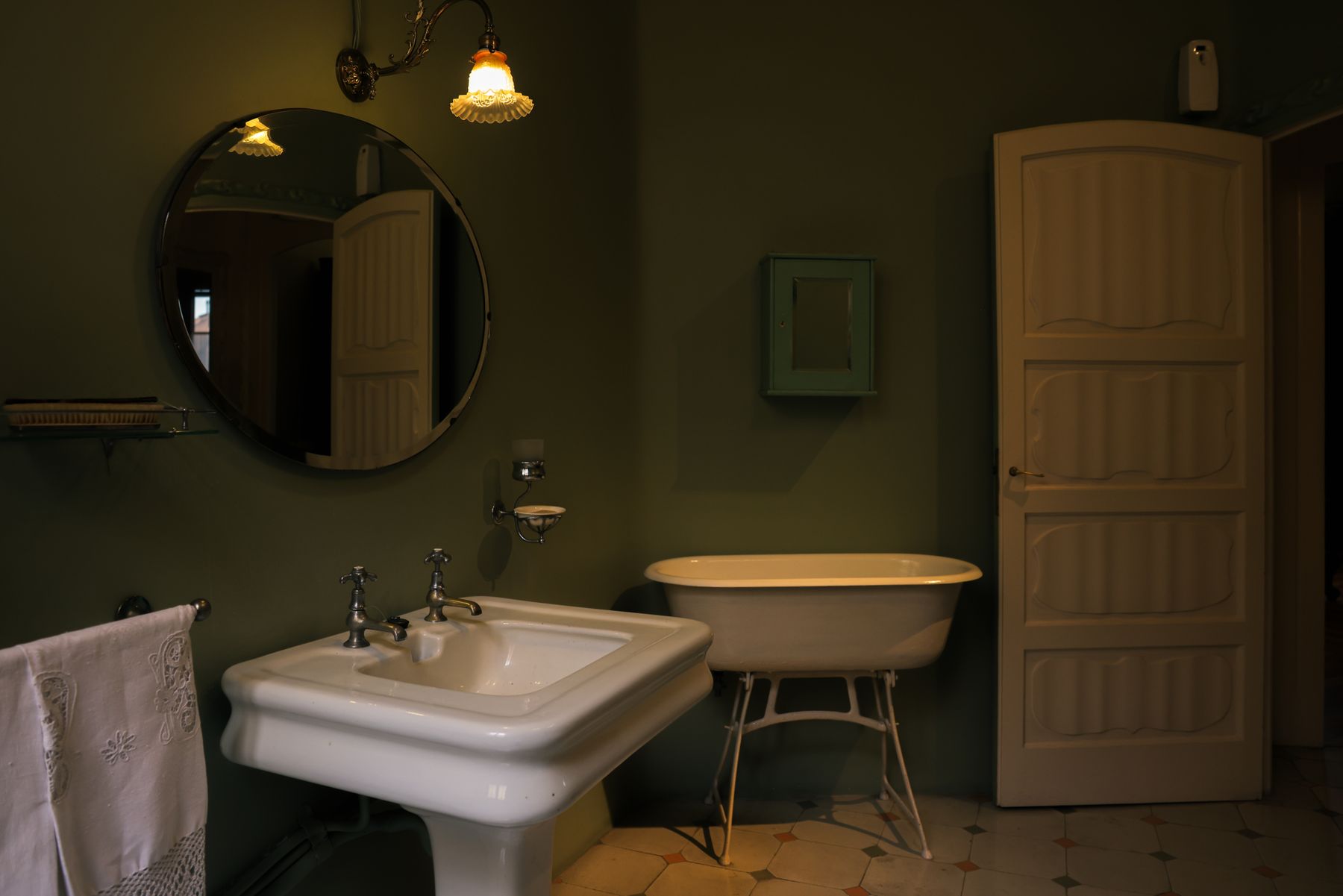
Use Warm Light to Soften Classic Detail
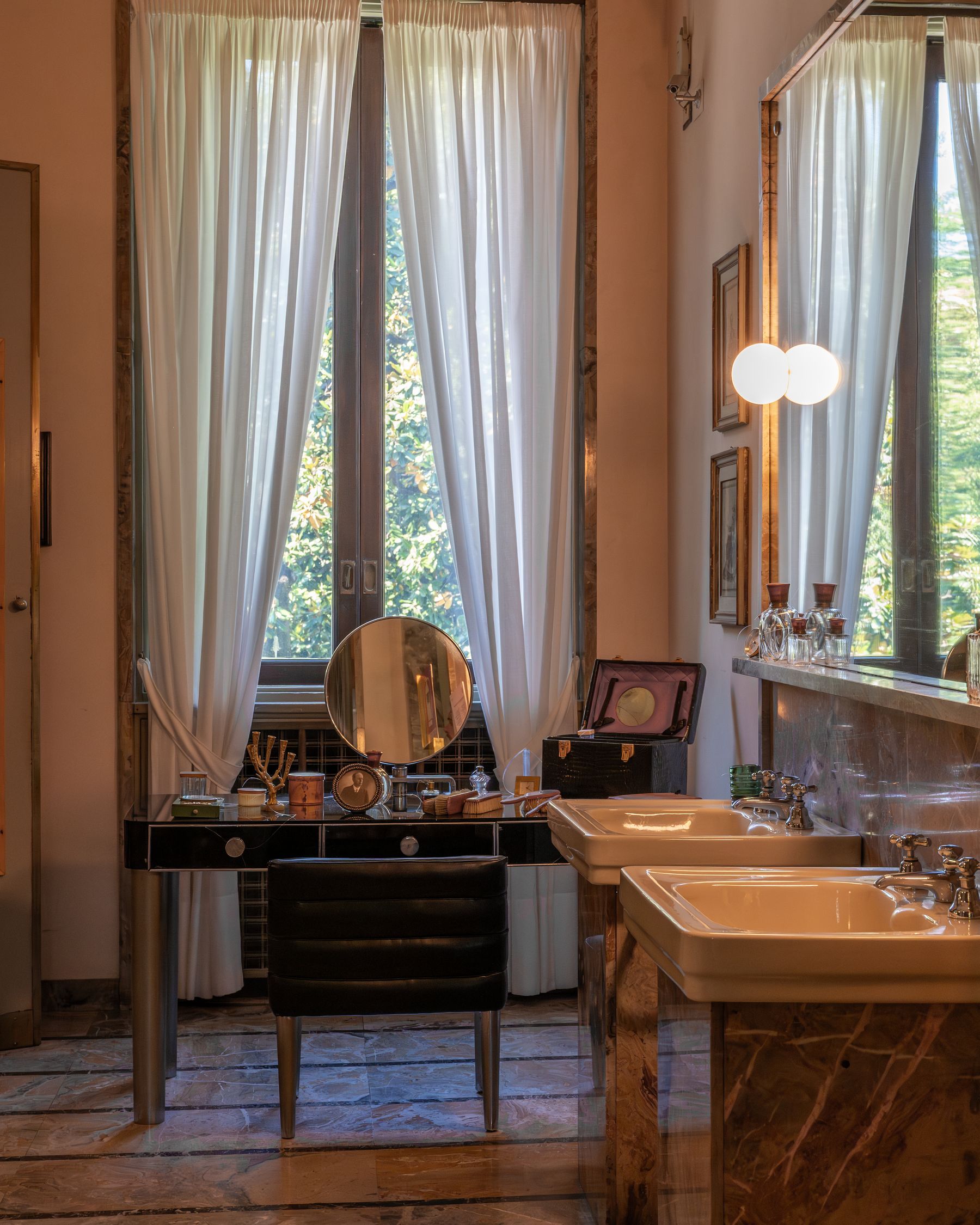
Traditional materials can look flat or overly formal under cold, uniform light. A warmer ambient layer helps wood, metal, wallpaper and classic ceramic feel more comfortable, while dedicated task lighting preserves useful visibility. Dimmers can be helpful where appropriate, but electrical work in bathrooms should always meet local safety requirements.
Mix Traditional Character With Cleaner New Pieces
An updated traditional bathroom does not need every item to reference the same era. A framed wood vanity, shaped mirror or classic light can sit comfortably beside a cleaner shower enclosure, simple tile and modern storage. The mix feels intentional when proportions and material tones relate even if the pieces come from different design periods.