Choose One Dominant Wood Tone
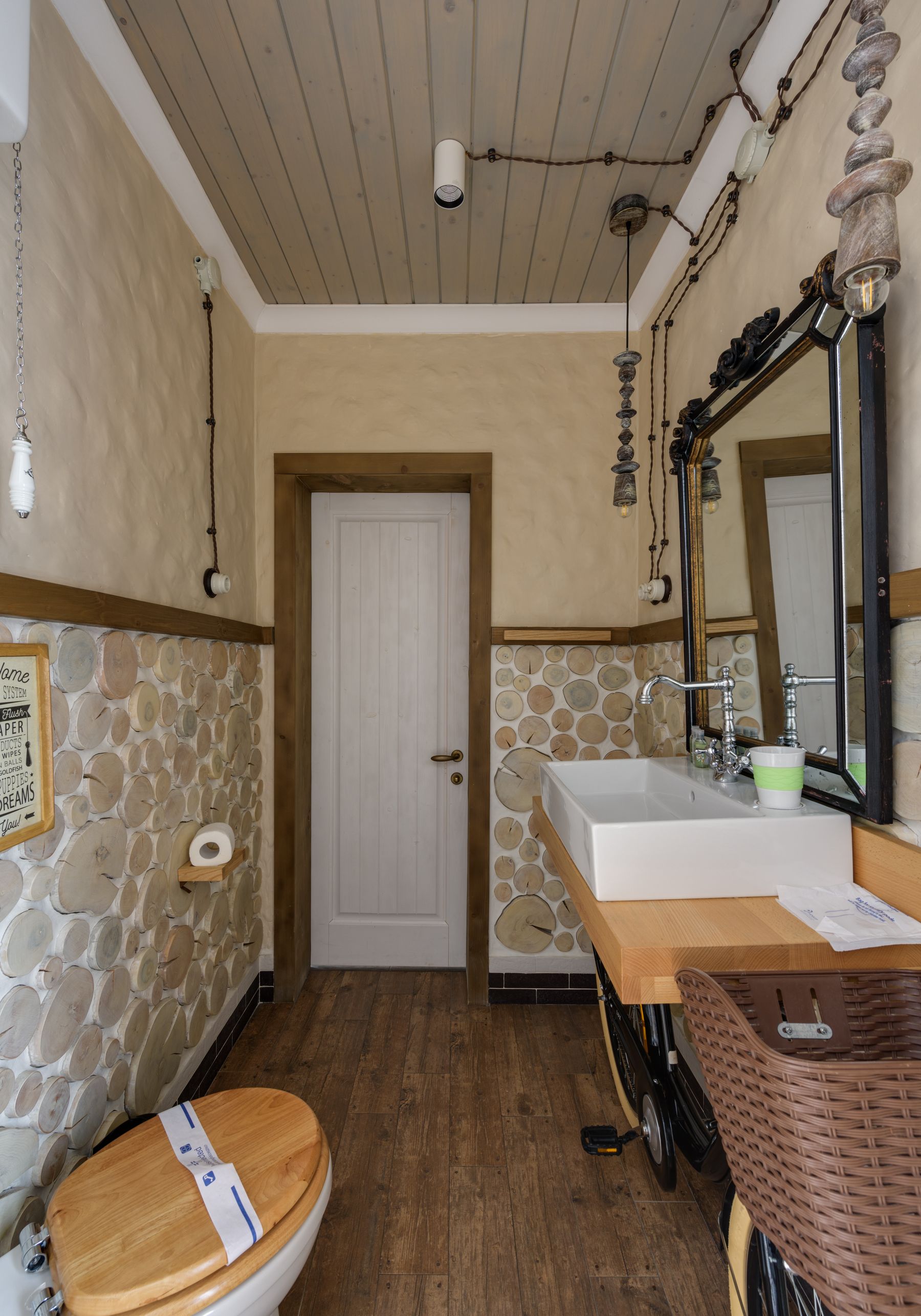
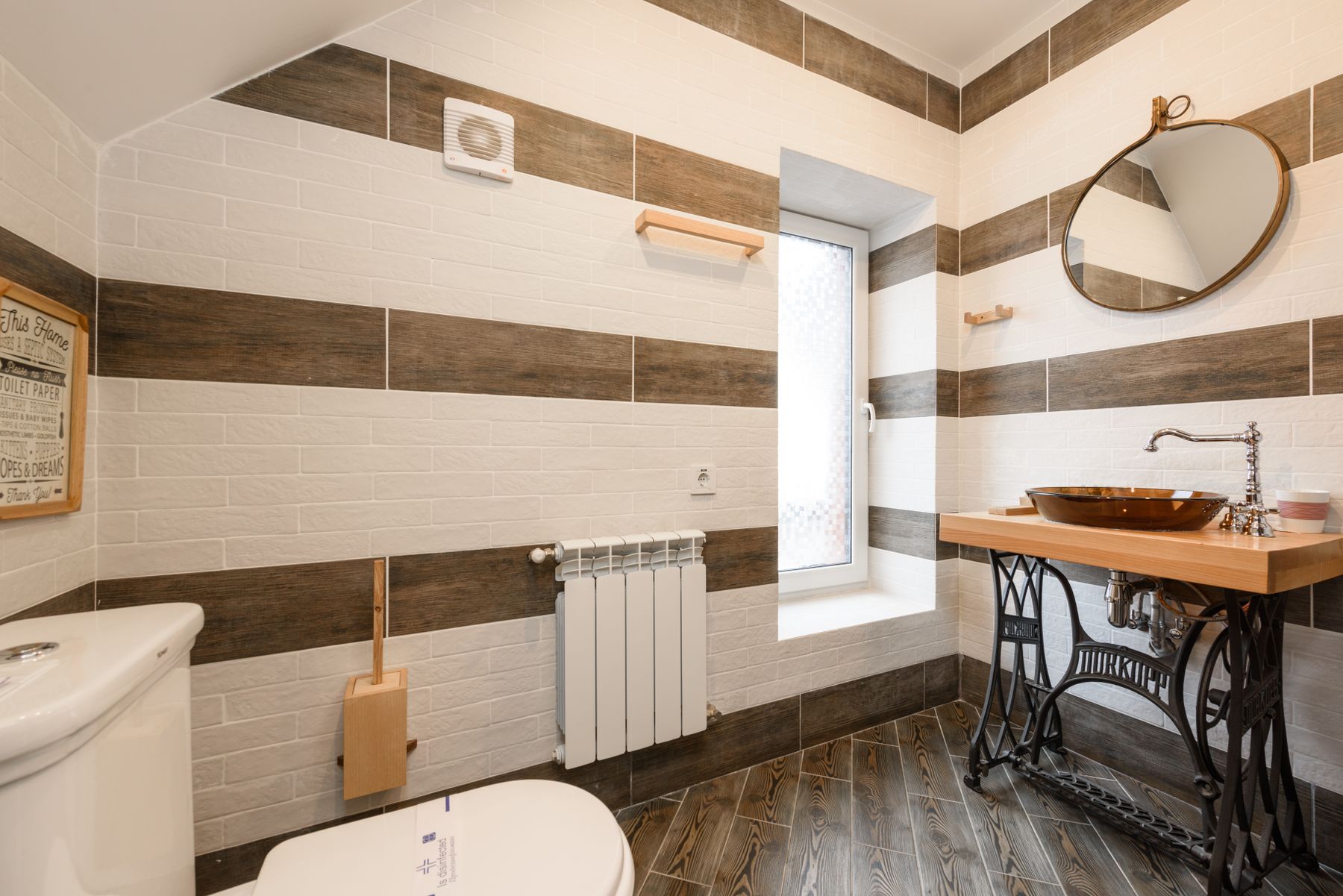
Start by deciding whether the room should lean pale oak, honeyed medium wood or a deeper walnut-like tone. That choice affects the stone, tile, metal and lighting around it. One dominant timber family creates more coherence than matching several pieces that are all technically wood but visually unrelated.
Let the Vanity Carry Most of the Warmth
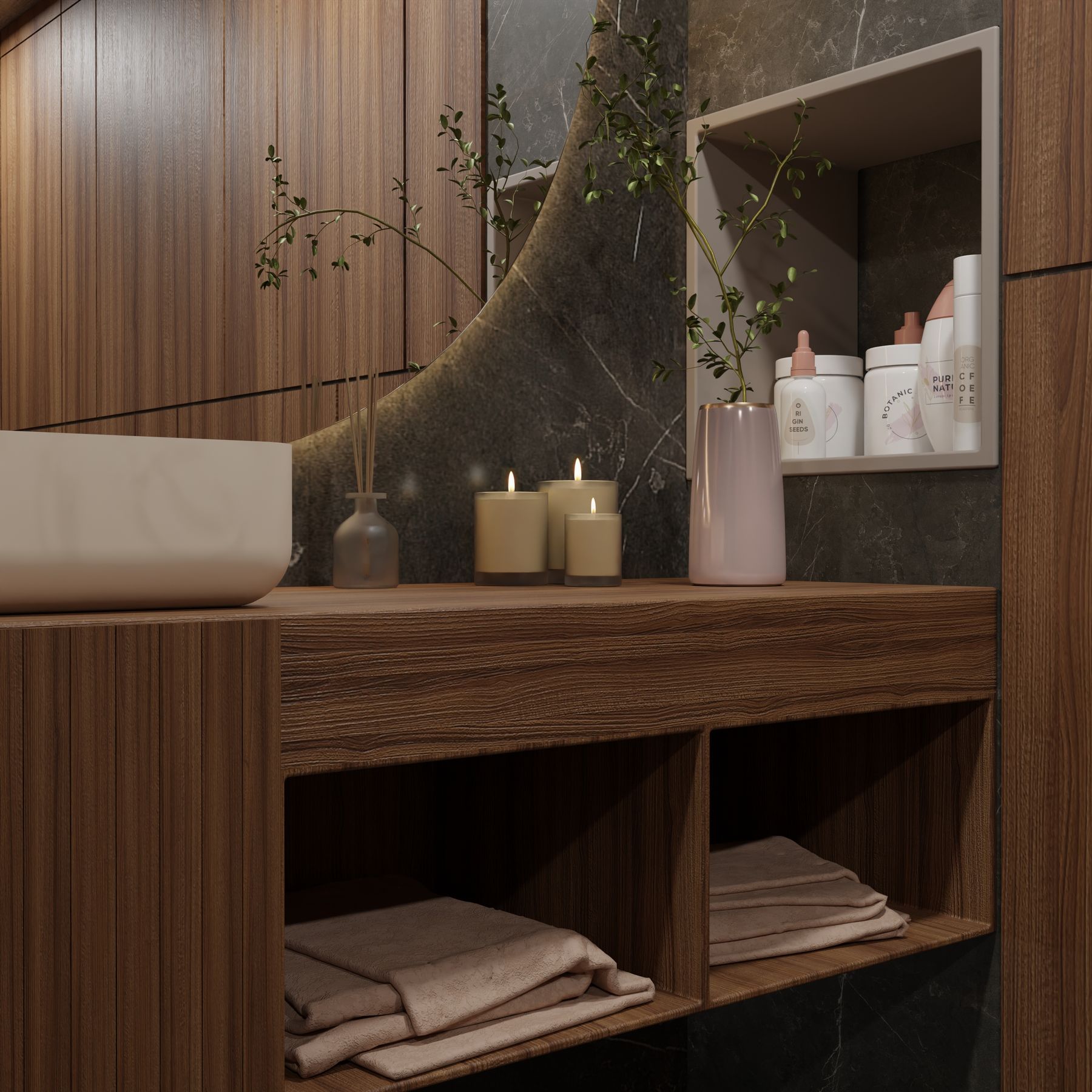
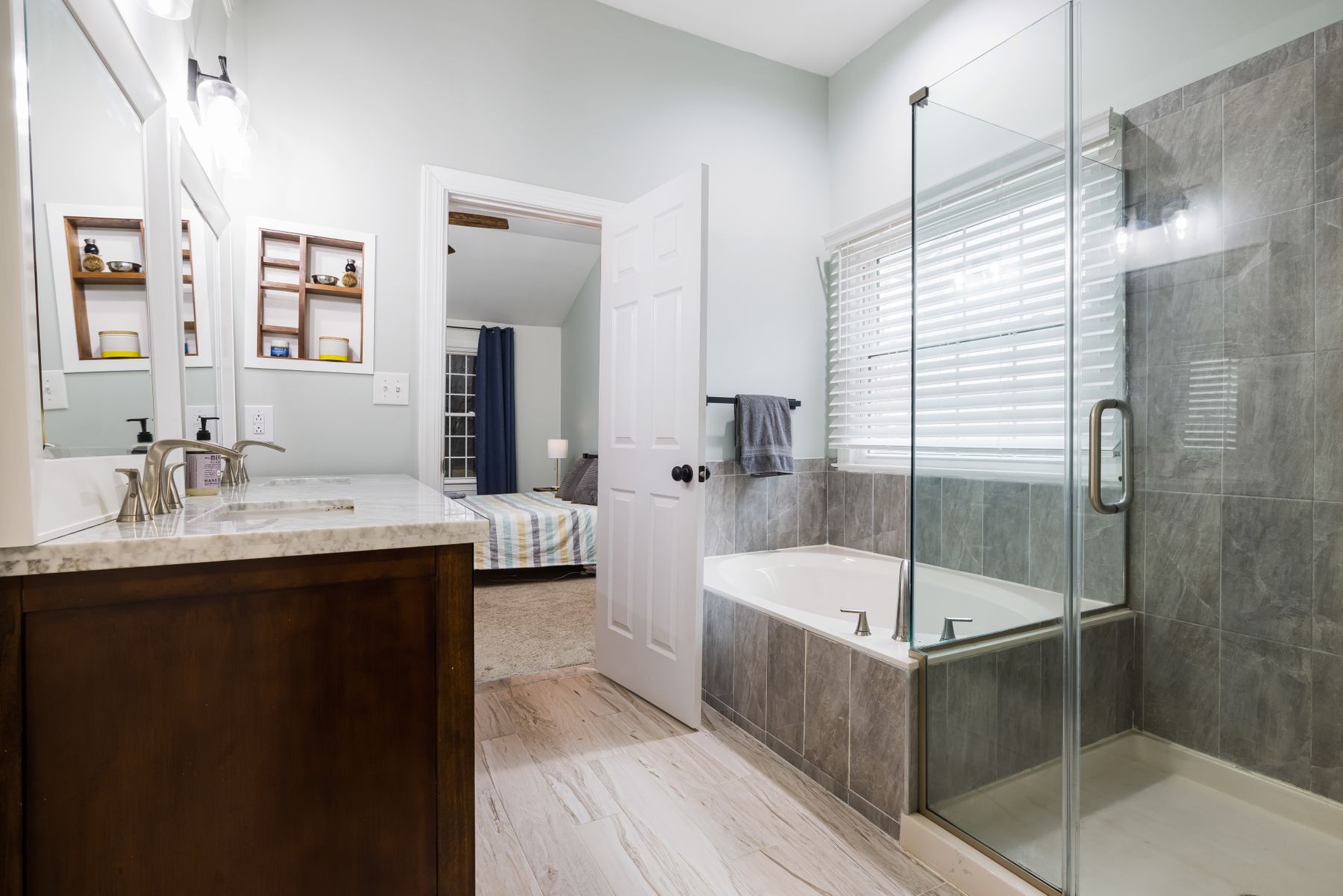
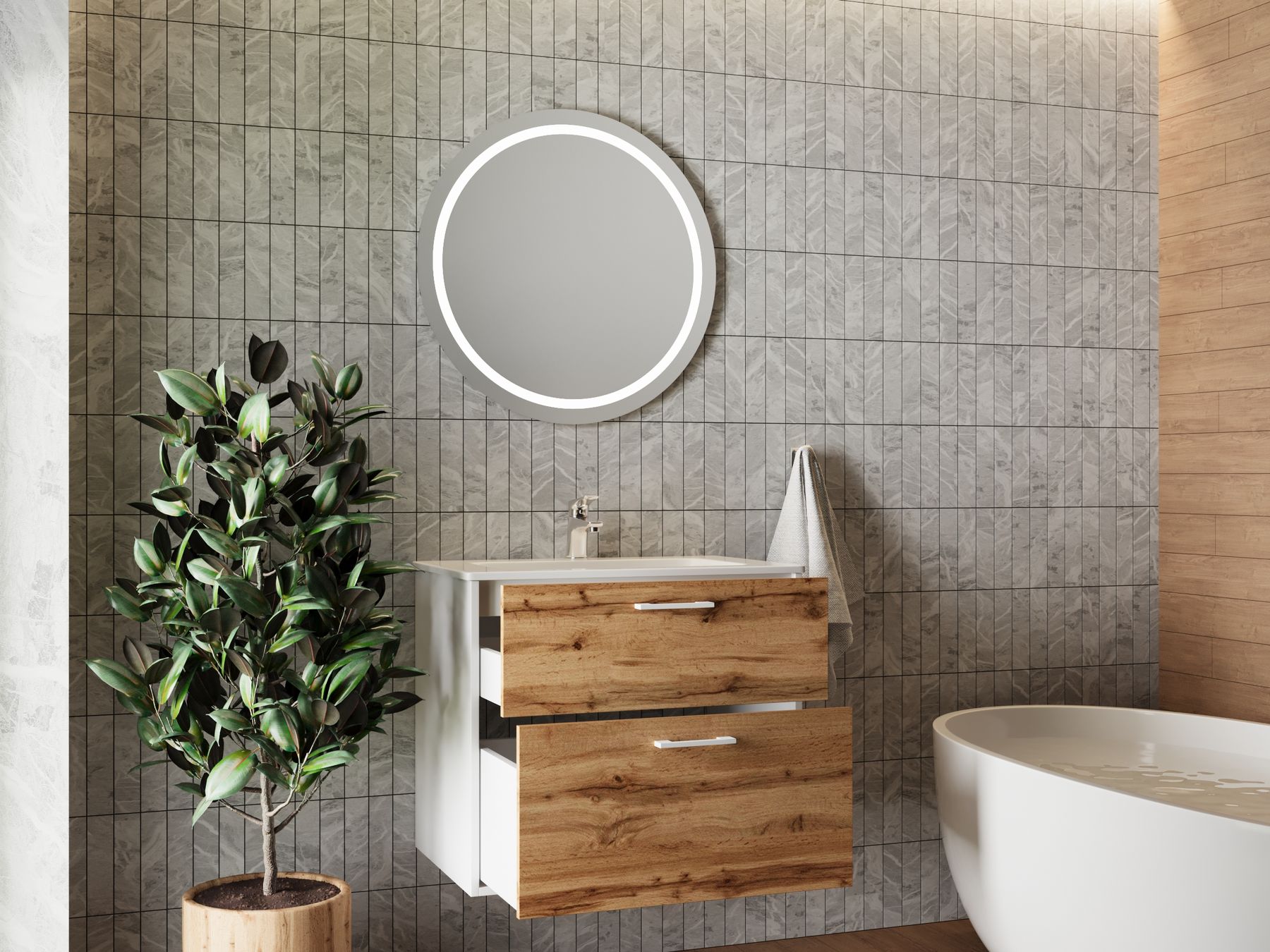
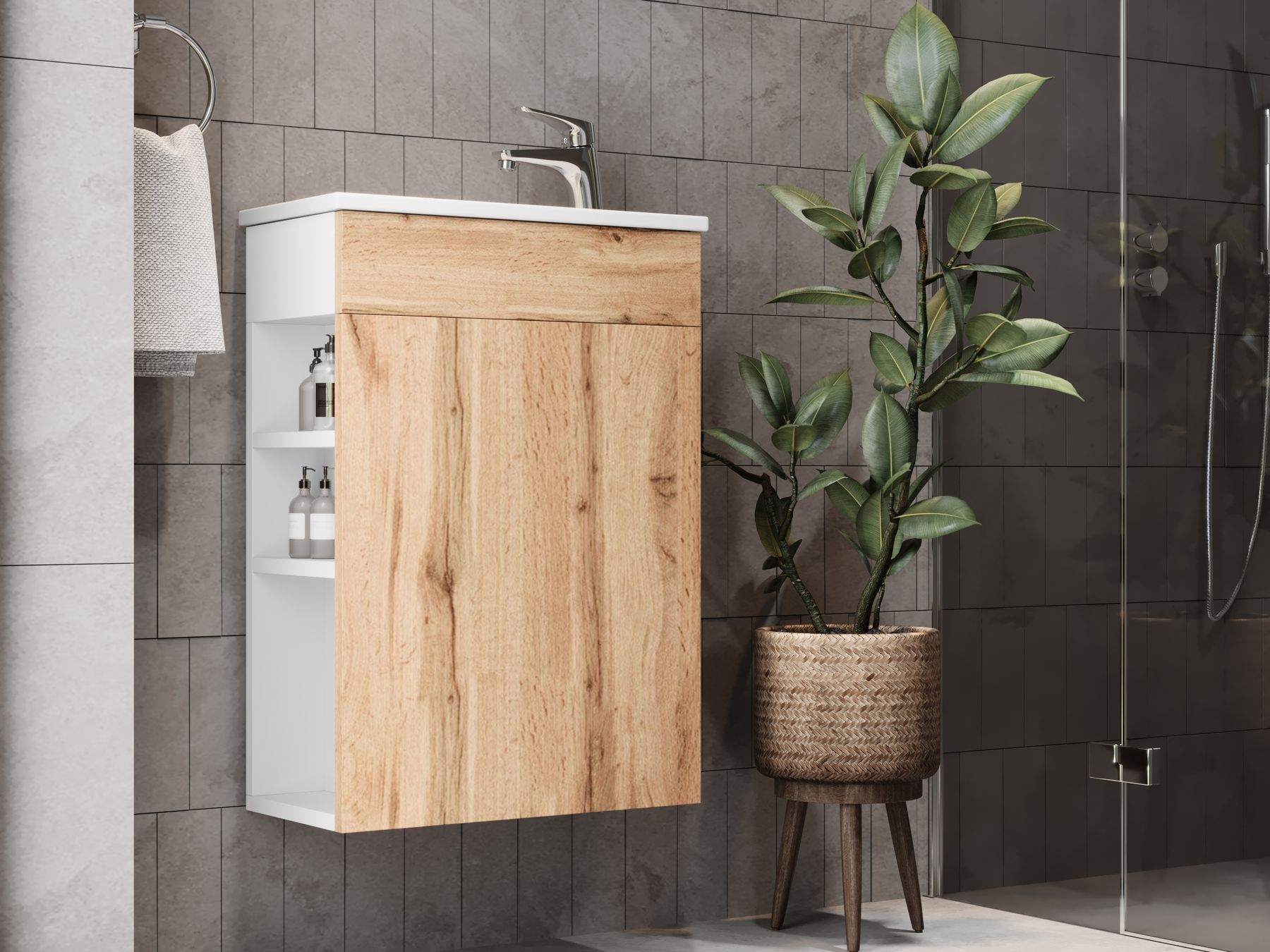
A wood vanity is the most practical way to make timber visually important because it combines color, grain and storage in one furniture-scale element. Keep the countertop and surrounding wall quieter so the cabinetry remains legible. Bathroom construction and finish quality matter more than simply choosing a convincing wood tone.
Pair Warm Wood With Pale Stone
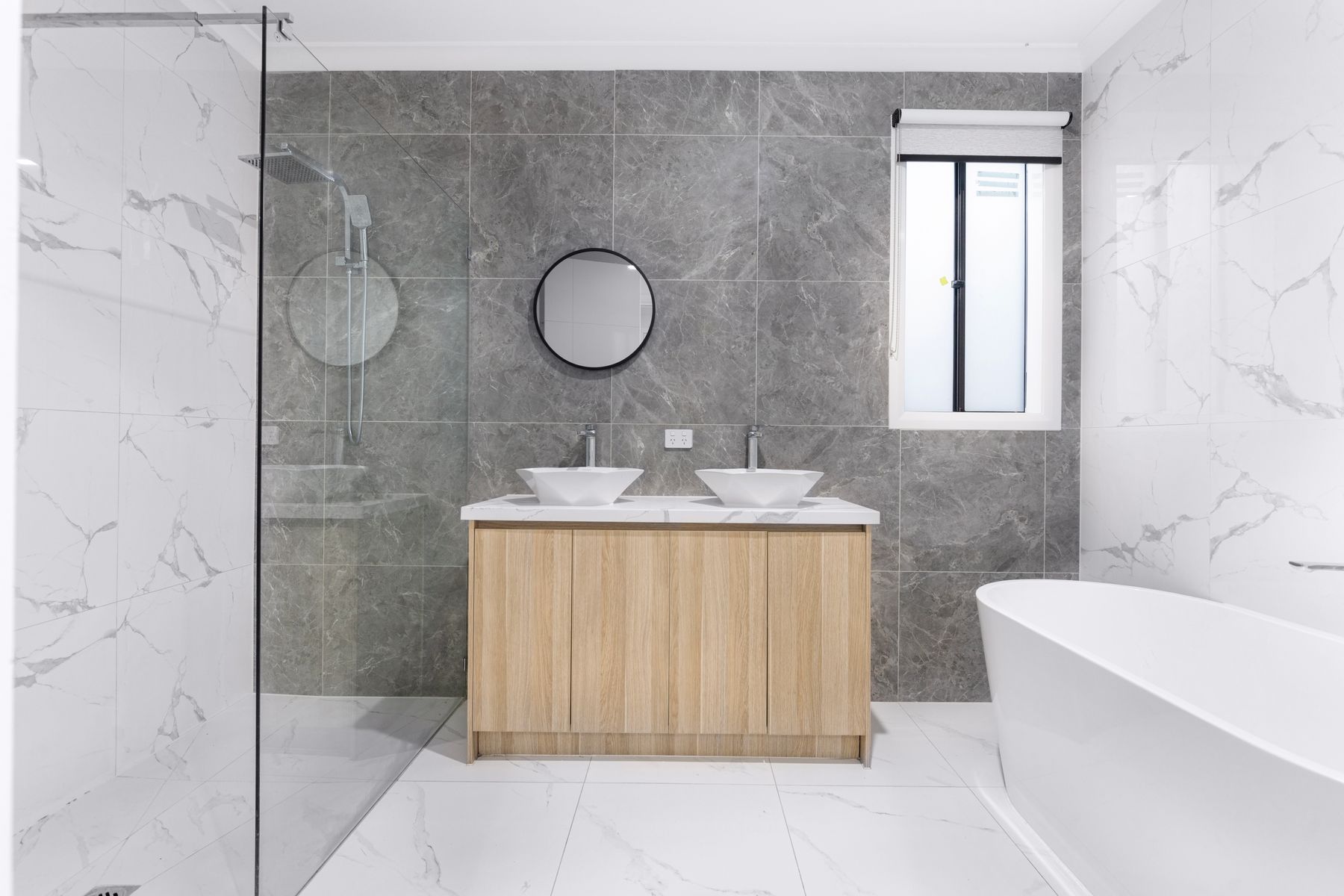
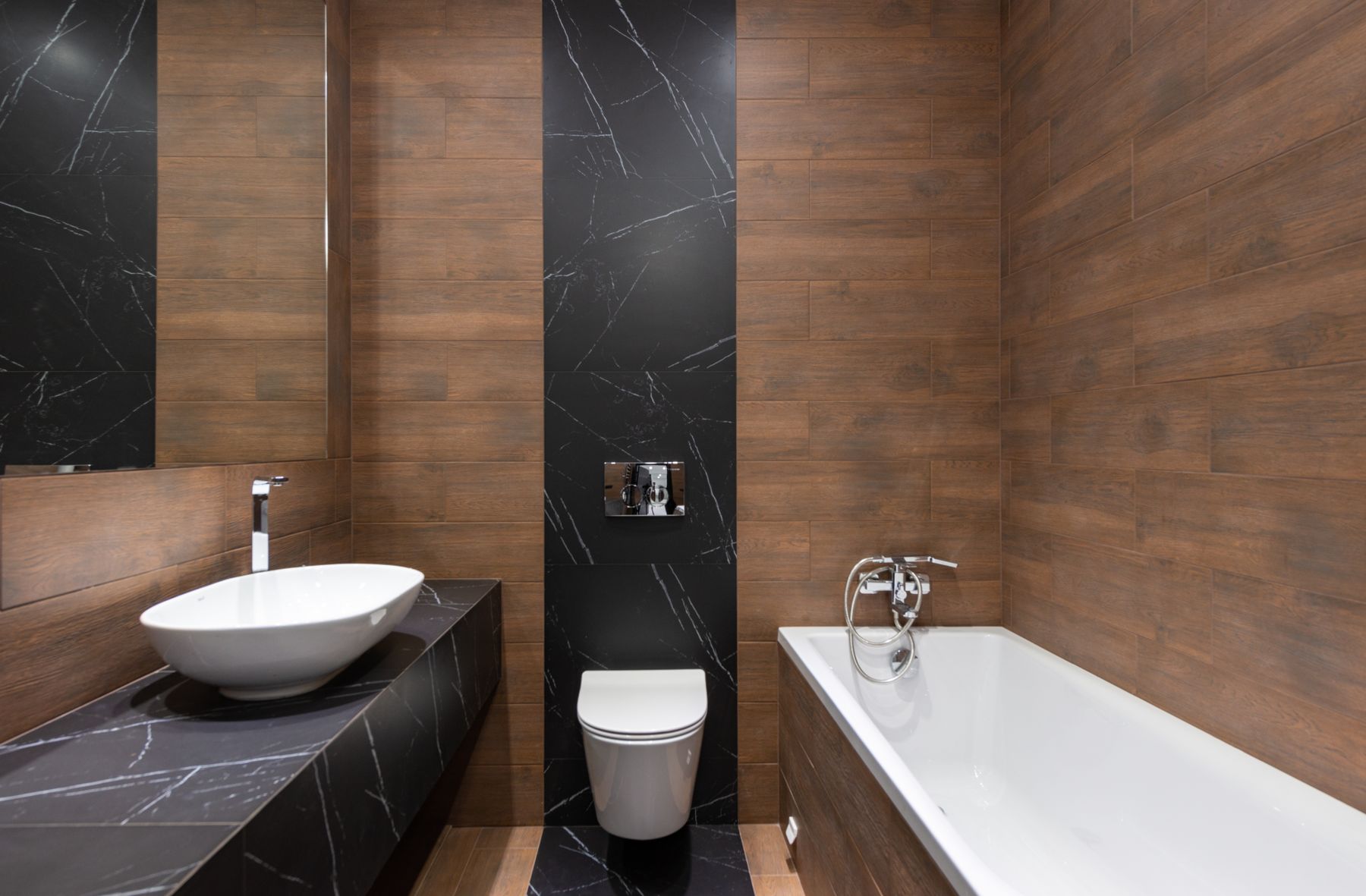
Pale marble, limestone-look porcelain and soft mineral surfaces give warm wood a cooler counterpoint. This pairing creates depth without introducing a strong second color and works across modern, classic and minimalist bathrooms. Keep veining restrained if the grain is already visually active.
Use Wood Against Black for Stronger Contrast
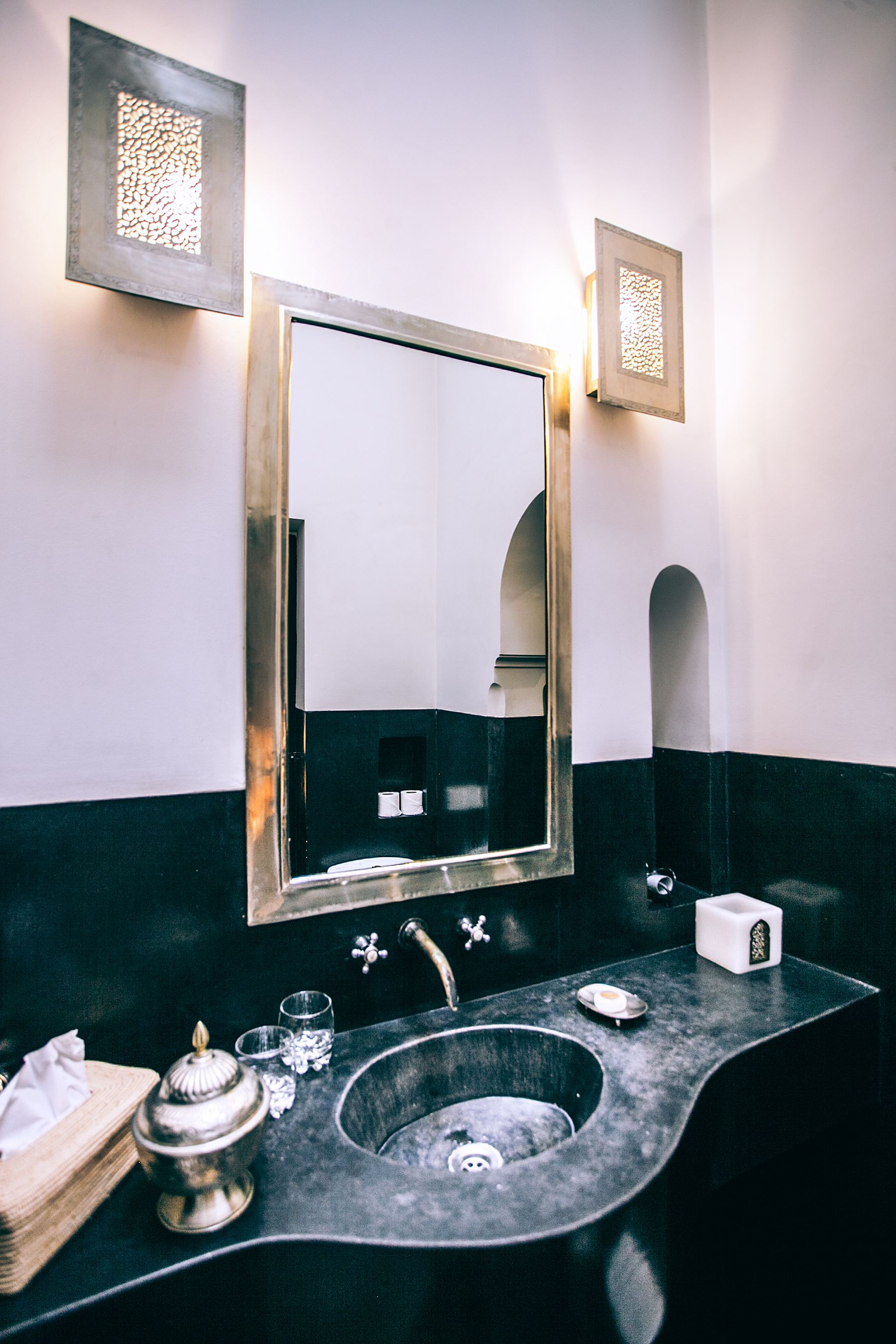
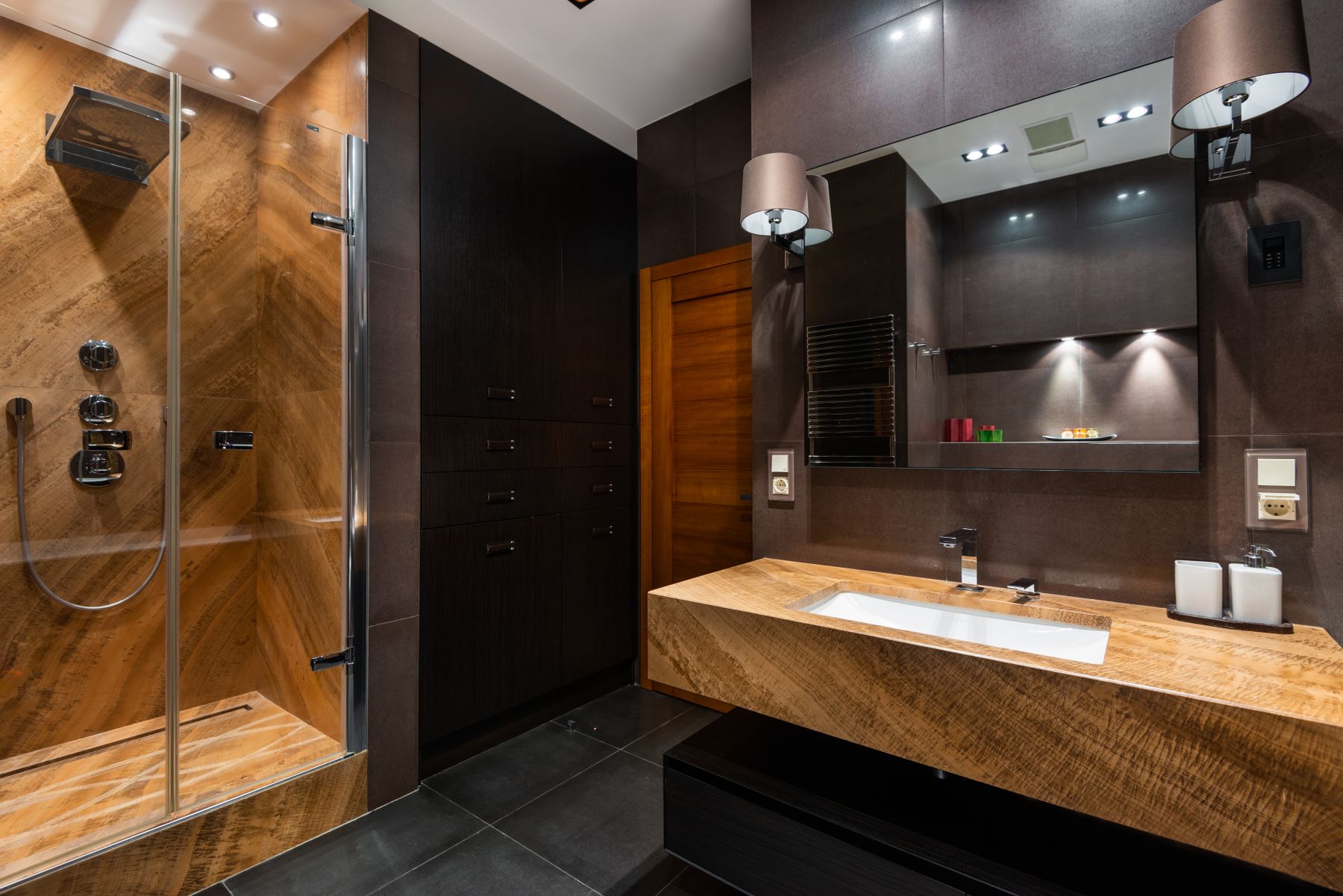
Black tile, dark walls or matte fixtures can sharpen warm wood and make the grain more visible. The combination works best when wood remains warm enough to separate clearly from the dark background. Preserve white ceramic, glass or good lighting so the room does not become visually dense.
Make Double-Vanity Storage Feel Like Furniture
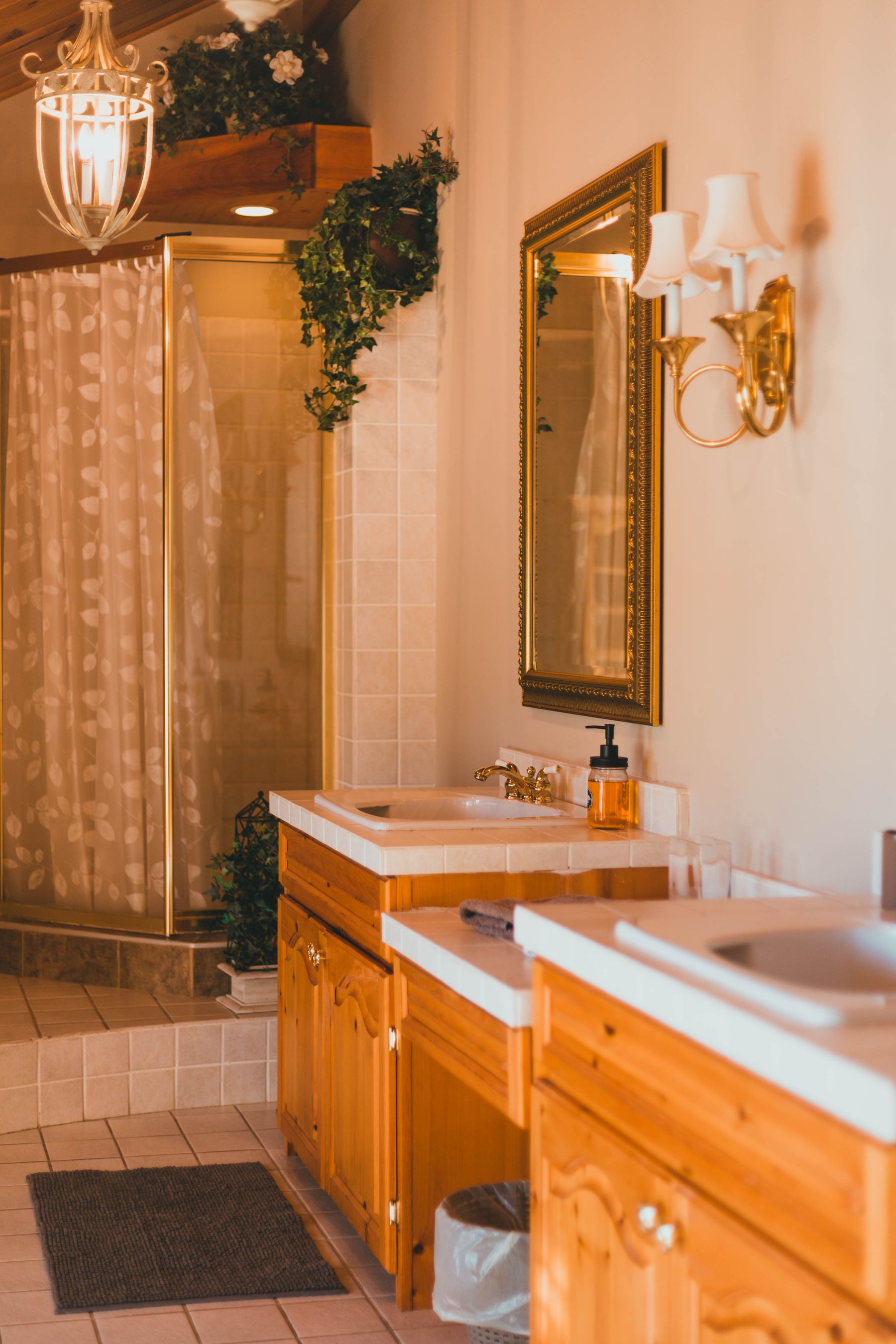
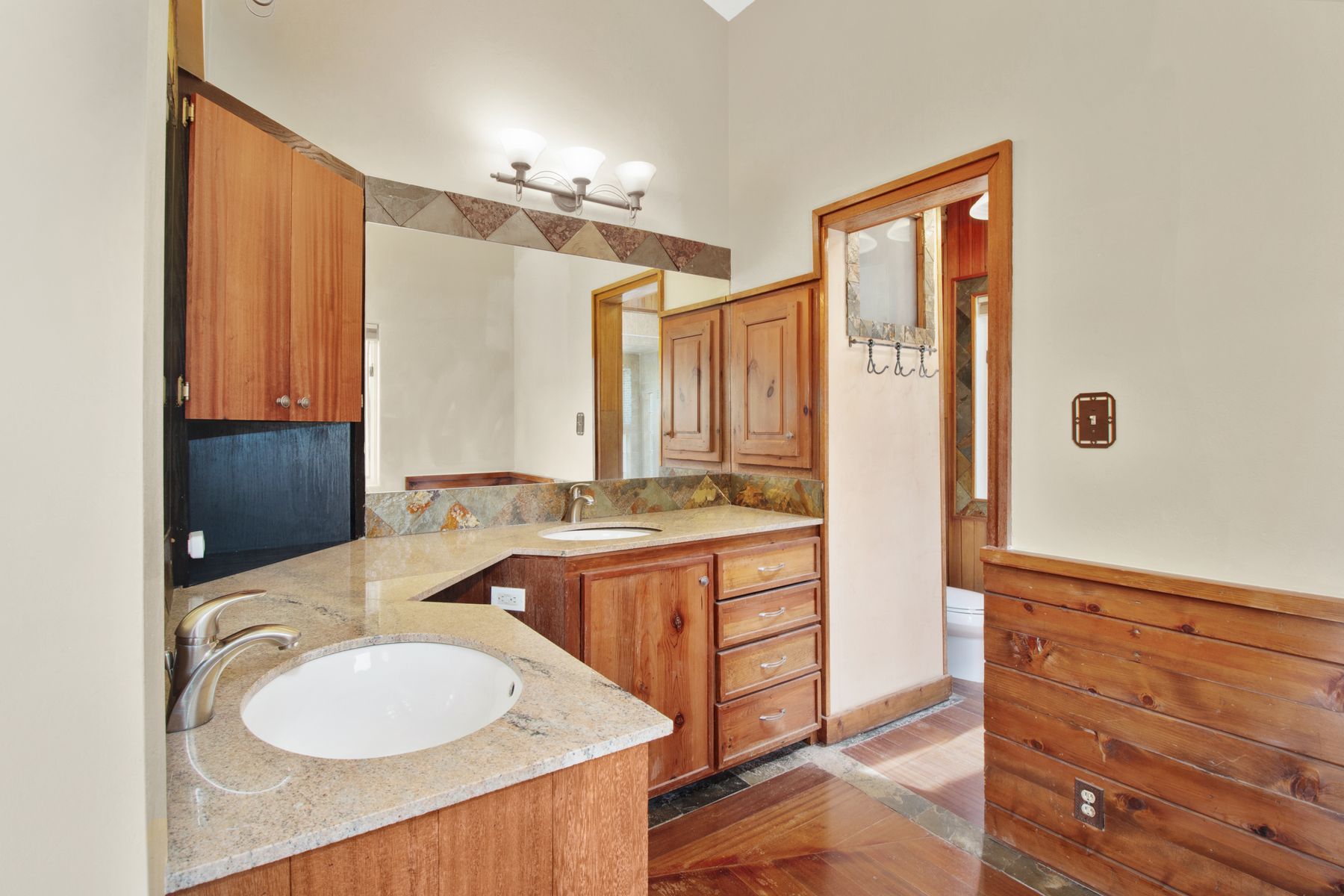
A broad double vanity gives timber enough uninterrupted width for grain and tone to read clearly. Keep handles, countertop objects and mirror frames controlled so the cabinetry does not disappear behind visual clutter. The internal drawer layout should still follow everyday storage needs.
Use Wood Paneling as One Architectural Plane
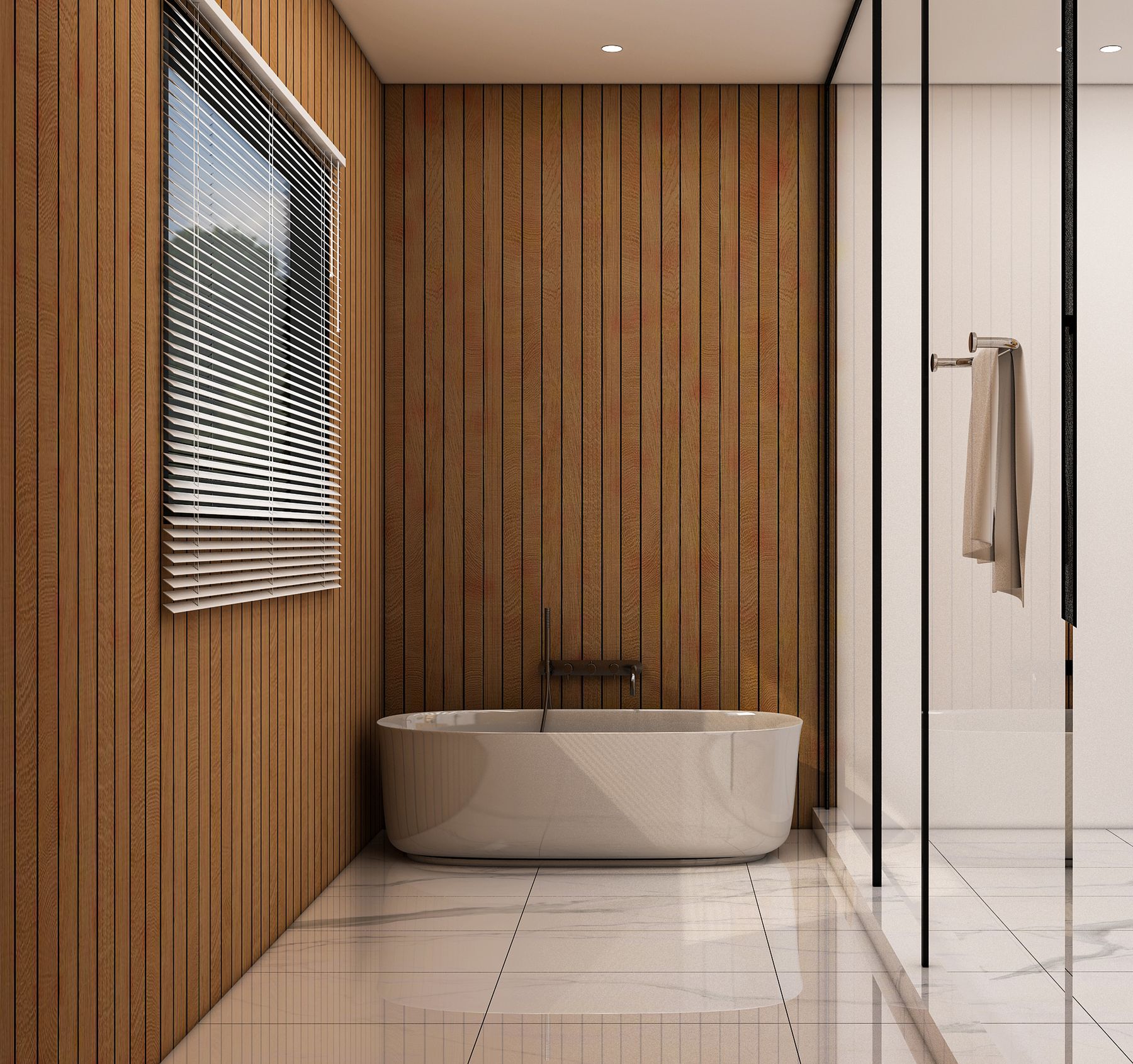
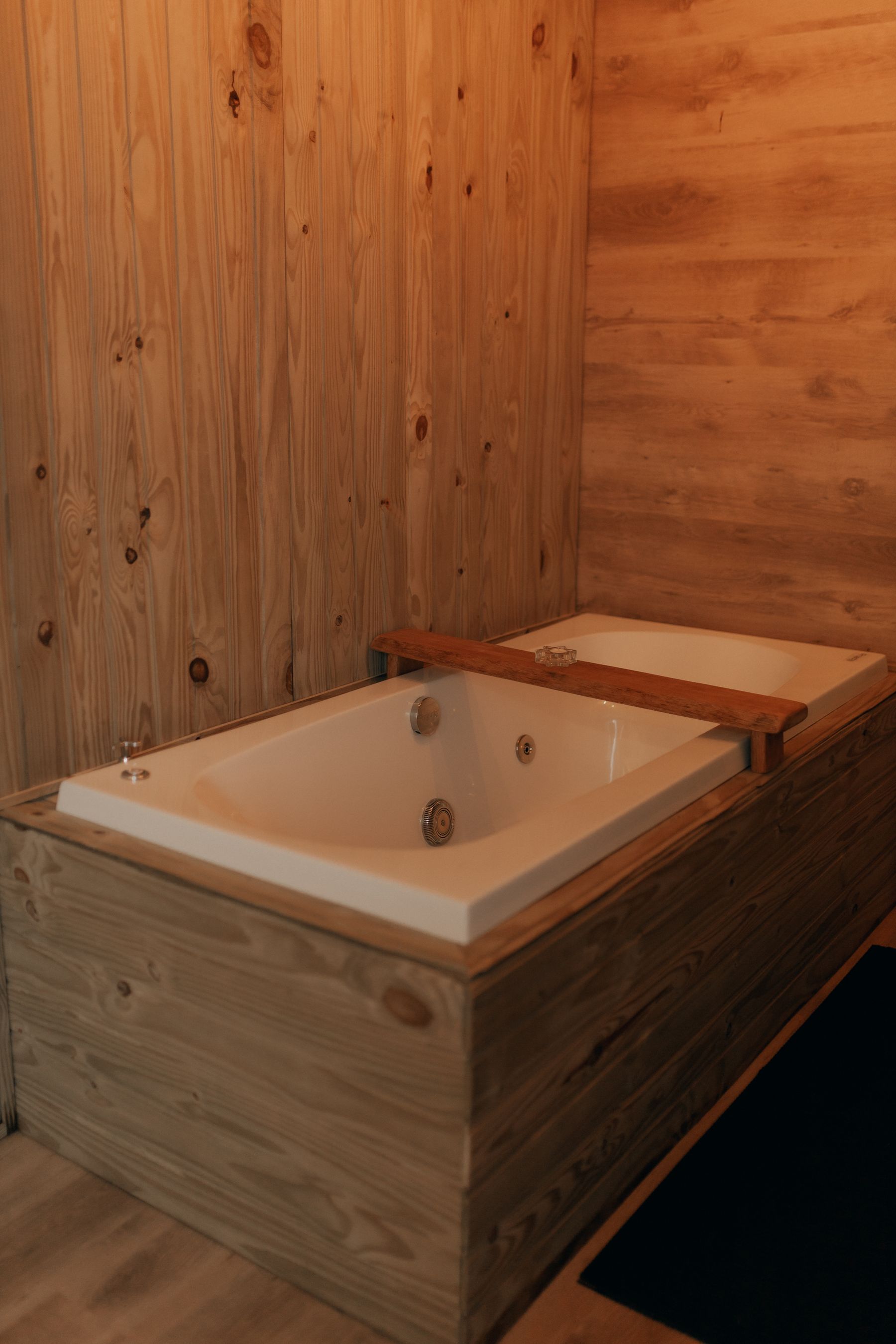
Timber paneling can move wood from furniture into the architecture, but one wall or clearly bounded zone is often enough. In bathrooms, the exact product, substrate, ventilation and splash exposure need to be resolved before copying a dry-room panel detail. A moisture-stable alternative can preserve the visual idea when real wood is unsuitable.
Keep White Ceramic as the Clean Counterpoint
White sinks and tubs give warm wood a clean edge and stop a timber-heavy room from becoming visually muddy. This is especially useful with medium and darker woods. Simple ceramic forms allow grain to remain the main decorative texture.
Let Natural Light Reveal the Grain
Wood changes noticeably between daylight and warm artificial light. Position the main timber surface where natural light can reveal grain without creating constant splash or UV exposure problems, and check how the finish looks after dark. A small amount of greenery can support the natural palette without becoming a theme.
Use Wood Around the Bath Only When the Material Is Suitable
A wood-lined bath zone can feel exceptionally warm, but it is also one of the most demanding places to use timber. Ventilation, drying, sealing, joints and manufacturer guidance matter more than the mood image. Where direct exposure is too difficult, wood-look porcelain or another moisture-stable material can deliver a similar tonal effect with less maintenance.
Edit Styling So the Grain Stays Visible
Warm wood already supplies pattern through grain, so the vanity does not need many decorative objects. Keep daily toiletries contained and use only a few useful pieces on the counter. This prevents the material from disappearing behind trays, bottles and styling.