Mix Woven Pendants With Simpler Glowing Shapes
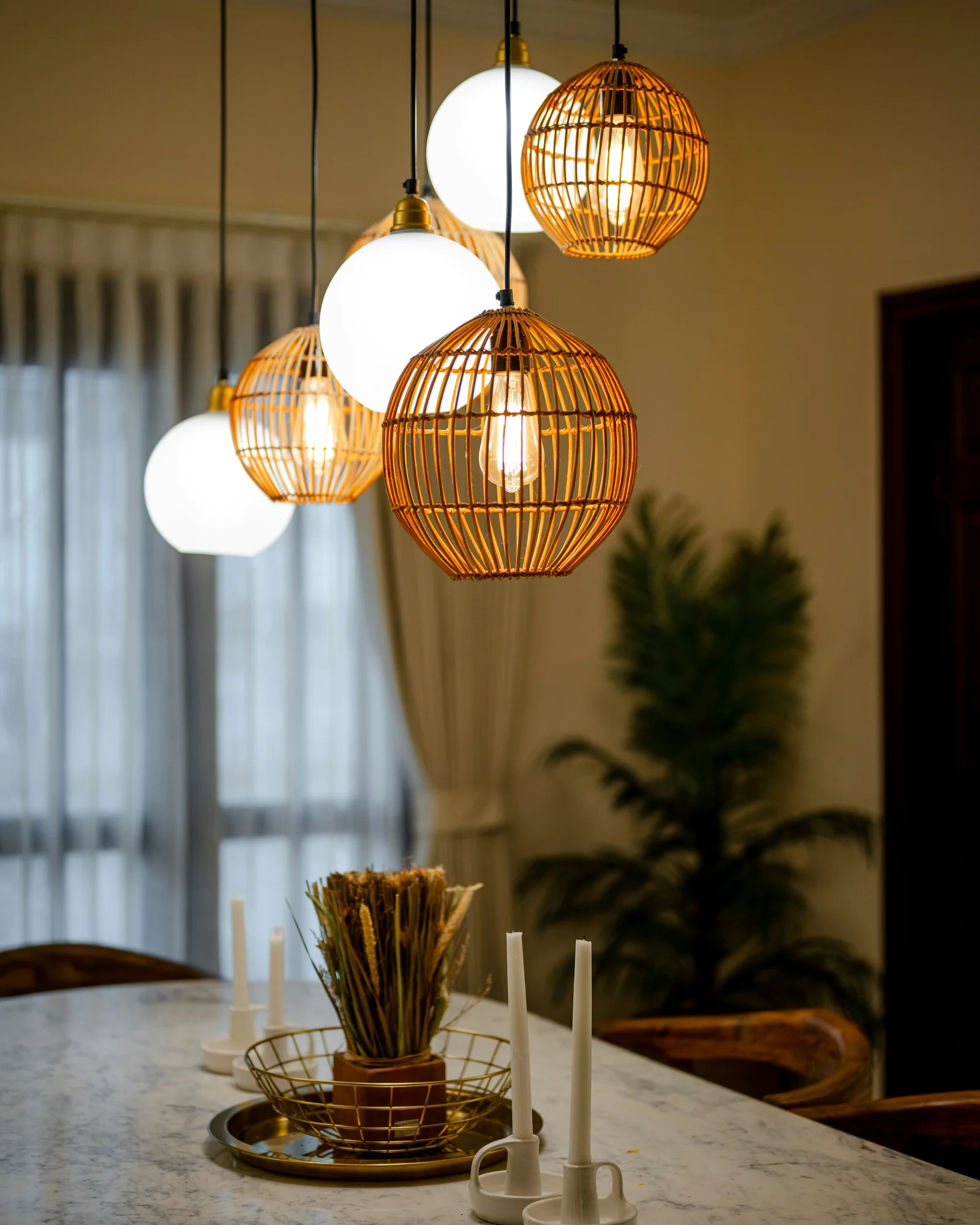
Above a dining table, a cluster of open basket shades and luminous round forms offers two kinds of visual interest. The woven pieces bring color and intricate lines; the smooth globes keep the composition from becoming an uninterrupted row of texture. You can appreciate both materials in the same glance because neither has to carry the whole arrangement.
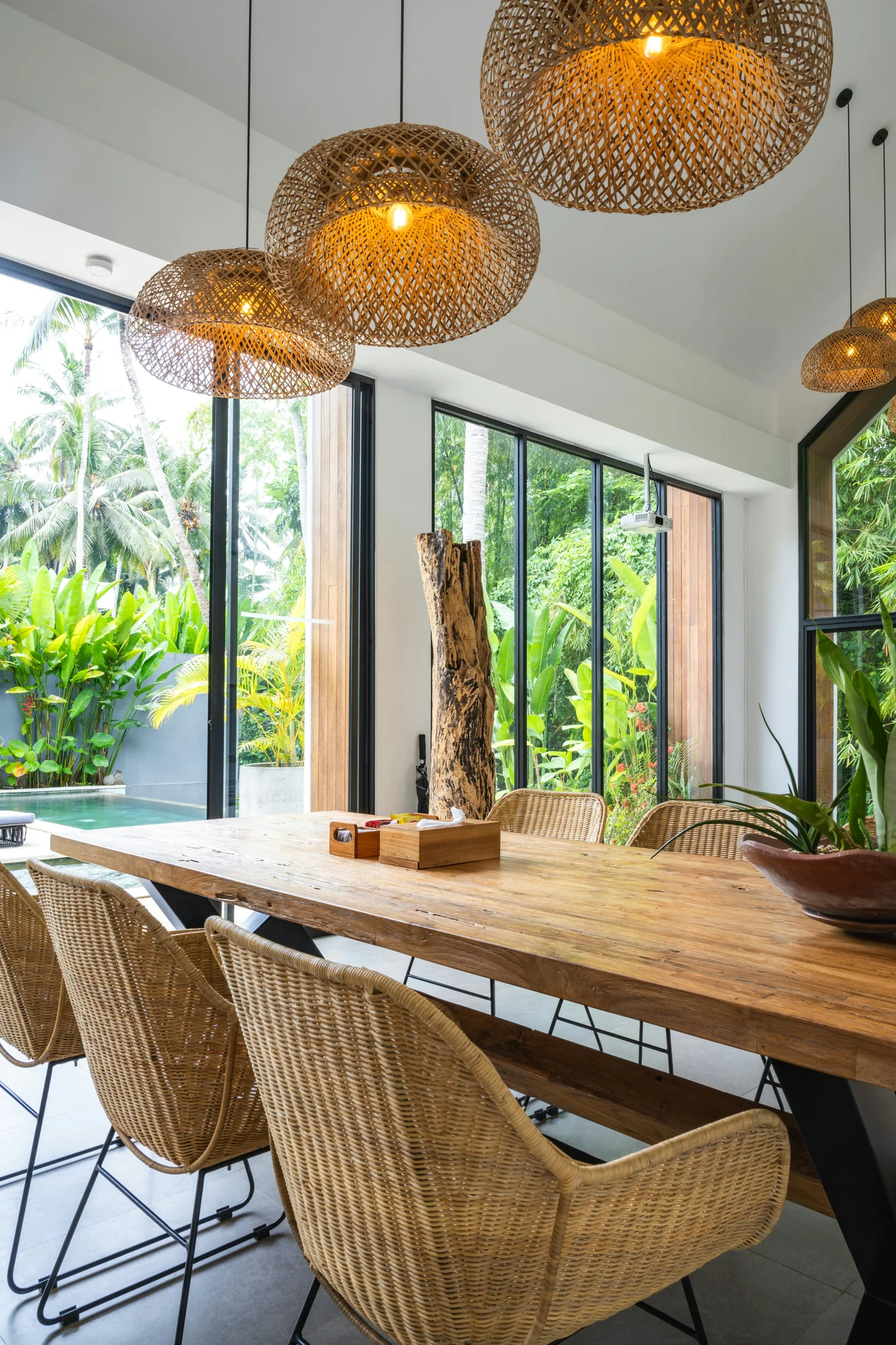
Where a room already has a distinctive table or substantial dining chairs, this mix can feel livelier than a matching pair. Keep the color of the weave consistent and let the smooth elements provide the contrast. Prefer a calmer look? The large pendants in the opening photograph repeat one shape family and make a more orderly cluster. Any mixed set still needs its actual fixture dimensions and hanging positions planned before installation.
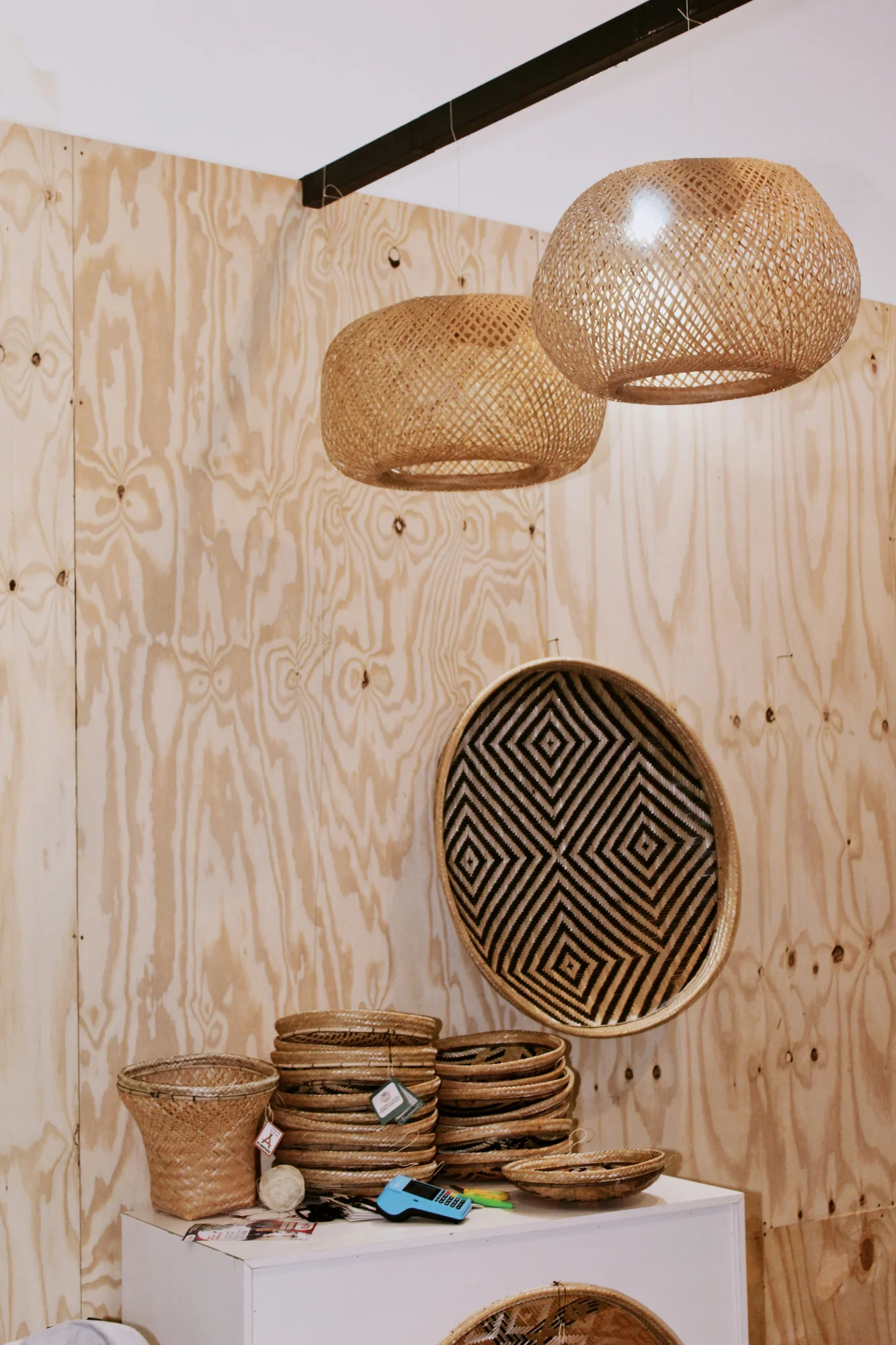
Use a Wide Woven Shade as a Sculptural Focal Point
Two wide, shallow woven shades hang against a pale plywood wall, and most of the movement in the frame comes from their rounded outlines. The wood is quiet enough to let the curves lead, so the shades do the decorating without a strong wall color behind them. That is the appeal of a statement pendant: shape does the work. The setting reads more like a styled display than a lived-in room, so take it as a study of silhouette, not a room plan.
Scale is the deciding point. A wide, low basket can look graceful when there is breathing room around its rim, yet intrusive when it sits across the best view into the room. Measure the complete shade rather than the canopy alone, and look at it from the doorway and from the seats beneath it. In a tighter room, the taller, narrower option later in this guide can deliver texture with less lateral spread.
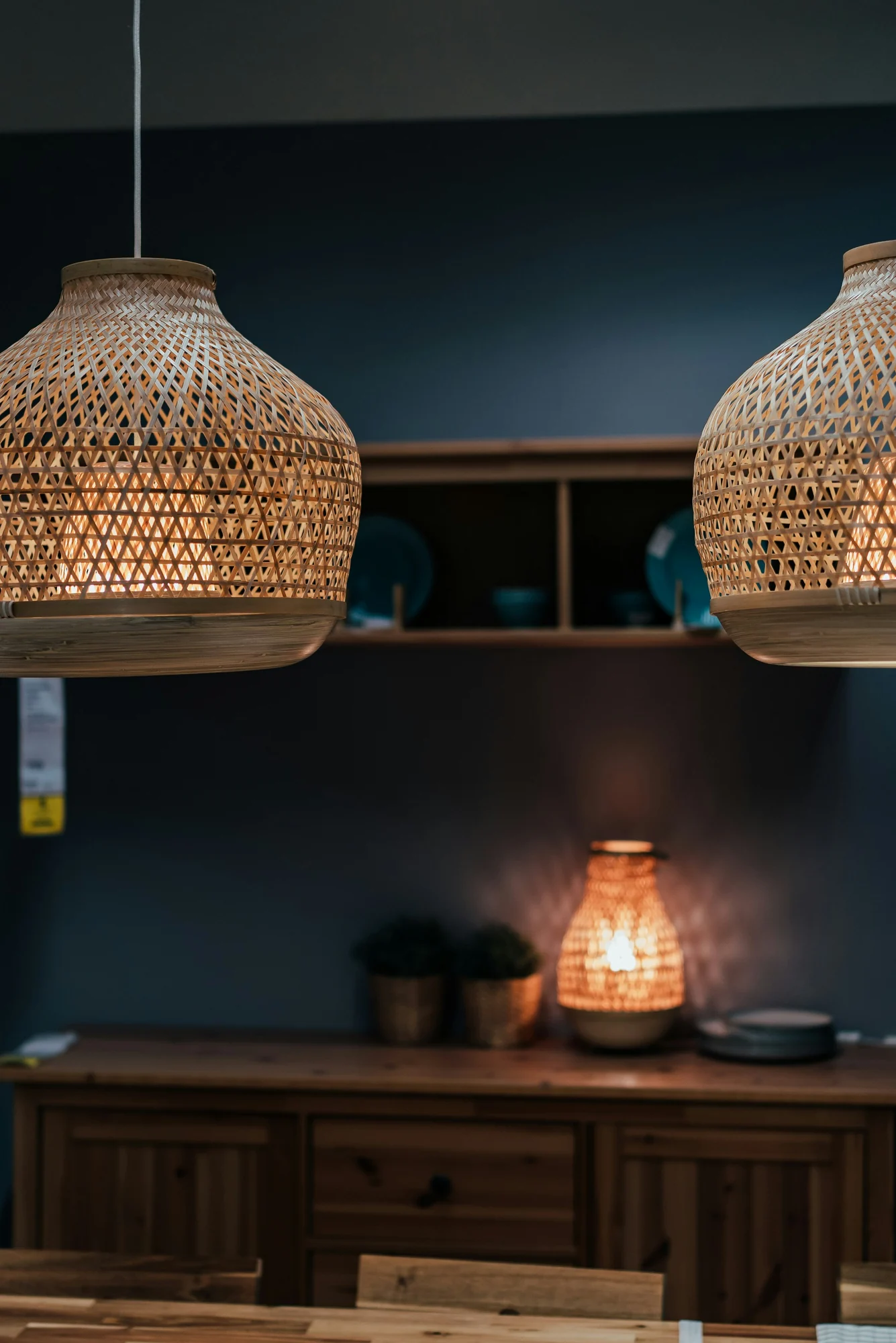
Set Warm Woven Shades Against a Deep Blue-Green Wall
Two substantial basket-weave pendants hang in front of a deep blue-green wall, their honey-toned surfaces glowing against the darker backdrop. A wooden sideboard with an open shelf sits below them, and a small lit lamp adds a second, lower point of warmth. The strong contrast is what makes this photograph worth studying: a dark wall, light-colored woven fibers, and pools of warm light that keep the room from reading as one dark block.
If you hang a pair over a kitchen island or dining table, use the surface length and the real shade diameters to decide whether one large fixture or two gives better coverage. For a common starting point, Lowe’s pendant lighting guide places the bottom of a pendant about 30–36 inches (76–91 cm) above a countertop; treat this as a design checkpoint, not a universal installation rule. Raise or reposition the fixtures if they block the view across the surface, and make sure the bulbs and any other task lighting support food preparation rather than relying on a decorative shade alone.
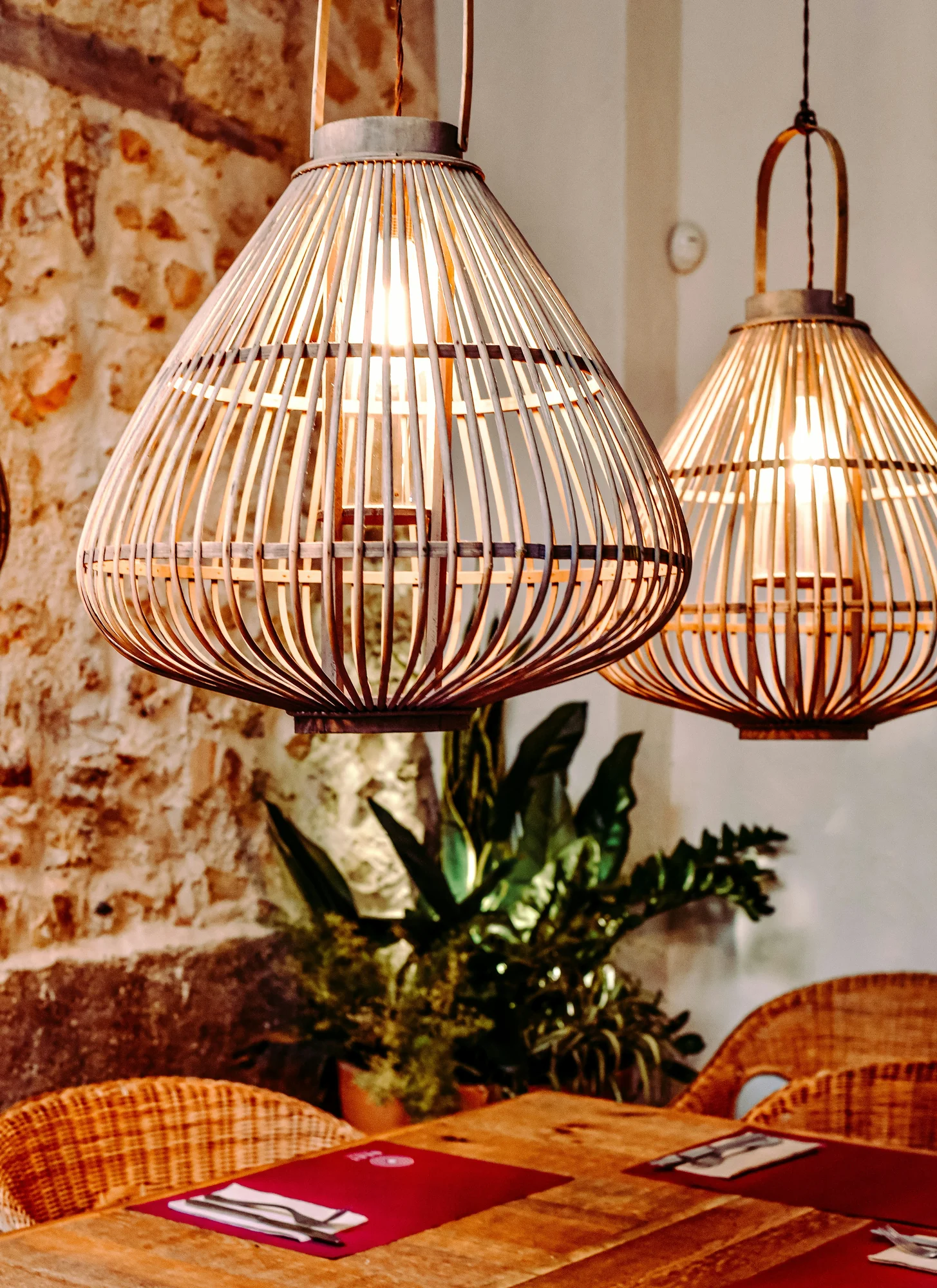
Let Natural Weave Settle a Colorful Dining Space
The red textiles, warm timber, and strong patterns in this dining room already have plenty to say. The pair of open woven shades does not introduce another saturated color; instead, their pale, earthy finish ties into the wood and woven seating. Because the shades are large but visually airy, the room can feel richly furnished without a solid-colored ceiling fixture adding another heavy element.
For a similarly eclectic scheme, look for a shade color that repeats something already present—a wood tone, a cane chair, or a natural rug. It need not match precisely. The useful relationship here is between the open ribs above the table and the more densely colored furnishings below. If the shade sits in front of busy wallpaper, however, consider a slightly tighter weave so the outline does not disappear into the pattern.
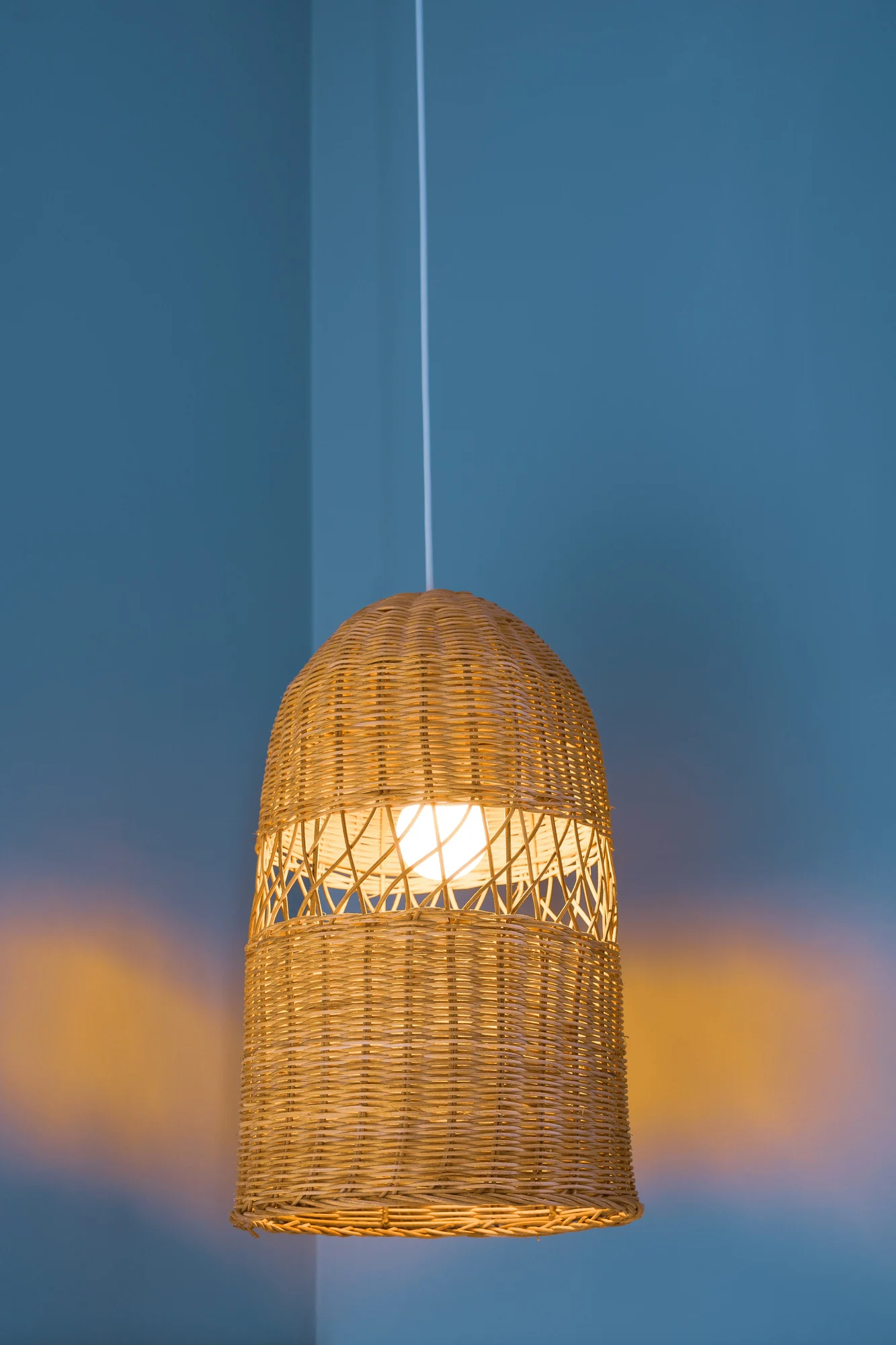
Use a Tall, Narrow Shade Where Width Is Scarce
A tall, narrow bell-shaped shade hangs against a saturated blue wall, and the effect is entirely different from the broad domes in the earlier rooms. It draws the eye downward in a narrow column, concentrating the visible weave in one spot rather than spreading it across the ceiling. The contrast between the warm-looking fibers and the blue background makes that vertical line particularly clear.
This profile can suit a compact breakfast perch, a side table, or a small niche where a wider basket would crowd adjacent objects. The space-saving advantage is visual width, not automatic safety or clearance: a long shade still needs enough room below it. Before selecting one, record both the body height and the lowest installed point, then compare them with people moving or sitting nearby. The photographed setting is a study of shape, not a verified residential installation.
Decide How Much of the Bulb You Want to See
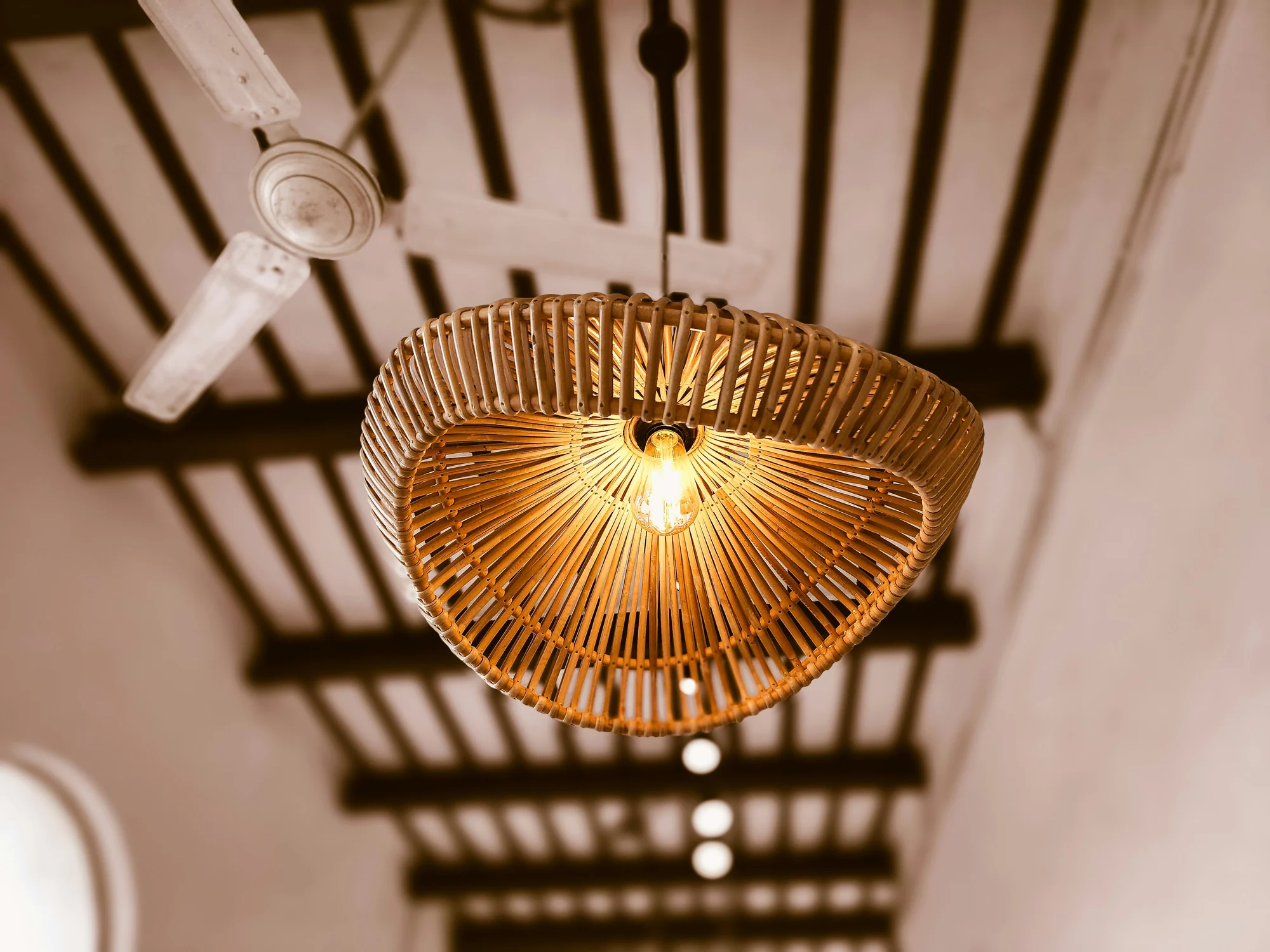
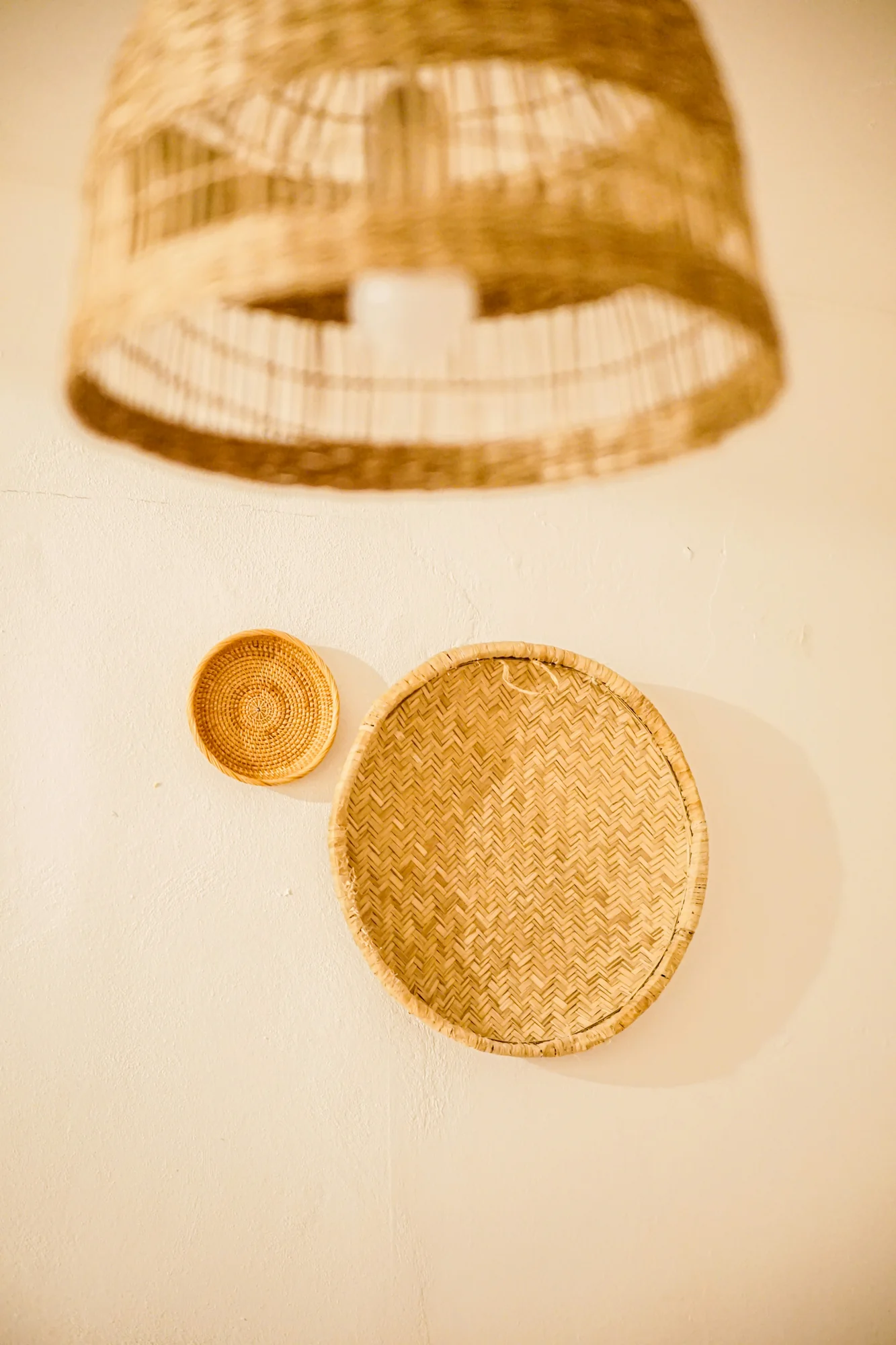
Two open-weave shades can be equally decorative and still direct attention to different things. In the first photograph, the bulb is plainly visible through the radial frame, which makes a strong graphic object against the dark ceiling structure behind it. The second view is closer and softer: the shade is slightly out of focus against a cream wall, and the eye goes to its loose weave and the round woven pieces hanging beside it.
Open ribs are compelling when the fixture is a visual centerpiece, but they may also leave a bright lamp in the line of sight. A denser or lined shade can be more comfortable in a place where someone regularly looks toward the fixture, although the actual result depends on the bulb, diffuser, shade geometry, and wall distance. Consider the view from a dining chair, a sofa, and the bed—not just how the pendant looks from a standing position. The two photographs illustrate possibilities, not guaranteed lighting effects for every product.
Free the Nightstand With a Bedside Pendant
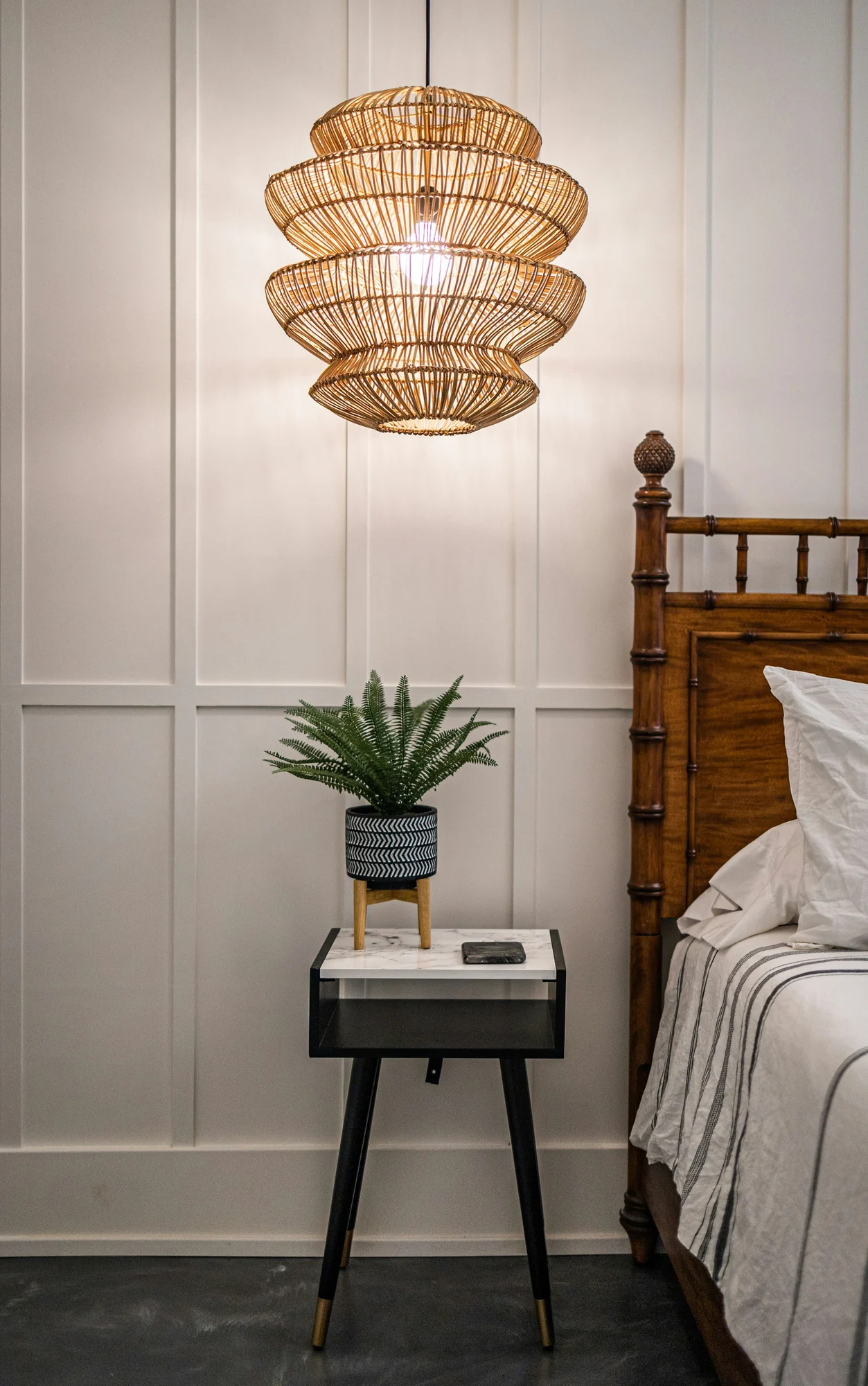
A tiered woven shade hangs just above the bedside table, which leaves the tabletop free for a plant, a book, a glass, or whatever else is actually used at night. The suspended form brings texture to the wall beside the bed instead of making the whole ceiling the focal point. It also marks the sleeping area without another piece of floor furniture.
The practical test happens while seated or lying down: can you reach the switch, and is the light source in your eyes? A bedside pendant should illuminate the intended surface without becoming something a person can bump when sitting up or getting out of bed. This option is worth considering during a renovation or when a suitable existing connection is available; new electrical work belongs with a qualified electrician following the fixture instructions and local requirements.
Get the Woven Glow With a Table Lamp Instead
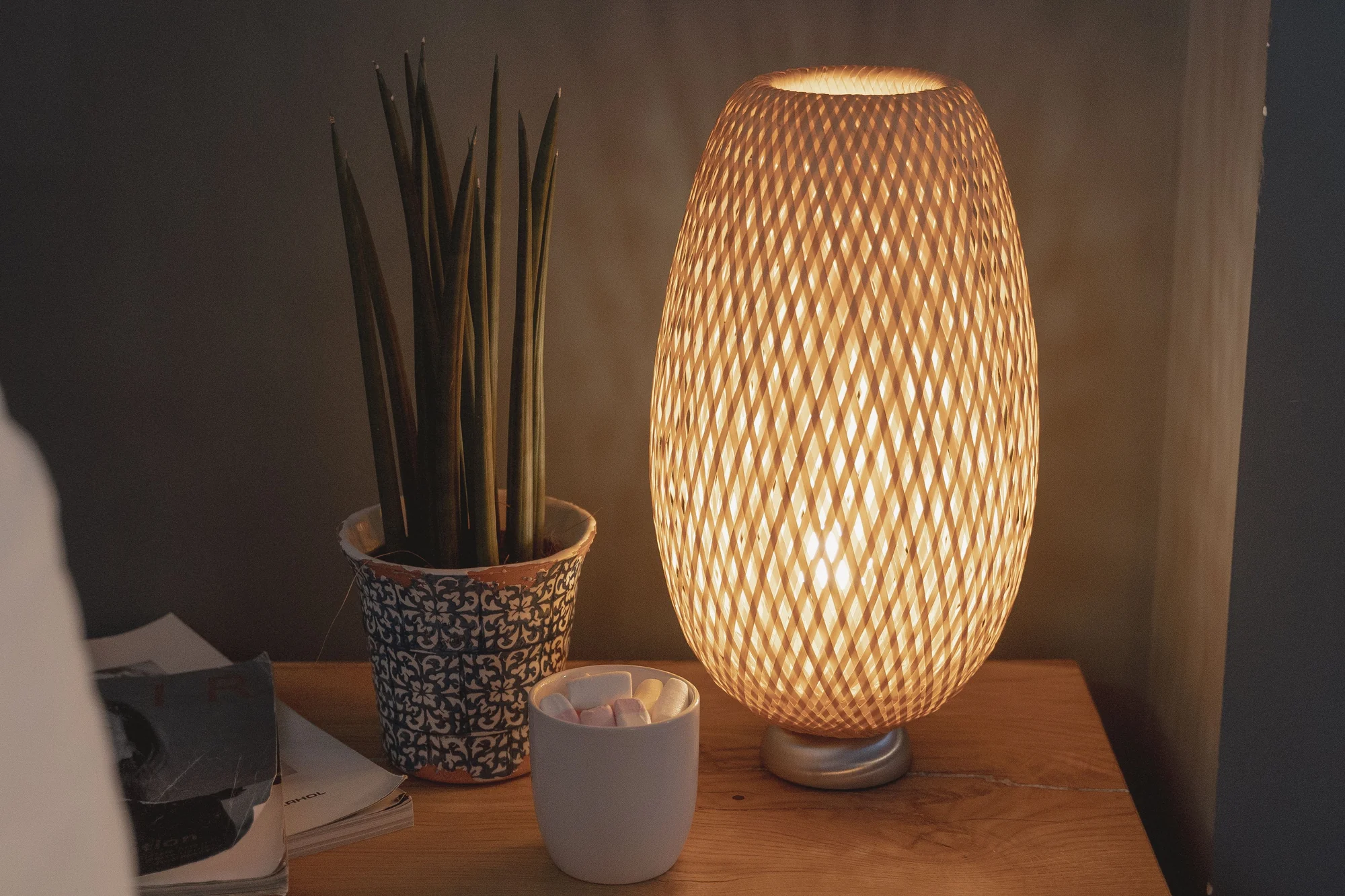
Not every room needs another ceiling connection. A compact woven-shade lamp on a bedside cabinet produces a close, warm-looking pool of light and brings the basket pattern down to a height where it can be appreciated from bed. Unlike a permanently located pendant, it can move with the furniture as the layout changes.
It is a useful answer for a rental, a guest room, or anyone who is still deciding where the bedside table belongs. Look at the footprint, cord route, shade opening, and actual bulb specification, particularly if the lamp must also support reading. The photograph demonstrates the texture and scale of a tabletop lamp; it does not establish whether the model is cordless, rechargeable, or suitable for a particular brightness requirement.
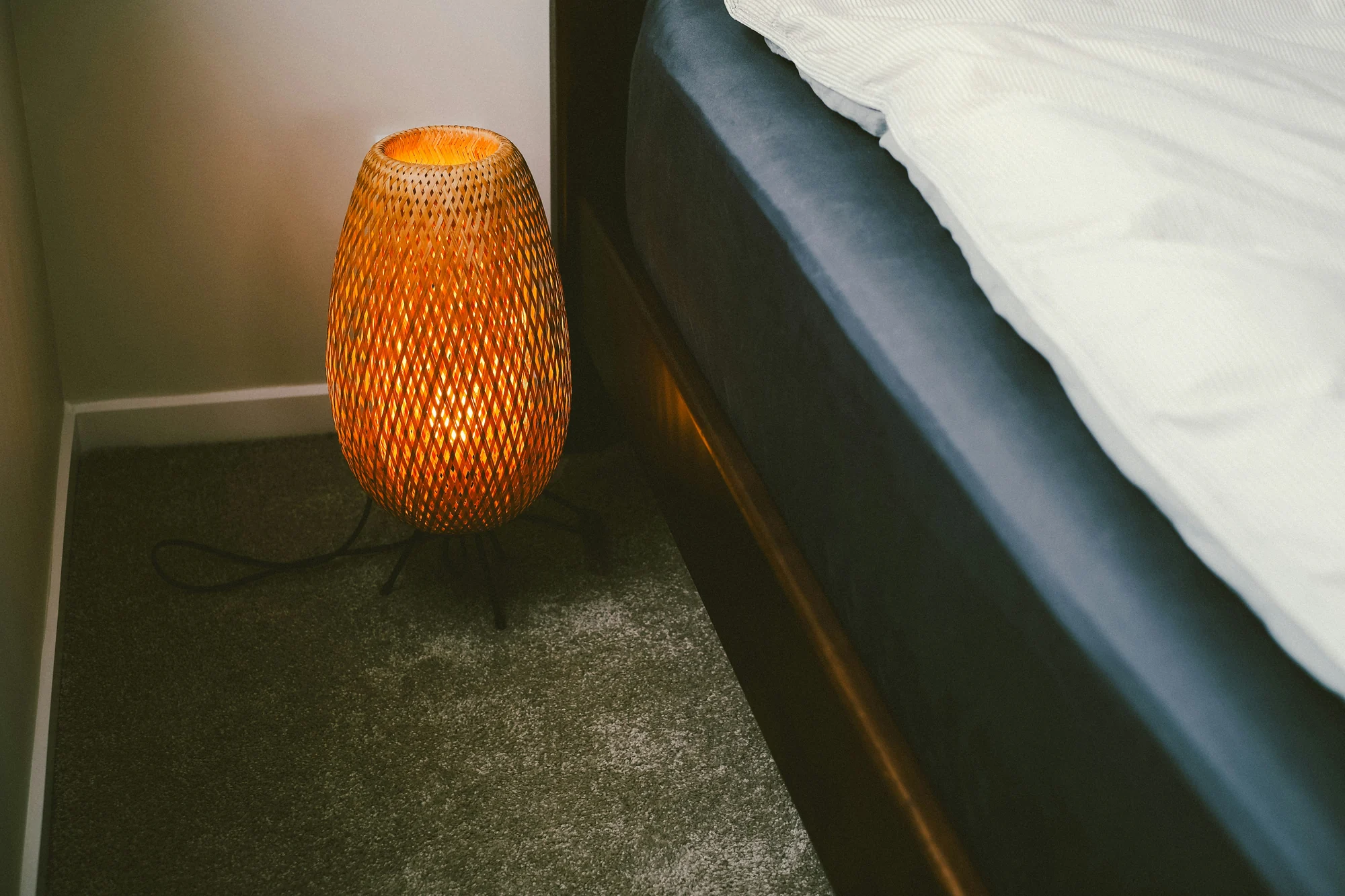
Put a Woven Floor Light Where Overhead Lighting Feels Too High
A small egg-shaped woven lamp stands on thin legs in the gap beside the bed. Its tight, basket-like shell catches the warm light close to the carpet and bed frame, in contrast to the more open ceiling baskets earlier in the guide. Here the woven material is a low decorative layer rather than a ceiling feature; that makes an otherwise quiet corner worth noticing.
Use this kind of lamp for atmosphere or to draw attention to a quiet corner; do not assume the glow visible in a photograph is bright enough for a book or detailed work. Compare the lumens specified for the chosen lamp or bulb and verify that its position will not create a trip hazard. A directional reading light can still be paired with a woven floor lamp when the two fixtures have different jobs.
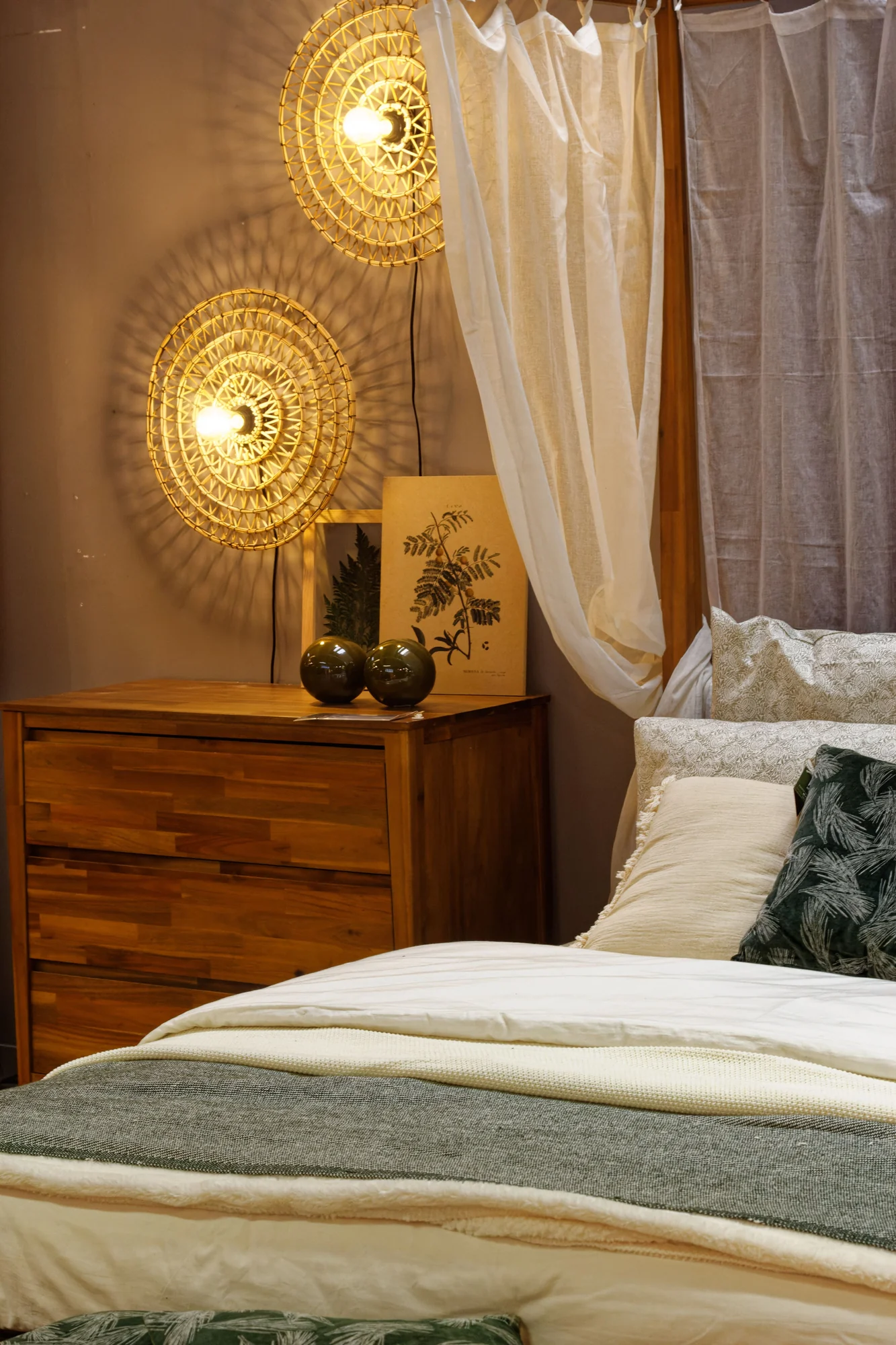
Save Furniture Space With Woven Wall Lights
Two round woven lights, hung at different heights above the nightstand, repeat one circular shape on the wall. Their open concentric ribs leave the bulbs visible and cast a radial pattern on the wall—the distinctive effect of these particular fixtures, not a promise for every woven sconce. They add texture above the furniture without lamp bases on the nightstand or a floor lamp in the walking route.
Wall-mounted woven fixtures are especially useful for narrow bedside arrangements, compact entries, and corners with little spare furniture space. Choose an open pattern like the photographed pair when you want visible ribbing and a decorative light effect; for an eye-level reading position, check whether the exposed lamps would be distracting. The photograph does not establish the wiring or mounting method. Follow the actual product instructions, plan the cable route, and choose equipment suitable for the location. For a broader lighting plan beyond woven materials, see our living room lighting ideas guide.
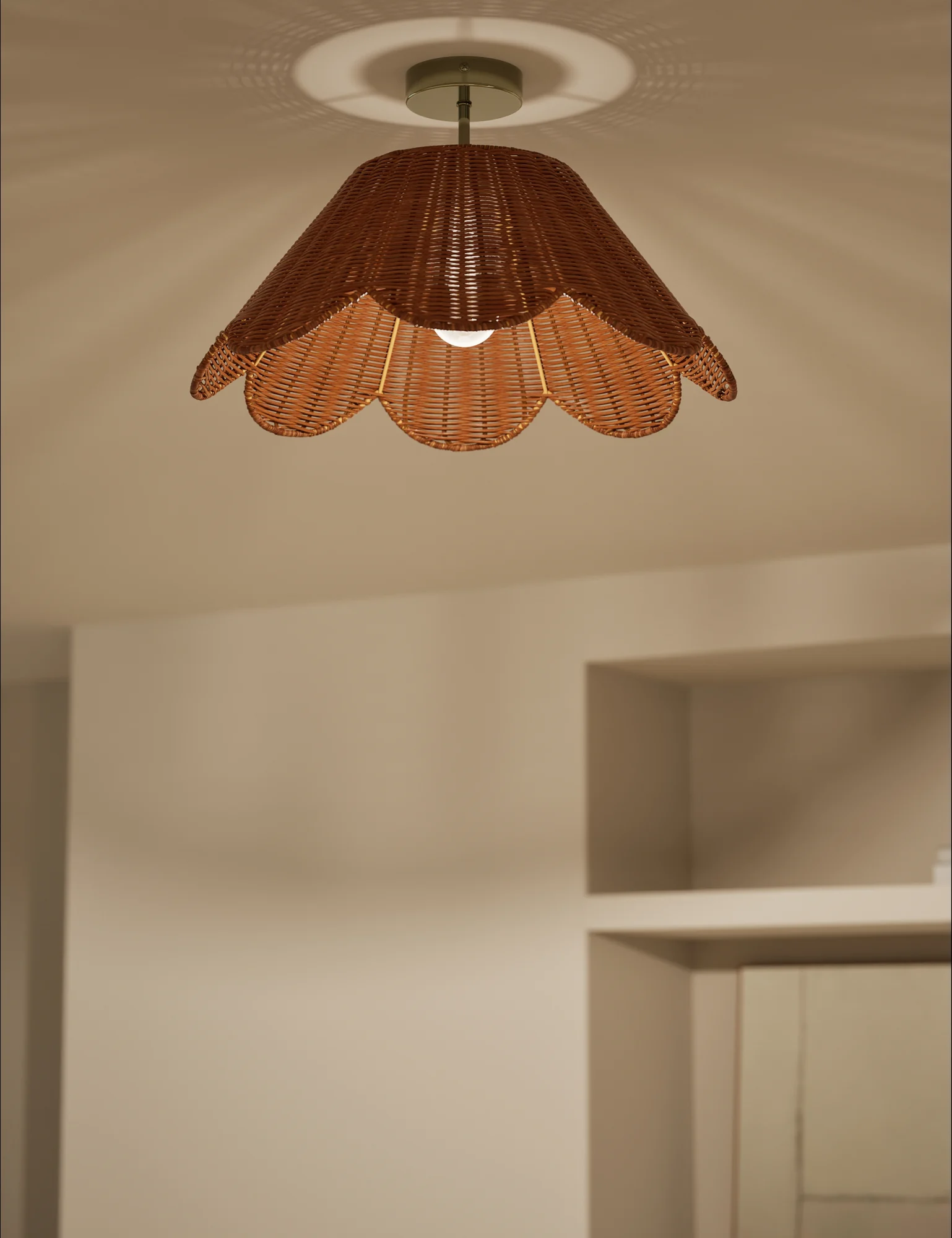
Switch to a Scalloped Flush Ceiling Light
A woven shade does not need a long cord to bring character overhead. The scalloped rattan ceiling fitting shown here sits close to the ceiling, turning the basket edge into a soft, flower-like outline. It is a different answer to the same material question: instead of letting the lamp hang into the room, the texture stays near the ceiling plane.
For a hall, smaller bedroom, or room with limited ceiling clearance, a close-mounted fixture can preserve more usable headroom than a deep pendant. The shade in the photograph is an M&S rattan scallop fitting, but that does not tell you whether a version is sold in the US or meets US electrical requirements. Check the specification and installation requirements of any fixture you are actually considering.
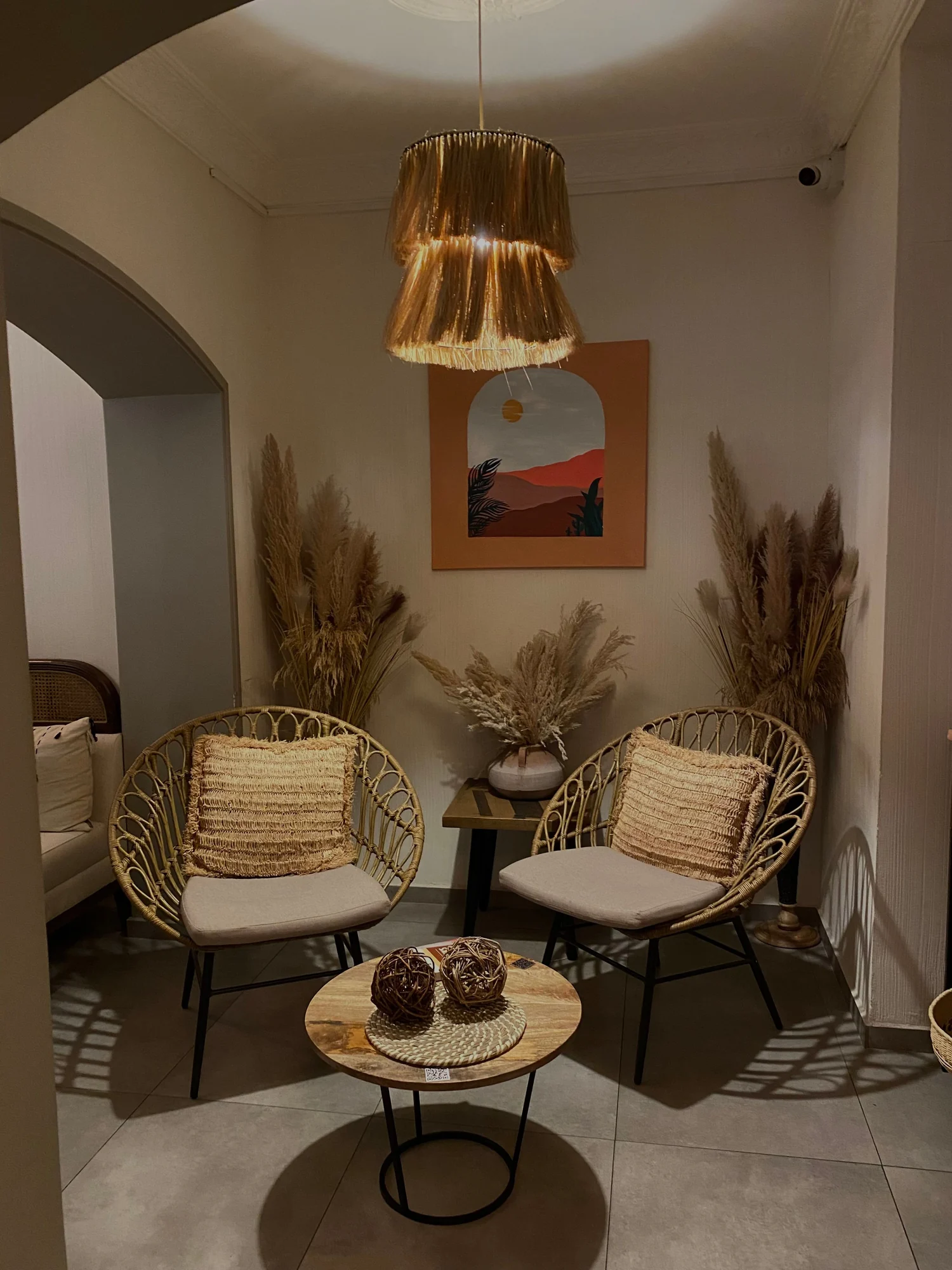
Keep the Shade in Proportion to a Small Sitting Corner
In this compact sitting area, one modest fringed shade hangs over the corner and gives the two round-backed chairs and the small table an overhead focal point without filling the whole field of view. A much larger basket might compete with the arch, the dried grasses, and the artwork; the narrower fixture lets those pieces remain visible.
This is a useful approach for a small apartment seating area or a breakfast corner that is defined by only a few pieces of furniture. Look at the shade in relation to the tabletop, not in isolation on a product page. The key question is whether the lamp organizes the small arrangement or makes it feel compressed. If it needs to sit directly above a walkway, re-evaluate the hanging height and consider a closer-to-ceiling form.
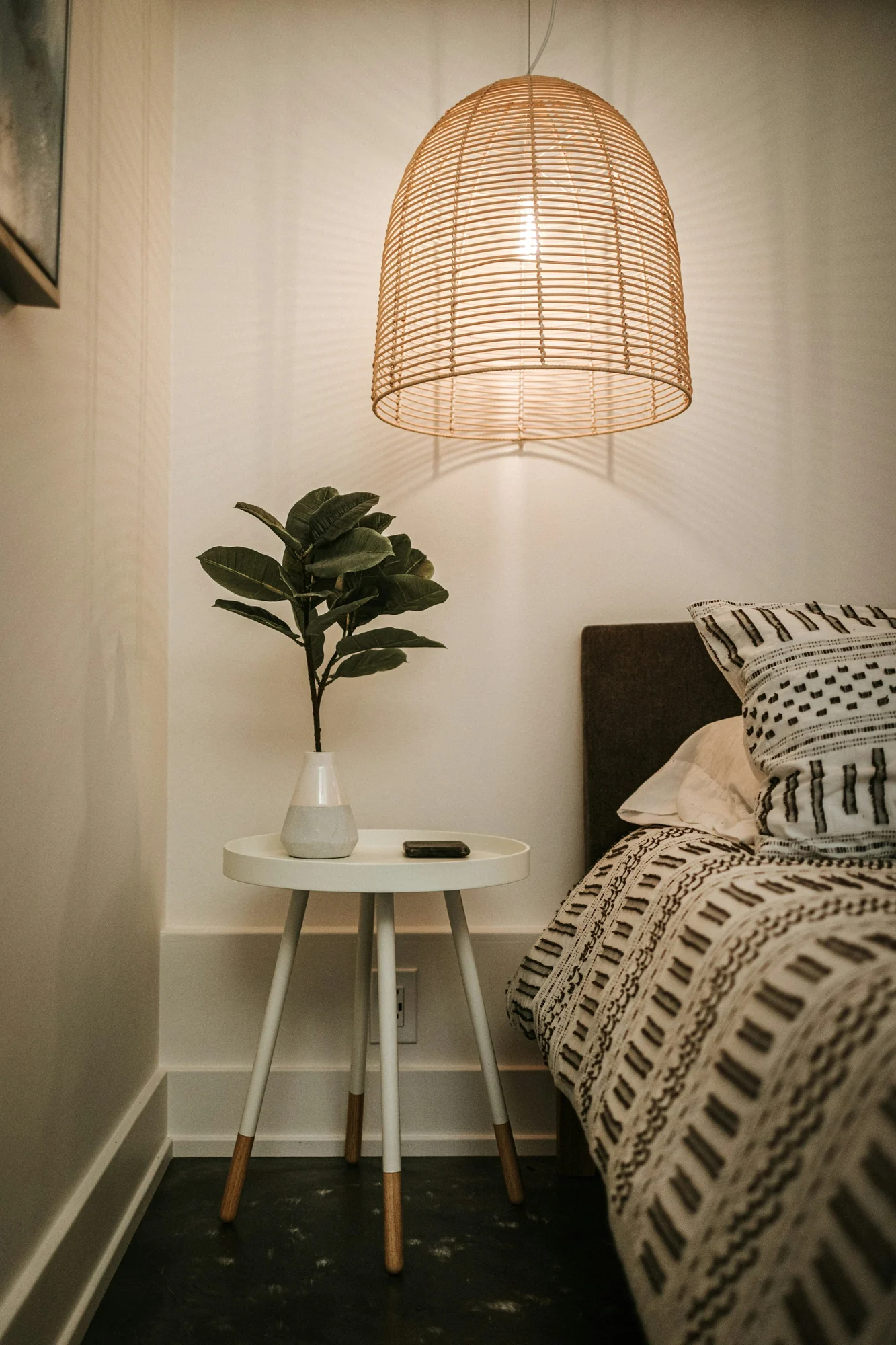
Pair a Pale Woven Pendant With Bold Bedding
A light, bell-shaped woven shade beside a pattern-heavy bed shows how much character can come from texture alone. Its narrow outline and pale color keep the focus on the black-and-white bedding while the walls stay soft. The weave adds one note of warmth without asking the rest of the room to follow a bohemian theme.
In a bedroom already furnished with layered linens and patterned pillows, let the shade be a subtle contrast rather than another conspicuous pattern. Natural-toned fiber can pair well with white, gray, and muted wood colors. More important than an exact material label is the shade’s relationship to the bed: stand in the doorway and check whether it reads as a gentle accent or steals attention from the sleeping area.
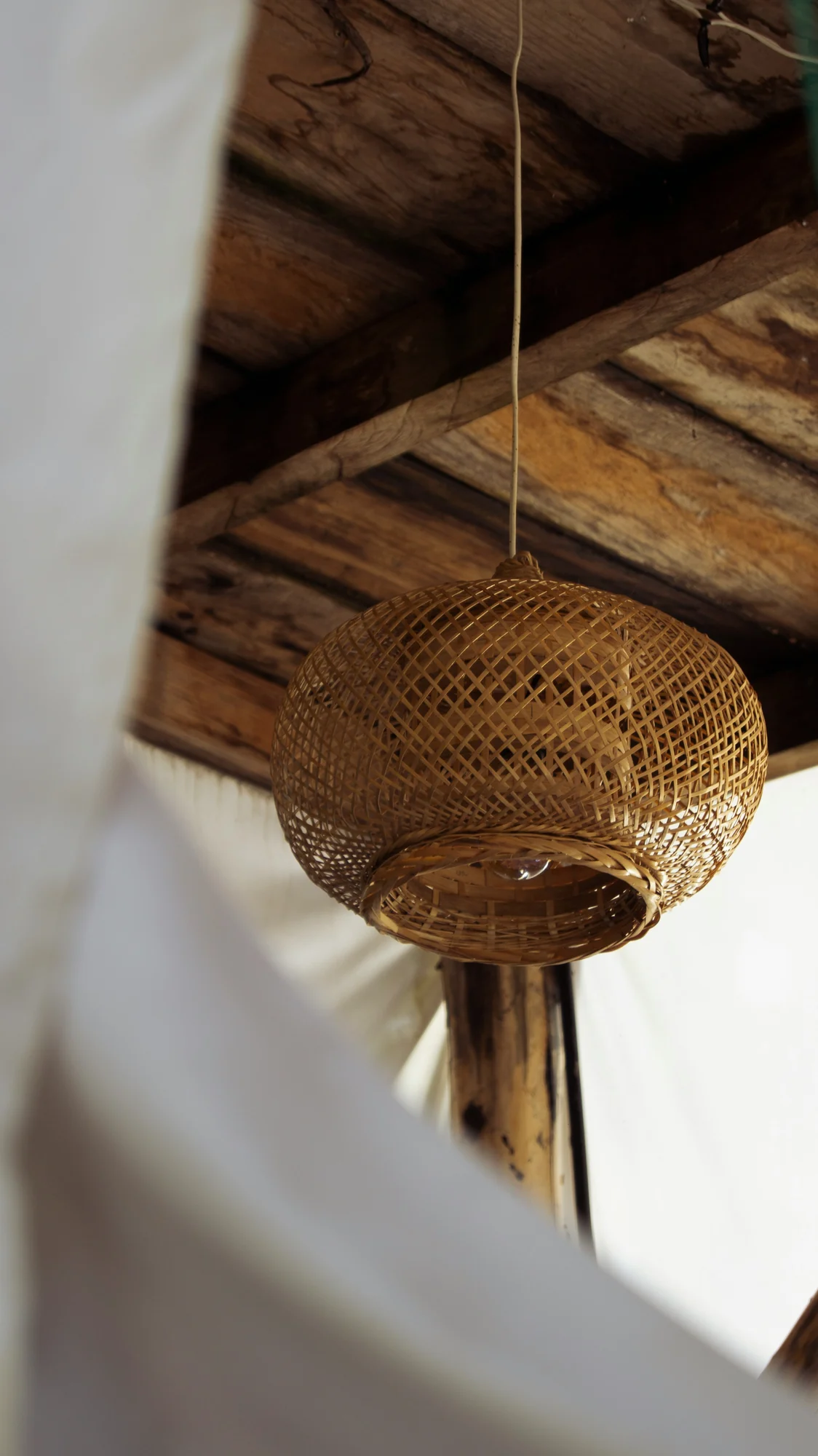
Make a Timber Ceiling Feel Connected to the Room
Heavy timber overhead can leave a large visual distance between the ceiling and the furnishings below. The woven shade in this photograph hangs beneath rough timber beams, its fine basket texture set against the much broader lines of the wood. It does not have to be gigantic to register: the contrast in scale does some of the work.
For a tall room, consider the pendant’s full suspension length and how its shape looks from the usual viewing positions on the floor below. A short drop can make a small shade disappear against the rafters; a very long drop can pull it awkwardly into circulation. Choose the installed level using the real dimensions and ceiling conditions, not a formula inferred from a photograph. For a similar effect in a smaller room, a single modest dome can be less demanding than multiple baskets.