Give the Cabinet Fronts a Clear Rhythm
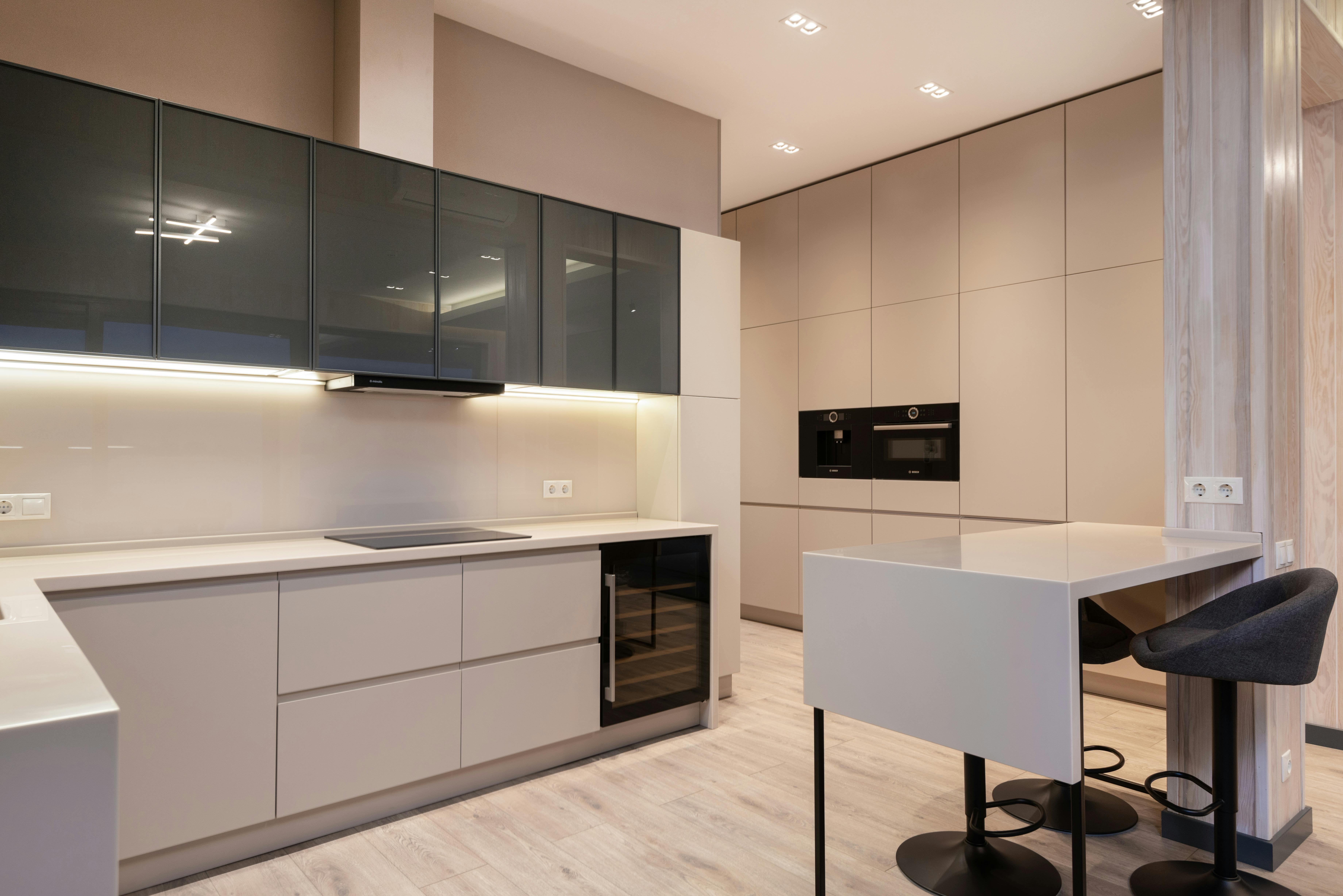
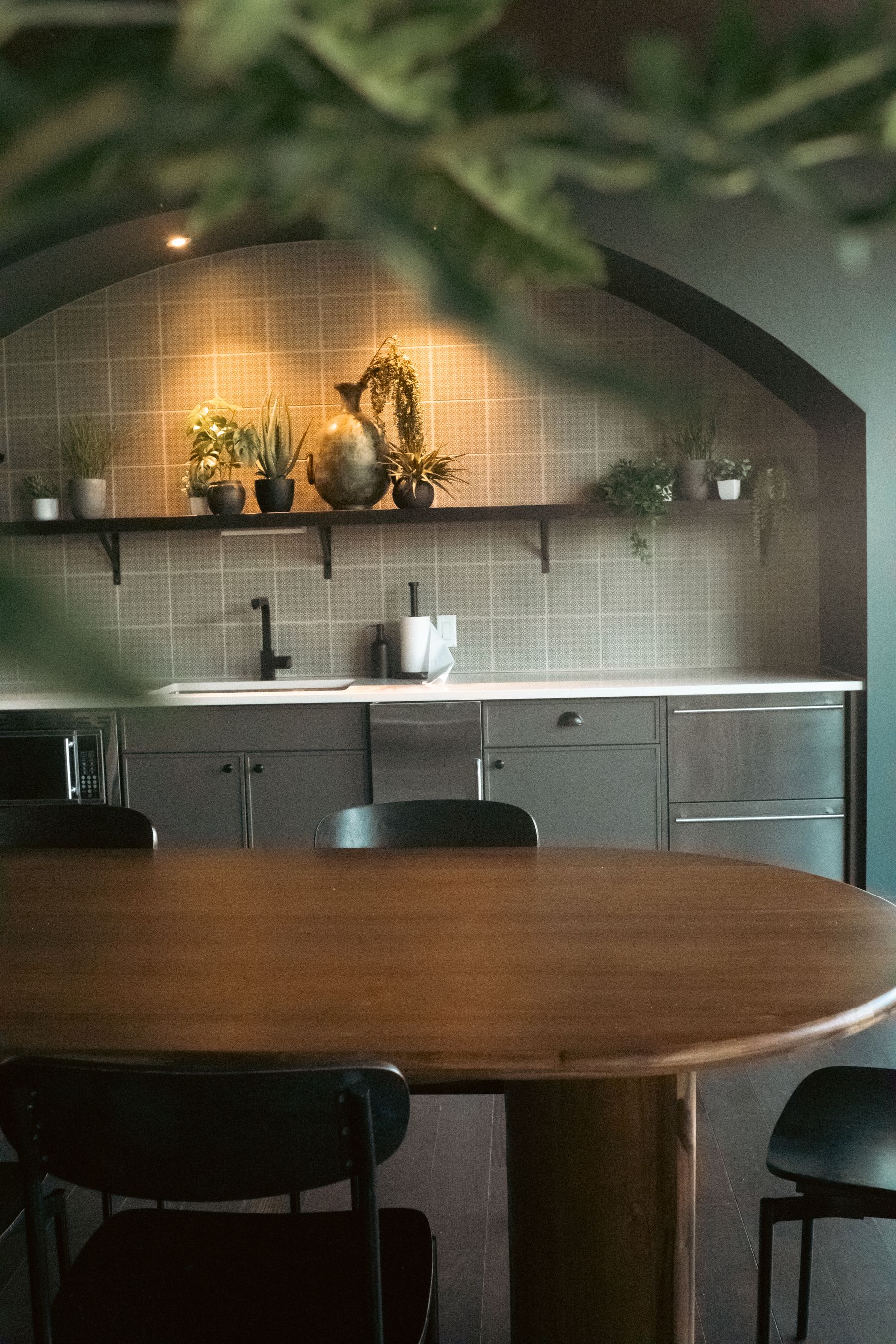
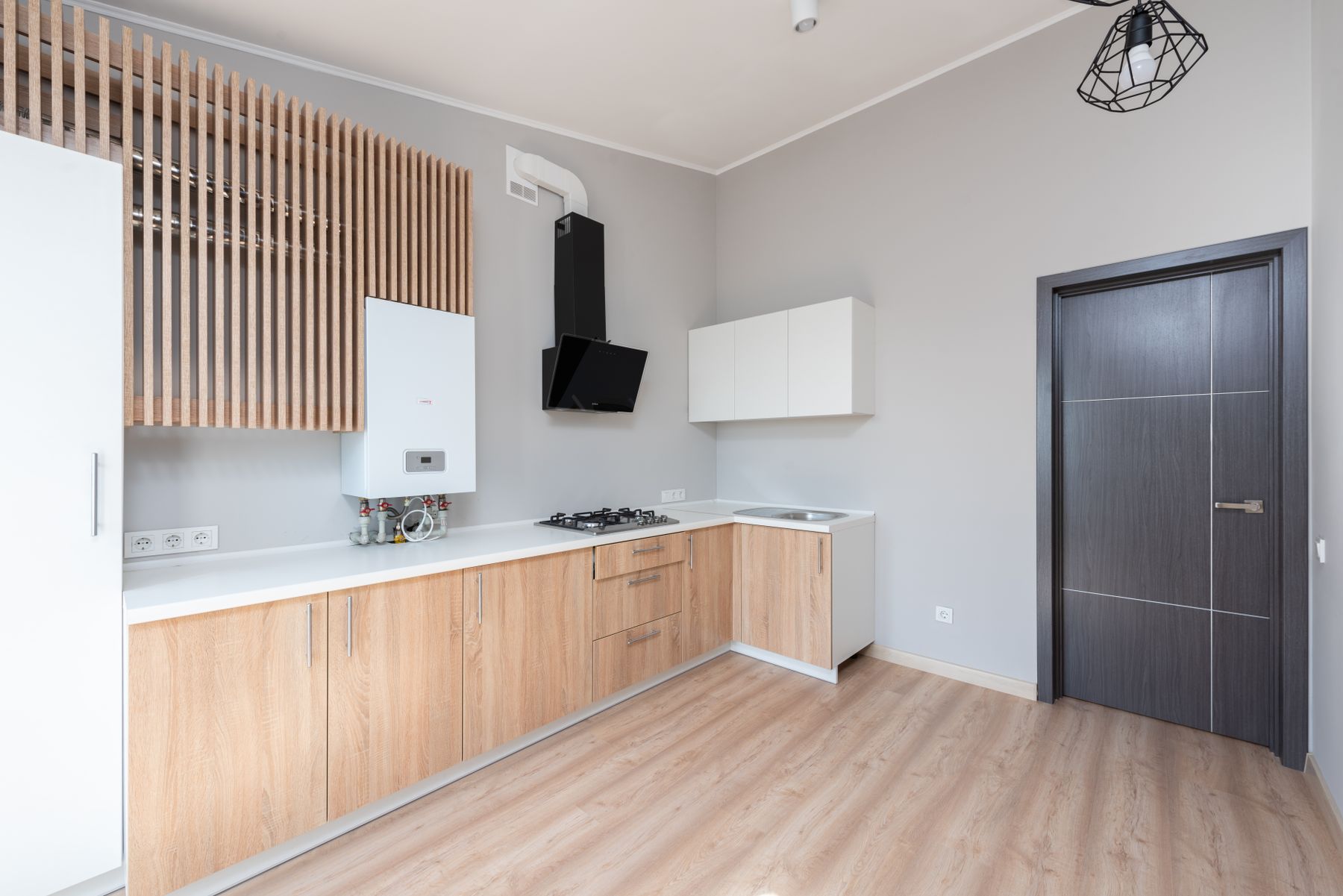
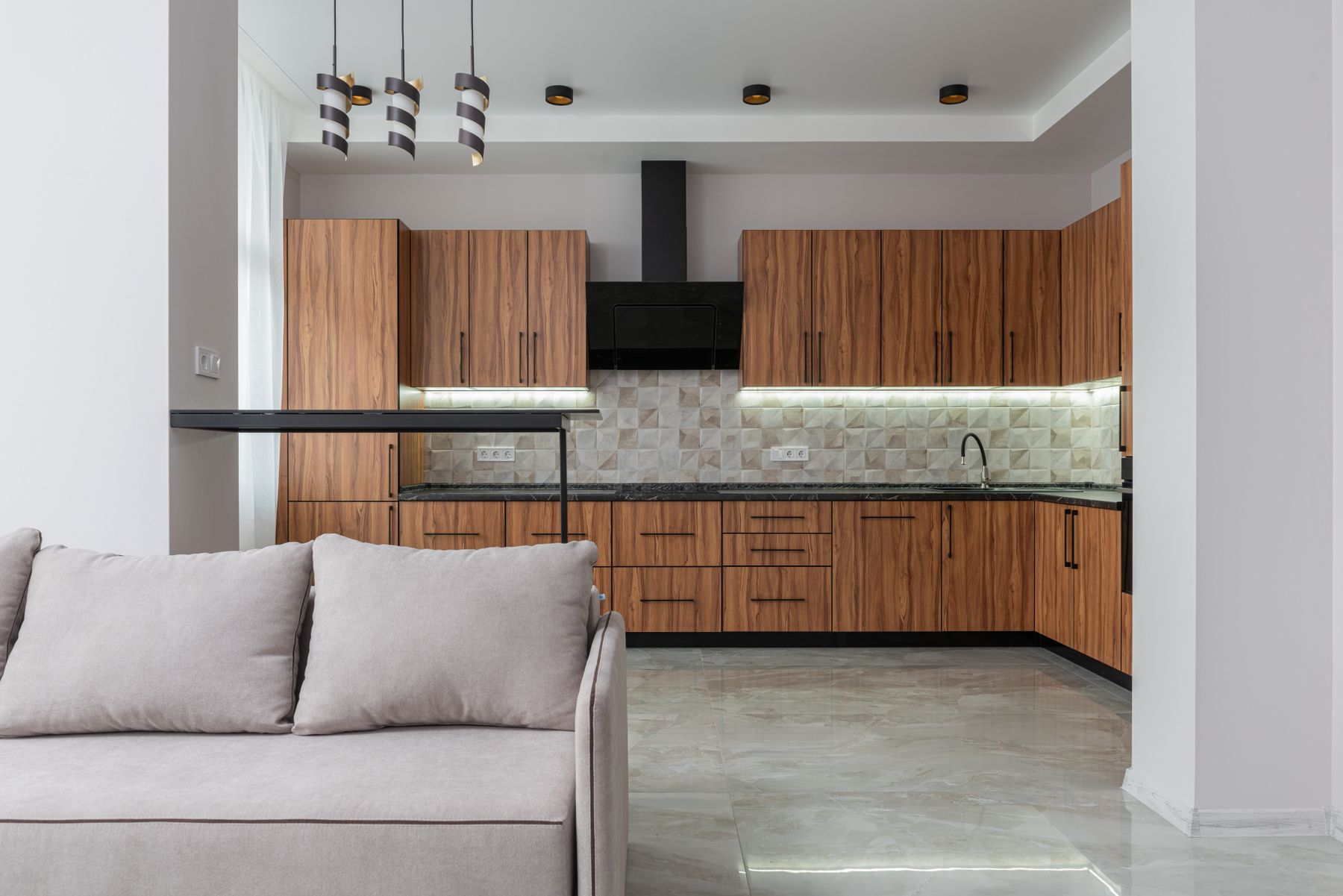
A contemporary scheme benefits from cabinet fronts that make sense as a group. Look at door widths, drawer alignment and the transitions between tall and low storage. Different materials can coexist, but the elevation should still feel intentional. Start with what each cabinet needs to hold, then decide where a change in height or finish helps the composition rather than fragments it.
Let Contrast Define One Main Element
Contrast can make a kitchen feel intentional without covering it in decoration. A dark island, muted green cabinet run or black pendant group can become the focal point while pale stone and walls stay quieter. Decide what you want to notice first from the adjoining room and let the strongest contrast sit there.

Pair an Expressive Counter With Quieter Fronts
A strongly patterned counter or backsplash can be the main decorative feature in an otherwise restrained kitchen. Speckled stone, terrazzo, dramatic quartzite or another expressive surface needs enough visual space to be read. Keep nearby handles and cabinet profiles simpler so the surface can lead.

Make the Island Useful From Both Sides
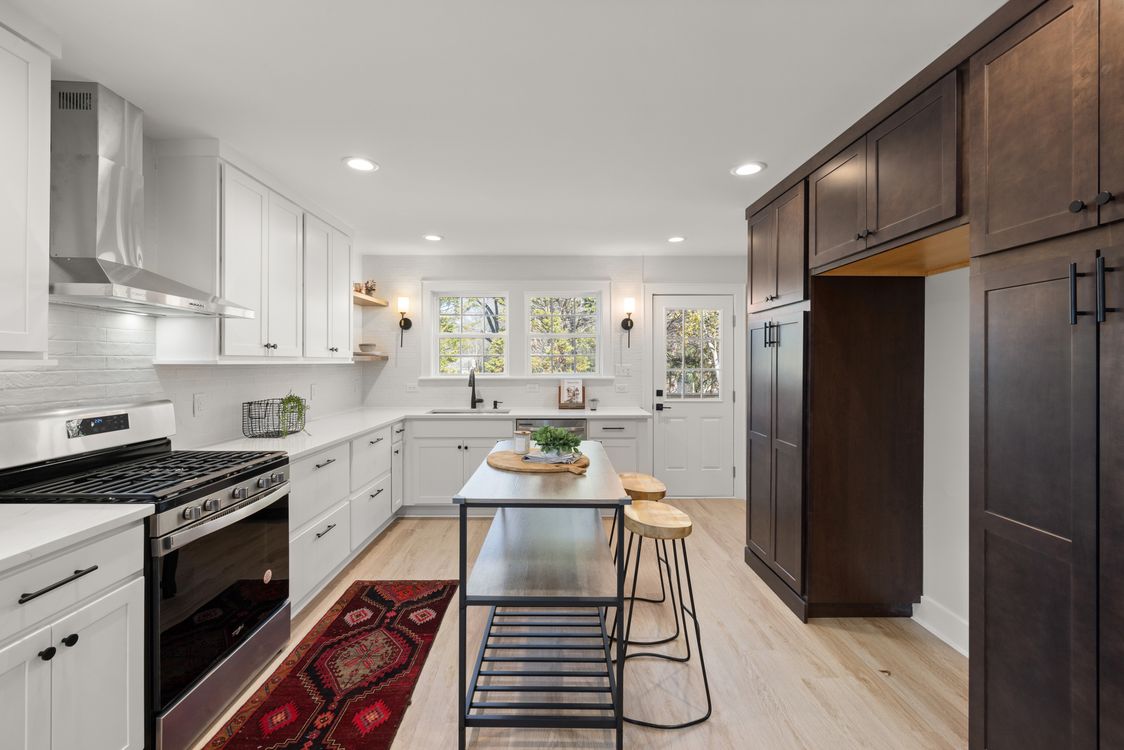
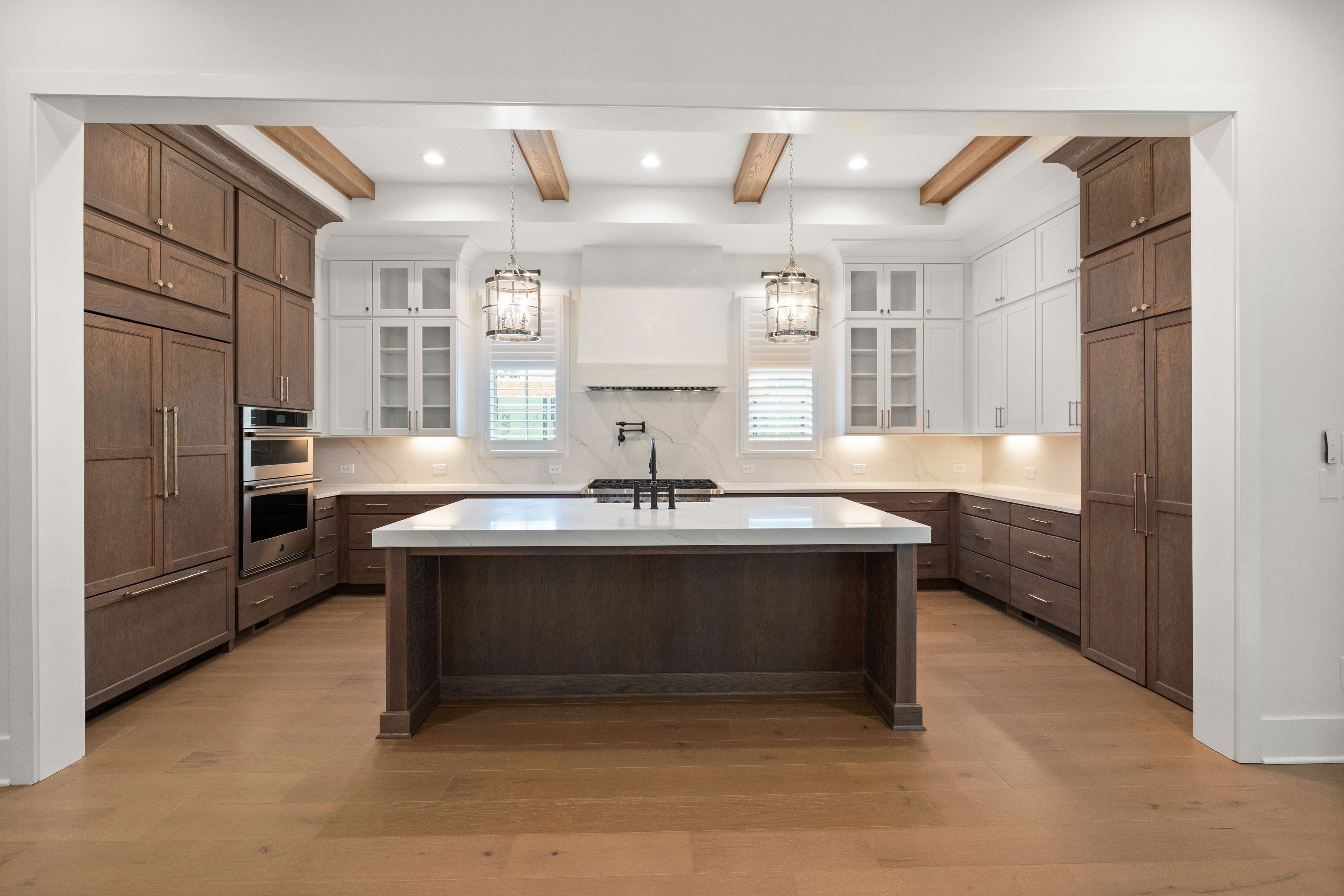
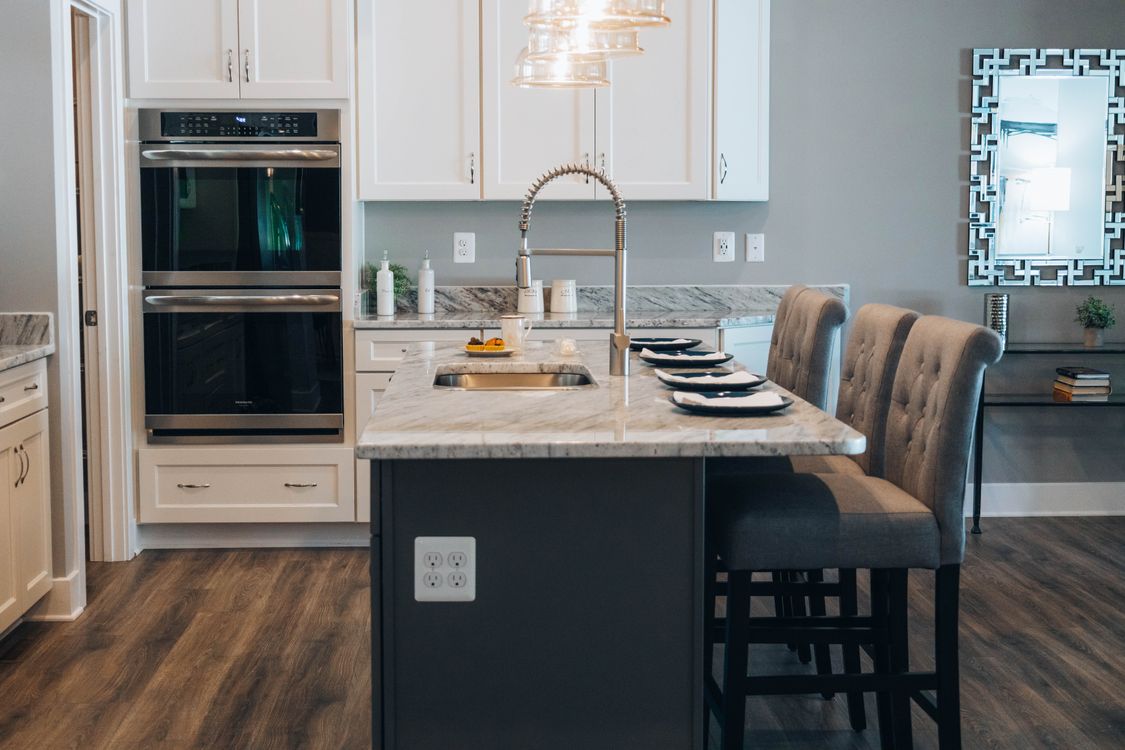
A large island should earn its floor area through function. Preparation, storage, seating and serving can coexist, but they need to be planned together. Consider where chair backs, appliance doors and people will be at the same time. A smaller island or peninsula is often stronger than a larger block that interrupts every route.
Connect the Kitchen to Comfortable Seating
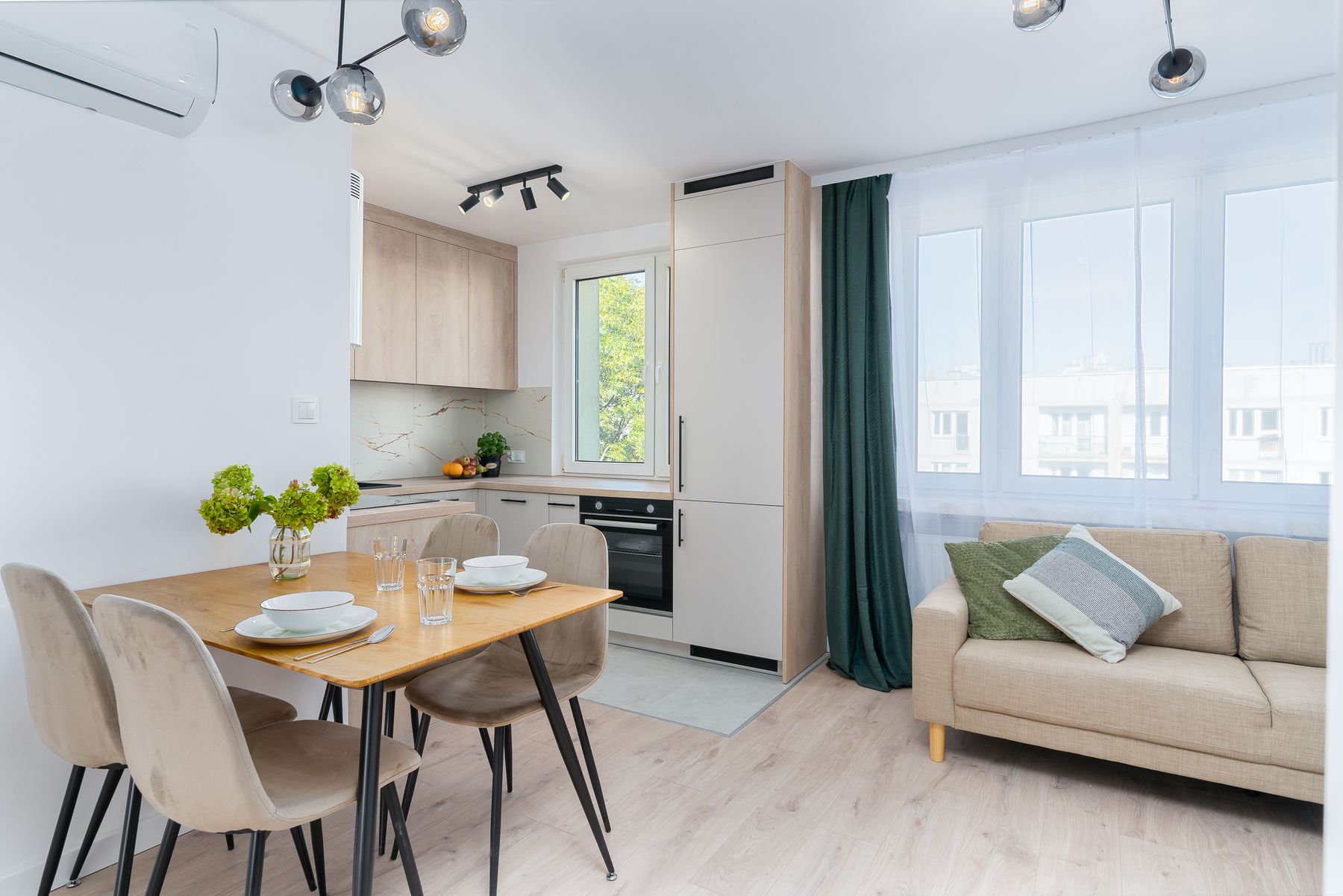
In an open room, the kitchen is part of what you see from the dining table and sofa. Repeating one wood tone, upholstery color or curved form can make the transition feel considered without matching every finish. Comfortable seating gives the kitchen a more residential scale and keeps the room from reading like a showroom.
Use Light to Show the Materials
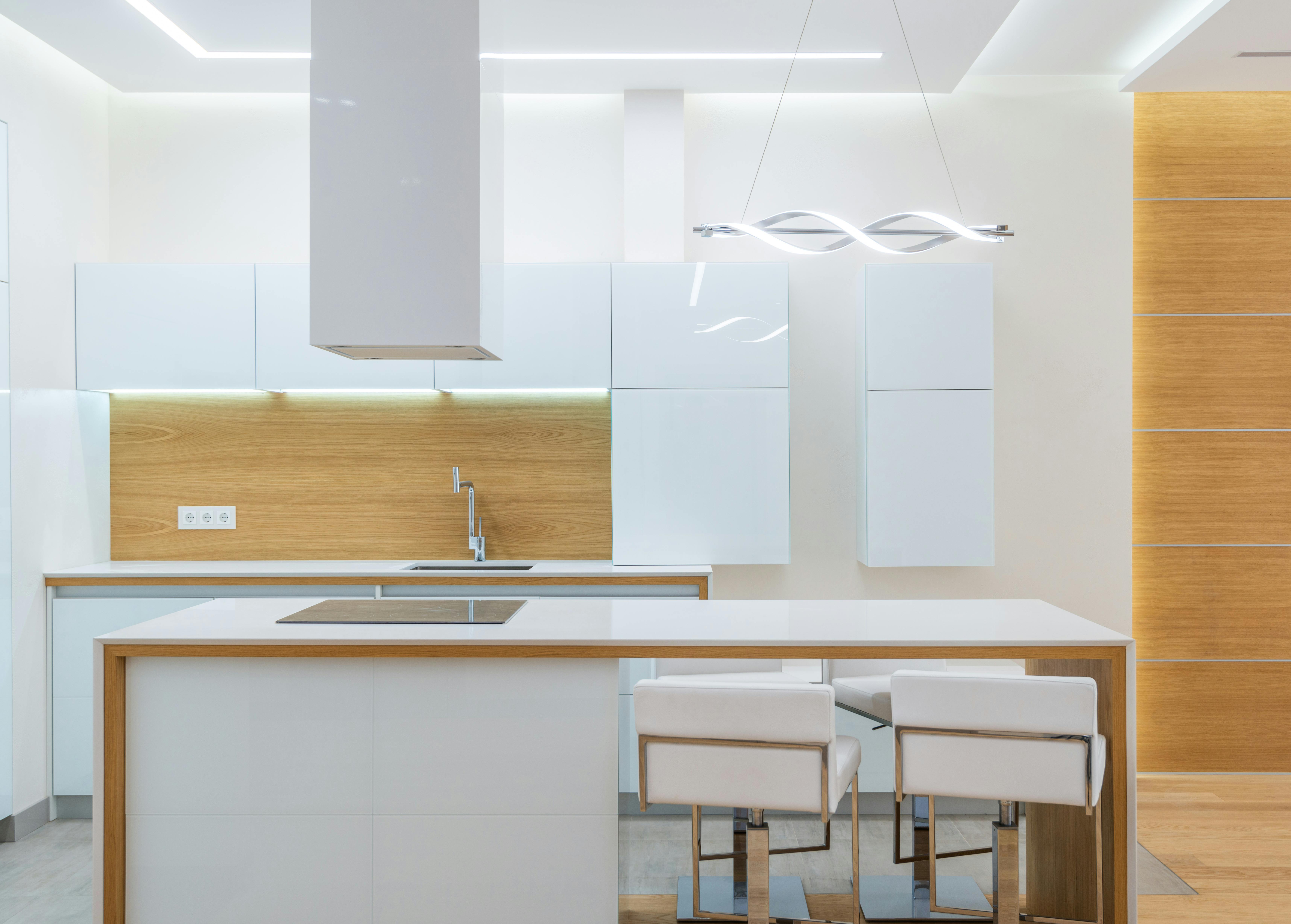
Lighting should reveal the surfaces that make the kitchen distinctive. Under-cabinet task light can bring out a backsplash, while ceiling and wall layers keep the room usable after dark. Decorative pendants are most effective when they support, rather than replace, the practical lighting plan.
Use Curved Forms to Break Up Straight Cabinetry
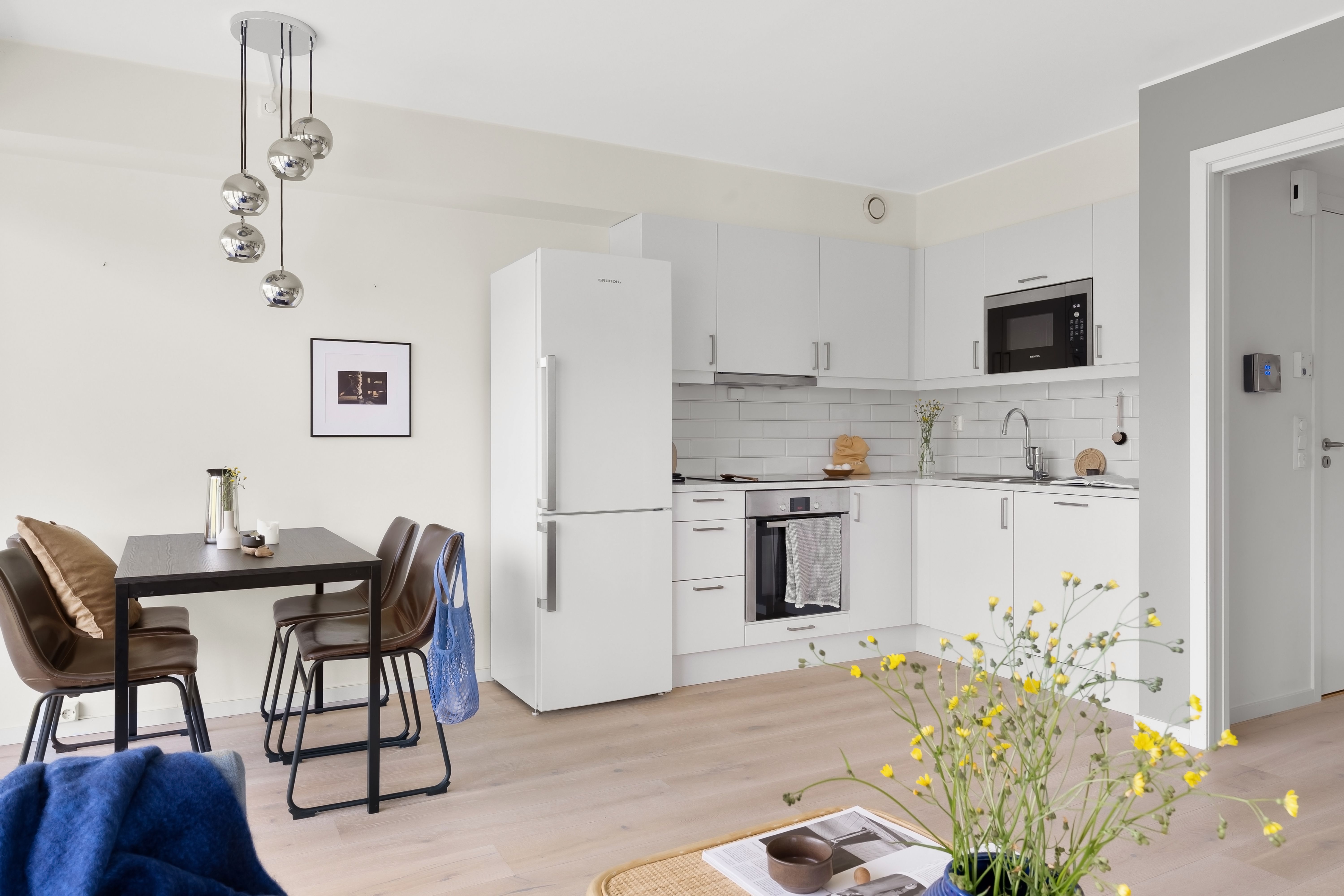
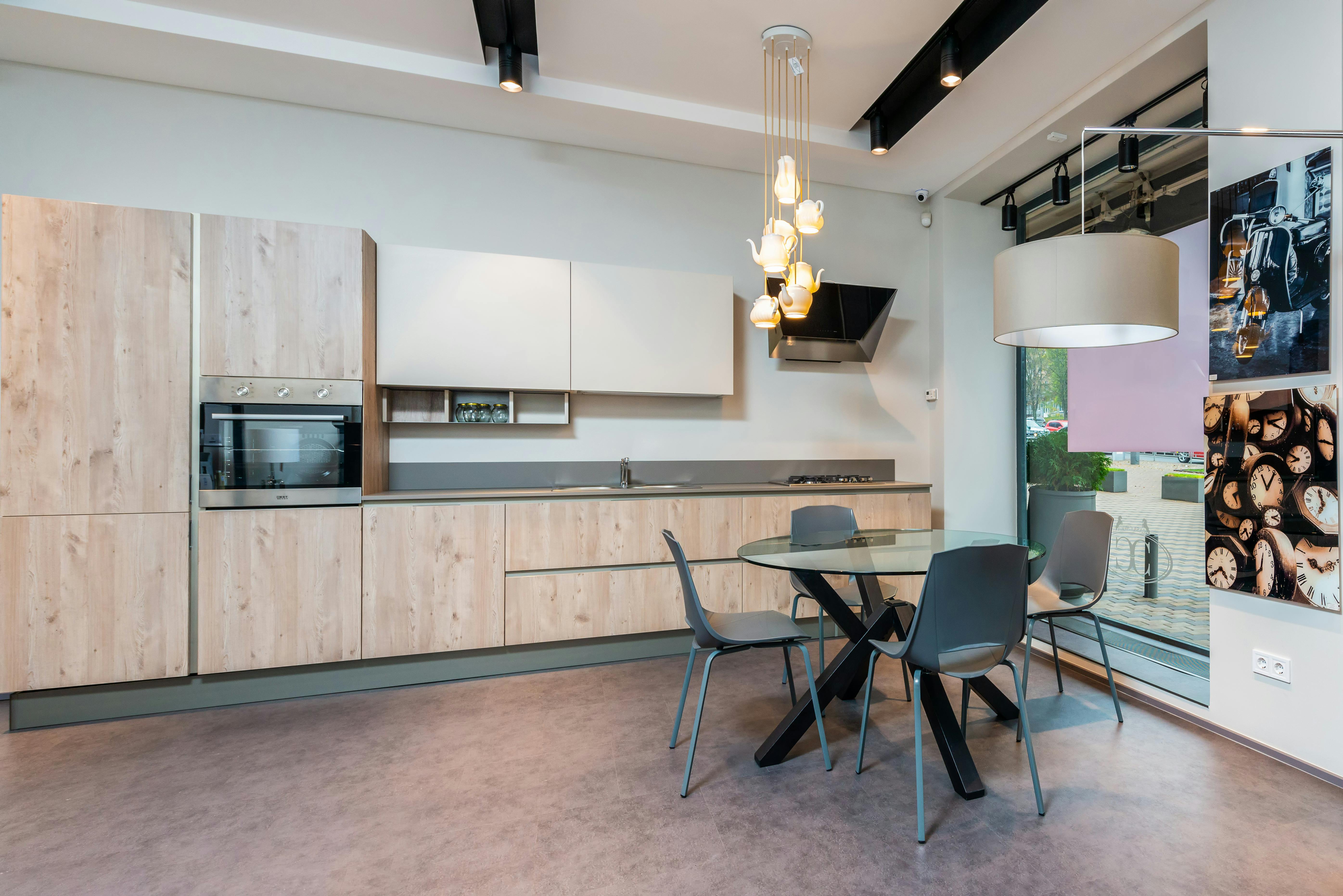
Contemporary kitchens often become more relaxed when one rounded element interrupts the grid. A circular dining table, curved chair, softened island end or rounded pendant can provide that contrast without changing the whole cabinet system. The curve should have enough space around it to be read clearly rather than being squeezed into a tight corner.
Warm Contemporary Surfaces With Timber
Warm timber can keep stone, glass and painted cabinetry from feeling overly polished. It may appear on one tall cabinet wall, an island, shelving or the dining furniture. The most successful rooms give the timber enough area to feel intentional but not so much that every surface competes through grain.
Integrate Appliances Into the Visual Rhythm
Contemporary kitchens can include fully integrated or clearly visible appliances. What matters is how they sit within the elevation. Group tall units where possible, align oven heights and avoid letting several unrelated appliance finishes break a calm cabinet run. A visible stainless appliance can work beautifully when its proportion and position are intentional.
Leave One Surface Visually Quiet
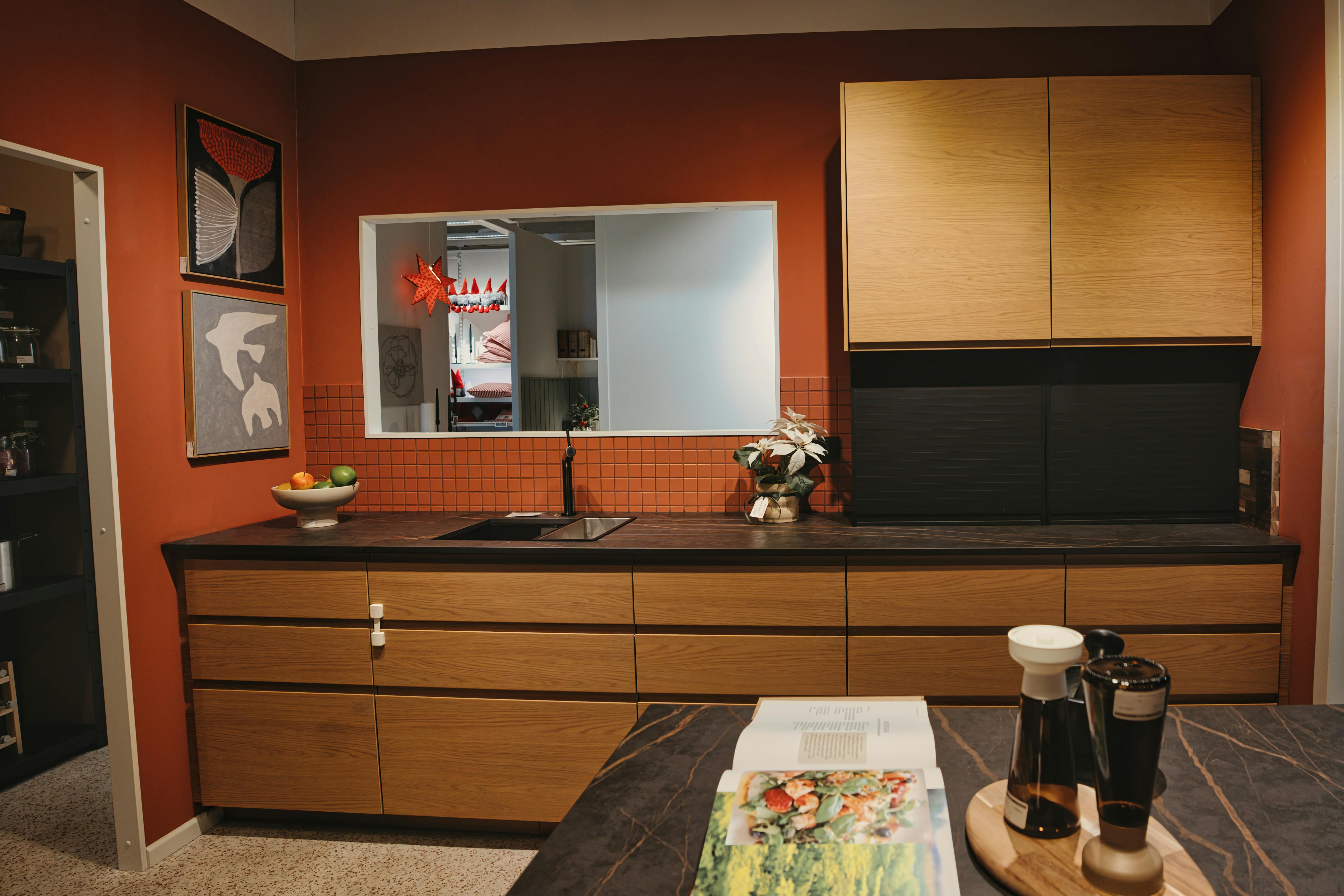
A contemporary kitchen can contain strong color, stone and sculptural furniture, but it still benefits from a place where the eye can rest. That may be a plain wall, a simple run of cabinetry or a mostly clear worktop. This quiet plane gives expressive materials enough contrast to feel intentional rather than crowded.