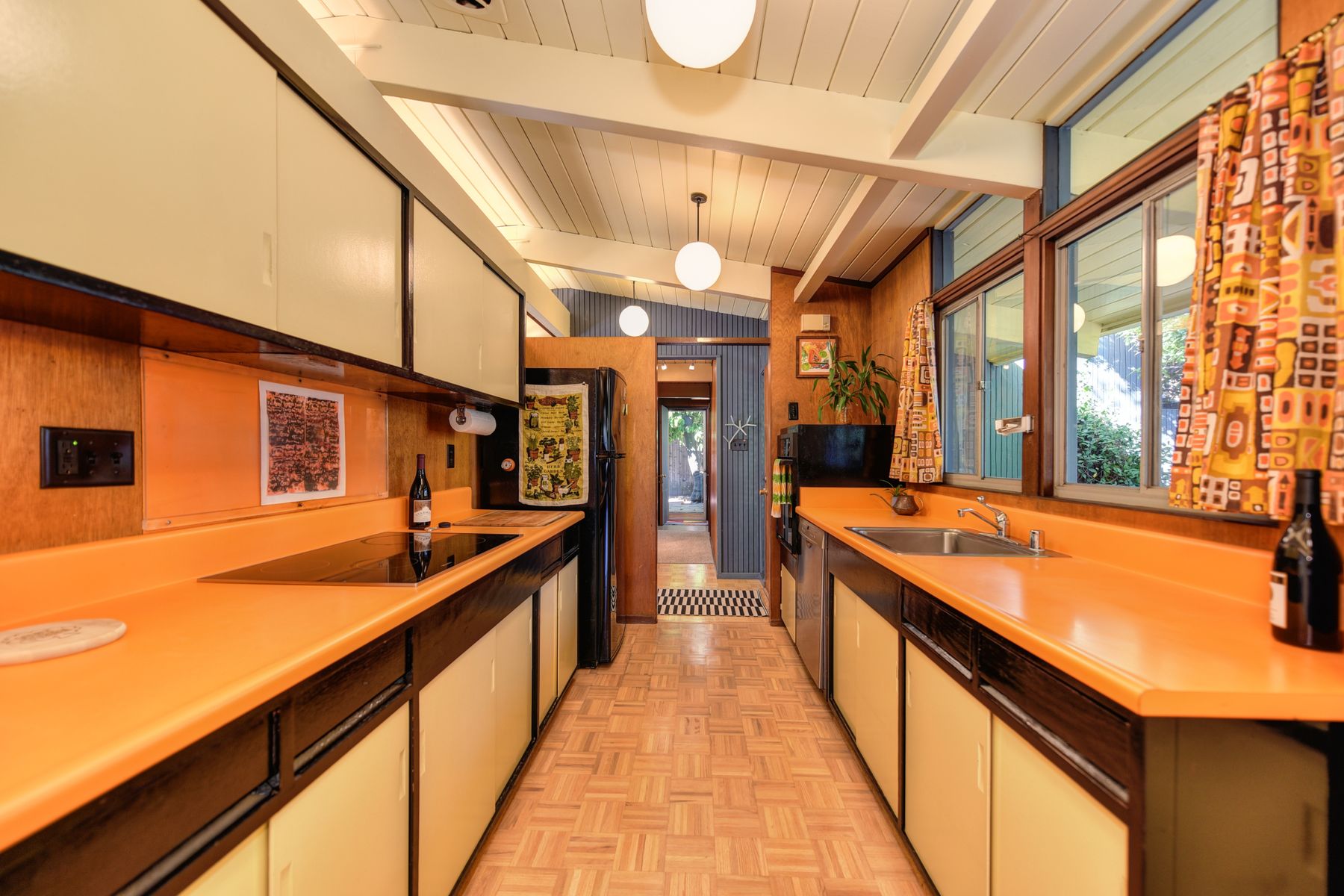
Make the Counter the Color Statement
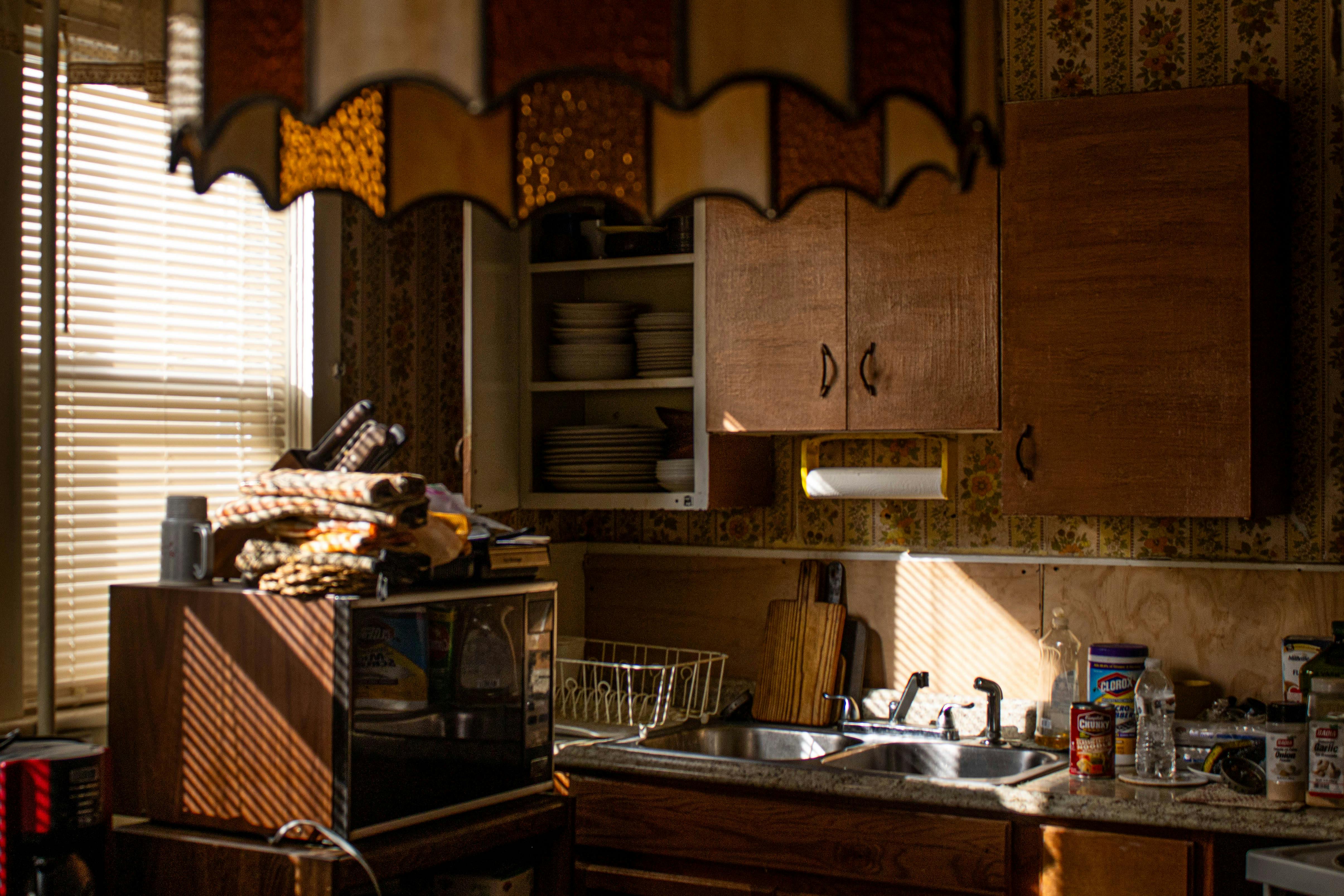
A continuous colored counter gives a narrow kitchen immediate identity. Orange, mustard, muted red or green can all work when the surrounding cabinet fronts stay calmer. If an existing counter is sound, use its color as the starting point rather than assuming it needs replacement.
Settle on a Small Color Family
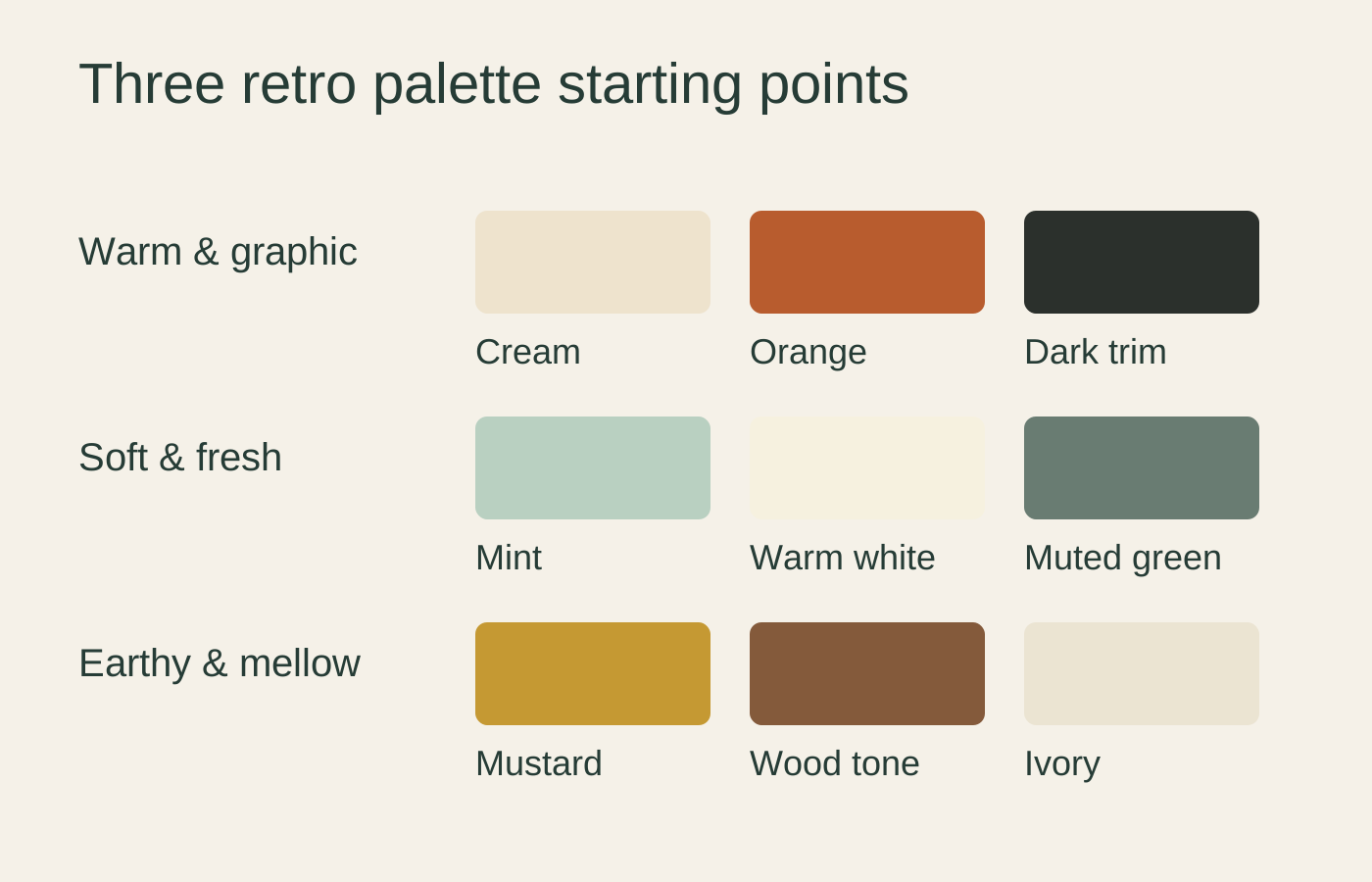
A small palette helps a retro kitchen feel intentional even when the pieces come from different places. Cream with orange and a dark outline, pale mint with warm white or mustard with wood are useful starting points rather than decade-specific rules. Let the largest fixed surface guide the combination.
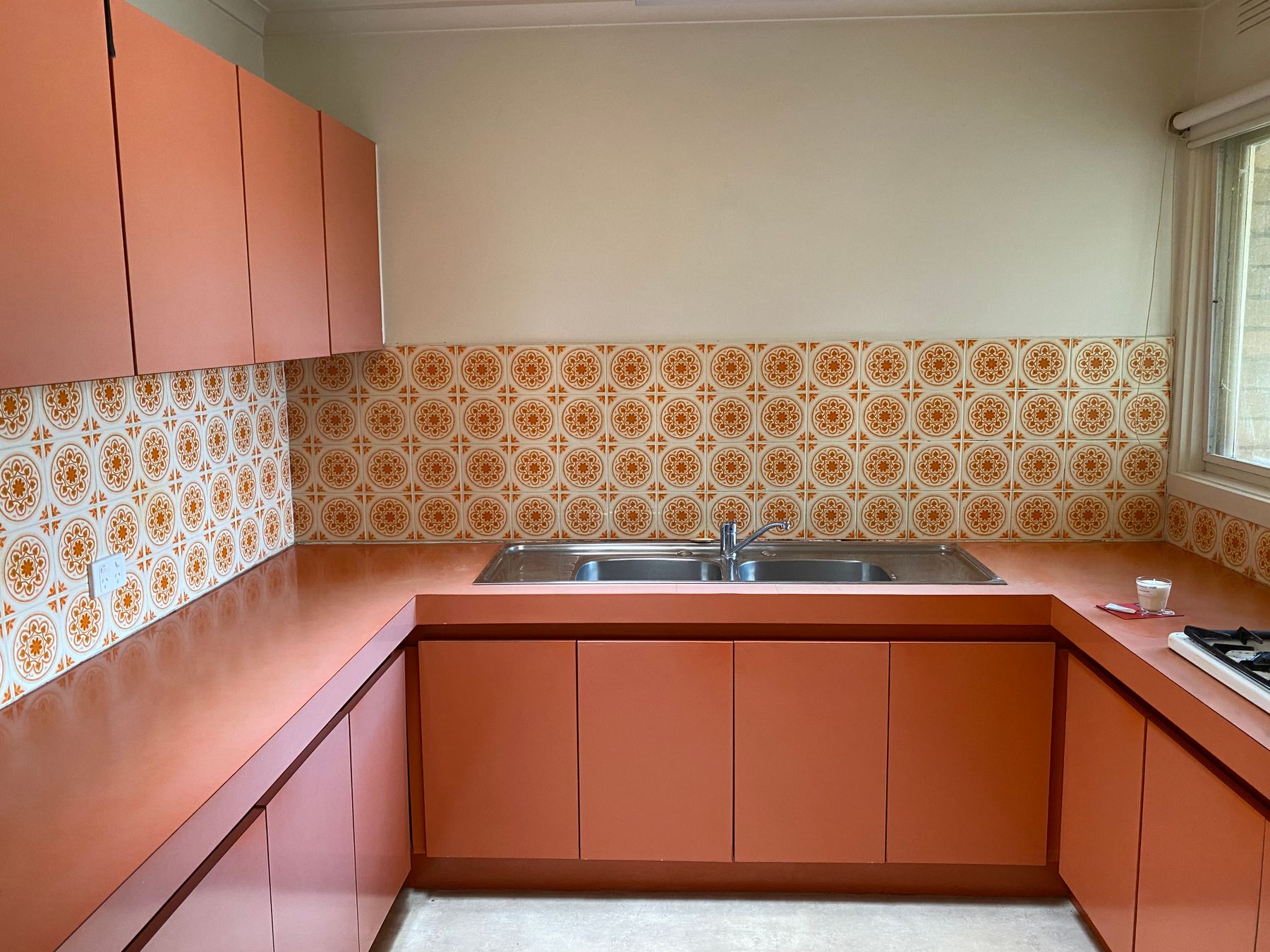
Contain a Repeating Tile Motif
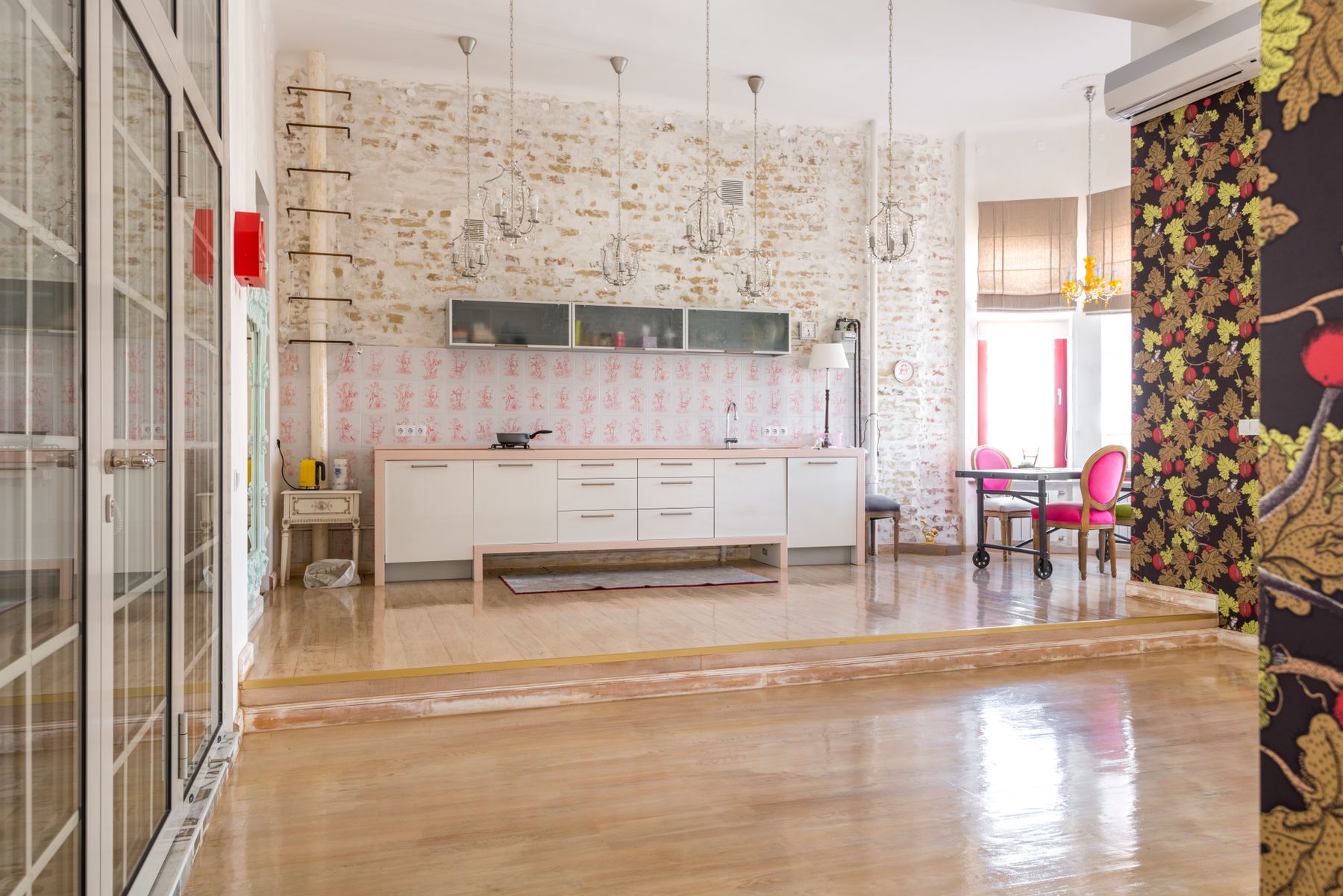
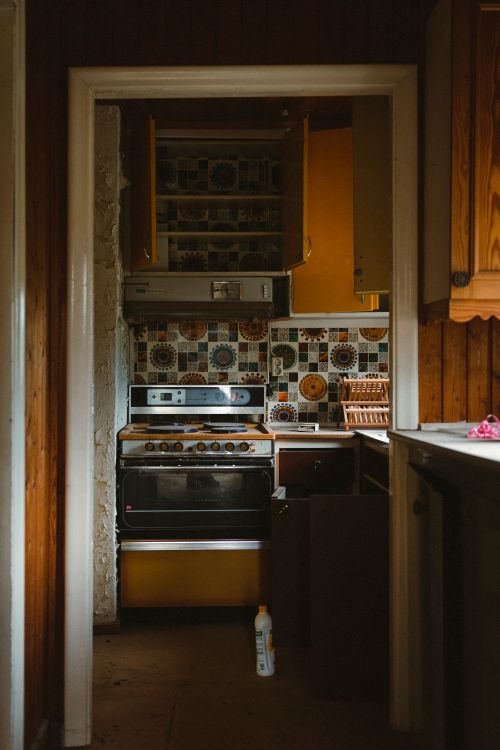
Patterned tile works particularly well when it has an obvious beginning and end. Keep adjacent fronts simple enough to support the motif and plan how the repeat meets corners, sockets and cabinet edges before ordering.
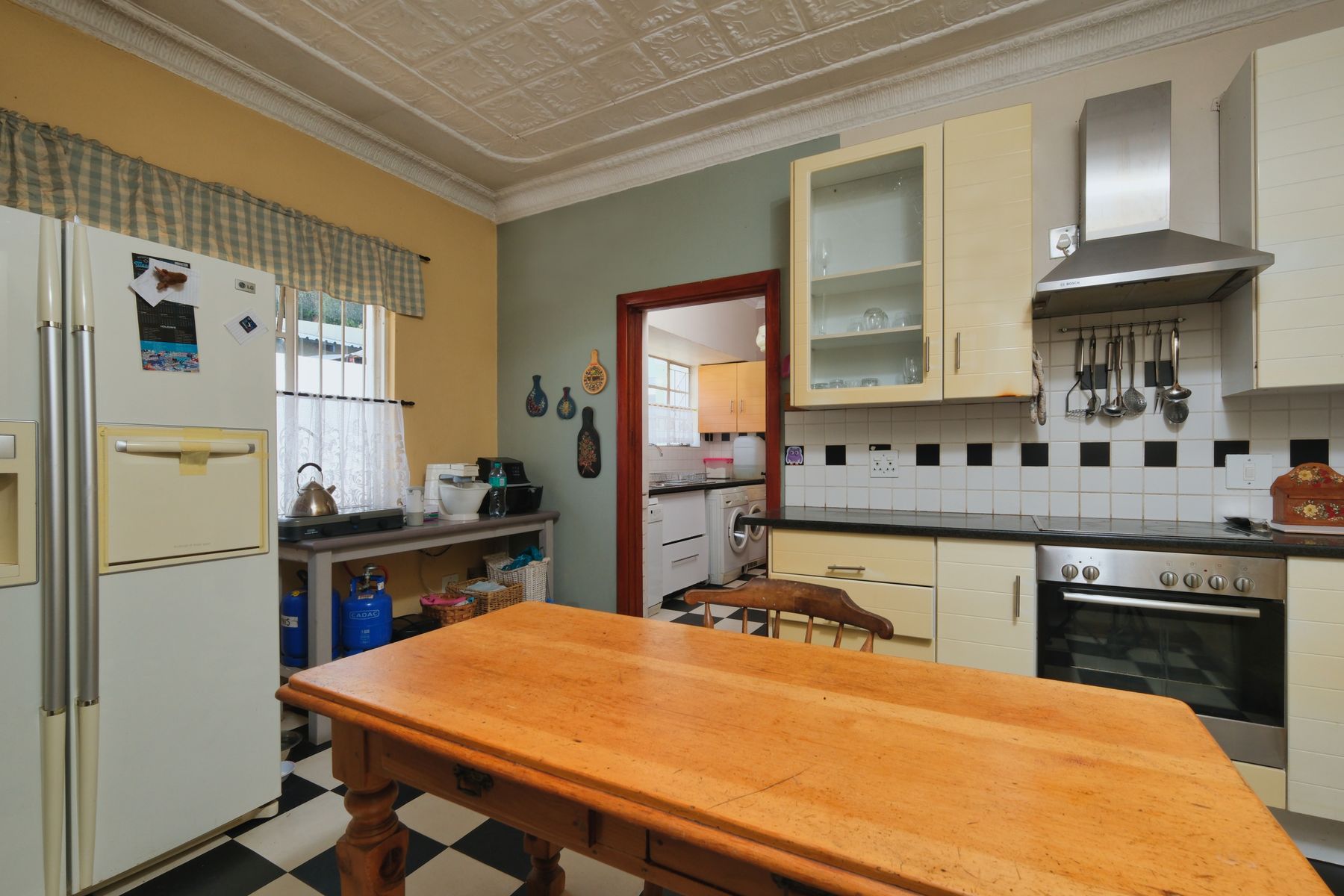
Let a Checked Floor Work With Plain Cabinets
A checked floor can carry the graphic part of a retro scheme while the walls and cabinetry remain quieter. Consider how much of the floor will actually be visible around furniture and choose the scale of the checks accordingly.
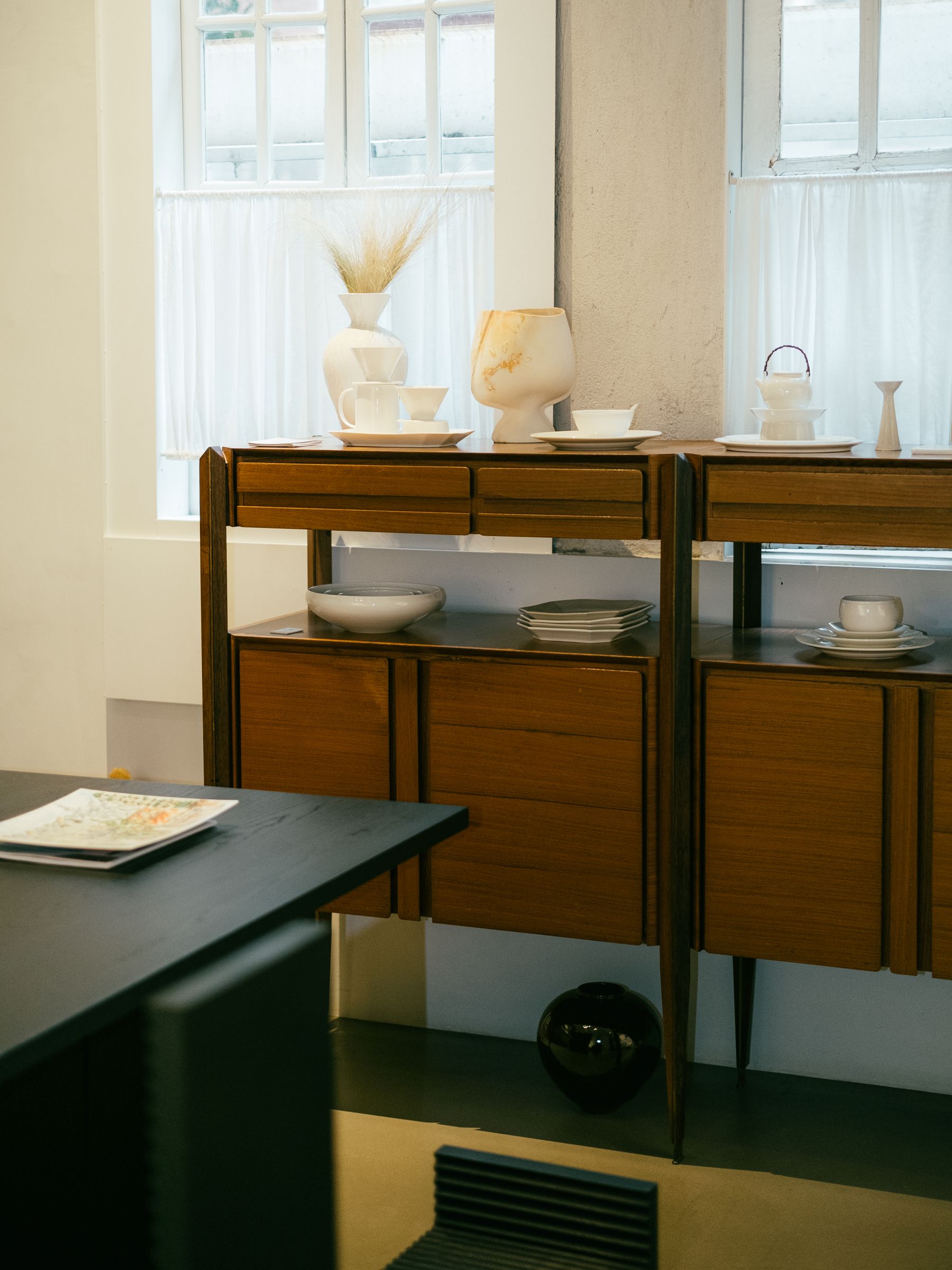
Use a Sideboard for Everyday Tableware
A freestanding sideboard introduces furniture proportions into a fitted kitchen and can hold dishes near the dining area. Choose it for what it needs to store before deciding whether the silhouette feels sufficiently retro. Wood tone, leg shape and hardware can then connect it to the rest of the room.
Soften the Dining Area With a Modest Textile
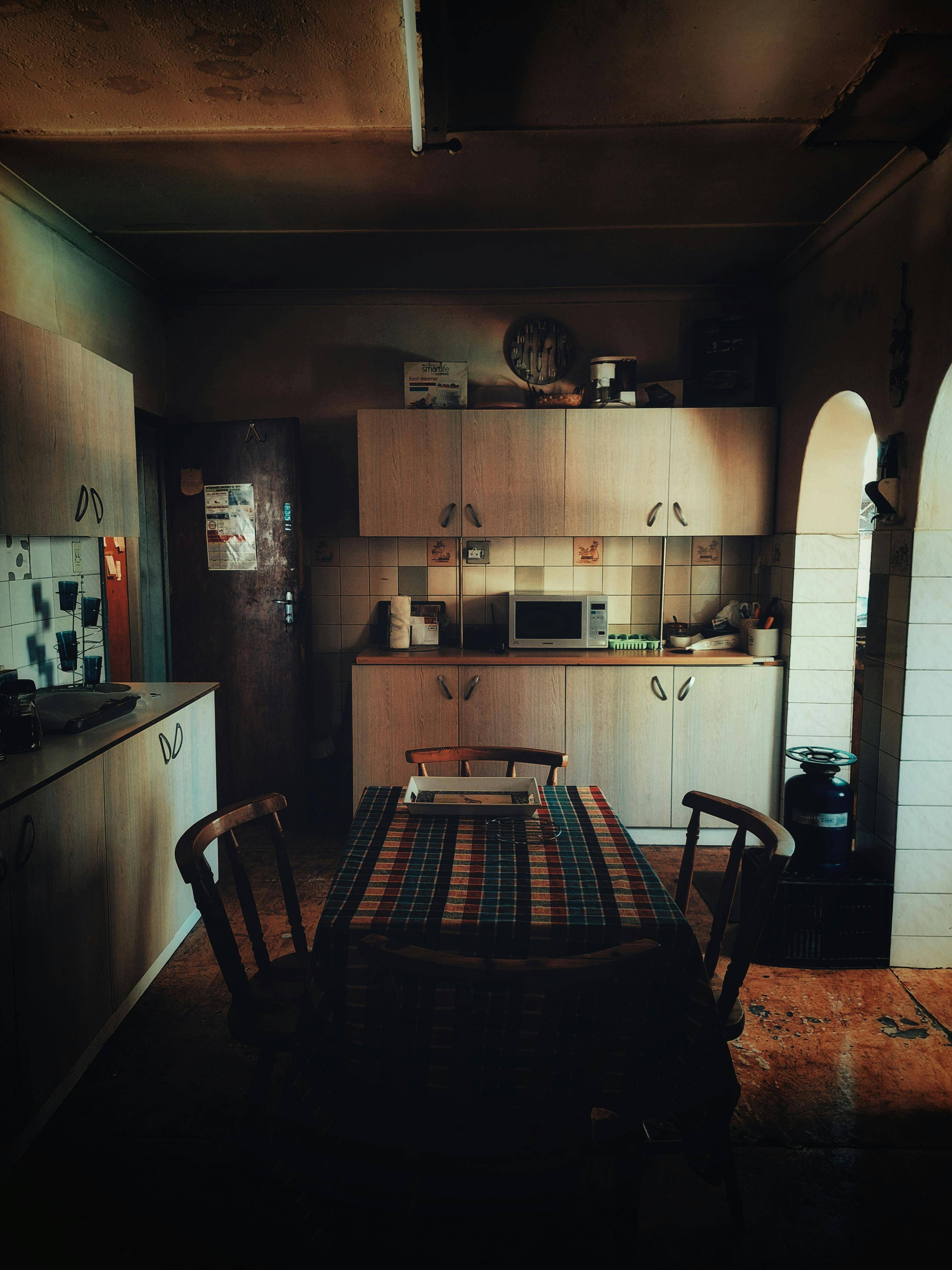
A tablecloth, seat pad or simple curtain can introduce a gentler retro mood when replacing cabinetry is unnecessary. Repeat one existing color and let the fabric remain washable and easy to remove. If the floor or backsplash already carries pattern, keep the textile comparatively quiet.
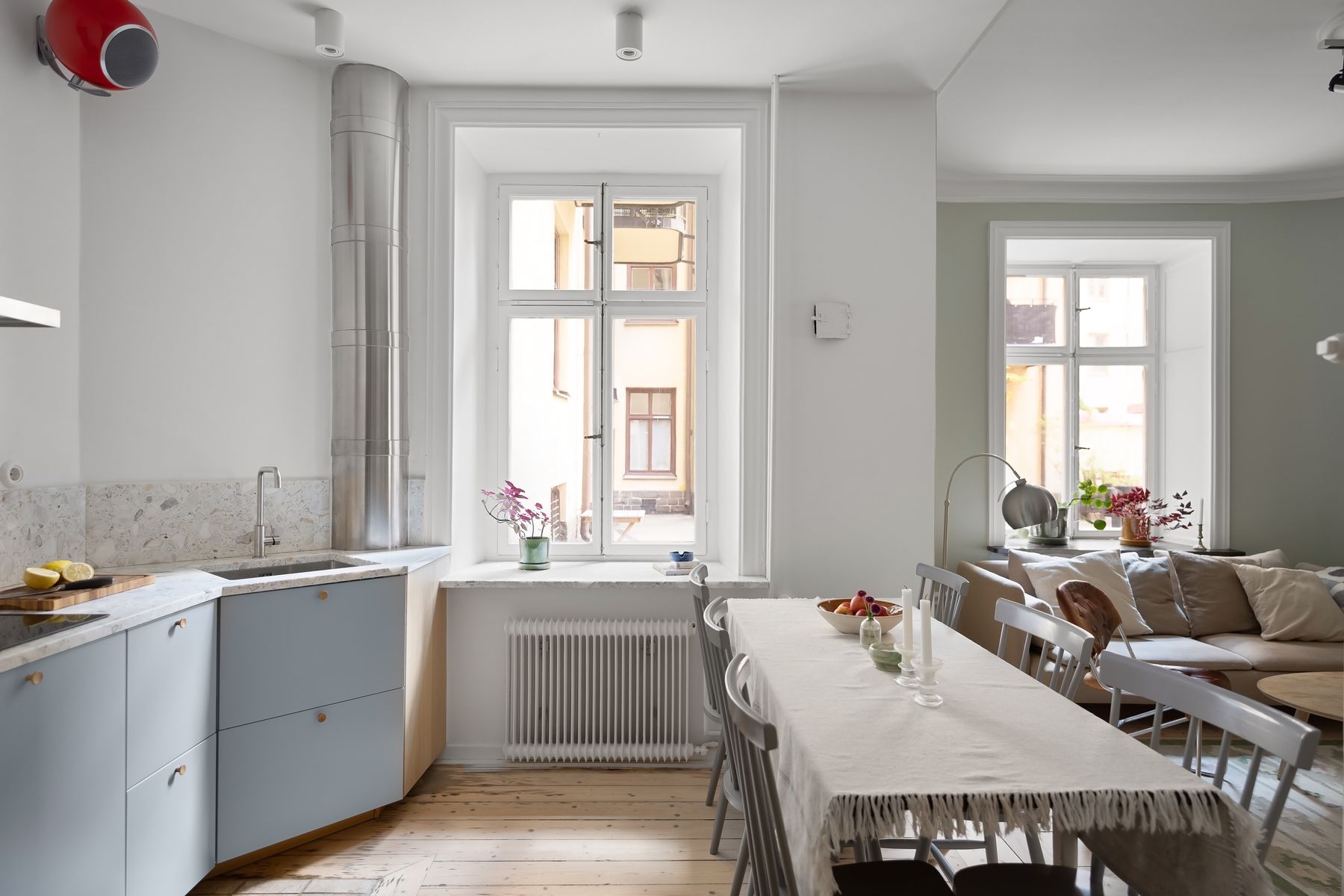
Use Muted Green Instead of Only Orange or Red
Retro color does not have to mean saturated orange or cherry red. Muted green, olive and soft mint can create a period-aware direction while remaining easy to pair with wood, cream and pale stone. Use the color across one coherent cabinet run rather than scattering it through many small accessories.
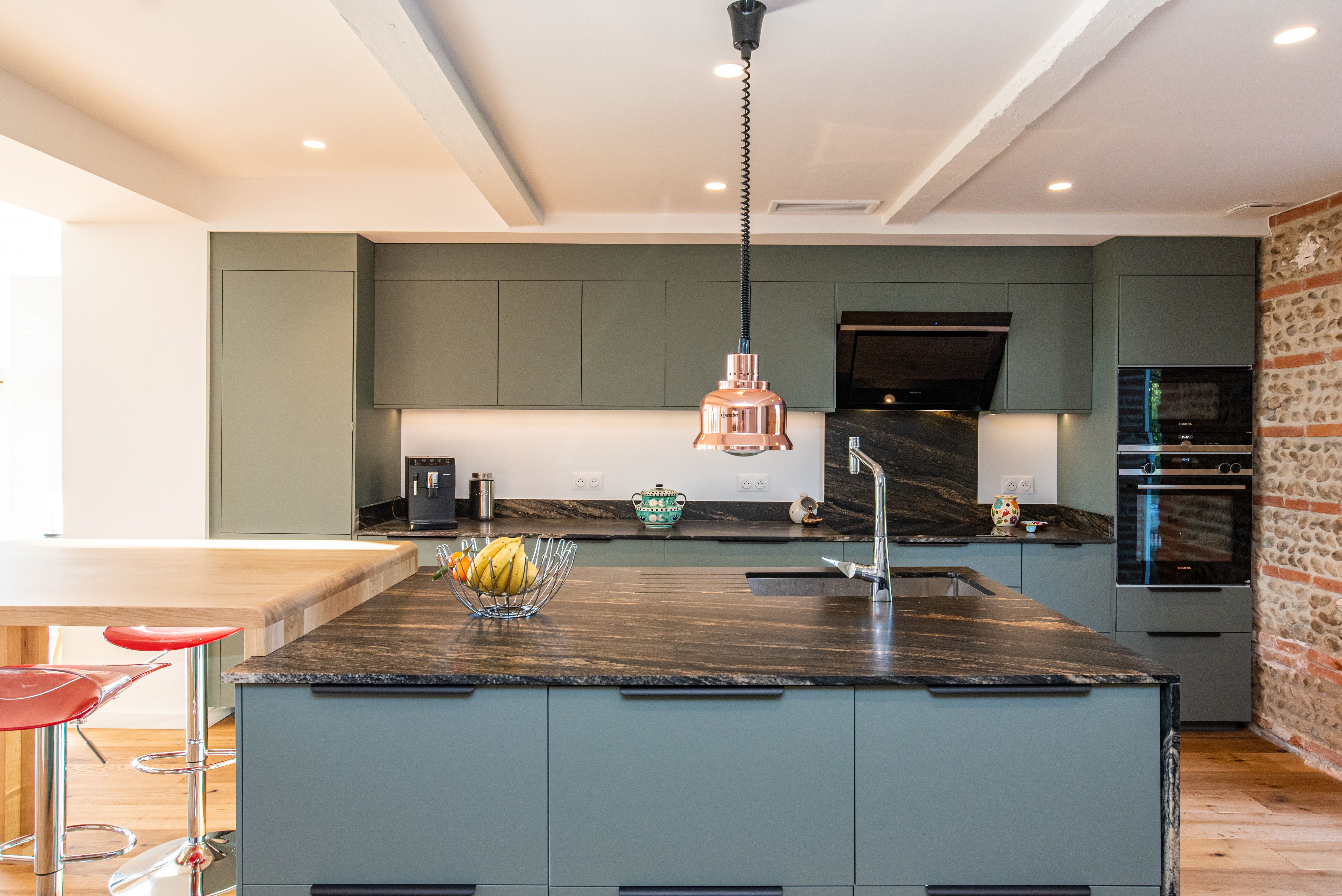
Choose Globe Lighting for Shape, Not Nostalgia Alone
Globe lights are useful because their simple round form contrasts with cabinet grids and patterned surfaces. One pendant or branching fitting can establish the shape language without turning every fixture into a retro reproduction. Check glare and scale from a seated position and keep task lighting separate.
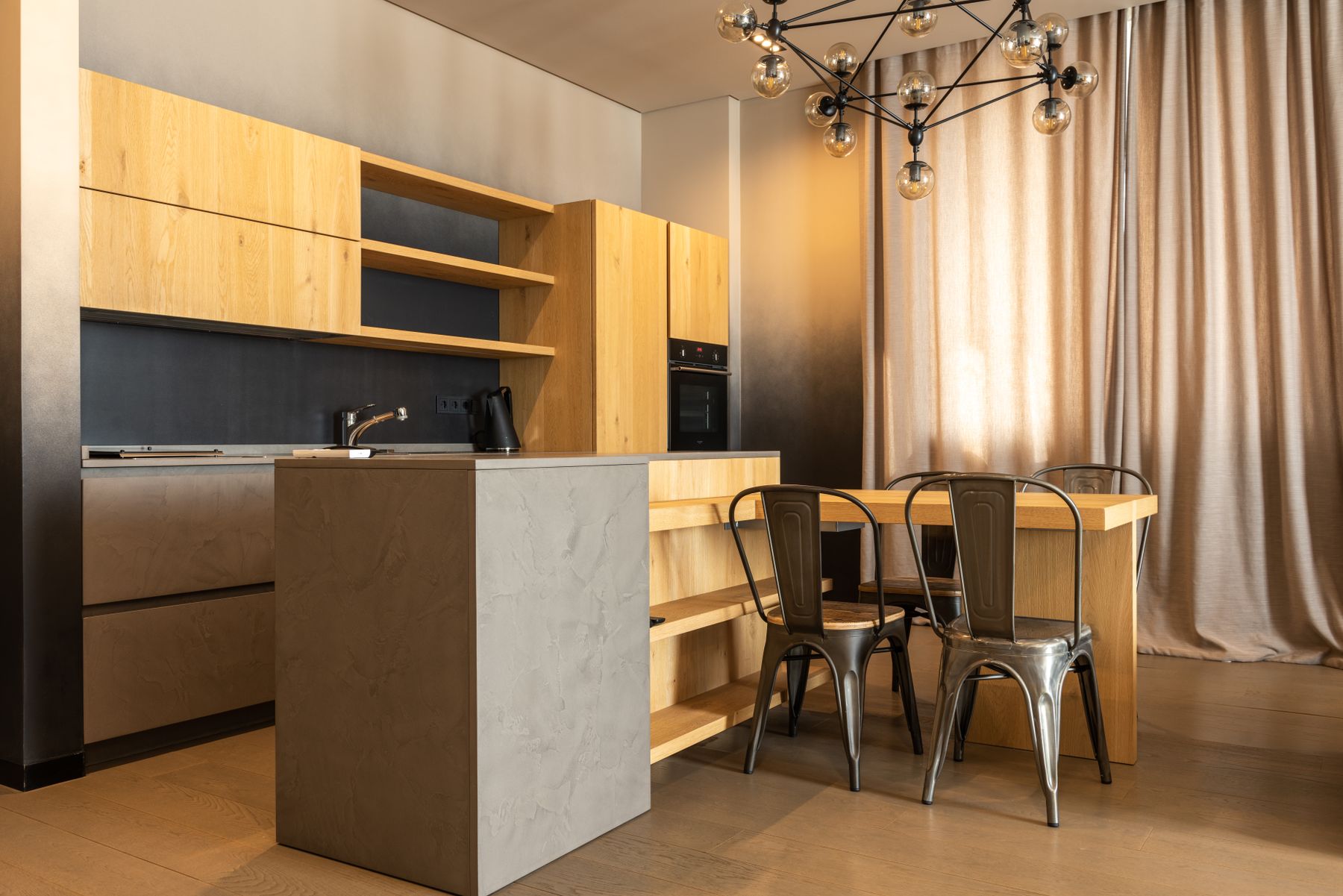
Keep the Appliances Current
A retro-inspired kitchen does not need a rounded refrigerator or reproduction range. Contemporary appliances can remain visible when the cabinetry, color and pattern already establish the mood. This usually gives more freedom to choose equipment by performance, size and maintenance instead of by styling alone.
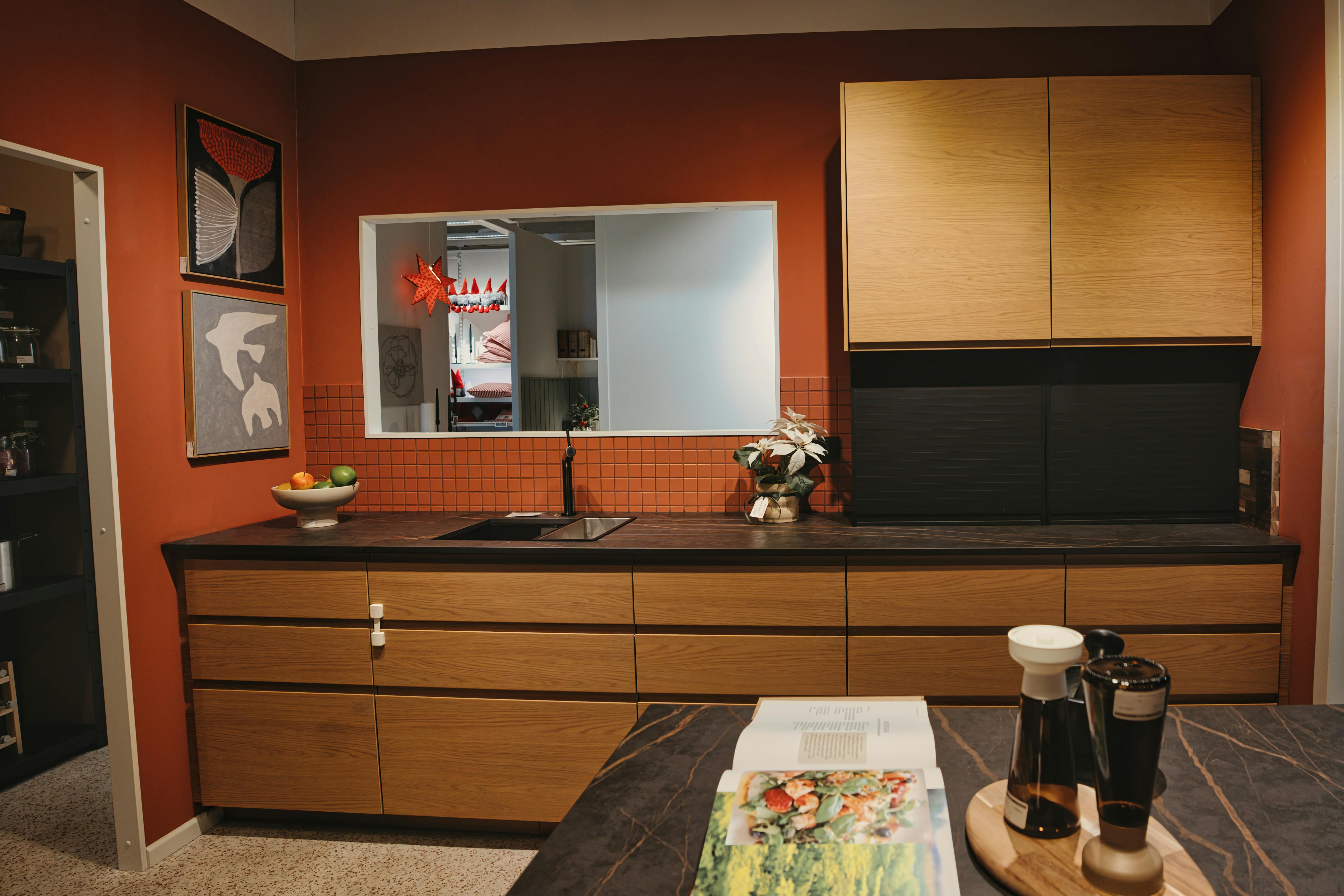
Use One Genuine or Convincing Vintage Detail
One older light, stool, cupboard or original wall finish can prevent a retro scheme from feeling entirely reproduction-based. The piece does not need to dictate the whole room. Let it sit beside current cabinetry and work surfaces so the contrast feels deliberate rather than theatrical.