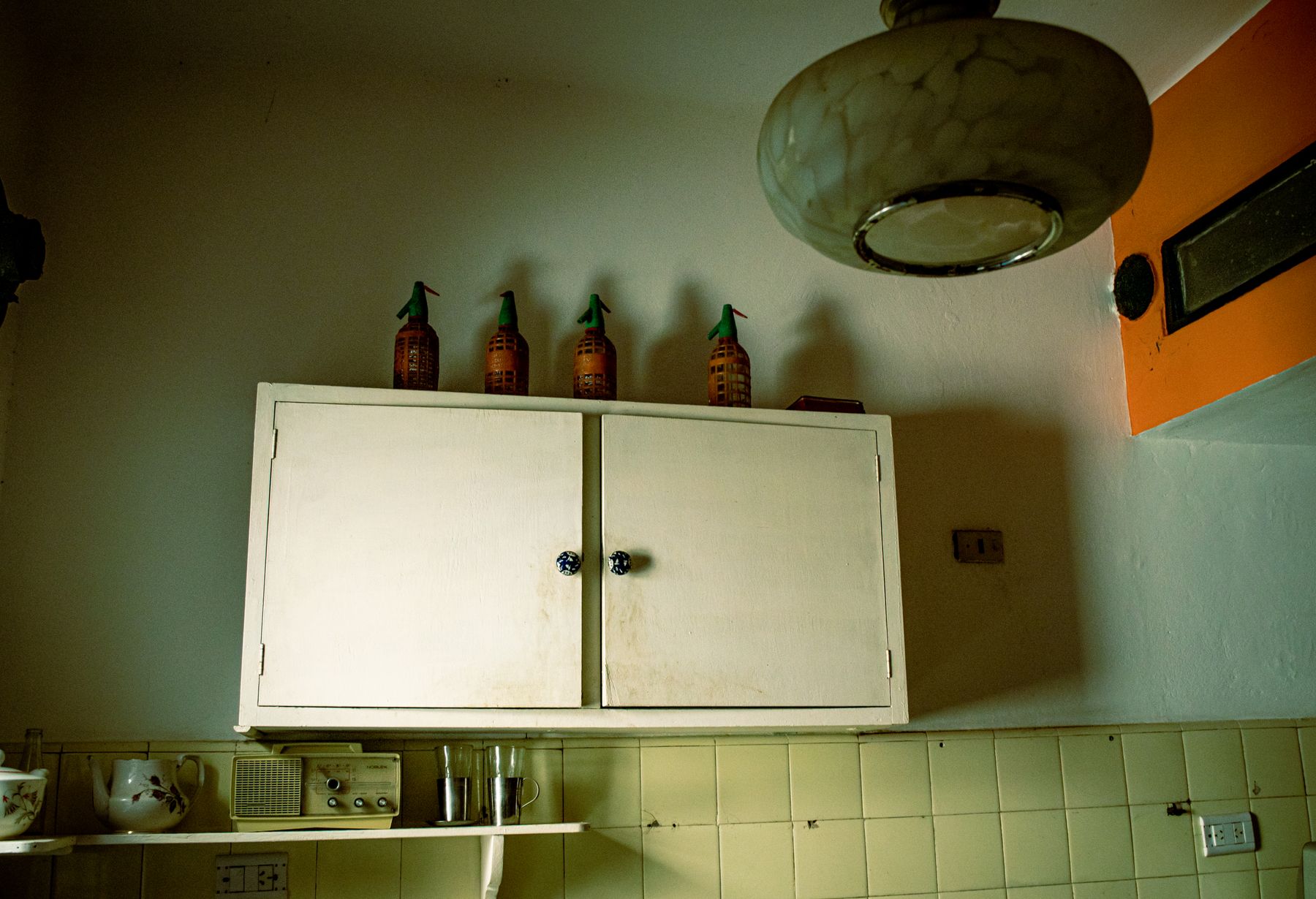
Let One Older Cupboard Set the Direction
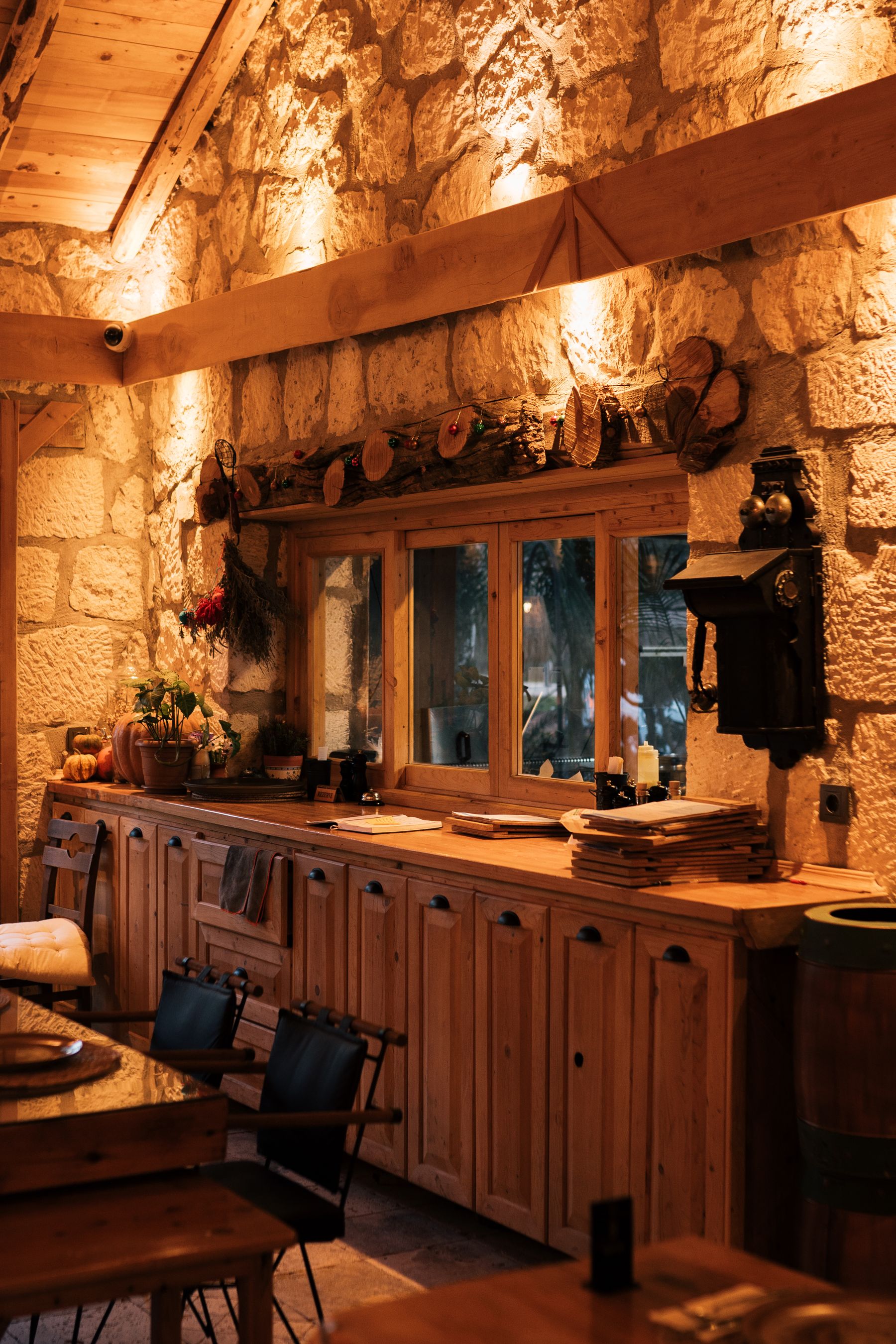
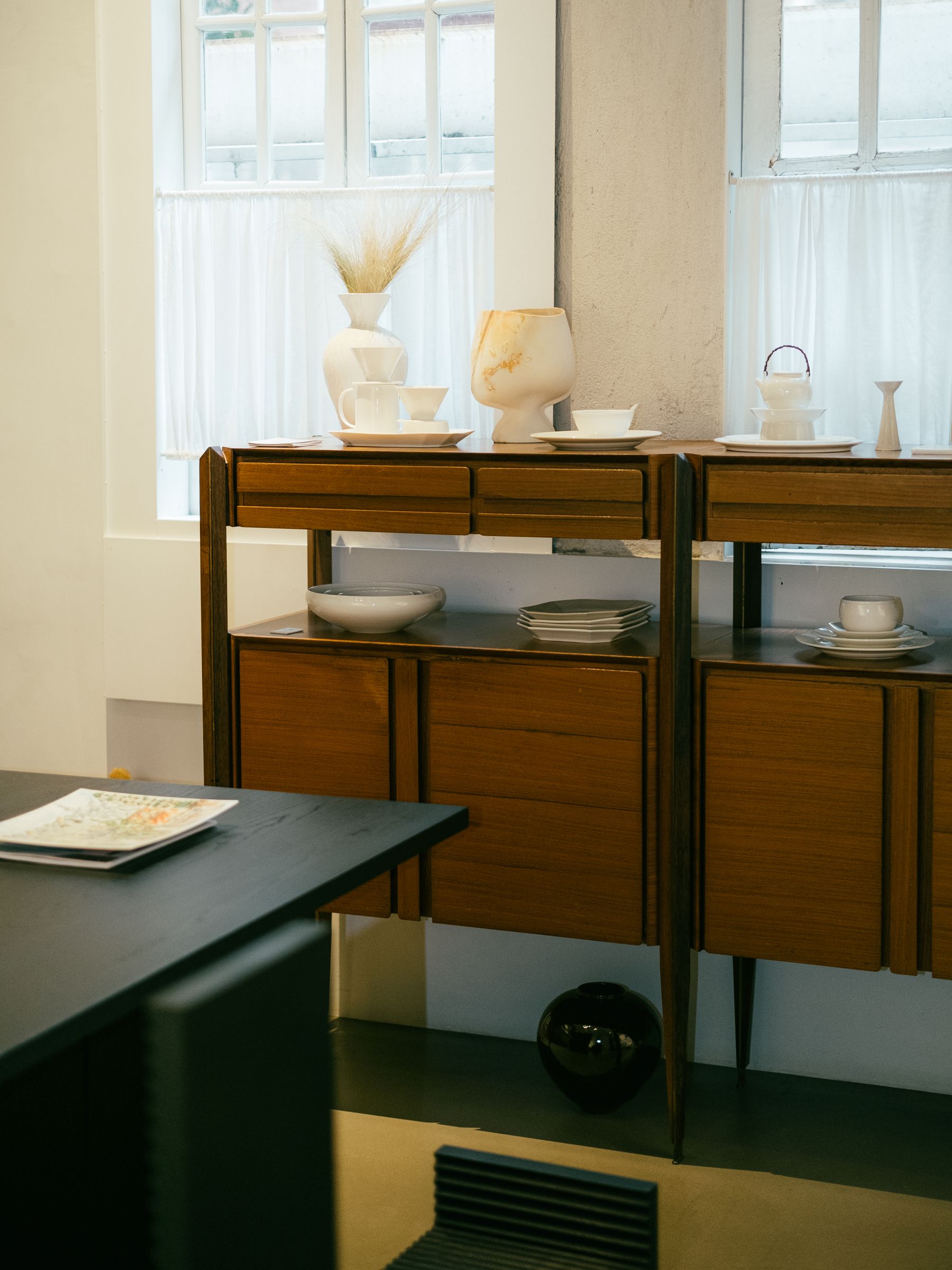
A freestanding dresser or older wall cupboard can give a plain kitchen more identity than a room full of small vintage ornaments. Look at its depth, storage capacity and door swing before deciding where it belongs. Let nearby fitted cabinets remain simpler so the older piece stays legible and useful rather than becoming one decorative object among many.
Borrow a Muted Color From an Existing Detail
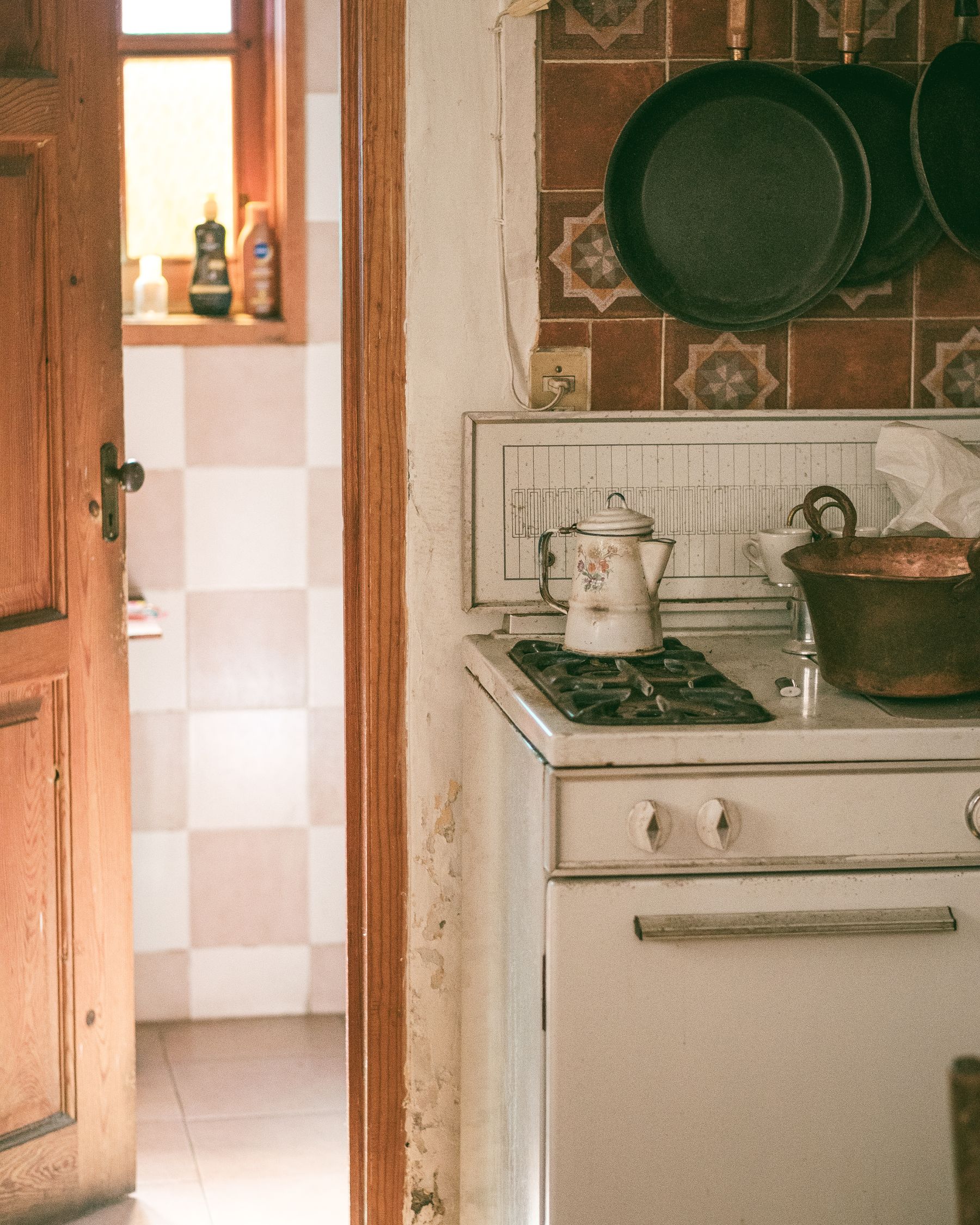
Dusty blue, faded green, butter yellow and warm off-white can all support a vintage mood when the color comes from something already present. Use an enamel jug, old tile or painted dresser as a reference, then repeat the tone more softly on another surface. Leave enough neutral area around the color that the room feels collected rather than themed.
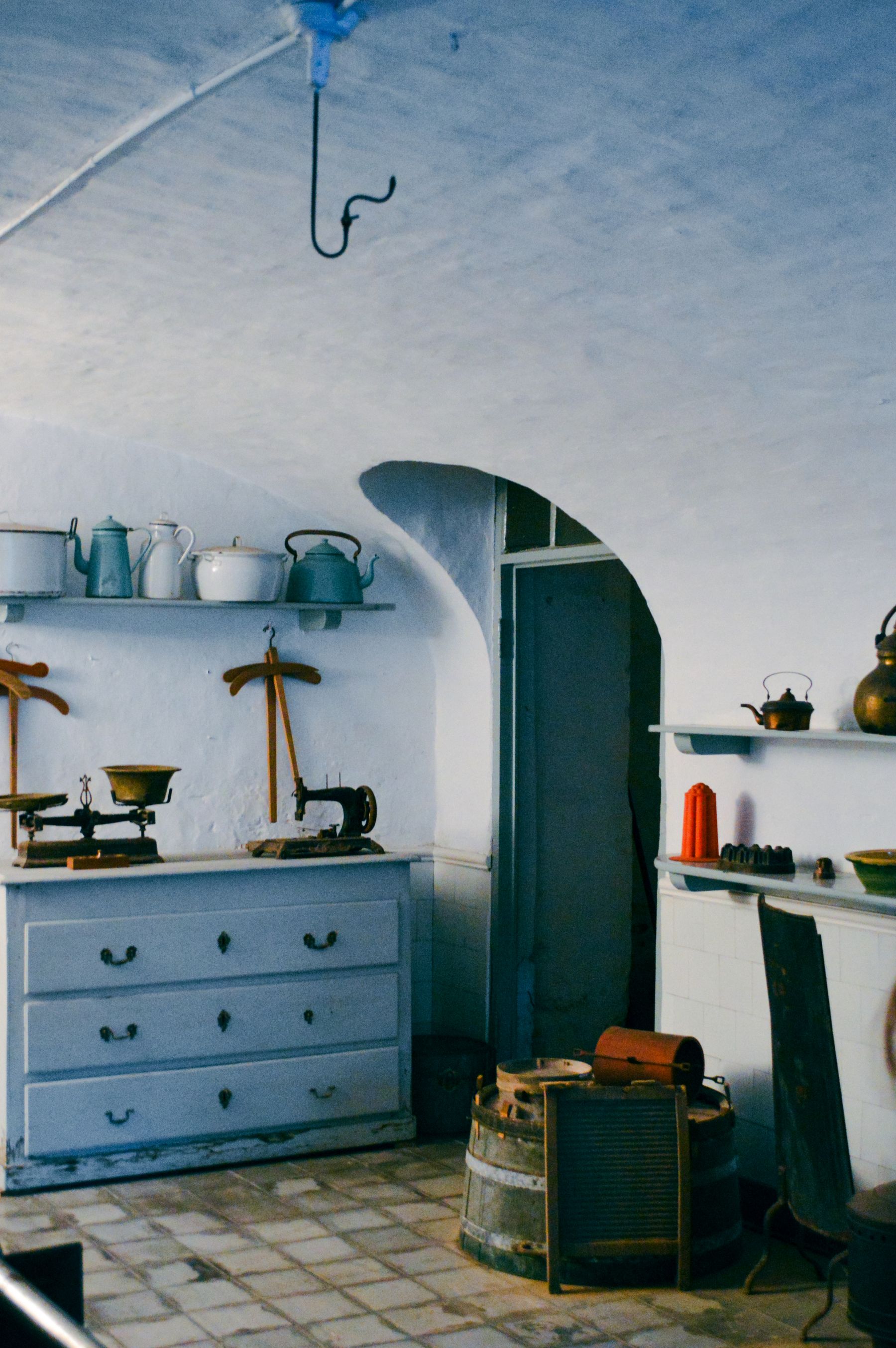
Display a Small Collection of Kitchenware
Enamel jugs, old scales, ceramic crocks and metal pans have recognizable shapes that can tell the vintage story on one shelf. Group by one shared quality, such as color, material or shape, while varying height. Use pieces with uncertain age or condition as display rather than assuming they are suitable for food.
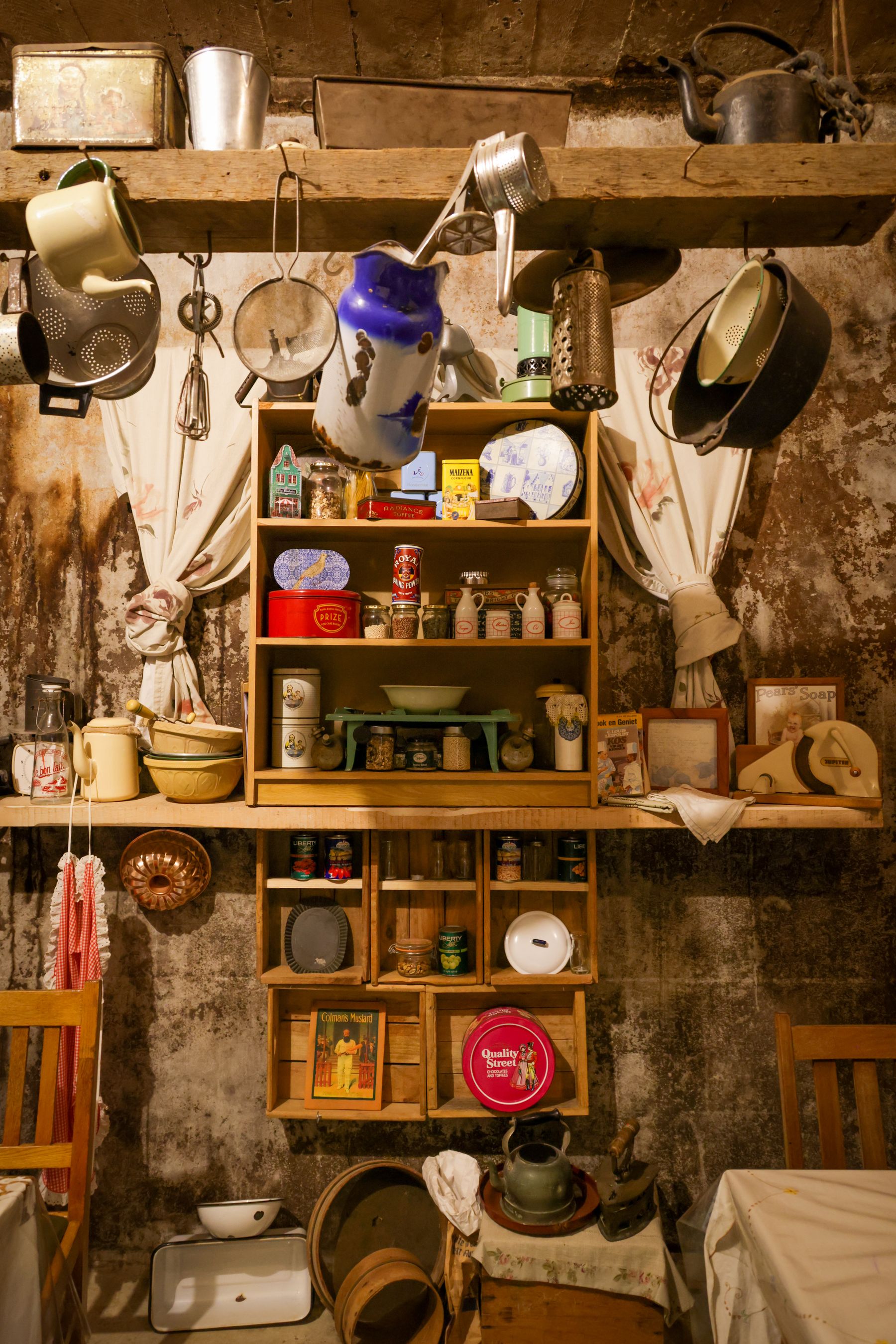
Introduce a Wooden Table Instead of Another Cabinet Block
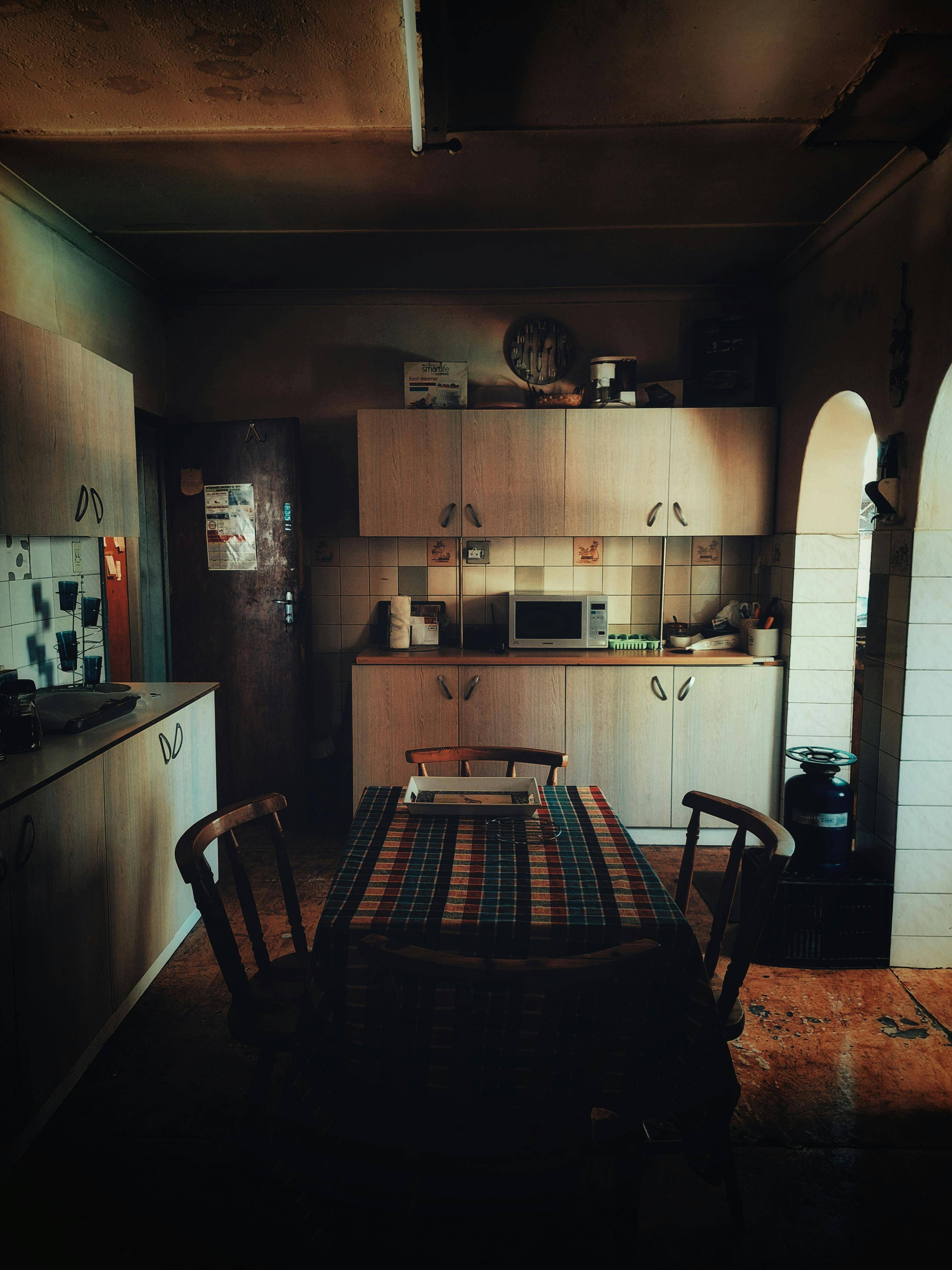
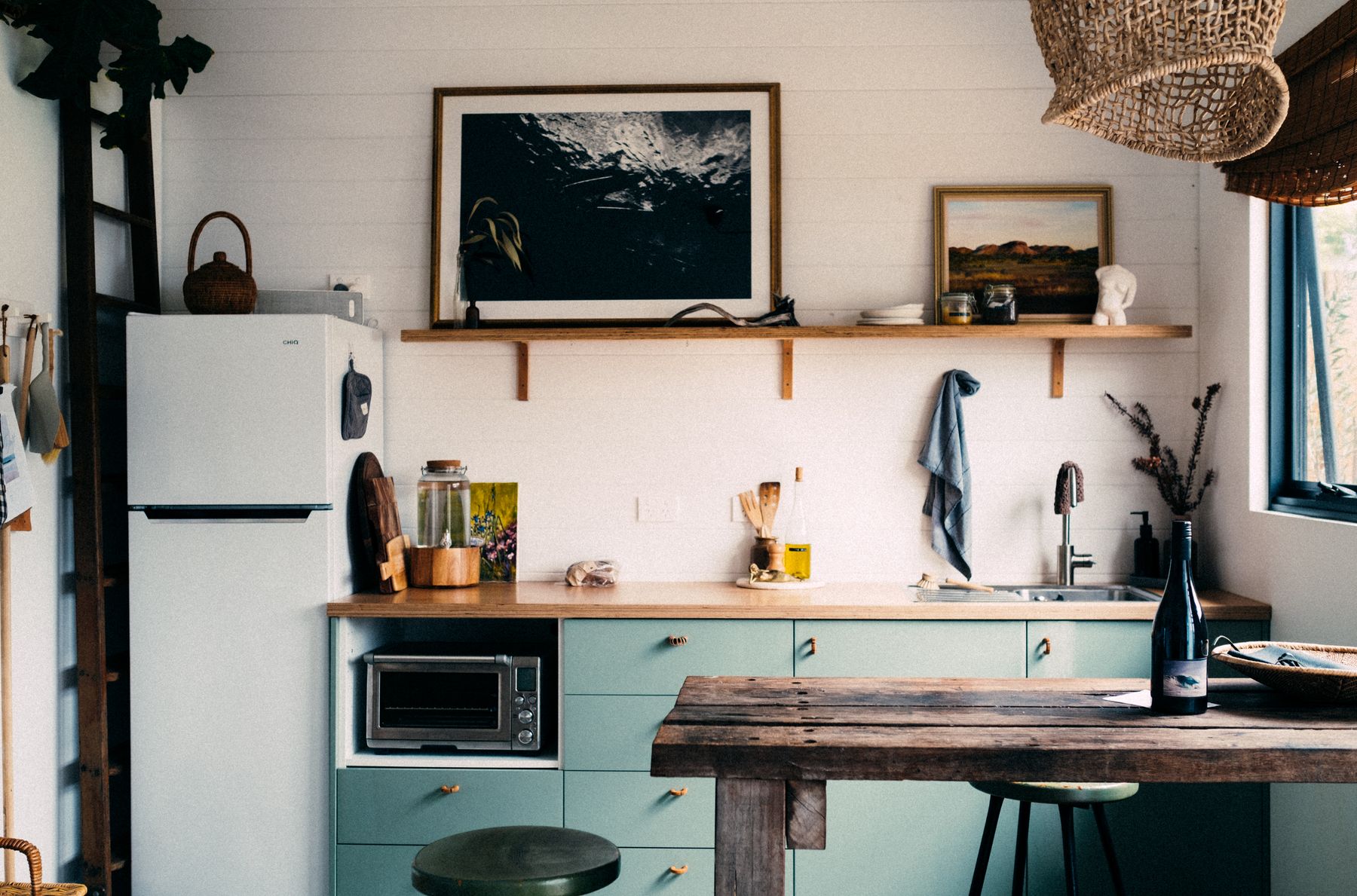
A kitchen table makes the room feel furnished rather than entirely fitted. It can provide a place for breakfast, sorting groceries or serving while its legs preserve views across the floor. In compact rooms, a modest table against a wall may be more useful than forcing in an island.
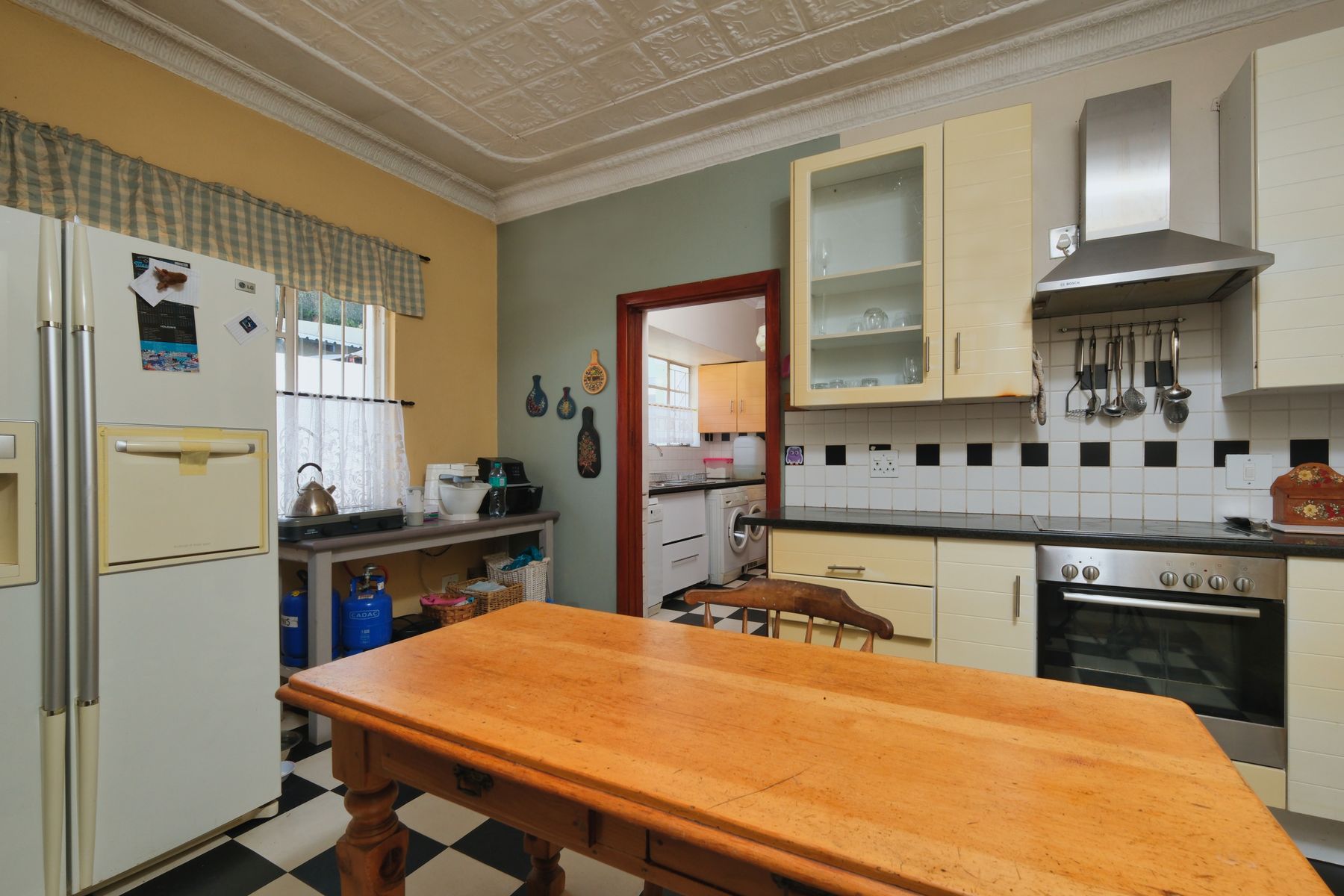
Give Pattern One Clear Home
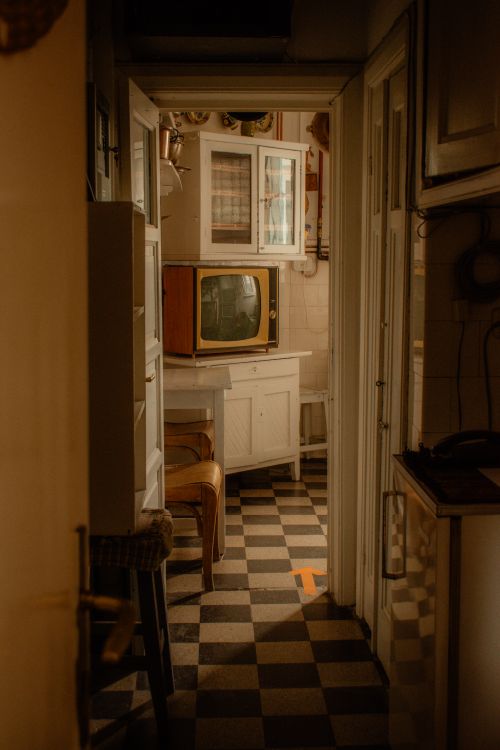
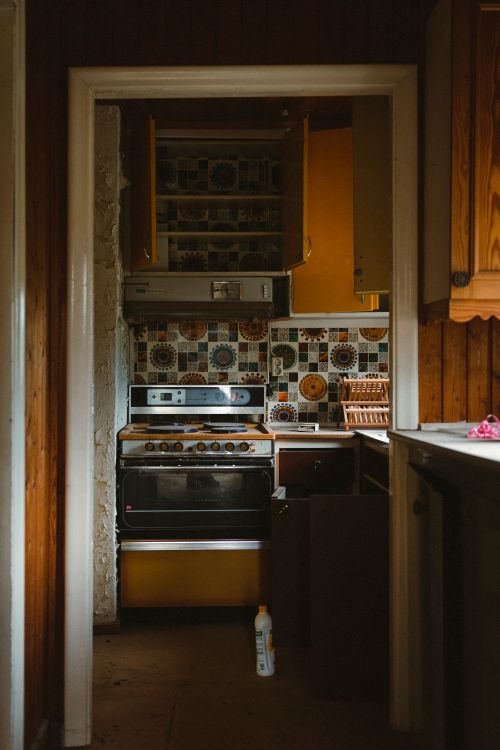
Small patterned tiles or a checkerboard floor can carry a vintage mood without making every surface decorative. Decide whether the pattern belongs underfoot, behind a counter or on a short textile, then keep neighboring areas quieter. Original tile deserves enough visual space to be appreciated.
Use Hardware to Connect Old and New
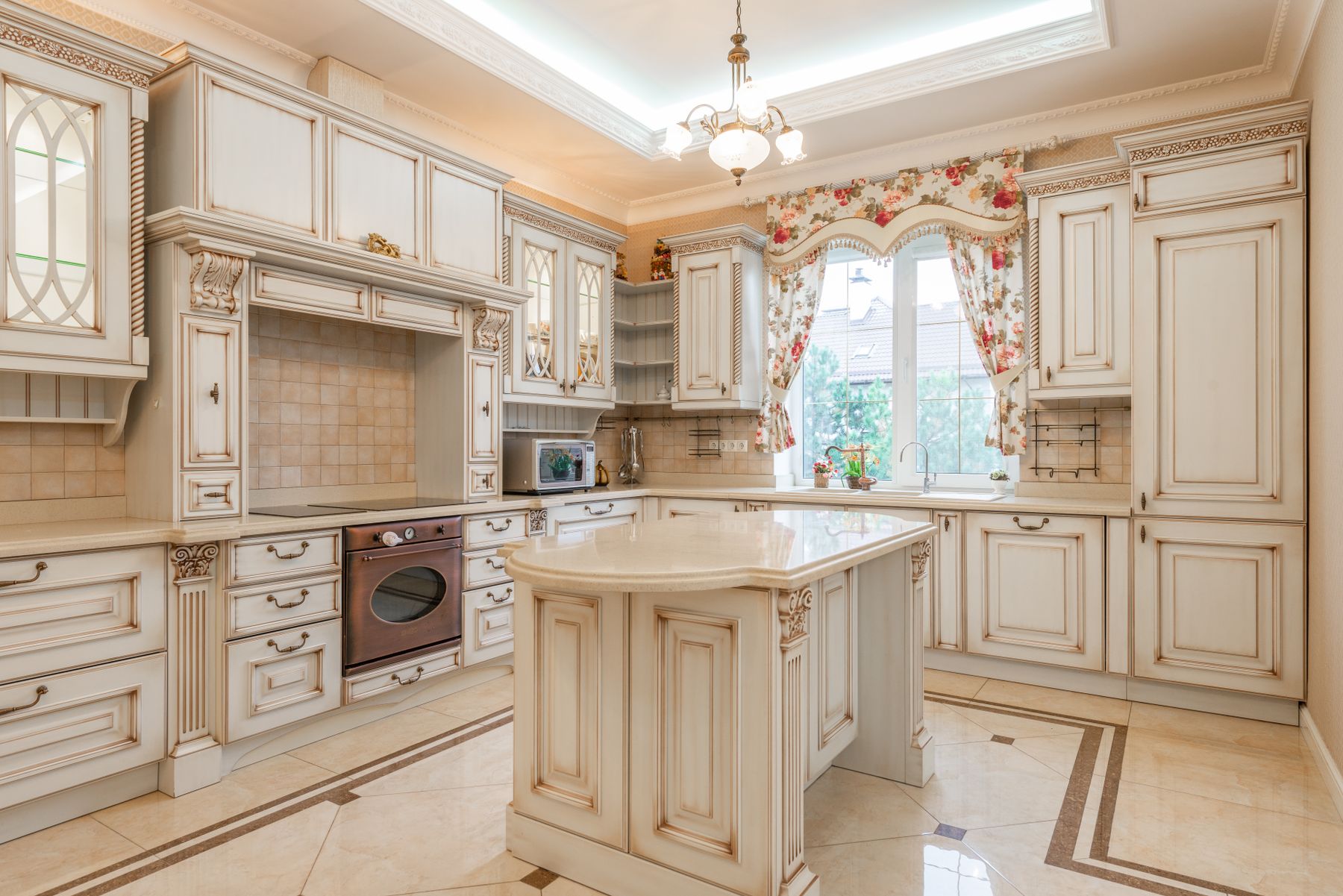
Simple round knobs, cup pulls and visible latches can help newer cabinetry sit comfortably beside older furniture. Choose the shape in relation to the door profile and keep frequently used handles comfortable to grip. Metals do not need to match perfectly, but a similar level of shine usually helps the room feel related.
Balance Patina With a Clear Working Zone
A room can keep older character while giving everyday cooking a straightforward place. Let patina live on a dresser, shelf or dining table and reserve the busiest counter for a surface chosen for current use and maintenance. Modern appliances do not need elaborate disguises; coherent placement is usually enough.
Start Small if You Rent
A rental kitchen can gain vintage character through movable furniture, framed art, a small table, useful ceramics or textiles before any permanent work begins. Work with the existing colors instead of trying to hide all of them. If a change requires fixing to a wall or replacing hardware, confirm what is allowed and keep original parts.
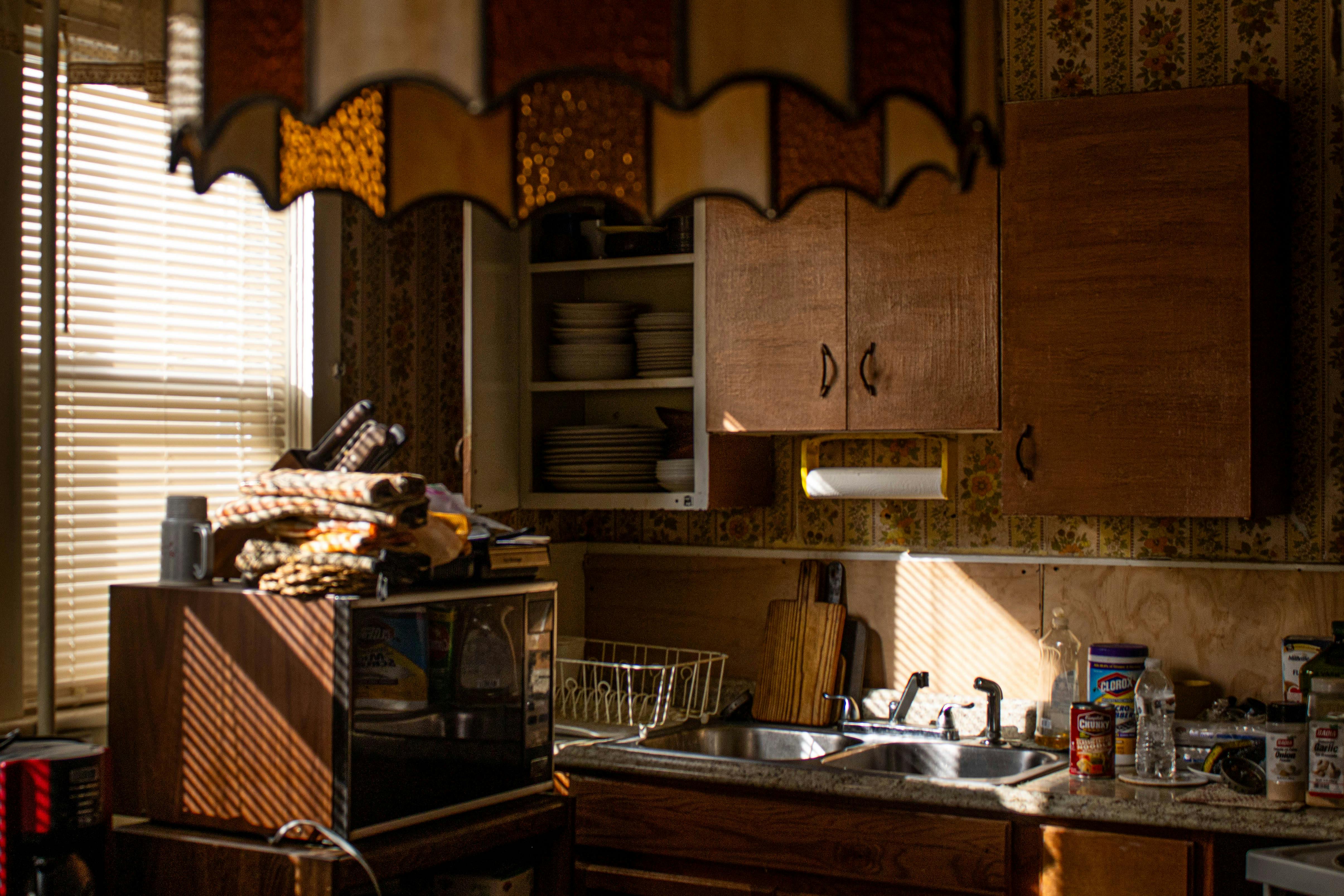
Use One Vintage Light to Change the Mood
A pendant, wall light or older lamp can introduce age through silhouette and material without asking the whole kitchen to become period-styled. Milk glass, opaline shades, enamel fittings or warm metal can all work when the scale suits the table or work area. Original electrical fittings should be checked and adapted by a qualified professional where necessary; reproduction lighting can deliver the look more safely.
Let the Floor Carry Some of the History
A checkerboard, encaustic-style tile or retained timber floor can provide enough visual history that the cabinetry does not need to become highly decorative. If the floor is already strong, keep the largest vertical surfaces simpler and use the pattern as the room's graphic base. In an older home, repairable original flooring may be worth preserving where its condition allows.