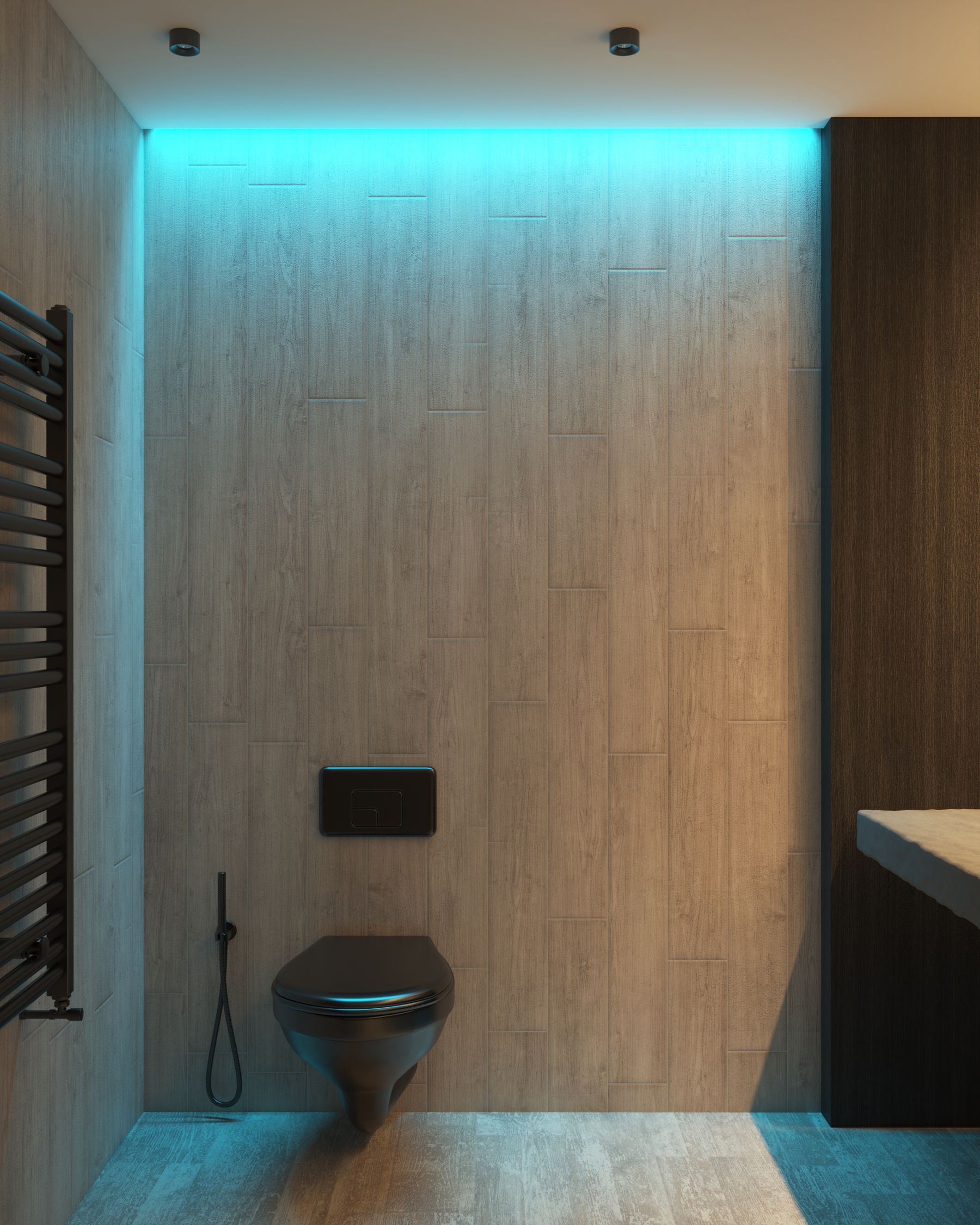
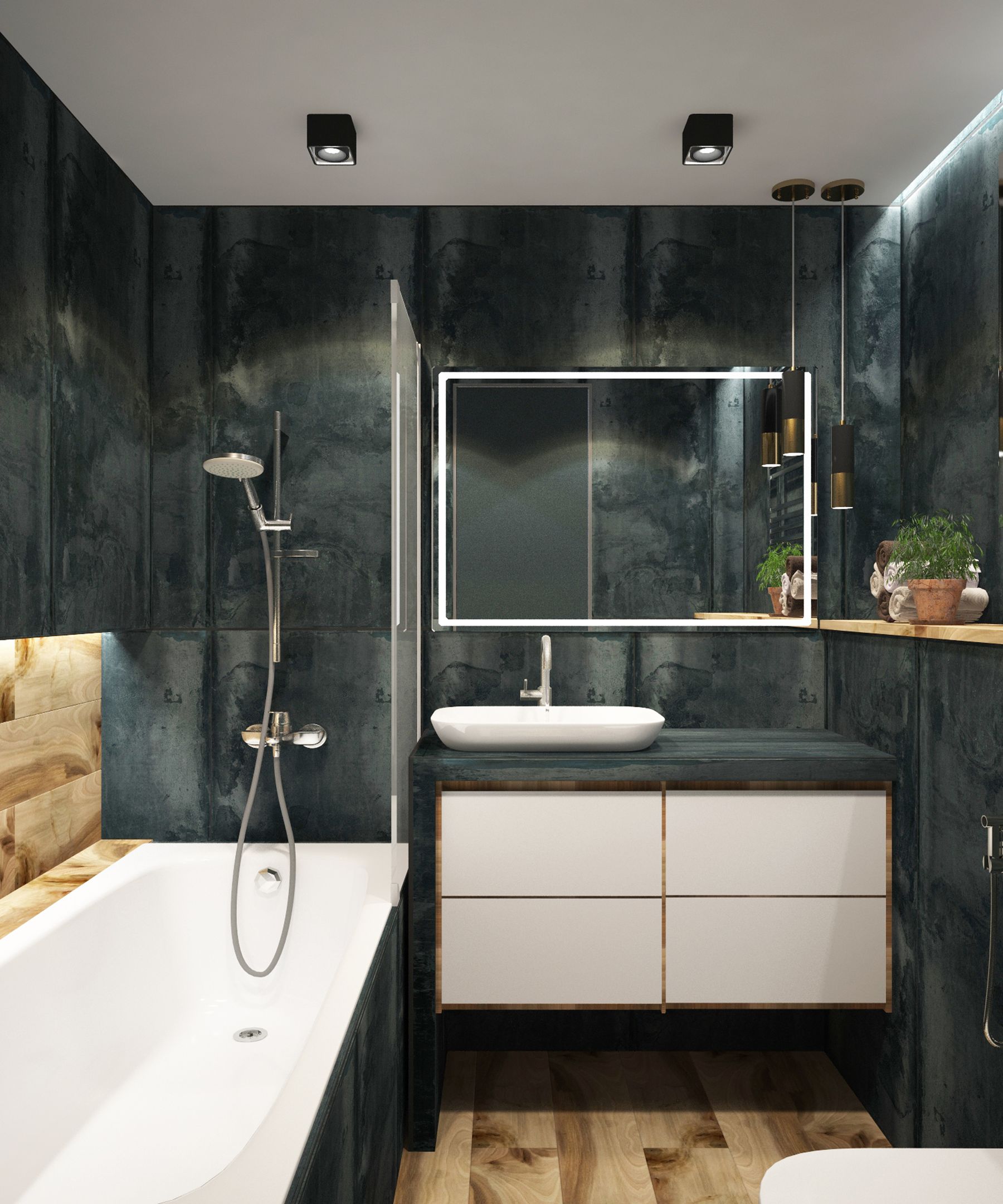
Give the Room One Current Focal Material
A dramatic stone, dark marble-look tile, richly textured wall or expressive vanity can immediately make a bathroom feel current. Keep the focal material to one major zone so it has enough scale to matter without competing with every other surface. Permanent finishes should also be chosen for durability and maintenance, not only for how well they photograph.
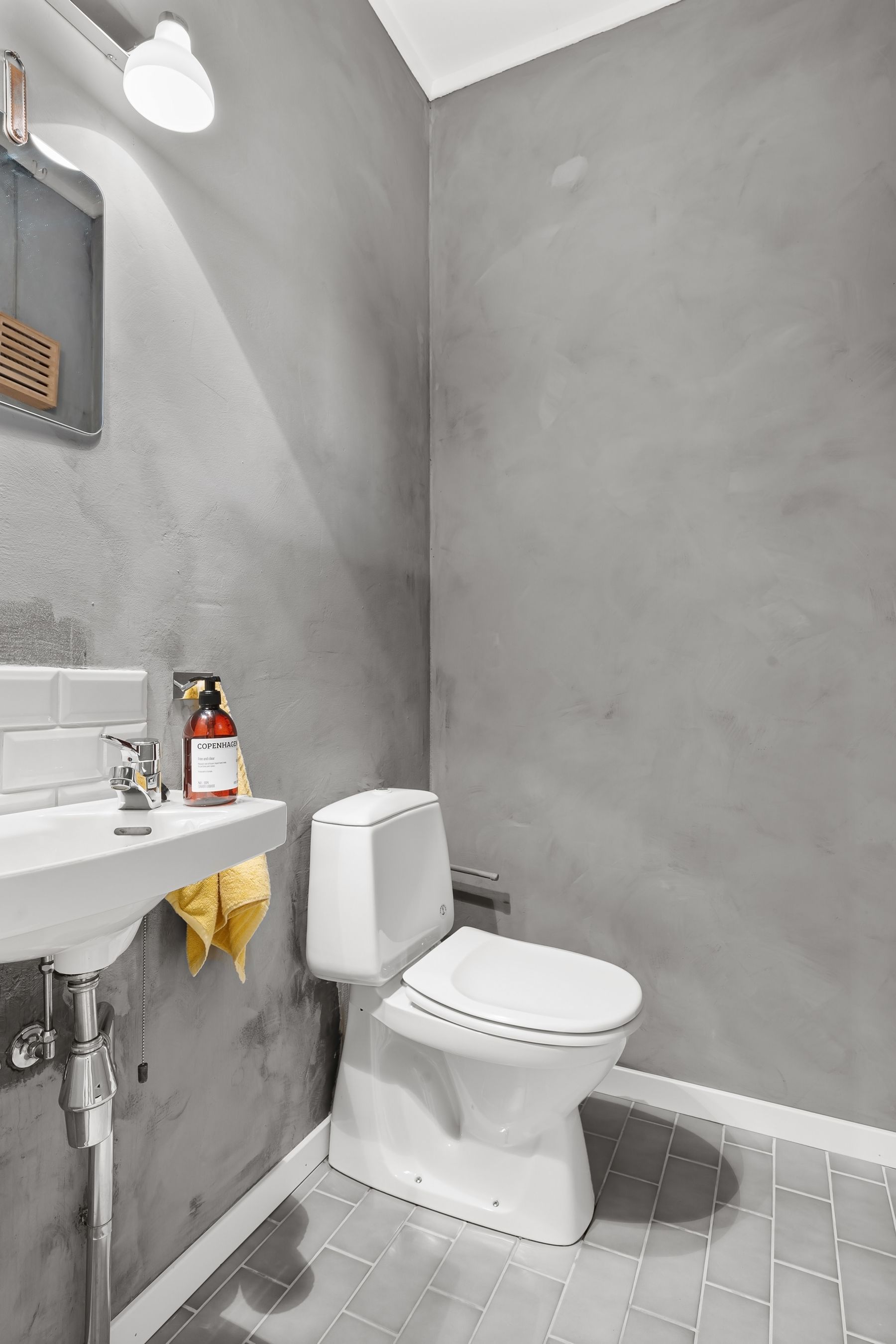
Layer Neutrals Instead of Matching Them
Contemporary neutral bathrooms feel richer when grey, stone, white, timber and metal have slightly different values and textures. Exact matching can make the room look flat, while controlled variation lets each material respond differently to light. Compare samples together under the actual bathroom lighting before deciding that every neutral must share the same undertone.
Keep Large Surfaces Calm
When one feature is expressive, broad walls and floors benefit from being quieter. Large-format tile, pale plaster-like finishes or restrained cabinetry can create a calm visual field around the bath and vanity. This also makes future changes easier because smaller decorative layers can evolve without replacing every permanent finish.
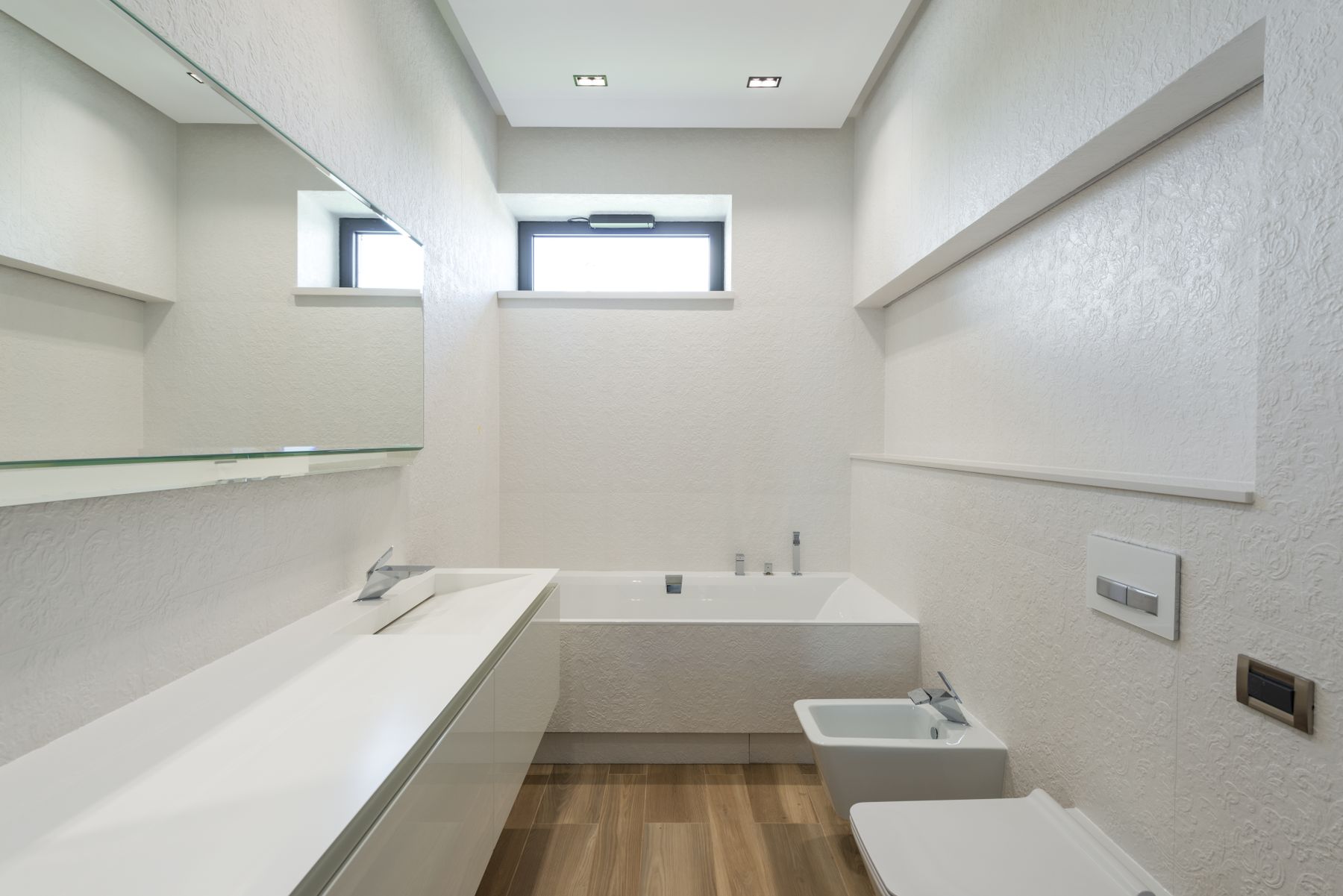
Integrate Storage Into the Architecture
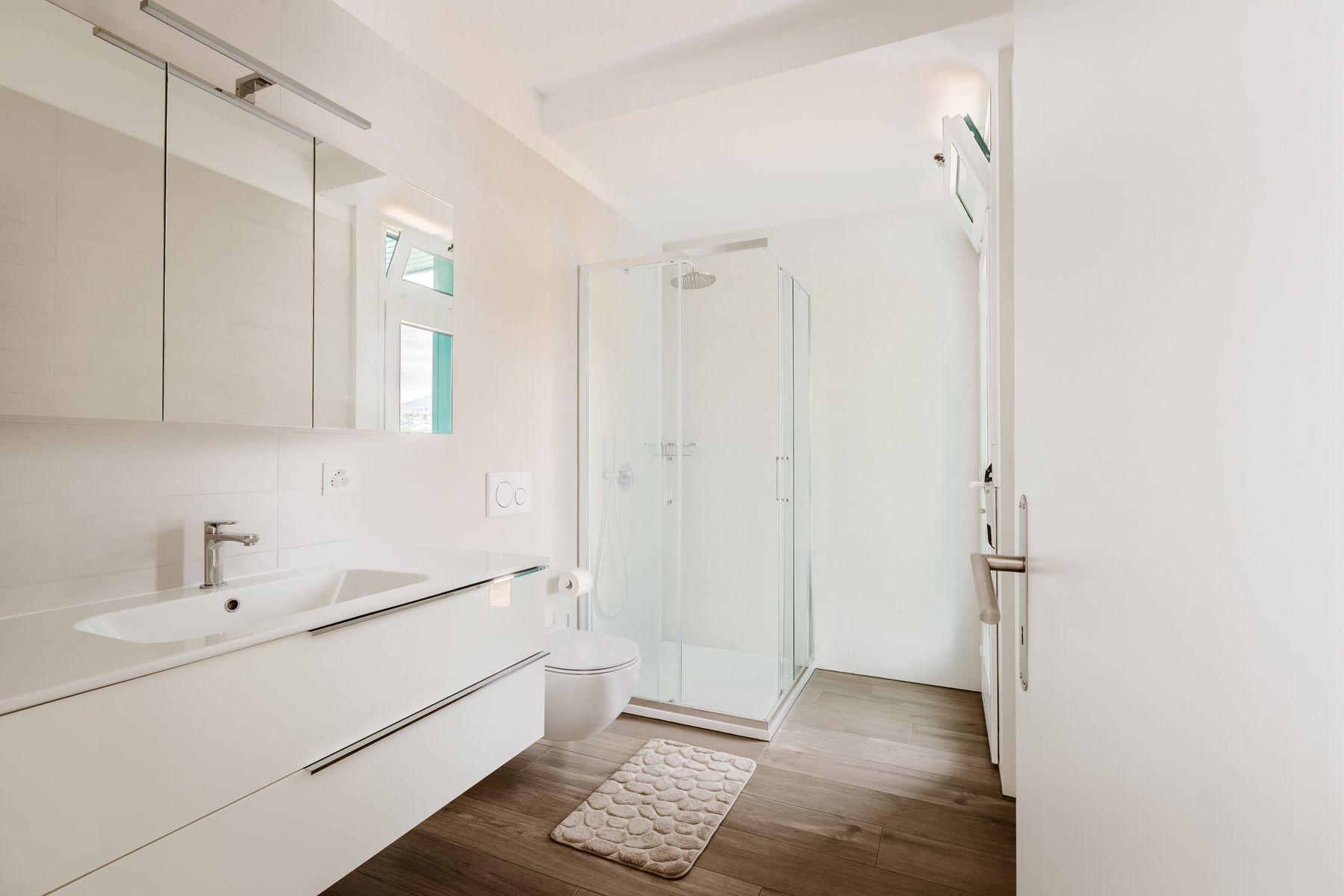
Mirrored cabinets, recessed storage and flush-front cabinetry can keep everyday toiletries accessible without making the bathroom feel stripped of function. Contemporary design does not require hiding everything, but the largest storage pieces should feel related to the wall and vanity rather than added afterward. Plan electrical outlets, medicine storage and grooming tools before finalizing cabinet depths.
Use Texture to Make a Simple Bath Zone Feel Intentional
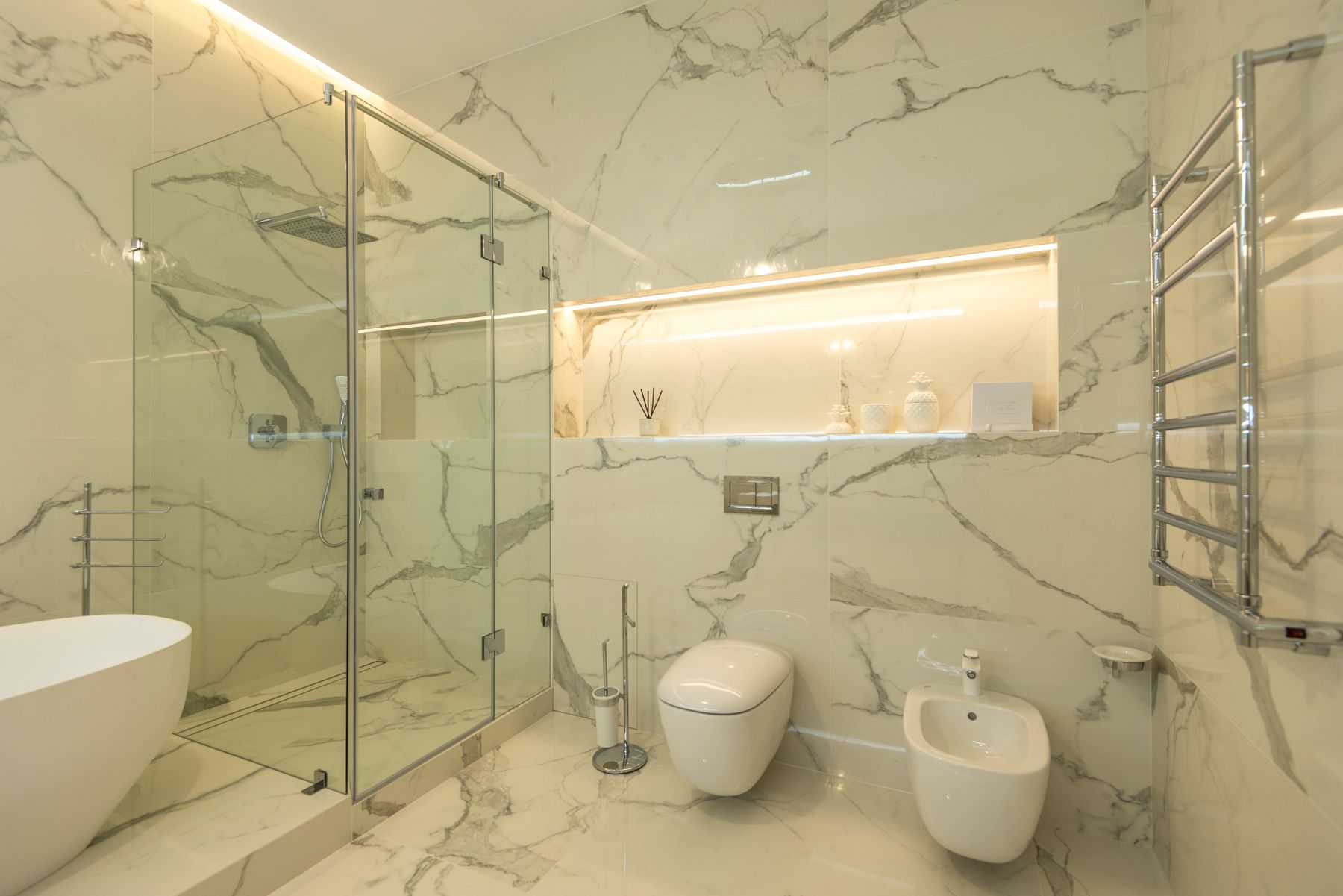
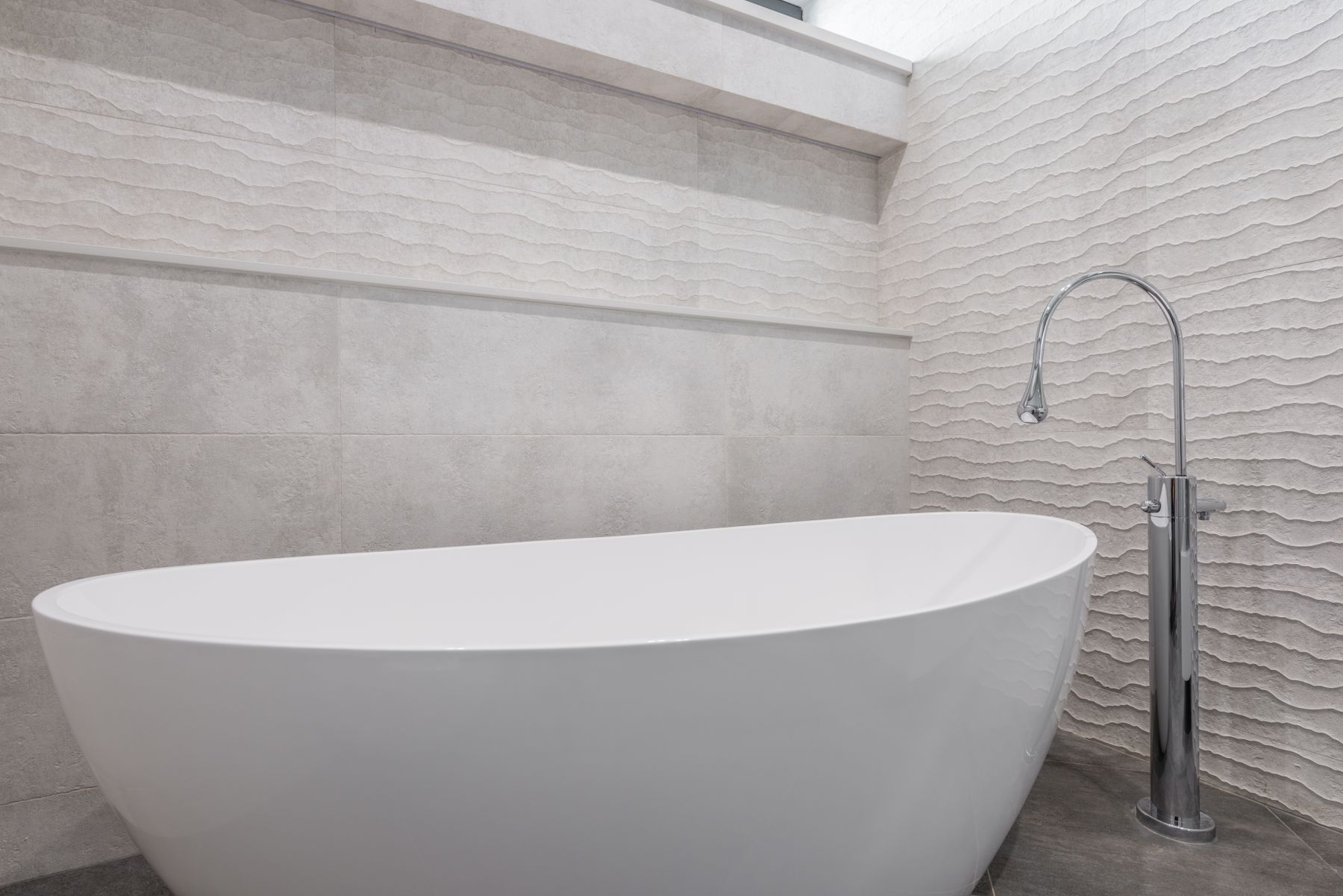
A freestanding bath does not need elaborate decoration when the surrounding wall has tactile depth. Stone-like texture, subtle relief or a softly mottled surface can create enough visual interest while the tub remains simple. In splash-prone locations, choose finishes that can tolerate moisture and regular cleaning.
Protect Negative Space Around Sculptural Fixtures
Current bathrooms often use a freestanding bath, broad basin or distinctive mirror as a sculptural element. Those pieces only read clearly when there is enough breathing room around them. Avoid filling every open corner with stools, plants or shelving, and keep cleaning access around freestanding fixtures practical.
Make the Vanity Wall More Expressive
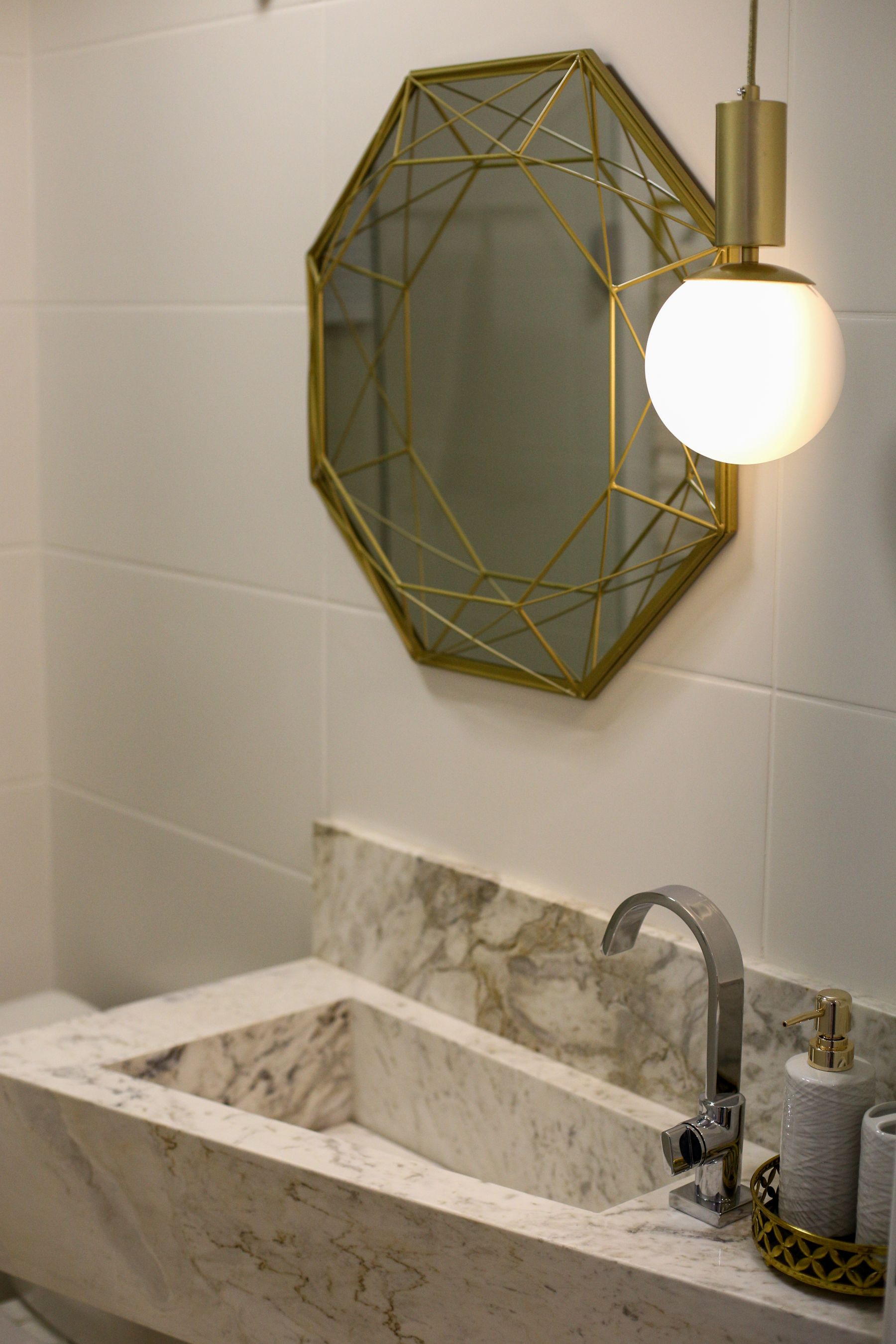
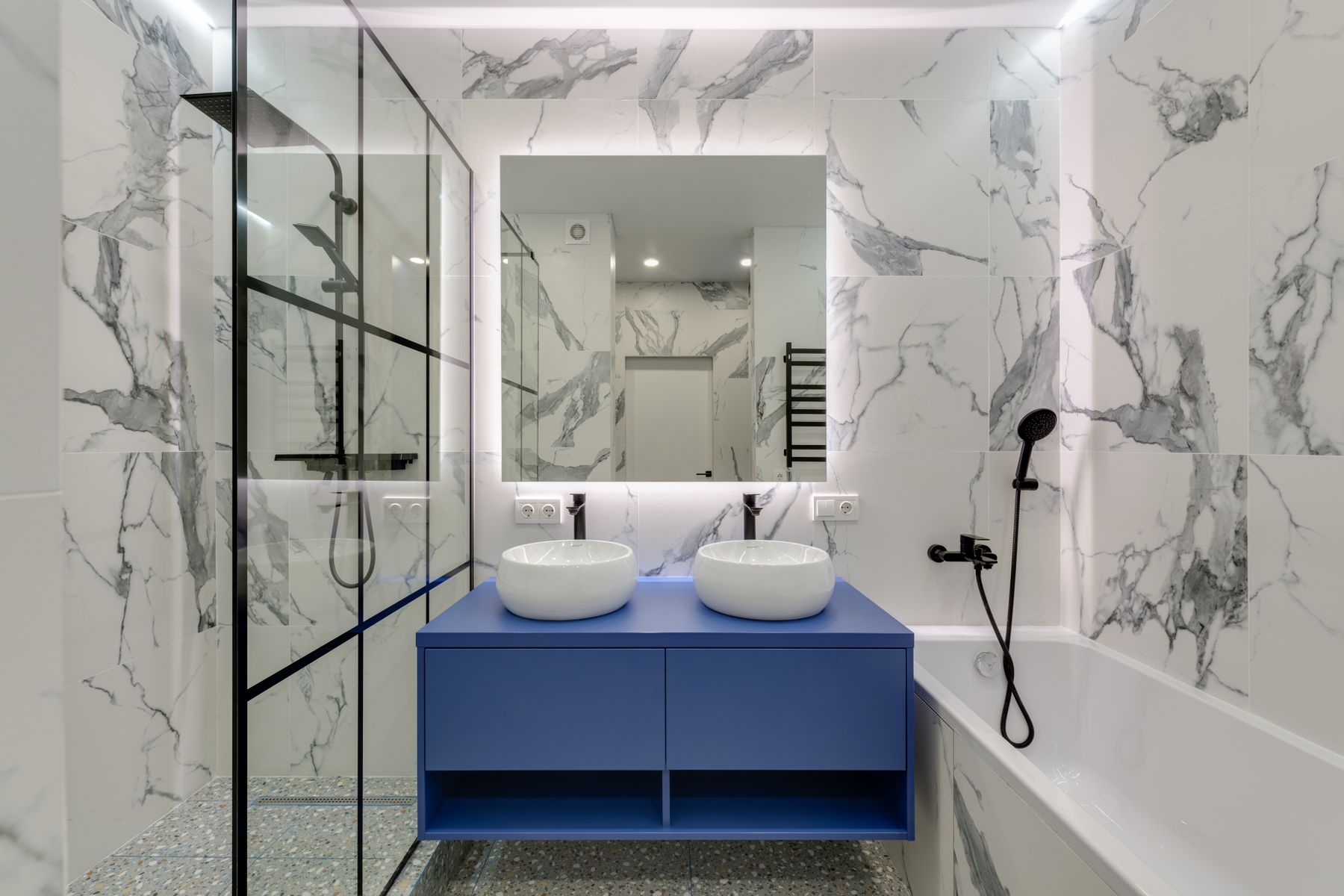
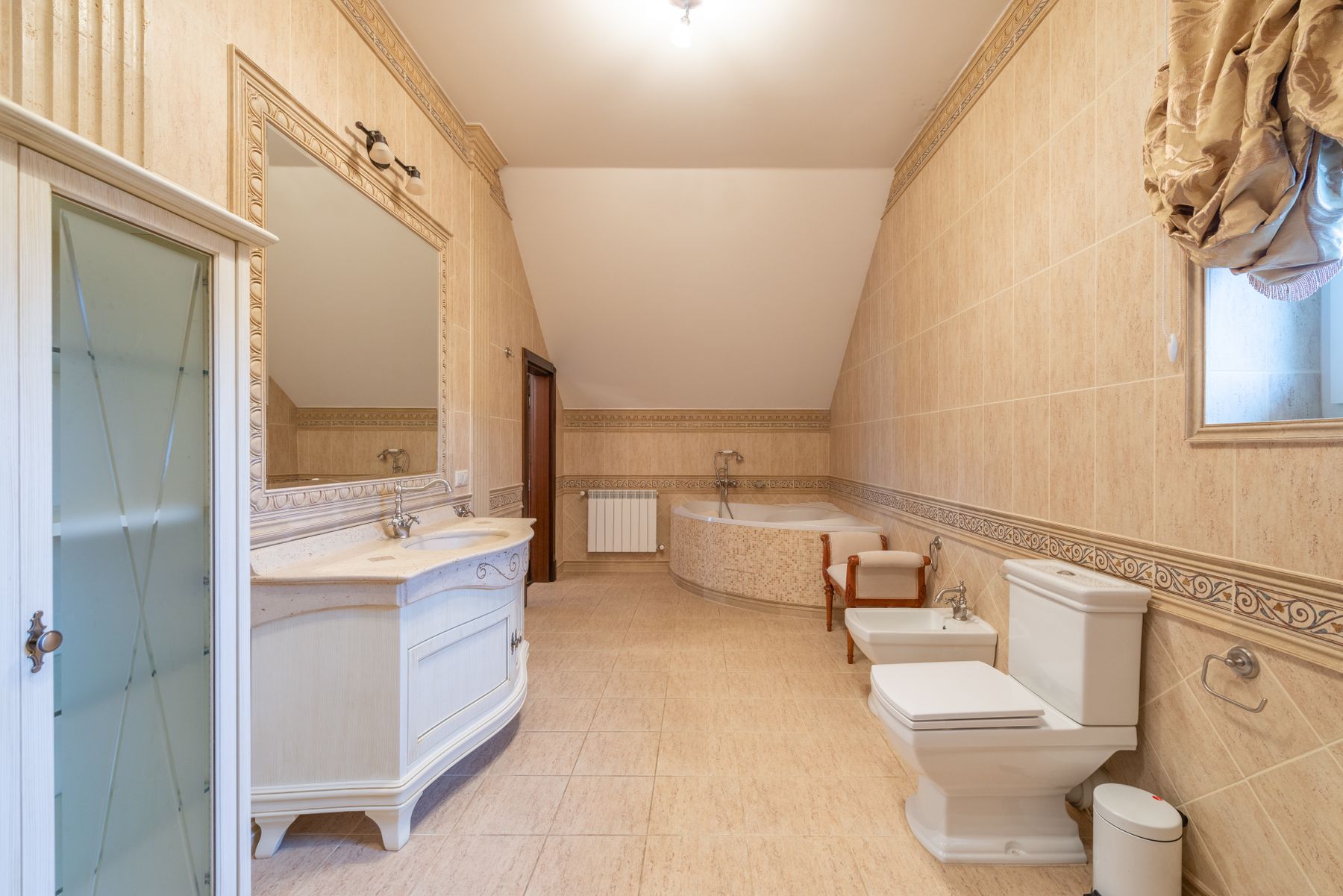
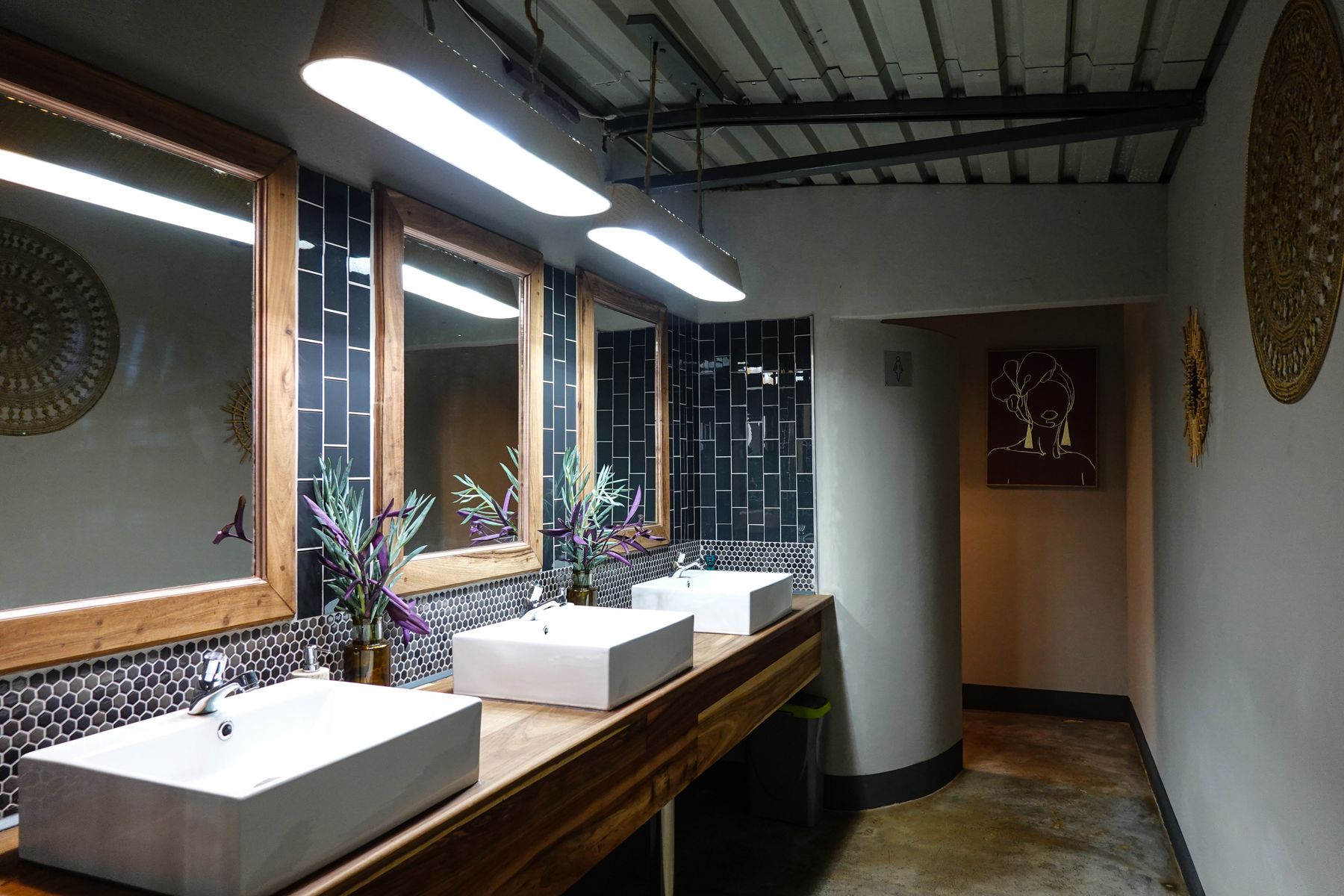
Contemporary bathrooms can handle stronger mirror shapes, decorative lighting or a more generous double vanity than minimalist rooms, provided the composition remains organized. Align basins, mirrors and task lighting enough that the wall reads intentionally, then allow one element to break the strict symmetry if it improves the space.
Link the Bath and Shower as One Composition
When a bathtub and shower sit beside each other, repeat one material, metal finish or visual axis so they feel like parts of the same room. Glass can preserve the relationship between zones without making the shower disappear completely. Waterproofing, drainage and glass specification remain technical decisions and should follow local requirements.
Use Dark Contrast in a Controlled Zone
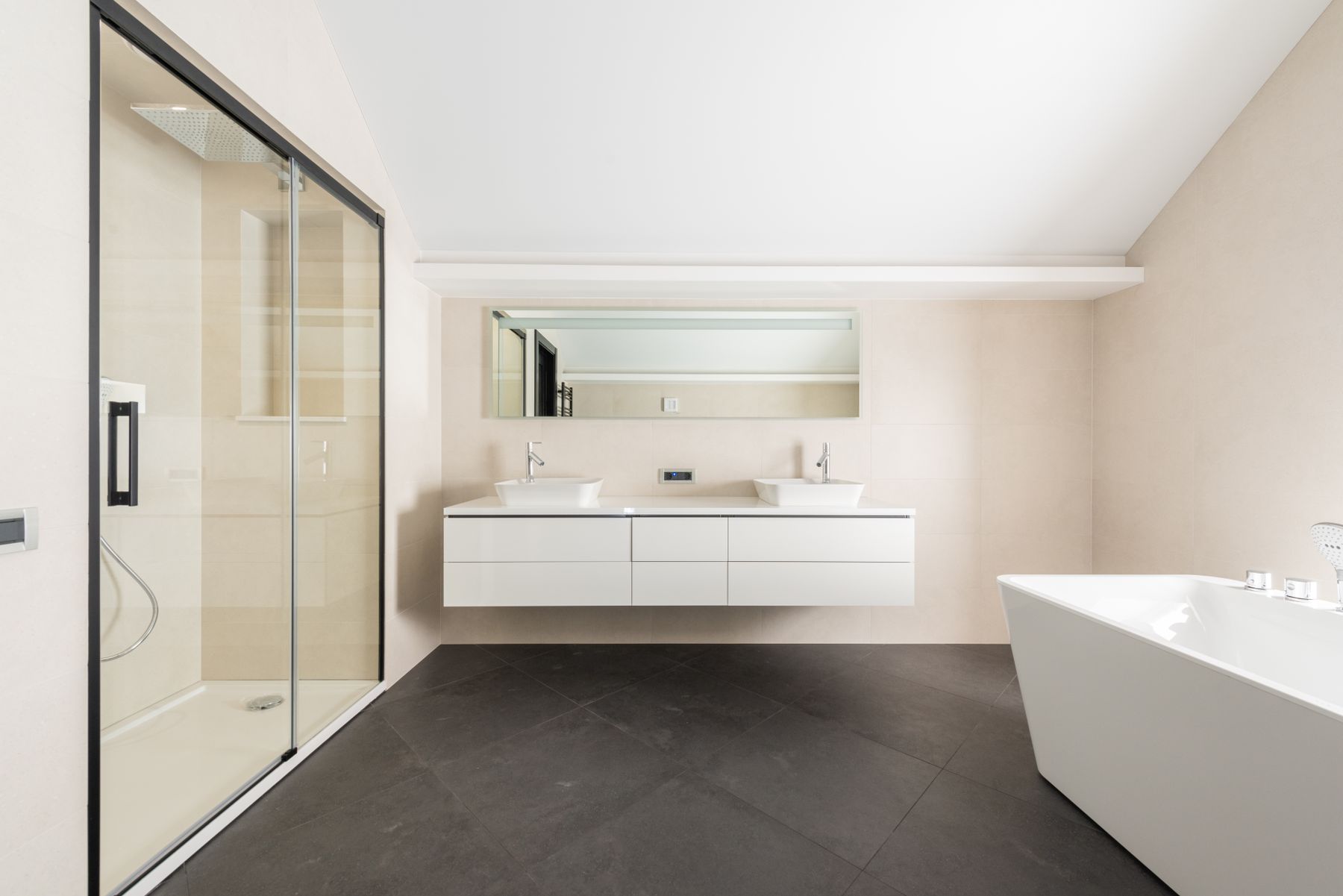
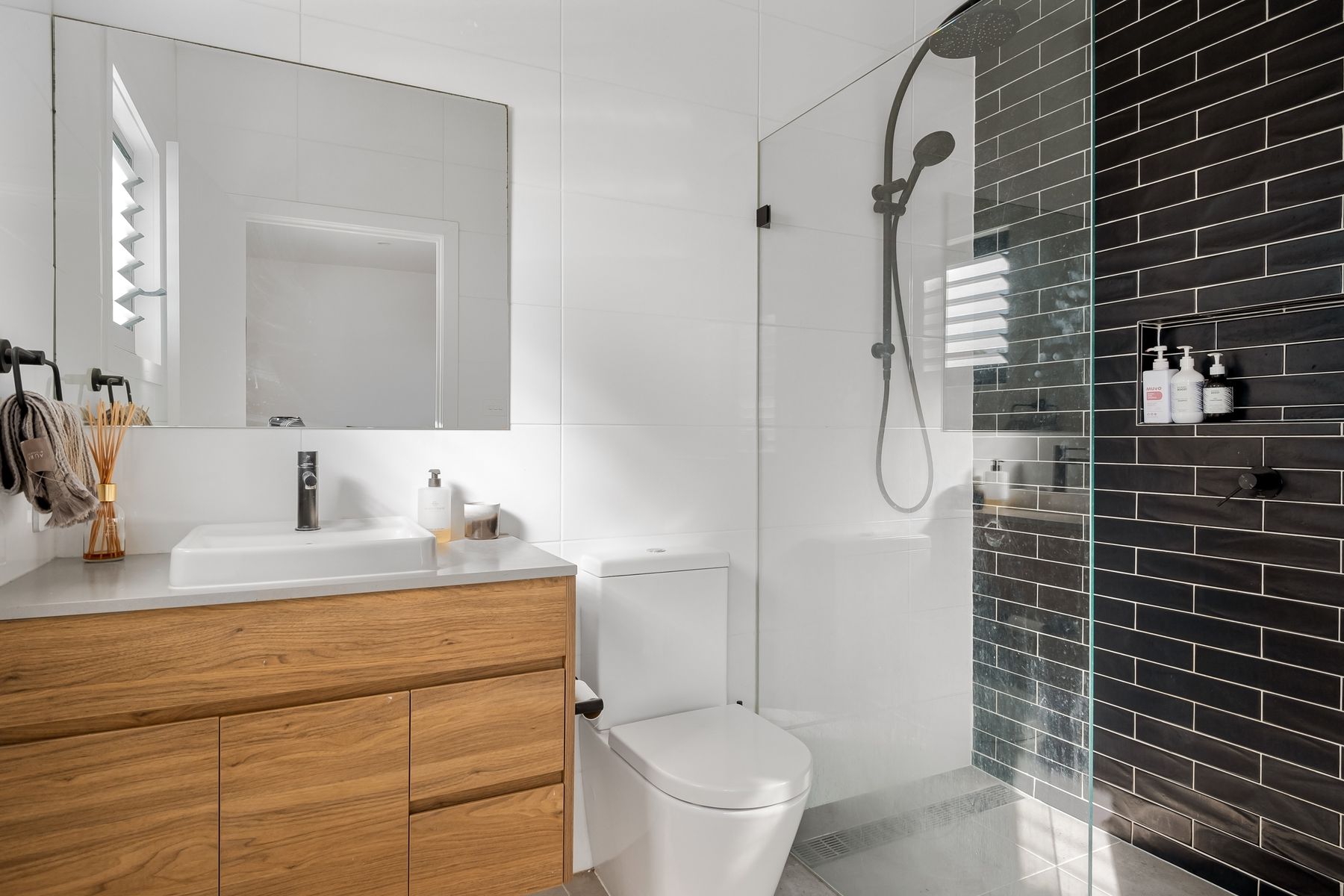
Black tile, dark stone or deep cabinetry can sharpen a contemporary bathroom, but the contrast is strongest when concentrated. Pair the darker zone with warmer timber, pale ceramic or good lighting so controls and edges remain visible. A dark surface should create depth, not make the entire room visually heavy.
Let Repetition Create Order
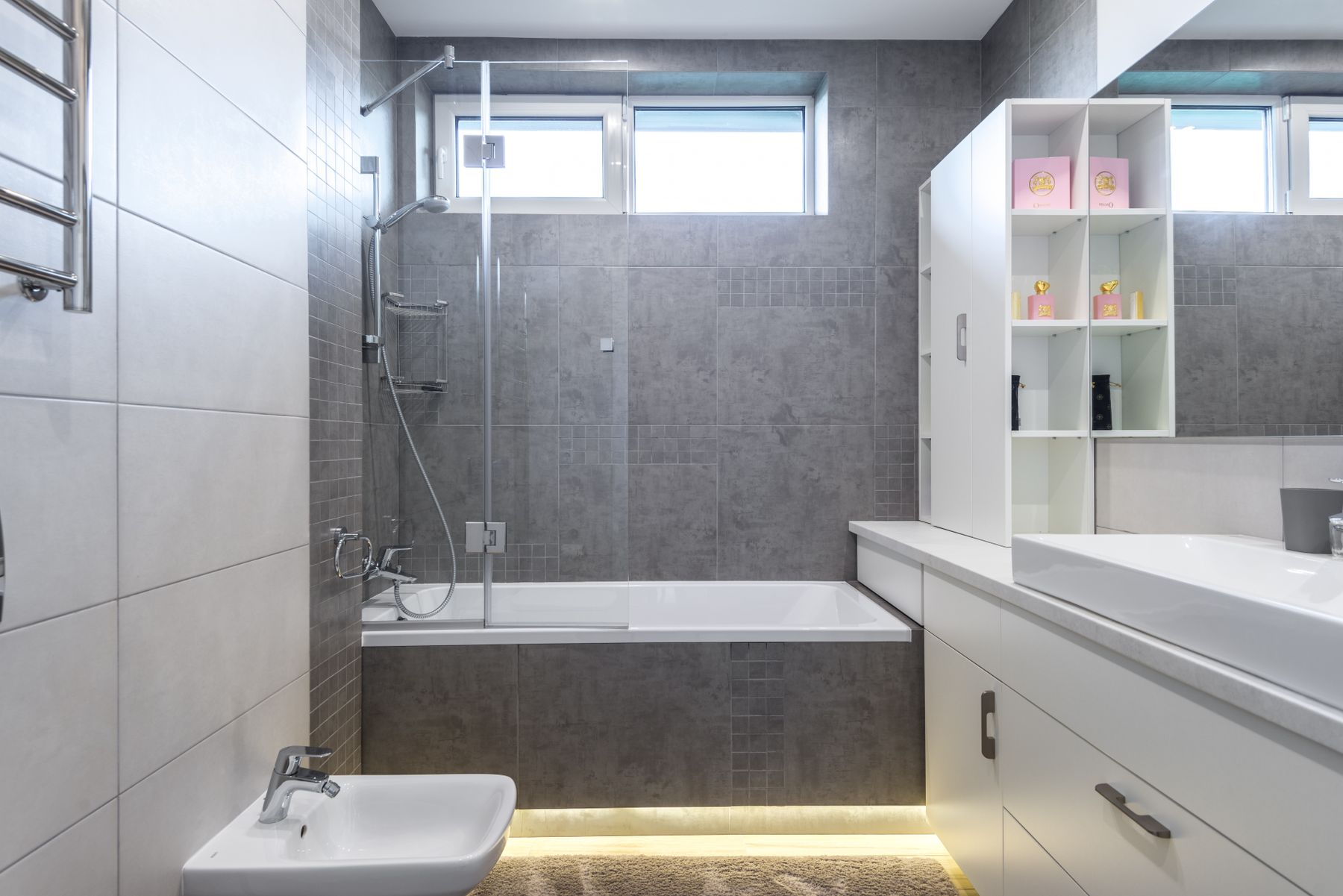
Contemporary rooms often contain several functions and materials, so repetition matters. Carry one tile family, cabinet tone or metal finish through the vanity, shower and bath to create visual rhythm. Repetition does not mean every finish must match; it gives the more expressive elements a stable structure.