Give the Cabinetry a Clear Architectural Shape
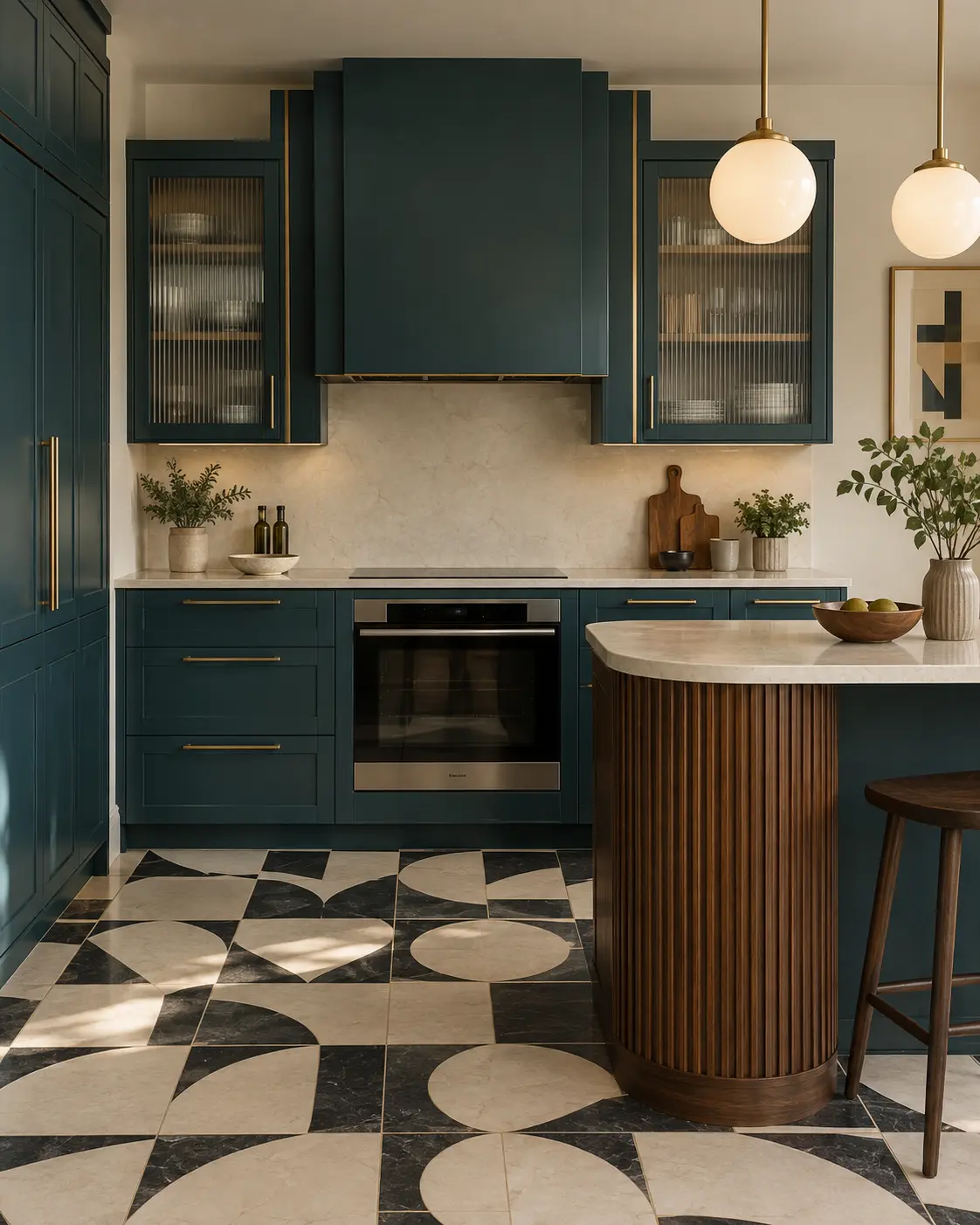
Start with the outline of the kitchen before selecting decorative handles. In the concept image, a taller central cooking-zone surround and lower side cabinets create a stepped silhouette, while the curved peninsula provides a contrasting form. You do not need both moves in one room. One shaped end panel, framed cooking area or carefully composed upper-cabinet run can be enough. Any real joinery, appliance clearance or structural alteration still needs to be resolved by the appropriate professional.
Choose Geometry at the Scale of the Room
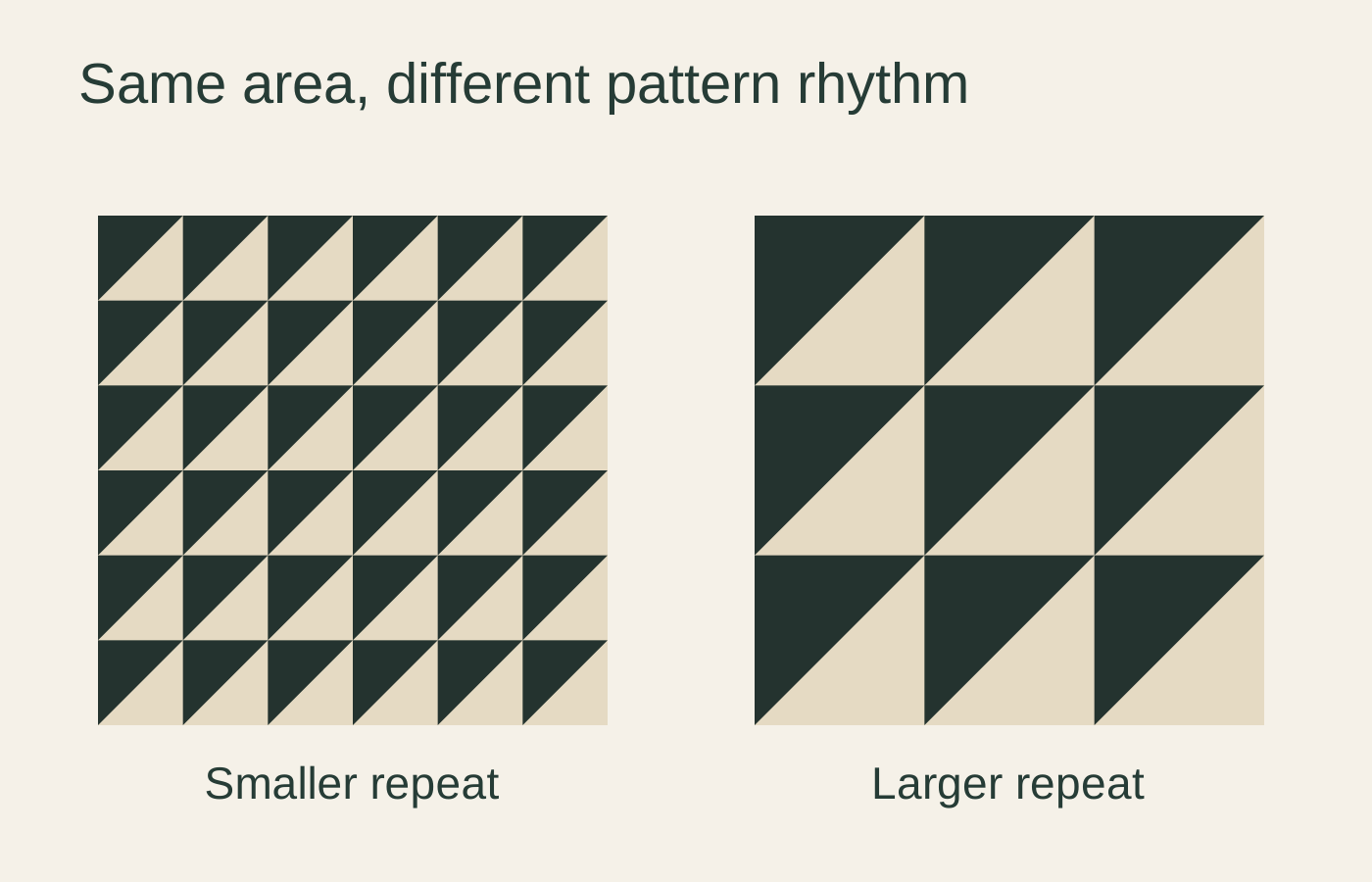
A geometric floor or backsplash can become the strongest pattern in the room, but scale matters more than the motif alone. A small repeat creates a dense rhythm, while a broader repeat produces fewer, larger shapes. Test the pattern through the doorway and around an island footprint rather than judging one sample tile. If the floor already carries strong geometry, let the cabinetry and splashback remain calmer.
Keep Warm Metal a Smaller Part of the Palette
Brass, bronze and other warm metals can sharpen the edge of rich cabinetry or connect a light fitting to hardware, but they are usually strongest in smaller doses. Choose the cabinet and stone first, then compare the metal beside both. A brushed finish can feel quieter and easier to live with than a mirror-polished surface, especially once fingerprints and reflected light enter the room.
Introduce Glass Without Turning Storage Into Display
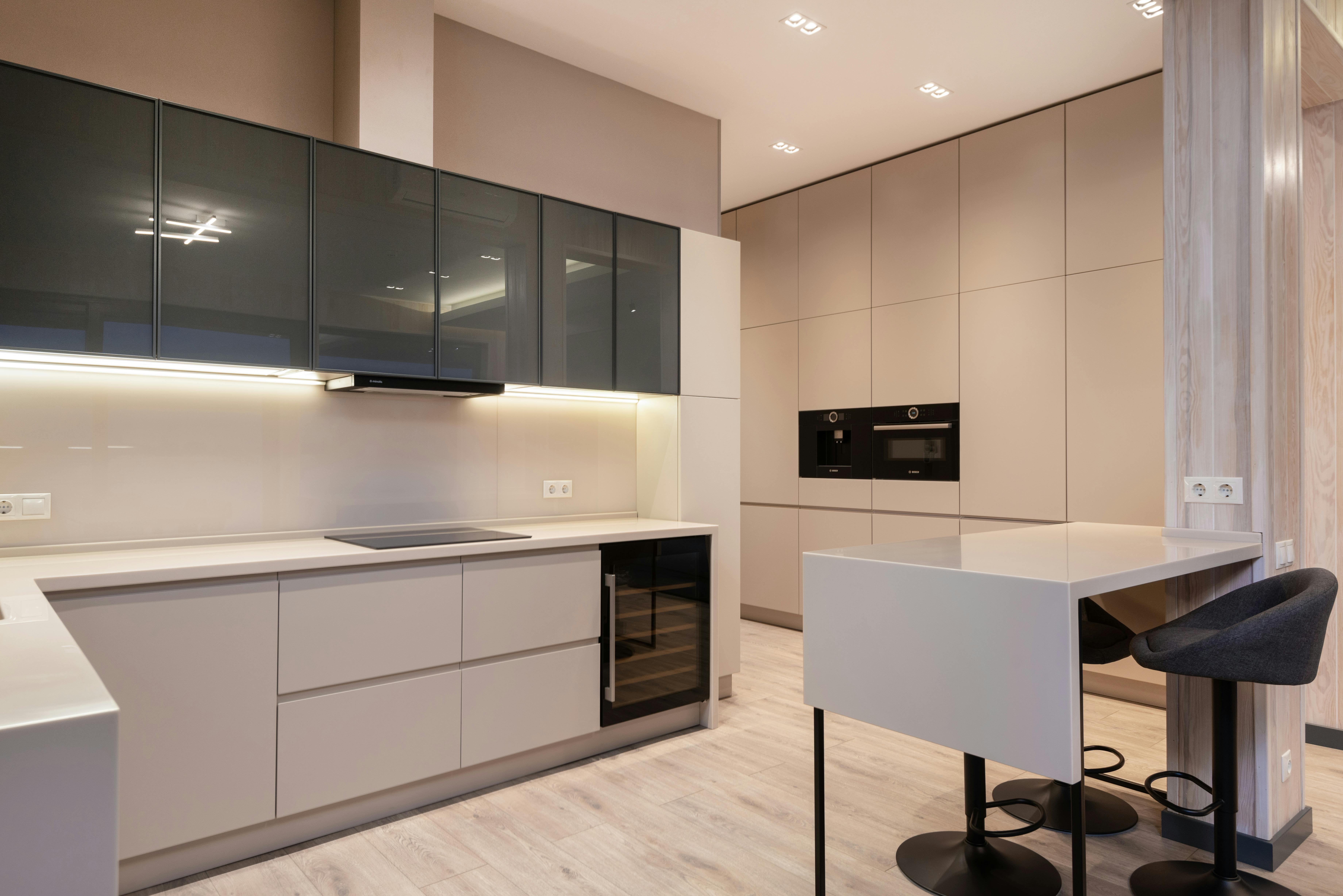
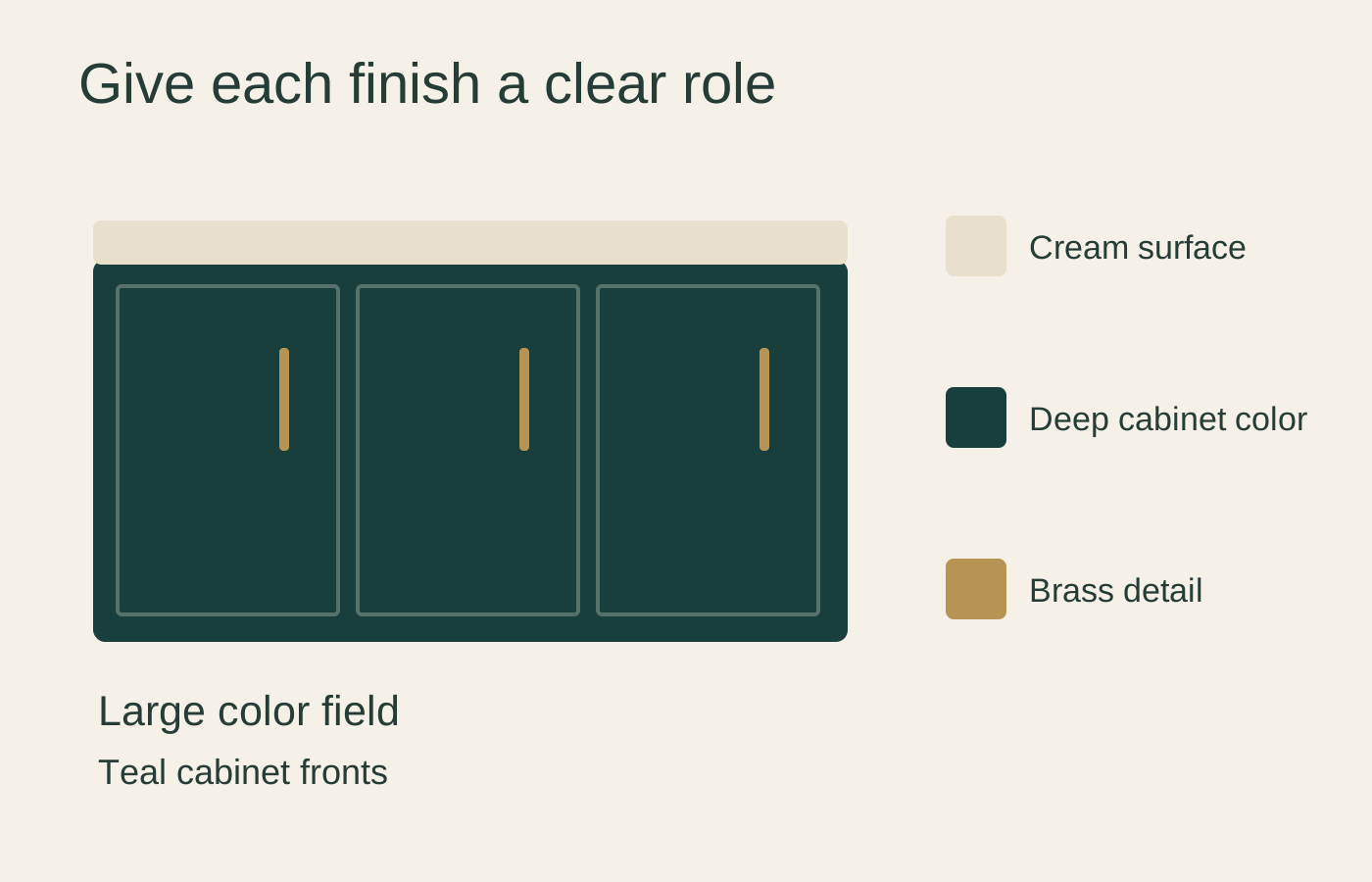
Glass changes the depth of an upper cabinet and can make a long elevation feel lighter. Clear glass works when the contents are controlled; reeded or textured glass is useful when you want light and reflection without sharply exposing every object. Decide what will live behind the door before choosing the glass. One glazed section is often more effective than converting an entire kitchen into display storage.
Use a Sculptural Light to Repeat the Geometry
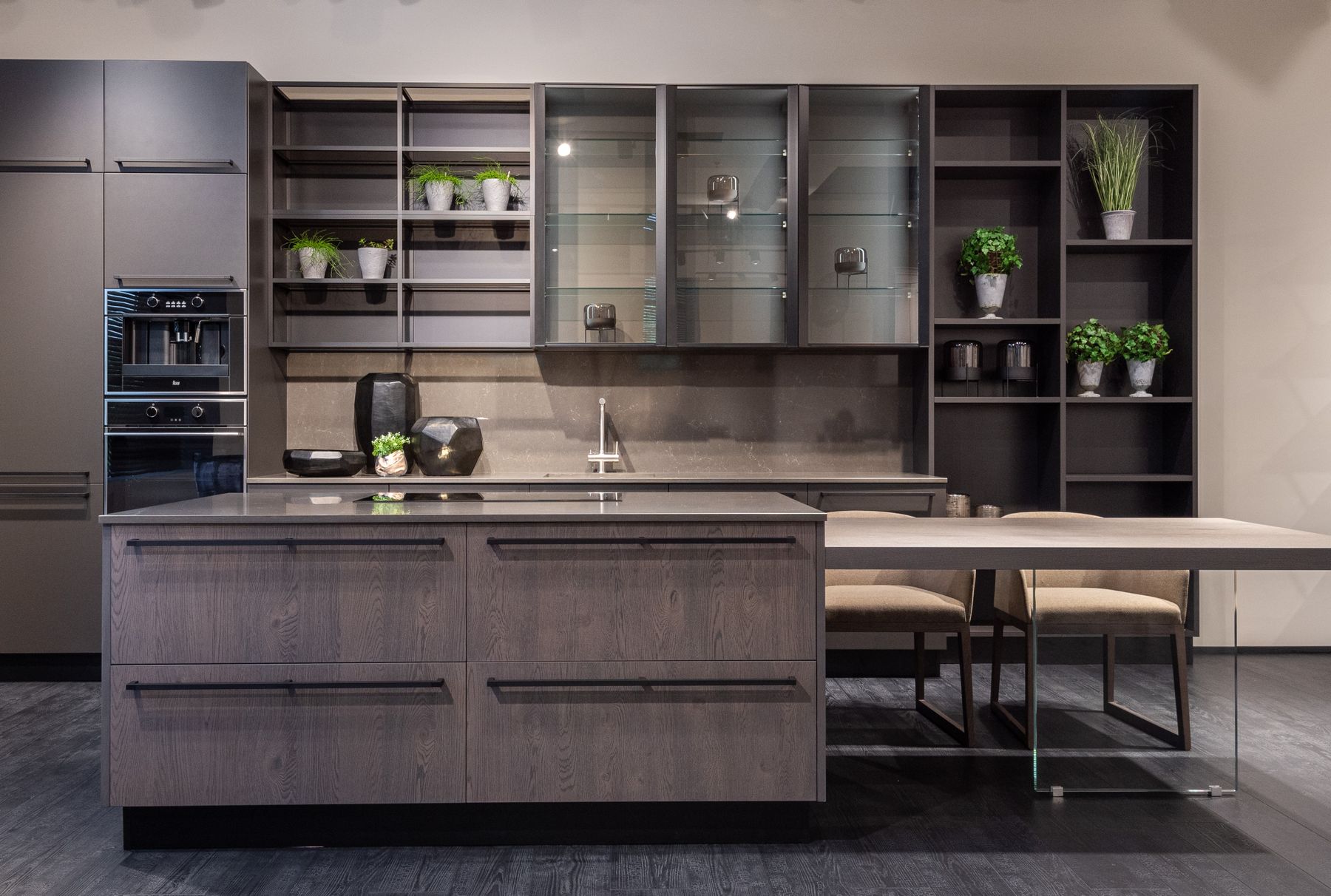
A branching fitting, globe cluster or compact stepped pendant can echo the room through repeated circles and lines. The fixture should relate to the table or peninsula beneath it and remain legible from the room entrance. If the floor is already strongly patterned, give the light a quieter background. Decorative lighting should complement rather than replace practical task light.
Use Rich Cabinet Color as an Architectural Surface
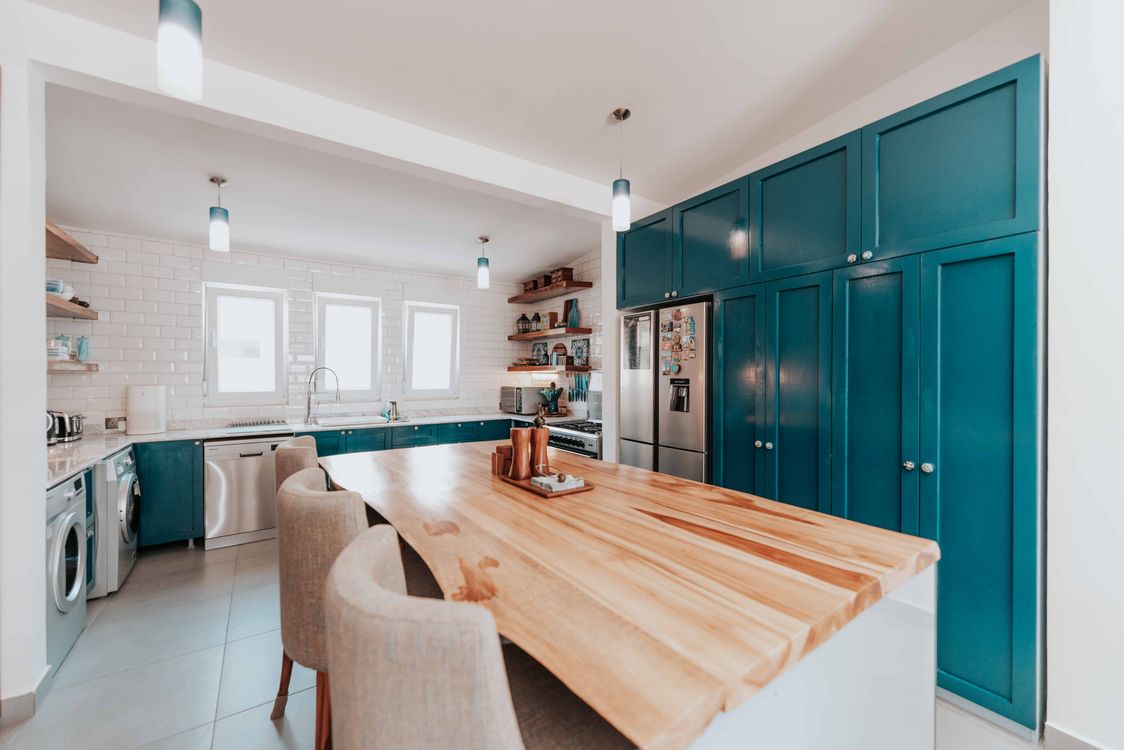
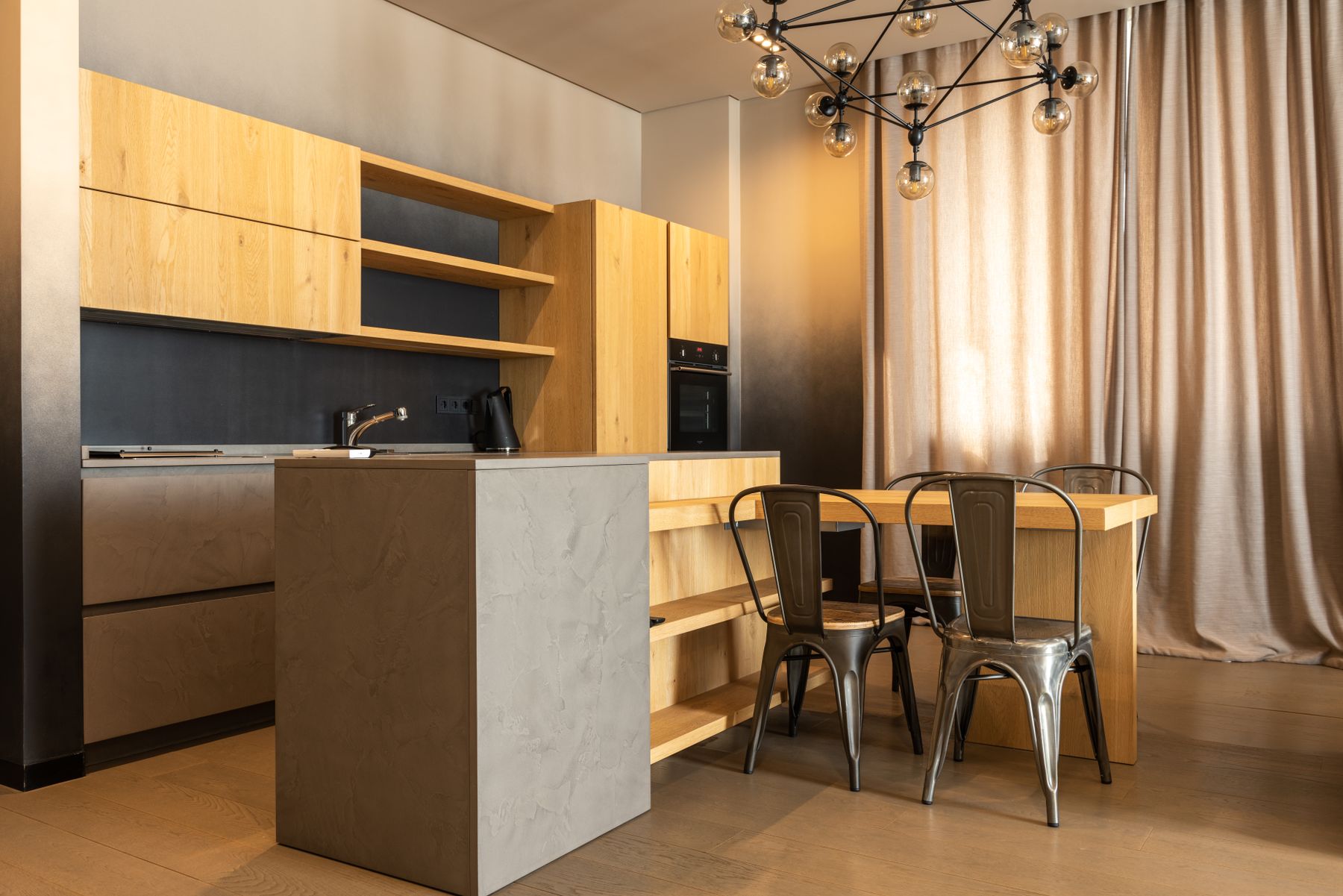
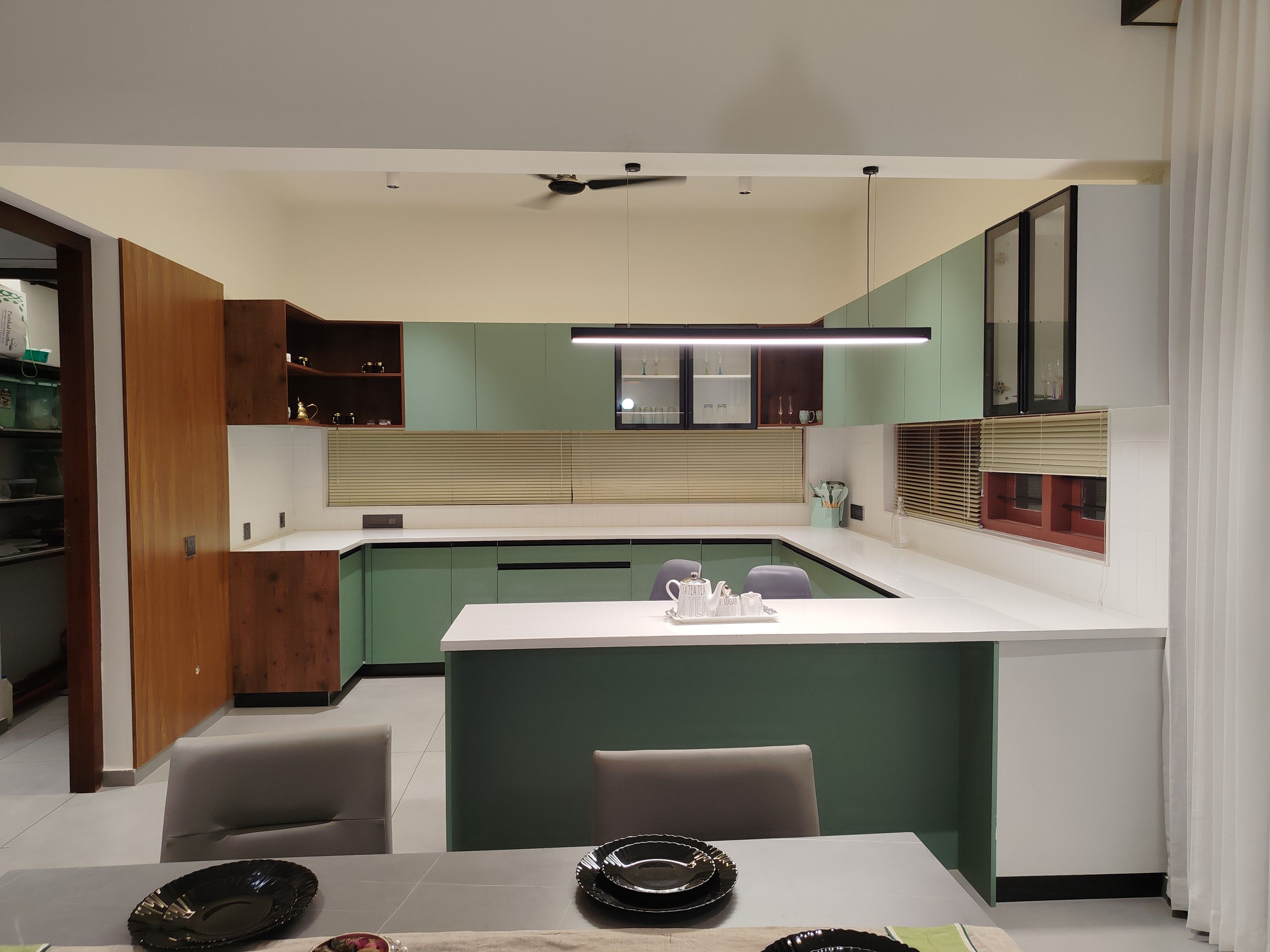
Deep teal, bottle green, charcoal blue and oxblood can give Art Deco-inspired cabinetry the visual weight usually associated with darker timber. The strongest result comes when color covers one coherent cabinet field rather than appearing as scattered accents. Pale stone and controlled metal details can then sharpen the edges without competing with the cabinetry.

Use Fluting or Reeding on One Meaningful Surface
Vertical fluting, reeded glass or ribbed joinery can introduce rhythm without relying on printed pattern. Use it where the detail can be appreciated at furniture scale: the face of a peninsula, a glazed cabinet or one end panel. Repeating ribbed texture across every cabinet can become visually restless and harder to clean. One substantial surface usually carries the idea more convincingly.
Use Pale Stone to Keep Rich Color Crisp
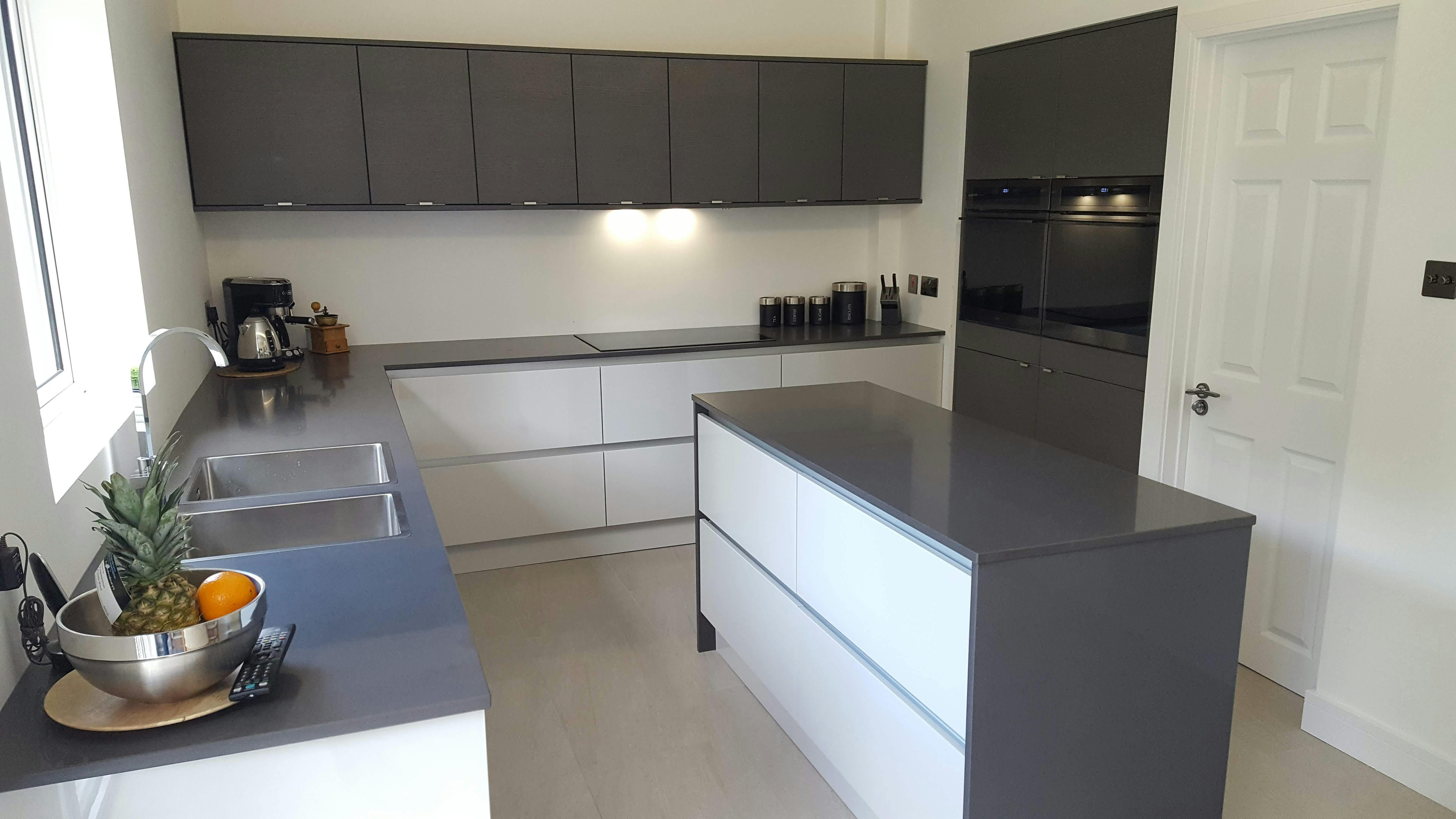
Pale marble, quartzite or a quieter engineered surface can give saturated cabinetry the contrast it needs to remain sharp. A light horizontal worktop also separates metal hardware and cabinet profiles from darker fronts. The stone does not need dramatic veining if the cabinetry and floor already carry strong geometry.

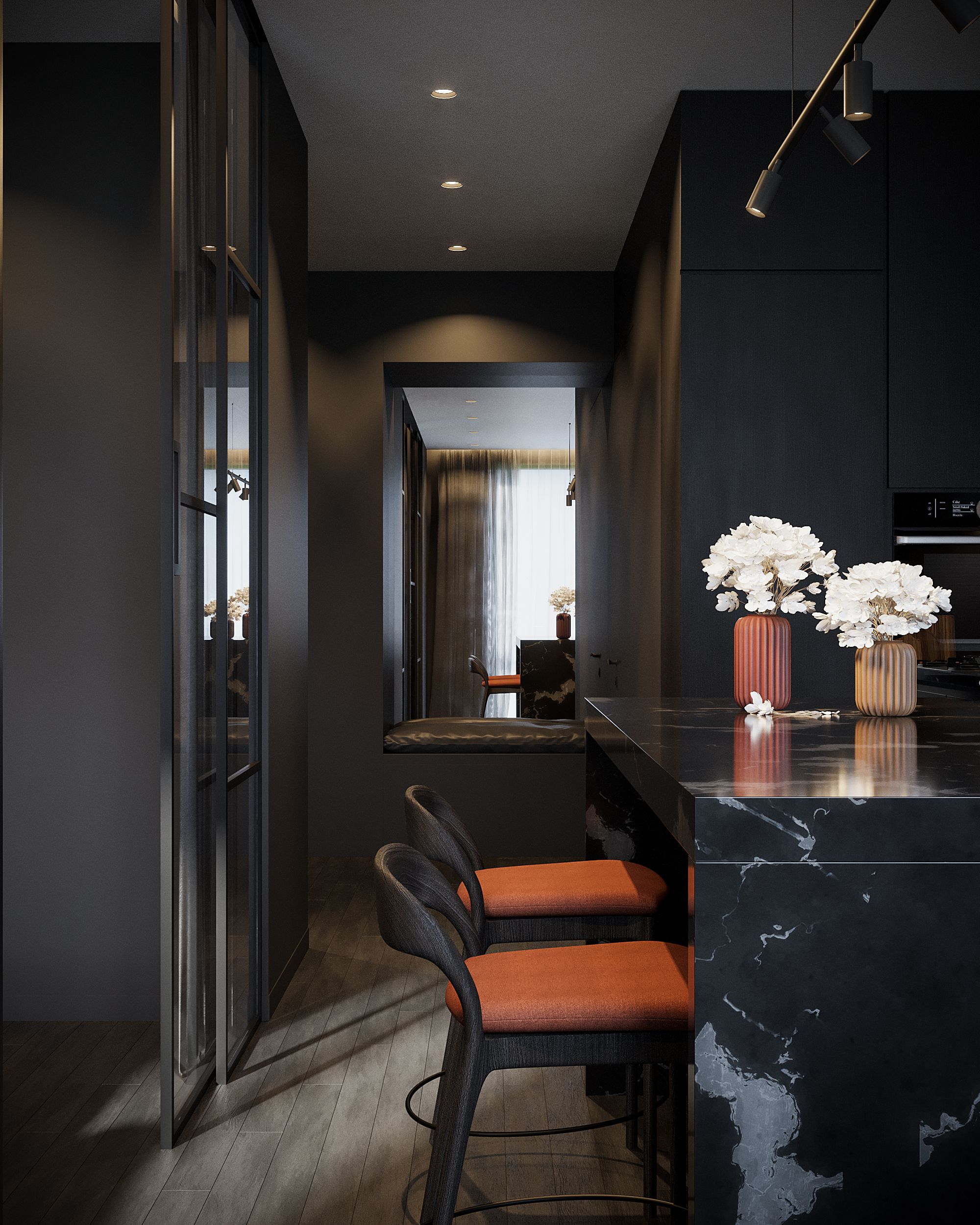
Let Veined Stone Supply Movement
When cabinetry and geometry are restrained, veined stone can become the room's expressive material. A black or strongly patterned slab introduces movement without adding another decorative motif. Use it selectively on an island, splashback or short worktop run and view the full slab before committing; the direction and density of veining can change the composition completely.
Protect One Quiet Plane
An Art Deco-inspired kitchen may contain geometry, rich color, glass, metal and stone, so it needs at least one large surface that does not compete. A plain wall, simple cabinet run or mostly clear worktop gives the stronger elements enough contrast to be appreciated. Restraint is what keeps polished detail from turning into visual noise.