Introduce a Pointed Arch in One Deliberate Place
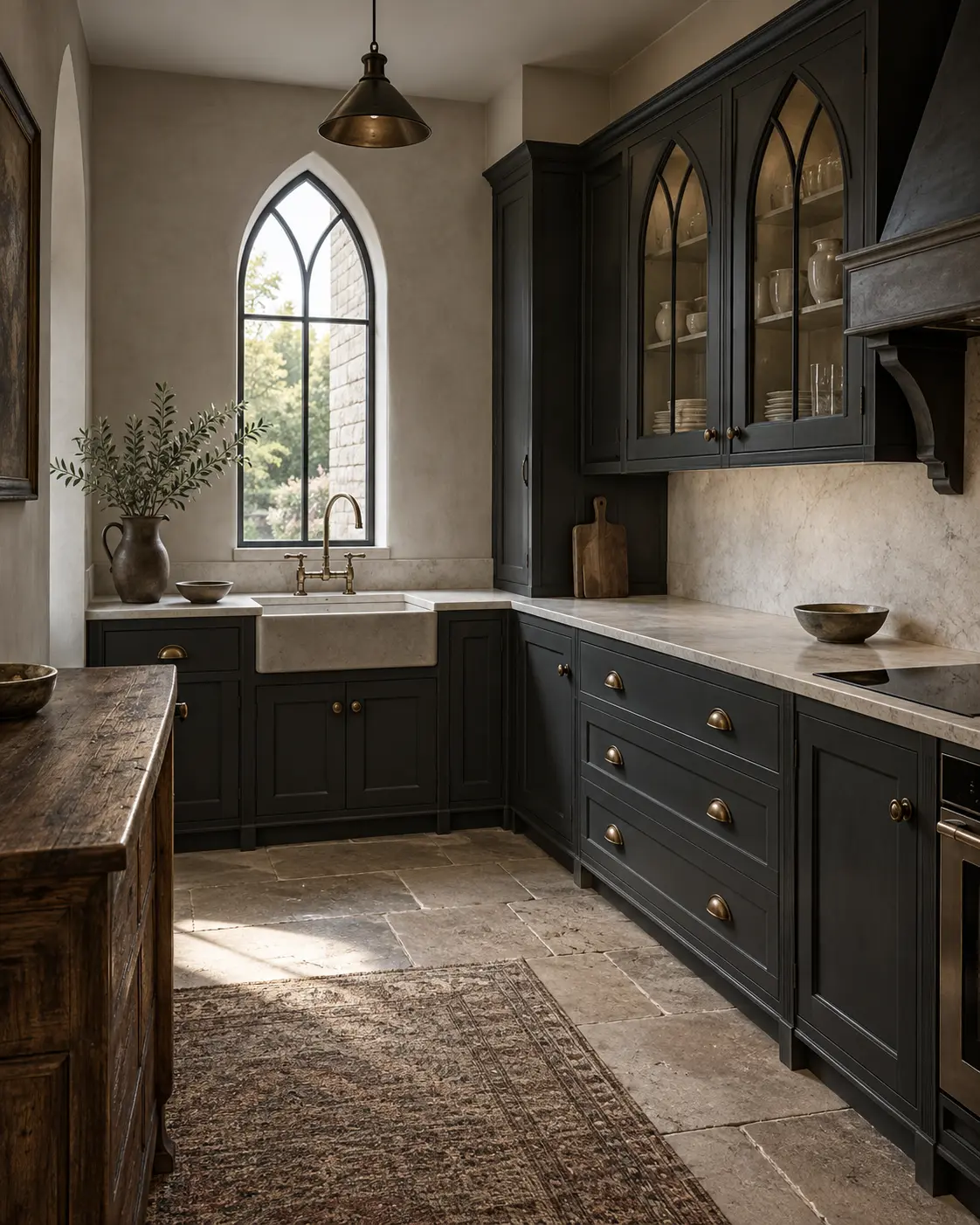
A pointed arch can introduce the strongest Gothic reference without requiring every cabinet and object to become decorative. The concept image places the motif in upper cupboard glazing and the window. In a real kitchen, a furniture-scale detail may be the more achievable route: a glazed cabinet, freestanding cupboard or selected panel treatment. Keep the surrounding fronts simpler so the shape remains readable. Structural openings should only be altered with appropriate professional advice; the transferable idea here is the relationship between one pointed form and a quieter background.
Build Depth With More Than One Dark Finish
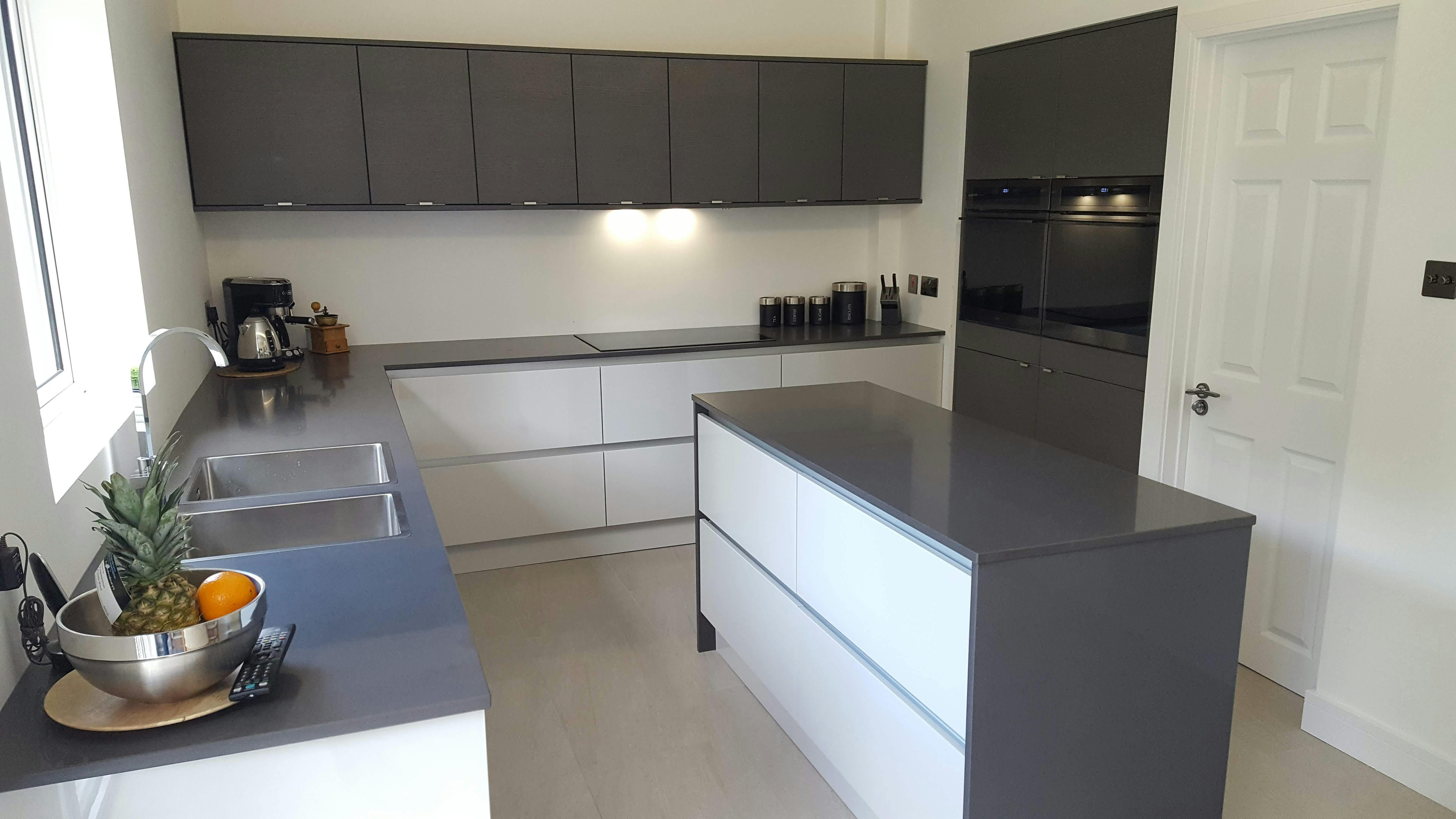
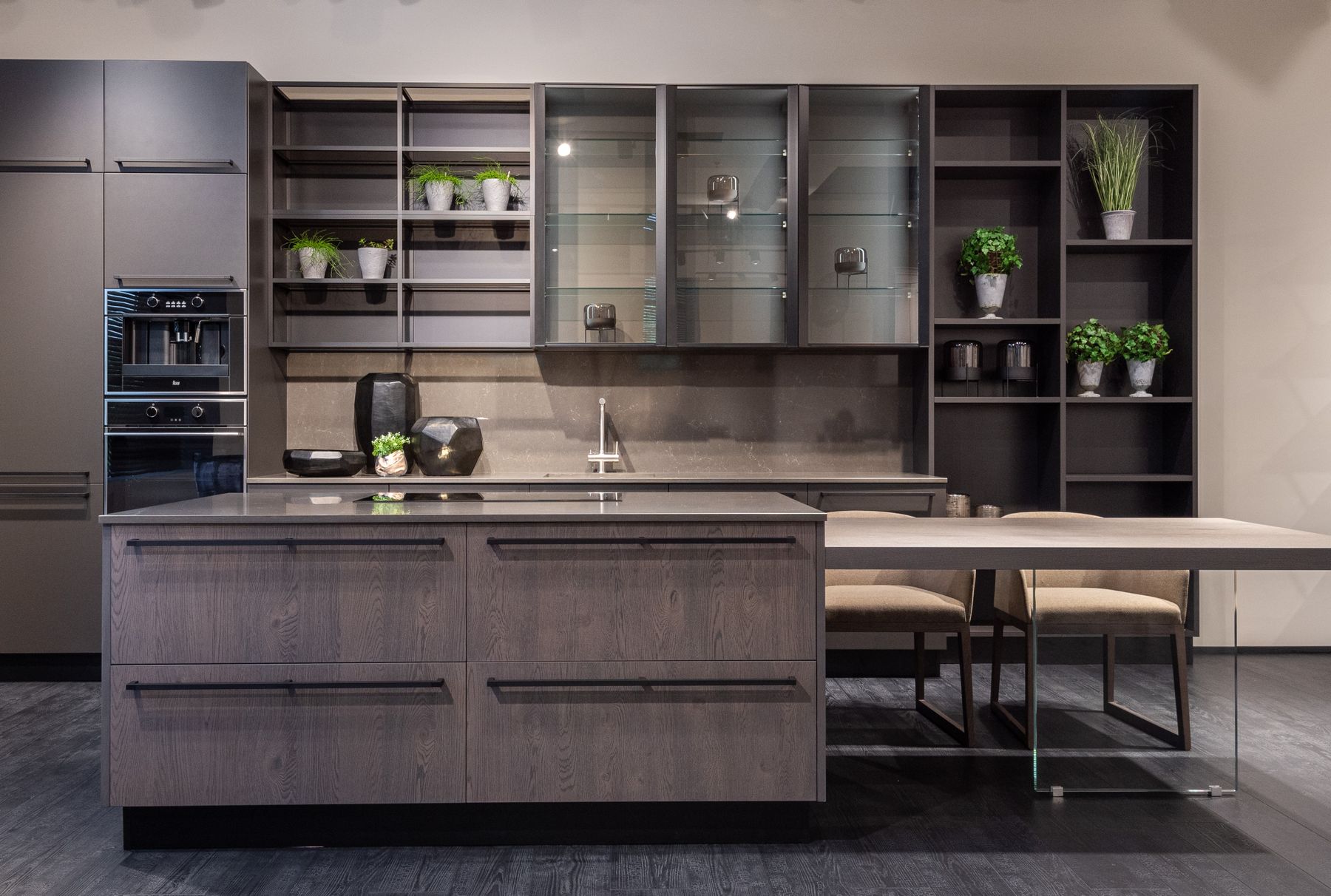
A dark scheme becomes more convincing when the surfaces do not all reflect light in the same way. Matte paint, visible wood grain, glass and metal can create distinct layers while staying inside a restrained palette. If every black or charcoal surface has the same finish, cabinet edges can disappear and the room may feel flat. Test the largest dark materials after sunset as well as in daylight and use lighter neighboring surfaces or task light where necessary to preserve depth.
Use Carved Furniture as a Focus
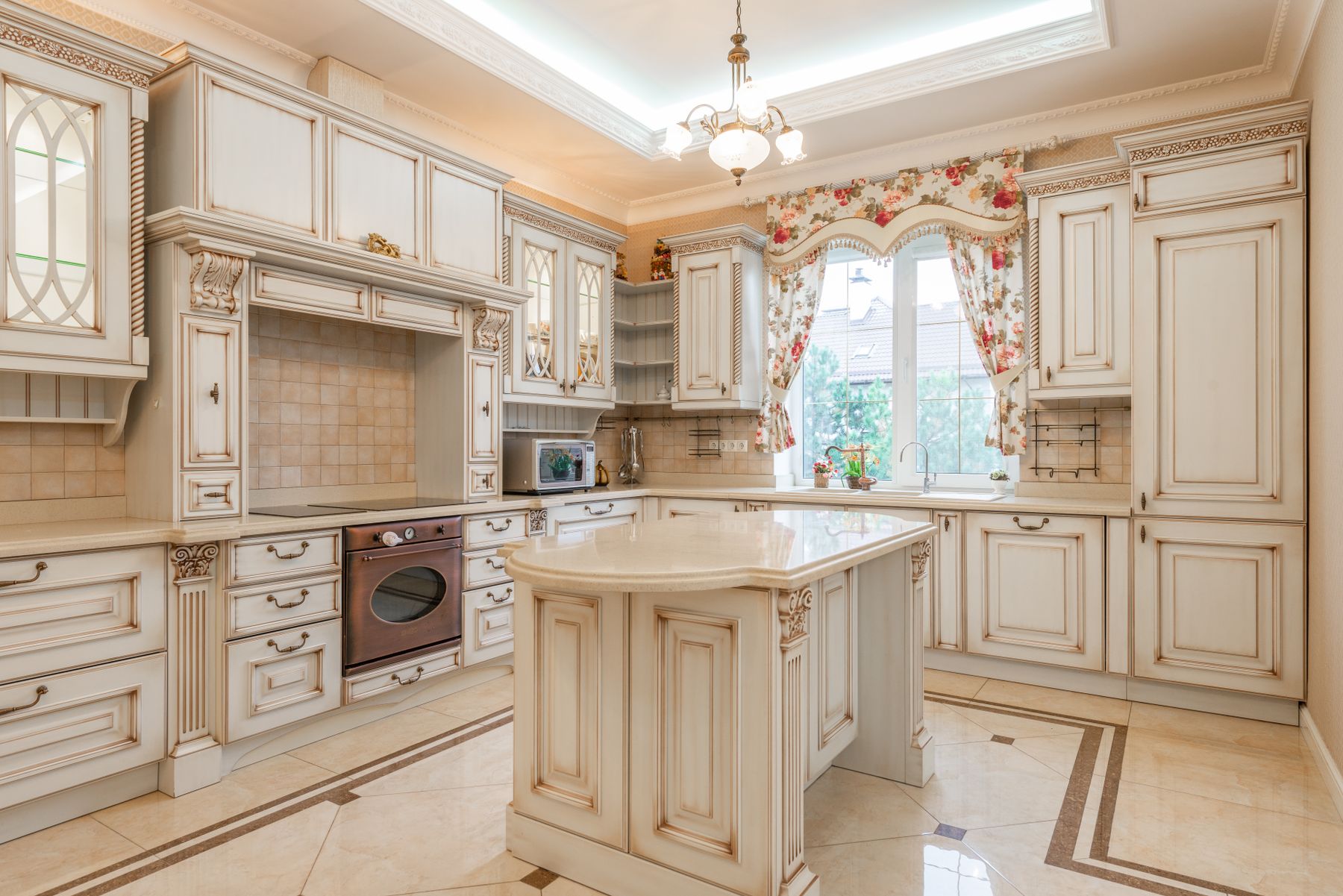
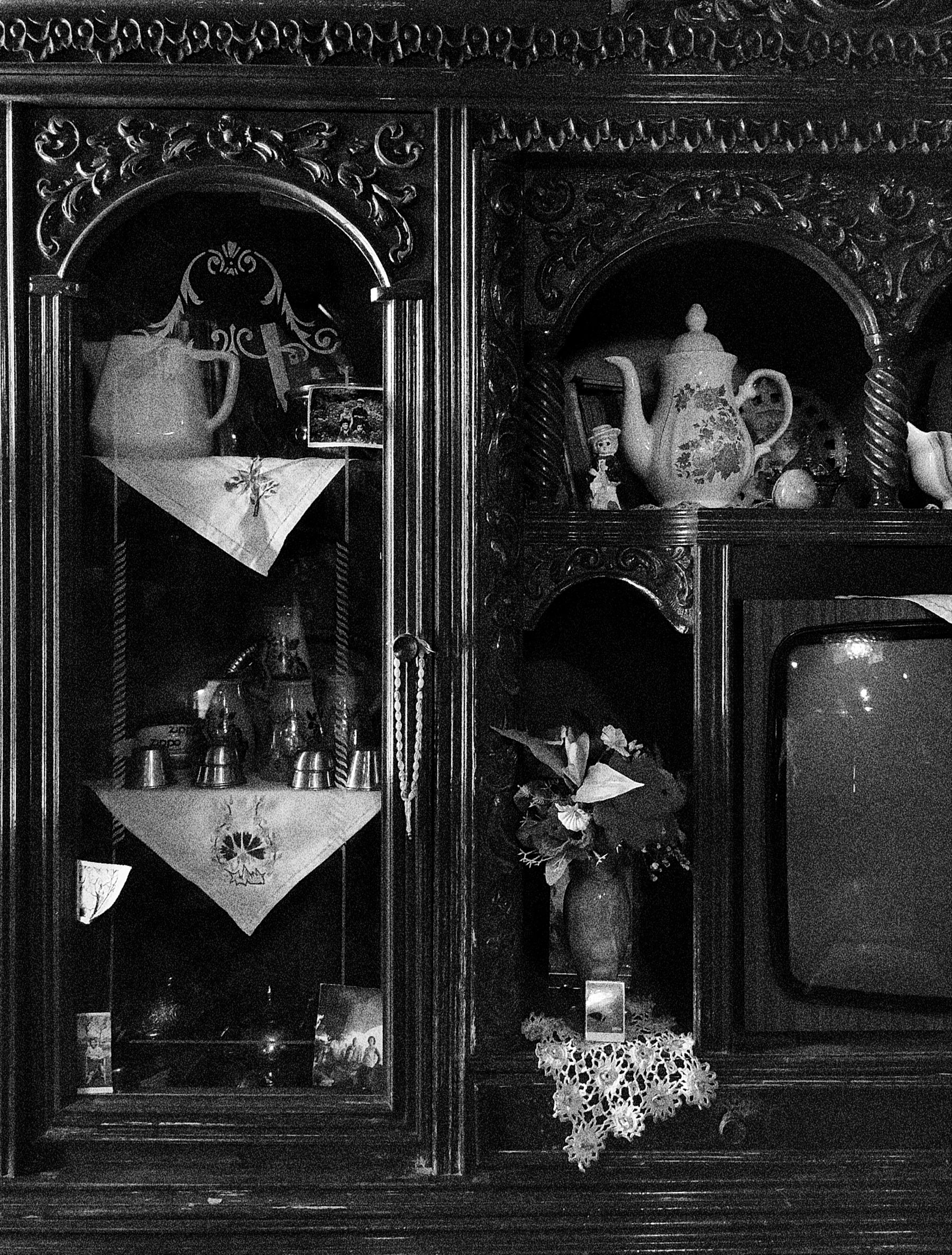
One elaborate cabinet can supply enough decorative detail for an otherwise restrained kitchen or dining area. Carved frames, shaped openings and deeper profiles create shadow and vertical emphasis without forcing fitted cabinetry to imitate antique furniture. Place the piece where it can serve a real storage role and stay clear of the busiest splash zone. If the cupboard is already expressive, keep the objects inside and neighboring furniture quieter.
Balance Heavy Texture With a Clear Working Surface
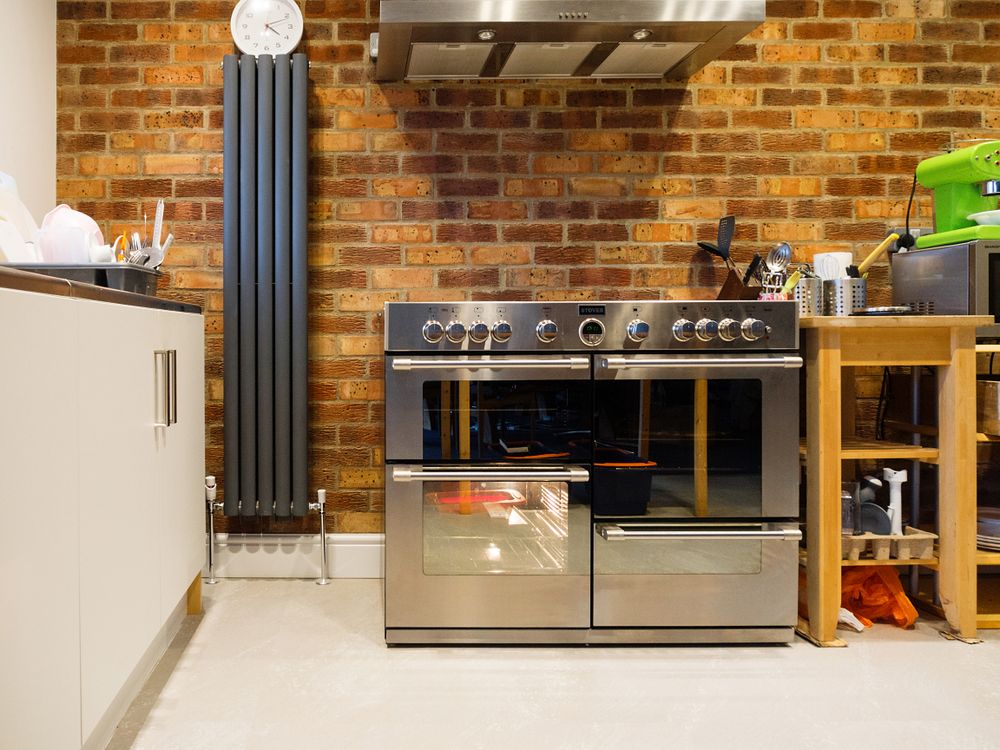
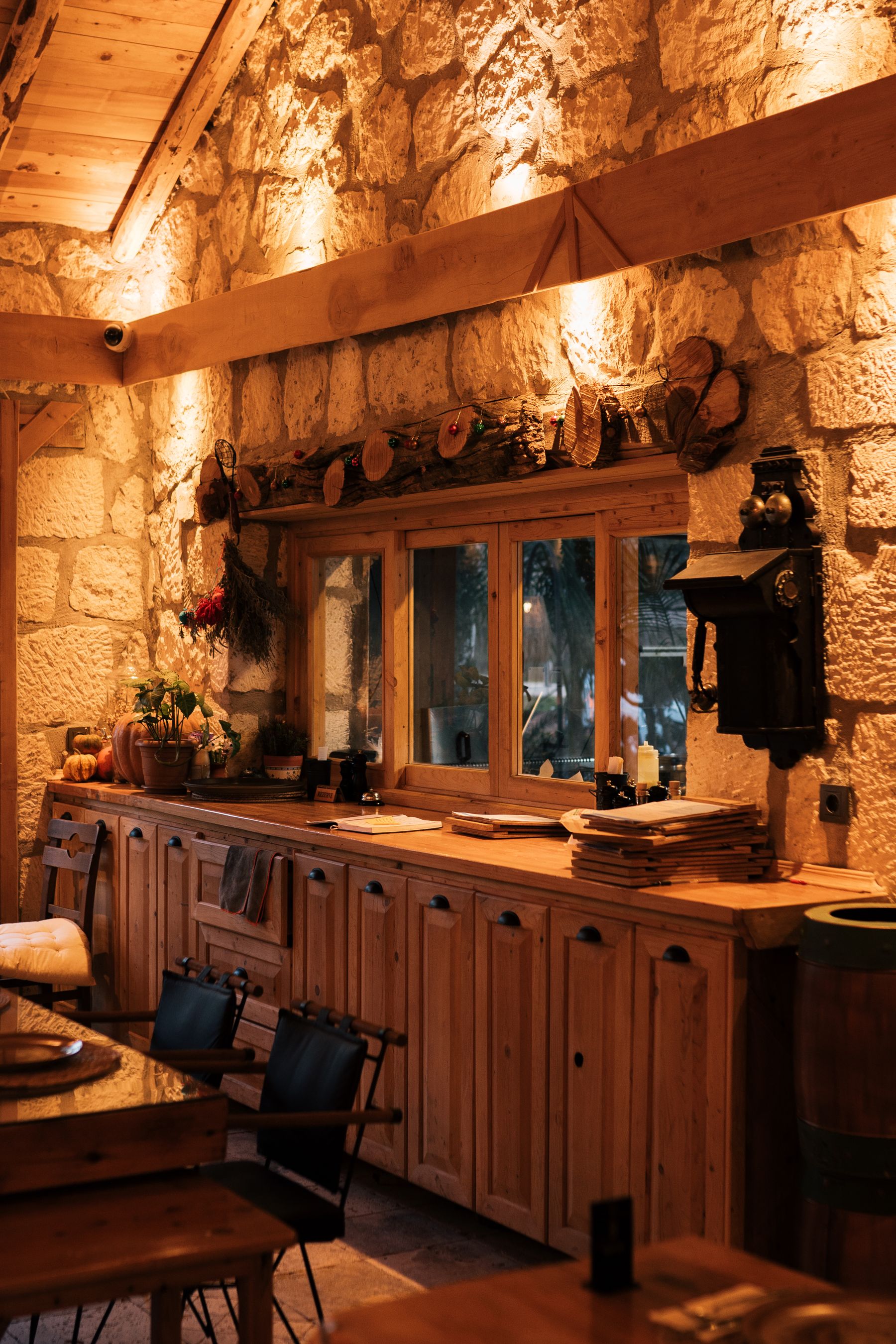
Stone walls, dark timber and pronounced texture can give a Gothic-inspired kitchen material presence, but roughness should not spread across every working surface. Keep preparation, washing and cooking zones smooth enough to clean easily, then allow one substantial textured wall, beam or furniture piece to provide atmosphere. A clear worktop also gives the heavier materials around it more visual space.
Choose Metal Lighting With a Legible Shape
Metal lighting can reinforce the mood through silhouette rather than excessive ornament. Dark iron, blackened metal or aged-looking brass can work when the fixture has a clear shape and the scale suits the island or table beneath it. A decorative pendant should not be expected to provide all the illumination the kitchen needs; worktops and sinks still require useful task lighting.
Keep the Atmosphere Bright Enough to Use
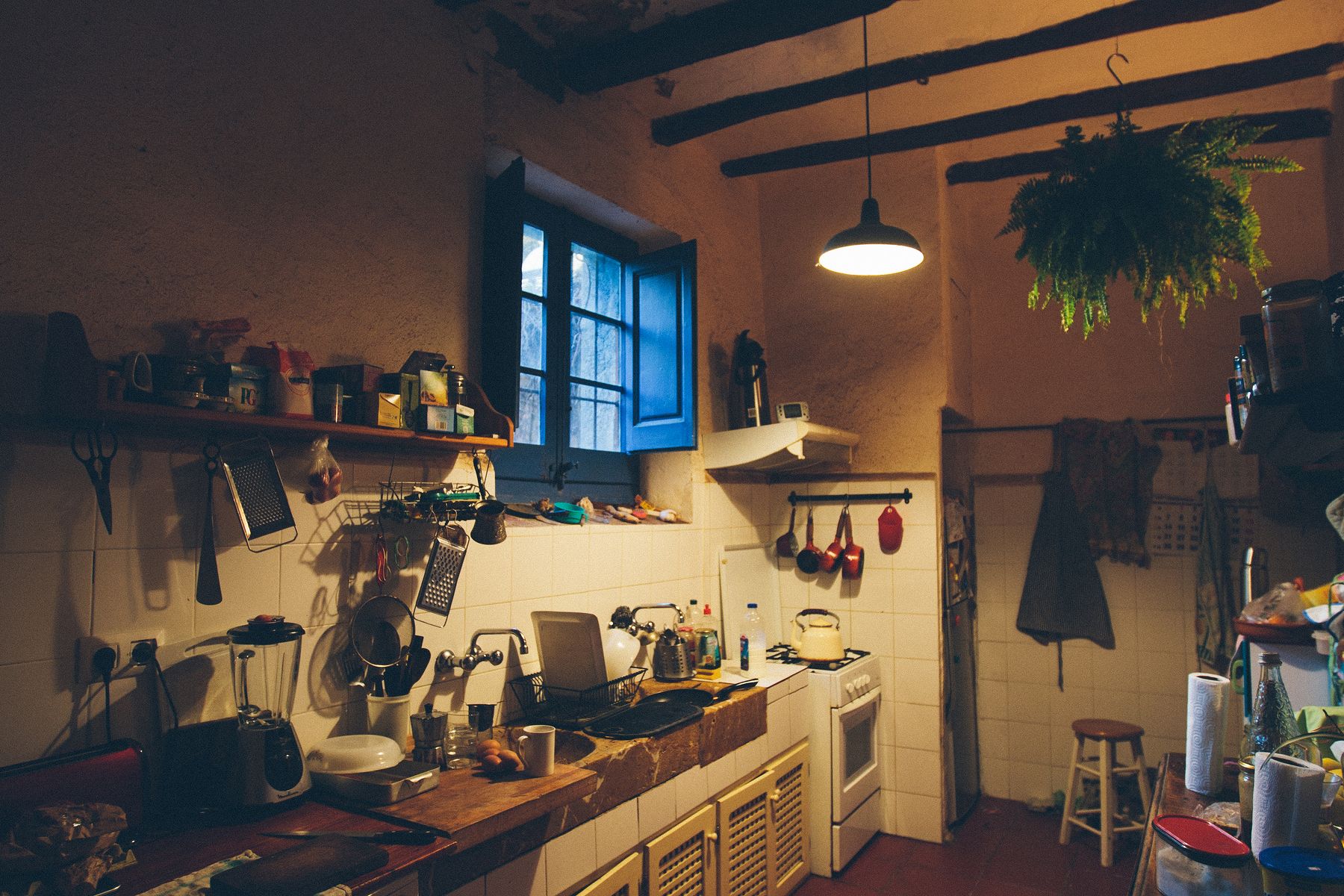
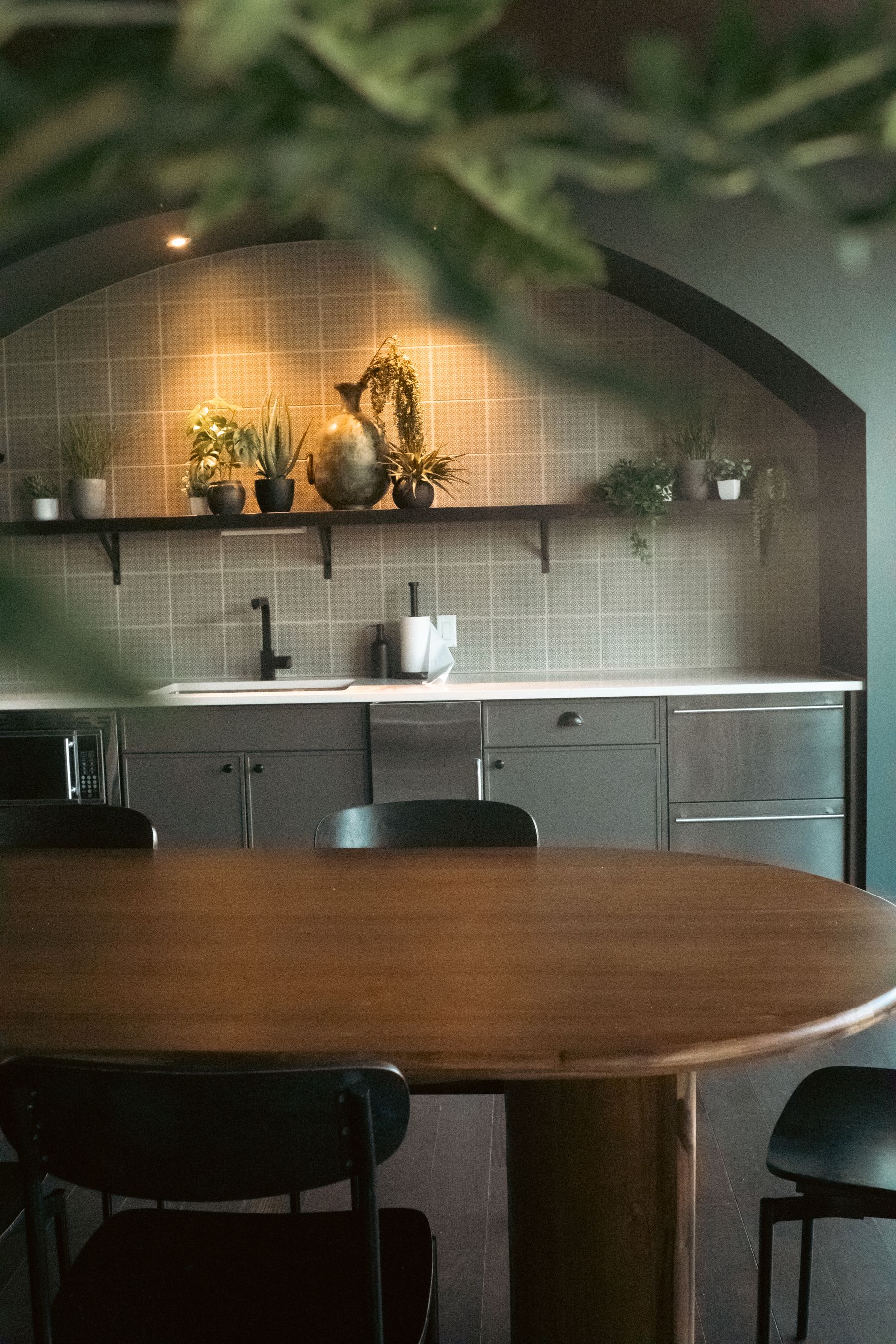
A dramatic kitchen should still reveal the materials you chose. Layer ambient light with focused task light so a dark backsplash, cabinet profile or textured niche remains visible after sunset. Decorative shadows can add atmosphere, but preparation surfaces should never disappear into them. Review the room at the time of day you normally cook, not only under ideal daylight.

Use Pale Stone to Sharpen Dark Cabinetry
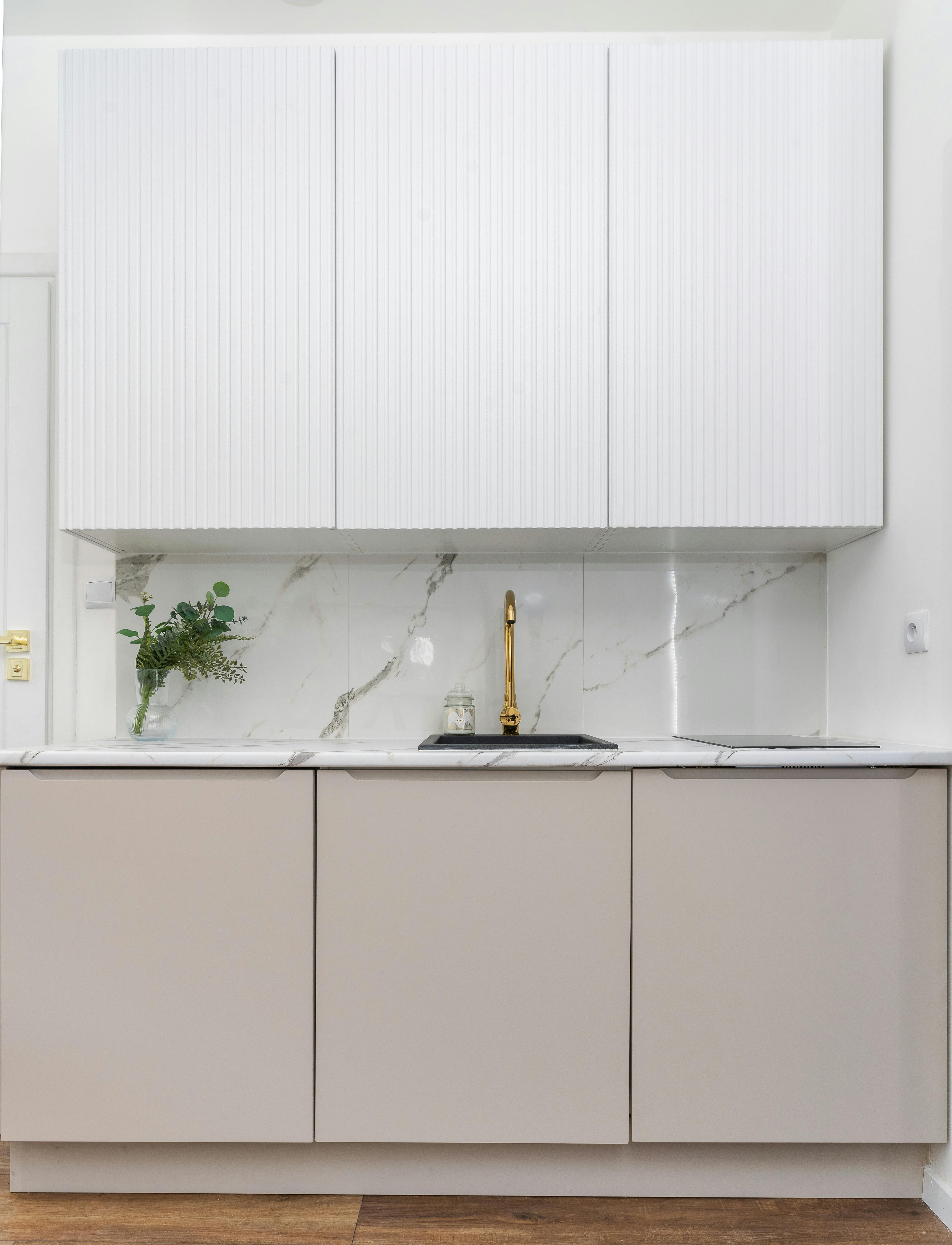
Pale stone can give dark Gothic-inspired cabinetry the visual relief it needs. A light marble, quartzite or softly veined surface creates a bright horizontal plane while the cabinetry keeps its dramatic weight. The contrast is especially useful when the doors are deeply colored or heavily detailed, because the worktop separates those forms from the rest of the room rather than letting everything merge into one dark mass.
Warm the Scheme With Dark Wood
Dark wood can create richness that flat black paint cannot. Walnut-toned cabinetry, stained oak or a substantial timber table introduces grain and warmth while staying inside a deep palette. It also gives carved or paneled details more depth because the surface changes as light moves across the grain. Use timber on one substantial element rather than scattering many small wooden accessories throughout the kitchen.
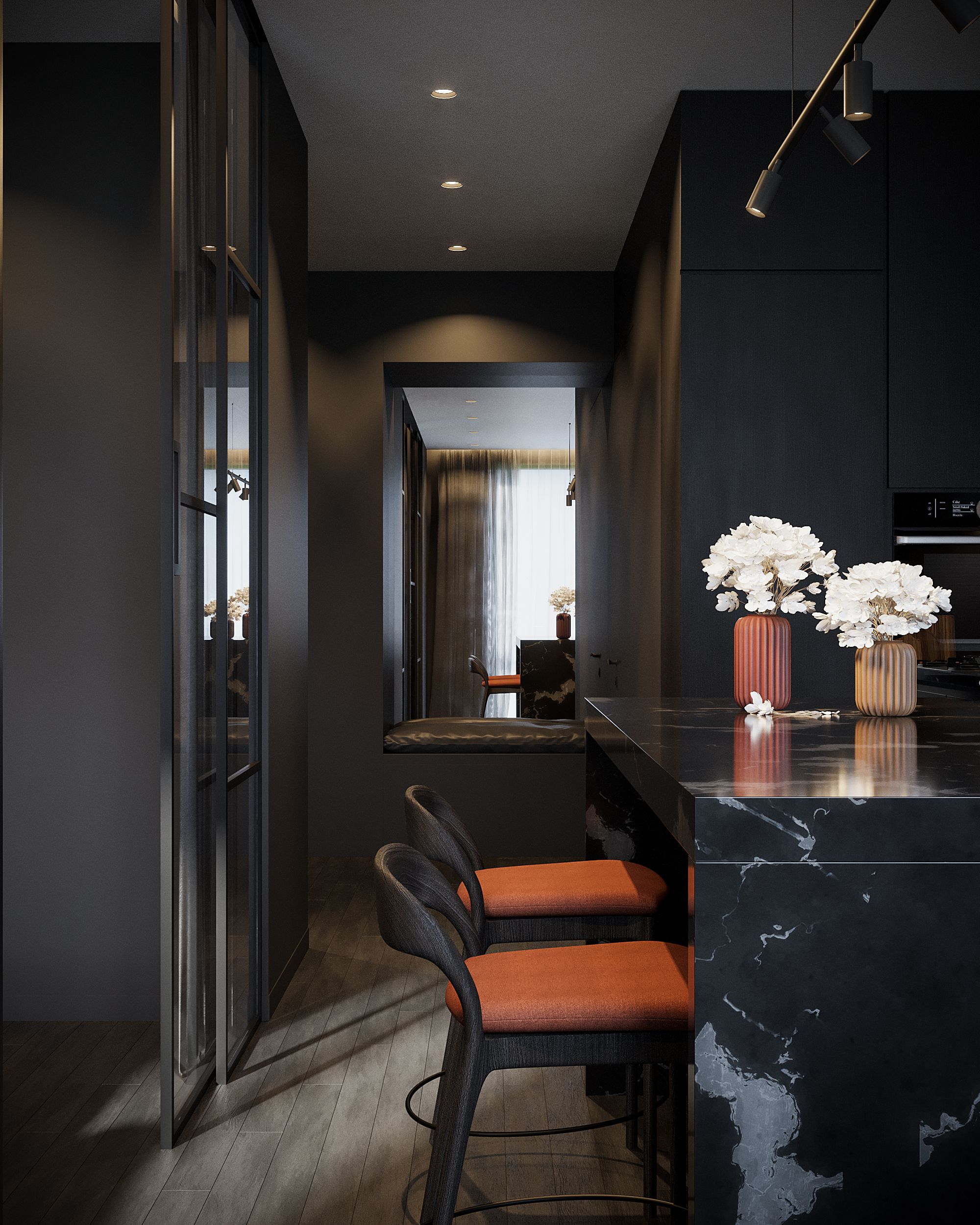
Let Veined Stone Add Movement
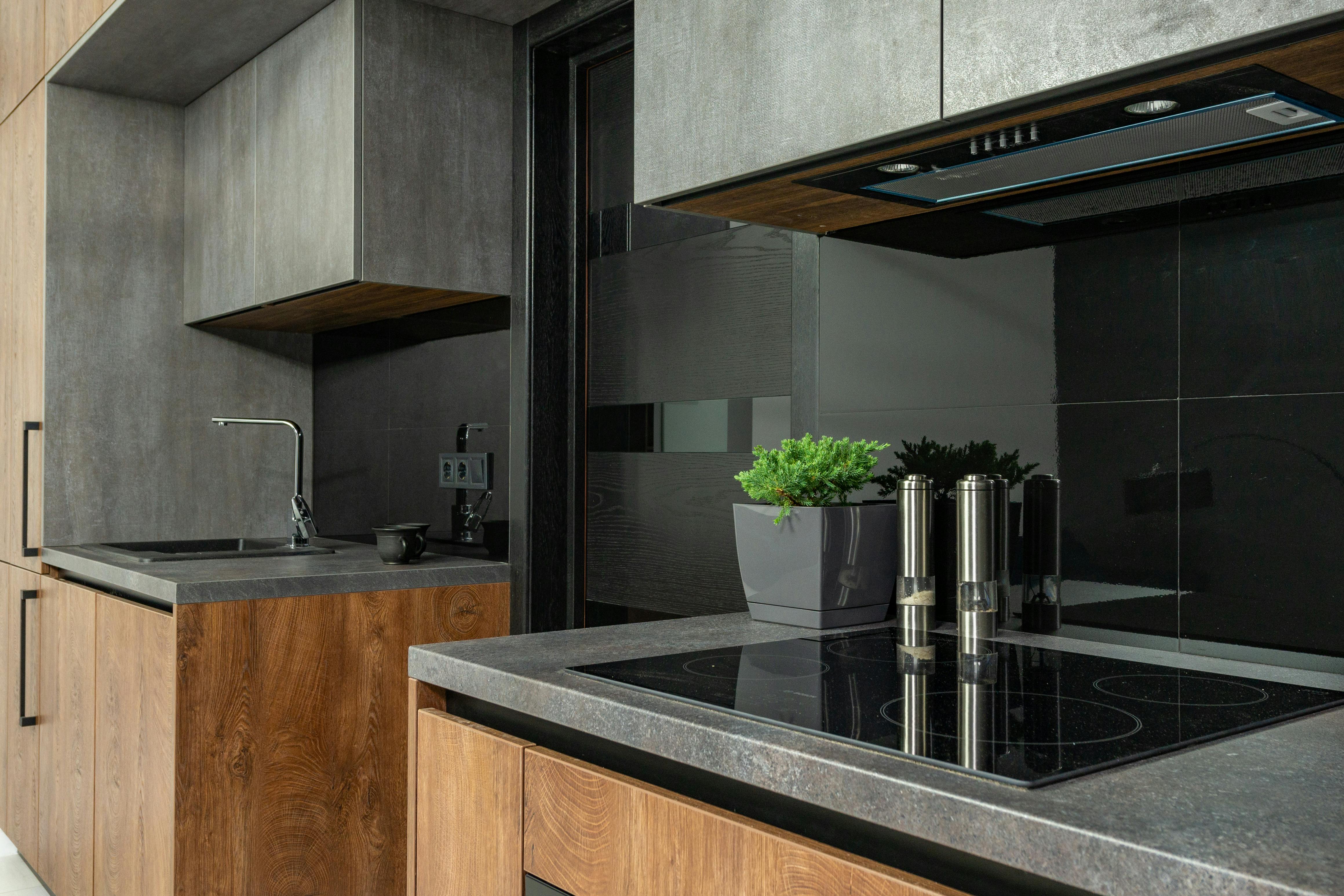
A dark palette can become static when every surface is flat and uniform. Black marble, soapstone or another strongly veined stone introduces movement while keeping the color family restrained. The pattern can make an island, splashback or worktop feel more architectural without adding another decorative motif. Use it selectively so the veining remains a focal material rather than competing with carved cabinetry and metalwork.
Keep Metal Details Deliberate
Handles, faucets, hinges and small metal details can support the Gothic direction through weight, finish and repetition, but they do not all need to be ornate. Blackened metal can disappear into dark cabinetry, while aged brass or bronze can become a warmer highlight. Choose one dominant metal family and decide whether it should recede or be noticed. Too many decorative finishes can make the room feel costume-like rather than architectural.