Start With Proportion Before Specification
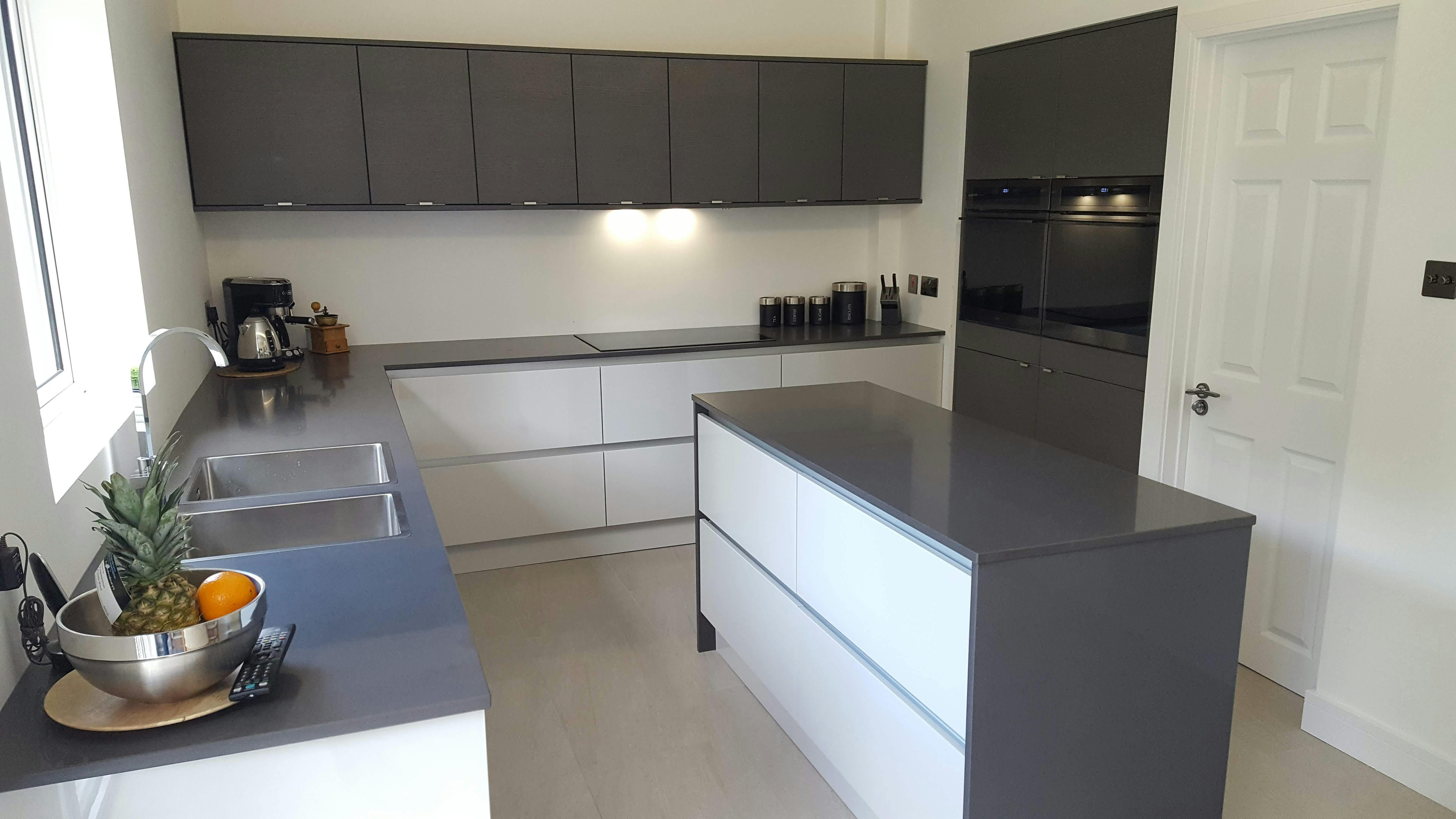
A luxury kitchen should make sense before the stone, appliances or lighting are specified. Long cabinet runs, tall units, island dimensions and the amount of visible wall all affect whether the room feels composed. Resolve the major volumes first and avoid oversizing the island simply because the floor area allows it. Good proportion creates the quiet confidence that expensive finishes alone cannot.
Let One Stone Surface Carry the Drama
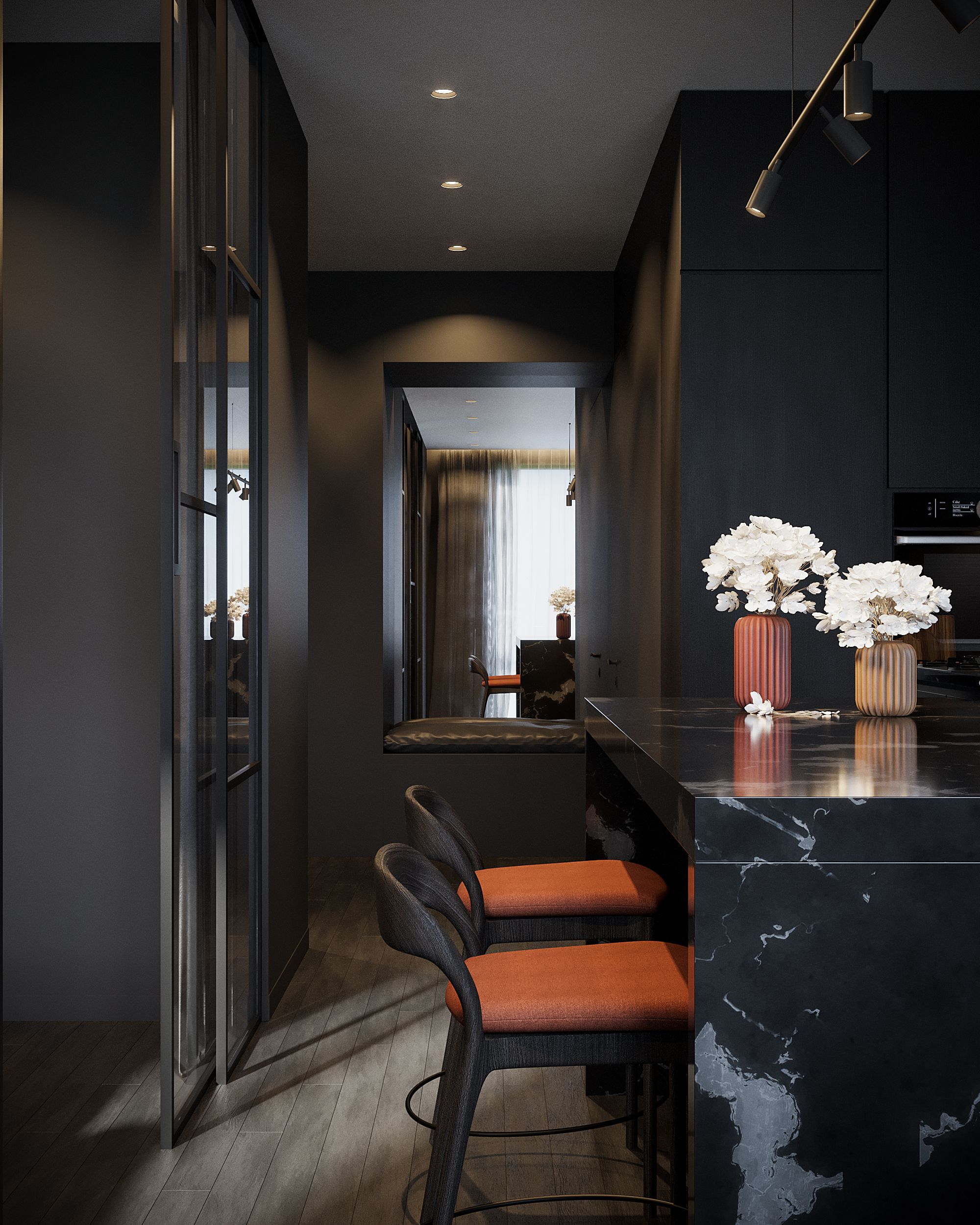
A strongly veined marble, quartzite or other expressive stone can make an island or splashback feel architectural, but it rarely needs to cover every surface. Choose where the stone should have the greatest impact and keep surrounding worktops or cabinetry quieter. With natural slabs, the exact veining matters as much as the material name, so slab selection and fabrication layout deserve attention.
Treat Cabinet Finish as a Large Material Field
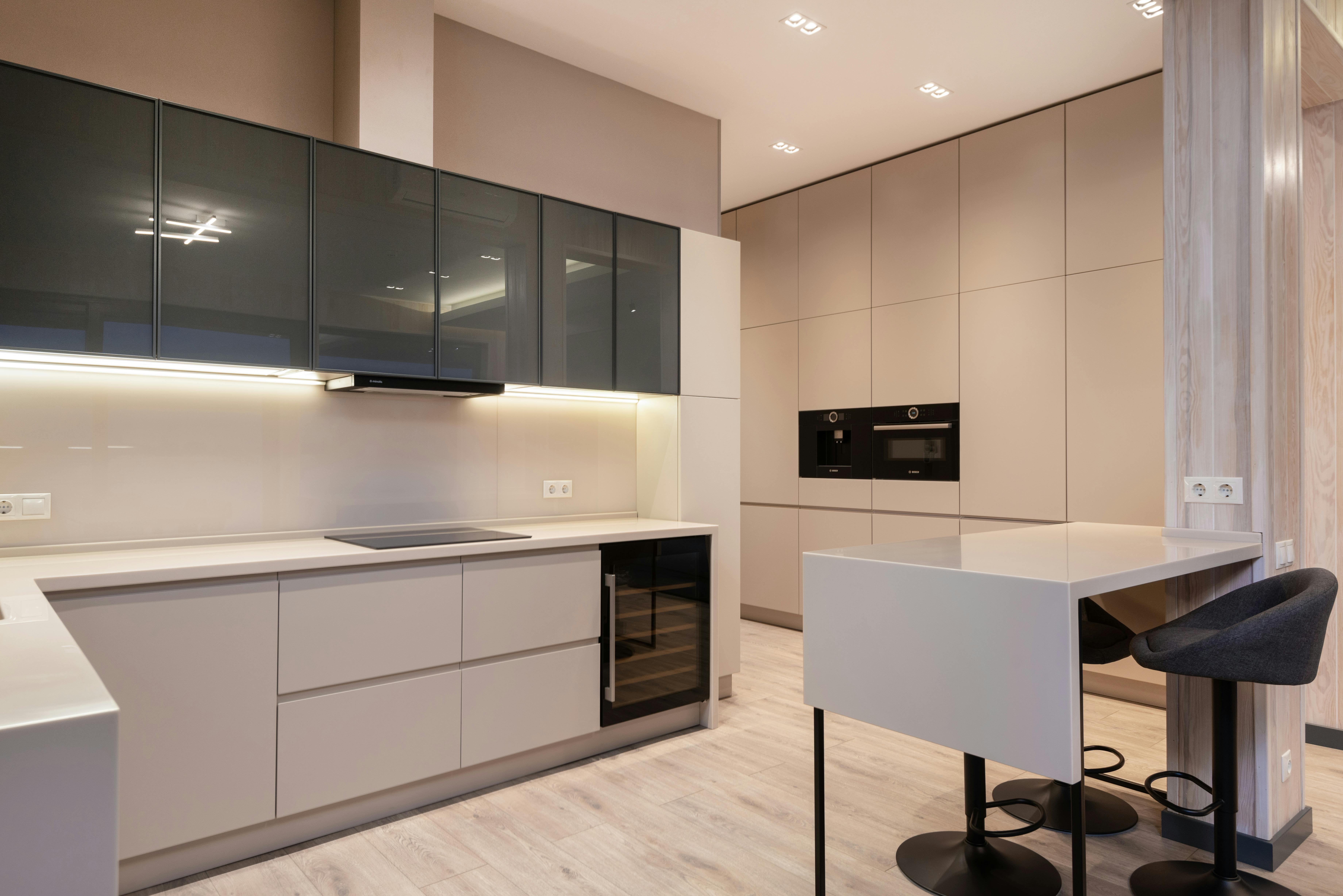
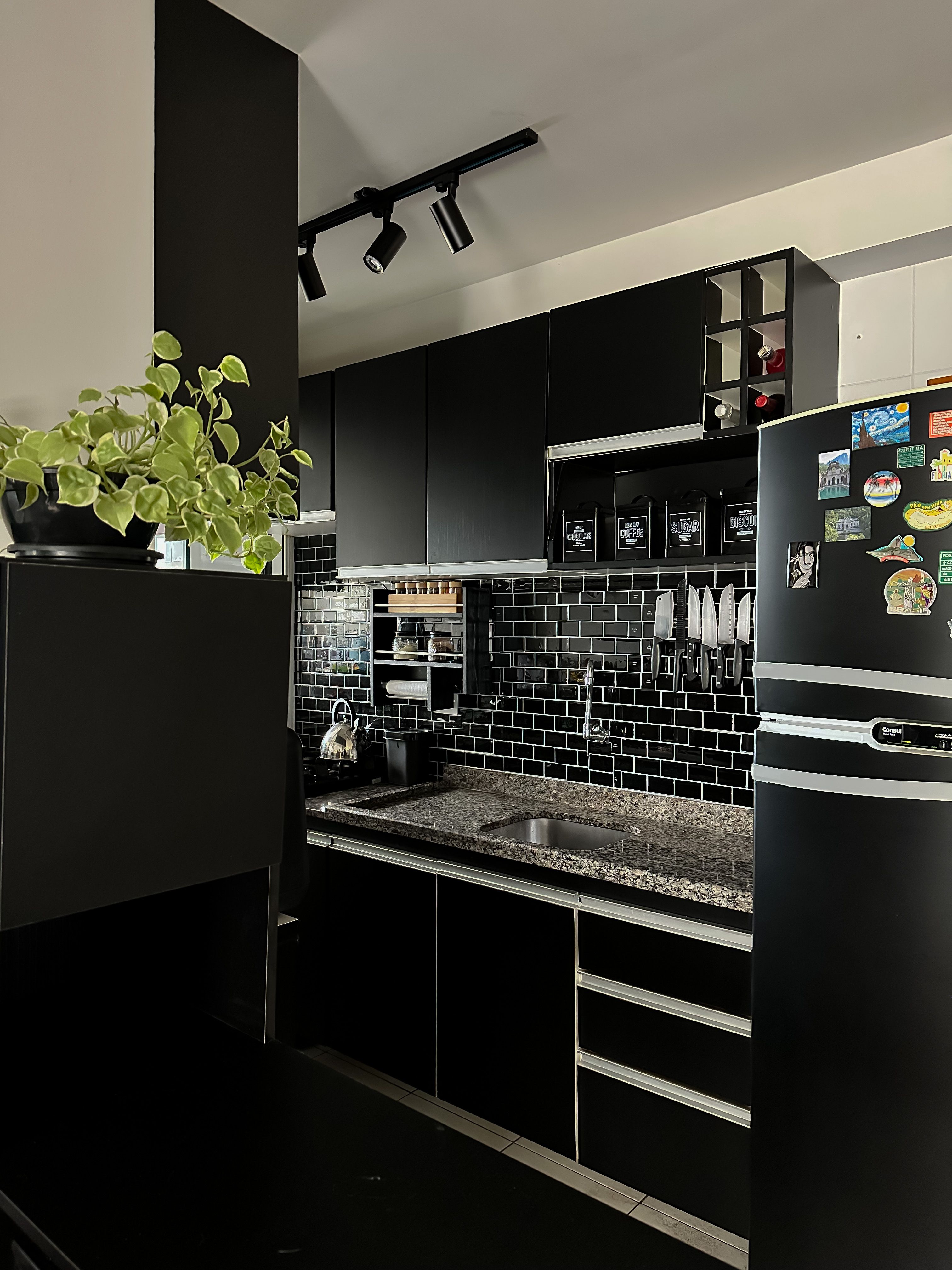
Cabinet finish occupies far more visual area than handles or accessories, so its depth and consistency matter. Matte lacquer, richly stained timber, natural veneer and softly textured finishes can all feel luxurious when the edges, reveals and alignment are precise. A premium effect comes from the way the entire elevation reads, not from attaching elaborate details to every door.
Use Timber for Warmth and Furniture Quality
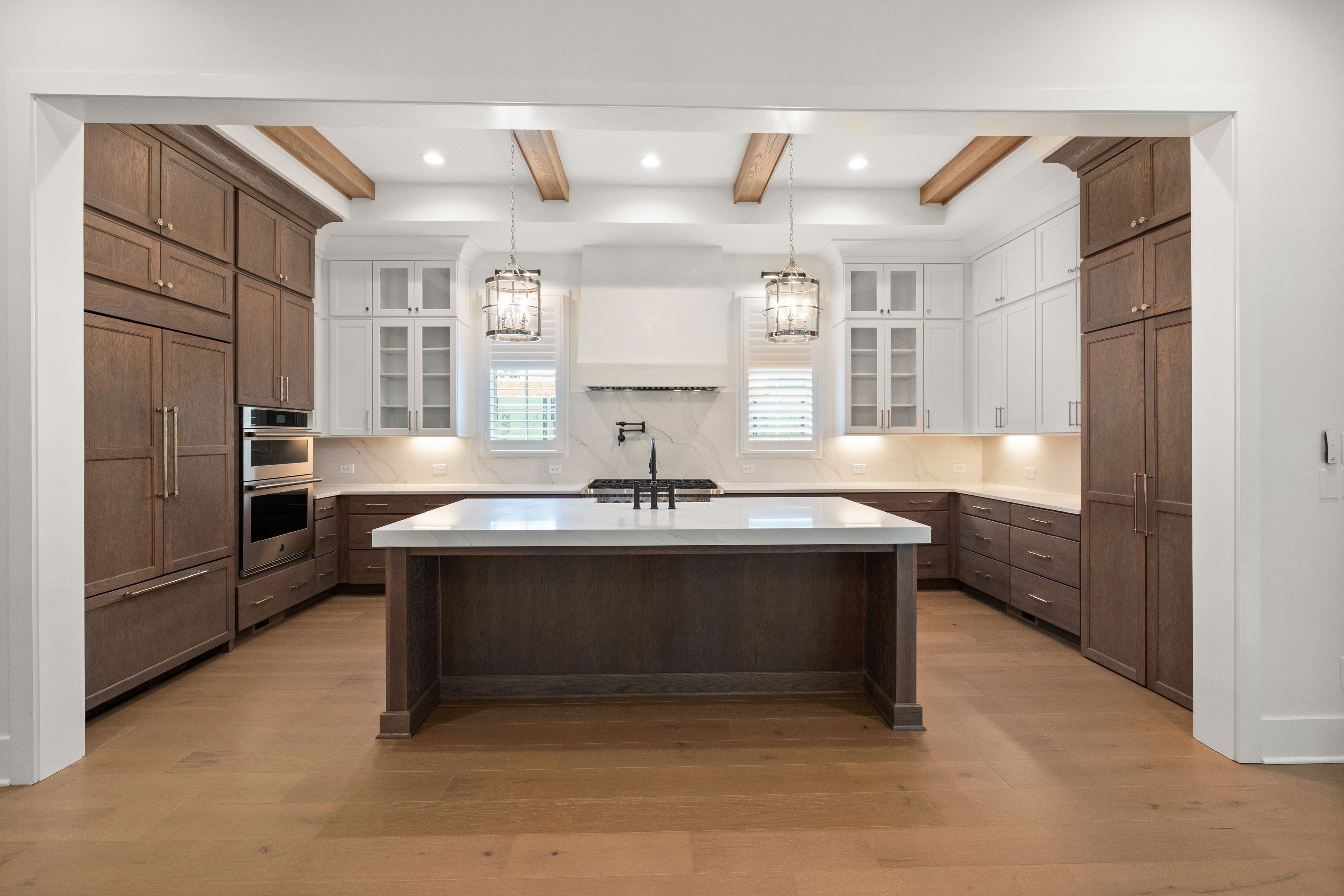
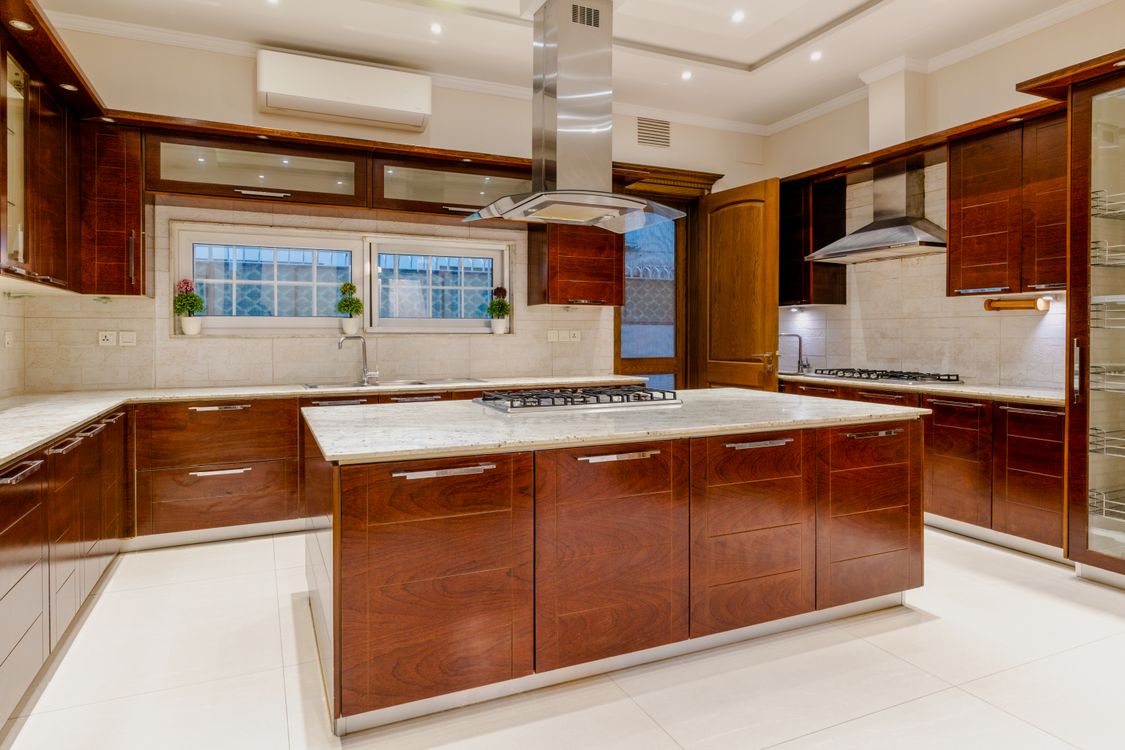
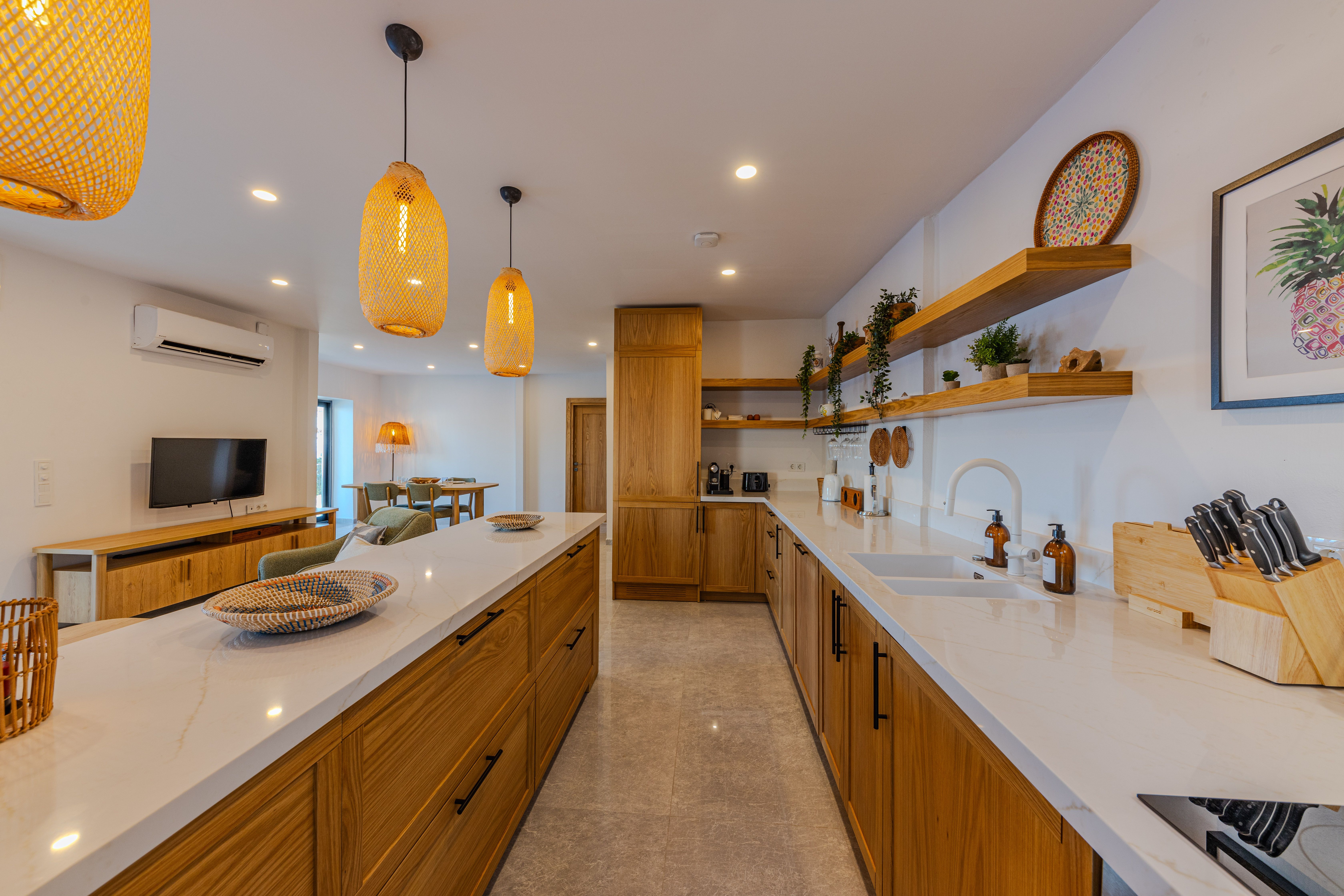
Timber can make large cabinetry feel more like furniture and less like a wall of equipment. Oak, walnut and other natural veneers offer grain, variation and warmth, but the way the leaves are matched matters. Use timber across one significant zone and let stone, paint or metal provide contrast so the grain remains legible.
Make the Island Earn Its Scale
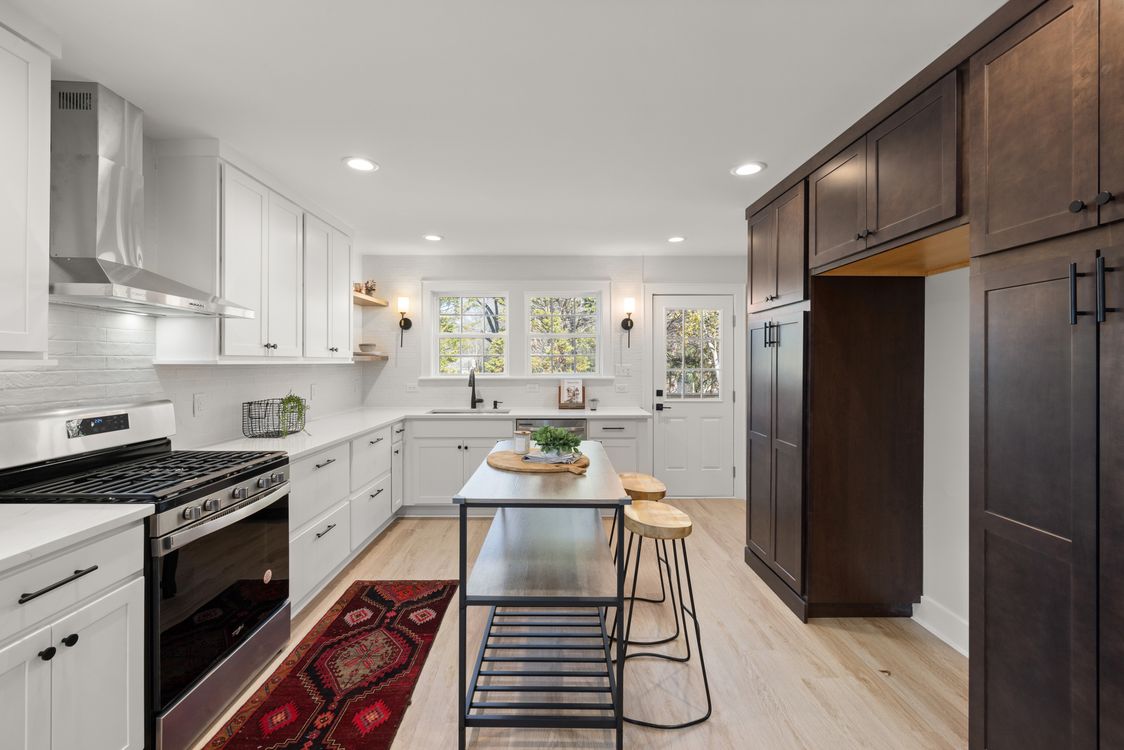
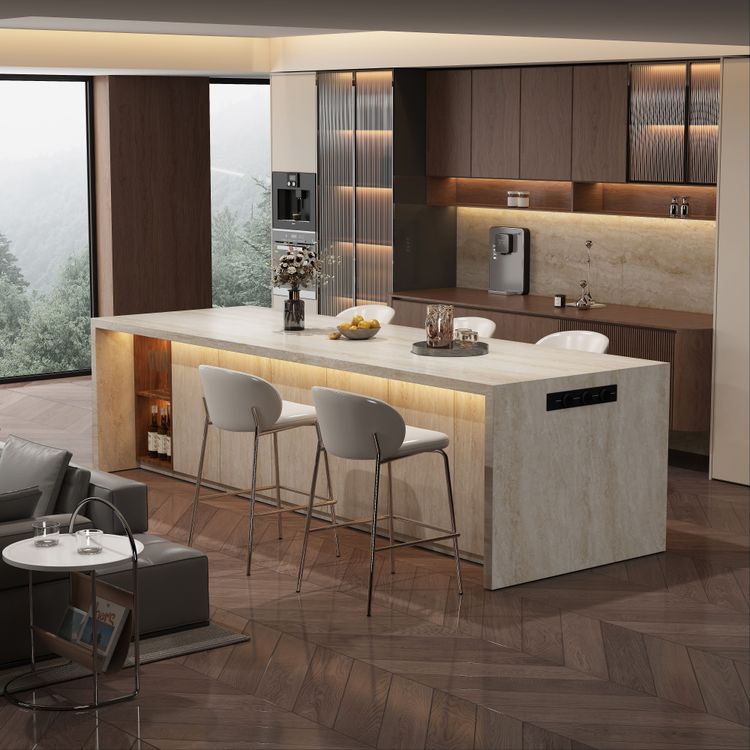
A large island only feels luxurious when it works from every side. Preparation, seating, storage and serving need enough room to coexist without creating long dead zones or awkward circulation. Waterfall stone, timber paneling or a furniture-like end can give the island presence, but function should determine the dimensions before decorative treatment does.
Integrate Appliances Into the Architecture
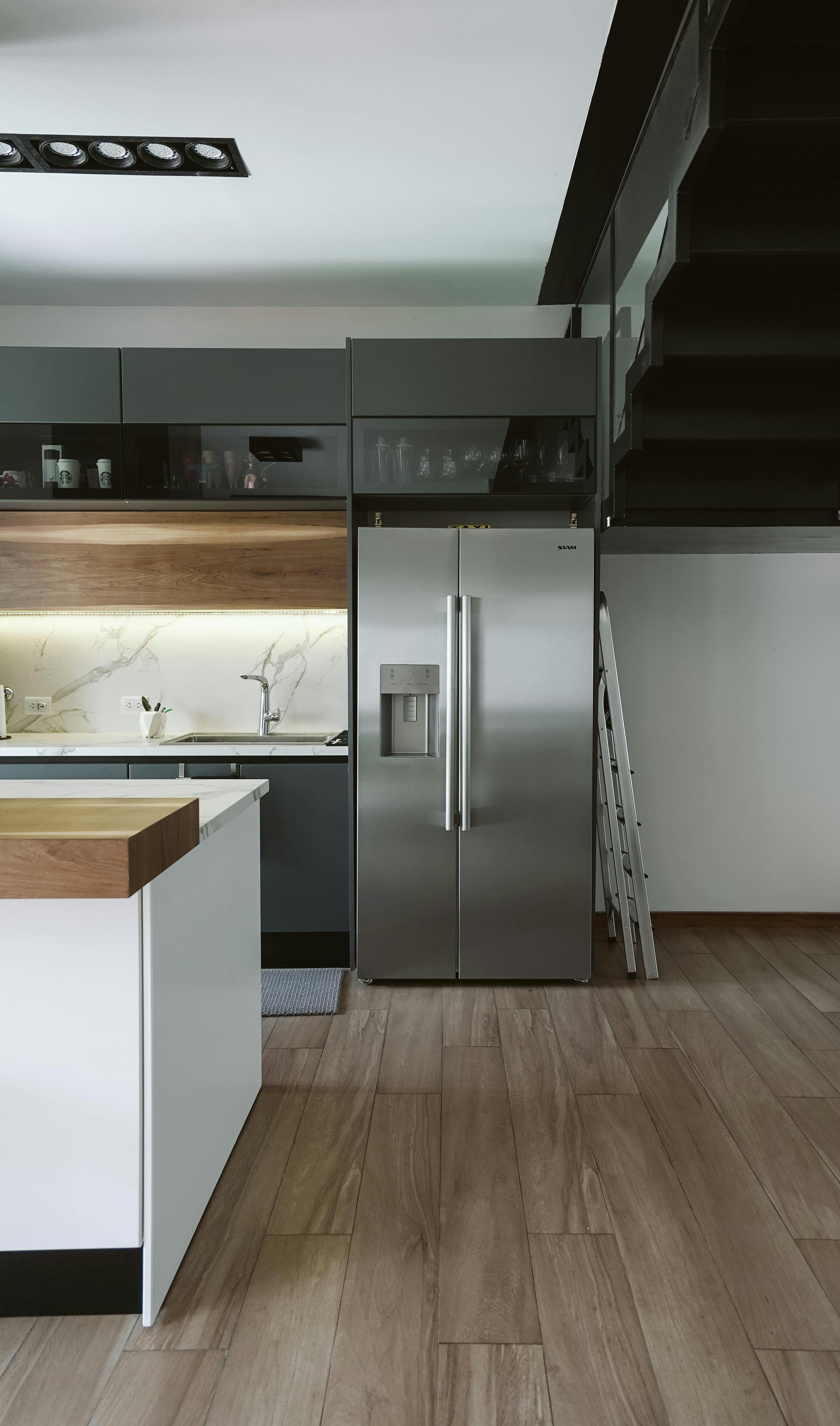
Panel-ready refrigeration, stacked ovens and concealed extraction can reduce visual interruptions, but integration should never make appliances awkward to use or service. Align equipment with cabinet divisions, group tall units where possible and plan ventilation and maintenance access from the beginning. Visible stainless steel can also feel entirely appropriate when it is deliberately positioned.
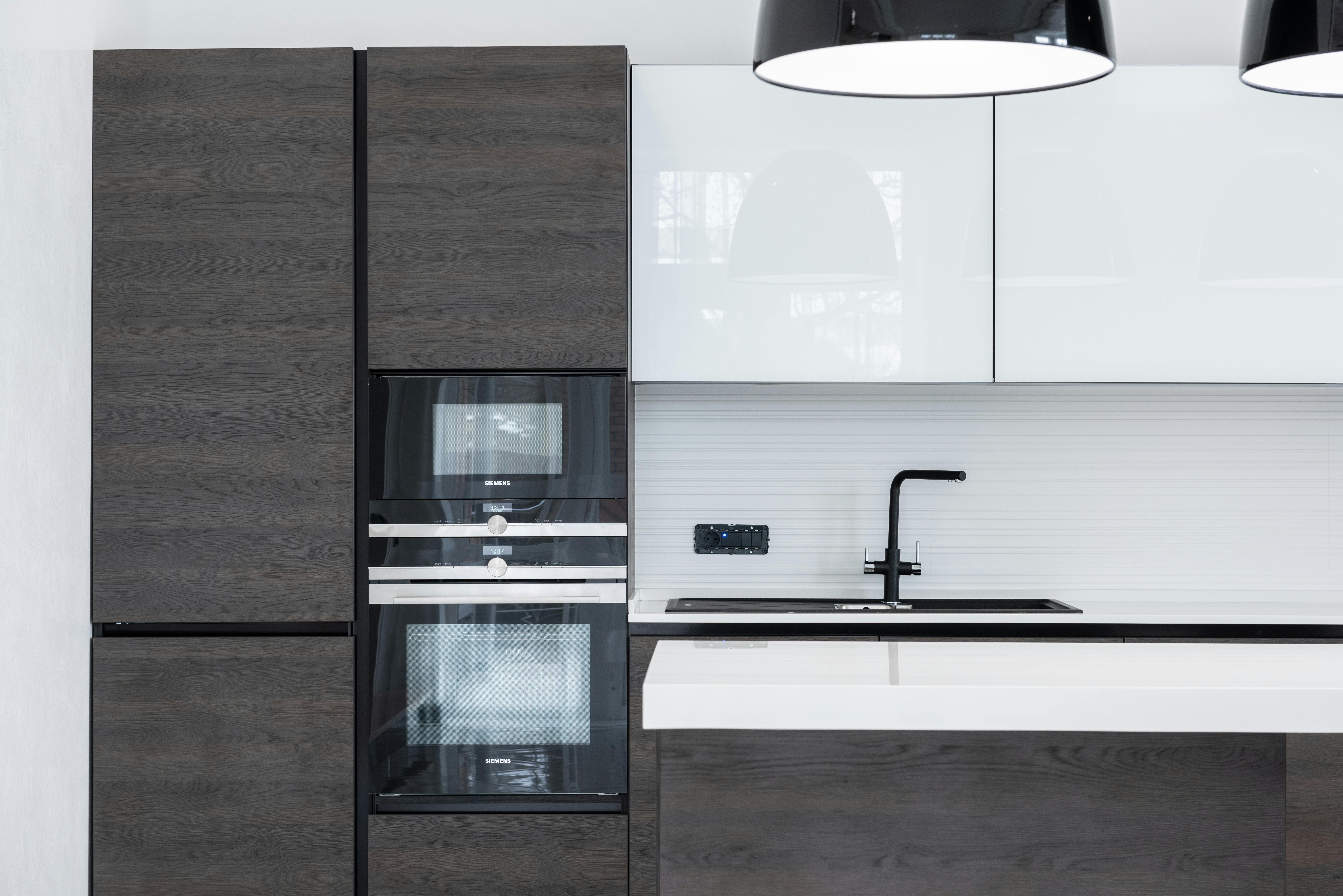
Layer Lighting for Work, Material and Atmosphere
Luxury kitchens benefit from several light layers because stone, timber and metal respond differently after dark. Ambient light should make the room comfortable, task light should protect preparation areas and selected decorative or concealed light can reveal material depth. One expensive pendant cannot compensate for an incomplete lighting plan.
Use Metal as a Precision Detail
Brass, bronze, nickel and blackened metal can sharpen cabinet and stone details when used with restraint. Choose a dominant finish for handles, faucet or lighting and let less visible functional components remain practical. Too many decorative metals can make a high-spec kitchen feel more like a finishes showroom than a coherent room.
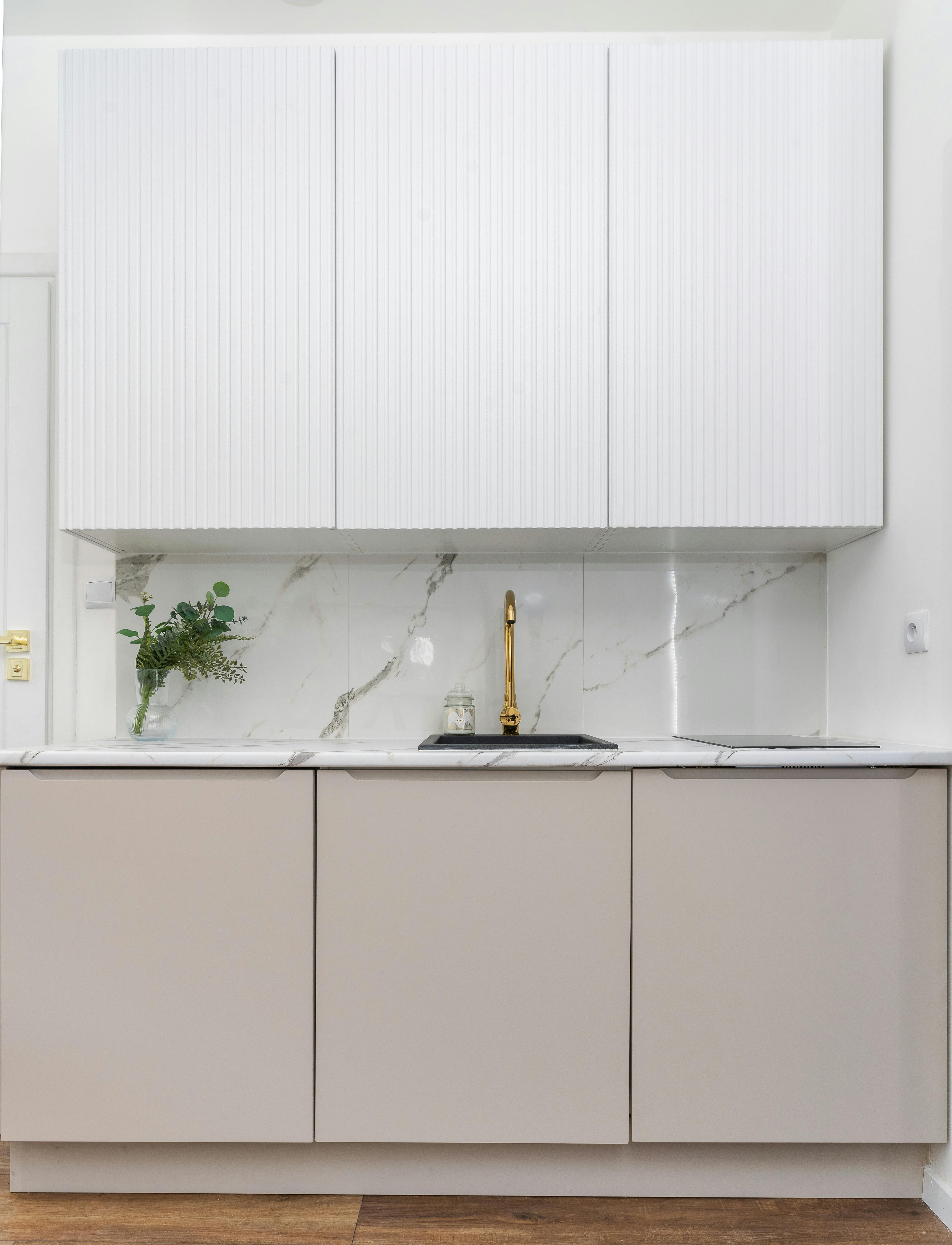
Make Seating as Considered as the Cabinetry
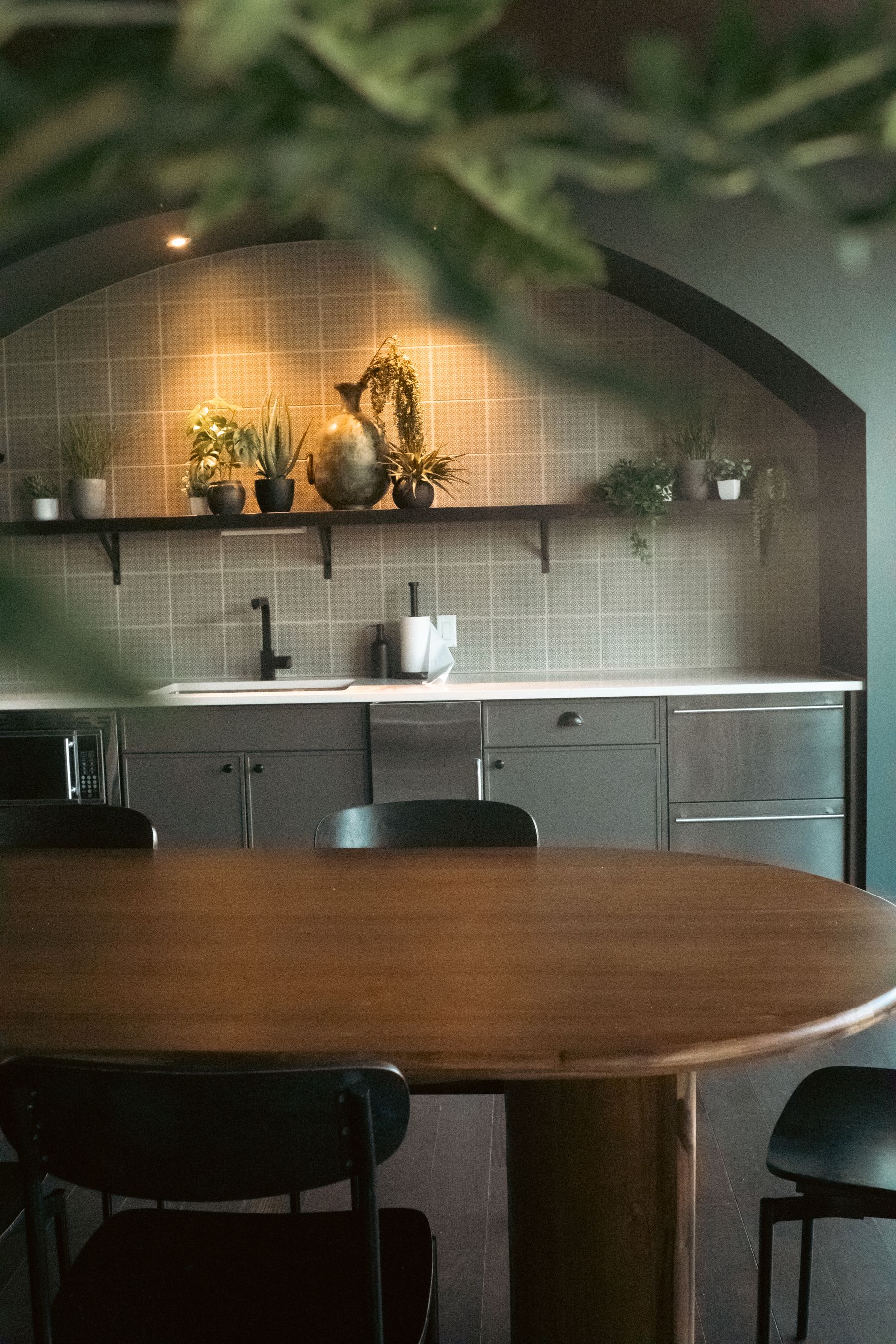
A kitchen can have exceptional joinery and still feel uncomfortable if the dining or island seating is treated as an afterthought. Upholstery, chair proportions and table height should support the way people actually linger in the room. In open-plan spaces, comfortable seating also gives the kitchen a residential counterpoint to stone and metal.
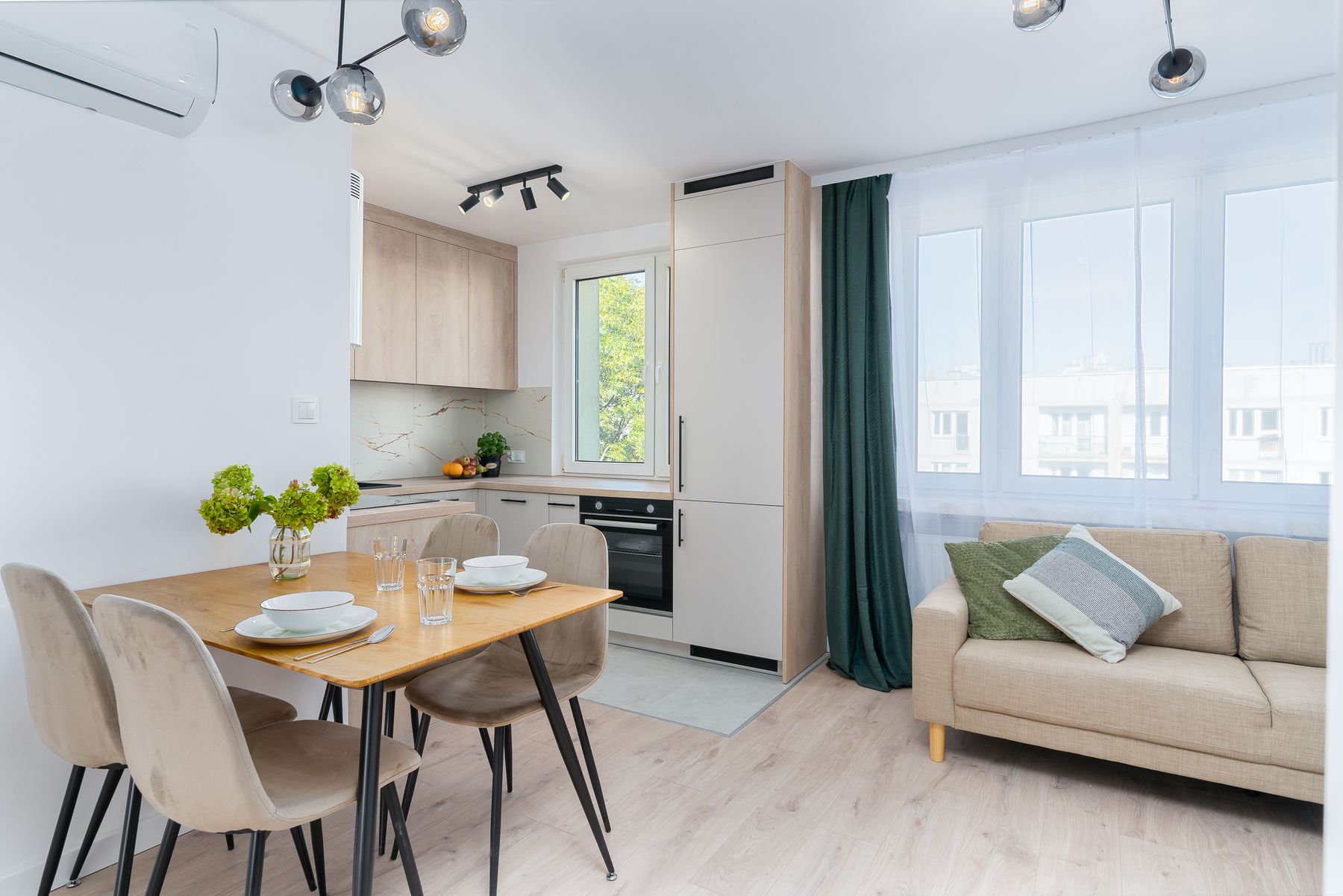
Protect Negative Space Around Premium Materials
Premium materials need visual space if they are going to be noticed. A clear worktop, plain wall, quiet cabinet run or generous aisle can make stone and timber feel more valuable because the eye is not constantly redirected. Luxury often reads most clearly where the designer has chosen not to add another feature.