

Define Farmhouse Through Usefulness, Not Symbols
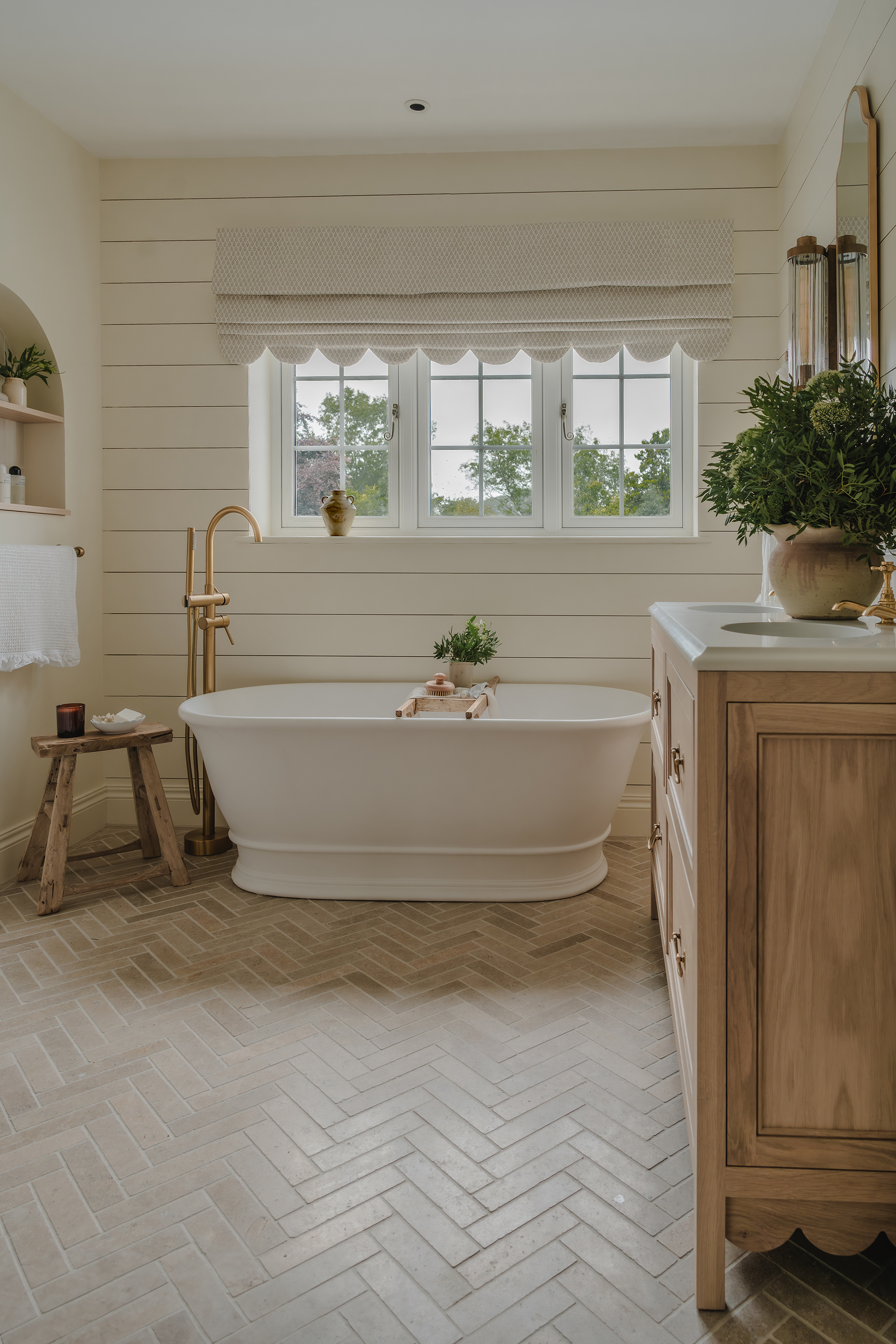
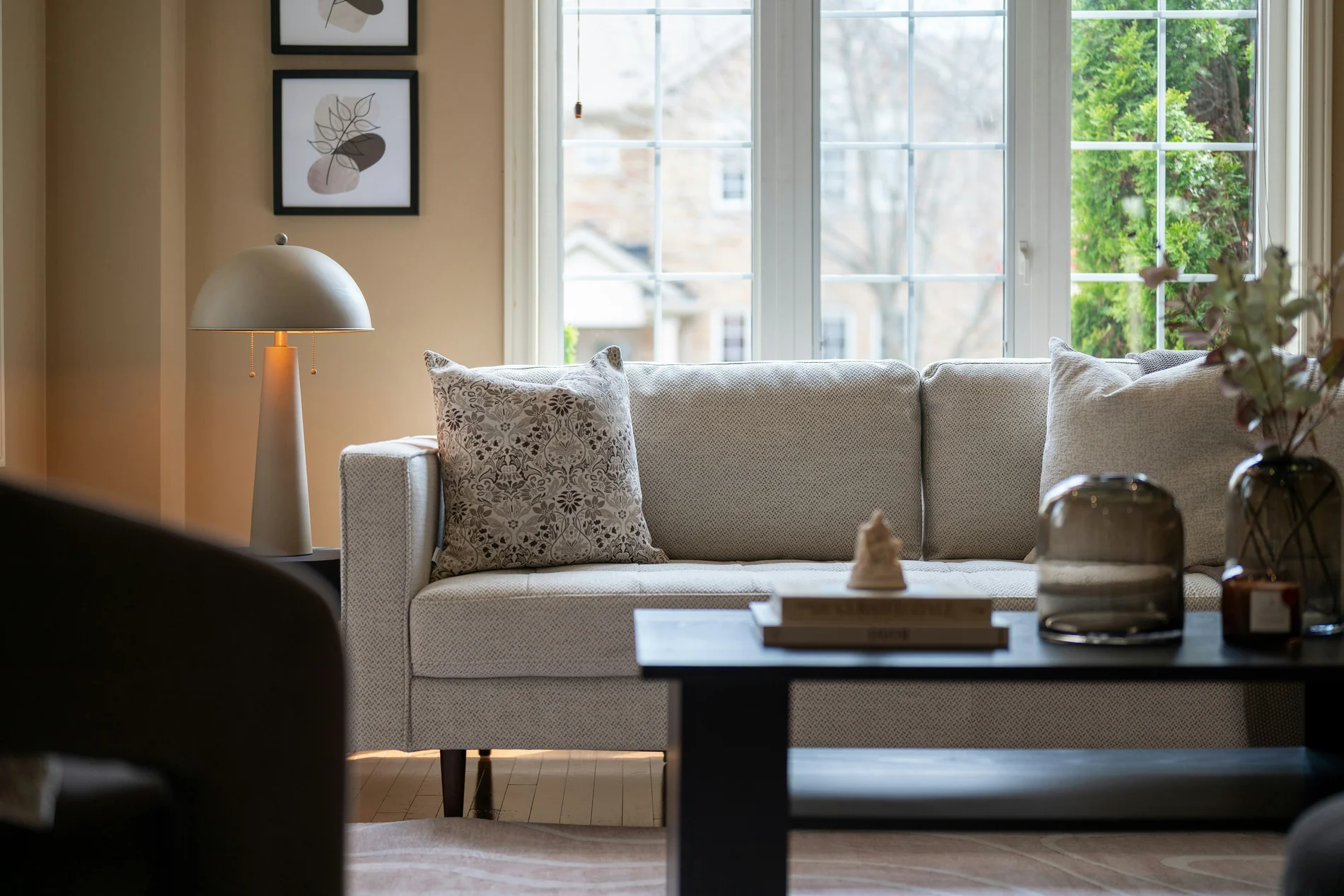
Farmhouse design grows from practical domestic objects: a comfortable sofa, a table that tolerates daily use, a cabinet that stores games, washable covers and a light that reaches the page. It can be old, modern or mixed, but warmth should come from touch and routine rather than a catalogue of rural signs. A restrained room may read clearly through painted joinery, timber, a checked cushion and ceramics. Start with the household's work and rest, then let style emerge from the objects that support it.
Separate Farmhouse From Rustic, Country and Cottage
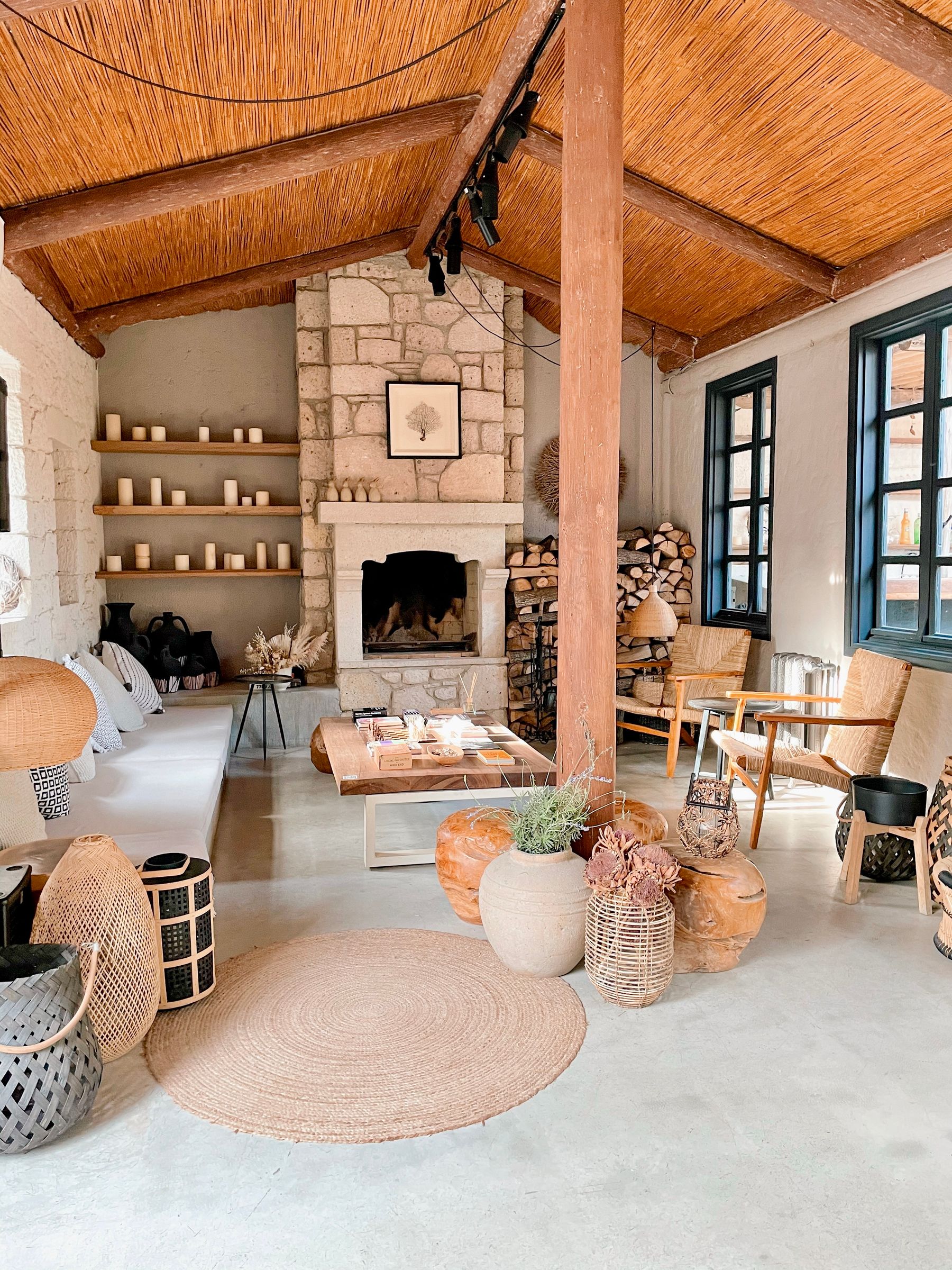
These rural labels overlap, but they should not collapse into one page. Rustic Living Room Ideas emphasizes raw natural material and rugged architecture. Country is strongest when it interprets a region or tradition, while Cottage can focus on small scale, close-set layers and architectural charm. Farmhouse is the practical middle: painted and timber furniture, workmanlike forms, checks or stripes and a credible exchange between old and new. Use those boundaries to decide whether the room needs material weight, regional specificity, compact charm or relaxed utility.
Choose Classic or Modern Farmhouse Deliberately
Classic farmhouse tolerates more visible age, turned legs, painted case goods, deeper colors and traditional textiles. Modern farmhouse edits the same ideas into cleaner upholstery, larger pale fields, simpler black or aged-metal accents and fewer objects. Do not confuse modern with empty or classic with cluttered. Choose one as the base, then let a limited number of pieces cross the boundary. The room remains coherent when the largest furniture, wall treatment and lighting agree on the level of refinement.


Use Existing Character Before Adding Cladding
Survey floorboards, beams, deep window reveals, modest paneling, masonry and built-in cupboards before covering a plain wall. Repairing one sound existing feature usually creates more credibility than applying thin boards everywhere. In a newer room, a precisely detailed timber shelf, painted cabinet or simple panel field may be enough. Investigate damp, old coatings, wiring and structural movement before exposing or enclosing building fabric, and use qualified help where work changes fire performance, insulation or load-bearing construction.

Plan the Conversation Group Before Styling
Map doors, windows, radiators, vents, outlets and the route to adjoining rooms, then place seats close enough for normal speech. Farmhouse furniture often has visible legs, cornices and projecting arms, so nominal dimensions can understate its physical presence. Give every regular seat a reachable surface and useful light without filling the perimeter. The full-scale tests in Living Room Layout Ideas help resolve several entrances or focal points before softness disguises a weak plan.

Choose a Sofa for Posture, Scale and Cleaning
Linen-look, cotton-blend, leather and textured woven upholstery can all work; the right choice depends on bodies and routines. Compare seat height, depth, cushion support, arm width, removable covers and the floor area left for tables and routes. Deep slipcovered sofas suit lounging but can swallow a small room or leave shorter users unsupported. A cleaner frame often lets architecture and older furniture carry the style. Order a large sample and test light, spills, pet hair and abrasion before committing.

Mix Armchairs by Job Instead of Buying a Set
Pair the sofa with chairs chosen for actual users: an upright seat with arms, a deeper reading chair or a lighter piece that can turn toward guests. Matching suites make a collected room feel showroom-heavy and often repeat the same ergonomic compromise. Link different seats through one wood tone, textile color or comparable seat height. When buying vintage, inspect joints, springs, odors, upholstery labels and previous repairs; allow professional reupholstery in the real price rather than relying on a charming photograph.

Give Every Seat a Reachable Surface
A coffee table cannot serve every body or activity. Add a stable side table, narrow console or shared pedestal wherever someone regularly sets a drink, book, remote or mobility aid. Round edges help at tight passing points, while a weighted base matters around children and pets. Keep most of the top available rather than filling it with decorative objects. A refinished stool or modest painted table often feels more farmhouse than a new oversized piece because its value is clear in daily use.
Let the Hearth Anchor, Not Dominate, the Room
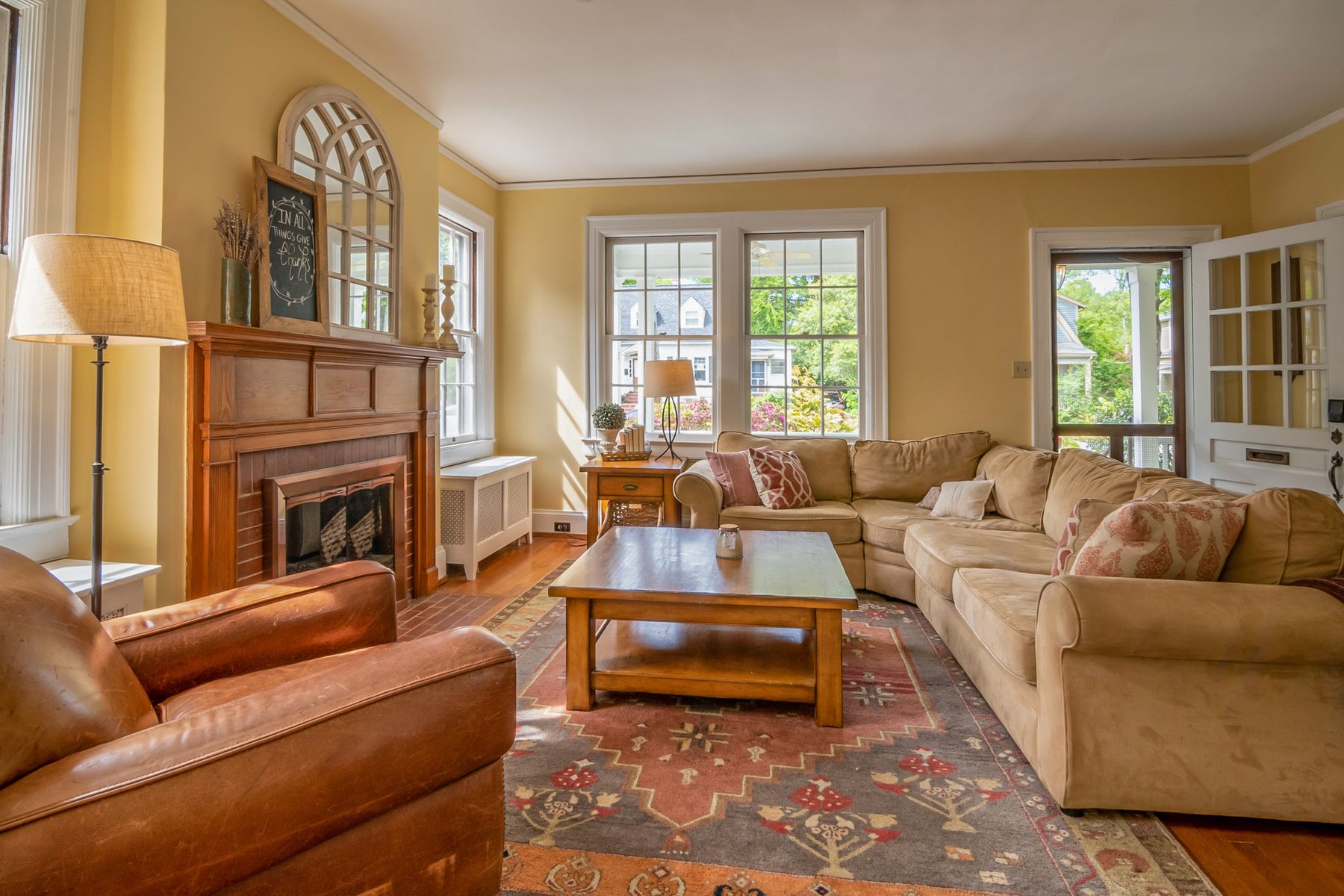
Angle seating so people can enjoy both the fire and conversation instead of forming a rigid audience. Verify appliance clearances, guard needs, ventilation, chimney condition, fuel storage and local requirements before moving rugs, baskets or furniture toward heat. If the fireplace is decorative, treat the opening honestly rather than implying unsafe use. A simple mantel with one artwork, mirror or asymmetric group is usually enough; tiny themed objects dilute the architecture and create cleaning work.

Coordinate Timber and Painted Finishes
Painted bookcases or cabinets can lighten the room while a timber table, chest or armchair supplies grain and age. Avoid distributing unrelated orange, red and grey woods in equal amounts. Let the floor or largest piece establish a dominant temperature, then use paint, upholstery or stone to bridge smaller differences. A complete matching set is easy but rarely feels evolved. Keep the pieces that solve the best jobs and vary the rest by finish, era or construction without losing the undertone relationship.
Use Reclaimed Material Only With Evidence
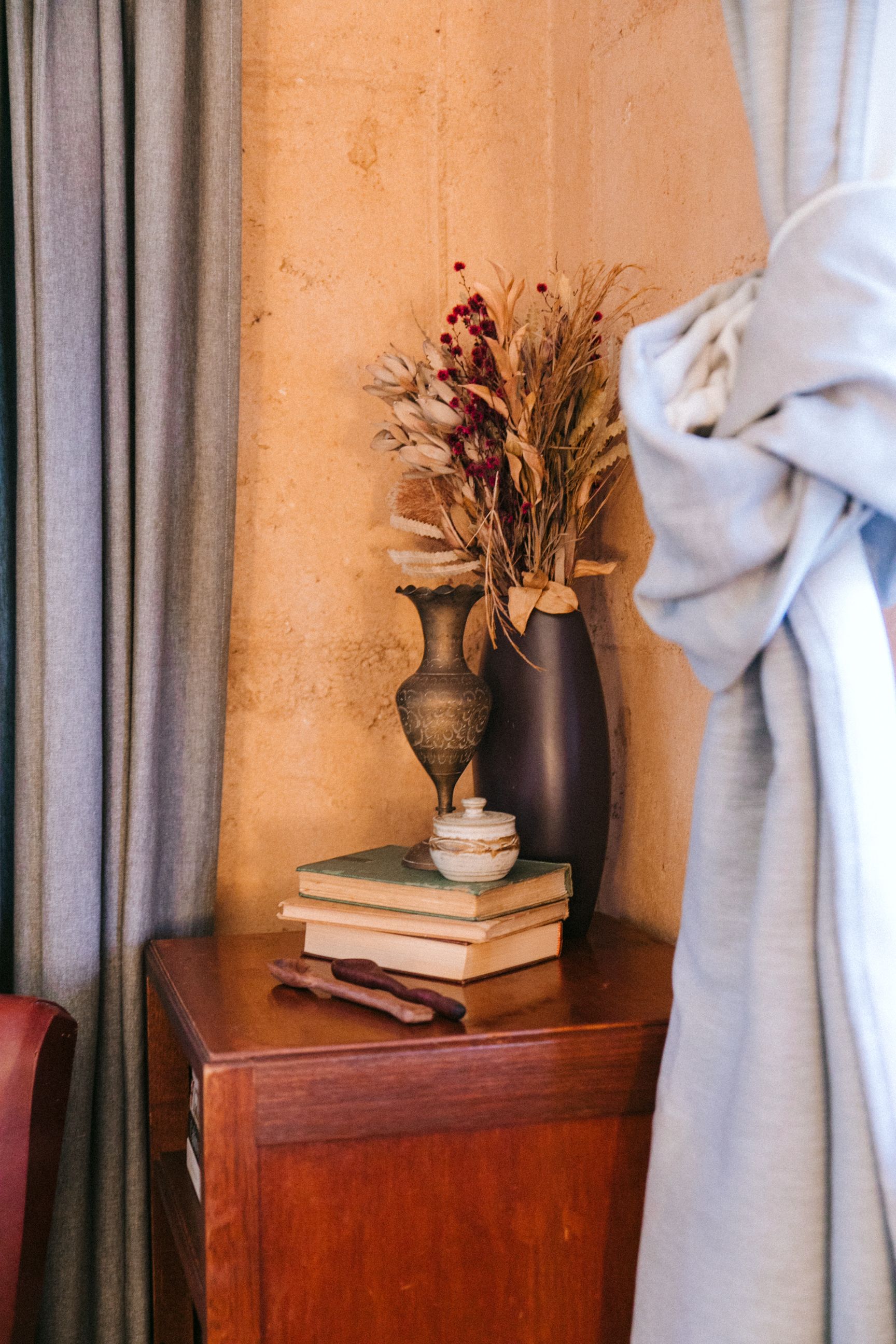
Ask where salvaged boards and furniture came from, how they were stored and whether old paint, preservative, oil, mold, odor or pest exposure is known. Material from unknown industrial, exterior or agricultural use may be unsuitable for an indoor table or wall. Remove protruding fasteners, stabilize splinters and preserve sound wear instead of manufacturing damage. When provenance or contamination cannot be established, responsibly sourced new timber with a repairable finish is the safer and more honest farmhouse choice.

Build a Warm Palette With Real Value Contrast
Warm white, oat, mushroom, putty, muted olive, dusty blue, clay and tobacco brown all belong. Start from daylight, floor and retained timber, then choose one pale field, one middle color and one grounding value. Do not make every item beige; steps in lightness keep furniture and routes legible. Sample large boards beside the sofa and rug through a full day. Farmhouse warmth comes from related undertones and material, not from choosing the same nominal neutral repeatedly.

Use Warm White as Breathing Space
Use warm white on the largest plane that needs light—often walls or ceiling—then let timber, color and pattern occupy defined areas. Brilliant cool white can turn grey beside honey wood, while a yellow cream may look tired under warm lamps. Sample two or three whites beside flooring, curtains and upholstery in daylight and evening light. If white controls every major decision, Modern Living Room Ideas may offer a clearer clean-lined route; in farmhouse it should usually support usefulness and material.

Bring Muted Color in Through Bounded Fields
Muted blue, sage, clay, ochre or faded rose can appear on one wall, sofa, curtain pair or painted cabinet. Give color enough area to matter instead of scattering many tiny accents, then repeat it once in a different material. A green cabinet may connect to a striped cushion; dusty blue curtains can answer one ceramic lamp. Keep the remaining fields quieter so farmhouse character comes from useful layers rather than a collection of color-coordinated ornaments.

Choose One Leading Pattern and Vary the Scale
Checks, ticking stripes, quiet florals and simple geometrics suit farmhouse rooms when their scales differ and one clearly leads. A patterned rug can carry the broadest rhythm while curtains remain plain and cushions use a smaller stripe. If wallpaper leads, keep upholstery quieter. View complete repeats from the main doorway and seated positions; a sample square cannot reveal rhythm. Avoid repeating the same buffalo check on several objects, which turns a useful textile language into a retail motif.

Size the Rug From the Seating Group
Choose the rug from the furniture arrangement, not the empty floor. In many rooms, the front legs of main seats should connect to it; in a floating plan, all legs may fit. A tiny rug between distant seats emphasizes separation and adds another edge to cross. Flatweave, wool and washable constructions each trade softness against cleaning, movement and pet performance. Living Room Rug Ideas explains placement, fiber and edge safety in more depth.

Layer Textiles by Job, Not by Quantity
Put durable upholstery on high-use seats, a washable throw where pets or children settle, lined curtains where privacy or drafts demand them and wool underfoot where warmth matters. Texture should solve touch, acoustics or wear rather than act as filler. Too many cushions shrink usable seating and lengthen cleaning. A quilt or handworked textile may provide the strongest farmhouse note, but protect fragile pieces from direct sun and daily stress. Build the comfort system first, then add one meaningful decorative layer.

Treat Curtains as Privacy and Climate Equipment
Relaxed linen-look curtains suit farmhouse style, but appearance cannot replace privacy, glare control and thermal performance. Use a translucent layer for daytime screening and a denser curtain or blind where nighttime privacy, summer heat or winter drafts require it. Mount and stack panels so they clear the glass rather than permanently stealing daylight. Keep fabric away from radiators, heaters and floor vents, and make controls reachable. Observe the window morning, afternoon and night before specifying each layer.

Build Lighting for Tasks, Faces and Evening Warmth
Combine ambient light for safe movement, shaded lamps for faces and reading, and restrained accent light for a cabinet, art or textured wall. Put controls near the places where activities begin and use dimming only with compatible lamps and drivers. Exposed filament bulbs often create glare without useful output, while a decorative chandelier cannot light every seat. Living Room Lighting Ideas offers detailed planning for beam spread, color quality and control zones.

Use Aged Metal as Punctuation
Aged brass, blackened steel, pewter or simple iron can appear in lighting, fireplace tools, curtain hardware or one cabinet fitting. Choose one dominant family and repeat it lightly rather than specifying black metal on every leg, frame and shelf. Old electrical pieces need professional inspection and rewiring where required; decorative patina is not proof of safety. Position metal where it performs a job, and let natural wear develop instead of using aggressively distressed finishes on new components.

Make Storage Look Like Furniture
Use a painted cabinet, timber bookcase, chest or low sideboard where the room needs closed storage, display or a surface. The piece should fit the contents and leave door, drawer and walking clearances rather than merely filling a blank wall. Mix books and meaningful objects with breathing room; do not stage every shelf with identical baskets. Living Room Storage Ideas develops inventory, closed-versus-open storage and maintenance planning for busy households.
Display Useful Ceramics and Personal Objects
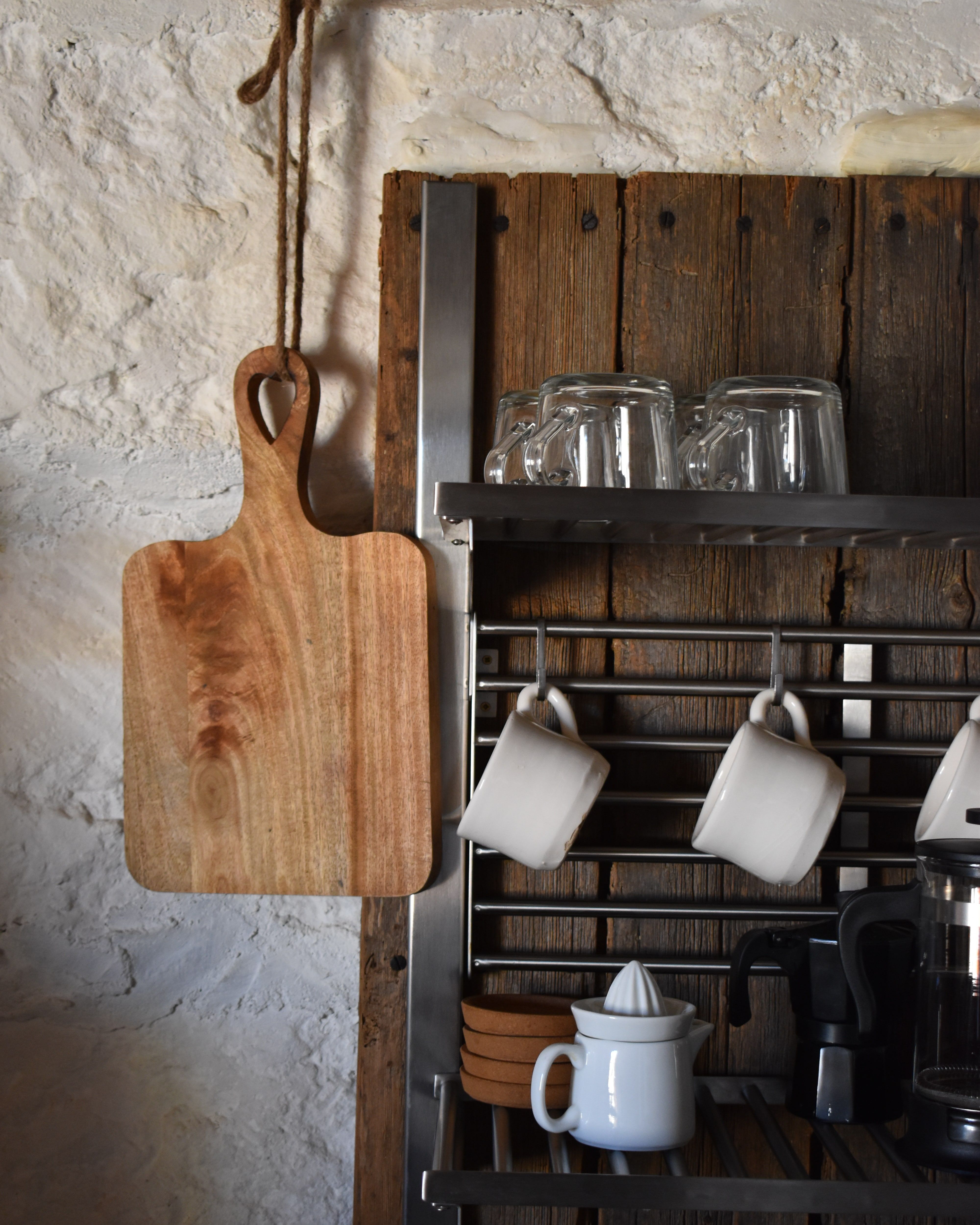
A pitcher used for flowers, a bowl for keys, framed family work, books and a repaired basket can provide farmhouse character because they belong to the household. Group objects by use or story, vary height and leave enough negative space to clean the surface. Avoid filling shelves with empty vessels, faux books or signs that announce the room's theme. Rotate fragile or seasonal pieces rather than displaying everything at once, and anchor tall furniture when children or pets use the room.

Integrate the Television Without Building a Disguise
Set the screen at a comfortable seated height, check viewing distance and glare, and preserve ventilation, cable access and service clearance. A low painted cabinet, simple dark recess or balanced arrangement with books can reduce visual dominance. Decorative sliding barn-door covers often add depth, hardware and a literal motif while making the screen awkward to use. Test sound and remote function with doors closed. If media is secondary, arrange chairs so they can turn toward conversation or the view rather than permanently facing one black rectangle.

Make an Open Plan Read as One Home
Repeat two or three elements across living and dining zones—perhaps one warm white, a timber family and aged-metal lighting—then give each area its own rug, task light and furniture scale. Do not buy a coordinated package for the whole floor; continuity comes from relationships, not identical pieces. Protect the route between kitchen, table, sofa and exterior door, and plan sightlines to daily storage. Acoustic softness from curtains, rugs and upholstery matters more as hard surfaces and ceiling volume increase.

Adapt Farmhouse to a Small Living Room
Choose one comfortable sofa, one movable chair and reachable tables instead of a complete heavy suite. Let a painted cabinet or tall bookcase provide storage without spreading small baskets across the floor. Use a rug large enough to connect the group, keep window treatments clear of glass and select one meaningful pattern. Small Living Room Ideas offers deeper guidance on furniture depth, door swings and multi-use zones when every few centimeters affect daily movement.
Give a Large Room More Than One Purpose
Create a main conversation group and one secondary purpose such as reading, games, music or a window-facing pair. Each zone needs its own light and reachable surface, while a continuous route connects them. An oversized sectional is not the only solution; two compatible groups can feel more domestic and adapt to gatherings. Use one large rug or clearly related rugs rather than many islands. Repeat timber or color across the room so zones belong together without becoming mirror images.


Create Rental Farmhouse With Portable Layers
Start with a substantial rug, useful older chair, floor and table lamps, full-height curtains and one painted or timber storage piece. These movable layers establish material and proportion without temporary shiplap, adhesive faux beams or risky wall treatments. Confirm lease rules, use approved fixings and store original hardware for reinstatement. Focus effort on the view from the entrance and the main seated position, then choose pieces that can perform in a future home rather than fitting one themed arrangement.

Design for Children, Pets and Different Bodies
Provide at least one supportive seat with arms, preserve a continuous route and position tables, switches and storage within useful reach. Anchor tall furniture, secure heavy mirrors and inspect older pieces for tipping, splinters, unstable repairs or hazardous coatings. Choose cleanable upholstery and low-snag rugs where pets or children play. Visual warmth should not hide level changes or narrow passages. Adapt symmetry around an accessible seat or mobility route without apology; hospitality is more authentically farmhouse than a perfect staged composition.
Buy Vintage and Handmade Pieces With Clear Eyes
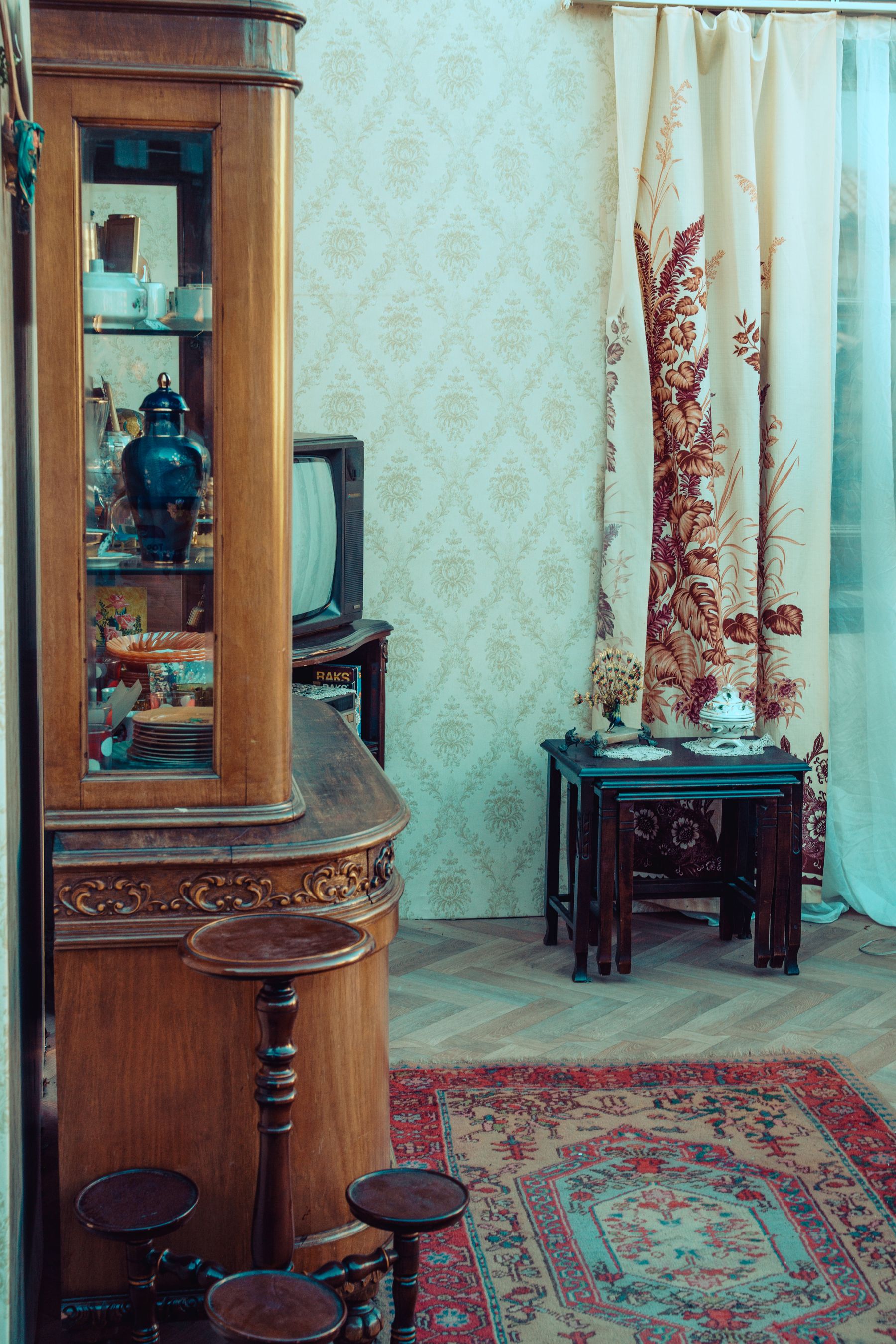
Measure the location, doorway, stairs and vehicle before visiting dealers. Inspect joints, drawers, odors, pests, upholstery, finishes, sharp edges and previous repairs, and ask for provenance without treating a story as proof. Handmade does not automatically mean durable, while reproduction furniture may offer safer wiring, better scale or replaceable covers. Budget delivery, repair and adaptation before purchase. Vintage Living Room Ideas provides a fuller framework for condition, restoration and mixing eras.

Plan Maintenance by Material and Routine
Keep maker instructions for upholstery, wool, painted furniture, timber, stone and metal rather than using one universal cleaner. Rotate cushions and rugs where appropriate, protect wood from standing liquid and inspect old joints, wiring and finishes periodically. Deep crevices, raw boards and many small objects multiply cleaning time. If the room cannot be maintained within the household's available effort, reduce decorative layers and choose smoother repairable surfaces rather than accepting dust and damage as signs of authenticity.
Build the Room in Functional Budget Phases
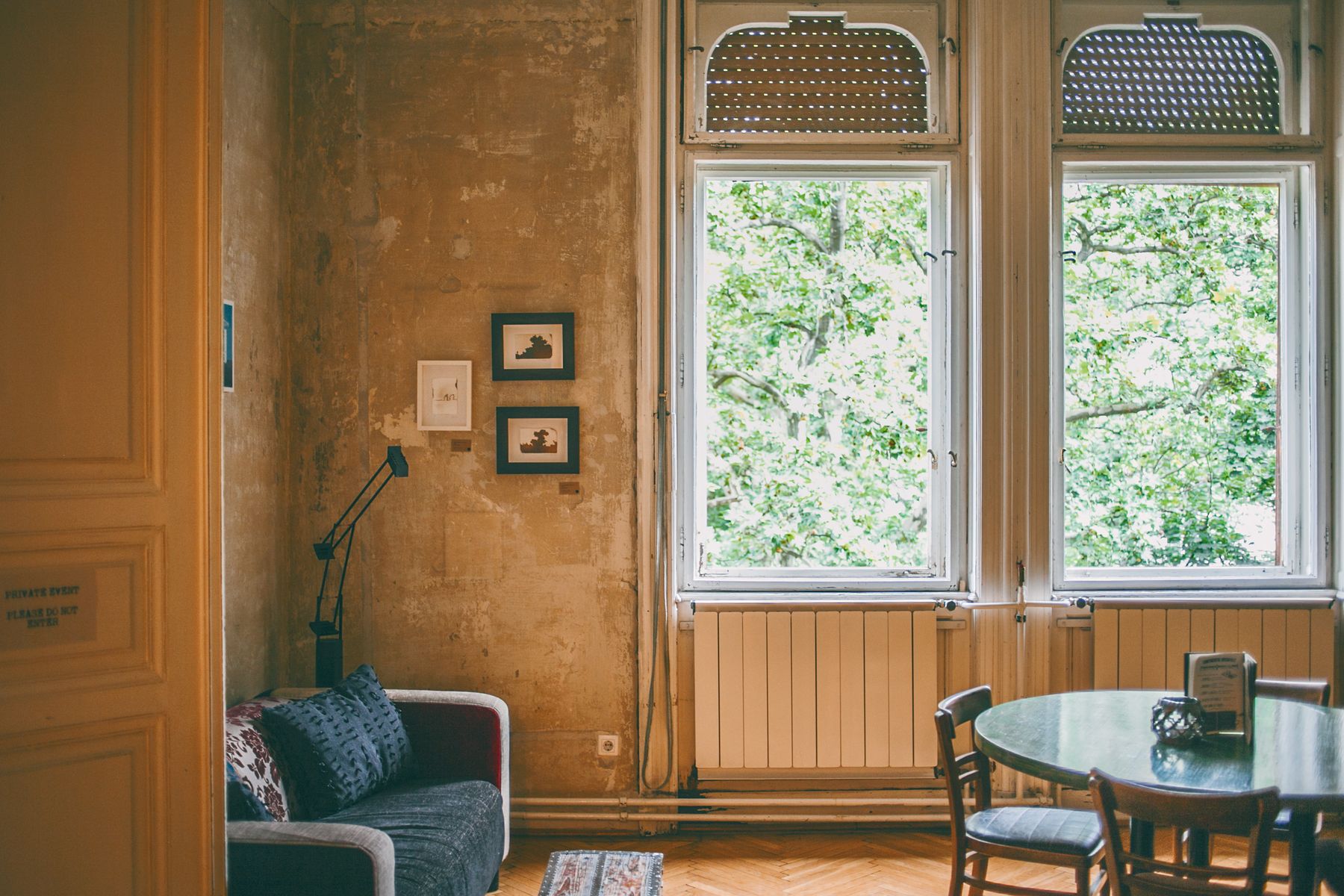
Spend first on comfortable seating, the correct rug size and useful lighting, then address storage, curtains and one focal surface. Vintage repair, custom upholstery, chimney work and electrical changes need realistic labor allowances. A sound secondhand table or lamp may stretch the budget, while novelty accessories usually create clutter without structure. Complete each phase and live with it before purchasing the next. The strongest farmhouse rooms feel gradual because usefulness and material relationships developed over time.

Test the Everyday Room and Edit the Clichés
Review the room after ordinary weeks, not immediately after installation. Notice which seats are used, where drinks and remotes collect, whether curtains close easily, what catches pet hair and which decorative gestures feel forced. Remove the weakest slogan, distressed finish or repeated motif before adding anything. Photograph the room from the doorway in daylight and at night to reveal clutter and contrast. A successful farmhouse living room feels practical, warm and personal even when every overt rural reference is removed.